

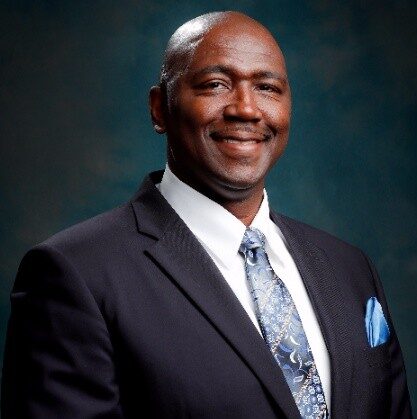
University of Illinois’ all-time men’s basketball scoring leader Deon Thomas joined the UI development team as Associate Director of Development. Thomas works out of the Illini Center in Chicago.
Thomas starred for the Illini from 1991-94 and continues to rank as the school’s all-time leading scorer with 2,129 points. He earned All-Big Ten honors all four years as a player and was selected as a part of the University of Illinois Athletics Hall of Fame Class of 2019.
In his role, Thomas cultivates and solicits Chicago area donors, communicates DIA fundraising efforts and helps expand the Illini network in the Chicagoland area. He also serves as a liaison to the Fighting Illini men’s and women’s basketball alumni.
Thomas has served as a radio analyst for the Fighting Illini Sports Network and as a studio analyst for the Big Ten Network the past two seasons and intends to continue in both roles.
Welcome to the Athletics of Business, a podcast about how the traits and behaviors of elite athletes and remarkable business leaders frequently intersect. The real stories and hard lessons to help you level up your leadership and performance. Now your host, Ed Molitor.
Welcome back to another episode of the Athletics of Business podcast. I am your host and CEO of the Molotor Group, Ed Molotour. Now, you know we have had some amazing podcast episodes here on the Athletics of Business podcast, which has nothing to do with me and everything to do with the quality of guests that we have had on the show. And today I'm going to tell you, this is a very special episode because we are being joined by a great friend of mine, one of the most tremendous human beings that I have been blessed to get to know at a very deep level, Deon Thomas. Now, if the name sounds familiar and you're a basketball fan, it obviously should because Deion's name is synonymous with Illinois basketball, not just high school basketball, as he was Illinois Mr. Basketball his senior year, 1989.
He was the number one player in the state and he was a number three player in the country, hailing from Simeon High School and the great Bob Hamrick. He's also the all time leading scorer in Fighting Illini history, who has an amazing list of great players that have gone through there. But here's what I think is really cool about Dion. And people don't talk about this when they talk about Dion, right? He was the team captain in 92, 1993 and 1994. He was selected in the first round by the Dallas Mavericks and he opted to play professionally in Europe and Israel. And that decision alone changed the course and the trajectory of his life in nothing but positive ways. Now, currently he is the associate director of development for the University of Illinois at Urbana Champaign and Chicago.
He's also the community relations coordinator within the University of Illinois system. He is a Fighting Alignment men's basketball radio analyst on the Learfield Network and he is a backup Big Ten Network sports analyst this season and why the term backup is there. He'll explain in a couple of stories inside of this podcast episode. But we're really going to talk about some amazingly powerful stuff. I mean, Deon will share stories with us about being raised by his grandma as his mother struggled through drug addiction and being raised on the west side of Chicago in a neighborhood known as the Village.
And some of the things that he experienced, the people that he grew up around and the impact that they had on their lives and how he chose not to allow those circumstances to define him and listen to his grandmother's words when she would tell him, dion, you are bigger than the village. And we'll talk about impact that his grandmother had in his life, that Coach Hamburg had in his life, his stepfather had in his life, and that Coach Collins, the late Jimmy Collins had in his life. And some amazing stories right there, some great lessons. And something that I think is really unique and cool inside of this is, I asked Dion, you know, how did you create your own identity with so many different people in your life that influenced you, with different styles, different personalities, and different forms of communication?
And he talks into that in a really powerful way. And if you know Deion Thomas well, first of all, to know him is to love him. But if you know Deion, you know, one of the things he has this incredible ability is to connect with people, to be very personable, very genuine, very authentic, and to build incredible relationships. And we talk about where that comes from in his life, and then we jump into diversity and inclusion. Yes, it is a hot topic right now. It's a very significant topic right now. But as Dean and I talk about and discuss, it is something that's very significant all of the time. And we talk about Black Lives Matters and those events. We talk about a couple of the committees and panel discussions that Deon chaired and the conversations that he had.
And we talk about some of the experiences Deon has faced in the past with race. And Deon is kind enough to share with us the conversations that he has with his daughters, how he keeps it real, how he lets them know, as a young black Jewish woman, life can be, and how it can develop into things that may present themselves in the form of challenges and opportunities. That's the thing I love about Dion. He's a very real person. He's a very genuine person. And I wish we would have had more time. Today, we're going to have Deon again.
But there's so much here, whether you're in the business world, whether you are in the athletic world, or honestly, whether you just want to listen to and hear from a person who has seen it all, who's accomplished a great deal despite the deck being stacked against him. And the way we wrap up the conversation is really powerful. We talk about his mother, and we talk about his mom's book. Okay? And I want you to buy this book because the story is amazing and it taught. And the title of the book is I Climbed out of the Belly of the Beast. And it talked about how she has overcome drug addiction and she is now one of the top realtors not only in the Arizona, but also internationally for her real estate company. So I'm going to get out of the way.
I'm giving too much away. I want you to listen to the podcast episode. This is just an amazing conversation with my great friend, Dion Thomas. Enjoy, Dion. Welcome to the Athletics of Business podcast. It is beyond incredible to have you here, my man. I really appreciate you taking the time.
Ed, as always, man.
It's great to be able to share the microphone with you, brother. You know, anytime you need me, I'm here.
Hey, it's funny because we always have these great conversations. It's just that they're never recorded, they're not in any formal setting. And I just said something to you before we start recording. I mean it with all sincerity. So go jumping into 2021. There's so many significant events, like we're living inside of a history book before it was written right now. And I'm like, there is nobody I'd rather have this conversation with to start off the year than my man Dion Thomas. So let's get at it. You know, in the introduction, I fill the listeners into our connection, our relationship, how far back we go, the amount of respect and love that I have for you and your playing career, your coaching career.
But just jump into your world right now, what you're doing, where your focus is and how all of the craziness on the peripheral has affected, impacted what you do.
Well, I am currently the associate director.
Of athletics in the Chicago office, mainly focused on development for the University of Illinois athletic department. So we work out of our Chicago office downtown.
And you know, as well as a.
Stand in for btn, as you know, I was full time with them for four years before taking this position. And you know, new president, new rules, doesn't want people that work in an athletic department really being the face of the Big Ten. And I get that, you know, you.
Want to make sure that there's no.
Conflict of interest of anything like that. So I totally get it. So I'm more so a stand in for that. But I am also the analyst for Illinois Sports Radio. So we broadcast mainly the men's basketball games.
I don't cover football yet. No, no. My man Martin o', Donnell, was that.
A shameless plug right there?
But of course not.
My man Martin o' Donnell does a great job for football, but you know, I'm a huge Illinois football fan, so I watch a lot of it. And I also am the host of Champagne on Ice.
Yes. Love that name, by the way.
Oh, thank you very much. It's been great.
Goodman and John Goodman, Jeff Goodman and Rob Dallcher started, you know, their own podcast network called field of 68. So they contacted me, we came together and so I cover Illinois basketball for the field of 68, which has been absolutely tremendous. But you know, to go along with your second part of the question you asked, how has Covid and 2020 really affected what I do as a frontline fundraiser, you know, a major gift officer, as they call it? It affected me because it affected the people that I really deal with on a day to day basis. A huge part of who I am, what I do. And you know, this from my playing days to my coaching days to what I do now has always been being personal, being face to face with people, being in contact with people once Covid kicked in.
And I have not been in my office since March 13th of 2020. I have not been able to have face to face meetings since that date as well. So I've become a big fan and a big user like everyone else of Zoom and Microsoft and teams to be able to have conversations with people, to be able to have conversations with our supporters to make sure that, you know, they're doing well. Because, you know, yes, they could give us money and we can do this and we can do that and they support our athletes, but it's really pales in comparison to how they are doing in their individual lives. And that's one of those things that I focus on because it's not just about the checks they write, it's about the relationships that we build. And that is extremely important to me.
And, you know, so this has affected us in a way. But thank God, more people than not have been able to. If they got some scratch and bumps and bruises from it, they haven't been that bad. And there's actually been some that have done pretty good. So I'm pleased about that.
Go back to what you just said. It's not just about the checks they write, it's the relationships that you build. And I've got to think somewhere down the road, and it's already happened, really based on conversations we have, but somewhere down the road that's going to pay tenfold, meaning they're going to really open up their checkbook in a positive way too. But it's also going to mean a deeper relationship as well. Have you seen that happen?
I have. You know, before I took this position a little over a year and a half ago, I was Always involved in some shape, form or fashion within the University of Illinois. And if that was building relationships with other alums, if that was, you know, being at the football games and just interacting with people that were there that of course I didn't know and meeting people and shaking hands and just being me, that has definitely been a benefit in this position. I've had some people come to the table that had never really donated towards athletics. They had given money in other areas at the university, whether it was their college or if they were funding scholarships or various things of that nature, that have made major donations, major mid to high six figure to seven figure donations to the university.
And I think a lot of those were based on the relationships that we had that we've built up long before I took this position. So, you know, my mother used to tell me as a kid growing up and I didn't learn it back then. It took me till I was almost 40 years old to learn it. But she told us not always what you know, it's who you know and who knows you. And that was her key of telling us how important it is to network and to get to know the people that we're going to be involved with. So it's paid off tremendously for me being able to not just meet people on the surface, but truly get to know people well.
And here's what's awesome about that comment. Because people see that, you know, they think Chicago politics, right, when they hear it's who you know, that's not it at all. And it's not about the fact you're one of the greatest basketball players in the history of the University of Illinois. It's about the fact that you're one of the greatest human beings in the history. Because. Well, it's true. Because I mean, Dan, think about it. They could know you and you could be a complete dirt bag. They're not, you know, there's not going to be a relationship. I mean, there will. It's not going to be very solid one. So it's a credit to you. Which leads me into how fulfilling, rewarding is it for you to continue after all you did as an athlete for the University of Illinois, okay?
To go have your professional career, to get into the coaching career, to come back home, so to speak, and still contribute to the growth of the University of Illinois athletic department in a completely different way. And to do that by relying on what you are great at and that's building relationships.
Well, you know, I'll tell you how important it is to me but let me say this, and I've said this in some other interviews, I don't know if you've heard the comment, but the University of Illinois changed my life. You know, I was my poor kid from a single family home where my mom had a drug problem. My grandparents, who were amazing and really did the majority of the raising of me and my brothers had seventh grade educations. You know, the University of Illinois saved my life. Basketball saved my life. And as good of a player, well, you know, Jimmy Collins was one of the first to notice me as a basketball player. So they made it possible by offering me a scholarship to go and play at the University of Illinois.
What that did, not just for me, but for my entire family is changed the trajectory of our family. You know, as I mentioned, my mom had a drug problem. She never went on to graduate from college, although she does have her associate's degree. My brothers and cousins, none of them had gone on to college and finished. My family was made up of gang bangers, drug dealers and hustlers. That is what my family was. So me going on and graduating from the University of Illinois had allowed me to show my family, my younger cousins and my brother that there's a different way that we don't have to be our family doesn't have to be what it's been in the past.
You know, being on going overseas and being able to bring them over there so they can experience, you know, things other than where we grew up really made that possible. Now my brother is working on his third degree.
Yeah, it's amazing.
He's working on his second master's degree. I have multiple cousins that have gone on and have graduated from college, so. And from other universities. So what does that do now? Their children will go on and attend universities and graduate, and it changes everything. And that's what Illinois did for me. So for me to be able to come back and give back to these young men and young women that are working their tails off day in and day out, you know, you were an athlete, you were a coach. You know how hard that is to be able to go to practice every day, train every day, get up and go to class. You're traveling, so you still have to keep your grades up. So I know and I recognize how difficult that is.
So to be able to alleviate some of that pressure on them, to be able to create opportunities by speaking with our donors and our supporters and our fans so these kids can have opportunities for scholarships and personal growth, I mean, it's huge. It's tremendous. You Change lives that way. And not just your individual life, but those coming after you.
Well, and I love what you've talked about, right, because you focused on why you're doing it. You focused on the kids and what Illinois did to you. Because a lot of folks in your position, it's about them. And what I mean by that, and I shouldn't say a lot of folks, there are people in your position where it's about how much money can I bring in? Look at what I'm doing, look at the value that I add. Your value is way beyond dollars and cents. And it's on the impact and the effect long term you have on these kids lives, on these student athletes. And unless you live it's hard to understand how challenging and difficult it really is, right?
Oh, no doubt. And let's not get it twisted. I know I have to raise money and I get that. But at the same time, I understand the importance of it, you know? Cause my supervisors are going to be looking at my bottom line, same as they do everyone else's. But when I'm out and I'm talking to a prospect or I'm talking to a current donor, if I'm going to them and I'm making this transactional and I'm making it only about the dollars that becomes, that's on, you know, and people will eventually get tired of it being on the surface.
So if I can get them to understand the impact that they're making, you know, not just on my quota and what I have to do, but the impacts that they're making on the lives of these young people at the University of Illinois, I think that goes a step further. And then to help them, meaning the donors reach whatever philanthropic goals that they're trying to meet. So they may not only want to donate to athletics, maybe they want to help out one kid that's on the golf team that can't afford to be at the University of Illinois, but yet they want to donate to animal science or the college of Aces or the business college. So tying all of what they want and what they want to do in their philanthropic lives, it's not just about me.
It's not just about kids, but it's also about putting them in the position where they're feeling good about what they're doing and where their dollars are going to.
Well, and I want to go back to where this comes from in your story with your grandma, because your grandma. Now listen, if you're listening to this podcast, you don't already have a Pen and paper out. Get it out. Because if I know Dion, he's coming with some grandma quotes right now. Okay? Because I'm telling you what, this woman had some unbelievable words of wisdom for you, right? And she had, you know, her and Coach Collins, is it safe to say the two greatest impacts on your life.
They are two of the greatest. Yeah. You know, there is no our forefathers and the people that come before us make us who we are. When my mother was struggling, and that's it. My mother is one of my best teachers of life, both good and bad. And, you know, hopefully we'll get an opportunity to talk about her today because it wasn't all bad. But when things take place, you know, and you've read in the good book the sins to get the children that, you know, the father sins fall on to the kids or whatever the exact verse and quote is. It's true. My mother had my older brother when she was 15, had me when she was 19, yet she still graduated from college. She still, I mean, from high school. She still held a job that, you know, supported us.
But then when things started to fall apart, we had family to fall back on. My grandmother was and is to this day still one of, if not the biggest influence on me and on making me who I am today. You talk about her quotes. I live by her quotes. My kids get so tired of hearing, you know, my grandmother on things and they tell me all the time, they're like, that everything does not have to be a life lesson. I say, that's where you wrong. Because everything is.
Hey, just tell them, give it.
You know, I'm saying this to my 8 year old daughter. Give it 15 years, all right? Give it 20 years. You'll understand. Everything is a life lesson, right?
And you. And that's what I told him.
I was like, you will be quoting grandma before you know it.
Right, Exactly. That's what I told her. I was like, you will be passing these quotes on down to your kids and they will do it to theirs. But she was huge in my life and teaching me how to treat people, you know, I mean, you talking about, I'm a great person. A lot of that comes from her because where we grew up or where I grew up, it's really easy to be hardened. The street will harden you. And she did not allow that to happen to me. And she also didn't allow me to see, you know, the rate where I lived as my only destination in life. I mean, she's always say, maybe, baby, you're bigger Than the Village, which is where we used to live, is an area that was called the Village over on the west side, which was filled with nothing.
But, you know, as I said before, pimps, hoes, prostitutes, drug dealers, hustlers.
That's it.
Bigger than this.
And that's. That's the walk to school right there. That's who you see.
Oh, every day. Every day. I mean, I don't know if many of your listeners will have seen any of the Snoop Dogg videos, but Snoop used to have this guy in there with these big flashy glasses and a green suit on all the time. He was a pimp in my neighborhood. His name was Magic Dyne1. You know, and he used to say, gold is for the honeys and green is for the money. And this is. This is a guy that used to drive up my neighborhood and kick us a few dollars as he was, you know, would stop his car and give us a few dollars. This is what we saw growing up. So if I don't have the lesson from my GR. Baby, you're bigger than the Village. You don't have to be here. You don't have to do this.
Then maybe I get sucked into that. Yeah, and it's really easy to get sucked into that.
And you shared a story with me a few times. We've talked about this about at dinner. There was times when you would have to sit on the floor because, you know, there could be a drive by, bullets could be flying. Can you share? Was that normal to you? Did you. I mean, was that just the world you lived in? Was that normal?
That was everyday life. I mean, we. My wife and my daughters make fun of me today because I still sit on the floor and I watch tv. Now, I don't sit down there as long as I used to as a kid because, you know, these old rickety bones just don't allow you to sit down there like I used to as a kid. But, no, we grew up basically sitting on the floor watching television. And it was because, you know, at any time you can have bullets come flying through your window. So it was a rough era to grow up in, especially when the crack era and all these other things started happening because then things really got out of control. But, yeah, spent most of the time sitting on the floor watching tv, man.
And I still suffer from a little PTSD today because I can only imagine.
You know, and it's funny because our stories do shape us, right? Our stories shape who we are. Experience help us shape us. But you never allowed that to define you. You did not let your circumstances define you at what age. And I'm going to. You know, I know the answer is, but I need to ask you so you can tell the story. At what age did you realize basketball might be a way out?
Well, for the listeners that know, I didn't start playing basketball until I was a freshman in high school.
Mind boggling.
And I wasn't particularly in love with it. So I went through my freshman year. We won the city championship. My freshman year, the JV city championship. And then not until my sophomore year, I was like, oh, I can use this. You know, the light came on. So again, and, you know, and I talk to people all the time and they asked me, well, you know, your love for the game. You know, I was like, man, basketball was answer to a means for me. And that's what it was. I mean, I wasn't one of these guys and that were in, that was NBA or bust, or I'm like, no, I need to do this so I can afford to get to college so I can change the situation that I'm in. And so as time went on, that really became my focus.
Now, of course, I did end up enjoying what I'm doing, but I think I enjoyed more so the competition and being able to go up against guys. And as, you know, the life lessons that you take from that. Because you mentioned the people that were important to me, that was my grandmother, of course, then there was my stepfather, who unfortunately just passed away. And then there was Coach Cop, that was Jimmy Collins, I mean, Bob Hambrick. Then Jimmy Collins came into my life. So I had four great people, four great men come into my life, including my grandmother, to add to that. So I had five great people in my life to really help me steer clear and use that. You're right.
I didn't allow it to define me, but I didn't allow it to define me because I had the right people come into my life to teach me at the times. And, you know, and I'm not gonna sit here and lie. Cause when I finish my book, I'm sure you're gonna read it and you're gonna be like, oh, my God, I didn't realize you were doing some st. That. Yeah, I was. I wasn't always the smartest. Well, I didn't always do the smartest things that I. You know, and that's. When you're a product of that environment and your friends are doing it, you tend to get caught up in the same thing.
Right.
But thank God I didn't Continue that stuff.
Do you remember the first time you met Jimmy Collins? Tell us a little bit about Jimmy Collins. Because. And you know, Jimmy, Coach Collins just passed recently, and he impacted so many lives, you know, and I've been fortunate. Know, obviously competed against him, recruited against him, only got to know him in the gym, sitting next to him around the sidelines. But the last several years that we've been friends, getting to hear the stories, really, it's just enriching the vantage point that I had into the impact he had in all of you. Can you share that with us?
Sure. I mean, Coach is one of the, let me say, the most amazing people I've ever met in my life. One of the most genuine people I've ever met in my life. When you sat with Jimmy Collins, you. You knew two things. Either he liked you or he didn't like you. You know, there was no faking in him at all. And more times than not, he liked everyone. I mean, he was so open and honest and. And did not mind, you know, handing out the life lessons and just, you know, in general information to be able to help people out. But you asked when was the first time I met Coach Collins? Actually, my freshman year at Simeon. He came in to recruit Nick Anderson and Irvin Small.
And so after practice, we go to the office, to Coach Hambrick's office to take the tape off of my ankles from practice and coaches. And Coach C is in there talking to Coach Hambrick, and he was like, yeah, you know, love seeing Nick this and, you know, the whole conversation. Then he looks over me and he says, what about Big Slim right there? Now, granted, I was my freshman year, I'm all of about six. Five, six. About 160 pounds, 75.
Soaking wet.
Soaking wet. You know, it had gotten it to the point where I had another teammate on the team, and were in the running for who they would call Minute. And for the listeners, that's Minute Bowles, seven foot seven center, that was as skinny as any pole that you would see outside. So were in the running for who was going to be called Minute. But, you know, Coach Collins in there, he was like. He asked Coach Hambrick, yeah, what about Big Slim right there? And again, wasn't really fond of basketball my freshman year played because my. Really. Because my older brother told me I had to play. So Coach Hambrick's response was, pardon my French, he ain't gonna be sick. His knees always hurting. He's always complaining about his back. He don't want to come to practice.
Half the time, he's trying to get out of here. And Coach Collins looked over at him. He was like, no, Bob. He's like, there's something there. And I will say this. I think Coach Hambrick knew how to push my buttons. He knew that I'm the kind of guy if you say, oh, no, you can't do that I'm going to do everything in my power to prove you wrong. So I think he was sprinkling a little spice on there.
Oh, yeah. Well, he knew what he was doing. He knew how to tap into it. He knew what made you go and what made you tick. You know, to pause for a second. Like, on the podcast the Athletics of Business, we talk a lot about how that's so critical doing the business world, but isn't it just a human element of getting to know people? And those were the men that you were surrounded by, you know, surrounded by the guys that knew how to make you now. So that's how Coach Hambrick did it. How would Coach C. Do it? And how would Coach Henson do it?
Now, that's two totally different methods right there. Coach Collins was from Syracuse, New York, not the good part of Syracuse, New York. He was from the. You know, from the rough part of Syracuse, New York. So that's normally how you got it, you know, in his smooth, very sophisticated kind of way. But then he'd curse you out, right? You know, and he would really get on you, and again, not belittling you, but would really push you because. And he would tell you, because I know you can do this. You're half and over here, and you're cutting corners over here. When if you did this and this, you would be in the best position that you want to be in. So he really gave it to you. You know, he gave it to you spicy. He gave it to you direct.
And Coach Hanson, on the other hand, never cursed, never raised his voice. But Coach would challenge you from a mental and moral standpoint that you knew he was getting on you, but you wanted to please him so much, because, again, just like Coach Collins, Coach Hambrick, you knew they had your best interest at heart. So you're like, okay, man, I feel like I'm letting them down, or I'm letting him down by not doing my best. So they both got the same reaction out of you, definitely in different methods. Coach Collins and Coach Hambrick's method were more the same. But again, this is where you grew up. You know, Coach Hambrick had a paddle. Can't paddle, kids Today, but Coach Hambrick had a paddle. But he also used his words both lovingly and sternly, as Coach Collins did.
And Coach Henson would, just like I said, he would come at you from a moral standpoint and from a mental standpoint and really challenge who you are and what you're doing from those standpoints. And, you know, as he said, you got to be mentally tough to come and play for me, you got to have some intestinal fortitude.
I love the word intestinal fortitude. Right? And we have other words for intestinal fortitude, but we're going to stick with that right now. So here's my question. You have all these great leaders around you, and you develop your own leadership style when you get done playing overseas and you get into coaching and you pick and choose from the coach sees the coach Hamburgs, the Coach Henson's and the other men in your life. Right. How did you decide on what your coaching style was and how did those men impact the way you would lead the players that you coach, the way that you would develop relationships with your peers, the ones that you worked with at the different universities? How did you decide what you wanted your style to be, what you wanted your identity to be? Right.
Well, it's a little like a recipe book. You're taking a little bit of everything from every teacher you've had in your life. You know, my grandmother taught me compassion and how to deal with people and how to see people and not to judge people, but to take them for what they are and who they are. Coach Collins and Coach Hambrick taught me discipline. You know, when you had to crack the whip, understand that you have to crack the whip. And it's not that you're being a bad person, but you're doing it to get the best out of, you know, whomever you're dealing with, whether it's one of your kids or whether it's one of your coaches. And I don't want to say crack the whip.
Crack the whip sounds like it's a bad thing, but, you know, I get it, and I don't want it to sound like a negative. But you have to learn how to push their buttons, which button works for them. And then you get to Coach Henson again, his communication style, his preparedness, that he always had us, regardless of who were playing or who was injured, who wasn't injured, or how we had to move things around. We were always prepared and were always looking at various scenarios to make us successful or at least to bare minimum. And he didn't judge Our success by our wins and losses. How hard did you work? Did you do what you were supposed to do? I mean, were you doing your job? You know, were you doing it with integrity and with toughness? And those are the things.
So I took a little bit of everybody and put that into my own little mixing bowl. And then, of course, I had to be me, you know, and you. And you have to do some soul searching on what style and who you are. And then again, you know, like I know it. You can't deal with everyone the same way, so you really have to make sure that you're flexible. So I wanted to have that piece in there. I had to make sure that I'm coming, communicating clearly with every. With the people that I'm, you know, that I have under me. And then at the same time, you still have to let people know that you're serious. You can't be nice all the time, because people take niceness sometimes as a weakness.
So you have to be ready to put your foot down when it's time to put your foot down. So I think I took a. I definitely took something from each person and from each relationship, from my foreparents that made me who I am. Yeah.
And that's what's so unique and special about you. And it leads me to believe, you know, you talk about your grandmother taught you compassion and not to judge. It's challenging right now. It's a hard thing. It's a hard thing not to do. Right? I mean, it really, truly is. When you and I try to, you know, we try to walk that line, toe that line. But there's been so much going on in our world. And I want to talk about not getting political, but I want to talk about diversity and inclusion, and I want to talk about your ability to observe and to recognize opportunity to improve that. When we have so many things going on. I mean, the Black lives matter, there's times I wonder if people really understand what it's about. You know, there's been so many ignorant comments.
There's been so many disillusioned comments. But can you talk into, like, your journey after basketball where you've seen this show up, how you've been able to observe different things and have the compassion not to judge, but to keep moving forward with improving the diversity and inclusion that's so important?
Well, first of all, I'm glad you brought this topic up, because I think it's not that it's relevant today. It's always been relevant. And I sit on the diversity inclusion Committee at the University of Illinois and our athletics department. So I think this is a great question. I think this is a great time. But, you know, one of the. I shouldn't say, but the first thing that people need to understand is we're better when you have multiple voices. We're better when you have more diverse backgrounds of where people come from and their experiences. When you can bring all of those things together, it's like a puzzle. Every piece of a puzzle is unique, but they all form one beautiful picture. And if you don't have the various pieces, then your puzzle will. Now you'll pick your picture or your puzzle will never be complete.
So it is a necessity to have diversity if you want to reach the highest levels of your company. Now, of course, that means putting the right people in there and not just bringing along anyone. But you brought up back Black Lives Matter. That is a statement that should never rattle anyone's cage. And the only reason it rattles people's cages is simply because the message was taken, I believe, out of context. Now, if it said, black Lives Matter more than yours.
Right? Only yeah.
Or only right.
Exactly.
Then I could see people getting upset. But, you know, and I held many talks at Illinois after George Floyd passed away. You know, they asked me to chair several of those conversations. How do we get to this point and how do we get out of this point? You get to this point because people don't know the reality of the African and African American experience here in the United States. They think that, you know, oh, well, they were all slaves. And since I didn't, I don't own slaves and my family didn't own slaves, then I have nothing to do with that. When that's not true.
You know, it may be true that they had nothing to do with it, that their parents never owned slaves, but when you don't discuss the rich history that Africans and African Americans have had in this country and all of the contributions that they've made to make this society great, other than them being a commodity that helped build this country for one, and that helped make it the richest country in the world, then you're belittling people. You don't talk about the inventions. You don't talk about all of the creations that came from the African and descendants of their. Of Africans, just their mind and the things that they've put together. So that's one way you get into this belittling of who someone is or dehumanizing them in some shape, form, or fashion. And that's not just African Americans.
I Mean, African Americans, Latinos, Asian Americans, all had huge contributions in our culture. But that does not get taught in schools. And if it does, it gets glossed over as if there was only a period. And they don't talk about how this whole system was not set up for those people, but yet in some shape, forms or fashions, they've still strived within a system that was not where they weren't counted. I mean, to this day is still in the constitution that we're three fifths of a human being. I mean, of all things that should.
Be changed, think about that. Think about that. 20, 21. Three fifths of a human being.
Exactly. And I mean, and so when you look at it from that viewpoint, but you don't put in all of the things that have, you know, that have happened because of, you know, the various races. Then you have a race that puts themselves or believe that they're above everyone else. And then when you have someone hijack the message, and again, I don't want to make this political, but when you have someone hijack the message and start to demonize other people, now you have people that have already been looking down upon people that have not really since it's not affecting their everyday lives. You don't realize or you don't see what's happening to those people. So when they come out and they say, hey, my life matters.
Okay, it does, but that's not what we're talking about right now. I mean, it does, but it's not the conversation. Right. Like your house isn't on fire, somebody else's is and that's the one we're focused on.
Exactly. And you should be willing, first of all, you have to be compassionate and you have to be willing to listen to someone about what's going on in their kitchen, you know, to this day. I have a college degree. I've played professional basketball for 14 years. My family, thank God, is doing well. I get nervous when the police drive up behind me, not because I'm doing anything wrong, but because I know that thing can go to the left really quickly, you know, And I have no issue with law enforcement. My brother was a cop, my dad was a cop. I have several members of my family that are now police officers, you know, in Chicago. So I have no issue with cops.
But because of the treatment that I went through as a kid, which people are and were shocked when I told them about some of my run ins with the police. And I've never broken a law in my life. But for the ones that you Know that still the dealings that I dealt with and the generalization of people that caused them to mistreat me. I mean, and even this is when I was the number one basketball player in the state. I was the number three player in the country. I was the all time, you know, at the University of Illinois, who did not know me in Champaign, but yet I still had to deal with those things.
You know what? Since I have you, because we've had this conversation and I've had it with many of my friends, former teammates, kids I coach. Talk about the sick feeling in your stomach, the helplessness, the fear, the anxiety, the complete lack of control of no matter what you do, no matter how proper you are, right? No matter what, no matter how you carry the conversation, no matter how you respond, good, bad and different, it's going to go a certain way and you can't do anything about it. What does that feel like inside?
Well, it's really the. It's the unknowing, which is the part, I mean, because I don't know how this person is going to react when they come to my car. Like you said, I can be as polite as possible, but I can't dictate how you talk to me and things of that nature because I haven't had this happen to me, thank God. But I have seen where guys have gotten pulled over and I was in the car and they could be polite, but then the cop wasn't polite. But then you expect me not to get upset when you're calling me everything but a child of God and you're speaking to me in a way that you don't want me to speak to you. It gives you a helpless feeling. I mean, it's a pit in your stomach.
That one you already had because you don't know how a situation can go. But then when you're seeing it escalate, the helplessness that you feel. I mean, no one should feel like that. No one should be in that situation. I don't care what color you are. I mean, no one should feel that way. And you just feel. You don't feel like you. You feel. You don't feel helpless as we talk about. You know, you feel like animal because you know, your dog bites you smack them around. I mean, you know, you shouldn't be doing that to people. Shouldn't be doing it to dogs either, but.
Right. Well, you know, I know we have a hard stop here, but we have so much to talk about. We're gonna. Dion, we gotta have you back on Soon. I mean, real soon. Right, like during basketball season soon. Because there's gonna be a lot to talk about the Illini. But before we go, I think it's very important. I want to talk about your mother's book and I want to talk about the journey your mom's been on. Okay. And then when we wrap it up, I want you to give a plug for your podcast as well. Okay. But let's talk. Let's jump into your mom's journey and her book. And I will have the information for that posted in the show notes so the listeners can go to the show notes and they can click on that, too.
And I'll put it in the social media post as well. Sure.
You know, as I mentioned earlier, you know, my mother is the youngest of the three daughters, and she was treated, you know, and this is why we can't spoil our kids. She was treated like a princess, which she will tell you, eventually turned into some things that didn't work very well for her. Unfortunately, she was also molested when she was younger and held on to that grief for a long time. And then holding onto that and blaming herself developed a drug problem, you know, and a really bad drug problem. I mean, my mother was literally out of my life and my brother's lives for 11 years when she lived on the street. So from the time I got to high school, my mother never saw me play ed until I was a pro and I brought her to Spain.
Heartbreaking. I mean, it's awesome. That part of the story is awesome, but heartbreaking. And I can only imagine how many times you look for her or how many times you thought about her.
Oh, I look for her a lot. I mean, every time I would come home from overseas, I would go try to find her. When I would come home up to Chicago from Champaign, I would try to find her. And, you know, and it was just, you know, it was really difficult. But once, and thank God put me in a position where I was able to help her, so I was financially secure enough to be able to put her through rehab, to be able to help her get onto her feet. And when we talk about somebody that has taken off and soared, I am so proud of her. So, so proud of her. And I would push her to write her book. I mean, I don't know how many times we talked about it.
And so then she decided to do it, and she did it. The title is I climbed out of the belly of the beast. And that's exactly where she was. Now she has gone on to Mentor multiple women that have been going through, you know, alcohol, drug abuse, physical abuse down. And she lives in Arizona now, so she's been doing a lot of that down there where she's mentored and counseled a lot of people to get out of that situation. She is now one of the top real estate brokers, not just in Arizona, but in the country. As a matter of fact, I was on with her earlier today, and she was telling me how she just won another international real estate award. I mean, that's phenomenal. Yes, it is. It is.
I'm super proud of where she is now and what she's done and not the fact that she just did it for herself. Now she's passing it on and she's given it back and has been for a while, but giving it back to other people. And also in writing this book, hopefully that'll be able to spread her reach even further to show people that they can do it as well.
Okay, I climbed out of the belly of the beast. We'll have that in the show notes. But the way you talk about your mom and the way your face lights up with joy and pride and the fact that you have this relationship. Right. I can only imagine what that's like. And when you talk to your daughters about that, when you talk to your daughters about, hey, here's what life threw here's how she responded, here's what life could throw you, it might not be pretty sometimes. And we're going back to talking about some of the issues that we're dealing with. How ignorant people can be. Right? As a black female, how are those conversations with your daughters?
They're real. I have never pulled punches with them, ever. We have always talked about the hard stuff, and I always told them that I wanted to make sure, the same way as my mom was there for me, that I'm giving you the real. So when you walk out this door, you'll understand it. Quick story. You know, my wife israeli, she's Jewish. So we would have these discussions, you know, and I'm talking to the girls and, well, when you walk out this door, when you do this, when you do that. And she would like, well, they're Jewish, too. I say, well, when they walk out this door and they walk into society, people can't see that they're Jewish. They see that they're black, and that is how they're going to treat them. And so that's what they need to know and they need to understand.
I had to talk when I was a kid. On how to deal with police officers, on how to deal with just anything that could confront me in the street. I have to make sure that they have those same conversations, that I have those same conversations with them. Because it's not a if it's going to happen to them, it's a win. And when they have it, then they'll know how to react and deal with that situation. And I make sure that they also have these conversations with their grandmother because as I took a ton of lessons from my grandmother, my mother has a ton of lessons that she could pass on to them.
I mean, as a father, that has to be so powerful and so at times, nerve wracking. But complete credit to you. Kudos to you. I know you got a role. We're having you back soon. But hey, give a plug to Champagne and Ice, greatest podcast name ever. Okay. Champagne and Ice, I love it. I love the visual of it. Tell us a little bit about that.
Well, Champagne on Ice came about as I mentioned, Jeff Goodman, who was a national reporter covering college sports, as well as Dan, and they also covered college sports. So they approached me about, hey, this is what we're trying to do with their field of 68 podcasts. They wanted to cover the top 68 programs in the country. And of course, Illinois is one of them. And they contacted me because of my previous work with BTN and on my previous podcast fadeaway that they had heard in my relationship with Goodman when I was coaching at uic. So we cover past, present and future align. I bring on some of the, you know, our greatest players to be able to share stories and not the stories that people see in the newspaper all the time, but the ones that are behind the scenes.
You know, why they choose Illinois? What have they taken from, you know, their degree and their time and their exposure on a campus like the University of Illinois and how it's helped them in their life afterwards and really want to, you know, talk about what they're doing as well. I want to give them a platform to be able, if there's something that they're working on, to be able to get it out there. So, you know, the fans and the people that support the University of Illinois may want to help them or support them because again, this is, for me, this is an avenue for networking and that's what it will allow them to do. The same as your podcast. People listen to it, they learn about things and then they want to contact those people or read those books.
And I think if we do that's the community that makes us all better, right?
Awesome. Champagne and ice link in the show notes. I know you got a roll, Dion. I love you, brother. It was awesome. I mean, we could talk for hours and we will talk for hours. I'll connect with you later. Okay. Thank you so much, Dion.
Always a pleasure, Ed. Love you too, man.
Thank you for listening to the athletics of business. Be sure to give us a rating and review so know how we're doing. For more information about the show, visit theathleticsofbusiness.com now get out there. Think, act and execute at the highest level to unleash your greatness.