

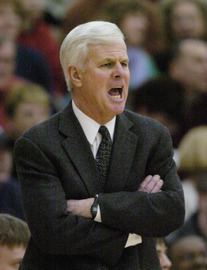
Ed Molitor, Sr. has 42 years of experience as an educator, coach and motivator. A firm believer that life and athletics is a “Frame of Mind Game”, Ed has presented to hundreds of coaches and student-athletes at clinics and sports camps throughout the Midwest. He also taught graduate classes to teachers and coaches on such topics as peak performance, leadership, team building, sports motivation and mental strength training. Inducted into the I.B.C.A. Hall Of Fame in 1997, Ed also serves on the All-State selection committee. A consummate motivator, he has developed a unique plan for athletes of all ages to reach their potential. When applied, his insights into motivation and thought management will certainly make a difference in a person’s life. He has helped a countless number of athletes learn to balance the stress of competition and the other areas of their lives. They are able to transfer what they have learned into a life of self-discipline, self-control, self-confidence and peak performance.
Welcome to the Athletics of Business, a podcast about how the traits and behaviors of elite athletes and remarkable business leaders frequently intersect. The real stories and hard lessons to help you level up your leadership and performance. Welcome back to another episode of the Athletics in Business podcast. Ed Molitor, senior my dad. And if you've listened to the podcast over the course of the last year and a half, you have heard myself, not only myself, but several guests, reference the significant impact my dad has had and continues to have on others. Now, he coached high school basketball. He's a very successful high school basketball coach for 42 years, as well as an amazing educator. Won over 500 games. He's in the IBCA, the only basketball coaches association hall of Fame.
But I will bet you that he is more well known and more well respected for the impact he had on his players, both on and off the court, and shaping their thought process, their mindset, their ability to pursue goals with self discipline, self confidence, self control, than he is for any win he had, for any championship that he won. Now, I'm not gonna sit here and talk about all the amazing things that he's done, because this is just the first of many conversations. This is going to be something that we do monthly. There's so much there. And I was blessed to grow up in locker rooms.
I spent my entire childhood in gyms and locker rooms, listening to him talk, listening to him teach, watching the players struggle, watching them come together collectively and have a singleness of purpose and the highs and the lows, right? And I lived that with them every year. And two things really stuck with me, that he talked to his teams about time and again, whether they were going through adversity or they were realizing great success. And that was this. He would say, fellas, you got to remember, basketball is a frame of mind game. And then he talked about how athletics are a microcosm of life. And that is at the very core of the athletics of business brand. And into this initial conversation, we're going to talk about his journey and how it helped shape him and shape his philosophy.
And speaking of philosophy, he will talk about how your philosophy could evolve. It will evolve. The game changes. Just like in the business world, the industry changes, the market changes. But his coaching philosophy, how it evolved, he refused. Non negotiable core values cannot and did not change. Okay. And he'll jump into, you love this, the difference between expectation of effort and the expectation of accomplishment. And sometimes we lose sight of what we're really trying to focus on. One thing that he always told me, and I still tell myself this really on a daily basis, through the grind of building this business into what our vision is. And that's don't let what you can't do get in the way of what you can do. And one of the questions he always asked his players, his teams, is, how bad do you want to be good?
How bad do you want to be great? And we talk about choices on this podcast often, right? How success is a choice and how important it is for you to have a clearly laid out definition of success for yourself. And he'll share his with us. And I'm gonna tell you what, when he does, you want a pen and paper handy? Because it is phenomenal.
And as we wrap up the podcast, towards the end, we talk about his commitment to continual growth, continual learning with his growth mindset, and how learning is a lifelong experience, and how to this day, okay, after he's been done coaching on the court for many years, he still pays attention to what he feeds his mind on a daily basis and why it is so significant for you as a leader, okay, whether it is in your business world, whether you are coaching, even if you're not in the coaching career, if you're coaching your children just for your family and for your own good, how significant is to pay attention and being intentional about what you're feeding your mind on a daily basis? Now I'm gonna stop talking. I'm gonna turn it over to this conversation.
And again, this is the first of many great conversations that we are going to share with you. So enjoy. Take notes. And I would love some feedback. You can send that to me at Ed at the molitor group.com dot. That's Ed at the enjoy, coach. Thank you so much for joining us today on the Athletics of business podcast. This is something that we have talked about for quite a while. And without a doubt, this is the most excited I've been to jump into a podcast episode, a podcast interview. And I do want to mention that we're going to spread all the topics we like to cover across numerous podcasts. There's so many things we would like to capture. But again, I can't thank you enough for joining us today.
Well, Ed, it's my pleasure. Through the years, we've had many conversations about the game of basketball, how it relates to life, and discussed many times the great people the great players, the great coaches we've been able to meet and learn from. So I'm really looking forward to this.
So 42 years, let's just jump right into it. 42 years of coaching high school basketball, and there's a lot of people nowadays and great friends of ours that would shake their head at that because of all the different factors that go into it. But you were very intentional about making a positive impact on young men's lives, and you were just as concerned with their success. A matter of fact, you were more concerned with their success off the court than you were on the court. Can you take us through your journey back to your childhood, back to your high school days? When did you decide that you wanted to be a coach? And who are some of those folks that helped influence that decision?
Well, I think we really do have to go back to high school. Growing up, I loved baseball and football. I didn't really know anything about basketball. In fact, I never touched the basketball until maybe the summer after my 8th grade. And I didn't know anything about the game. I thought I was going to be a baseball player or a football player. When I got to high school, it was a brand new school. The only sport they had was basketball. So I tried out for the team. I made the team. I was the last player on the team. And the coach. We only had freshmen in the school at the time. The coach was a former marine who coached us that way. And the lower you were on the list, the more difficult he made it for you.
But I made it through there, and I really picked up a sincere liking for the game. Going into sophomore year, I got cut from the sophomore team. I went home. It was very disappointing. And four or five really great things happened to me that year. Number one was my dad put up a basket on our garage which allowed me to go out to the driveway every day after school. If I had a couple buddies, we play one one, two on two. We could also squeeze in a three on three. But other than that, I would shoot and shoot during the week and then go in and do my homework on weekends. And the second thing that happened that I really feel fortunate was my dad came home one day with a magazine called Success Unlimited, written and produced by, edited by W. Clement Stone.
And it had a stories, a lot of many stories in there about people that overcome odds to be successful in their chosen field of endeavor. Third thing that I thought really helped me was I joined the boxing team. And those workouts really kept me in shape, probably better shape than I would have had, have been playing basketball and not playing a lot. The fourth thing that really impacted me was my grandfather, at 82 years of age, took me down to the firehouse where my dad worked and taught me how to play four wall handball. And that was a game that I played for over, gosh, 40 years and had a lot of fun and good times doing it. But the last thing that was the cream on the top was that they hired a new basketball coach.
After my sophomore year, the band coached in the Chicago Catholic League. He played in the Chicago Catholic League in high school. He played at Notre Dame University and then played in the NBA. And he came to a school assembly and they introduced him, and he said that all spots are open. We're looking for tough, competitive people that will work hard and are good students and will represent our school and our program not only on the floor, but off the court as well. And those five things, I think, really got me thinking about loving basketball a whole lot more after that. That summer, I played as much as I could. I shot as much as I could. I come to school a junior year, and the coach was my PE teacher as well as my history teacher.
And so he saw me 2 hours a day and kind of got to know what kind of person I was, what kind of student I was, how serious I was about learning. But the first day of tryouts, I broke my foot. So another setback. I went home. I had a walk home from school, by the way, in my book, my bag, about a mile.
That explains a lot. And you know what I'm alluding to.
Yeah. My dad said, you know, you got to stay off it for a couple of weeks. And I begged him to take me to the emergency room, figuring that it's just a sprain and they'll ice it and I'll be back playing in a day or two. Well, after the x ray, it showed that I had broken bone on my foot and I was going to be out six weeks. Another setback. I go to school the next day, and I explain it to the coach, and he said, you come to practice. He said, I know what kind of person you are. I know how you competed in PE class, and we have a spot for you. I didn't know what he was going to put me through, though.
I thought I was just going to sit and watch practice and maybe take some notes and help out here and there. If we practice for an hour and a half, he had me doing exercises for an hour and a half. I couldn't wait to get back on the court, and. But that was my introduction, really, to high school basketball as I played under coach Nomera for two years. He talked to us a lot about values, about life lessons, about being good people, being competitors on the court, but also being good people off the court, representing our program and our school and the community with dignity and respect. It resonated with me because he sounded just like my dad would be talking to me. So he definitely had a tremendous impact on my early life, and that's really how I fell in love with it.
And as I went along in college, I decided that after watching the game with my dad in high school, it was the third place game between the Chicago Public League and the Chicago Catholic League. DePaul Academy won the game. They interviewed both coaches, both tremendous coaches. Bill Gleeson from DePaul Academy and Jim Brown from dusable, both icons in high school basketball in Chicago. But I told my dad, I said, dad, here's a man that's coaching high school basketball. At the time, I think he and his wife, Adrian, had eight children. They ended up having 15. And I liked what he said. I liked the style of ball they played. They played well as a team. They played defense. They hustled. They did all the little things.
And I said, dad, I'm going to coach high school basketball, and I'm going to teach biology, and I'm going to do that at DePaul Academy. And as it turned out, when I was getting close to graduating or finishing my work, I sent a letter to the Chicago Catholic school board, and I got three invitations to come and interview. One was DePaul Academy, one was Leo, and one was Mendel. I didn't call Leo, and I didn't call Mendel. I called DePaul Academy, had an interview on a Saturday morning, early Saturday morning, and the principal had a contract. I looked at the contract, and all I could see was biology teacher slash basketball coach.
And I'm not sure I knew how much money I was going to make or what the benefits were, but I signed the contract right on the spot, and that's how it all started.
Now, let's. Let's back up a little bit, though, because when you went to college originally, what was your major? What was your intent when you first went to college?
Well, you know, it's funny you asked that question, and we've shared this many times. I wanted to be a doctor early, and another person had an influence and impact on my life because of that, or due to that, I should say, was a biology teacher who I really fell in love with biology and in particular the human body, the physiology of it, the anatomy of it, the kinesiology of it. So I decided that I'm going to try pre med and maybe I could be an orthopedic surgeon and hook on with some athletic team, maybe the college level, the professional level, or even the high school level, and I could stay involved in sports that way because I knew my playing career wasn't going to be very much longer. But I love sports, and in particular now I really had a passion for basketball.
And then were home. I was home on spring break. I was sitting with my dad watching this game, and it just clicked. I decided that, no, I don't want to be. I don't want to stay in pre med. I switched my major to biology with a minor in chemistry and psych. And it was an easy transition because I was taking the same courses for pre med and I wanted to coach basketball. And then that's what happened. I transferred to Roosevelt University and this great school I graduated from. The coach there offered me a job coaching the 7th grade team for two and a half years, and I did that. And that's when it really all resonated with me that this is what you're going to do.
And, you know, I can't believe I've never asked you this question in all our conversations. Dad, I've never. I've never ever asked you this question. Was there any connection, and I asked because of the similarities between their philosophies, their styles, and the way they carried themselves and did things, was there any connection between coach DeMera and Coach Gleason?
Well, yeah, John Demera was a great high school basketball player. I mean, he has to be pretty darn good to go to Notre Dame and play there and then play in the NBA. But John Demera was a coach at Webber High School when coach Fleece had met him, and they became very good friends and obviously shared philosophies. The style of play was similar. Offensively, the discipline was similar, the expectations were similar, the defensive philosophy was different, but that's pretty much the only difference. Okay, you know what you were getting with Coach Namara, and to contrast his leadership style with the coach we had my freshman year and then the coach that took over the sophomore year, they didn't have the passion or the understanding of being a leader. And John, the mirror, I mean, had a very strong self image.
He knew who he was, he knew what he wanted to get done and he went about and did it.
How much did that influence you? And how much of an impact did that have on you when you later would develop? Your whole mindset wrapped around what type of coach you wanted to be, what type of impact you wanted to have on the kids, the way you were going to go about doing things. How much of an impact did coach Demera's style have on you?
It did. You know he was a man that you would run through a wall for. He gave me an opportunity to play when he could have said, you know, Ed, I'm sorry. You're going to be out six weeks. You're going to be too far behind everybody else. You know, maybe next year. But he saw something in me or saw something. Maybe that's just the way he was brought up. Maybe that was his coaching philosophy. Give the guy a chance, see what he can do. And I'm not sure the other two coaches would have done that, to be honest with you. And I always believed. And then coach Gleason, too. Bill always said, keep as many kids as you can in your program. They need that discipline, they need that direction, they need that inspiration.
And that's what I always try to do, is as many uniforms as we had, we would try to keep that many players.
Coach Gleeson, you get to DePaul and talk about the different type of kids that you coached at DePaul. I mean, obviously a Lincoln park school, but all sorts of backgrounds, all sorts of different circumstances. But talk about those years you spent with him and how that influenced your coaching style.
Well, first of all, being in the Chicago Catholic League and being with coach Gleeson, he introduced me to so many coaches, so many officials, high school coaches that were legends, good people, college coaches, Ray Meyer, Al McGuire, Hank Raymonds, Donier from Dayton. I met all these guys through glees, and they were very kind to a young guy like myself to bake me into their circle and share ideas with. With you, philosophies with you, drills with you. I was fortunate being at DePaul Academy for two years. That right across the street was DePaul University, right across the parking lot. Actually, at least two times a week, I was able to have lunch with Ray Meyer and his staff in a little italian restaurant across from the high school. And think about it.
I'm 21 years old, and these guys are on top of the world in their game, and they're letting me sit down with them and pick their brain. I mean, and that really started me thinking about, you know, my coaching philosophy.
So what was that like? You go and sit and talk to these icons, and you're 21 years old. I mean, would you go there prepared? Would you have questions in your head? Would you bring. I mean, how was it? I mean, obviously, growing up, you know, the salt and pepper shakers as the offensive and defensive players, right?
Well, you know, I think part of the thing. Joe Meyer, Ray's second son, was a senior at DePaul Academy, and his youngest son was a freshman. And coach Meyer knew that the next year I was going to have Bobby in biology class. So maybe I better be nice to this guy. I don't. I don't know, but, you know, it. I would just sit and listen, you know, I would listen to their conversations. I mean, think about it. I was a big Loyola fan growing up, obviously, because they won the national championship in 63, but we used to go down in the stadium a lot, and Loyola was always playing in a double header or a triple header, but not DePaul. And I never understood why, but two different philosophies, DePaul versus Loyola.
So I would just go there, and if they asked me to come over and join them, sometimes they wouldn't, because obviously they're talking about maybe recruits or maybe, situations that happened, issues that came up that they don't want anybody else to overhear. But I would just sit and listen, and then maybe, you know, I obviously would make mental notes and ask a question or two. And then I got to meet the trainer at DePaul, Tom and 40, who was a wonderful guy, used to train with the Bulls, and then Mike and 40, who you met down at Oak Street beach, riding on his motorcycle, he was a handball player. So we used to play handball a couple days a week down at alumni hall.
And so I got to know a lot of those people and saw how they dealt with other people, and they were very respectful. They were very organized, very disciplined in their approach to practice, and they were great people.
So let's talk a little bit about your time at DePaul and what you guys were able to accomplish there in your two years. And really, when you walked away from there, what were two or three things that you took away from Gleese in the way he ran his program and your accomplishments there.
I think the number one thing is your practices need to be organized, crisp, moving. You have to have skill development. And I learned that skills are different than fundamentals. Dribbling a basketball doesn't become a certain way. Change the direction, you know, behind the back, between the legs, crossover world. Dribble really doesn't become a fundamental until you know how to use it and when to use it, if you think about it. So there was a difference when a skill becomes a fundamentalist, because the, why is there not just what you're doing, but why are you doing it? You know, why are you doing in this situation? And that was the one thing I saw, the work ethic that Bill expected from his teams. I saw how hard they worked.
I saw that he talked to them before every practice, and he sat them down on the stage. We used to practice in what they call the barn, which was DePaul's original gym, and they had a stage there. And the players would sit on the stage and bill would critique practice and talk to them. It was really interesting. And the other thing was the preparation, the game preparation. I mean, he knew what the other team was going to do. His players were well prepared to compete, and the scouting report was unbelievable. And Bill asked me to scout, and I love scouting and then meeting with him and at Kelly's and going over to scouting report with him, and you learn so much just by doing that.
By the way, Kelly's a fine north side establishment. What were some of, oh, that's right. It was one of the best, many good stories. Remember, what are some of your better memories in terms of games, you know, takeaways from the poll?
Well, I remember were playing Weber high school, and my first year there, even though I was a lower level coach, obviously went to every game and critiqued from the stands. That's, that's what Gleese wanted me to do. We had a very, very good team. We ended up winning the city championship. We ended up going out to DC and playing the math in the catholic tournament out there. But I never forget one game were playing at Webber. We trailed the whole game. Trailed the whole game. Finally took the lead only to foul with about 5 seconds to play up to the player, made both free throws. Now we're tied. Police calls the timeout, and he tells the player they're not picking us up full court, meeting us at half court.
Roll the ball and let it go as far as you can go on the inbound pass. And then told the player to pick it up and call another timeout. So now we're down to about the clock. Don't start till he picks it up. So now we're down about 4 seconds. When he picked it up just at mid court, called a timeout, Bill set up a play. Now we got a sophomore in the game who didn't play a whole lot, only to come in when our senior center fall out. And they threw him a lob pass. He turned around, took a little jump hook at the buzzer. We went. And I was jacked. I was so excited, I couldn't believe it. I couldn't believe it. And then I got to the locker room so excited. And Bill was so disappointed in the way they played.
He told him, you're better than that. And you played down to this team's level. And that's no discredit to that team. Because they were a young team. And they were ready to pull off an upset against a very good team.
Right?
Then when we played in the Catholic League championship against Mount Carmel. And Mount Carmel had won it the year prior. And they had pretty good players back. They had a point guard and went to Wisconsin. Well, not to Wisconsin, I think to Marquette. Then they had Bob Frazier, senior that played at Wisconsin. And they had a big kid in the middle. And we ended up beating them by four. Which gave us the right to play the public league champ in the city championship game. And we played down at the old amphitheater. And ended up winning that by four as well.
Let's put that in perspective for a second. How many people were at that game at the amphitheater?
Well, actually, it was a difficult time, okay. Because there was. That was the era of civil unrest. And so they limited the spectators to just schools, okay? They really didn't have a lot of outside spectators. Now, typically, when the catholic league and the public league played at Chicago Stadium. They would fill Chicago Stadium. 18 to 20,000 people. That was amazing. Then we go out to DC and play in the catholic tournament. And it's an 18 tournament. And we end up playing Damata High school with Austin Carr. Wow. I'll give that some thought. Austin Carr, who I think he might still hold the NCAA tournament record for most points in a game. But that was an outstanding experience. And watching Morgan Wooten, who was young at the time, obviously. And Bill Gleeson, who was young at the time, going head to head.
It was like a chess game. It really was so many opportunities to learn. Then we used to have the catholic league tournament at alumni hall. Every year for Christmas tournament. And then they had the public league tournament there. And I'm watching Dusable play. And still coached by Jim Brown. It's my first year at DePaul. And Desabo is up one, okay. Against Marshall. Marshall comes down, runs a play, gets it inside. Kid gets fouled. Makes both free throws without blinking an eye. DeSavo player took the ball out of bounds through a half court to maybe a little bit further than a half court pass. The guard, Ricky Green from DuSable, caught the ball without even dribbling, caught it, went right up and shot about a 35 footer at the buzzer, won the game.
So afterwards, we're in the hospitality room, and I'm talking to coach Brown. I introduced myself and I said, I really liked the way your kids played and battled and on. Came back and won. I said, but tell me about that play at the end. He said, coach, it's been my experience that when a team takes the lead and with seconds to play, they let their guard down, they think the game is over, and they kind of celebrate a little bit. If they're not doing it physically, they're certainly doing it mentally. And I've always told our guys, and we work on this, that we're going to get the ball right out of the net, whether it's a free throw or basket. We're going to outlet it to this particular player and see what happens. That stuck in my mind.
That's what we did in Antioch in the super sectional, and we missed the layup at the buzzer. That's the kind of people that I was able to learn from. I mean, they were willing to share their philosophy, their ideas, what they knew, and always willing to help.
Well, and, you know, you said something, and I really want touch on it because this is something that has shaped me the way I was raised. Civil unrest.
Right.
And we're going through something right now. We're going through a very challenging time as a country. Challenging time.
Right.
DePaul wasn't, it wasn't just all rainbows and unicorns. I mean, you had some guys with really tough backgrounds. That it was just for them to get to school was a challenge. And, you know, here we are now in 2020. We really need touch on that. Can you talk a little bit about what you learned and the type of things your kids there had to go through, the neighborhoods they came from, you know, the trains they had to take, the buses they had to take, and all that stuff?
Well, you know, what people have to understand is, and it's different now in the catholic schools, there's more boundaries than applied. But back then, a student could go to a catholic school from any part of the city or any suburb, provided they can get there. Some of our kids had to take two and three buses and in the process, stand on some street corners in pretty rough neighborhoods. You know, one boy in particular, we had to pick them up in the morning because he wasn't going to the city's public school. He wanted to go to DePaul Academy, and he would have to get through the gangs that were waiting for him every morning. So we had a coach or a teacher pick him up every day, and we rotated that just to be sure that he got to school.
These were tough city kids that were street smart, wanted a good education, and wanted to pursue their basketball dreams.
And we should touch on what years you were at DePaul because that would really put it into context.
I was at DePaul Academy from 1966 to 1968.
That's when things were really heating up in the city, was it not?
They were heating up. And, you know, it's a shame that we're still going through this, still. But the kids, I can honestly tell you the other thing that happened. And, you know, Dave, the football coach from Conant, he sent you a couple of photos from Nepal Academy my first year there. The year prior to that, they dropped football because they couldn't afford it. And now these kids, they have nothing. They were football players that were students. Now they have to make a choice. Do I stay in school and not play football, or do I transfer to another school, which they could have, and play football for that team. And some opted to stay and some chose to leave. But these kids, I mean, they were resilient. They were resilient. They walked with a spring in their step. They were respectful.
And I think that had a lot to do with the atmosphere around the school and the expectations of the faculty and the coaches and the administration. It was a good place for me to be and see Gene Sullivan. Gene Sullivan left Loyola Academy, was an assistant at Notre Dame University for several years. You know, Gene Sullivan was the athletic director at DePaul University. He became the basketball coach, as you know, at Loyola University. And there's numbers of guys like him in all sports that I was able to meet and get to know and learn from.
So let's talk about, you mentioned coach Sullivan. I was going to bring him up later on, if not this episode, another one, you know, the whole mental aspect of basketball. But let's talk about your values, right? And your philosophy and what ended up being a result of all these experiences that you had.
When I left DePaul, when DePaul Academy closed, because the university needed the classrooms for offices and administration areas, I was fortunate enough to get hired at Marist high school as a sophomore coach. And the talent level was like night and day. The street smarts were night and day. When I say street smarts, I don't mean these kids were bad kids. They grew up seeing a lot. You know, at Marist, we had several kids from the suburbs, and they weren't as street smart, they weren't as competitive. And I saw some really competitive players, intelligent players, and I thought, well, why can't we do that here? But when I got the head position a year later, I instilled some of my values. Honesty, honest effort. Honest, in your words, integrity. Do what you say you're going to do. Resilience, discipline, commitment, caring, things like that.
It was a challenge to accomplish that, but we did it.
I'm just taking some notes here. I'm thinking 42 years, when you got into it, you had a certain belief system, a certain mindset. You say the word resilience and that had to be a huge component of your makeup, right. And over the course of years, as things change, as players change, as situations change, as the game changed, how important was it for you to keep going back to your foundational beliefs and your foundational core values of coaching and why you were doing it?
When you look at the word coaching or coach, how many other titles could you give that person? Teacher, counselor, decision maker, problem solver, parenting leader, you know, and I think you're forced with so many different scenarios when you're dealing with teenagers, many outside influences that all want a piece of these kids and are all telling them they should be doing this or they should be doing that, and, you know, you're not good enough, you're not this enough. And it's a challenge to convince them to stay the course. And I think that it all goes back to your philosophy. You have to have a philosophy that stands the test of time. And that philosophy, I think, is every. It's evolving, it's going to change, but the core values are there. You may change how you coach a kid, how you teach them.
I always felt that you treat everybody the same way with respect and dignity and try to understand what they're going through. But I don't think you can coach everyone the same way because players are different, personalities are different, their skills are different, their experiences are different. So I don't think you coach everyone, but I think you treat them all the same. I think that's what I always feel back at what's best for this kid right now. What's best for our team right now.
Yeah, you said something just now that was very, it was huge. You treat them all the same, but you coach each kid differently. Can you talk into that a little bit more.
Yeah, I think when I say coach, your expectations of accomplishment are going to differ from player to player, not your expectations of effort. And I think when you talk about effort, you have to consider the physical part of it, the mental part of it, and the cognitive part of it. You know, basketball is a cerebral game. You can't expect, say, move a sophomore up to the varsity. He may be skilled enough to play there, he may be big enough to play there, but is he smart enough? And I think you got to coach that player little bit different, maybe be a little bit more patient with that player as opposed to a senior that's been there for two or three years for you.
You know, and I think I found through the years, and this is talking to coaches like Mageris, Rick Mageris and Gleese and Tom, answer, big kids, it takes them longer to come around than it does the shorter, quicker, more athletic players. And I think you got to be more patient with that player.
And when you're more patient, when you've identified that and you need to be more patient with that player, how do you get them to be more patient with themselves?
Well, that's a great question. It's hard, you know. As you know, patience is a virtue, especially when it comes to athletic improvement. One of the biggest reasons for a person's inferiority complex in athletics or negative self image, if you will, is they compare themselves to other players. So if you're a player that's not as good as several other players, you can't let what you can't do interfere with what you can do. That's the challenge, to convince that player this is a work in progress. It's going to take time. And all I can do is share stories of guys that I've known, some coached, I've coached, some played against, some read about, some heard about that, matured late and became a very good player, but not right now. It took time, and patience is something that's a value. That's got to be a core value.
You have to be patient.
And you just said something, don't let what you can't do get in the way of what you can do. And, you know, we're so focused now on getting players to really build on their strengths, right? I mean, even back in the old days, it was, hey, if you don't have a left hand, that's all you need to work on, right? Just get in the gym and work on your left hand. Nowadays, it's like, okay, let's build on our strengths. Let's shore up our weaknesses. But what if someone really believes, you know, I got a shot at being pretty good. I'm just not doing it really well right now. I've got a shot at pretty good.
Can you talk about how significant it is for them to stay focused on the things that they can do while not giving up on other aspects of, you know, what they do?
Players need to know, and this comes from the coach needs to know, their strengths and their weaknesses. Coaches, for the most part, are professional people that care about their kids and want them to have a good experience in athletics. I think players want two things out of sports. They want it to be fun, not horseplay fun, but they want to enjoy their experience, which is fine. And also, I really think the serious, sincere athlete wants to play to their potential. You know, I would ask a kid, how bad do you want to be good at what it is you're doing? And they tell you, and I'd say, well, where do you see yourself now and then? Where do you see yourself? Where do you want to be? And then what are you going to do to make up the difference?
And really, success is a choice. But success is not just being the best player. Success is not just being the leading scorer or the fastest runner. I convinced most of our guys that success is a choice and that an accumulation of predetermined, personal, worthwhile goals. And you can be successful. You set goals and develop a plan of action to achieve those goals and work to plan. And when you do get those goals, you're a success. But you have to build on those successes. The success you have in one area of your life, you have to carry over to other areas of your life.
Absolutely love that. Can you go back to your definition of success after? Success is a choice. It is an accumulation.
Success is a progressive accumulation or realization of predetermined, personal, worthwhile goals. You need to think about it. That's pretty powerful statement. It's progressive. It's not just, okay, I scored ten points, so I'm a success. No, you know, life is a journey, athletic life, basketball life is a journey. It's not over in one night unless you get seriously injured. So if you're progressively realizing goals that you have predetermined and you have set yourself and they're personal, it's not your mom telling your dad telling you, or your math teacher telling you, or your buddies telling you, and they're worthwhile if you do that, and if you have a plan for accomplishing those things, then you're successful. And that's why towards, you know, the latter, probably half or third of my career, things were changing.
Kids wanted things a lot easier, and they didn't understand why it wasn't happening to them as fast as it did turning on a computer or cell phone or whatever. So I started having them bring three goals to practice, and two of them could be physical goals, like, I want to get five loose balls today or I want to get five rebounds when they knew the drills were going to do. And those are physical goals, number goals. But one had to be an attitude goal, and that's the big thing. When I came to Merristad, their attitude, and they were good kids, but their attitude was non productive. And I don't like to use the term negative because then that's a connotation that they're bad kids. They weren't bad kids. They just. They were not productive. They needed to change their thinking.
So I decided that we're going to have an attitude goal, and it may run the gamut from, I accept full responsibility for my actions today. I'm going to be enthusiastic the entire practice. I going to give 100%, things like that. And what I would try to do is I would collect these goals at the start of practice. And while they were doing their stretching warm up, I would walk around and I greet them. And then I. The back of my mind, I tried to put kids that I thought were struggling a little bit in situations where they had an opportunity to accomplish one or all three of those goals. And what we're trying to do is strengthen their mindset, and in the same.
Time, you're also putting them in position to possibly fail, but yet learn from that failure and respond from that.
Oh, exactly. I mean, then it's their choice, right. You know, then you got the moment of truth. Okay. Oh, my God. I'm in this drill. And, you know, it's funny because then you have to watch a player's behavior and is it incongruent? Is it congruent or incongruent with what they just said or what they just wrote? A kid says, I want to get x number of rebounds in this particular drill, and he's not working at it well, you know that he's just paying you lip service.
I was, and I was just going to say that as a congruent or incongruent with what you're trying to accomplish as not just a team, but as a program.
Right.
You know, can we go back to some. You just said something that's huge. I mean, I know I've said it a few times now, but the negative attitude versus a non productive attitude, because I think that gets confused a lot.
Right?
Like when people see someone struggling in the business world, like, God, you know, they're just. Something's wrong with them. No, what is it? It doesn't mean they're negative. It doesn't mean they're negative because they're becoming frustrated or might get down in themselves or, you know. Can you talk a little more into that between. About negative versus non productive and what, how you can handle both?
Well, positive attitude or negative attitude? Negative. There's a connotation to that in some people's eyes and minds. That's a bad person. Maybe they don't know how to change. And that's why I felt it was so important for coaches at the high school level to give them a vehicle to change their thinking and give them skills so that can carry over into other areas of their life. I just think that the players have to feed their mind on a daily basis. When I went to Marist, one of the first things we had to do was change the attitude. We had to change their self image the way they saw themselves. They were beaten down by the previous staff. They didn't have any success and they didn't have any. They really didn't have any respect.
So went about changing your self image and trying to stay as positive as we could, as optimistic as we could, as energetic and enthusiastic and honest with them and organize with them and try to develop a respect and trust, which I think we accomplished the first year, and then we kind of snowball from there. But I think the big thing is that if people, and that's why what my dad did for me my sophomore year was bring that magazine home. It opened up my eyes of what you can do. If you have dreams and you're willing to pursue those dreams with a passion and a strong work ethic, you know, you can accomplish things that perhaps four or five, six months ago you didn't think you were even capable of it.
But you said something in terms of, and I was going to segue into that, the difference between motivating someone and inspiring someone, because that's one of the things, one of the many things I had so much respect that you did. It wasn't just about getting people to do things that they didn't want to do. And you just said this, it was about getting them to do things that they may not have thought they were capable of doing.
Right? I heard a long time ago, a good leader inspires people to believe in the leader. A great leader inspires people to believe in themselves. I used to kid around a lot, and I would say, you know that guy over there on the other team that shot the ball well tonight? He didn't come into this world shooting basketball. He spent time at that. He worked at that. He spent a lot of time at that, and that's why he's such a good shooter. But I just think that you have to believe in yourself. So we try to get these people to believe in themselves, that they were capable of doing. They were capable, but we didn't set the goals high.
The vision for the team at Marist was that the one vision was, we want to play together, we want to be a fundamentally sound team as well as we can, and the length of time we're going to be together. Because there were no off season programs for these kids back then in the state association. You couldn't do anything in the summer, organized no camps, nothing. So were weak fundamentally. We were weak mentally, were weak physically, and we had to change all that. And that's the culture that we brought in there. And I think you need a growth mindset. Getting back to motivation versus inspiration that I read a while ago, that you can't motivate other people. When you think about the word motivation, that's motive in action. So if you don't have a motive, it's going to be hard for me to motivate you.
But I can inspire you by sharing stories with you of other successful people, other successful failures, people that fell down many times but picked themselves up and kept going, you know? And I think that's the big thing you can inspire. And just because you tell a story doesn't mean you're going to inspire them. But I think we have to encourage people to feed their mind on a daily basis. One of the things I asked our players all the time was, how much do you think you spend on food a day? And they look at me, what do you talk about? I said, well, you have breakfast, you have lunch, you probably have a snack somewhere between breakfast and lunch or after. Then you have dinner and kids say $15, whatever the price was.
And I said, okay, how much do you spend feeding your mind on a daily basis? And they said, well, what are you talking about? And I said, well, your body is a machine and your mind is its driver. Now, if you were a millionaire and you paid several hundred thousand dollars for a race car to get in the NASCAR circuit. I said, would you have Joe schmo drive your car? Oh, no. I'd have the best race car available. Well, your mind is the driver of your race car. What are you doing to nourish it, you know, and I think you got to keep after them. Any little incident where you can relate that to success, I think, eventually sinks in.
You know, when you talk about the motivation versus, you know, inspiring. Right. Motivating them versus inspiring when you inspire them, I think you get more emotional attachment, right. Because you can't motivate others because they don't have a motive. But when you inspire them and you get that emotional attachment. And one of the things you mentioned about coach Demera earlier in the conversation was you'd run through a wall for the man, and that's what many of your players mean to this day. You know, we have, the golf outing last year is, I would do anything for your dad. I would run through a wall form. Right. I take a bullet form. And that's because you got that buy in, because it had some sort of meaning in their life, whether or not they were getting playing time or not.
How significant was that to you to get to that point?
Well, it means a lot to hear that comments from those guys or through you and others, but it means that I chose the right career, and I went about doing it the right way. It wasn't just the wins and losses. It wasn't just that. It was, you know, you could have a lot of wins and losses and have. Have not have a lot of fun, but I think we had a lot of fun because there was other things that were interested in other than just games, which was a big thing, obviously. And there's no way we wanted to lose any games. We wanted to win them all, and that's not going to happen. But there has to be more to it than that. And honestly, to the day he died, I thought of John Namara many, many times.
I was alongside him, and he was in the IBCA hall of fame three times. He was in there as a player and there as a coach and in there as a friend of basketball when he got out of coaching, when he was introduced or inducted as a coach, I presented him with the plaque. It was a thrill for me. It was an honor for me.
And, you know, you think about the things that he did for you, getting you to believe in yourselves and things that you've done for so many players. But here's something I think people don't get about coaching and really? And we'll get to this point in our conversation, our future conversations, coaching in the business world, right. Because we know that people today want three things. They want to know that they're. They're valued, that the work they do is important and it has meaning. They want to be coached. But what I think, where leaders fall short, it might just be my opinion, but I believe it's a popular opinion, is when they think that coaching is just convenient. It's when it's convenient for them.
Right.
They don't understand that coaching truly is a 24/7 thing, because the great coaches, you're always there for your people. They know, based on the trust and relationship and love that you've developed amongst each other, whether it's in the athletic world, the business world, whatever. They know that they can pick up on the phone. They know they can shoot you a text. They know they can shoot you an email. And how significant was that for your players to know that you were always there for them for way more than just basketball?
Well, it's very significant, and that's what we're there for, and they have to understand that. And I think over the course of a year, a season or two seasons, or a player's career, they come to understand that you're a constant. You're not changing your philosophy just because of any added pressure or adverse publicity. I mean, your values are the same. You care about us. And it's not just a business coach where, or a business like leader in athletics where the only thing that matters are results. That's not the only thing that matters. I mean, we care about how you're doing.
It's transformational. Transformational, not transactional.
Right. I remember our good friend Mike m walking in the school for a game. It was an away game, and. And Mike was standing by the locker room all by himself, and it was dark. It was a. I think it was. Must have been a Saturday night. And. And I walked in, and I said, mike, how you doing? Not good, coach. Not good. I said, what's the matter? He said, well, we got our report cards. Today was at the semester. I said, that's great. I said, how'd you do? He said, well, my dad's a little disappointed because I got one b. You got a b? On the mic's probably straight a steward, right?
Right.
And I said, sounds like kindergarten, right. I said, mike, you got to love your dad. He cares about the best for you. And I said, but when you go home tonight after the game, tell him that coach Molitor said whenever he got to be in school, his father threw a party for him. That light Mike up. You know, I felt for him. You know, I cared and I felt for him, and I think that's what it's about. I mean, you think of all the guys that you know, and you. You've been around a lot of outstanding coaches. Many, many of them are great people. They're great people persons. It's about relationships. I got coach ansted, Coach Sully, you know, Gleeson, all those guys, you know, rick Mageris.
I mean, he's in the NBA with the Milwaukee Bucks, and he comes to camp up there at, I think it was Carroll College, and he's bringing doc Rivers to do a demonstration, and he sits down with me and he shows me the Milwaukee Bucks playbooks, their playbooks on the road conduct, their travel conduct or out of bounds plays. I mean, he didn't have to do that. He's big time coach.
No. Was your jaw bruised from hitting the floor? Because I know you love that stuff, and that's really. It's funny because that's how I was going to wrap this up a little bit so we can lean into this next time. But one of the things you had it figured out at an early age, what it took, and you studied the game, you studied people, you invested in relationships, you invested in yourself. Over the course of 42 years, the game and people changed a lot. And I used to sit and watch you, no matter who was speaking, whether it was at the Milwaukee Bucks camps, the medalist camps. If you were hanging out at the Nike clinic, you were always taking notes, you were always asking questions.
Can you talk about here for a few minutes how important it is to continually invest in your personal growth professionally?
Well, I think learning, you know, is a lifelong experience. I was always looking for something that I could bring back to our program and help our players with, be it a thought, an idea, philosophy, a joke, a story, anything like that. And I just think that if you stopped learning your trade or stop learning your sport or how to teach your sport, how to. How to coach your people, then you really stopped living in that particular situation. I mean, you become stagnant. I just felt there's always something you can learn. I mean, we sat at the camps. I mean, how many camps we worked at, how many coaches, how many players. I still have boxes and boxes of notes that I took, and I don't think I'm the only one in that. I think we all did. And that's the circle of coaches.
That we knew, and that's why they were all successful and well thought of and highly regarded.
You know, you've said two things that really resonate in terms of things you would do for your players, things that you do for your staff.
Right.
So if you knew what their goals were, you try to put them in a position to be successful. Okay?
Correct.
Or learn from failing, you know, while trying to achieve those goals on a daily basis. And the other thing is you're always looking for something. You're very intentional, always bringing something back for your players and staff. And I've got to think you did that with their goals and their dreams and their vision in mind.
Oh, absolutely. I wanted to make them better, and I wanted to make our program better. I wanted to share with them the things that I learned, that maybe they can fit into their game or their mindset. And I think that's how you learn. Even if a non coach came to school and did an assembly or some type of presentation, I would take notes. If I thought there was something that would benefit us, I would jot down what that person was saying and use it later on. One thing I learned from W. Clement Stone, getting back one last thing. One of the things I'm going to talk about was, I would love to meet W. Clement Stone. Now. I never, I had no idea how that was going to happen. I had no idea.
But in 1984, this was after I talked to, I came home from Lincoln, Nebraska, on a flight with Joe Newton. We talked about W. Clements Stone. And that was in the summer of 84. That particular fall, I was asked if I would be interested in attending the W. Clemens Stone foundation presentation of the 17 principles of success. So it was, we would meet one day a week, one night a week for about four or five weeks. Okay. It was very interesting. It talked about the 17 principles of success. The last night, who shows up the w. Cleving stone? I had no idea how I was ever going to meet that man.
Right.
Okay.
And what was that like?
Oh, it was amazing. In my mind, he was bigger than life, but in reality, he was probably about five foot four. But he had such a presence about him. And he was aging, and he had such a presence about him. He smoked a youth cigar, and he was very generous of his time and his conversations. And it was very insightful. But he said something that stuck with me. From that point on, whenever you're exchanging ideas or whenever you are listening, not just exchanging, but listening to somebody else's ideas, remember the formula r two a two recognize, relate, assimilate, and act upon it. So what that meant to me is recognize the idea, recognize theory, recognize the drill, recognize what the person is trying to convey to you, relate it to your situation. You know, how does it fit into what I'm doing?
How can it help me do what I'm doing better? Assimilate it. Break it down. Put it back in your own terms, your own ideas, your own words. However you want to break it down, assimilate it. Just like you would break down food and use it for energy. And then at some point in time, if it fits your situation, act upon it.
And I've never forgotten that.
R two. A two. Recognize, relate, assimilate, and act upon. And that's something. That's probably what I was doing for many years prior to that, but didn't know what I still.
Right.
I do. You know what I'm saying?
Yeah.
No, absolutely.
Yeah. That's phenomenal. Way, this has been awesome, and I'm looking forward to doing the next one. And like I said, we're gonna do this once a month, but that I. I appreciate it. We have so much more to talk about. We mentioned Gene Sullivan. We got it. You know, we need to get into culture. We need to get into mental toughness. We need to get, you know, what makes up a great teammate, and, you know, how you become invaluable without being most fed. And what else do we need to talk about? There's so much out there.
Everything. I think we'll just start with the outline you put out there and then go from there. I mean, this is. To me, it's a walk down memory lane for me. I mean, it really is. You know what? You were there for most of it.
I was. I was. But you know what the best part of it, dad? There's no losses, no referees, and no disgruntled parents. How about that?
Really? Yeah.
We're good. We're good. All right. Well, thank you.
I appreciate it. Give those kids a hug.
Thank you for listening to the athletics of business. Be sure to give us a rating and review so we know how we're doing. For more information about the show, visit theathleticsofbusiness.com. Now get out there.