

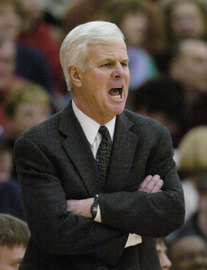
Ed Molitor, Sr. has 42 years of experience as an educator, coach and motivator. A firm believer that life and athletics is a “Frame of Mind Game”, Ed has presented to hundreds of coaches and student-athletes at clinics and sports camps throughout the Midwest. He also taught graduate classes to teachers and coaches on such topics as peak performance, leadership, team building, sports motivation and mental strength training. Inducted into the I.B.C.A. Hall Of Fame in 1997, Ed also serves on the All-State selection committee. A consummate motivator, he has developed a unique plan for athletes of all ages to reach their potential. When applied, his insights into motivation and thought management will certainly make a difference in a person’s life. He has helped a countless number of athletes learn to balance the stress of competition and the other areas of their lives. They are able to transfer what they have learned into a life of self-discipline, self-control, self-confidence and peak performance.
Welcome to the Athletics of Business, a podcast about how the traits and behaviors of elite athletes and remarkable business leaders frequently intersect. The real stories and hard lessons to help you level up your leadership and performance. Welcome back to another episode of the Athletics of Business podcast. I am your host and CEO of the Molitor group, Ed Molitor. And I am fired up for episode 104. Mind blowing that we are at episode 104. And today we are joined for the third time by coach Ed Molitor, senior. And mind you are the first guest to make their third appearance. We've had some fantastic guests. You first appeared at episode number 83. Then you joined on episode number 95 for the psychology of Coaching.
And today on episode number 104, we are going to talk about how you build a coaching philosophy and what that means and how you lean on that. Lean into that. So I couldn't be more excited to get started. How are we doing today?
We're doing well, and it's a pleasure to be on your show again and share some ideas about my philosophy, how it grew over the years, and where I drew my ideas from.
Well, it is so powerful. And here's what led me to. And we've had some great conversations wrapped around this over the years. And even recently, we know that today's workforce wants one of three things. They. They want to know that they're valued. They want to know that the work they do is important, and they want to be coached. And I don't mean be coached in the sense like rah, you know, just a pat on the back, paying lip service to it. We're talking transformational action. In other words, we look back in our lives, and a lot of people refer to somewhere along the lines, athletic coaches having a huge positive impact on their life. And I firmly believe in the business world, we have the exact same opportunity to impact the people on our team.
And I just think there's so much there to how you developed your philosophy, where you pulled it from, how you made it your own and you owned it, how it evolved over time. And there's just so much to talk about. So let's jump into it. I mean, how did you develop your coaching philosophy when you first got into high school coaching?
Well, the opportunity to be on your podcast gave me an opportunity to reflect on 42 years of teaching and coaching. And I really think your philosophy is a group of ideas, ideals, standards, thoughts that you live your life by. And as I look back on that, Ed, I've got to start as a youngster and watching my dad, as a lieutenant in the Chicago fire department, lead his men and how he treated them with respect and integrity. And then my uncle Bill, who was the president of the engineers union in Chicago, how he led. He was in charge of about 30 different men in his heating plant and the respect they had for him and vice versa, just how they dealt with those people. I think my dad introduced me to sports, mainly baseball and football.
He set the tone very early by playing catch with me, encouraging me, being positive, and then my grandfather teaching me how to play handball, same thing. And then that was intensified by when I got into high school and I played basketball and my coach was the same way. It was very patiently, enthusiastically taught the skills of the game, the strategy of the game. A very patient one coach for I don't know how many players, there's no assistance for him. Back then, my boxing coach was the same way. Okay. And so I think I started to develop a little bit of an idea about working hard, being competitive, being caring, being patient and things like that.
They were enthusiastic about working with young athletes, teaching them the skills of their craft, of their sport, and they did it patiently and enthusiastically and with a great deal of energy. And I think, really, that's where I started to get an idea that you have to think a certain way, you have to play a certain way, you have to conduct your behavior a certain way in order to get along in the athletic world. Then, lo and behold, I used to love to compete in sports. But the opportunity I had my junior and senior year.
Wait, hold on a second. Let's be very clear, okay? That's not past tense. You still love to compete in sports.
I do.
Okay. Yeah. Whether it's mexican rummy, golf, whatever it is, but go ahead.
I'm sorry, but you have to understand, that was the way were brought up, not forced upon us. But you learned it through observation, right? You saw your father's work ethic. You saw how he went to the firehouse, how he worked his side job as a tuck pointing business. So that work ethic was kind of ingrained in you. Not purposely. You just did it subconsciously. And then really a great thing that happened to me when I was in college and I made my decision that I wanted to get out of pre med. I had an opportunity to coach a grade school basketball team for two years. And that's when I really fell in love with teaching the game. And that became my. My, what do I want to do? Okay.
I didn't know why I wanted to do it other than the fact that I truly loved it and I love working with young athletes.
Well, and so you decide to get out of pre med, you go into coaching and teaching, and now you've got to figure out what type of coach you want to be, right? What you know, at some point in your career, you're going to be a head coach. And as an assistant, a young assistant, you are pretty intentional about surrounding yourself with some great men and picking the brains and picking the minds of some great coaches and not just great coaches and great men, but great leaders.
Can you talk about how you were able to extrapolate, if you will, their philosophy and their set of values and their, you know, ideas in terms of whether it be the players on your team, your practice plans, your offense, your defense, whatever philosophy, whatever area of your philosophy when you picked and pull from different folks, how you're able to develop that, create it, cultivate it, make it your own.
Like I've said before, and you know this very well, I was fortunate in my first job to be at DePaul Academy for several reasons, but number one was the head coach. Bill Gleason was very well respected, an excellent coach, an excellent people person. And then I had the opportunity, because the school was on the same campus as DePaul University to spend time with Ray Meyer and his staff, and they were more than willing to take you under their wing, so to speak, and share with you ideas on what their offensive philosophy is, ideas on what their defensive philosophy is. And you kind of absorb all that and you start getting an idea of how you want your team to play.
And I was a coach of the sophomore team, and Gliese pretty much let me do what I wanted to do at practicing that didn't really care if we ran their offense, wanted us to play man to man. And so that was ingrained in me. And then I just started talking to the coaches in the catholic league, some great coaches, Gene Sullivan, obviously, Bill Gleeson, Gordy Gillespie. I mean, these guys are icons in the coaching world, and they were more than willing to answer questions, to let you watch the practices, to share their philosophical ideas with you on certain things that you're interested in.
Was it ever hard? This question has popped in my mind, but as you sit there and you talk to all these greats and there's something that they do that you don't know if you really buy into. Like, you don't know if that's what's best for you as a coach. Like, it just might not be the way you want to do things. Was that hard for you to say no to that, so to speak. Like, okay, I'm not going to implement that in my program. It's great. I respect them. I admire them. I'm not saying it's wrong, but it's not for my philosophy. It's not for me.
Yes and no. I think if were going to play against that particular coach, I wanted to learn everything he wanted to share with me so I could put it in the back of my head and have a better idea of how to prepare to play and coach against that man's team. But I was like a sponge, you know, I would go. Clinics weren't a real big thing back then. You may have one or two a year. Catholic league had a clinic, and then we may go to one called the all american clinic, the seven up clinic in Chicago, and they had some great college coaches, Adolph Rupp, Al McGuire, John Wooden, great high school coaches.
And just to sit there and listen to them and kind of put things in the back of your head, looking to the future that maybe someday I'm going to be able to run my own program and not just be an assistant, where I do pretty much what the head coach wants you to do, and I did it willingly. I think everybody should start out as an assistant coach, and I think you learn assistant coaches do a lot of scouting, so you get to see many styles of play through the season. Assistant coaches break down film, and that's pretty much what I got from that.
So let me ask you this before we get into what your philosophy was, so to speak. But let me ask you this. So as you are an assistant coach, and you probably didn't have this challenge, obviously, with Coach Gleason, but I'm thinking more in the business world right now, where you're working for an organization and you're preparing for your day to come when you can get a leadership role. Right?
Right.
And you're continually learning and you're continually studying, and you're continually, like, building up your philosophy so you're ready when the time comes. How challenging is it for you, in other words, to be an assistant for a head coach when you might not 110% agree with the way they're doing things, yet still do things in those way and still be able to continue to build your philosophy and hold true to that while you work for someone that you might not completely agree with the way they do things. Like, I look at guys that are on staffs now across the country and in college coaching, you bounce, right? That's just what you do. It's just the nature of the business, and sometimes you're going to find yourself, and I just happened to me in my coaching career, right.
You find yourself on a staff, great people, wonderful people, great to be around, have had some huge success. But there might just be something about that program that you don't totally agree with, but yet you still have to show up and do your job every single day to the best of your ability. Can you talk into that? Cause I'm thinking about, like, the mid level leaders. I'm thinking about the young folks in the business world that are trying to work their way up the ladder, so to speak.
My first three years of coaching, I was in two programs. I was in the program at DePaul Academy, where I was like a sponge. And I pretty much bought into everything that the head coach stood for at Gleeson, stood for, even though it was maybe a little bit different than where I played in high school. We were predominantly a zone team, and Gliese was 100% man to man. We did a lot of scrimmage in high school. Bill did very little scrimmage in at his practices, maybe ten minutes at the end of practice, but he always sat his kid, he always talked to his players before practice, was a very good instructor of the skills necessary.
And he talked to his players as a group after practice to kind of summarize everything that took place and where we go from here the next day and so on. Bill didn't practice. His seniors on Monday gave them off, didn't want them in the gym. He practices younger kids altogether. The seniors loved it. Some coaches in the Catholic League didn't practice on Thursday night before a game on Friday. They just come in and shot freeze throws and had a light shooting practice, and that was it. Those were things that I was not used to when I played. We played Friday nights and we played Sunday afternoon. We would go three, four weeks, five weeks without a day off, without. We just come in the gym and just play and practice.
And then when I got to the second program at Marist High school, I was a sophomore coach and assistant varsity. And it was a polar opposite of where I came from and where I started to learn philosophy and how to deal with people, treat people and coach players. And I didn't agree with a great deal of it, but I felt it was my responsibility to develop the players physically, to do what the head coach wanted done. But I treated those players differently. I treated them with respect and communicated with them, talked to them, indicated I cared about them, not just as players, but as people. And I think it helped me get through that transition where were doing some things that I just didn't think were necessary, basketball related things. Right.
So my coaching philosophy is, always has been very values based and purpose driven. What was the foundation of your coaching philosophy? If you were to talk about. If you're just visualize building it from the ground up.
Right.
And explaining from the ground up, what was that foundation of your coaching philosophy?
Are you talking about X's and O's or are you talking.
No, let's talk. Let's talk about in terms of, from a leadership standpoint and with, you know, with your people and the relationships and the work ethic and the communication and the energy, all of that.
I think the one thing I learned, and I thought I really knew basketball in my third year of coaching, but players and people, they don't care how much you know until they know how much you care about them. Right? And that's the thing that struck home with me, is I had to develop trusting relationships with my players, with our sophomore team, basically, and with the varsity kids I work with. I was different than the head coach. There's no question about that. I was demanding in terms of effort, demanding in terms of paying attention to detail, demanding in terms of the standards we set. But I treated them with respect, and I really cared about them. Cause I wanted them to get better. It wasn't about me. It was about we. It was about us.
And I think in the process, I showed vulnerability to them. I remember walking into a locker room, of all places, at St. George's High School, and Tony Perone was a sophomore coach. It's the first time I met Tony, and we lost a close game, and our players were devastated. And I walked in the locker room and I said, guys, I said, get your heads up. I applauded their effort, and it was a great effort. I said, I cost this the game. I made a couple of mistakes, and this is on me. And I think it hit home with these guys that, hey, you know, he cares about us. It's not just, it's not him, you know? And then I think you go from there. And then when I became the head coach there, I realized that we had to change the culture.
It had definitely changed. There's no question about it. The foundation of our values, definitely based on mutual respect and trust. Things such as honesty in our actions, honesty in our work ethic, integrity. We're going to do what we said we're going to do. We're going to do what we believe we're going to do. Responsibility, accountability, you know, things like that. I think that you develop the whole person, not just a player, not just a team, but it's something that these kids can grasp onto. You have to connect with them. You have to let them know that you're interested in them as people.
You know, I think a way to really show how and shine the light on your coaching philosophy and how that held true in two completely different situations. Okay, can you explain the type of environments you had at Marist? Explain Marist a little bit in location and the type of environment. And then lets talk about your last season there, what you accomplished, and then lets transition that to when you took over at Palatine High School in 76 and what the environment mindset was like there and the type of players that you inherited, so to speak. I would love to tell a story about Kevin when you sat him down and talked about culture and the change you needed to make and just kind of. I'm just going to step aside and let you talk into that here.
Well, again, when I took over at Marist, first of all, the physical structure of Marist was an all boys school at 115th and Pulaski. We played in the East Suburban Catholic Conference, very competitive conference. All the teams in the conference were all boys school. We probably had about 1800 students in our building. You know, it was kind of a rough neighborhood. They were south side people that were different than the north side people. For whatever reason. I came from the north side, from DePaul Academy, but those were tough kids, too. But the thing I noticed is that when I took over at Marist, our culture was defeated. It was a defeatist culture. They didn't believe in themselves.
They didn't think they were ever going to be good enough to be successful in terms of wins and losses, the most wins they had in the school's history was three. My first year there, we became competitive, almost beat some really good teams. We won four games, which was a milestone in the regard. I really worked hard at improving their self image, if you will, the belief in themselves. We really worked diligently on becoming better teammates, team cohesion. We kind of became more goal oriented. And I realized that there's more to athletics than just X's and O's. You have to really connect with your people. They have to feel that we're all in this together. Okay? And what they can contribute has to be valued and they have to know it's valued.
I always told our players that embrace your role and do the best that you can to fulfill that role to the best of your ability. This is a role, and it's an opportunity for individual greatness, individual recognition. And kids really bought into being good defensive players. They bought into the executing the fundamentals, they bought into our philosophy offense, which, pretty simple, was to get a good shot each time down the floor. And we wanted to use our offense to break down the other team's defense. And in so doing, when you break them down, you kind of get into their heads a little bit. You frustrate them and they start to get tired. They start to get mentally tired. Defensively, we felt that we can set the psychological tempo of a game by how we play defense.
We wanted to pressure the ball as it came down the floor, we wanted to deny entry passes. We wanted to keep the ball out of the inside. We wanted to limit our opponents to one shot and a pressured shot at that, and then block out and go back down the floor on offense. But I still felt that there were things missing and I had to really work on improving our mental strengths and our emotional strengths, how to keep our focus, how to stay in the zone, so to speak, when things are going bad. And the true test of mental strength is performing consistently through adversity. We learned a lot about what momentum is, what causes momentum. It's either series of good plays one team's behalf, series of bad plays on another team's behalf, and momentum could be.
It could be a positive energy momentum, it could be a negative energy momentum. And the more I got into that part of it, I could see us evolving into a much better team.
Can I interrupt you for 1 second? I'm sorry, but you talk about momentum, and I think this is so significant with the times we're going through right now in the pandemic. And when you see a shift in momentum in the wrong direction, you see this adversity just over and over, the adversity being relentless. How do you grab that momentum back? And let's not even, let's forget the X and O's for a second in terms of hoops, but you were just amazing. And talking to teams before or after, during practice and just getting a vibe for them and being able to communicate with them. How would you be able to pick up a team that was struggling? Right. And I was on a team of years that we struggled. Injuries, I mean, tough losses and things start to pile up.
How do you go about that with them? Whether it's the conversations, whether it's resetting expectations, reestablishing goals. How do you do that during times of adversity and get that momentum back going in the right direction? What's your philosophy on that?
I think in high school basketball, which is really neat, it's not true in every sport, but every team plays in a state tournament. So there is light at the end of the tunnel. There is a second season. You know, it's called March Madness. And I think in the back of my head, if were struggling, I knew, and the more experienced players on the team knew that, okay, we're struggling now, but adversity is going to reveal our character, and it gives us an idea of where we are, and let's build upon our character so we are really ready to play at the end of the season. And if you look back on the years, were pretty good at the end of most of our seasons, okay.
We were very competitive, and teams didn't want to, I don't think they really wanted to play us in the state tournament because we've proven that were going to come and play and we're going to play our best and we're going to be loose and we're going to throw everything we have at you because there is no tomorrow if we lose. But I think you got to get back and you got to read people. You got to read people's body language. You got to read their eyes and see if they're. Are they listening? Are they down? Are they depressed? Are they anxious? Have they given up? And I'm watching the Bears game last night with the packers, and one of the announcements says it looks like the Bears defense has given up.
They gave up five weeks ago.
Well, they're giving up, and that's terrible. That's a bad feeling, and you can lose, but don't ever, ever give up. Never give up.
You talk about read people, and I'm sitting here and we're talking about times of adversity, right. And getting momentum back. And I always think in the macro, the micro, right. We talk about collectively as a unit and individually as a. As a performer, as a player, as a contributor. You have situatione year one of your better teams, okay, where you're, you were playing in a huge game, sectional championship on Friday night. Things were going as well as you possibly could have imagined for your team at that time of year based on all that you had gone through during the season. And one of your key role players walks in, okay. And obviously, I'm not going to mention a name, we love them. And one of your key player walks in and absolutely blows you away with something that he says to you.
Can you tell us that story and how you handle that situation? Because I see this happen in business a lot where a sales team, okay. Is performing at a very high level. I'm completely flipped a script here from struggling to performing well. But yet they may have one or two individuals that just doesn't think they're contributing. It doesn't think their role is important, even though, I mean, they're blowing it out of the water collectively. Can you talk about that story just a little?
Yeah. You know, and that team struggled early, struggle often, but they stayed together. They stayed together. And obviously we didn't give up on them because we saw what we could accomplish. So at the end of the year, we have, I think, 17 wins. We go into the regional, we win the regional. Now we go into the sectional and play two good teams. Win the first game, and now in the second game, the championship, the team that we're going to play has won 26 games in a row.
Lost their first game, right? That was correct.
They lost their first game, won ₩26 their next. Won their next 26 games.
Pretty good run.
Yeah, it was a very good run and had two division one players on it. But anyway, the night before the game, it's a Thursday night, we're in the coach's office. The players are in the locker room. They're showering, getting dressed to go home. There's a knock at the door. I answered the door and I said, I won't mention his name, but what's up? He says, coach, can I talk to you? And I said, yeah. And I noticed that he had his uniforms in his hand. I said, what's up? He says, I just want to turn these in. He says, I'm going to quit. I was floored. I just keep going. He says, yeah, coach. He says, I don't think I'm contributing to the team anymore.
I said, listen, mind you, he was a senior, correct?
He was a senior, and he started every game until this tournament. And the reason he didn't start in the tournament was because one of our juniors was getting better, getting better offensively, and we needed to score some more points. We weren't scoring a lot of points, and we knew that the player that was going to quit, we knew that he could come off the bench and give us a spark offensively and effort wise and on and on. So I sat him down and we just went through his whole year, his whole career and how much he contributed and where he's come from to get to this point now. And I sensed that he probably was getting some kidding from his senior buddies that, hey, you lost your starting job and on and on.
And he assured me that, you know, you helped me see through this and I made a mistake in my judgment. And I said, no, I appreciate your honesty. And it helped me see things a little bit differently. Well, what happens the next night the score is tied with 10 seconds to play. We get the ball, we call a timeout and maybe a little bit more than 10 seconds. And the team had played his own the whole game against us. And they came out in a man to man and he did something that we worked on, if not four days a week at practice, at least three days a week. He caught the ball at the wing, drove it to the baseline and laid it up and we ended up winning by two points.
And here's a guy the night before that was down on himself because he lost the starting position. You know, I mean, were flabbergast. I thought he could, and he wanted more tickets for his family.
I just think that's an amazing story because it just speaks to the fact that you stuck with your philosophy, right? And you were able to have that conversation, read them and convince them that not only should he stay on the team, I mean, it's hard to explain the atmosphere that night at the game, how electric it was. We got to the game an hour and some change before the game in a place was already sold out.
It was.
It was unbelievable. But let's go back to Marist. So your last year at Maris, you rebuild the program at Marist. I really want to talk into that philosophy and how, what the result was your last season there and then when you left there and the change in taking over the new program where your philosophy jumped into building that culture.
Well, again, as you know, Eddie, a philosophy is every evolving. It goes along with having the growth mindset. You're always looking to do things better. I was just trying to put all the parts of a good athletic program together. The strategy, the skill development, the people development, okay? Not just develop players, but develop people. And it all came to fruition my last year there. Now going into the season, I knew we had, what do we have? Two starters back. They were both pretty good players. One was all conference the year before. And I knew we had some role players off of the team the year before that were ready to step in and they played hard, worked hard in the summer and lo and behold, we ended up going 26 and three and lost in a sectional championship to a very good team.
We had won 15 games in a row and the 16th game around the road at Holy Cross and they had a good team and our best player got hurt in that game and we ended up losing after being up by about ten or eleven and a half time. But when they came back to our place Monday at practice, the two captains came up to me and said, coach, you won't have to say a thing all week. He said, well, we'll be ready to play. And we ended up winning by 25, 27 points. You know, obviously we took all our senior, was senior night, took all our seniors out and it was just a unique group of kids that stayed together, worked together, and we had progress. No question about it, we had success.
And then you make the hard decision to leave Marist, leave the south side, to go up to the northwest suburbs. Completely different monster. Completely different monster.
Yeah.
What was that like when you got there?
Well, again, it was a program that the culture was totally opposite of what, you know, we had developed. But I learned that before I start making judgment on players, on athletes, especially when you're a new to situation, I sat down with each player in the summer and I asked them some important questions. What's your schoolwork like? Who's in your family or your brothers, sisters? You know, mom and dad, why do you want to play basketball? What is it for you that draws you to basketball? Where do you see yourself fitting in, you know? And you got to understand, we had seniors to be juniors, to be sophomores to be up there in the summer. And I sat down with each player and I said, well, we're going to observe you in the three weeks we have together and we'll make some decisions.
So at the end of three weeks, I sat down with each one again and told them what I thought in regards to their sincerity. You know, they may have said certain things that they wanted to do, they wanted to accomplish, but their work ethic wasn't congruent with that. Their attention to detail wasn't congruent to that. And I knew that we had to make some changes, but weren't going to go back on the culture we established at Palatine. Weren't going, Marist, I'm sorry, weren't going back on the philosophy I developed. We're going to stick to that and we're going to develop people and we're going to develop players and we're going to develop cohesive teams.
The one player in particular he asked me to talk about, I had some friends up there in the northwest suburbs, and one of them was a high school official that ended up becoming a big time division one official in football and basketball. And I asked him about the program there. He told me his opinion of it, and he said, you know, ed, he said, you've got a good player there. But the reputation he has now, he's selfish, he pouts, he makes faces. He's not coachable. He's indifferent to playing defense and never had a shot, never saw a shot that he didn't like. And I asked his name and he told me so.
He was the first one I sat down and talked to, and I said, these are the things that I've heard, as I was talking, these are things that I've heard about you. I said, are they true? And I never saw him play before. I saw him one day at the open.
Let's. Before we go any further, we have to mention his name because the end of the story is absolutely phenomenal. Right? So it's Kevin McKenna. I mean, Kevin McKenna. Kevin. Kevin is an associate head coach at University of Oregon. An incredible career. But where this story goes to me just speaks to why a coaching philosophy is so powerful. Go ahead.
I'm sorry. So I asked him if these things were true, and he said, coach, they were true. And we had great eye contact. He didn't look a way, he didn't look down. He looked me right in the eye. I said, kevin, you're only going to be here one more year. I said, unless I get fired at the end of this year, I'm going to be here at least two years, maybe longer. I hope it's going to be long. I said, can you change? He said, absolutely. Absolutely. I can change and I will change. And from that time on, that moment on, never, ever had a problem with Kevin at all. You know, we laugh about this. The number of charges he drew in a game, like 724 right now, he became.
He was too slow to get out of the way.
He became a good defensive player. He loved to compete. He scored less points his senior year than he averaged his junior year, although he broke the school scoring record his senior year and ended up his last game at home in the regional championship, he had 42 points. But here's the kind of kid Kevin was when I saw him play and was able to work with him in the fall in the open gyms. And then when practice started, I call up assistant coach at Creighton, Tom Brosnahan, good friend of mine. And I said, bras, we have a kid here that you ought to be interested in. His name is Kevin McKenna. He's six seven. He can shoot it. He's a delight to coach. He listens, he runs the floor. He's just a delight.
So Bryce came out and watched them a couple days at practice, and he said, we like them. Then as their season began, the assistant coach came out and watched Kevin play several times. Well, when the season had ended and it came time for Kevin to decide on a college, some big time schools were getting in on them besides Creighton, you know, Tulsa, DePaul, Notre Dame, Northwestern. So Northern Illinois with John McDougall, excellent coach. And I sat down with Kevin and I said, what do you think? He says, coach, what should I do? And I said, we'll narrow it down to a couple of schools and, you know, draw a line. And what do you like about the school, that program? What don't you like?
And what it came down to was Kevin decided to go with Creighton because browsers, the first coach that came and saw him play his senior year, and that's just the kind of kid he was. He came from a solid family and just a great family and great values.
What I thought was really cool, he did, to talk about the time, you know, when he decided where he was going to go, how he called the other schools, too. And I do think that's an extension of the way you did things that year at Palatine.
Well, there's no question. And I'll never forget Kevin come over to the, to our house on a Saturday afternoon, and you were out playing, and mom and I were there, and he came in and we sat down at the dining room table and he says, here's my choice. And I said, well, are you going to call the Creighton coaches coach at coach Rosahan? He said, I am. He said, but I'm also going to call the schools and tell them of my decision. And John McDougall in northern Illinois wrote me a nice note and said it was a class act, class gentleman, and he thanked me for helping in the recruiting process and wish Kevin the best of luck. And if you ever have any other players that might be interested in northern, please call. And that's the kind of guy that John McDougal was.
I want to talk into here in a second. Kevin went on to have, obviously, a great career. Creighton, his rookie season was on the Lakers when they won the world championship, and they magic and Kareem and worthy and those guys. And just an amazing run as a player and even more amazing run as a coach. And just like you said, he's one of the greatest human beings you're ever going to meet. But yet when you have a success like that as a coach in terms, you know, you're making an impact. And I want to get into some of the fatal errors that happens inside of coaching philosophies here in a second. I want to talk about evolving, but something that keeps jumping out at me. You know, I firmly believe that you're always trying to get quality answers from your people, right?
Because when you get those quality answers, it gives you powerful information to put them in the best position to be successful. And then all starts with quality questions. Can you talk about your ability, your desire? It starts within your ability to figure out what major players tick. I mean, you didn't just do it as a coach, you did it as a teacher, you did it as a leader in the school, you did as a leader in the community. You just have this ability and the strength to figure out what makes people tick and what that means and why that's so significant.
I learned that through all the years that we have four basic psychological needs, okay? Power and recognition. Love and belonging, freedom from and freedom to and fun. When each of us have the same four needs, the difference is that we have needs and different strengths. Do we want power and recognition? Well, knowledge is power. Do we want to be recognized for an accomplishment? Yeah, but it's not really necessarily a strong strength where love and belonging to a team is much stronger than being recognized. And I tried to observe our players behavior to see which needs were the strongest for them and try to put them in a situation where those needs are going to be fulfilled because their behavior is going to be such that they're going to get their needs, all behaviors, purposeful, meaningful and needs fulfilling.
And that's how I try to read people. I try to read their body language. I learned that when you sit down and talk to someone like that, the player, one one, you got to listen with three ears. You listen to what they say, you listen to what they don't say, and then you listen to what they really mean. And that's their body language, eye contact, things like that. If I thought a player was down, I'd pull them aside and try to find out what it was. The other thing I think we did that helped is we became more goal oriented. And every day at practice we would have them turn in a sheet with three goals on them, and one of them had to be an attitudinal goal. It had something they wanted to accomplish in regards to their attitude.
And then the other two could have been performance goals, effort goals.
What if. What if a player didn't think there's anything wrong with his attitude? And what if he was kind of spot on? You know what I'm saying? I mean, what if there was someone that had a really good attitude? How would you approach it? Attitude, no. Goal.
Well, you know what I would do is I would get the sheets, either myself, they would come and give them to me, or give them to my assistant at the time, and I would read the goals while they're loosening up. Okay. And I would try to put players in a position where we could challenge their attitude goal. Okay. I want to accept full responsibility for my actions today. I'm going to give 100% effort. I'm going to maintain a positive attitude. Okay. We would put them in situations that may challenge that, and we may put others in a situation where they're going to accomplish their performance goal. Like so many deflections, so many rebounds, so many loose balls, something like that. And we try to get them to set smart goals, which. Smart being an acronym for? S being specific, m being.
You can measure it. I want to get three loose balls. Okay. A stands for attainable. You know, what's the result of accomplishing those goals? And the t would stand for the time I want to get them maybe in this particular drill that I know we're going to do because we do it every day. Yeah. And I think you kind of get a feel for is their actions congruent or incongruent with what they're saying? You got to observe them, I think, over a long period of time.
So speaking of long period of time, and that's a great segue into how your coaching philosophy, give yourself permission for that to evolve over time. Right. While staying true to your core values as a coach and as a person. And when do you realize that it's time for your coaching philosophy to evolve? Can you talk a little bit about how yours evolved over the course of time? I mean, everybody, there's always change, right? Players are going to change, the workforce changes. Just talk into, you know, a little bit about how you grew with that.
Well, you know, you gotta look back to when I started coaching in the sixties. That was at the start of the Vietnam War and the unrest in the cities and the colleges because of the Vietnam War. And young people were starting to question authority.
Okay.
Now, my first three years, perhaps not, but from that point on, they started questioning authority. So, yeah, it's not just do it because I said to do it, you know, why is this important for me to do? What am I going to get out of this if I do it? What are we going to accomplish if I do this one thing and do it well? And I think you got to communicate that. I'm learning. You got to spell it out for them. You got to communicate it to them, and you can tell them. You have to tell them how important it is.
So over the course of your career, though, is your coaching philosophy. You started, you know, your first head coaching job. Here's my philosophy. Here's how we're going to do things. And as the years went on, did your philosophy change? Did it evolve? Did you maybe do some things different defensively, offensively, how you handle players. You know, one example could be how you handle a superstar versus a role player in a disciplined situation, things like that.
I don't think you coach everyone the same way, but I think you treat everyone the same way. And I think if you are a quote unquote superstar, then you're probably more skilled, you're probably stronger, you're probably faster, you're probably obviously a better athlete, so you can do more things. And what we're trying to do is to get each player to reach their potential. And we're trying, in the process, we're trying to have the sum of our parts greater than the whole. When you throw in the skill, when you throw in the attitude, when you throw in the mental toughness, when you throw in the core values, it has to be greater than the sum of our parts. And there's got to be intangibles. And that's the team cohesiveness, that's the positivity, the energy that you bring to practice. You know that yourself.
But I think in terms offensive and defensive philosophy, that has only grown stronger and more fixed, more adamant during my career, shot selection became very important. It's not an equal opportunity. Running the floor became very important. Team defense, you can tell the core value of a team by how they play half court defense and by their shot selection. You could tell a lot about a program just by watching those two parts of the game. Effort was non negotiable. Getting after loose balls was non negotiable. Talking on defense was non negotiable.
What you're saying is there's certain components of your philosophy that are non negotiable. Right. They're the core intangibles and those always hold true. But over time things inside of your philosophy will change. But were living in a time right now where the pace and range of change is unlike anything weve ever seen in our lifetime.
Right.
And I firmly believe that the greater a leaders ability to adapt and overcome challenges and adversity and to grow through things and the more resilient they are, the more successful their teams are going to be. And I think part of that is having the ability to change and make decisions without all the information. Right. At one point in time. But how did you like when you saw the game change? Let's a great example. Coacheski right. You look at the way he's changed his recruiting philosophy at Duke, the way they played the game. I mean, sometimes we don't enjoy watching the way the game's played at the college level now, right? It's a different game than we grew up knowing.
But it was amazing his ability to go out and get the one and done players but still hold true to what it means to be a Duke basketball player. Still hold true to the way a Duke team plays and the duke player plays and carries themselves, you know, on the court and off the court. Can you talk into how some of the keys to your success to be able to do that, always hold true to those core intangibles and it's non negotiables. Yet had the ability to evolve as a coach?
Well, I think, you know, the three point shot in high school basketball, I think obviously that changed the philosophy a little bit. Prior to that, all baskets were worth two points. You know, I guess early on you learned that if a team plays you man to man, you're trying to get a layup, okay, mid range jump shot. But that changed. We weren't going to shoot 33 pointers a game. We weren't going to try to outscore you from the three point line necessarily. We were going to take good shots and you're a three point shooter and that particular situation arises, you have a green light to do that.
So what was some of your strategy, though, to make the change, in other words, like, okay, you identified the three point line like this, change. This is going to change the game, right?
Right.
Now, what does that mean to us? And you sort of just laid that out there. But what was your system or your process is a better word. What was your process for figuring out what that change? Because what im trying to get at is as things change in the business world, things change in the athletic world and people need to make that decision and commit to the change.
Right, right.
But what kind of process can you give them? In other words, identify it, you know, label it, what it means to us and then figure out, but yet still hold true to who you are as a leader.
You don't back yourself into a corner and say, this is the only way we're going to do this. I think you have to see where the changes are coming. You have to identify the changes and how can we incorporate those changes into our particular system? How can we make these work for us? And I don't think it's a one person's decision, so to speak. I think in the business world, you may seek the advice of your team members. We've done that in coaching and sat down. How do you think we can do this better? What is your idea? How we can do this better? Obviously, you do that with your coaching staff. The players at a young age are a little bit hesitant, maybe, to give an input in a group setting.
But if you were to sit down with them one one, they may be more apt to say, okay, this is what I think. I think you got to ask them, what do you think? And then if it fits what we're trying to do, then we can maybe incorporate something like that.
And that takes a lot of self confidence as a leader to be able to do that, too. That self confidence comes from doing things the right way for the right reasons over time. And with that being said, was there ever a time in your career where you not questioned your philosophy but were curious and you wondered and are introspective about, am I doing things the right way? Is this the right philosophy for me? In other words, is it aligned with what I believe in, what we're doing?
Yeah, I think there's. There's a couple of seasons where we may have had a player or two quit because the demands were too much, the expectations were too high, the standards we set were too high for them. Okay. And sometimes you get addition by subtraction, you know, so you sit down and am I working them too hard? Am I expecting too much? Should we back off? Should we scale this down? You know that I think you try to go to your. And again, I was a big believer in talking to kids when I sensed that they needed someone to talk to and sit them down and say, hey, this is what I see going on. This is how I see you acting.
Not that it's malicious or anything like that, but it's subtle things, body language, maybe making a face, rolling their eyes, what's going on and what we have to understand, these are young kids. They're teenagers. And we live in two worlds. We live in an external world, and we live in an internal world. And the external world is everything that's going on around us on the outside. You know, family pressure, family problems, peer pressure, school pressure, and then the internal world are all our thoughts and anxieties and fears and doubts and things like that. And what we need to do, I think, in athletics and even in life, is arrange our external world. So our internal world is good.
And I think that speaks a lot to you. You talk about young athletes, and we talk about the millennials in the workforce, and you hear the leaders that have been around for a while, right? And they consistently complain, whine for lack of better terms about these millennials. I can't figure them out. They're different than they are different. You know, there's a lot of things they're a lot better at than some of the older leaders, you know, more seasoned leaders. But as leaders, and I really took this from. From coaching, it's our responsibility to figure out. I'll go back to what makes them tick, what's important, what's going on in their internal world. In their external world, and how can we put them in the best position possible to be successful?
And as we talk about that, what are some of the mistakes you have seen over the years that people have made? Whether they compromise their coaching philosophy, whether they never really locked into a philosophy, and they change like the wind that goes back to, if you don't stand for something, you fall for anything. What were some of the more fatal errors that you've seen before?
I get into that, Eddie. One thing I learned is that when our needs are being met, we're in what they call our quality world. We're probably going to be able to perform better. Okay. Than if we're not in our quality world. Okay. And one of the things I learned is that when you sit down with a player, you ask them, what do you want? And they'll tell you, well, I want this, I want that. I want that. What are you doing to get what you want? And then if they tell you what they're doing to get what they want, you ask them, is it working? Yes, it's working, coach. Great. Keep it up. And if there's anything I can do to help, let me know. Is it not working? No, it's not working. What are you going to do differently?
And you know yourself, success is a choice, but they don't know how to be successful. Okay. So we got to walk them through the process of what it takes to be successful. I made a note through the years of some fatal errors that I see coaches making jeopardizes their program, maybe their reputation, their success or lack of success. Okay. Number one would be fail to develop people. Two would be coach everyone the same way. I think you treat everyone the same way, but you can't coach them the same way. Three would be concentrate on negatives rather than goals. And I think the team members, whether it's in the academic or athletic or business world, if they have goals, they have to know how accomplishing those goals are going to fit into the overall success of our team. And those goals obviously should be valued.
Number four would be to fail to set and keep high standards. Five would be failure to teach skills.
And when you talk about skills, we're talking about starting with the fundamentals, correct?
Correct.
You know, really this for you and I, this goes back to the basics, you know, just doing these things and it goes back to not compromising your culture. So when you recognize that and you realize that they're not too high for everybody else, they're not too high for your program, they're not too high for what you're trying to accomplish and what you're capable of accomplishing, how do you, inside of your mind, do you rectify that questioning of yourself or your philosophy? I mean, how do you have that conversation with yourself?
Well, I don't think you can compromise your standards because of one or two dissenting people. These are standards that were established by people that came before you. And we're just talking about work ethic, necessarily, not punishment. You know, if you work hard enough, long enough, smart enough, good things are going to happen to you. And that's what I always go back on. I said, maybe we're just not doing this the right way yet, but we're going to keep doing what I think is going to work for us eventually. You know, I don't think you lower your standards because you have a group or a couple of guys that don't want to put in the time and effort. I think the players that are there with them resent that. If you do that, I think you've lost some credibility in the locker room.
Well, and I think that's huge because it all goes back to trust. Right? And we talk about being an authentic leader and we talk about operating with honesty, integrity. That's what it all comes down to. So as we start to wrap this up, when we talk about it, and there's so much here about coaching philosophy. If you were to sit there and you were to talk to someone in the business world and they would say, coach, how do I go about beginning to think about what my philosophy, what are the first few things that I need to think about as I build a coaching philosophy for my team here at work?
I think the first thing is you're working with a group of people, not just workers. I mean, people have feelings. You've got to communicate with them. You've got to develop relationships with them. You got to show genuinely that you care about them, about their families, about the goals that they set, about the future that they see for themselves in the business or in the company, and lay out what you expect of them, lay out how you see them fitting in. And this may change over the course of six months or a year or two years, it's not set in stone that this is going to be where you're going to be forever, that you work here, and it's just like moving up the ladder, so to speak, on an athletic team, things change over the course of the season.
If we do things a certain way, then if somebody does go by the wayside because of academics or an injury or what have you, then you're more ready and able to step in and fill that role. And I think I remember Steve Fisher saying many years ago at a clinic, the best job for you is the one you have right now. I don't think you can be looking to move up the ladder when you're being counted on to fill a role in an organization. I mean, that's in the back of your head, but you're not consciously thinking about it where it consumes so much of your time and you're not doing the role that you should be doing.
So if I'm going to sit down, I'm going to fill out, I'm going to lay out my coaching philosophy, so to speak, and I'm really going to articulate it on paper because there's so much power in putting a pen to paper and really taking the time to think about it, you know, and the exercise itself strengthens you and strengthens your philosophy and your beliefs. But if I'm going to sit down and write that out, what is, you know, obviously people value people. What are, what are the areas I need to think about? You know, obviously, people, communication strategy processes. What are some of the x factor areas? What were some of your keys in terms of the philosophy part, not what your philosophy is?
But what were some of the key areas that you looked at that maybe some other folks neglected, which really hindered their success?
Thats a tough question. I think it all goes back to who you are, what you stand for, what you want to accomplish and how you want to accomplish.
When you talk about what you want to accomplish, too, its not just in the wins and losses. Its not just in the match. We all want to win. I mean, we, the reason we wake up every day is to win that day. Like this whole, like everyone gets a trophy, everyone's a winner, throw it out the window. I mean, we're doing a disservice to everybody. We all want to win. We are all pursuing victory at its highest level. But what you want to accomplish can even be at a deeper level. Right. It can be the impact that you want to have for your people because you were so intentional about that, like you did as much if not more for your players off the court as you did on the court. How did you do that?
I think it goes back to caring and it goes back to sensing that maybe a particular player is in a difficult time in their life at that particular moment and you do what you can to help them see through that. And I just never forget the time we had to let a guy go and great human being, but he just crossed the line of too many things that he did. I said, I'm going to let you go with deep regret, but not before we go down and you have an opportunity to maybe confide in your guidance counselor to see if we can help you out in that regard. And, you know, without mentioning any names. It worked wonders for him. I mean, he went on to play football in college at a division one school.
He became a big brother to the youth in the area, and he's very successful in his career. But it was just something that was disrupting our program. And we sat down after the first incident and we said, we can't do this anymore. And he agreed with that. And he said, it won't happen again. Well, it did happen again. And I said, one more opportunity you're going to have, and then we've got to part ways. And it really tore me up inside to do that, but I felt it was in his best interest before he harmed somebody. And obviously it's not what we stood for. It's not who were and not who we wanted to be.
And is it safe to say that your ability to draw on the strength of your coaching philosophy allowed you to handle that situation the right way, which you knew was better, not for your team, but what you knew was better for him.
I said that I had developed confidence in myself through the years of experiences, and I knew deep down in my heart, the big thing was I cared about these guys and I wanted them to be successful. I wanted them to be good citizens, if you will. I wanted them to be role models in school. And they had to realize that young players look up to them. Young players want to be like them when they get to be that age. And what kind of an example are you setting for them? And deep down, I cared. But I, you know, whenever players had trouble that I couldn't help with, I usually, more times than not, I had them go down and see their counselor. And I felt that obviously, and you know this better than anybody, being a studious athlete is difficult.
Being a conscientious or conscientious student, rather, is difficult. But being a conscientious student athlete compounds the difficulty. And I feel that every school should have a counselor to guide and counsel high school athletes is my feeling on that.
And again, it goes back to leading and developing the whole person, right? It's a person, not just a worker. It's not just an employee. And this is fantastic. And again, I can't thank you enough. I mean, this is your third visit here in the podcast. There's more to come. Episode number 83, episode number 95, and this being episode number 104, and tremendous amount of respect for what you have done, what you've accomplished, but more importantly, how you've gone about doing it. And I love sharing this. And I know from the amazing feedback we get that your words, your stories, your lessons make a huge impact. And, you know, coaching philosophy is something that, well, probably dive into again because it's, you know, there's so much that we can talk about it, but you know, the bottom line is this.
You have to make a decision. What you stand for. You have to make a decision. Who are you, what you stand for, the fact that you're leading people and how being values based and purpose driven kind of drives everything, you know, not kind of how it drives everything. There's so much that you said here today, and I appreciate it. And until next time, because it will be next time soon.
If I could say one thing.
Oh, you can say many more things. You can say as many more things as you want. You've got the microphone, my man.
I forgot to mention, every coaching philosophy should be able to answer what is coaching? And the philosophy has to be answered that question. But also, I go back to Rudyard Kipling's poem. I have six all serving men. They taught me all I knew. Their names are what, why and when and where and how and who. And that's the foundation of your philosophy.
Boom, right there. That's it.
That makes sense.
Makes huge. Makes total sense. That's huge. That's, I mean, that's fantastic. Say that one more time. Rudyard Kipling's.
Rudyard Kipling. Quite a poet. I have six all serving men. They taught me all I knew. Their names are what, why and when and where and how and who.
That's in a nutshell right there.
Yeah.
When you think about it, coach, I appreciate you. Thank you.
And give those kids a hug for me.
I always do. Thank you for listening to the athletics of business. Be sure to give us a rating and review so we know how we're doing. For more information about the show, visit theathleticsofbusiness.com. Now get out.