

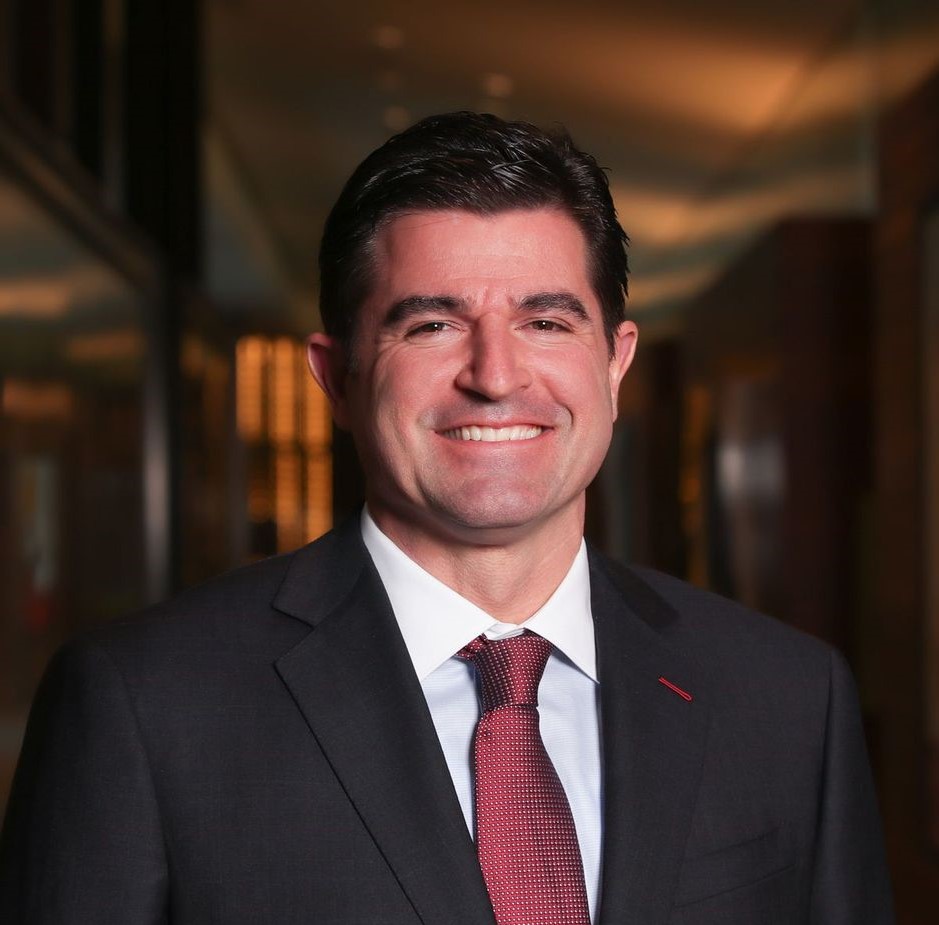
Scott O’Neil is the formerChief Executive Officer of Harris Blitzer Sports & Entertainment, an organization with the mission of building passionate, high-performing teams that inspire people to enhance the communities where its teams live, work, play and win.
With more than 20 years of experience in the NBA, NHL and NFL, O’Neil has earned a reputation as a leader of leaders and is one of the most connected, dynamic and driven executives in the industry today. Previous executives whom he has mentored and managed run many of the top organizations in sports and entertainment today; those he currently manages are poised to lead the industry into the next generation.
O’Neil’s reputation for authentic leadership, unparalleled drive to innovate and emphasis on the importance of corporate culture has placed him at the forefront of the industry vanguard. In merely six years overseeing operations for the properties in HBSE’s portfolio, O’Neil led the Philadelphia 76ers to sign the first jersey patch sponsorship in “Big Four” sports history; construct the most technically advanced training complex in professional sports, the Philadelphia 76ers Training Complex; establish an industry-leading Innovation Lab, and become the first U.S. professional sports franchise to acquire a world-renowned esports team. In that same period, under O’Neil’s ambitious and aggressive leadership, Prudential Center has become a top seven and top five most-played venues in the U.S. and the world by Billboard and Pollstar, respectively, and welcomes over 1.75 million fans and event attendees through its doors annually.
As former President of Madison Square Garden Sports, O’Neil was the key architect in some of the largest venue sponsorship deals in history while overseeing iconic sports properties including the New York Knicks (NBA) and New York Rangers (NHL). O’Neil spent seven years as the Senior Vice President of the NBA’s renowned Team Marketing and Business Operations group, where he advised NBA, WNBA, and NBA Gatorade League teams on all business operations, CRM Department and NBA Canada business. Earlier in his career, O’Neil served as the President of HoopsTV.com and held positions with the Philadelphia Eagles (NFL) and New Jersey Nets (NBA).
For almost a decade, O’Neil has served as an Alternate Governor for the NBA and NHL. In 2015, 2016, 2017, 2018 and 2019 the Philadelphia Business Journal named O’Neil to their “Power 100” list of the “most influential people” in the greater Philadelphia region; he additionally received Philadelphia Business Journal’s “Most Admired CEO” honor in 2018. In 2019, The Hockey News named O’Neil No. 37 on their list of “100 People of Power and Influence.” In 2019, Hashtag Sports honored O’Neil with an award for “Leadership in Supporting Diversity in Sports.” Sports and technology outlet, SportTechie, named O’Neil as 2017’s “Most Innovative Executive”; in 2016, Philadelphia Magazine declared him one of the “Most Innovative Leaders” in Philadelphia. He has been twice named to The NJBiz “Power 100” list. As a young executive, O’Neil was thrice recognized at Sports Business Journal’s acclaimed “Forty Under 40” Awards; launching him into the publication’s renowned “Hall of Fame.” He additionally received “Forty Under 40” honors from Adweek and Sporting News in 2006 and 2005 respectively.
O’Neil’s influence and experience have earned him a place at the podium at some of the largest industry conferences in the world, delivering keynotes at events such as: Leaders in Sport, Beyond Sport, Sports Business Journal’s World Congress of Sport, the IEG Pivot Conference, the Ivy Sports Symposium, Sports Marketing Association’s Conference and more. O’Neil’s leadership practices have been chronicled and applauded in The Outward Mindset by the Arbinger Institute, publishers of The New York Times Best Seller, Leadership and Self Deception, The Orange Revolution by Adrian Gostick and Chester Elton, and Potato Chip Ticket Sales by Kathy Burrows. He has made numerous appearances on CNN, CNBC, FOX Business Network, and has twice co-hosted Bloomberg television’s Bloomberg. He also interacts daily with his nearly 20,000 Twitter and 35,000 LinkedIN followers. He serves on the boards for the March of Dimes, Zoomi Inc., the Sixers Youth Foundation and the Sixers Innovation Lab.
O’Neil earned his bachelor’s degree in Marketing from Villanova University and his master’s in Business Administration from Harvard Business School. He currently resides in Pennsylvania with his wife, Lisa, and three daughters.
Now your host, Ed Molitor.
Welcome back to another episode of the Athletics of Business podcast. And things get in the way, things pop up in his world. Now, on episode 102, welcome Scott O'Neill, CEO of Harris Blitzer Sports and entertainment. And I did not think that it would be possible, even feasible top that conversation. But we immediately started talking about having an encore interview because we enjoyed our time together so much and felt like there's a lot of things we still wanted to talk about. We threw some dates out there, but then life happens, right? And things get in the way, things pop up in his world.
Things popped up in my world and thought we had a date settled towards the end of June, a little bit after the release of his new book, be where your feet are, which we talk quite a bit about in this episode. But then on June 30, Scott says, announced that he was stepping down as CEO of Harris Blitzer Sports and entertainment. He stated that he stepped down because it was time and were going to dive into that. And we talk all about what went into Scotts decision. There's so many great things in this conversation. I didn't even think that it was possible, like I said, top that conversation. Well, this episode is an absolute masterclass.
And the power of self awareness, what it takes to be a change agent, the power of surrounding yourself with incredible people in building extraordinary culture and the joy that comes from developing future leaders. And Scott peels back to Curtin and talks about a recent trip that he took with his daughter to Mozambique to help build schools and some of the powerful and extraordinary experiences that they share together. And we jump into, as I mentioned, his book, be where your feet are, the seven principles to keep you present, grounded and thriving. And that talks about, as you can imagine, being present and focused and everything you do. And there's a very significant life event that was a catalyst behind this book.
And as a matter of fact, Scott shares a very personal story about the writing that took place and how that evolved into this great book. And I love how Scott describes the book. He says the book is not a pat yourself on the bat, victory lap, lego guy, everything is awesome. It's the opposite of that, Scott said. And he goes on to say it's essentially like a vulnerable peak behind the curtain. Look at life, and life can be messy and I'm kind of okay with messy. This book is about purposeful living. So is this podcast episode. It is phenomenal. There's so much here. There's so much content. So I'm going to get out of your way and let you enjoy this conversation with Scott O'Neill. Scott, thank you so much for joining us again today on the Athletics of Business podcast.
I'm fired up to have you here. A lot has changed since we recorded our first episode on November 11 of 2020.
Yes, he sure has.
And that might be the understatement of the day, by the way.
I will.
Say wise, we sit here and mid to late summer.
You know, I've stepped down from my.
Position as CEO of HBSC, which I'm happy to love to talk about. I just got back from a three week trip, helping to build a school in Mozambique. I'm in an incredible state. I feel happy and free and at peace and excited about exploring what's next. Connecting with people haven't connected with in quite some time. And having time, like, time, has been my most precious commodity over the last, I don't know, 15 years or so. And for the first time in a.
Long time, I have a lot of it.
Has that been odd for you? And I don't want to say a challenge, because I'm guessing, knowing you like I do, that you're embracing it. But has that been a little bit odd, having so much time?
You know, if you ask me this in three weeks, the answer would be very different. Right now, I haven't had a second to breathe.
I literally landed from Mozambique and was.
Kind of whisked off to a youth.
Conference for my church that I was.
Helping to plan and lead.
And then I got back for a.
Day, and then went to a family reunion for four days up in Mohawk, upstate New York. And then I came back.
I'll be here for three days.
And then I have another camp for young men in our church.
So I think in three weeks I.
Will have a breath and have some time, and I think it'll be very different in the meantime. I've been scrambling for the last five weeks.
But, yeah, no, it's fascinating.
Even today I have two calls today. I haven't had only two calls, including.
Saturdays and Sundays, in twelve years. So it's nice.
That part is nice.
I have all my girls home these.
Last few days, which has been really cool. So it's different. For sure. It's different.
Well, that's awesome.
And one thing we have to mention, too, because I want to talk about here, as the conversation evolves is congratulations on the phenomenal book and the success. And I want to thank you for the book. I mean, be where your feet are. It's an amazing book, and we'll get into what inspired you to write the book. But I've shared the book with so many, like, physically shared the book, and I did a seven week presentation with the financial group and I talked about your book a bit. And that's another understatement today. And I put. I shared the link with them, right. And I was able to monitor, like, how many folks actually jumped on the Amazon link and bought it. And then the feedback I received was mind blowing.
It was awesome.
But congratulations on that.
Thank you.
That's been. It's been a humbling journey. I mean, I, I didn't have any interest in writing.
A book, quite frankly.
And my best friend took his own life, unfortunately, a couple of years ago, and I spiraled into depression. A lot of what people are feeling.
Now, I think mine was a little.
More severe than the mental health issues I think young people are facing all over the country. But for me, I had trouble sleeping at night. I had trouble getting out of bed.
In the morning and burst into tears.
Walking out of a meeting, somebody would say something to trigger a memory. And I started to write to heal, which sounds really strange, but I just.
Like, I don't know if you've ever.
Seen the movie Forrest Gump, but you remember when Forrest was running?
Absolutely.
That was me writing. You know, I was just, like, writing nonsense.
I just, you know.
But others were just these stories, some of what you see in the book, and that just became a healing.
And then a good friend of mine.
Who co authored the book, Randall Wright, came to visit. He's a good friend of mine, a closer friend of my wife, but a friend of mine. And he said, you need to publish this.
And I was like, no, like, this.
Is kind of my own journey. Like, this is about some of my struggles and failures. And he's like, man, could you imagine? He's like, you talk about wanting to help people. You talk about wanting to develop leaders.
He's like, go put something out in.
The universe that's vulnerable and you. And talks about failure and overcoming failure.
I said.
He said, that's what the world needs. And I said, nah, that's not really me. So six months later, I had an agent, and they sold the book to St. Martin's Press, and voila.
Jeff.
So you literally did write the book to heal. There was no intention of you putting that into the hands of the public. That's amazing.
Yeah, that was pretty wild. And then the ultimate expression of ego is writing a book.
You know what I mean?
That's, you know, like, I have something to say that people have to listen.
To, so you have to get over that part.
And the second thing you have to get over is, like, being talent, which is so strange. I mean, you're talent podcaster.
But, like, I don't know. It was just.
I managed talent for a living. I never was talent.
That was like, you know, you put.
Yourself out there, people like, this is not good enough. I don't want to represent you. You're like, wait, what?
You know?
And I'm saying, hey, this isn't good enough.
You know?
Especially after all you had been through to write the book, right? You're telling me that my stories aren't.
Like, no, somebody's gonna buy this, you know?
So I went through some of that. But.
But I will say, sometimes it's nice when you hear from your mom, and she says, oh, you're awesome, and you're smart and you're funny, and I love the book, and that's great, you know? But when you hear from perfect strangers, this is humbling. You know, guy, reach out and reach out on LinkedIn, just say, hey, I want to be a better father. I want to be a better man. I want to be a better person. Husband. You know, I was like, huh? Another one. Like, hey, I was driving to Montana. I cried for 3 hours listening to your audiobook. So there's some of those things that come in. They come in relatively regularly of strangers. And, you know, I loved the notion of having something for my kids and my friends, but I've been humbled by the impact.
Jeff. Yeah.
That is so cool. You know, you talk about you want something for your kids. And my good friend Porter Moser, when his book came out, were talking, I said, what's been the coolest part about it? He said, the coolest part about it is, my daughter Jordan's with the women's basketball team on a road trip, and she calls me, she says, dad, I'm on page 72, and the story's amazing. I just want, you know, he made my day. Oh, like, yeah, like, stuff like that. I mean, it's so, like, I have goosebumps. That's just. That's great stuff.
That is.
That is really great stuff. Now, the audiobook, did you do. You did the audiobook yourself? I read. How was that? Was that reading your own words. Was that.
Yeah, no, I haven't listened to it. I don't know if you're like, I am, but, like, it's hard to listen to yourself.
Like, absolutely.
You know, you do an interview on tv, I never want to see it. You know, if it's in print, I can read it and almost hear my home voice. But the audiobook, for me, I might broke down a few times doing, you know, reading some of the stories, which apparently they captured pretty well. Either really well or really not so.
Well, but we'll go with really well.
Yeah, but I've gotten some good feedback on the audiobook, but for me, that, it's amazing. It's like, I mean, it's a production. I mean, you're not probably, I think it's like six or 8 hours long, and I probably spent, I don't know, 14 hours in studio or makeshift studios.
COVID.
So it's makeshift studio, but it's pretty amazing. And you get the producer in your ear. Read that again. Read that again. No, like, I know, read it again.
Did you find yourself getting caught back up in the stories? Not just emotionally, but like, all of a sudden you realize, like, your energy's rising, so you're reading faster when you're supposed to be reading in a certain cadence. Did you have that challenge a little bit?
Yeah, no, I did. Look, I, I'm very emotional. I'm very passionate.
You are too.
And so, you know, this is my life, and you're talking about your life. So I am like, in some ways reading it as if I read it for the first time almost. You know, it was a pretty special experience. I imagine I'll listen to it at some point, but not, not yet.
Yeah. You know, speaking of emotional, walking away from HBSC, because when we first talked, we had such a rich conversation around what it was like to build that organization off the platform of starting with the 76 ers. Right. And the incredible young talent that you brought on and the ownership and the relationships that you had. How hard was that process and that final decision to walk away from what you built?
Well, the end was kind of the easy part because we've been talking about it since January. You know, I've been working with Josh.
And David and Michael Rubin to try.
To find a replacement. We found an incredible guy, Tad Brown, who stepped in and will do an amazing job in taking the company to the next level. He's wonderful people. He's smart, he's talented, he's interested, he's interesting. He understands big business. He understands team business.
So he'll be great for me. I'm a builder.
I want to grow. And we grew this business, over $2 billion in value in eight years.
Built it from a little tiny mom.
And pop team to a global sports entertainment enterprise, and I want to do that again. And this business is big, and it's almost a $3 billion business now. So I think in terms of growth, for me, that's what I. I'm a change agent.
I'm a grower of businesses, and this.
Is a big business and doesn't need much change. It's a really high functioning, incredible business. Culture is amazing. The people are great. But I'm not a great maintenance manager. I don't want to do that. That's not what I'm about.
It's not what gets me popping out.
Of bed in the morning.
I like change.
I like action, and I like growth.
Well, and it's interesting because I believe the average lifespan of the CEO is six years. You're there for eight years and you.
Talk about being a two bonus years.
How about it? I mean, two bonus years. You talk about that. You talk about seeing it through, right through the process, all that stuff. You don't want to manage it. But at what point in your career did you realize that? Because that sometimes folks, and you see it in different industries, right? And you see it, you know, my old industry in college coaching, you see folks that stay too long, and it's not a slam on them. It's just knowing what you are and what you're really good at, what we passionate about. How did you figure that out?
Yeah, well, I mean, we grinded through it. I will tell you, I've known for some time, like, what I'm meant to do, what I'm on this earth for now, I hope to develop the next generation of leaders.
And I think I had a fair share of that at HBSC.
The thought of building another platform and getting to do that again is pretty exciting. So I will tell you, I loved my time. I love the people I work with. I love what we built. I love the guys I worked for. Most people don't get the blessings like I've had in careers. I mean, I worked for the NBA, David Stern. I worked for Mastersburg. I had the biggest brand in the sports entertainment. And now to be able to build one that's one of the biggest brands in sports entertainment is pretty amazing. I'm not quite ready, and I don't quite know what I'm going to do next. I know I'm going to build something.
I know it's going to be big.
And I know I'm going to attract the best talent in the world to go have some fun.
That's awesome. Can I read a quote that I read of yours when I was getting ready for this podcast? No, this was good because it really puts it all in a nutshell. HBSC is the best organization I've ever been a part of with the highest degree of difficulty I've ever encountered, which I want to talk about that, by the way, and the most fun I have ever had because every day brought a new opportunity to learn, develop. This company has grown through a culture of extraordinary teammates willing to be innovative, having the discipline to do the work, and the courage to lead from the front. While I thoroughly enjoyed every moment of my time here, I am even more excited to build, grow and drive my next platform. I mean, I just think that's so powerful.
Yeah, I mean, I guess, yeah, that says it in a nutshell for sure.
I mean it really.
But the challenge, oh, man, I don't know. I'm not a guy who looks back very often whether that's, you know, that's a strength and a curse. And I don't do a great job.
Of reflecting and celebrating, but I tend.
To be in the present and forward. But what I'll always cherish is the culture we built and the people there. I mean, the friendships and the relationships and the laughs and the tears and the struggle and the grind, you know, and coming together as this incredible team to do incredible things. And we used to say all the time, like, very good isn't good enough.
And I love that.
Very good isn't good enough. Like, I love the notion of like pushing the edge and pushing the limit and pushing people.
So I think, boy, what a gift.
I love the fact that's how you view it.
Right?
You're so humble. But let me ask you this. When you first started to articulate your vision for the culture and the state that organization was in, when you got there, did people look at you like you had ten holes in your head?
Yes.
Yeah.
And I might.
I might have or maybe only nine. Can you talk about that a little bit? How important and how significant it was to you to speak to the culture, right. And constantly, constantly talk about it. And when everything really started to click.
And, you know, there were only.
Twelve people there that were there when I started.
Insane.
This notion of culture is soft, is not what I'm about. You know, I'm about a culture of accountability.
But I do believe that with incredible.
People and an extraordinary culture, there's nothing you can't accomplish.
And so, yes, did I.
There's somewhat infamous stories about my first.
Month there, but one is we just. I took everybody on a tour, and I just had them write, just write.
Down what you see. That was the exercise.
Write down what you see.
And we came back and, you know, their box is stacked up and sick paint.
Pictures on the wall are crooked.
Coke machine or Pepsi building. You know, it's like all this crap.
You know, I came in the next.
Day and I said, hey, if that coke machine's not gone by noon, when.
You won't be here.
And so when I wrote that in.
The book, and my editor and my.
The woman who helped me write, michelle Bender, it was amazing. They both like, hey, you sound kind of like a jerk. I was like, hey, guess what? This is a change situation. Like, this is not for the faint of heart. Like, this isn't like, come in. Like, let's go sit in a circle and hold hands and sing kumbaya. I mean, we're trying to change the world. We're trying to make an impact. City of Philadelphia at the time eventually became bigger circle, but we're trying to build a world class organization. We're trying to be like the creme de la creme of this league. And right now we're 28, 29, and 30. And every KPI we have, we practice in a college and share the gym with a bunch of students. We have one corps. Our locker room seats twelve people.
I was like, guys, maybe? Yeah.
Was I hardcore? Yes, I was. Did I have higher expectations than what I found there?
Yes, I did.
Did it take a while?
Yes.
Did new people help?
Yes.
Did I hire people that I loved and trusted and knew because I knew that they knew what the culture of excellence in play.
I did. Was that hard?
Yes, it was.
I come strong, you know, I have a strong personality.
I have a strong will. Now, listen, when you hire people and the culture becomes, the expectations of the culture become higher than your expectations, then as a leader, you can step back. That's the nice part. It's like when the people you bring in are like raising the bar, but what you thought was possible, you're like, hey, let me know how that goes. And they became the great drivers of talent and culture. Hugh Weber, who, he was with the Pelicans, who's the Hornets. At the time in New Orleans, they were a revenue payer, revenue share payer.
I mean, they were a top ten.
Revenue team in the league. This guy's running one of the organizations here, like Jake Reynolds, who I'm related to hardest to work with. Someone you related to.
And that guy changed the culture of.
The organization by himself as a, I think hired like 26, 27. He came in, changed the culture of the organization. Chris Heck, Laura Price. Laura Price was there. She's one of the twelve. So you know what they say, there's no one stronger than the converted.
Meaning she was there and she was.
All in, all the time. Susan Williams, an amazing force for good.
Who I worked with at the NBA.
Or at Madison Square Garden. Donna Daniels, who runs our building now.
The GM, incredible general manager I worked with at the NBA. At the NBA.
So, like, you had these people with.
Chris Heck, who I worked with twice before, now president of Sixers, like, so.
You start to get these pieces of people who have seen it, done it, been it, have high expectations. Understand the gear it takes to be excellent at your craft. Understand what it takes to be world class.
Won't tolerate mediocrity, if you will.
And I want to go back to that. Won't tolerate mediocrity. And I come strong. How much of a difference maker is it for you that you know you're doing things the right way? Cause everything you do is based on your core values, right? What you stand for. How much role would that play in your success with this organization?
I don't know. I mean. I mean, the one skill set I have is to hire great people.
Like, that's my skill set.
I hope people would argue that I.
Help them develop and grow because that's.
What I'm passionate about.
And then getting them to work together.
So that's what I do. Do I always do the right thing?
I don't.
Do I always say the right thing?
No, I don't.
Am I sometimes come on too strong?
Yes, I do. My intentions are always pure.
And people that know me the best will tell you that his intentions are as pure as gold. And also say people that know me really well say he's really humble. People that don't know me well said, man. That guy's overconfident.
Or they have other more choice words.
But those that spend a lot of time with me know that I love them. I love the people I work with, and I know people don't like to.
Use that word at or aren't comfortable.
Using that word in a work setting. I am like, I. I love the people I work with, love them. I don't always like them, by the way, but I always love them.
Then that's what matters, right?
Yeah.
It's just like. Just like your family, right? Sometimes. But let me reword that question, like, with values, because you're in a world that's moving so fast and you're inside building this culture and the business side of it, and yet Philly's a tough city. Let's take Philly for an example, right? It's a tough city. And the fan base can be brutal. Sports radio can be brutal. You had this absolute conviction. You didn't do what was comfortable or convenient. You had this conviction. Did that go back to knowing who you were, what you stand for and the fact that you're out of love with your people?
That's where. Yeah.
And that had to help your decision making and how fast and quick. And you made those decisions.
Yeah, I think that's right. I'm really comfortable in my own skin. I really am.
I haven't since I was a young kid.
I know when I offend someone. I know when I say the wrong thing.
I know when I do the wrong thing.
I'm very self aware, and that's really hard. It's hard to be that self aware. I wish I were oblivious. And we've had some leaders in this country recently that have been oblivious and not very self aware. That's kind of a gift, you know.
It'S a curse and a gift.
Being so self aware and kind of wearing that and owning it at night, man, I just wish I would handle that better. And then as I got older, being, okay, just picking up the phone, say.
Hey, Donna, I should have said that to you today, too. I just want to say, you don't accept my apology.
So that kind of growth helps as you get a little older, a little more mature.
I do.
I'm very values based. People know what I stand for. They know who I am.
Some of my closest confidants were my.
Biggest opponents and biggest debaters, which I love. You know, I don't have a lot of robots. I've never had a lot of robots around me. They don't make it too long.
The strong, the tough, the confident, the.
Willing to take me on will walk in my room, walk in my office. Scott, like, you are off base.
I'm like, okay, let's talk about it.
I like to argue. I like to fight.
I like to debate.
But oftentimes, almost every time I take the counselor, you know, I'm coachable.
It was a grand experiment.
I'd never been a CEO before. I've been a president. And when I was that president at Madison Square Garden, the only thing I.
Could think about was, I don't want.
Anybody messing with the culture. Like, you know, I had a couple bosses there, and it was different. Like, I. I wanted, is this to be shaped and be the best place to work in the world? That that was my goal. Like, think about that as an aspiration, by the way.
Was it?
No, I'm sure there are better places to work in the world. For me, it was. It was the best. But, like, aspirationally, you walked in, it's.
Almost like, you know, you go to.
Disney and you see all these people smiling. You're like, how are they smiling? It's august. You know, it's hot. They're in those terrible outfits, the food's bad, blah, blah. Walk 2 miles to get to their post, and they're all happy. It's because they self select in.
Right.
You know, at HBSC, we have people self selecting. They said, like, I am willing to work hard. I am. I have high character. I want to be challenged.
I want to be innovative. I want to do things differently.
I'm willing to work, but I want to be the best in the world at what I do. I mean, I'm willing to learn. Like, all those people start self selecting in, and then, you know, then it's easy.
Yeah.
Yeah. How rewarding was that for you? Because you brought so many young leaders on, right. How rewarding is it for you? And they, so many have gone on and do incredible things. When they call you back and call you up and say, hey, Scott, walk me through this. You know, this is a situation I have, and I remember when we did this with HBSC. What are your thoughts on this? And, and then watching them in the trajectory, how rewarding is that for you?
What's really rewarding is when I call them and say, hey, I'm dealing with this topic. I need your counsel. That was really rewarding. But, you know, I've been really fortunate.
I mean, you know, I always think.
About my group at the NBA. It was Amy Brooks, who's now president of the NBA. Chris Granger is now CEO of Ilitch Sports, runs the Tigers and red Wings. Chris Hex, president of the Sixers. Tom Glicks, president of Carolina Panthers. Dan Reeds, president of Facebook Sports Entertainment. I mean, it's kind of like that's one little group. Yeah, I'm sure I'm forgetting 1010 people, but Donna Daniels, who's now general manager of the parents.
I mean, like, it's kind of crazy.
You know, my group at the NBA, similar. I'm at Mastersburg Garden, and this group is the most talented group I've worked with.
I think we have probably, like a.
Couple dozen people who run organizations. I mean, think about that.
When did you know? I mean, you recruit this great talent, you develop it, you retain it as long as you possibly can. When would you know, when was the tell that it was time for them to fly on their own?
I mean, some are still there and probably should go. So what I would try to do to keep them is move them out of their core competency into another area. So what happens is when you have a really talented organization, it's hard.
They almost, like, run into ceilings, and.
So I'm trying to break through the ceiling. So one thing you do is try.
To grow the organization easy, easier. And then the second thing is, you.
Know, I'll give you an example of a young woman, not so young anymore, but Brittany Boyd, who started as a.
Director of guest services.
She's now the chief marketing officer for the Sixers, the biggest brand.
She was guest services at the prudential center and then moved up.
And now we moved her over because.
Like, she couldn't grow in her current role.
She was running into a roadblock. You know, Katie O'Reilly is another one who's now our chief revenue officer, came in as a deal maker, moved her to chief marketing officer, then moved her to chief revenue officer. So those are, like, two examples of people who are in and out of their zones. And I'm just looking for really talented.
People who are smart, who can lead and manage, who have the gear, who.
Are intellectually curious, and then we give them a shot. We have a lot of people doing.
Some big jobs that they're not classically trained in.
But when you get up the ladder, it's really not about technical expertise. I mean, you have to have a strategic mindset. You have to understand a strategy. But then it's just about hiring extraordinary people, building world class teams and somewhat.
Getting out of their way, giving them feedback, holding them accountable, setting goals, all that kind of stuff. And so I want to make sure.
That those extraordinary leaders get big opportunities, and it might not be right down the pipe or right down the middle of where they grew up in the business. Jill Snodgrass, another one, grew up as a director of service, and now she's running our activation team on sponsorship. We just take great people, extraordinary leaders and put them in roles that matter.
Several minutes ago, you said you dont take a lot of time to reflect. Right. And you do all this amazing work with all these amazing people. HBsc you walk away and your daughter and youre going to take this amazing trip to Mozambique. When you got on that plane and wheels up, youre up, you take off. Did you take time to reflect? Did you step and kind of look back a little bit in journal maybe, or talk to your daughter about it or just have conversation? What was that like, completely detaching, going and doing this amazing work? And id love to talk about the work that you folks.
Yeah, so I, you know, I was with 20 teenagers, so it was me.
Every parent's dream, by the way.
Yeah, yeah.
It was me and another mom. So it was a mom and a dad, effectively. And then there were two leaders of the trip who were 24 and 21, Ben and Kylie, who were in charge. And we kind of, you know, helped support them. But were essentially the mom and.
Dad of the trip.
And the first night our flight gets canceled. And so we're, it's 04:00 a.m. We're in Newark airport trying to find a hotel.
And so were up most of.
The night and got out the next night. So most of us hadn't slept in.
48 hours or so.
So I slept on the plane. Good sleep. I kind of promised myself one thing and that I was going to be where my feet were. So I was going to be present with my daughter and with this team of incredible teenagers from around the country. And I was going to do my reflecting and look forward. On the way back, I was gonna.
Give myself, like, that flight back. So that's when I, I did quite.
A bit of thinking and writing. But, you know, it's a 15 hours flight or so I had plenty.
Of time to think and to write.
But on the way over there, I.
Wanted to be 100% engaged with the young people. And that was fun. I love teenagers.
I do, I love them. I love young people just in general.
Even when they get up in their.
Mid twenties, like, I love that age, 1617 to 25. I just, I love their hopes and.
Their dreams and their struggles and the light in their eyes and the will and the questioning.
I, and to get a chance to be hands on with 20 of them for three weeks is a gift I always appreciate, I think, just a quick little. We were doing a, we did these.
Devotionals every night where the young people.
Would get up and teach a lesson. Oftentimes faith based, sometimes not, but mostly faith based.
And whenever there was a law in.
The deal, I would get up and I would teach.
And so one of the kids wasn't prepared.
So I said, I got this one. So I pop up. I said, let's talk about storytelling. I said, I love to tell stories. I said, tell me about the work site.
Tell me.
I said, I want to learn how we can teach. Are there six or seven lessons we could teach that we learned from the work site today? By the way, we're building a school. The foreman doesn't speak English.
Okay.
Okay.
We have scaffolding made out of tree sticks, and I'm standing on it, the 8ft off the ground, thinking like, okay, this is a little wobbly. Learning how to plaster. I don't have no skill. My daughter's like, dad, you're getting better. Good job. I'm like, this is ridiculous, anyway. I'm like, carrying 120 pound bags of cement, thinking like, okay, when's my back going out? You know? Where are the young kids when we need them? So anyway, so I'm saying, okay, tell me what you saw. This young woman, Sophie, says, well, Scott, I was on the cement mixing team today. I was like, awesome.
I was like, well, tell me what you learned.
Tell me what you could teach.
Well, I was adding water to the.
Cement, thinking like this, a lot like life. I said, all right, tell me more. She said, well, if I don't add the right amount of water to the cement and keep the water coming, it dries out and it's of no use to us.
All right.
I said, okay, take it home.
She said, well, I've got to say.
My prayers, read my scriptures. I have to surround myself with really good people.
I have to work hard.
I have to be open to learning. I have to be a good person. That's my water.
And I was like, now, that's a.
Lesson I could teach. She's 20 years old, this young guy. Carl's from Utah.
He says, I have one, scott. I said, oh, carl, give me a.
Big football player, offensive lineman, high school kid, 17 or 18. He says, well, I was on the wheelbarrow. Anything we needed that needed muscle, he did. He'd take that big wheelbarrow cement, roll.
It on the two by fours and weave it through the site, probably 50 yards. And he said, well, when I was wheelbarrowing today, I thought, I need to.
Stay on this path. I was like, okay. He said, well, there's sand on the side. He said, look, I could roll it to the sand.
But it was hard.
It was harder. I was like, okay, so what's that path? He said, well, that path is living the right way and making the right decisions.
I'm like, how good is that?
I'm like, I could talk for 45.
Minutes on that, right?
I said, all right, give me one more. My daughter, Kira, who's a credible. I mean, I'm a doting dad, but this kid's off the charts. I mean, she just leads wherever she goes.
It was so cool to see that.
I said, she was like a foreman by day two works. I went, what do you know about construction? Stop telling me what to do with the scaffolding. But she said, well, the scaffolding.
I was up there the first day, and I was really wobbly.
I was up the second day, it was wobbly.
She said, third day, I'm like, I am going to oversee when we put.
Together, because we had to take the scaffolding down every day because there were young kids around. I said, all right, so tell me more.
So, well, we had to get the.
Right boards to put them on the tree branches, and we had to tie the wider the wire tighter.
I was like, okay, so.
So what's that about life? So, well, it's just about preparation.
It's about understanding what your expectations are.
And then having a feedback cycle to know that you can get better. I'm like, are you kidding? Now, these are 1819 and 20 year olds.
And went on.
There were seven of them.
Seven lessons that day that I would.
Say, I quote unquote, was teaching that day.
But, you know, I'm in learning mode.
I ask questions so I can learn. And I'm literally like, I have my journal. I'm writing them down. Like, okay, I'm gonna use every one of these. I will give a talk somewhere in my life. I'm gonna use every one of these.
How cool is that, though?
Yeah, I mean, for me, I felt, like, this overwhelming sense of gratitude.
Like, all the time.
My room smelled like sewage. Sewage. I once brushed my teeth and used the water, and, like, the toilet water came out of the sink.
I got sick so badly over there.
That I woke up one evening. I was shaking because I had chills and having great medication, all this crap. And I had sweated through a sweatshirt. I'd never done that before.
I literally looked up.
I thought, there's a hole in the roof.
And it leaked.
But I took my shirt and my sweatshirt off. It was heavy, drenched with sweat.
I just took it up and put the dry shirt on.
We walked into houses that didn't have electricity or running water. The school kids, were right next to where were building the school. They were learning under a tree.
They had four trees. And because they had shade, a little.
Teacher would come out and she had a blackboard. The kids would be sitting dutifully around this tree. And I just felt this overwhelming sense of gratitude. And my big lesson was, I grew.
Up with my dad telling me, like.
I said, dad, this isn't fair. Sean got this. Hey, dad, this isn't fair. Mike got a truck.
I wanted a truck.
My dad used to look dead in the eyes. Said it a thousand times, Scott, life isn't fair. For the first time in my life in Mozambique, every freaking day, I was like, life isn't fair.
Did you catch yourself at times just pausing and. Just watching and observing?
Yeah.
What was that like?
A lot of times on the bus.
Kids would be, you know, kids are singing. I mean, singing, playing games. The high school boys. I'm around girls a lot. I'm not around boys a lot. They're hilarious, you know, and over the top and funny, but there's always a lot of commotion. And that's where I did a lot of flexion.
I'd be looking out the window sometimes with a camera in my hand and.
Riding on this sandy dirt road for 40 minutes. We got stuck a few times.
Dips, big dips and turns. And I'm looking at the shops, which.
Are made out of, like, corrugated metal sheets. Metal sheets tied together with nothing.
I would just shake my head and.
Think about my family, my kids, my friends, my neighborhood. What are we really upset about? We have every advantage in the world.
We have access to.
We have running water.
We have hot showers. Hot showers.
Someone said, what'd you do when you first got home?
I was like, I took a hot.
Shower for 30 minutes. That's the first time I've been cleaning in three weeks. What's the second thing you do? I go, I ate three meals right in a row.
As much as I could. I don't know.
I don't know how to articulate it. I would just say, like, this overwhelming sense of gratitude for being able to grow up in this country. I know this country's not perfect, but I love this country.
I really do. I do.
I love it. I feel appreciative. I feel grateful. I feel like everybody has a chance. And I know there are some areas in this country that are bad. There's some areas in Philadelphia that are really rough. I would say that they'd be like the four seasons compared to what we.
Were handling in Mo Van Beek and even here. Join the military. You can do it. I know it's hard. Like.
Like, I sit in this, like, beautiful neighborhood in this great house.
I have this cool job, and I get it.
Like, it sounds condescending coming for me. I understand that. I grew up with nothing. I've seen that.
That side of the fence.
I just always thought, like, when we.
Didn't have anything, I was like, I'll.
Go into the military.
They'll pay for my college.
That's what was my mentality growing up.
My parents ended up finding some commercial.
Success and pay for my college.
What a gift.
But I was like, no, I'm gonna go to college.
They don't have a chance there. A couple of times, we got, like.
Pulled over by the military.
Once I was. It was just me, a driver, and the mom on the trip, and it.
Was after curfew, and we didn't have our passports.
And I was literally thinking, like, what.
If they throw us in jail?
Who's going to come find us? How will they find, like, what am.
I going to say? I don't speak the language.
You know, you think, like, you know.
We have our civil liberties here, which sometimes we take for granted, and sometimes we. We, you know, shake our head at.
And I'll say, like, this is the.
Greatest country in the world, bar none.
Stop. Period.
In a sense, yes, we have some.
Work to do, but, man, we should.
Count our blessings every single day to.
Be born in this country.
And I think one of the. One of the things we really struggle with in this country, and it's our own doing, is communication. And the way we go about doing it. How was the communication over there? Obviously, there was a language barrier, but seeing the kids and seeing the teachers and seeing the people, and there had to be a way they communicated whether it was by eyes, whether it was by body language, whether it was by touch. What was that like?
Kids are. Kids are. Kids are. Kids are kids.
I mean, I. So the kids were amazing. They were swarming around the site and.
The school, and after the work site.
Was when it was our playtime with.
The kids, it was amazing.
They have light in their eyes, and they smile and they're happy, and they want to play, and they want to have fun and laugh. And when you don't have anything, you don't know anything differently.
And so joy becomes what you can make of it.
They're jumping off of tires.
Those are their toys. Anything, you know, the makeshift jump ropes out of, like, garbage ish.
I don't know what it was, but. And so the kids always find a way to play, and the kids were really happy and cute and loving and wanted to have fun and smile. That was pretty neat. I think that's universal.
I really do.
I think kids are born with.
The joy, and as parents and as.
Teenagers and as adolescents, we get that cynicism. But when you're a kid, it's just pure joy and happiness, and I love that.
Yeah, that's awesome. Now, so you have this amazing trip, and you get on a plane, you come home. You're starting to take time to reflect now, preparing for the next step. And I'm not asking what the next step is, but what are some of the things that you're. Wherever it is, whoever it's with, will you try to recreate what you built at HBSC?
No, I mean, I'll do. I mean, I go back to the.
Teams I've worked with over time, go.
All the way back to the. To the Eagles and my team there, which was amazing. And hoops, TV, NBA and MSG and HBSC. It's like every place has its own, I don't know, karma ecosystem, way of communicating, different language, different mix of people to come together.
And, you know, I think, you know.
Like, you coach, so you get the drill.
It's like if you treated every team.
Exactly the same, you'd have exactly zero success. And so you're trying to build a team that complements each other and complements.
Your skills with maybe some of the.
Same characteristics, but it'll be an entirely different situation and entirely different. What's really interesting to me is what I thought about on this plane coming back. I just spent time with these young.
People, was, I want to be in.
A platform where I can hire a lot of young people, and my friends, kids, my nephew, whoever, anybody in their twenties, and I want to work on developing them into extraordinary leaders and then.
Putting them out into the world.
I absolutely love that. And can you speak to the notion out there that millennials don't have what it takes to succeed?
I totally disagree.
I totally disagree.
Yeah. Can you talk about it? I love millennials.
I think I might be a millennial, just not by age. And Gen Zs, too. Gen Zs get beat up, too. I think these two groups have a lot in common. I think they're willing to work, which I love. You remember, I'm technically a Gen X. I'm like, on the edge of a.
Gen X and Gen X got hit.
Quite a bit because we didn't work hard. But millennials and Gen Z, they'll work hard. They're really smart, they're very connected. They understand how to get information, to find information out of the blink of an eye. They grew up with their phones, which is a tremendous advantage. They understand their brand and your brand. They're very mission driven.
They want to look at you and.
See your authentic self. And if you're not an authentic leader, they'll just walk out the door. They have no cars, they have no houses, they have no ties. They're like, yeah, I'm going to just check out. I'm like, but you have no other job. Yeah, this isn't working for me. But you haven't looked for a job.
Yeah, I'm good.
Like, think of that mentality. I never had that. I was like, oh, I need a job, okay? I'm not leaving my job. Like, I don't care if my guy's screaming at me every day, I need a job. But like, I love that sense. Now, some of that, all that stuff.
I said that I love, you know.
They'Re a little entitled. They expect the corner office on day four. They expect to be promoted on day two.
They're willing to work for it. I love that they see the world.
They're global citizens. They don't see people like we see people. They embrace diversity as a competitive, sustainable, competitive advantage, which is wonderful. I think we're in good hands. I think the country's in good hands. I think the world's in good hands. I would work with this group all day and twice on Sunday. I really do love them.
I think that's so cool. I really do know.
So well said.
As we wrap up here, there's one thing I want to make sure we get to our listener, because one of the things that I love about you is you are in this. And if you haven't been in or haven't been around it's hard to really grasp the level of cutthroat competitiveness. Fast moving, high pressure, high anxiety. Sure. High reward if you succeed, high punishment if you fail. You know, business that you were in that professional sports is, in, our professional sports is, excuse me, but you have had this ability to stay so humble and, you know, constantly act with humility. Sure, you compete. Sure, you can be tough, right? And you want to run to the fight and we want to win, but you want to win the right way. And those things aren't mutually exclusive.
It's not mutually exclusive in an industry like that. I think it's safe to say it's not mutually exclusive in any industry. How have you been able to do that? To remain so dialed in, so focused, to be where your feet are and remain humble and yet win at an extremely high level?
That's nice.
You say.
I would say, like I say all.
The time, people, people, people. It's like David Stern, my former boss, who I love and respect, God rest his soul, passed away.
Like, I'm not sure his style will work today.
Like the king ruler. I know everything I do, everything you do, as I say. And by the way, he was just smarter than everybody, you know. But I think today's world, you have.
To set up an organization so that.
People can make decisions and you, as a leader, have to make it okay to.
For them to slip and fall on.
Occasion, or you're not going to innovate or try anything different. So I don't know. I think the one, like I said.
I go back to like the one.
Common piece has been surround yourself with.
People who are better, smarter, work harder.
More talented, more creative, have better ideas, willing to get in a foxhole with you, willing to debate hardcore issues, are.
Confident enough, strong enough, and that, you.
Know, I, and I've overcome my mistake I made early in my career, which.
Was I wanted all type a's and it can't.
I was running my introverts out left and right.
And what I learned recently, last ten years, is like, no, the introverts are the smarter ones.
They're the ones with all the ideas. Stop putting them on the spot in a meeting. Just check in with them before.
Hey, can you come up with five.
Ideas to help me with x? I'm going to talk about it.
So, you know, so you have to.
Move a little bit, you know. I don't think one size fits all. I don't think one size fits all managing a team. I don't think one size fits all managing a company. I don't even think one size fits all meaning in an individual person. Because you move and grow and you might need something, you might need a.
Hug on a day, you know, you.
Might need a kick on another, and you might need to be pushed and pulled, or you might not be coddled sometime. You might be struggling. Go take a vacation.
Get out of here.
You need time. Just grab that stick too tight.
Chill. I don't know.
I think today's leaders, we need to be flexible and malleable and compassionate and understanding and our jobs are to set.
The vision, set the strategy, help hire.
The right people, make sure the right people are in place, and make sure the culture. Because culture, like, you don't own the culture, and you can't set the culture.
Culture.
I say, next woman up. So, like, the next woman you hire, she's determined the culture more than I am. Like that next person, what does that look like?
How's it taste? How's it feel? You know, culture is what you tolerate.
And what you celebrate. So that's where I can help. But at the end of the day, you're the CEO of a $3 billion business.
It's your people.
Like, they are determining every day how they're dealing with complex issues. And so I never want to forget. That's a lesson I never want to forget.
That's awesome.
And it's a great way to end. And, Scott, I can't thank you enough. I appreciate you. I appreciate your time. Again, congratulations on an incredible run at HBSC. Congratulations on the book and for being the person that you are.
Thank you, sir.
Ed, one thing for you is that who knows when we'll talk next time, but it might be interesting.
Until it changed, then it is.
You just stole my thunder, that's all. Yeah, absolutely. You know, whether it's three months, six months, nine months from now, I'm sure we're going to have a lot to talk about, though.
Thank you. Anytime.
All right.
Thank you for listening to the Athletics of business. Be sure to give us a rating and review so we know how we're doing. For more information about the show, visit theathleticsofbusiness.com. Now get out there.
Think act.