

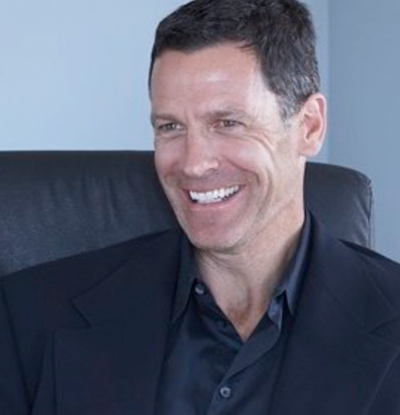
In every facet of his life, Mark Pattison scales personal and professional summits. Mark is a former NFL Player, philanthropist, podcaster and successful entrepreneur & currently an executive at Sports Illustrated and now has climbed all Seven Summits having completed this feat by scaling the death-defying Mt. Everest in the spring of 2021. Mark dedicated his climb to his daughter Emilia who is overcoming her own Everest by defeating epilepsy. Mark has raised over $56,000 with generous donations from both the NFL and Las Vegas Raiders. All proceeds go to Higher Ground.
In the Fall of 2021, the NFL is debuting a documentary about Mark’s journey he experienced on Mt Everest. This film will be shown on NFL 360.
Mark’s podcast, Finding Your Summit has over 120,000 downloads after 200 episodes which provides powerful conversations with celebrities, sports legends and others about overcoming their adversity and finding their way.
Mark is a father and caring human being who continually looks for opportunities to give back to others. He helps people get off the sidelines and back into the lane of life by unleashing their potential & realizing what they are capable of in their lives.
The real stories and hard lessons to help you level up your leadership and performance. Now your host, Ed Molitor.
And Mark is one of those individuals that in every facet of his life, he scales personal and professional summits, literally.
Former NFL player with the Oakland Raiders, philanthropist, podcaster, and successful entrepreneur.
And by the way, successful entrepreneur is a major understatement. And if this is your first time listening to the Athletics of Business podcast, there could not be a better episode for you to jump right into this journey with us, because we are joined today. Just an amazing, mind blowing conversation here. We are joined today by my good friend Mark Patterson. And Mark is one of those individuals that in every facet of his life, he scales personal and professional summits, literally. Former NFL player with the Oakland Raiders, philanthropist, podcaster, and successful entrepreneur. And by the way, successful entrepreneur is a major understatement. And currently he's an executive at Sports Illustrated. And now he has conquered all seven summits, having completed this feat by scaling a death defying Mount Everest in the spring of 2021. And we talk quite a bit about that.
Mark dedicated his client to his daughter Amelia, an absolutely amazing relationship that we talked about. And also on podcast episode number 20, we talked quite a bit about his daughter Amelia. And Amelia is overcoming her own Everest, her own summit, by defeating epilepsy. And Mark has raised over $56,000 with generous donations from both the NFL and the Las Vegas Raiders, with all proceeds.
Going to higher ground.
And we'll tell you all about higher ground. And in the fall of 2021, the NFL is debuting a documentary about Mark's journey he experienced on Mount Everest. And this film will be shown on NFL 360.
And there's going to be a link.
In the show notes where you can purchase a ticket to stream the premiere of this amazing video. And I've seen a couple of clips of it, mind blowing as well. And this is taking place in Sun Valley on September 23. Mark's podcast, finding your summit, has over 120,000 downloads after 200 episodes, which provides powerful conversations with celebrities, sports legends and others about overcoming their adversity and finding their way. And Mark, this is what's really cool about him. Besides all the amazing accomplishments he's had, he has and all the philanthropical work that he does. Mark is a father and a caring human being who continually looks for opportunities to give back to others. And helps people get off the sidelines and back into the lane of life by unleashing their potential and realizing what they are capable of in their own lives.
And we're going to talk about his 60 days of suffering among Everest. When he ran out of O two, when he ran out of oxygen. How more than half of the climbing party didn't even make it. The things that they faced. Two cyclones. Two cyclones. The avalanches COVID the relentless adversity in the unknown and the fear of the unknown.
And here's something that we dive into.
I think is so pertinent to all of us and so relevant and so important. Mark chose to be in the fight. He opted into the climate. He did it with a passion and a purpose, and he did it by stepping into the fear. And there was so much fear.
And Mark talks about how went.
Back to a quote from John Wooden, and he explains that and what it means to him, and it's being your best when your best is required. And when we talk about the training, we talk about the preparation. Mark really hits on what it takes in terms of daily discipline to make dreams come true.
Now I'm going to get out of your way.
Enjoy this conversation. Get your pen and paper. Couldn't be a better podcast to listen to if you're working out, if you're walking, driving, whatever it is. Enjoy my conversation with Mark Pattison.
Mark, welcome back to the Athletics of Business podcast. It is so awesome to have you back. Last time we talked, episode 20, where we talked about reaching the highest points, and originally your plan was to scale Mount Everest in 2020. And we have so much to talk about, so just. Let's just jump right into it.
Have you been?
Hey, I've been great. You know, I mean, obviously, I've been. Now three months back, we're talking here on September 8. I'm not sure when you're going to run this pod, but it's literally taken me three months to recover coming off the summit of Mount Everest.
Unbelievable. Three months. And what. What have been the challenges that you faced?
Well, there's a number of things that happen. You know, when I'm up there, I think one of the things that's the biggest surprise to everybody is the length of time you're actually spending on the mountain in Nepal. And there's two sides you can go on. One side just runs through Tibet, which is controlled by China, and then the other side, which I went on, is Nepal. That's known as the south side. And I always wanted to try and go from the south side because of the challenge of going through the Kumba ice fall, which is absolutely terrifying. But you're there for 60 days, two months. And, you know, the thing that people don't quite understand. That's one element of it, but it's 60 days of suffering.
And I think when you boil it all down, I was in the ice fall and part of the hill sliding and I stretched a ligament in my knee and, you know, as a basketball coach, you know, that is not a good thing. And then I also fell off a ladder in the ice ball about 12ft backwards.
That was early in the climb, correct?
That was early in the climb and it was my first rotation. We actually have three rotations, you know, as we go up and down and up and down. We do that to build red blood cells so it can carry more oxygen around your system. And also, at the same time, you're waiting for the. The jet stream, which sits at 26,000ft, to rise up and above the top of Mount Everest at 29,032ft so that you can, relatively speaking, have a safe passage. It's not blowing 250. So you're. You're going up and you're going down, you're going up. In my first rotation, I was a little careless. I was leaning a little bit too far back and rope slipped out of my hand and literally I went straight down into a crevasse and ripped out my back. And so had some nerve issues. Issues.
And I'm still getting over those. And the last thing is, it was such a traumatic event, especially on the last, like 48 hours on the mountain, that I literally had PTSD. I didn't remember things about the final push and everything else that. Really traumatic things that went down until, man, it was like 1014 days after.
Wow. Wow.
So your mind completely pushed it out.
I mean, completely push it out. Forgot about it.
Yeah.
Human body's amazing that way. So do you want to pick up there with the last 48 hours? You want to talk? Because there's a lot, like, COVID played into us. A lot of things played into this climb. Like, it was not your. There's no such thing as a normal Everest climb, but you know what I'm saying, it was. There's things that came your way that were just too far out there to even expect.
Yeah, well, the first thing you know, you opened the show by saying the last time we talked was prior to 2020, as I was preparing to go up Mount Everest. And as we all know, going back 1824 months, basically the entire planet shut down and shut down because of COVID And so I was all geared up. I'd been training like a madman and I literally packed my bags for California, where I was going to leave from Lax. And fly to Nepal. And I was in California when they shut down the south side in Mount Everest and all of Nepal, so he couldn't even get in. So, you know, while that was disappointing, I had to reset my mind and go from disappointment to seeing that as an opportunity to get bigger, faster, stronger and resetting my goals.
And so one of those goals I had set to was not only climb Mount Everest, but also try to climb Lotsie, which is the fourth highest mountain in the world. And it literally sits adjacent to Mount Everest at camp 426 thousand, 500. It sits in the saddle. In one side of that saddle as you go up, of course, you go to Mount Everest, and on the other side of that saddle, you go to low t. And so that at the time was the goal. And so I just re upped everything. And I moved literally my flights, my reservations, my who I was going to climb with all that stuff. I took it from 2020 to 2021, and I just went at it with, you know, I doubled down in terms of my training and everything else I was doing.
Right.
How was it? So you go through it the first time and you're throwing this curveball, and I love how you reset your mindset. Bigger, faster, stronger, have a better climb. But now you're going through it again, right? So it's like, when you go through this portion of the training, does it have that same impact? But now you're doubling down on it. So is that there that fear of, as you double down, that something's going to come up again and the climbs going to get canceled or rescheduled again or if the climbs ever even going to happen?
Yeah, I didn't look at that way. You know, I just looked at it is going there information that I know. And as we go back and just start talking about COVID-19 one of the encouraging things that was happening at the time, and this goes back early in this particular year, the cases were starting to go down. They actually found a solution in the drugs with Pfizer and Moderna and Johnson. And Johnson that it was possible that you could take these shots and that you would be free from getting COVID-19 which we now know isn't exactly the case, but certainly it's reducing the death rate. But nonetheless, my big challenge at the time, because I didn't, my age did not fit into the category of being one of the first ones to go get the COVID shot. So being vaccinated.
And so to say that I fudged the rules just a little bit would probably be fairly accurate in terms of the way I was able to maneuver my way in and get a vaccinated. I think my last vaccination shot was March 6 of this year, and I left on March 30. So I got in just under the wire of being vaccinated. And that was the biggest thing for me in terms of the hurdle of going over there. Just knowing that I was going into a third world country and that country alone does not have the resources, of course, that the US has and that most of the people over there, the Sherpa and everybody else would not be vaccinated.
So did that come into play at all when you were over there with folks not being vaccinated? And how did COVID show up?
Yeah, I mean, look, theres a lot to unpack right there. I mean, first of all, none of the nepalinese people that I was aware of were vaccinated. That was number one. Number two is, even though that the government in particular tried to really downplay and hide the COVID cases that were being hit at Everest base camp, the fact is that expeditions were cancelling, which was tragic in terms of people getting COVID, either, you know, people who were non nepalnese or the Nepali Sherpa that were coming down with these cases. And, you know, once you get one or two people in camp that start getting COVID, you know, it's the gift that keeps giving. And so literally, people who had paid all this money to go and train and do all this stuff, it shut down.
Their opportunity to go for the summon is really disappointing. And then the other side, kind of to your other point, something that hit us that hadn't hit in years past is were hit with two cyclones. And so I've never been in a cyclone, and that's basically a hurricane with snow.
Right.
And I was in it. And, you know, I was in it, essentially up at camp three. And camp three, like, of all the camps you don't want to be at camp three because you're, you're anchored in, at a 45 degree angle in a tent. And I was trapped in there for three days. And that was not a fun experience whatsoever in terms of being in your sleeping bag, not mobile, can't go outside your tent. You know, you're in this confined, fine space. So, you know, when you add it all up, we started with 21 climbers and of the 21, two got COVID, which brings you down to 19. And then of the 1911 of us made it to high camp 26,500 and of those eleven, only ten made it.
And then when you take the entirety of who was up there on the mountain, there's 400 climbers total. Of the 400, there's only 120 of us that made it.
Wow. Wow.
Can we go back to camp three for a second?
45 degree angle.
You're literally.
I mean, it's not like you're just in your tent and you can't climb for three days. You were literally in your tent for three days.
I was in my tent. And one of the snafus that happened, too, is, you know, everything. When you get that high up, it's freezing, as you can imagine, and you're already in a full body suit with your. It's essentially. It's a suit. It's a sleeping bag with arms and legs. Right. That you get into and you zip it up. And so I was in that in addition to. I was in my sleeping bag and then my sleeping bag zipper broke and so that it was separated. And so ultimately, this is after probably 24 hours, I gave my sleeping bag to one of my guides and they were able to essentially sew it shut. So I was literally in the same. Like a mommy. You have to crawl in and crawl out just through the top. It didn't. It didn't zip down.
I mean.
Oh, my.
I mean, how.
How did you get through that?
Like, what was.
What was the story? You know, we all believe in, you know, you got to talk to yourself and stop listening to yourself. Right. So what was the story you were telling yourself during those three days with the broken sleeping bag? You're a.
Well, you just got to literally live in the minute, and that's what it is. And, you know, so I was also up there. There's a girl that I climbed with on Denali. Her name is Cokie. She's wonderful. And she was my climbing mate, so to speak. And actually, I just talked to her the other day, and she goes, do you remember the most terrifying moment on the mountain? I go, yes. And she goes, what was it I said when you grabbed me at 02:00 in the morning by the face screaming bloody murder because we had an avalanche that was coming down on us in the middle of this cyclone, and I grabbed her through her both wrists, and I just said, it's going to be ok.
And I was, you know, part of that was just because I was coming out of a hard sleep, but part of it is like, there's nothing you can do. We were so steep on that hillside, that 45 degree, and I'd taken my belt, which had about a three foot strap which I'd clip in to the fixed lines on the mountain, and I clipped it into her because half of our tent fell off the mountain, and so only half of it, we had put enough snow under it to create, like, a platform for us to actually sleep on. And so to make sure that she wouldn't roll off the mountain, I tied her in. Imagine that.
So what happened with the avalanche? How did you. I mean, I can't. I mean, what's going through your mind? I mean, you say that to her and, I mean, there's really no other options what to say, too, right?
Your.
So what is going through your mind as the avalanche, as a cyclone? I mean, what. What are you guys saying anything to each other? Can you even hear each other? Can you hear yourself think? What's that like?
Yeah, so, you know, one of the things, I mean, this sounds really bizarre, but it's almost like I grew up in Seattle, Washington, and it rains a lot in Seattle, Washington, right? And so, yeah, a lot. Right. And so when you walk outside and it rains, it's just like, oh, it's raining again. And on Mount Everest every day, we dealt with avalanches the first five or ten days. You'd hear these things coming down like a freight train, and you'd run out and you'd go, oh, my God, you know, we're gonna get hit. And these things would come right up to the front door and all the powder and everything else would kind of settle and, you know, it was frightening. And then after, like ten days or so, it was just like, it is what it is.
And so you almost become a little bit cavalier about saying that if it's going to hit you. There's not much you can do, and hopefully you're not going to get hit. And that's essentially what, when I woke up and I was on the mountain, you know, is pitch black. We're in this cyclone. We hear this freight train coming, and we have no idea because we're inside of a tent whether it's going to hit us or not. His. But there's nothing you can do, right. And so the best thing you can do is just stay calm and just, you know, hope and pray that you're going to make it to the other side.
Right.
I mean, it almost speaks to how we build our resilience, doesn't it? I mean, just get. Just spend a lot of time outside your comfort zone. You sort of. It becomes a way of life. And when you just start figuring it out.
Yeah, no, I really like the way you just said that. And you know, one of the things I think that's really important in life is that, you know, I've always said this like, it's not over till it's over. You as a coach know that. You know, the best thing you can do for your players is just have them stay in the moment and don't get all caught up. You could be down by twelve points with the final minute and that doesn't mean you're going to lose the game, right. And so, but you got to stay calm and you got to stay with your wits and you know what's going to get you out of this pickle. And that happened to me another time. Another time I was in the ice ball and I was in there by myself and that's terrifying.
So you've got like, you know, first of all it's a glacier, it's a frozen glacier that runs from our high base camp or a base camp at 17,500 and you have to climb through this navigating up to 19,500. So it's a 2000 straight up and you're going through all these gigantic ice columns, you know, they're like 30ft and they're constantly falling. It's a frozen river but during the day it melts and so it collapses. And so every single time went through, I went through five times. Every single time went through were going through a different route because the route that was originally established was, had collapsed.
Wow. Right.
So I was in there by myself on maybe my second rotation and I look up and there's this, you know, again, once again another avalanche coming straight at me and this thing was huge and I was just like that's it. I can't do anything, I can't move, I can't go anywhere. I didn't panic, I didn't scream. There's nothing I could do but just stand there and hope that it was going to turn. And it did. And looking back on it, I really wasn't in that much danger. But when this thing is coming straight at you before it turned, you don't know it's going to turn right. So again it's just like the best thing you can do is just stay calm because there's all this different variables that were going on the entire time on the mountain.
Well, different variables. And how about just like the relentless adversity, like it just doesnt stop and sometimes its so unexpected. How did that wear you down? Like, how did that start to grind on you when it was just something new every single time? And I have to imagine there was times things popped up that there was no way possible you could have prepared for.
Jeff, you cant prepare at all for the ice fall. I mean, going back to the beginning of the podcast here, you know, when I talked about being absolutely relentless and doing things I'd never done, I mean, I literally climbed. I live in Sun Valley, Idaho, so I live right at the base of a mountain, I live at 6000ft and I had strapped on skis and we call this thing called skinning. So it's essentially hiking up the mountain without sliding back, and then you strip these skins up and ski down at the end. But you know, I'd done over 150,000 vertical feet training up leading up to this, and that's a whole lot. And at the end of the day, I had to tap into every single one of those chits I'd put in the bank.
And there were multiple times where I was like just fried and just like, I'm not quitting, I'm not quitting. And just having that mindset and knowing that my body, my legs could actually keep walking, which they could. The whole trick was all in my head. And that was the biggest thing. Now when we got to the final 48 hours, I think were talking about that ten minutes ago. That's where things took even another level. Because when I woke up in the morning, it wasn't, well, Harley woke up. We were supposed to have an hour to prepare and they forgot to wake us up, our tent, and so we had about 20 minutes. So essentially I had nothing to eat. I got outside the tent because everything was chop, let's roll.
I wasn't wearing the right kind of eye protection, and I became snow blind in my left eye. Within an hour of climbing, I was just getting pelted. It's this 45 miles per hour wind going left to right, and my face, the side of my face, my eye just got whipped and literally could not see out of the left. And one of the reason why that it's so become so problematic is because you are not anchored to other people, which all the other mountains I've ever climbed, you're always anchored to somebody else or a team. And this on Mount Evershear, anchored to the mountain. So sherpas go up and they tie in these ice screws, and there's 30 to 50 yard intervals between these ropes and so you're leaning down, you're clipping in with a carabiner.
It's about 3ft again from your waist, and off you go. And you unclip and you reclip. And when you lose your sight, especially in one eye, you lose that depth perception. So, you know, are you clipping to the right line? You know, where is it? I mean, multiple times I'd clip in the air, right, thinking that I was there. So that became. And so that's this more mental drain of energy that you don't need to be spent on your. Blinding your left eye. And now I haven't eaten in three days because of the cyclone and because we're eating this freeze dried food and my system was rejecting it. And then we get to the top, I'm like, oh, my God, I can't believe I'm just absolutely fried. And now, you know, I run out of oxygen and all this other stuff.
So that became like a whole nother element.
What did you do when you ran out of oxygen? How did that happen?
Doctor Justin well, I think one of the things that's interesting is that when you're up there, if you take your mask off, it's not like there's no oxygen at all. Like you're going to. You're not going to fall over immediately, but, you know, it's a third less oxygen that's up there. And the problem with a lot of climbers in the past is that they either have cerebral, which is your head edema, or pulmonary, which is your lungs edema, which is a lack of oxygen, and then your lungs or your brain fill up with fluid and you die. And so, you know, the whole key is trying to maximize that. And so when I was going down the mountain, I'd run out of oxygen and my sherpa had taken off.
I was really struggling trying to get down that mountain, actually, I was sliding down my butt, you know, just trying to make it down. I just kept saying to myself, today is not the day that mark dies. And, you know, I've never said that to myself before. And it was just a motivating reason. In addition to, you know, fighting for my daughter in particular, who has epilepsy, Amelia, you know, the kind of fight, that struggle that she goes through all the time. Like, I can't give up. I can't let the mountain beat me at this. And so I got to figure it out. And there was a russian guy that had come up behind me. I don't know where he had been, but he had looked at my tank. He said, you're out of youre out of hose.
I said, you need to tell my sherpa to stop and I can catch up to him. He was probably two or 300 yards below me, eager to get back to high camp. I said, you need to tell him to stop. Im out because I need those. And so it took me forever to get down to him. But all these things is built into the whole world of God. Its just exhausting and just what next, you know?
Yeah, well, and that's just the thing, what's next? So is, I mean, when it was all said and done and you went through the physical and mental emotional recovery, if you had to go back and.
Would you do it again?
Is it something that you would absolutely, you know, try to conquer the 7th summit again with all you went through?
Yeah, you know, I've thought about that. I've thought about it from a different angle, which is one of my buddies who is, who had chosen to go with a different outfitter they had come up on a day after were coming down and they got caught in the cyclone. So there's a cyclone that hit us before and we decided to go higher and hope that we had good weather. The day that we picked the 23 may happened to be a bluebird day. Once the wind calmed down after I got snow blind and the climbing actually was a perfect day. And then the next day and the subsequent days after that, the cyclone came back and it was a mess.
And so they had gone up and they weren't able to summit because it snowed 4ft and it was, the winds were high and everything else, you couldn't do it, so they had to go home. And so from his standpoint, I put myself in his shoes and he's going back again next year. And when I came off the mountain, I was like, I never want to be on that mountain again. And as I sit here now, I'm thinking that if I hadn't made it, I'd probably be headed back there next year because I'm very goal oriented. But the fact is I did make it. And my answer now is hypothetically, I would love to go back and redo it, knowing that I think I could have had such a better experience climbing than what I did.
And some of the things that happened to me were preventable and, you know, I know better, but, you know, you goofy in times like that and you're surviving it. So the answer is, I'm not going back, but I secretly wish that I could or I wanted to just go and have a better experience on summit day. Everything else I like to leave behind.
Understandable.
Now that you've conquered the seven summits, right? Something you've been living with now for years, trying, you know, attempting to do this. Now that's gone, what do you. How do you fill that void?
Well, the first thing is I've got right back into training, you know, and I did that almost immediately when I came back. So, you know, I do my crossfit, which I did this morning. I do that every day in the am. And then in the afternoon, I climb with Jim Moore, my best friend here in Sun Valley. And, you know, I did a six mile loop last night. And over the weekend, labor day, I did. I did 19 miles. I've realized that through all this, that what I need to keep me fueled and energized is to make sure I consistently and continually goal set. And so my birthday is coming up in December, and I'm headed to Ecuador, and I'm going to climb a mountain called Cotopaxi.
And so I can't think of anything better on my 60th birthday to go up there, and I drop down, do 60 push ups, and summit at 20,000 foot peak.
That is so cool. I mean, your 60th birthday is mind blowing, right? I mean, you look like you could still play.
Honestly, you do, Mark.
But you think about going back to your plane days in the raiders, and you're sitting around the locker room having beers with the guys, and you're talking about what you're going to do when your plane days are done. Do you ever fathom that this would be the road you take?
Because you.
I mean, you came from the northwest, so this was something that was in your blood to speak of.
Yeah. No.
The answer is no. And, you know, we all go through different periods of change through our life, of course. And, you know, after I came out the NFL, it was really like, what's next? And, you know, how I was going to monetize my life. And that was kind of the big, you know, that dominated my thoughts. And so I figured that out. And then I got married and I had kids, and then we all go through the kid life, you know, stage of, you know, especially when they're younger. And I was the coach of everything and. And going through that, and I did climb Mount Rainier, and that was a very fun experience for me. And it was kind of the beginning of a lot of things I didn't know that were in store for me. Down the road.
But I continued to climb a lot, just smaller things, you know, I. There's a mountain outside of sail of Washington called Tiger Mountain. I'd probably be on top of that 150 times. And so I just didn't realize that I was preparing for this larger journey in my life. And then about ten years ago, I was going through a patch, and through that rough patch, I said, you know what? In order for me to pull myself out of it, I've got to come up with the biggest athletic goal I can possibly think of, and I can't go back and play in the NFL, so what could that be?
And so I tapped back into those things that I knew I was good at, and it was athletic, and it was a challenge, and it scared the out of me because here, you know, off I go around the world. I mean, literally now I've gone to all these different regions of the world and interacted with all these amazing cultures and had some really tough challenges to climb all seven of these summits.
Yeah, that's amazing. And speaking of summits, your daughter's absolutely amazing, Amelia, and what she's been through and what she continues to, she absolutely feeds off your competitive greatness.
I was watching a video when I.
Was getting ready for this podcast where.
Jim and you were on the higher.
Ground video, and he talked about competitive greatness, and he talked about competitive behavior. And how much has that showed up in the work that you're doing with higher ground, the work that you're doing that your daughter's doing? I mean, can you talk about that a little bit?
Yeah.
I mean, look, one of the things I've found is that, you know, passion with the purpose is probably the most fulfilling thing I've ever done. You know, I guess when I was playing football back in the day, I just loved the game. I had an absolute love of the game. I was a complete gym rat. I would have done it for free, but I'm glad I got paid. But at the same time, you know, I wouldn't necessarily say it was passion with. With purpose in the sense of giving back and paying it forward. And when John Wooden talks about competitive greatness, it's really, at the end of the day, it's about being the best, your best when your best is required. And certainly on that summit day, I had to be. Actually, I wasn't my best when my best was required.
Many of these other mountains, I was my best when my best was required. And Amelia has continued to step up to the challenge. And despite being bullied in school being called stupid friend challenges, all this kind of stuff. She has persevered and, you know, we're sitting here again in mid September and she has not had a seizure in seven months. And I really believe part of that is because nothing I've necessarily said to her, but by example, she has seen her dad go and take on great challenges. And I put her to the forefront of the epilepsy foundation, which I worked with a couple of years ago. And then now with higher ground here in some valley. And we've had her speak a number of times in front of 3400 people. We have that video experience that you saw and things like that.
And so I think the whole world, the word to me is when I look at her is empowerment. And by me being involved in these different things, it's allowed her to be empowered to feel like she's flying higher and standing a little bit taller. And that in part has helped sideline her daily seizures, at least for right now.
Well, and her whole perspective, and you talk about its ability, not disability, right, in her whole perspective and the fact that shes so focused on helping the cause and not just herself and helping.
Herself by helping the cause.
Which brings me to higher ground in this amazing event that youre putting on. NFL 360 did a documentary on your seven summons. Can you tell us all about that, what that was like, what you have coming up and where we can find.
More out about that?
Well, yeah, I mean, look what I just talked about, being at your best when your best is required. And the other part of that equation is being in the right place at the right time. And so if COVID hadnt hit in 2020, out of the Blue, here comes the NFL in January of 2021. So earlier this year and they call me up and say, hey, Mark, we'd love to do a film on you. I'm like, you're kidding. And they go, no. And so they flew over here and they filmed myself. Jim Mora was in the movie. There's another famous mountaineer named Ed Wiesters. He's in the movie. My daughters are in the movie, a guy who I played with in high school, college and separate NFL teams, but nonetheless, he was a ten year NFL quarterback, Hugh Millennial, he's in the movie.
But they came over and they filmed this amazing piece and then they equipped me with a bunch of cameras going to Mount Everest. And, you know, as you can imagine, I filmed all kinds of stuff. I just clipped a gopro on my shoulders and up and down I went. I hadn't even seen this footage. But the net is that if you can think of searching for the summit, which is essentially a 30 by 30 type documentary on this journey, focusing mainly on Mount Everest.
But the beautiful thing about it is the movie, even though, yes, it is about my ultimate summit of Mount Everest, a lot of it's just about life and it's about dealing with my daughter and her struggles to overcome and my strong why for actually not ending up as a casualty on summit day on Mount Everest, but actually making it through and in a large part is, you know, my love for her and, you know, her struggle, which meant that I was not going to give up under any kind of circumstances to get back down to see her.
Yeah.
How often did that run through your head while you're climbing?
It's amazing because I could only go about 10ft. And I kept saying, like, literally I went like a 1010 foot steps because.
I'd go 10ft and I'd have to.
Rest on my knee for two, three, four minutes. I go, okay, just give me another. Give me another 10ft. Just do this one familiar go. And I go, 10ft and I'd stop and I go, okay, now this one's for my other daughter, Claudette. Go. And I went through this mental gymnastics. I was up there, Ed, for 18 hours. And, you know, you read about some of these endurance athletes that run for days and they run for 100 miles. And I'm not one of those athletes. You know, football guys, probably a little bit like basketball guys, are more sprint. You get in the gym, you go to the free throw line and go back. You go to the half court line, you go back, you go to the end line, you come back where you just go back and forth.
And as a football player, you know, that was kind of my deal. Now, obviously, I've been climbing these different mountains around the world and I'd be out there for, you know, 10 hours. And then in my mind I'd said, okay, I'm going to be there. If I can really get after this thing, I'm going to be up and back within 8 hours, you know, 10 hours probably the average. And if it's really bad and I'm going slow, then maybe 12 hours. But 18 hours is a whole different level.
So with that being said, as I look at your raiders jersey behind you, what you've been through, okay, doing the seven summons, does it make you look back and reflect on your time at football when you thought you were going through the worst? Right, like the worst of worst physically and mentally and kind of chuckle to yourself and say, you know what? I didn't even realize what I was physically, emotionally, mentally capable of.
Yeah, it's a great question. And definitely when I was playing in the NFL, I had my ups, my downs, I was there, you know, I made the team, I got cut, I got traded, I was brought back, I had all these things happen and each one you have to mentally battle through so that you don't get down and you lose your confidence. Because playing at a professional level, it's the ultimate test of being as confident, self confident and cocky as you possibly can. And this is a little bit different because at the end of the day, there's no typically for the most part, the consequence if you don't make the team is deaf.
And when I was on that mountain and this really kicked in at 26,500ft, 6ft from me, the tent right across was a guy who had passed away on the 12 May of this year and he's just laying in his tent right next to me. And then as I'm going up the mountain, there's a fellow, Don Cash, who I attended with down in Antarctica in 2019, a mountain called Mount Benson. He had successfully climbed it, although he struggled, he later that year, in 2019, he'd gone to Mount Everest and he was the one of the first people to die. Got to the top, raised his hand and fell over. Took him 18 hours just to go one way and he was absolute chocolate mask. But when I was growing up in a Roman Hillary step towards the top, I had to step over Don Cash.
So it's just a whole different level of consequence of coming down.
So what you just said is really profound. Its a whole different level of consequence right as we sit here, and I want to tie this for 1 second, I want to tie it back to kind of what were growing through right now because the COVID thing is still hanging around. You look into the business world, you look into just life in general. And for whatever reason, a lot of people put an expiration date, they thought they had control over the situation, when it will pass, right, and everythings going to get back to normal. But yet theres still the adversity that keeps showing up and theres still, theres the variant, theres the restrictions, okay, there's.
There'S a different things.
There's the big divide that we have going on in the country. There's, there's all this stuff that's still happening and people are getting worn out by it. I have to think, you look this, like, hey, you know what? This, this isn't like the level of consequence of not buying into what needs to be done to grow through this is what you really need to focus on. But what advice would you give to folks who are frustrated, who are down, who are bitter, who are, becoming mentally weak because of it.
Or just they've had enough and they.
Think because they've had enough that it should all go away? I mean, what would you say to them after all of this that you've been through?
You know, there's a couple of things that are in there. I think the biggest thing to me, because I was, again, I was going through a rough patch, so I was, you know, my confidence was low and, you know, I didn't know which way to spin and all these kind of things. And one of the, as I've, as I look back over these last ten years, so it took me essentially ten years to complete seven mountains. Two of them I did twice. And one of those things is stepping into the fear. And I found that has been a huge thing because a lot of people, they have these great ideas, but then at the end of the day, they figure out a way to tuck themselves out of that because of the fear that creeps in.
I couldnt do this because of that, this and that. The second thing is once you step in the fear, then you have to have the daily discipline to keep going to actually make that dream come true. And then the last one of those is commit. And I think this is the main difference between myself of playing in the NFL, climbing seven summons, being an executive for Sports Illustrated. The only difference, because those things were not handed to me. None of them. I had to go out and hunt those things down. And there were all kinds of obstacles that came in the way.
And it's like your classic New Year's resolution where, you know, come mid December, people are going to start lining up all their goals for the next year and they're going to lose x amount of weight and do this and do that. And by march they're out and they quit doing whatever they committed to do just because they weren't fully committed. And they let something get in the way and it's too hard. It's too this to that. And so one of the things that's really helped me stay the course beyond doing those three things I just said is having positive voices in my ear.
You're one of them.
So I listen to your podcast and, you know, you're talking to other people like me who are out there doing different stuff. And it fires me up to keep going, to keep climbing up the mountain, to keep doing this. And all those times I talked about, you know, I put in 150,000 vertical feet, you know, every single time I was going up that mountain, in my ear, I was listening to an audio tape, maybe an inspirational song, a podcast that, you know, it's all uplifting. I don't listen to the ventures of Mickey Mouse or something, you know, goofy. That doesn't really have meaning. It's just like, how did this person get through it? And we're all tied. But, you know, those are the type of things that if you want to fly high, you got to have this positive voices in your life.
Jeff. Well, you just said something, right?
Like someone who's been there, someone who's done it, someone who's been through it. And you have to learn to love the process. But how in the world the process that was so grueling for you, training.
For Everest, how did you get to.
That point in your mind that you love the process, like, every single day, being your best when you're not at your best?
How did you do that?
I think it just goes back to the daily discipline. I mean, look, I'm like everybody else. And some days, like this morning, I don't feel like getting up and going to do crossfit. I do it every single morning. And some days I'm jacked up and I have a cape on my back and ready to go. And a lot of those days, I'm like, oh, God. So, you know, the first step is just those I call the fof the feet on floor. You know, getting your feet on the floor and moving, and you gotta move towards that goal. And there's not been one time ever that I've felt like, do I really want to do this?
And I talked myself into it or have a buddy talk myself, me, or whatever it is for me to get on the mountain, start moving on that particular day that I've ever come off it and said, I wish I had not done that. Every single time I'm saying I'm a better person. I feel accomplished. You know, it's a great way to clear your mind and get the day going well.
And here's a trick, too, right? Not that you'd wake up and say, I wish I had not done this, but as I trained for the half Ironman, this. This snuck up on me. The closer I got to race day.
And the more I felt ready.
I'm like, can it just be here? Can. Can we just. Can we just get to. Can we just run to the fight right now and just knock this out?
But again, it goes back to what.
You'Re talking about, that daily discipline to still lock into what needs to be done that day and understand the value in it.
Yeah, it's interesting, too, because I've thought a lot about this, and as I look back on all these mountains I've climbed, I really can't remember the actual moment where I'm standing on the summit. And that's because of two things. Number one is because the summit, of course, you're only halfway there and you still have a whole nother, you know, thing to get back down the mountain. So the summit is really the bottom.
When you look at it.
But more importantly, is the other 364 days that I really enjoy. And that, again, gets back to loving the process. And if you don't love what you're doing, you're probably not going to, you know, keep at it. I mean, that's just the bottom line. You don't have that strong enough. Why that drive, that passion, whatever word you want to use, you're going to. There's going to be something that's going to come up. It's too cold, it's too dark. It's too this, it's too that. You know, I'm out there when here in some valley when I was training this last year at night with a headlamp on and it blowing and it's cold and, you know, it's awful.
And I'm huddled in a little, like, hut on top of the mountain, just trying to prepare and get warm or hands are cold and, you know, just like, you know what? These are all things I know that are going to help me, you know, down the road. And again, I ran into all those things on Mount Everest, the cyclone, the 45 degree being snow blind, running out of oxygen, not eating for three days, avalanches coming down. It was all there. And so all those things, all those chits I put in the bank, and I tapped into every single one of them at the end of the day.
Yeah.
And it's so cool when you look back on what climbing has done for you and provided for you. And I'm not talking about the documentary, but I'm talking about, you know, I love the relationship you have with your best friend, Jim Moore. I think it's so phenomenal.
But you guys have done some climbs together, have you not? Yeah. Yeah.
And, I mean, I can only imagine what that experience has been like. And you look at the relationship with your daughter and how far your daughter has come and the amazing young woman.
She is, and you look at the.
Lives that you've been able touch. We haven't even gotten to the water boys. We talked a lot about that, you know, in episode 20. I mean, in all of this, you know, you talk about timing is everything. Kudos to you and congratulations to you. Because if you don't make that intentional decision to take on the biggest physical challenge, people probably thought you were completely off your rocker when you said you're going to scale the seven summits. But really, this is all about you buying into what you decided you wanted to do.
Yeah.
And also to, you know, probably the first four years of it, I was just trying to get healed. And one of the things I found is that through being in nature, being in the mountains, having that tranquility, the calm, your phone up, blowing up your computer, you know, just being away from all that stuff and having butterflies and birds fly really helped me get clear on what I was doing and how. And then. And then somehow or another, I got even and, okay. And I started to get my steam back and I started getting. It was just like, okay, now it's time for me to really tap back into what do I want to do here? And, you know, I got very intentional about building a social media and starting a podcast and doing some of these other things, but never losing.
The reason why I was doing this is because of my love for climbing mountains. That was it. I wasn't doing it for really anybody else except for my love of doing that and loving the process. And now at the end of this whole journey, climbing seven summits, less than 400 people have done it in the world since 1983 when it all started. You know, here I sit and these opportunities have come. We talked about a book deal I just signed and this movie that's coming out and things like that. And I still don't make any money on this stuff. You know, they all cost me, but I don't really care because I feel fulfilled in what I'm doing. And I've got so many messages from so many different people about their struggle and what they've gone through and thanks for keep pushing.
And so if I can be a role model in any way towards that, then great. And if I'm not, that's great, too, because at the end of the day, I'm going to keep doing it for myself. And, you know, whatever ripple effect that has on anybody else that's great. That's awesome.
That's so cool. Do you have a formula to someone sitting here listening to this incredible conversation right now? I said, God, I wish you could just bullet it for me real quick. What I need to do if I just can't see the light at the end of the tunnel, I have a feeling it's there, but I just can't see it. You know, whether it's their career, whether it's something that they're battling with personally, whatever it is.
Do you have kind of an outline that you would give them?
Yeah, I mean, look, I don't think that, well, let's go back to my own situation because that's all I can do. You know, best thing, action creates reaction. And the longer you sit and you think about my circumstance and it's awful and you're never going to emerge out of any of this. And I'm with Sports Illustrated. I work on the digital and not the magazine. And I spent a whole lot of time learning all about digital, how it works, how e commerce works, how people get paid. And it ultimately put me in a position. And just like when I was playing football back in the day, I was highly recruited out of high school and I got to college and that was completely over my head. I mean, I did not have a chance.
I didnt have the body, I didnt have the frame for it. I didnt have the mental capacity. And it took me three years, long years of just heartache and dark times for me to actually emerge. But I kept doing the things I knew that was going to put me in the best position to succeed. And then one day I get the call. Its our first home game my junior year and I get put in the game against Michigan and were down by 14 points in the fourth quarter. We come back, we score a touchdown with 28 seconds to go. I get my number called and I catch a ball over the top of a defender to win the game. And im on the COVID of sport, not on the COVID but in Sports Illustrated, a big cover shot.
And that kind of launched my, all that pain. I mean, I had two years of kind of starting at the University of Washington, but on the flip side, I had three years of dark times. But I didn't give up because I knew at some point in time I was going to get my shot. And when I did, I had to make it count.
That's amazing. And that's just kind of what you go back to, right, with everything that you do now. I have to ask you, where is that picture hanging in your house, it has to be somewhere, doesn't it?
Actually, you know, I've got all this other picture. You know what? I do have it.
That's a great show shot.
It's a great shot. You know, it's coming to the top and it's ironic just because now I, you know, I work with sports illustrators, so it's pretty cool. That is so awesome.
So awesome.
Well, hey, can we talk about, before we wrap things up, can we talk about the searching for the summit event that's going on in Sun Valley, Idaho?
Right.
That's going to be a premiere of your film. Talk a little bit about that, please.
Yeah.
So that's going to be on the 23 September. And people can, you can either come to some valley and see it in person. It's going to be at a really cool theater. I've also got a country blues star that he's a friend of mine. He's been a friend for a long time, Steve Azar. So he's going to make, and he and Jim Moore are going to do an MTV unplugged style. But for most of the people who cannot make the event, no big deal. We're going to live stream it. So you can go to my website, markpadisonnfl.com. And at the very top there's a big red button that says searching for the summit documentary. And you can buy your tickets. There's a link that goes into the arduous theater, so it's pretty turnkey.
Mark PATtersON, NFL and so you can sit there at 07:00 p.m. On the 23rd and you can watch the same show that we'll be participating in. And then after the Steve Azar gets down with Jim Mora, having their fun up there for 30 minutes. We're going to run our film and that also goes for 30 minutes. And the NFL is phenomenal at storytelling and that's exactly what they did.
Yeah.
That is so cool. And I just want you to know I'm not giving up on finding flights out there just yet because I think that's going to be really cool if an amazing place that you're having it, just an incredible cause. And every single penny for this event.
Goes to higher ground.
Can you talk a little bit exactly about what higher ground does?
Yeah.
Higher ground, you know, is an organization that was formed quite a long time ago. They're in LA, New York and some valley, which is their home base. And they're really there to help people, mainly military folks with cognitive and adaptive issues. And so it's not just throwing money towards research, but actually bringing these athletes to some valley. And we take them snow skiing, we take them fly fishing, we take them river rafting, things like that. And it gets back to that word empowerment to really enable them, for them to fly higher. And they give that confidence back that, you know, they're a valuable part of this community.
And where else can we find you on social media, whether it be Twitter, Instagram, Facebook, anything?
Yeah, all that stuff. Thank you. All that stuff. You can just go through my website, markpatisonfl.com, and pretty much my handle is. Mark Pattison. NFL.
Way to keep it simple.
Yeah, keep it simple.
And we'll put all that, we'll put everything in the show notes as well.
Well, all the links. We'll have a link for folks to.
Get their tickets, whether even if it's just streaming for the event as well.
And I look forward to the book.
Is there a timeline yet in the book or.
No, there's not. I'm sure it'll be a year or so.
Yeah.
Okay. Well, Mark, hey, congratulations on everything. I mean, an amazing accomplishment and what you have done and the amount of people that you inspire is, you know, nothing short of amazing.
Thank you so much.
Yeah, I appreciate your time. Appreciate you taking the time to join us today.
Anytime for you.
Thank you for listening to the athletics of business. Be sure to give us a rating and review so we know how we're doing. For more information about the show, visit theathleticsofbusiness.com. Now get out there, think and.