

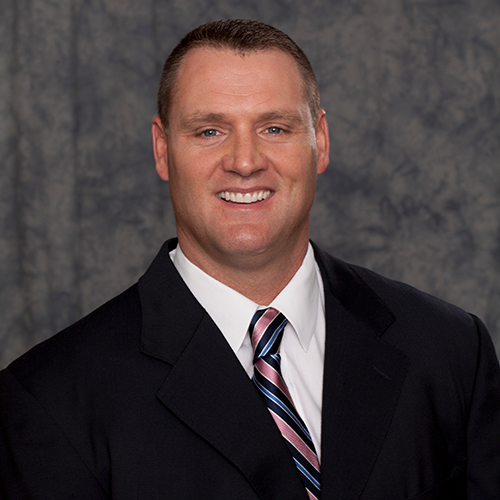
Hunter Goodwin is an owner of Oldham Goodwin Group, LLC and currently serves as President and Chief Operating Officer. Hunter also serves in the capacity of Director of Hospitality.
Hunter is responsible for implementing the company’s business strategies, launching new ventures and initiatives, overseeing ongoing company operations, and developing synergistic business relationships. Hunter specializes in the asset management and development of commercial, multifamily, and hospitality properties utilizing his extensive experience in construction management and business operations. Hunter is responsible for the asset management and operations of all hospitality properties in his role as Director of Hospitality.
Prior to real estate, Hunter was a professional athlete for eight years and was a team captain for the Miami Dolphins from 1999-2000. He served as a Miami Dolphins representative to the Player’s Union from 2000-2001. Hunter served as a Fox Sports College Gameday Analyst in 2005 and was also a consultant commentator for the 2003 NFL Draft for KVET—Austin, Texas.
Hunter enjoys fishing, hunting, and lives in College Station, Texas, with his wife, Amber and two children.
Welcome to the Athletics of Business, a podcast about how the traits and behaviors of elite athletes and remarkable business leaders frequently intersect. The real stories and hard lessons to help you level up your leadership and performance. Now your host, Ed Molitor.
Welcome to the Athletics of Business podcast. And today's episode is a special one for a couple of reasons. To begin with, we are recording this episode from College Station, Texas, home of the Texas A and M Aggies, where I was an assistant basketball coach from 1996 to 1998. Now, this is the first time I have been back. Now, some may argue that's the first time they've allowed me back in 20 years. Well, that is not the big reason. The big reason is that I am sitting in the offices of Oldham Goodwin Group with today's unbelievable guest that I am honored, humbled and fired up to have Hunter Goodwin. Hunter was an offensive lineman at Texas A and M from 1993 to 1996 and was then drafted by the Minnesota Vikings. He played tight end for the Vikings from 1996 to 1999.
After that, he played for the Miami Dolphins from 1999 to 2002 and was team captain for the 19992000 season. And he also served as the Miami Dolphins representative to the players union from 2000 to 2001. Hunter ended his career in Atlanta because of a hip injury in 2005. During Hunter Goodwin's nine years in the NFL, he was dubbed the best blocking tight end in the league. He focused on being a team player and executing each play the way it was drawn up. Now he takes the same disciplined approach to hotel operations and development in his role as president and COO of Oldham Goodwin Group, a commercial real estate company in Bryan, Texas. Hunter, welcome.
Ed. Thanks so much, man. I need to pay you to do my advertising and promotion. Unbelievable. Is not. My daughter made me the only person in the world that would use that as an adjective to describe me. But thank. Thank you.
Well, having a daughter myself, I guess that's a positive that your daughter would use that.
Very true. Yeah, she's hadn't gone crazy yet. She's only 13, so the teens are coming.
See, I only have a six year old, so just keep those teen stories away. But hey, I. I really do appreciate you. I mean, I'm very humbled. You. You represent what the brand, the athletics of business about and I was going through. I like to. I like to think I'm a pretty prepared person and that comes from my days as a coach. And I read a couple articles and you have Some quotes that really speak to the things we talk about. I'm going to read a couple and if you could just take that and run with it and then I'll do follow up questions. And one of the ones I really love was the NFL was better than any NBA I could have gotten. Most people don't understand the kind of high stakes game we played week in and week out.
You're paid a lot of money, but there's a tremendous amount of expectations. The criticism was open and candid, and if you repeat a mistake, you might be terminated. How did that prepare you for life after football?
Well, Ed, I mean, education is paramount. I mean, it's a core of everybody. However, I think the next step in real success is pressure, the ability to handle pressure, perform in a high stakes game where, let's be honest, people change under pressure. Some get angry, some get tearful, some get agitated. But at the end of the day, I think the NFL was so. I just feel grateful and appreciative that I got to experience it because you. I'll give you an example. My wife was a teacher and she would always dread her principal coming in and doing her evaluation, which typically happened once a year. She would lose sleep leading up to it, and he would come in and sit in her class for about an hour and visibly watch her teach.
And I said, honey, in an attempt, back when I was foolhardy and thought I could solve all the problems, I said, honey, what you're describing is every day that I walk in the door at work, from the time I start to lift weights to the time I go out on the field and execute a game plan, I come back in and everything I do is filmed, critiqued and judged, and it's done in front of my peer set. So not only do I have to listen to the principal or have the principal evaluate me, he then criticizes me in front of all the other teachers. And I think when you're raised in that environment, Ed, while it's uncomfortable and it at times wears on you, it also is invaluable. The scars, if you will, that it prepares you for life.
Because there is a tremendous amount of sensitivity in the world today. It seems to be getting worse and worse. And I just believe the best way for you to get more out of people and how coaches were able to get more out of me is constant and honest feedback. And when you're giving honest feedback, at least when I was the recipient of it, there was a lot more of it that was critical than was Positive. And I think one of the things I've had to learn as I've transitioned into business is you can't just give criticism in your coaching. You can't just point out the areas of failure. You also at times need to consciously give an attaboy and find a balance there because I think it's healthy.
But it just really prepared me well for taking coaching and being open to receive coaching because that is not, I don't think for any of us are born on, put in this earth, put on this earth with the desire to have other people tell us where we failed or how we could do better. You have to learn. That's a habit that has to be learned over time.
Right. And you talk about taking feedback and it's going to be criticism. But I think one of the things we learn in athletics that's so key in business is you are vulnerable and you have to be transparent and you have to be honest with self, you have to be honest with team. So let's talk about a little bit what you folks do here and then how you execute a feedback loop with your group, with yourself, because that's so important. And you talked about we're sort of getting away from competing as a society. We're sort of getting away from the toughness aspect. So how are you able still to add that piece of the puzzle which makes you guys so successful?
Well, I mean the word gets belabored, but it's such a foundational element in everything I try to approach. It's culture. And even down in the smallest microcosm of an insignificant sporting event Little League game, all the way up to, I think the greatest and biggest companies. A championship team is one where the coaches have gotten buy in to the process that they do day in and day out. And once those players begin to demand it, set the tempo, hold others accountable. Without the coach, before the coach can actually begin to open his mouth to correct an act or action that's flawed, when the teammates begin to do it for him, you've got the culture where it needs to be. That is very easy to talk about, but as you know as a coach, very hard and rare to.
And I think the hardest thing about it, Ed, for me is it's every day. I mean you have to and it does, it gets, it wears on you. It's exhausting. But you've got to bring it. I'm very fortunate. I've had Denny Green taught me this, that he always was really good at identifying practice squad guys who he then converted into really great players for us. Ed McDaniels is a linebacker that, you know, didn't quite make it, wasn't highly drafted, hung around for two years on practice squad and became a very vocal leader, but just a tone setter, big culture guy.
And, and you, when you watch those kind of kids develop, I've done, I've employed that practice here is I've got a lot of guys, young men and women that have been with me a long time who started here as interns and bought into the culture. And now, you know, it's easy for me because I don't have to follow behind them to ensure they're doing it the way I want it done. They demand it, they carry that badge of culture with them everywhere and they necessitate it and demand it of others. And if you can get however big the group is, you know, 500 people or five, if you can get the majority, holding the minority accountable and pushing the culture, you can win at whatever it is that you do. It's hard to get there but, and it takes a village.
But you've got to get right, you got to get the right kind of people and the right mix. And I think that's what's so hard in everything business and sport is finding the right roster and getting the right mix of the right kids on the roster. Because you're not always going to get self discipline, self starters, you're going to get a mixed bag. But it's how can you shape and mold the right mixture to get the majority, holding the minority accountable and pushing and believing in your culture? That's the task that I try to wake up with every day and pursue.
So when you folks are building your human capital here, do you get real intentional about finding people that would be glue guys, so to speak?
You know, Great word, Ed. Absolutely. And I think what I've found is as I've, and trust me, most people won't admit this, I've made tremendous mistakes in hiring. And it's hard because I think in an interview, unlike in sport where you're going to figure out pretty quick their character, lack thereof, do they have the ability to make the hoop or make that 15 foot jump shot or catch that pass over the middle of the field or block that down defensive lineman, but in business you can hide a little bit. It's easier to hide and be a little bit deceptive and you can really trick yourself in an interview What I've done is, I think my approach now is I am very careful about who I allow to come into our culture and how I've. I guess my coping mechanism is I engage the immediate.
The people that I trust that I deem as foundational team leaders in my company, and I involve them on any major key hire that we have. They give input, they're involved in the process. Because really, as I tell the. The person interviewing, we feel like this is a very special team and we're allowing you to join our team. So you need to convince us why we should allow that entry and make certain that your culture or our culture is going to fit your expectations. Because. And we try to be very blunt, thorough and concise in communicating what the expectations are and how we expect you to handle yourself. When you wear our jersey, that's.
I mean, and that's incredible. And in. Porter Moser, who I spent time with, we played together. Creighton spent time here at A and M. He was here with Tony, head coach, Loyola went to the Final Four. He was our first podcast. Podcast guest. And he said something that really resonated with me and you. You sort of just spoke to it. He knows when he walks by his assistant coach's office and he looks in the window and he sees one of his players or one of his recruits sitting in the office with the door closed, but he looks through the window, he's comfortable with the fact that he hired a person that's going to be saying the right things to that kid, and he's going to be saying the things that he, as a head coach, would be saying to that kid.
Is that something that's hard to develop in the business world?
You know, I use the word Ed. That's very profound. I always say, early on, when I was working with some younger talent, I used to tell one kid in particular, I'll brag on Cole Baker, who runs my hospitality division. He came here as a college intern and I hired him out of college. And I used to tell him all the time, cole, I want to. This sounds egotistical, but I want you. I want to replicate myself in you. I want you to think the way I think. I want you to problem solve the way I problem solve. I want you to have the same aggression and intensity and ferocious approach to things in the grind that I have.
And if I can get to a point where I trust that you will do it the way I would want it done, and you become immensely valuable to me. And in a decade, he's immensely Valuable to me, as evidenced by where he stands in both stature and pay.
That's huge.
So I think if you can get. Because then, Ed, it's a self fulfilling prophecy, just like it is on a team. If you get your buy in from your leadership. Typically in sport it's the older guys and in business that's not always the case, but it's a fair parallel. Once they begin to carry it out for you, then everyone that answers to them begins to carry it out and it just begins to sink in all the way down to the person that answers the phone, which some may say, okay, well that's just the, you know, that's just the receptionist. That's an insignificant job. And I myself have stopped what I'm doing and gone to talk to my receptionist and said, look, you may think this job is beneath you, but when you're answering the phone, you're representing a brand that stands for something.
And if you can't do it the way we want it done, we don't think it's insignificant. Do it this way. And even all the way down to that, I think people begin to buy in. And once they see it working and they see it winning and they see being part the best thing in the world. My most favorite memories of sport were being involved with teams that won. Right. Because that's how you measure success. And I go back to the 98 Vikings or I go back to some of my years here at A and M. When you had a winning team there? Yes. Were there hall of Fame players? Of course. Was there fantastic talent? Of course.
But was there a great culture of tremendous accountability and leadership and honest and fair feedback amongst that group that the coaches didn't have to demand and necessitate. The room was full of it. We managed ourselves, we policed ourselves. And when practice wasn't going the way that it needed to go, we didn't need our coaches to yell at us. We saw it and we held each other accountable. And I think when you get to that point, it results in winning and it's infectious. And those that don't want that will naturally, there'll be some attrition and they'll naturally find a way out and those that aspire to it become better.
And let's talk about that a little bit. I'm going to get back to people who either think the job is below them or there's some people that just get by. They don't think their job is really that important when truth be told, it's very significant. I remember one of the things when I was a walk on and create for coach, I mean, he would be very intentional about even if it was just feeding the post for the first 15 minutes of practice. Here's why you need to do it, here's how you have to do it, and here's what we're going to get out of it as a team. But in this world, in the business world, I firmly believe that your best performer, your highest performer needs to be a great teammate.
Doesn't need to be a leader, so to speak, but they need him or her, he or she needs to be a great teammate. How important is that to you?
Tremendously important. And I'm going to go back a little bit, Ed, and go back to something you just said a minute ago that I don't think any highly successful person, female, male, black, white, green, pink, doesn't matter. I guarantee if you interviewed 100 people that the society deemed successful, all hundred, at some point in their career, did a task or duty or job that was beneath them. They weren't always the CEO or COO or owner of the company. And I think that is a pivotal part in your life, is if you think you're truly great and the task and duty that you're being asked to do is beneath you, if you let that energy convert into negativity and pessimism and skepticism, then you will guarantee no one will ever recognize your excellence.
If you attack sweeping the broom closet like the best damn broom sweeper that's ever swept with a broom, and you do it with meticulous attention to detail and you do it every day. If the employer you have doesn't recognize your greatness, some other employer will, just like a coach will. Right? And I think that is, it's almost fascinating to me is when you're, I like you was a walk on. And I came here without being given the gift that others were given. So I felt I already had a built in mechanism to motivate and overachieve and go to practice every day and act like it was my last practice of my life.
It was a game.
Yeah, it was a game.
It was a game.
Yeah. And that, you know, did I go home at night and lay my head on the pillow and go, I'm good enough to play and start and be on the field and yet I'm not. Of course I did every night. But did I sulk about it and whine or did I say, you know what, I'm going to wake up every day and prove those that watch the environment that I deserve to be on the field and eventually I got recognized.
How much did that conviction and that swagger help you build this business?
So let's talk 100%.
Yeah. Let's talk a little bit about how when you got done playing, had the hip injury, you got done playing, you transitioned out. What was that like jumping into this business?
You know, Ed, transition is hard and I've watched a lot of guys struggle. A lot of my friends and teammates have struggled. Going from college to the real world, going from pro to the real world. I think any transition is hard. Going from coaching to another career or profession. That conviction, man, to me it's like your coping mechanism. It's like the woogie that you're five year old carries around. It's to me when you get stressed. This is me so candid, open conversation. When I got stressed and when I felt like I was spiraling out of control and you know, I was about to, I was running up against something that was tough and challenging, I immediately went back to my safety, my safe area, which was grind, work, bear down, grit, have, you know, screw the, screw everyone.
I'm going to show them I can do that. And I think that competitiveness and burning desire to prove I'm worthy and can do something was paramount in my, I mean I would attribute a huge amount of success because let's be honest, when you come into a room, it's pretty hard. Even I'm 45 now, but I'm still 6, 6 2, 60. It's pretty hard to convince people I wasn't a former player of something. Like you're always labeled as an ath and I think in business, I think you're starting to see it change a little bit. But I think you always felt initially especially you had to be more prepared, you almost got labeled.
Well, maybe they're not going to be that smart or they're not going to be as an expert on the subject matter, or maybe that was a false creation in my own jacked up brain. But I always felt like I had to over prepare, I had to shine, I had to prove that I belonged. And just like I had to prove I belonged in sport, I felt like I've had to prove that I belong in business. And I still feel that way. You know, I don't take for granted at all the success we've had. I'm grateful for it, but I feel like I have to continue to work at it every day and be a better leader, be more informed, understand how to continue to get better and evolve as a person. If I don't, then the game will pass me by.
Be that football or be that. It's easier at this level because your body doesn't fail you know? Right.
Yeah.
When you're running people for a living, your body eventually fails you if your will in your desire doesn't. But in business, I mean I felt like for me I, I probably put more stock into that than it deserves, but I felt like I really had to earn. I did not want people ed to walk in and go yeah, well that's just the ex jock. Right. I wanted them to be impressed with my astute knowledge in business. And I felt like because of that desire to prove that I belonged, it made me over prepare and work harder.
So what was more of a challenge for you? And if you could talk into how you built and scaled this business, was this scaling the business and talk about the different pieces of the puzzle, was it scaling harder or was it the sustaining success getting to this level and then saying okay, we can do more, here's how we have to do it. Now what was the bigger challenge?
Growing and growing is, has been hard and I'll tell you why. So personally I really enjoy the getting my hands dirty. Right. I mean I'm a former glorified offensive lineman so my role through most of my life has been a servant mentality. Right. My job is to make sure that the quarterback doesn't get hit and he can have plenty of time to read the field and make plays. And when the receiver makes a great catch downfield and the quarterback makes a great throw. Everybody gives credit tom Brady but they never really admonished the front five that made it all possible. So I think that being embedded in my DNA as we have grown and I have had to grow as a leader, my, my ability to, to one coach, which is where I was originally most comfortable and one mentor and one set.
The example I've had, I don't get that opportunity any longer. It's. I now manage my leadership team and then I have to trust that they're carrying forward the culture to their C level management team who then carries it to the on site managers who then you hope carry it into the properties. So you have to affect, I guess it's just layers and the growth of figuring out when do I need to onboard people the recognition of.
Where.
One of probably my failures has been. There are certain things I'm good at and certain things I'm not. But sometimes I think in my head I believe I could will myself to be good at anything. And while I've proven I can do that, you do lose a lot of. There's a sacrifice in proving you can do everything. And I think so hiring some skill sets that are better at certain subject matters than you, but ensuring they still fit your culture and they're going to approach it with the same like mindedness as you is key. And it's harder because you have, you begin to lose some control.
And was that hard? Well, you just said it was hard, but how challenging was. I mean you're a servant mindset. You like to, as an offensive lineman, you like to take care of things, you like to take care of people. Now you're turning those reins over, so to speak. But let's talk about how many properties and what is the size and the.
Spectrum of, I mean our business today we have, I'm giving you broad brush jokes. We probably have about 45 commercial properties which under that title we put any multi tenant retail or multi tenant office or single tenant office that would, medical office would fall under that. We have a, I think 10 apartment complexes with one under construction. And we've got 12 hotels which probably in the next 30 days we're in the process of closing on a two hotel portfolio which will take us up to 14. So we're a 500 plus employee company and you know, countless. I've got a vice president of hospitality, a vice president of multifamily, a vice president of development, vice president of commercial and then we have an entire brokerage and sales division that is under my business partner.
But it's a big company and it's a lot of, it's a lot of oversight and a lot of layers of management and as you grow, making certain that the culture is continued, mandated and it's done all the way down to the very last person that works here. That's the hard.
And talk a little bit about the challenge of doing that in a business, in an industry that evolves so quickly and changes so much and to be able to maintain that consistency so your group knows what to expect from its leadership, how you're going to respond to certain shifts in the marketplace, whatever. How do you stay consistent with something that changes so much.
You know what's funny Ed, is you use the word consistent a lot. And it's, it to me is the answer. And consistency is in my opinion when you're not that smart like me. You can't. I, I'm not smart enough. And I tell my, Everyone that works has heard this a thousand times. For me, I'm not smart enough to be a manipulator. You're just going to get honest, raw feedback. And you may not like it, but that's how I'm going to roll. And to me, if I'm consistent with that and I'm honest with you in everything I do, then I obviously expect the same back. I want that reciprocity amongst my team and I want them to be honest with one another. And just like, I mean, Jimmie Johnson used to belabor how you dress, how you act.
You know, when you're a Miami Dolphin, you're walking through the airport, act like one. You want to act like I'm idiot and you know, wear your pants around your ankles, do it on your free time. But when you're representing us and our brand, you can't, it can't be a part time gig. You can't do it on Friday and not do it on Saturday and Sunday. And so I tell my team, everyone is watching how we react. Everyone is watching how we handle a problem. Everyone is watching how we interact with an upset customer. Everyone is, you know, watching how we re. Do I come to the defense of a manager when they're being treated unfairly by an upset, you know, irritated guest or resident that just is now made it personal. That's where I think those are those opportunities.
Just like when you're a coach, where you can shine right, is being there for them. And it's finding that balance between pushing, prodding, motivating and holding accountable and also loving and being there for people and going and doing the extra mile. And it's hard because as you grow. I've talked about this with our current coach. I mean, good coaches are great counselors. The more team members you have, the harder it is. There's only the one thing none of us can change is time. And when you're coaching a hundred kids, you don't have the time to sit down with each kid and intimately have relationships. So you have to make what you desire. Is that the relationship you would have with that kid is carried out through others down to that kid.
And that's hard because if you're trusting someone and they're betraying that, it can hurt your company and it can hurt your team, your company. And it's happened. And I think when you find that's happening and they're not living up to what you expect in the culture. You better get rid of it and you better address it quickly. And. And that is also part of your culture.
And the leaders need to be. And this is. This is one of the big things. I took this from Coach K. I'd love to say I came up with this myself, but speaking of not smart, be the face your team needs.
Yeah.
You know, be the face. And you just talked about whether it's caring, whether it's empathetic or whether it's a foot on the rear end or, you know, smack upside the head, but that, you know, that's such a big deal. And the other thing. And we're running out of time here, and I've got a couple good questions for you. Not because they're good questions that I thought of, but because I know the answers will be good. Decision making, split decision making, the ability to work through things in your head, but make a decision and then stick with it. Can you talk about that a little bit?
I can, and here's been my approach, and probably the offensive line mentality in me as well is I think when you're in a role like myself or others in the company, and once again, you have to lead by example when it comes down to a big decision. I'll give you one specifically. We had made a determination a couple years back that a software solution that were using had become antiquated. It lacked intuitiveness, and it was causing a very specific chain reaction of issues, creating inefficiency for us. So we needed to make a major decision for our company as far as what's going to be our new software, that is architecture to run our company. And what I did is I assembled key decision makers, almost like a committee, key decision makers that would be affected by the decision.
And I brought them all in, and went through, I think we selected three different software solutions. We made each of those software solutions present to this committee, and they got to be involved in asking the right questions, evaluating the software solution. But at the end of the day, it was ultimately my decision. But I. But I made my decision through exposing them to the decision themselves and giving them a chance to communicate to me, which only helped me make a better decision. Ed. Right. And I mean, I think when I think back to. Dave Wanstead had a leadership council that I was part of when he coached the Dolphins, and really that's what. If you go back and you. You really think. So what was the real purpose? What was the mission of the leadership council?
Well, I think he wanted open lines of communication, but he also would assemble us in a room and entrust that it's easier, okay. For a coach to say, you know what, boys, we're in week 16, you're tired and beat to hell. But we need a full pads practice. If we had some collaborate, if he bought, if he had some buy in from his key member, from his key leaders, that here's the reason why I think we need this. That took a little extra effort on the front end, but it completely wiped out any naysayers on the back end, if that makes sense. So I think that approach is not one I always do, but I'm finding it works really well. Is a collaborative approach towards key decisions.
Giving the people, giving your immediate people you trust the ability to weigh in, but at the end of the day to make the decision that's best for the company, respect it and move on. And you can't waiver, right? You can't waiver.
No. And you have to stick to it. But it also gives them ownership. And if you do listen to them and you embrace what they say and you go with it, now they have an emotional attachment to what it is you're doing.
Nothing's perfect, brother. Nothing. I mean, and I told him that, I said, there's not a software that exists that's perfect. And Jimmy Johnson, I mean, he taught me this. If there's anything about. Well, there's a lot of things he taught me. But one, Jimmy didn't always have the best plan. Like the plan could have been better. He probably would hate me for saying this, but what he did a damn good job of is his coaches, his players and his down to the trainer. If you believe in the plan and you execute on it and you never waver or deviate from it, a mediocre plan will win over the best plan ever that's constantly wavering and altering and changing. And so I just learned from him, and you said it earlier in consistency, you got to have a good plan.
But if you stick to a good plan and a good process, it'll beat the best fanciest plan ever employed. If you don't have buy in and a team of leaders that are just hell bent to make it work.
How much in the business world is mental strength were talking about before we started recording, how much does it play into the commitment? Not just being interested in the process, but being committed to the process. And how does mental toughness come into play there?
Yeah, you said mental strength and I'm glad now You've come over to my dark side. When I say mental toughness, I just think it's so key. I'll give you an example is I had a really unique experience with our, with a current head coach that the world would know, well, where he and I were. It's a unique situation, but I'll get to kind of the crescendo. We met a 37 year CIA veteran or a former employee of the CIA in. One of the things that jumped out to me is it doesn't matter what field you're in, military, business, sport. You must have mental toughness. It is an absolute to me, gospel, necessity. It's like air. You can't win without it. And the challenge I think today is you can't. I'm going to use your word. I'm going to steal a word from you, Ed.
You use mental strength well. If you want a strong bicep, you don't have the bicep. Get strong by just sitting there complacent and lazy. How you develop mental toughness is, or mental strength. You must put people in high anxiety, high pressure, uncomfortable positions. And that's not natural. People don't like if I look back on the crazy crap that we had to do, I went out to practice last night and I sat there thinking to myself, with my son, I'm just dripping in sweat and I'm thinking to myself, how in the hell did I wear pads, run around and physically compete against dudes my size and do this in 100 degree temperature with 95% humidity? Like, why in the hell did I do that?
Well, that I was subjecting myself to very hard environments and situations which were giving mental strength, which has been absolute foundational element in everything I've been successful in doing. My marriage, my, how I raise my kids, how I run this company without it. I don't know what I'd do if I had mental weakness. Just if I didn't have the football experience to build the mental toughness and the mental strength, I would be weak. Period. End of story.
So how do you get people to get outside? I believe that the edge of your ability, get outside your comfort zone, embrace it, live there. How do you get people in this world to challenge themselves and embrace. Embrace adversity. Grow through failure. Not get through failure, but grow through it. How can you do that? You have so many different things going on. How do you lock into being able to challenge people that way?
I mean it gets back there's. No magic. There's no magic answer. I think it gets back to. As you grow, you better develop a culture of people that are going to necessitate and demand the. They can write. I'm going to give you analogy. They have to write the workout plan for mental toughness. They have to execute on it every day. They have to hold people accountable and they have to demand that it gets done. And they have to force people beyond the barriers that they naturally have. I always used to laugh, God rest his soul, because I love Denny Green, but I remember one time where we had gone to La Crosse, Wisconsin, I think, to scrimmage. It was either the Saints or the Chiefs.
And it was during two days back before this new collective bargain where we actually went full pads both practices, and we did like four days staying in this crappy, unair conditioned dorm. And it was miserable. I mean, fights every hour. I mean, it was crazy. And we stopped, we bust back to Minneapolis, and on the way we stopped in some, you know, countryside cafe to have dinner. And Denny gets up there and he said, you know, march all night, fight all day. March all night, fight all day. March all night, fight all day. And he would always tell us that your body is ultra conservative. And it, you know, when it shuts down and starts telling yourself, you can't go anymore. You got 80% left in the tank.
And I'm sure he made it all up, but it sounded good, but it sounded awesome, and we kind of bought into it. And what you find is you. If you watch any movie about, you know, military success, a lone survivor. You see human beings endure immense discomfort, immense pain. And they do it because they just will themselves to do it through their. What's between their ears. And the more exposure tough circumstances, the more I think every day that you get exposed to that, it is strengthening your brain. So when you need it, you're ready, right? You're prepared. And it is hard. I mean, I don't have a magic answer. And it's getting harder. I think you know, I don't buy this. We all want to jump on the millennial bandwagon that they're all different and all this. I think if.
I think this, Ed, this is not Hunter's opinion. This is Hunter's opinion forged from a lot of. Formulated from talking to a lot of current coaches. I think this generation of kids needs mental toughness worse than any we've ever had. I think the guys, the generation that's no longer here, that fought in World War II and those guys are dying off. If you look at what they were exposed to, life circumstance, it was hard. Those guys that served and died and you know, the beaches in Normandy and D day, like those dudes, those cats were tough.
And see, you and I got exposed to that through our uncles, our great uncles, our aunts. It's our generation to. You know, we need to figure out how to motivate the millennials. And let's talk real quick about.
I wrestle with this at full disclosure. I wrestle with this with how I parent because, you know, my kids are fortunate that we didn't mind. I mean, my parents were middle class, but I didn't belong to a country club. That wasn't my lifestyle today, that is my kids lifestyle. They go on vacations that I didn't get to go on until I was signed my first free agent deal, right? And so how do I create an environment of accountability and mental toughness when the life they live is softer than the one I lived?
How do you.
It's hard, brother. And I wrestle with it. Every day is as. How do you do it?
That line where you don't want to be too overbearing, right?
And it's hard, man. There is. I don't know. I don't think there's any recipe. I've not found one. I seek it every day. But trial and error. I mean, I made a mistake with my son that recently, and I think I was probably too harsh and too hard. And then you have a wife that kind of gut checks you and says reassess. And you think about it, and you have to admit, okay, I'm flawed. I need to. I need to rethink what I did. And you've got to go back and you've got to cure it and fix it. And you do the same thing in business, right? I mean, just like a coach. Every. Every. Just great. You think Nick Saban executes every situation with perfection. You know, that's bs. He makes mistakes every day, but you got to go back and fix them.
And I think that's. That is the hardest thing today for I think coaches is kids aren't as tough as they used to because we as a society won't allow. We don't want. We don't want toughness. We don't. We don't want to create. Everything is about how do we create an environment where everyone gets a medal and everyone wins because, oh, my gosh, we're gonna. What I think is hilarious and I'll get off my soapbox, but I Think depression and mental illness is the worst it's ever been in our country. And it's all, it's typically tied to anxiety. But I think the problem is now because we have so little anxiety that at the first sign of a problem, it just the reaction for the, for the mentally weak brain is they fly out of control.
And I think finding that perfect dose of pushing and exercising the mental toughness and creating the mental strength but not being a psycho over the path nut job that the other parents want to arrest you, that's the balance and something I'm very, very self aware of because you and I sounds like our backgrounds were similar in the fact that I was raised in a very tough household. And let me tell you something, the one thing it was not was comfortable. You didn't wake up comfortable and you didn't go to bed comfortable. You went to bed uncomfortable and you barely slept going, oh crap, I got to get up and do it all again tomorrow. But he was strengthening my mental tough. He was making mentally tough and mentally strong to prepare me to succeed.
And, and I credit my father and mother for doing that. I have to do the same thing.
Now as a father. It's hard to do.
Oh, coach. It's impossible. It's very hard and it's hard. It's very hard. And I don't have a magic answer. I wish there, I wish there was a book you could read that gave you the how to. Because I think it's different too by the. If it's a girl, if it's a boy. Even within the different sexes, certain kids are respond well to uber criticism and other kids, you know, harbor it. It makes them worse. And you've got to be a little bit more tender and loving. And end of the day, let's full circle. Come back to something you talked about. You talked about the ever changing landscape of business. It's. The landscape changes, period. The world we live in is different. It's different today than it was two years ago. It's different than it was five years or 10 years ago.
So I think you always have to be changing. You always have to be self aware, you always have to be willing to improve and you always have to be willing to look at others. And all that's what I love about being around leaders. I love being around other successful people, not through their Twitter handle or not through fa. But I want to be around them. I want to listen to them. I Want to learn from them and I want to talk to them and I want to understand how they make people, what do they do? Because I'm always interested in how others are motivated. I learned something from Gary Blair, who coaches women's basketball. I learned something from coach G, who coaches women's soccer. Like, I want to be around all coaches of all types. Fascinating.
I got to meet our new women's golf coach and for the first 45 minutes, all we talked about was culture. Who would have thought that golf, which is a non contact sport, it's all about between the ears, right? And so her whole layout, she's a championship coach from USC we just hired. I think she's won seven national titles. And all she talked about, I just asked her like you asked me a question. She just went on a 45 minute rant about culture and development and accountability and self accountability and having leaders in the locker room. And it just, it's fascinating. You keep hearing the same things and you can learn from people and better.
Yourself and you know, I'm about to jump on the soapbox with you because one of the things, we love being around people like that and our kids are fortunate. They may not know it yet, especially mine, with how young they are, but they're around. I mean, that's the way I was raised around people like that. But they also have an inner circle of friends who aren't raised around people like that. Just like here at the office, you're going to have people that are wonderful people, they just, they don't get it. They just don't get it. That's it. And it doesn't make them bad people. It just, it makes it more of a process.
Mike Young, our A and M president, he's taught me a really interesting word. This sounds goofy, but he said he uses the word exposure. And the context of the conversation we had was that if you ever ask children when they're young what they want to be, what do you want to be when you're, when you ask a group of second graders what most of them are going to answer are A, what their parents do, B, a policeman, C, a fireman or D, a doctor. Because those are things they've been exposed to every day. Right? So they want to be what they see. And I think I intentionally took time out of my schedule. I didn't have last night to take my son to a physical, full padded practice, because I wanted to, I wanted him to see that.
You see a hundred guys walk out in Kyle Field With a hundred thousand fans, you see the pageantry and the core walk in and you think that's, it's all fun. But, but let me, I want to. Here's the truth and reality. Last night he saw guys on a knee puking. Last night he saw them uncomfortable and miserable such that a 9 year old had the wherewithal as driving home. He's like, dad, man, that is hard. Like I could see him wrestling in his mind. Do I? Is this really what it takes? Like it was almost like the first time anyone had ever really exposed him to the non glamour side of the output that we as fans watch.
Right. And one of my weaknesses as a dad would be, okay, well what are you complaining about? Your homework. You just watched that, why are you complaining about it? That's not hard.
No. So it's just I think that exposure piece and you go back to watch. I go back and think about all these coaches and the different things they do to motivate you and you. Oftentimes a common theme is they will make available to you or expose you to someone who has overcome unbelievable odds. Like I'll give you an example. Jimmie Johnson. I'll never forget I was telling our associate AD this story last night. We all walk into. I'll be quick and we'll wrap this up. But I walk in, we all sitting in an amphitheater, all defense, all offense, all special teams. So 53 guys, another 10 for practice squad, 65 guys.
And this is with the Dolphins. This is with the Dolphins.
There's a guy sitting up on the stage. So think of your old high school auditorium. We're all in the chairs, guy up on the stage, guys wearing a sports coat, looks just like you. And I don't know who it is, have no clue. We don't even know context. So Jimmy walks in, he says, guys, you know, I want to introduce you to Ed Molitor. And the guy stands up, he takes his mouth and he removes his sports coat. And at that point it's evident that he has no arm of any kind. He doesn't have a right arm, he doesn't have a left arm. He has. He was born with no arms at the shoulder, so he didn't even have nubs. He then proceeds to open a coke with his toes.
He pours it into a stemmed like the equivalent of a wine glass and he picks it up and drinks it with his toes. So at this point the room is pretty quiet and we're all like in sin in our shot. And I'll pair I'll give you the consolidated story. But he basically goes on and he says, you know, I had a mother and a father. I was born with no arms. And the short story, the consolidated version is I had a mother who loved me and protected me and would dress me and bathe me and did everything for me. She went away, like on a week long job, you know, went to some sort of a job requirement where she was gone for a week. So the dad, which I'll preface everyone's gonna, in the world's gonna think he's horrible.
He locks a kid in the room and says, figure it out, get dressed. And the kids, the kid who's now 30 years old is saying, it took me seven hours to just get my shirt on. I tried to crawl in it. I propped it up and he said, then the next day it took me six, five, four, three. And then four. You knew it. By the time mom came back on Friday, I could get my shorts and my shirt on with no help. And for five days, I despised and hated my father. Hated him, wanted to just kill him, use it as motivation to figure out a way to get dressed. But then I realized, I can get dressed.
So his point was, had his dad not ever mentally strengthened him through putting him in a tough situation which others might look at and go, what a horrible human being. His son would never have become the man he became, which is a functioning adult who drives with no arms.
Amazing.
Crazy, right? And when you hear that and you're healthy, you look at yourself and go, well, I'm not going to complain about my sore knee and I'm going to shut up.
When you guys walked away from that, was it kind of like, what was that? I mean, did you guys talk about it?
Yeah, I remember going out to practice and like, Tim Bowens got on a knee and kind of looked at us. It's like, I guess, complaining anyway. Like, there's no complaining today, boys. Shut up and let's make it happen. You know, So I just, it validates that exposure toughness, exposure tough circumstance and exposure to doing things that make you uncomfortable are not fun. But they are the exercise necessary to make your brain strong, which is going to be a coping mechanism to achievement, a necessity, if you will.
And it's going to provide you the opportunity to tap into some things you never thought for sure to achieve. Yeah.
And I guarantee if I asked you the same question, you could have, you could give your own series. Yeah. I mean, we could talk.
We could talk.
We could talk for Hours.
Yeah, yeah, but.
And everybody's got this.
Hunter. One of the things I really admire about you, many things, but you're involved in a lot of things. Okay. A lot of. A lot of benefits, a lot of charities, you know, the community. Is there anything out to our listener? Is there anything that you want to talk about that they can get involved in or anything that they can contribute to or something you want to bring awareness to?
I mean, I. I'm very involved in. In a bunch of different local charities, and both myself and my business partner have served. I've been the chairman of design review board, zoning board of adjustments. I'm on Scotty's house. I'm on all different kind, I guess, a general message. If you want to make a difference, quit talking about it and do something and serve. Find something that you can add value to. And once again, when you are serving on nonprofits that feed hunger, take care of those that don't have a home, are displaced, and, you know, are subjects of. Subjected to violence, that exposure is healthy for you because it. It reminds you how lucky you are to not be in that same circumstance. So I think just. It's a. It was a foundational piece that my dad taught me. He served on school board.
He did, you know, was. Was constantly involved in our community, and watching him made me feel somewhat obligated to do the same. And so I just would say, find something in your community. It'll. You'll get more out of it than you give. I promise.
And how about you folks? Website for the company if people are interested in finding.
Yeah. Oldhamgoodwin.com O L-A M G O-O-D-W I N.com Twitter handle.
Do you have Twitter? I don't have Twitter, no. I kind of figured I'm a LinkedIn.
Guy, but I don't do Facebook and I don't do Twitter.
I love LinkedIn. I think LinkedIn's awesome. So if you want to find out more about the Molitor Group, obviously, tomorrow. Group.com I do have a Twitter handle because I need to.
You have to.
I have to. You're amazing at the Molitor Group and do have a Facebook page. The Molitor group and the website for the podcast, which I love. Our group's doing great work is The Athletics of Business.com, which you may already know because you could be listening to it through that. But share. Share the podcast. This is been an incredible 55 minutes. I mean, this is a ton of value. Hunter, I appreciate it.
You bet, man.
All right. Take care, man.
I'm hanging out with guys like you all day.
Absolutely. All right. Take care, man.
Thanks, man. Appreciate it. Thank you for listening to the athletics of business. Be sure to give us a rating and review so we know how we're doing. For more information about the show, visit theathleticsofbusiness.com now get out there. Think, act and execute at the highest level to unleash your greatness.