
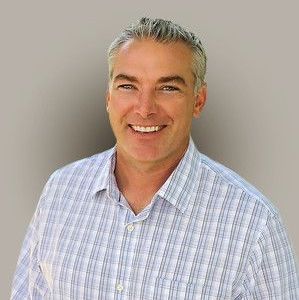
JJ Gottsch is the longest-tenured employee with Ryan Sanders Sports & Entertainment and has played a key role in the development of both the Round Rock Express (Houston Astros Triple-A) and Corpus Christi Hooks (Astros Double-A). He was promoted to his current position, COO, in January 2015. In this role, he oversees all business operations for the Express, RS3 Turf, RS3 Strategic Hospitality as well as the company’s growing entertainment division. Gottsch was president of the Hooks for the club’s first five years, where his leadership and experience helped them draw more than two million fans in their first four seasons. Previous to his position in Corpus Christi, Gottsch served as assistant general manager for the Express during the first six years of the organization’s existence. Gottsch helped lead the franchise to record-setting attendance numbers, establishing a new Double-A home attendance record with 660,110 fans in the club’s first year, eclipsing the old attendance mark that had stood for 20 years. The franchise would proceed to break its own attendance standard in each successive season with Gottsch on board as a steadying influence.
A former player, Gottsch’s professional career included time with the Butte Copper Kings in the Pioneer League and the Perth Baseball Club in the Western Australia Baseball League. At the collegiate level, Gottsch played for Creighton University as well as TCU, where he was a member of the Horned Frogs1994 Southwest Conference Championship and NCAA Regional team. He transferred to TCU after spending three years at Creighton, where he was a shortstop on the 1991 Bluejay team that advanced to the College World Series.
Will Ferrell Pitching for Round Rock Express – Promotion with Will supporting his Cancer for College charity – https://www.youtube.com/watch?v=haHlFA_bDkI&t=
Truckin & Buckin – A two-day simultaneous Monster Truck and Bull Riding Event in 2016- https://www.youtube.com/watch?v=o-cWDZiXPa0
Fear the Walking Dead – We rented our stadium out to AMC Studios for six months (before our 2018 season) so they could shoot the first season of Fear the Walking Dead – https://www.youtube.com/watch?v=IPYH7WMKPrs&t=103s *You’ll need to rewind back to the beginning, it seems to be opening ½ way through
Home Run Dugout – A new startup in Austin basically a baseball version of Top Golf – https://www.youtube.com/watch?v=VnkjqByAnO0&t=
The UFC Watch Party – https://www.milb.com/round-rock/fans/ufc-252
Recap of the Granger Smith / 4th of July Concert –https://www.youtube.com/watch?v=e6wRtwFkARA
RR Hairy Men Page – https://www.milb.com/round-rock/fans/hairy-man
The real stories and hard lessons to help you level up your leadership and performance. Now your host, Ed Molitor.
Welcome back to another episode of the Athletics of Business podcast. I am your host and CEO of the Molitor group, Ed Molitor. And speaking of welcome back. Today I am joined by our guest from episode number 82, JJ Gottsch, for his encore interview. Now, if you haven't listened to episode number 82, I encourage you to push pause, go back, listen to episode 82, because that sets up this conversation really well. There's so much to talk about. We really jump right into it and we dive into resiliency. And JJ just hammers home why resiliency is not an option for him. And he talks about who he owes it to. And I do not want to steal his thunder because it's an incredible segment inside of this conversation.
We also talk about how being brought up in a household of problem solvers helped shape him into the leader he is today, and where that whole mindset on resiliency not being an option comes from. And then a very interesting piece of this conversation. JJ talks about why it is so important to look at who all of your stakeholders are, everybody all your stakeholders are, when making decisions. And we really get specific about during this pandemic. And one of the stories he shares with us and the examples he shares with us is their 4 July concert they had at the ballpark with Granger Smith and everything that went into it and the whole thought process behind it and all the negative things that were converging on and how well they handled it.
And speaking of that, I love when we locked into how this time, this pandemic, and this period with his group, Ryan Sanders Entertainment, and all of his incredibly resilient and collaborative and creative people in the organization have proven that you don't know how much you're capable of doing until you are absolutely forced to do it.
Either way.
Really, really enjoy this conversation I had with JJ.
Gotcha.
JJ, welcome back. I appreciate you joining us again here on the Athletics of Business podcast. Our world has changed, and I really look forward to you filling me in on what's going on since the last time we talked.
Thanks, Eddie. I hope.
I was hoping I didn't bring your ratings down too much.
Quite the opposite, man.
Quite the opposite.
I appreciate you having me back, but as you mentioned, you know, things have changed a lot. You know, they're not only changing monthly and daily, but it seems like really, to this point, they're changing hourly. You know, were getting new information and news way back in March and early parts of April. But I'll tell you, from that standpoint, not much has changed because with our situation in Texas, you know, now we're the hotspot, whereas New York was the.
First time, I think, we talked, you.
Know, we're in Texas. And so with hospitalizations rising, cases rising, and really, you know, checking the barometer of that every day changes for us and our ability to either do business or not do business.
And how has that happened? How's that? Look, you talk about changing hourly, and when did that start? When did this new situation with how quickly it was escalating begin to do so?
Well, like I said, I mean, I.
Think our new normal really started in that mid March, you know, standpoint, I think when that first NBA game got called off, and then I think the following day, some of the college basketball tournaments started, you know, closing down. That's kind of when we started to get new information in on a daily and sometimes hourly basis. And honestly, you know, it slowed down for a little bit there in April and June when we knew that people were kind of waiting to take their time in terms of as it relates to sports and live events to kind of really figure out what this virus was, what it was going to do, how it was going to play out.
But, you know, as we realize that, hey, this virus isn't going anywhere, we're more than likely going to lose our minor league season, we've got to pivot. We've got to start doing some different things. And so once we made that decision and really got in the planning process for starting to look at different live events, like potentially concerts, either, you know, in our parking lots or on the field like we did, or, you know, pivoting to this Texas collegiate league, the.
Summerwood Bat league, you know, once you.
Make the decision to pivot and you have to start planning for these events and how to execute them, the information that you get really does change on an hourly basis because you've got so many different folks that have got a stake in this, you know, from looking at the different rules and regulations and guidelines provided by the CDC, provided by the federal government, provided by the state government provided by your local county, provided by your local city, you know, talking with your different hospital partners to see what kind of, you know, utilization they've got and how much bed space that they've got.
You've got your partners, you know, in terms of, for us, you know, talking with our different folks that are going to be in the summer collegiate league, from the nine other ball clubs to the commissioner of the league and kind of where they're at, not only how it's affecting your home games, but if you're going to go on the road and so you've got all these different factors that come into play. And like I said, from really, you know, mid march to really, once we got back into this pivot mode and started planning, it hasn't stopped. I mean, you absolutely have to keep your head on a swivel.
Yeah.
And we talked, you know, you and I caught up about a week or two ago and we talked about resilience and how this is, you know, even going back before then, we talked about, are you going to grow through this? Are you going to go through this? Right. Get to the other side of it.
And I know back when we had.
Our first conversation, you didn't want to have to let people go. You didn't want to have to furlough people, you didn't want to have to make. You were really into the collaboration and creativity. And then now we talk about the resilience. And I love some of the things you said and you talked about. Can you jump into that? How, what's been important to you to continue to be resilient in the face of all this adversity?
Well, and I think when we talk to it, I mean, the reality is I don't have the option to not be resilient.
Right.
And I think most leaders don't. You know, we're in a situation. We originally talked, were publicly optimistic and holding out some level of hope that were going to have a minor league season, at least in some way, shape or form, and that didn't come to fruition. And so the reality of is when you're either a minor league baseball team.
And you don't have a minor league.
Baseball season and you've got a stretch of 19 months from the end of the 19 season to the beginning of the 21 season, and B, your other significant business line is food and beverage operations of large venues and arenas, and that is 100% gone. The reality is when you don't have any revenue coming in and you've got expenses going out. You can only keep that going for so long, even with the help of a PPP program for some groups. And so for us, you know, were one of those ones that had to make the unfortunate decision in mid June that we ultimately had to let some people go. And, you know, some of those people were with us for 19 years. It was professionally the worst day of my life. I mean, not even close. There's not a close second.
I couldn't even, wouldn't even take the time to think of a close second. So, you know, we owe it to.
You know, those folks that we let.
Go to try to get our business back on track so that we can at some point, hopefully hire them back. We owe it to the folks that are still with us. You know, we had to let go of 43 folks, about 47% of our full time staff. We owe it to those remaining folks to do everything that we can to uphold our promise that we're going to do everything we can so that they've.
Got a job and we can just.
Somehow get to opening day next year, which still isn't guaranteed. And ultimately, our owners are just fantastic owners. They've stood by us. They've stood by the decisions that we've made throughout this entire process of trying to get creative and cut expenses where we can add revenue, where we can trusted us on kind of the tough decisions that we need to make.
You know, like I said, I don't.
Have a choice to not be resilient because I owe it to those folks and I owe it to my family. Right. So, you know, from the folks we had to let go, the folks we've kept, our owners and my family, I don't see myself as having a choice to not be resilient and get up every day and figure this thing out.
Well, and that resiliency comes from somewhere because, and we've talked about this, but, you know, I said that during this adversity as a leader, you're going to get revealed or you're going to get exposed, one of the two. Right. So either your ability to really lead and to bring things to the next level is going to get revealed or you're going to get exposed at your pain, lip service to everything. And you've touched on some of the things your resiliency comes from, like creativity, the right attitude, having guts and then having blinders on with the cancel culture that we are dealing with right now. Can you talk into some of that stuff?
Yeah, I mean, a lot of this stuff you either have or you don't have into several corporations and different organizations. And I don't know what your feeling is, but I think you're either you're leader or you're not. I think you can become a better leader. But, you know, I was bored up in a household of problem solvers, right? Really weren't allowed to make excuses. If there was a problem there, you needed to have a solution, not just tell somebody what the problem was.
Both my parents were entrepreneurs, so I.
Got to see them on a daily basis. They didn't have a big staffs of people to solve issues, so they had to get creative. And so I think I grew up.
With it to a certain extent, had.
Some great teachers and mentors along the way that provided that for me. And then I just think creativity, right. You know, I think some people just get stuck in the box of, well, this is the way we've always done it. And, you know, even pre COVID, that's never really been a world that I sat in terms of, this is the way that we've always done it. You know, I think that there's always, always a chance for you to get better. Always a way for you to get better. You know, in baseball parlance, you know, you look at Tony Gwynn as one of the greatest all time hitters that ever lived.
But I would tell you that Tony Gwynn worked just as hard when he was out of the batter's boxes when he did, and he never was satisfied whether he hit 300, 4353, hundred, 60. He always knew that he can improve and get better. So I think it's that work ethic, I think it's that creativity. But I think the big thing right now, and you hit on it, Ed, is really, you know, we're in this culture right now with all these different things that are going into the melting pot from this COVID situation where we've got really smart people on both sides of the fence on talking about it's safe to go outside, and then another group saying it's unsafe to go outside, saying masks are the most important thing. Some people saying they're not in the most.
So you've got these really smart people that are interpreting the data in different ways, but then you've got folks that are just saying, just cancel it, things aren't safe. Why don't you just shut it down? You've got all the other voices that are out there right now with all the different things that are going on that just want you to just almost shut everything down. And I think to a certain extent, you got to really look at who your stakeholders are. And so for us, you know, when it went into putting on these Texas collegiate league games, it was, you know, is it something that our organization wanted to do? Yes. Our mission from day one that the Ryans have impressed upon us that Nolan always wanted us to know, is that we want to promote the game of baseball.
You know, the game of baseball has given that family so much, and they see it as their duty to give.
Back to the public and the stakeholders.
Because it's given them so much.
And that's the community, that is the.
Fans, that's our sponsors and it's the players. You know, and I look at the risk that we took to open up our ballpark for 15 nights over 30 days with all the outside noise. You know, it's amazing as you sit at these ball games and the fans that come up one after another and just look at you with their mask on saying, hey, thank you so much for doing this. Thank you for having the guts, but for putting this on in a safe way. Our players, our players that had most of them, from guys that were their freshman year to guys their senior year, that had their last season taken away from them. Fortunately, it looks like they're going to get it back, but they had that spring season taken away from them.
Guys that, you know, Eddie, you've been on teams to where this year was going to be, that special year. You had a mix of some great veteran leadership, a couple young studs, and this was going to be your year. You were going to take it to Omaha. And for these kids, that year got taken away. And so for us to provide an opportunity for them to play this summer, continue to hone their skills in great professional ballparks and watch these kids on our club band together as a group of guys has been awesome. But even more than that are these players parents that have been so appreciative of us that reach out to us at the games, reach out via email, call us, text us and say, thank you so much for giving this opportunity.
So that's when you get this really great immediate feedback that you know that the risks and the decisions that you're making, those are our stakeholders, right? The people that are outside complaining about this, quite honestly, they're not going to come to one of these games and they probably have never been to one of our express games. So, you know, do I care about the general public? Yes. But do I care about these folks and their opinion that will never come to one of our games compared to the opinion of folks that are stakeholders. No, I don't. And probably the biggest challenge that we had in talking about looking at blinders and having the guts and the courage was the July 4 concert, because it was different. It was not a baseball game, it was a concert. And two things were converging on that.
Thing like two great white sharks is.
That one is that week leading up to July 4 is when the COVID turned in Texas and started going the wrong way. And so people were really getting nervous. And then that weekend before was that chase rice country concert in Nashville that went horribly wrong. They didn't do any social distancing. Nobody was wearing masks. Nobody was doing anything. Everybody was up by the stage. So we're running directly in the face of both of those things. And we got with Granger Smith, who was the artist for that show. We got with radio station. We partnered with, and we got with our ownership group and said, listen, we're committed to this thing. We think we've got a good, safe plan to put this show on in a socially distant way.
But if you guys don't want to.
Do it, we understand and we'll postpone it. And to Granger's credit, radio station's credit, everybody said, no, we need to do this. And it wasn't a huge profit center. Like, none of us did this to make money, but we need to prove.
To the public and to artists that.
You can put on a safe show. And, you know, ultimately, we had to put a lot of trust in the public. The folks that came out that they were going to, a, wear their masks, b, remain socially distant and follow all the protocols and rules and guidelines.
And I'll tell you what, edit.
I was at the front gate from the minute we opened up until the last fan walked in, and only one person didn't have their actual mask on over their mouth and nose, they had over their neck. And I said something to him and just asked him nicely and he kind of gave me a little look.
But, you know, we had, I don't.
Say plus or -2600 people. So one person. It was amazing. And it really restored my faith in humanity because that was the thing, you know, I trusted our staff, I trusted our plan, I trusted our artist, but we had to rely on the public and the public delivered. And were, I mean, it was awesome. And I had stress, a high level of stress that I didn't even know about for about three weeks leading up to that event headache. And I didn't know if it was allergies or COVID or whatever. Got tested, got the rapid test, got the antibody test, and it all turned out negative. So I didn't know what it was.
Morning.
I woke up after that concert headache was gone and I could see clearly, but I was just so happy and so proud for all the folks that put all the time and effort and put their name and businesses on the line. So.
But that's what you got to do.
Sometimes as you've got to make those tough decisions and stand behind them.
So as this escalates now, are we going to see another concert, a social distancing concert? Or is that now going to be put in the back burner? Are there other things that you're still trying to do or is it just, hey, we've got two weeks left in this baseball season here. Let's figure this out and then we'll move on to the next thing.
So right now our folks are kind of working parallel. So, one, we've got all of our baseball folks really concentrating on, you know, these last remaining home games of the season to continue to, you know, we've done it right so far. Right.
Let's.
Let's continue to do it right. And let's maintain all the right safety protocols. Let's have a safe stadium. Let's keep our staff safe. Let's keep our fans safe.
Let's keep our players safe.
Let's get through this and let's have another success story like we had with that July 4 concert. So when this thing's all over, we can go back and say, you can do it right. Here's another example.
You know, let's don't take our eye.
Off the ball, literally and figuratively, these last five games.
And in the same sense, we're working.
To do other events for the remainder of this fall. And as we get into the winter, fortunately in Texas, our winter's a little bit more mild. We're going to do more events now. We're not going to be cocky. We're not just going to go out.
And say we're just going to roll.
Out and do a bunch of events. And because we know the risk that we took on that July 4 concert and what we've been doing these ball games, we could do the whole baseball season July 4 and even a couple of concerts, but we do one bad one that washes out everything. And so, you know, we're continuing to meticulously put together plans and really looking at each individual event to make sure can we do this safely? Is it worth it to all of our stakeholders? And is it the right thing to do? And so we'll use that for every single event we do. You know, we're not going to get cocky.
We're not just going to do events.
To do events by any means.
Yeah.
Now, you have a great culture. I mean, what you do in the way you folks do it is unbelievable. But as you go through this right now, as you're dealing with all of this, how do you keep everybody breathing, so to speak, how do you keep that joy in the workplace and keep that energy going when there's so many different things? Like you said, social media is so negative. Everybody's looking for a fight. Everybody's looking to tell you guys why you shouldn't be doing these things. And then you share this story about this team, this group of players, this collection of individuals and their families. And this is a summer they'll never forget.
Right.
This is something that they will absolutely never forget and they'll probably draw upon.
When they're, you know, they move on.
In their professional careers. Not professional baseball, but their professional careers. How do you keep that whole vibe going?
Well, I'll be completely honest and transparent. You know, a lot of our folks, especially on the baseball front office side, they're. They're burned out right now.
Yeah.
Now, granted, we've only had one concert and ten home games, you know, so far this month.
And in a regular year, you know.
In the five month stretch between April and September, we've got 70 home express games. We'll do another 25 games with the UIL Texas high school state baseball tournament. We'll do soccer events, concerts. So we'll do well over 100 events within that five month period sometime. Twelve game home stands. So it's not the number of games where our folks are burned out. It's because we've thinned down so much that our staff is not only doing the job that they would normally have done, but in some cases, they're doing 2345 jobs, not only during the game, but leading up to the game. You know, our folks that are, you know, that may just be in marketing, well, that person may be the person.
That'S at the front gate.
That person may be helping out concessions. That person may literally be helping out with the infield drag in the third.
And the 6th inning.
Every one of our staff members, we had a rain delay the other night. Every one of our staff members went down to put the tarp on, take the tarp off. We got some water on the field, put down a drying agent. So it's not that we've, you know, the number of games, because our folks have worked a lot more games. It's just we're asking them to do so much more. That does make it tough. We had a seven day stretch where it didn't get under 102 for the high. But I think that the great thing about this is that these folks, they are truly on the front lines every day and every night. They're getting immediate feedback ed, they're getting immediate feedback from our fans. They're getting immediate feedback from these players parents. Watch. Last week we had a no hitter.
We haven't had a no hitter at Dell Diamonds since 2007.
Wow.
And for those in baseball, to be able to watch and see a no hitter and have it be your team, regardless if it's a limited capacity stadium or not, that's, you get to take part in that. And that's something that's really special.
And some of the really special things.
That this team has been able to do. Our staff, I think, has gotten to be more involved because they've had to wear so many more hats.
Right. So the harder you work, the more.
You'Re going to get out of something. That's just, that's basics. Right. Well, this is truly the case because our folks, who have always been a great group of people, have always worked extremely hard. You know, we're asking to do more now than we ever have. And I know they're burnout, I know they're tired. But I know that also, when they look back at it, this may be one of the most memorable summers they ever have working in the game.
How do you. And I want to word this the right way? I guess it's simple. How significant is constant communication with them right now? Because with everything that's had to be done, with the cuts that you've had to make and the way things are continuing to shut down, they have to be looking over their shoulder.
Right.
Like they're working the lips off. You have 15 people doing a work of 30. How important is it to stay on top of and constantly be communicating to your folks about, you know, what's happening in this moment in the now?
Oh, I think it's extremely important. Right. I mean, and I think transparency now more than ever, you know, we've got folks that, you know, we've always tried to be a transparent organization. But now, again, as we continue to talk about with a limited number of people in the organization, and more people doing more things, they've had to get more involved in more things. And so, really, everything that we do, every decision that we make, it's almost an all hands on deck as we're making the decisions, because there are so many things that go involved in each decision. So, hey, we're looking at doing a bull riding event. All right, so we'll send this out to the staff. So, hey, folks, we're looking at doing a bull riding event on these days. What does that mean to your department?
What.
How would that impact it? What are the things that we need to be thinking about? You know, because the reality is there's certain events that, with our current staffing limits, you know, unless we go out and hire a bunch of other part time folks or hourly folks or event day folks, you know, we just simply can't pull them off.
So we need to go in and.
Start really looking at creating a performer and on how we do that. But the point being is not only from a, you know, just keeping folks excited and keeping them upbeat, but just quite honestly, the health of the organization. We've got to be fully transparent and include our entire organization, almost every decision that we make. And so I think just by that, the nature of itself, Ed, we really are communicating with everybody every day, multiple times.
That's huge.
And do you have other folks, and I believe I know the answer to this question, but other folks bringing ideas to you, creative ideas of other things that you folks could be doing, like the bull riding, like the tennis, like another social distancing concert. What are some of the crazier ideas that you've had or not? Crazy, but what are some of the cooler things that you've had brought to the table?
No.
So one of the fortunate things is that we are a member of minor league baseball. And as we sit here today, there are 160 minor league clubs. I think when this podcast runs, there will still officially be, technically be 160. But we're in a unique state, even post COVID, with our relationship with major league baseball. But that to be said, our industry.
Is an amazing industry in that we.
Don't compete with each other. We all have our different territories in different markets. And so what we've done, even way before COVID was we share best practices, and we are, again, fully transparent. We give the good news, we give the bad news. So if somebody's doing something great in.
Reno, they'll share about it.
If somebody's doing something great in Scranton.
They'Ll share about it.
If somebody's doing great in Myrtle beach, they're sure about it. Somebody does something that doesn't work in Des Moines, they'll let us know why. And so there's always been this great collective industry mindset of working together and sharing best practices. And now more than ever that our minor league seasons were cut, not even cut short. We didn't even have them. They were canceled. And then with the uncertainty for some of our clubs, the spirit of cooperation, working together, sharing best practices, sharing best ideas has really just absolutely exploded. And to where on a daily basis, there's emails that are coming out from the national office in St. Pete. There's emails coming out from individual clubs.
There'S emails coming out individual leagues or.
Just different members that may know that, you know, in certain parts of the country you can do certain things, but just some great, great ideas, great sharing of best practices. You know, as I kind of think off the top of my head, you know, group that we're really good partners with, one, because we do the F and B or the Pensacola blue wall.
Who'S down in Florida.
They garnered a lot of national attention as they've turned their stadium into an Airbnb. You literally can rent the stadium for $1,500 a night. It's for you and none of your friends, and you get to run the place. You can take batting practice at 02:00 in the morning.
You can have them fire up, you.
Know, a movie on the video board, you can play cards in the clubhouse.
You can do whatever, but they've done.
A phenomenal job of doing that. One of their majority investors is Bubba Watson. So they worked with Bubba and actually created a disc golf course on their field. But there's folks all over from Richmond, Virginia to Reno. There's some clubs at the AAA level that also have USL.
Clubs that are.
That USL season, I think just got restarted up. So they're playing some matches, they're utilizing their ballparks in that fashion. A lot of teams have utilized for, you know, high school and collegiate type baseball.
But as I've talked about, you know.
We'Ve run the gamut from doing and looking at everything from bringing a bull riding and rodeo event back again. Movies on the field has been a pretty popular thing this summer, and we've even kicked the tires on the idea of actually turning our entire outfield into a grass court tennis courts for the entire fall. So that's the thing, is that a bunch in terms of minor league baseball before this? And, and I think everybody's really spreading their wings out right now.
Well, I'll tell you what, even if it doesn't come to fruition right now during the pandemic, you have some unbelievable things to think about in the future. But I digress because you said something that brought me back to the Creighton days. Batting practice at 02:00 a.m. I think that's a great segue into some stories about coach Hendry and about your time at Creighton and how you got there and all of that. What was it like playing for Coach.
Henry Crete Cheese, as we called him, the big cheese. He was awesome. I couldn't imagine a better person, place or time than Jim Henry at Creighton University during those years.
You know, going there, you talk about creativity. You know, when he got there, having.
To play initially at Boothfield and then having to play on campus, you know, I'm sure you know this, but we played on, it was an asphalt parking lot that they laid astroturf over. It was brutal. But, you know, he had limited resources. Even though Creighton's a great institution, obviously really focused on academics. But, you know, from an athletic standpoint, you know, I know that same thing with, on the basketball side, I know that Tony senior had to get really creative, but Jim was awesome. And his ability to recruit talent, when you look at those years that he was there, I think in a six year period, he had five first round draft picks. I mean, I don't, I'm not a rep, but I'd argue that I don't know if during that time period there was another university in the country that.
Did that, let alone the Missouri Valley.
You know, to go to a small jesuit college in Omaha, Nebraska, you know, where most of our march and April, you know, in between classes, we would have to run down to the field, scoop snow off the infield while the university plow trucks cleared out the outfield. And so you'd do that, then you'd run back up, hit your early afternoon class, grab a bike to eat and come back, and your arms would be so tired you couldn't pick them up to swing the bat during BP. You know, the ability for him to get that level of talent and then, you know, Jim's ability to motivate was unbelievable. He was just, and again, I don't really know, and this is no knock on his x's and o's ability, but just, I know his ability to motivate guys and get the most out of them.
Throughout my career and seeing different coaches, I don't know if I've ever seen.
Anybody that had that ability.
He was awesome.
What made him so special at that? Cause, you know, you're not the first former player that I've heard talk about that, but what was it about him that just. It gave him the ability to do that?
You know, he. He would rip your.
If you did something wrong, you know.
Either in the classroom or on the field. If you weren't hustling or if you made a bonehead play, he would rip your. But it would be in private. It would be on the field, around.
You and your teammates, publicly, with the.
University or with the media. It was never the player's fault. He always had our back. And so when you've got someone like.
That, that when it was obviously our.
Fault for whatever we did wrong, but yet he shouldered the blame.
You know, you.
You build up a level of trust and you build up a level of care that you want to just run through a wall for that guy.
Right.
You know, the other thing is that coming in there was guys, you know, like me that were pretty good high school players, and there were guys like Eric Maloney and Alan Bennis and Scott Selby. They were great high school players. And the ability to basically knock everybody down, get them to the same level.
And operate as a team, you know.
That was another one of his key facets, was getting everybody on the same page from a team concept, making sure that you're accountable to the rest of your team. That was another one of his. Great. To where he didn't have to place us that much. You know, I thought he just wasn't.
Much of a, you know, just that.
Wasn't kind of his thing.
But the reality is he put in.
The players hands you. He kind of had the players police each other, and then he really put leaders in the right spot, kind of helped kids, help really the better players, mentor the younger players, but just really did a great job with kind of putting all the pieces to the puzzle together, for lack of a better word.
I mean, you realize you just gave, like a master's course on leadership in business, right?
I mean, it's.
It's unbelievable. And he always seemed to be having fun. No matter the struggle, no matter what. He always seemed to be enjoying what he was doing.
No, and that's.
And that kind of goes back to that point, right. It's like, you know, and I know that hazing is not. Is pretty frowned upon right now, and.
We did or didn't, you know, at that point.
But Jim's ability, you know, at the beginning of practice, as we're all stretching, he would walk around and just would rag on guys, you know, and everybody would laugh, but it was one of those things to where, I don't know if he had pre planned it before each practice, because it wasn't the same guy every day, and he just would walk around and there'd be four or five guys for that day.
He would just, you know, he would.
Just rag on you and everybody would laugh. And it just kind of, it was a way to knock everybody down and put everybody on that same pedestal.
Right.
And it kind of equaled everybody out. And so I don't know if that was just Jim and that was just his personality and he was being funny and it was, you know, each day just kind of. It was what it was or if he had planned it that way, but he did. He genuinely started the practice off each day and it was going to be fun until you screwed up and made it not fun for him.
Right, right.
I can remember him coming to basketball practice and it was like a breath of fresh air. And his timing was impeccable sometimes. And it could be the most God awful practice. And you hear those footsteps on those old metal stairs. Remember those winding metal stairs and the old. I think about that unbelievable facility, and all of a sudden you see his head pop up at the top of those stairs and you would just be thinking to yourself, thank God he showed up. Cause you knew he would bring something.
Light to the mood.
What are some of your favorite Jim Hendrix stories or just one or two?
Oh, I'll give you one. That's pretty self deprecating. So we're playing like hand, like six games into the year, we're out in Fresno at the Johnny Quick Pepsi Best of the west classic, and Bobby Langer, who's a starting shortstop, tears his ACL. And so I go in as a freshman, and, you know, he didn't, Jim didn't hesitate and he put me in there and I was nervous as I'll get out and just try to get through the game and get through the series and everything else, and so we get through it. He was really positive and just kind of. Just trying to help me kind of get through it. When we get through it, we won the tournament and we're on a roll, and I think now we're ranked top 15 in the country or top ten or something.
Then we got a road trip to Oklahoma State or to Oklahoma. We play Oklahoma State, then Oklahoma. That's going pretty well. One game we're going, we're playing against Oklahoma. Brian O'Connor, one of my favorite people in the world. He's pitching. I want to say we've got a.
40 lead in the fourth.
He walks a guy. Brian walks the guy to get on first. So then the next ball is a two hop, absolute tailor made double play to me. All I got to do is field it, flip it over to McCafferty, and we got two. I completely booted.
All right, so now we got guys.
At first and second. That's my first error of the inning. Next play, the first error of the inning. What's that?
First error of the inning.
First error.
Okay, I got you.
All right, next guy fouls one to just be on thirds to hope yaks calling for it. I call him off, missed the ball by like 4ft. So that's second error of the inning. That guy then gets a base knock.
All right?
So he gets another chance, gets a base knock, but keeps everybody at the guy. Didn't score. So now our base is loaded. I've made two errors. We should technically be out of the inning. Next guy up hits a line drive at me, absolute line drive. So I'm thinking to myself, sweet, I'm going to get out of this. I'm going to catch it and then throw behind the runner at second and third and get a double play. So I try to take it out of my glove before I even catch it.
So I drop it.
So that's my third air of the inning. And then instead of just grabbing the ball, I'm looking to see what the.
Runners are doing and I can't get.
My hand on the ball. So I finally find it and I see the guy from third take off. So I'm going to throw it home. I airmail Ryan Martindale at home. So now I've made my fourth air in the inning on three batters. Cheese walks out and typically, you know, like when he's going to take the picture out, points at me and he yells at me to come up to the mound and he, we're all standing there. He's not looking at O'Connor. He's not looking at anybody. He is just airing me out and then just tells me to go to the dugout. The picture pulls me. I'm at shortstop. I've never seen a position player get pulled in a mid inning ever except for me. So I do.
He pulls me and he doesn't say, I think he cusses as he's coming back into the dugout. And you owe, you know, you owe Conor for the rest of your life and blah, blah. Then standing near the rest of the game, we go on. Well, the next day, this is, and this is what I love about Jim. This is kind of the point of leadership that I think where he stands.
Out is the next day.
So I'm a freshman, remembering I'm just two weeks into starting that very well could have destroyed that year for me and even further. So as we drive to the stadium, I'm thinking that I'm not going to play that day and I may not play the rest of the year. As I get off the bus, cheese is standing there and he grabs me by the jersey, he goes, hey, don't even think about getting a bat today. He goes, get your glove and go to short. And so all he did was just hit me. I didn't get a hit that day during batting practice. All he did was hit ground balls. To be the entire batting practice when batting practice was over, called me and he goes, don't think you're not starting today.
And so he put me back in lineup and the other thing he did is, I want to say my first ab, there was a guy on first or second just to kind of get my confidence back up. I got a sack bun or something. But he just did those things that I could have been destroyed, but his leadership and his trust and what he did for me, you know, was amazing. Now, the reality is, I don't know that we had another shortstop, so I don't know if he had a choice. But, but I'll always remember that. I will always remember that, you know, what he did and kind of what, you know, as we sit here today, you know, that was 29 years ago and it's still a significant impact of me and my memory of him and what he did.
Yeah, that's pretty amazing. I mean, the impact that he had. And, you know, we talk about those Creighton days, and one of the things I've come to learn about you is some of the amazing relationships that you have. I mean, you've been kind enough to make some amazing introductions for me, but it goes back to, you know, our good friend Tony Brony junior and you two guys, and I want you to know this. I need to go on record saying this. Tony junior said that you were absolutely, you could have been a division one basketball player, said you were the best player on that, on the Creighton prep team. So how true is that?
Well, Tony needs to probably be removed from whatever position and where he's working at the NCAA right now, because that is far from the truth. We had some really good players. It was, again, it was one of those unique things to where that. My senior year at Prep and Tony and I senior year, weren't blessed to have an amazing group of really talented individuals.
We had a couple guys that were.
Our point guard was Curtis Marshall. Hell of a player. Went on to have a nice d.
One career, but then we had just.
A bunch of other role players, you know, John Jungers. John was on that club, but now I was by far the best player from that team. Matter of fact, I wasn't even the starting five. I was the.
I was a 6th man.
I came in as the three point shooting specialist. But no, we had a fun team. And, you know, Tony reminds me a lot of Reed Ryan, who's been my boss here, one of my best friends, the founder of our organization to.
Where, you know, athletically gifted, a very.
Very good high school player, probably a better, you know, on the higher end, on the high school side, but college, probably even with everybody else. But where Reed and Tony separated themselves, they were just so much smarter than everybody on the field or on the court. Tony was two or three steps ahead of everybody in terms of either stealing a pass or knowing where to pass, knowing how to run an offense, knowing how to pick up a defense, really whatever it was. And so he was literally like, you know, there's that saying of having another coach on the court. He was the other coach on the court.
Yeah.
And I love the story shared. Tell me about the time, because you used to go to his house to eat before games, correct.
They lived, I want to say, three.
Or four blocks from campus.
So it was awesome.
So we'd go over there and misses B would always, you know, she'd make up something special and it was great. But went over there one time for lunch and Tony didn't. He said, hey, my dad's got a couple friends over. And so we go over there, and I'm either making this up in my head, we're going to need to verify it with Tony, but I'm almost positive that we go over there and we walk in, I can just see his dad sitting at one end of the table, his mom's kind of serving food.
And then I see one guy with.
This back to me, and then I see another guy with a bald head.
And Tony's like, come on, sit down.
You know, food's getting cold or whatever it was.
So we go over there, and it.
Was Dicky B and Jimmy v at the table.
And I'm sitting at.
I'm looking at Tony, like, what's going on?
But, you know, it's funny.
Like, I think they recognized and said hi to everything, and they gave Tony.
Junior a little bit, but it was.
Just crazy just sitting and listening to these guys talk.
And they were just loud, just so loud.
All of them talking over each other.
Yeah.
A lot of stories, a lot of laughter. I can only imagine how loud they were. Those are pretty cool. Pretty cool memories, though.
So as were at.
But prayer, one of the things that's from our time together, our previous conversation to now, one of the things I've noticed, I just mentioned it was relationships and how important they have been in your world, and that speaks volumes to you. What are some of the things that have helped you identify the right people to surround yourself with in not just your professional life, but your personal life as well?
You know, that's a good question because it was funny.
I might.
I was talking to my parents about that the other day. They were just, you know, talking about.
You know, over the.
Over time, we've been able to develop a lot of really great friendships. And I think it's, you know, you.
Look at people that are givers and not takers, you know, folks that, you.
Know, bring life to a room and don't suck the life out of.
It as you know.
You know, when you're grown up and on your neighborhood, you're. You're friends with people because of. By proximity. Right. You know, and that even happens throughout college or high school. Right. And so, but in high school, you start to gravitate towards kids and have more your interests and you're playing sports.
Or whatever, and then college to a.
Certain extent as well, you continue to kind of hone in on those folks.
That, because they've got more, you know.
Because they want more in life. They want to get a college education. They want to play whatever sport you're playing.
But really, as you become an adult.
Is when you really have the ability to start making decisions on folks that you want to spend your time with.
Right.
People that you want to have relationships with, because that's the first time, really, in your life that it's not predicated upon by proximity or team.
Right.
And so I think some of it just comes naturally. I end up getting introduced to a lot of the friends that I have now from friends that I had previous, because I think that you end up seeing a lot of similarities.
You know, as I was on.
Your podcast, and in advance that heard a couple of your other ones, I kind of got a feel for some of the messaging and some of the ideas that were important to you.
And as I thought about those, I.
Looked at other people in my life that shared those similar values, similar traits. And so I was like, you know, and I reached out to you and I said, you know, look at guys like Reid Ryan and Bonner Paddock and Jack Murray, and there's a guy named Sam August that I'm going to introduce you to.
But, you know, folks that have those.
Same qualities and folks that just want.
More out of life and want to.
Be the best that they can be and want to surround themselves with the.
Best people that they can be and just live life positively. And so, you know, I think some.
Of it's been by choice, but I think a lot of it's been predicated upon other relationships that I have on folks, you know, introducing me to people that are more like minded.
Hey, I appreciate you and I appreciate your time, and I just think. I think it's so important. I think you can tell a lot about a person who they surround themselves with, and that's one of the things that I've been so impressed with. And, you know, everything you've done. I look forward to the day that we can do a podcast and talk about all the amazing things you have going on COVID free, no pandemic, no cancel culture where you guys can actually just, you know, unleash your brilliance in what you do.
Again, I look forward to coming to the Chicagoland area, getting about six or.
Eight of us together, having a few.
Beers, and maybe getting a little Creighton podcast going.
That'd be awesome. We'll do it right outside Wrigley. We'll hit Bernie's across the street from Wrigley.
Awesome. Sounds like a plan.
All right. Hey, JJ, thanks again.
Thank you for listening to the athletics of business. Be sure to give us a rating and review so we know how we're doing. Doing. For more information about the show, visit theathleticsofbusiness.com. Now get out there, think act.