

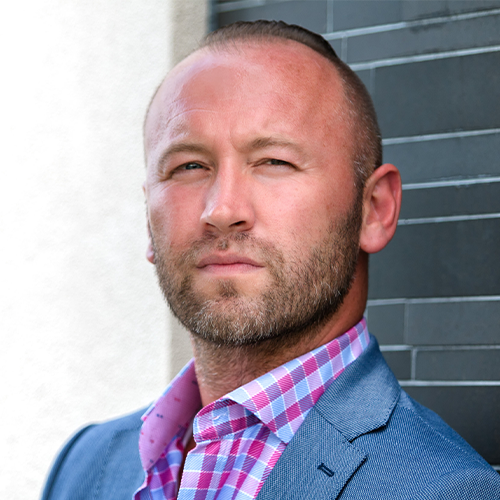
As CEO of Innovative Solutions, Justin Copie is leading the bold move forward: instilling growth in employees and inspiring change well beyond the four walls of Innovative. Yet the 65 people working at Innovative don’t work for him. He works for them.
As CEO and leader, Justin provides safety and direction: safety in voicing opinions, trying new things, and failing, and direction in where to go on the path to success. He serves others in cultivating a culture where people can come to work every day feeling safe and free to do what they love to do, and in turn help Innovative reach its vision.
Welcome to the Athletics of Business, a.
Podcast about how the traits and behaviors.
Of elite athletes and remarkable business leaders frequently intersect. The real stories and hard lessons to help you level up your leadership and performance. Now, your host, Ed Molitor.
Welcome back to another episode of the Athletics of Business podcast. I am your host and CEO of the Molitor Group, Ed Molitor. And man, what an episode we have for you today. Our guest, Justin Kopi, is a complete rock star. Justin is owner and CEO of Innovative Solutions, where he is leading the bold move forward, instilling growth in employees and inspiring change well beyond the four walls of Innovative. Now here's one of his mindsets that I absolutely love. The 75 people at Innovative don't work for Justin. He works for them. As CEO and leader, Justin also provides safety and direction. Now stay with me here. Safety and voicing opinions, trying new things and failing. Trying new things and failing. How awesome is that? And direction in where to go on the path to success.
He serves others in cultivating a culture where people can come to work every day feeling safe and free to do what they love to do, and in turn, help Innovative reach its vision. Now, some of the things that we're going to talk about today is Justin joined the company in 2003. Not only was he the youngest employee at the age of 20, he was the only millennial. Now think about that. Justin's going to talk about everything we cover here on the Athletics of Business podcast. Not only was he the youngest, he was the only millennial. The average age at Innovative at that time, I believe, was somewhere between 16 and 18 employees. The average age was 42 to 43 years old.
Okay, so as Justin just dug in and was making his 120 sales calls a day, he developed this mindset of always doing the right thing, but it always became about winning. And as he moved into a leadership role, he realized that mindset was going to be a detriment to him being able to serve his people. So that's when he had a series of events where self awareness became so instrumental in the key to his success. So we're going to talk a lot today on this episode about increasing your self awareness along the way of your journey and how, in fact, none of us are ever going to master that. Why is that? Because life keeps presenting you new challenges and new opportunities, which each one of those, you're developing new sense of self awareness.
But one of the things Justin learned about himself prior to becoming owner and CEO was that he was moving too Fast. Okay. Now, speaking of self awareness, Justin shares a story with us. It's my favorite story. I love it. One time, one day to be exact, September 26th of 2016, he walked into his all staff meeting where they had a routine that they followed when the things, you know, the typical agenda, as we all do, right. He got up there, it was his turn to talk, and he told everyone to go look for another job. It wasn't a suggestion, it wasn't a request, it was an order. I want you to go look for another job. And Justin's going to share with us the story of what that did.
In fact, and what happened was people started to either self select in, self select out, and some even. And we talked about this in the episode Self Selected up, which I think is awesome. And part of Innovative's commitment to the increase in self awareness. Justin talks about how the super successful get a lot of their power from having a coach outside of the organization. Because there's great mentors and you have great leaders within your organizations. But to have that outside voice, that outside set of ears, and to have that safe relationship is key and critical to the success of the most effective leaders. Justin, thank you so much for joining us on the Athletics of Business podcast. I am fired up, I'm humbled and I'm ready to roll.
Ed, I am as well. Thanks so much for having me. I cannot tell you how appreciative I am for the opportunity to talk to you today and have a chance to connect with your audience.
Well, I almost feel like we should have recorded our initial conversation we had a few weeks ago. So we'll try to duplicate that wonderful conversation, but want to jump right into it. I want you to tell us a little bit about Innovative Solutions, but more importantly how you started there as an entry level sales rep, the youngest person, but not only the youngest person, the only millennial, and what your journey was like to where you are today as a CEO of such a phenomenal organization.
Well, I appreciate the question. It's a, it's a question I get asked every now and then when people meet me. I'm 36 years old. So they're like, well, so you started the business in 1989. How did that work out? And I said, well I in kindergarten in 1989, but I had this really good fortune to actually co op to intern with the company that I own today, Innovative Solutions. The best way to think of us is we're like the IT department for small to mid sized organizations. And what we really specialize in is helping customers align business objectives with the right technology solutions. Because there's so many things people can buy from a technology perspective these days. And in 2003, when I had this opportunity to join the company as an intern, you know, were small, were about 18, 19 employees.
I was the only millennial at the time. The average age in the organization was at that time about 42, 43 years old. And it was an interesting time because the dot com bubble had just happened and the company had just kind of come out of its own recession as a tech company staying in business. And there was this just overwhelming sense of care for the people that chose to call innovative solutions home. And the leadership really believed that you needed to give people an opportunity to carve their own path forward. There's really no belief that there's a set career path, that there weren't even job descriptions for the majority of us when we came in.
I came in as an entry level salesperson, just really picking up the phone, making about 120 phone calls a day, cold calling small to medium sized businesses, just introducing themselves to me and my company and seeing if there was an opportunity for us to connect. I learned through this process of over three or four years of doing this that I can make meaningful connections happen and I could start to really break down the culture that had existed in the company for so long prior to me, which eventually led me into getting into a leadership position. You know, I was a significant individual contributor in the organization and it was desired that I share that knowledge with others and help other salespeople really on their come up, which, you know, I love to do.
And then, you know, I went through a four and a half, five year process that was really a succession planning process in disguise. I really didn't know it at the time. And then back in 2016, I was able to buy out the three partners at that time, all of which wanted to do different things, two of which are still with the organization as individual contributors today. And I'm humbled and excited to lead 75 people, which I half jokingly say I actually, I work for them, they don't work for me. It's just a, it's part of the mantra.
Yeah, I love that. And I saw that, you know, I saw that as I was doing some research and prepping. And it's the fact that they don't work for you work for them. And that's, that goes back to make meaningful connections. And you did that at a young age. What was it like to be the catalyst for making meaningful connections when you were significantly younger than some of the folks you were doing that with.
You know, it's such an interesting question because. All right, so I'm 20 years old, right? I'm picking up the phone, I'm calling CEOs that run small to mid sized organizations. Some of these business owners, you know, they ran $100 million companies. That was about the top end of the type of customer we would support back then. And I would go into meetings and I would have this overwhelming sense of just fear that I was too young, too inexperienced, and maybe even not mature enough to be having real dialogue. Was somebody who was two or three times my age. And I remember so many times having to go through this process as I was sitting in the car, like I'd literally park in the parking lot of the customer or prospect I was going to meet and I'd have to talk myself into the meeting.
And what ended up happening is I really overcompensated in many ways. And in probably my earliest years, I put off a facade of being fearless of, you know, I would walk into any company, talk to anyone, and I always just focused on winning. That was it. Doing the right thing. Always, always do the right thing. But it was always about winning. And as I matured and later on in my career, I learned, especially as I now needed to come out of being an individual contributor to leading others, that facade that I had built was actually going to be a detriment to me. And through a series of events in my life, I had the opportunity to gain some significant self awareness and start the journey of doing some really hard work on myself as I continue to find myself today.
Build a larger sense of self awareness. As I look to gain more perspective and as I look to have a greater deal of empathy toward others, those three things I think we'll talk about a lot today. Perspective, self awareness, and empathy.
How important in terms of being an authentic leader and how important is self awareness in that equation to you?
You know, it's amazing to me. So I'm a millennial and we are dubbed as this generation of folks that just don't have a great deal of self awareness. We all think we do, and, you know, I think we're unfairly labeled as maybe the entitled generation. Call it what you may, but I think at the end of the day, regardless of age, regardless of your generation, self awareness is this thing that you never. It's like the one skill you can never really master. I don't think Anybody really has figured it out. I was with somebody, a consultant actually, about two weeks ago, and I asked her, you know, do you know anybody that like really, really is self aware? And she was like, yeah, actually I do. I was like, who? Tell me, I'm dying to hear this. She goes, well, I met a monk.
And I said, all right, that's actually that. I'm going to have a hard time arguing this one, but maybe you're right. But, but to that end, I think if you dedicate your life to a life of solidarity and reflection and finding center, yeah, maybe you get a lot closer to it. But for the average Joe, I think it can be difficult.
I mean,
How does one really know how they're perceived? How does one audit enough? How does one really understand, gain a deeper perspective without understanding the other person's point of view? I mean, there's so many levels to self awareness that I think it's this journey you live with for the rest of your life. And I think a lot of people shy away from it because you can't master it. I really don't think there's any mastering self awareness. I think you can get better at it and I think that life as it throws experiences at you, gives you much more deeper insights into it. But it's nothing that you can ever master, but is an absolute critical part of being able to connect with people.
How has self awareness helped you in your decision making?
Probably, if I had to guess, and I'm guessing at this, I think it's given me an opportunity actually to slow down. Believe it or not, it's probably not the answer you would have thought. So I have this advisory board. These are, I mean, these are like business all stars. These are entrepreneurs that I pay on a quarterly basis. Actually, I work with them closer to every six to eight weeks. They, they come in, they look at everything that we're doing in our business and they poke holes in everything that I'm doing. And I love it because it's every eight weeks I get this dose of just reality.
And people in my organization know about the advisory board meetings because I share all the notes from these meetings and I come out of these sessions, there's their three hour bloodbaths where I get punched in the gut and like, I feel like my jaw is broken and I have to go like literally 24 to 48 hours to like fully recover. But one of the things that they tell me consistently is I don't realize how fast I'm moving and I never realized that. I never, I'm like even today, right? I've been working all morning, you know, going into the afternoon, been moving a million miles an hour. I don't think about it as moving fast. I think about it just like getting stuff done. We're moving the ball forward, we're moving the business forward, doing amazing things for customers.
But my advisory board, they are a huge mirror that I hold up for myself to help give me that self awareness, to know that as I continue to move fast, I'm only going to move as fast as my slowest person on my team. Because that's the reality of business. As fast as you want to move. It's a team sport. There's, you know, it's not, I'm not running this business just on my back. I have 75 people that are really moving the ball forward and doing the hard work. So that advisory board gives me an opportunity to slow down and allow everybody to get on the same page and help us move the ball forward.
I think that's probably for me at this point in my life, Ed, that's probably the biggest benefit I get from, from having good folks around me that helped me gain more self awareness.
So let's back up a little bit as this all plays into. You shared a story with me that I absolutely love. And the story was. How did you, how did you title it?
The Bold Move.
That's what you called it. Can you share that with us and how that contributed to really your awareness of where you were as an organization and realizing what you had and the power that gave you moving forward?
Absolutely. Well. And you know what, it dovetails very well nicely into this whole concept of self awareness. It was 2016 and I just bought the business and I had let the organization ride for about seven months and we got into. It was August timeframe and I had not moved a single person out of any role. I didn't shake up any. I didn't shake any trees. I let the organization just ride. We had done the buyout partners of the business prior. They were now taking their new roles. Things were good and I'll never forget it. It was a warm day here in Rochester, New York and I had this moment after work where I started thinking about the fact that weren't moving forward. The business wasn't growing, were just stagnant. And I said, oh man, this isn't why I bought the business.
I didn't buy the Business to just sit back. I bought the business to move it forward and do these amazing things that I really, truly believe in with a team that I care about. And so I said, you know what, I got to really go deep on this. And so I end up the following day I have a session with my therapist and we're just talking openly about life and all this good stuff. And I tell Mark, I'm like, hey, you know, I'm dealing with this thing right now. I'm just like, I feel like I'm stuck. I feel like I need to move it forward. And we talked through just a variety of different scenarios. And for about three weeks I pondered different ways that I could really jumpstart some of these big ideas I had. Well, it was Friday, September 26th.
We walk into an all staff meeting. So mind you, this is four weeks after I have this epiphany that we had just kind of stalled. And I walk into this all staff meeting at 1:00pm everybody in the company's there. We gather weekly for all staff for 15 minutes where I give everybody just kind of a state of things, how the business is doing, what are the new sales coming in. And we always talk about something related to our culture. Well, this all staff was no exception. As I walk into all Staff, I could sense there was just this very jovial, easy going attitude in the room. And I was like, this is the perfect moment. I get up in front of everybody and I said, listen, it's going to be a little bit of a different all staff.
I'd like everybody to consider going look for a new job, people. What I'm like, yep, I really think it's important everybody jumps on. Indeed. Monster. Pick your job search site. Look for a new job that you would seriously consider taking. And I'd love for you to interview. And I know none that not necessarily any of you are gonna, you know, be jumping for joy at this. I mean, otherwise you wouldn't be here. But I really think it's important that as we set forth on a new strategic vision for this organization, that everybody double down, everybody get committed to what we're trying to do here. And I think it's important that you go look to see if there's another opportunity out there.
Because a if there is and you think there's aspects of that role that you can bring into innovative, I want to help you do that and I want to help you have this super fulfilling career. And if there isn't, well, that's okay too. Let's Just be adults about it, and let's figure out a way to part ways amicably so that it doesn't affect our customers negatively and it doesn't affect our culture negatively. Well, about 2/3 of the organization took me up on the offer. A third of them flat out told me they're straight, they don't need to get out, they don't need to go. Look, they're comfortable. And I said, that's fine. Well, the two thirds that looked, they brought back all kinds of crazy ideas, good ideas, wild ideas, challenging ideas, bad ideas. It was everything in between.
And we realized that through the course of the following 12 weeks, there were 12 people that did not see alignment in where were going. And so they resigned one by one. Everybody had to have their own week. It was interesting to see that every Friday, after all, staff, I did somebody new, and they would come in and they would tell me that they're resigning, they're going to work somewhere else. But interestingly, they all told me, pretty much all, I think was 10 out of 12 told me they wanted the opportunity to come back after we got further down the road a little bit. And I welcome that. And what ended up happening for the organization was really two things. The first was the.
The positions that these folks held were elevated instantly when a new candidate was coming into the organization because we knew we could raise the bar. And then secondly, we had all these people that recommitted, and for the folks out there that are married, it was the equivalent of renewing your vows after 25 years or whatever. The people that were there, they felt really aligned to what were doing. And so they went all in. And it created just this very positive energy and obviously insinuated a tremendous amount of loyalty, which was amazing because it helped propel the organization forward. And going into 2017, it was exactly what we needed to not just have the right people on the bus, but to reinvigorate the energy in the organization to help us do just really incredible things.
So the folks that came back, they had to come back with a new bag of tricks, to some new ideas, some new insight, not just about what you were doing, about how the organization that they were working for was doing what was going on in the marketplace in their eyes, but it also had to come back. And you said this with confirmation that, hey, this is a great place to be. You know, I want to. I want to. This is it. I'm all in.
Yep. So they did. And we did something in conjunction with this process. I was really frustrated. I alluded to this earlier when I told you when I came into the company in 2003, we didn't even have job descriptions. Well, were sitting at about 60, 65 employees at this point in 2016, and job descriptions are still kind of fluffy and all over the place. Nobody really knew where their job description was. It was just this weird thing. So as part of this self selection process of like, are you going to self select in, Are you going to self select out of the organization? And some people self selected up ed, which was a different process, which I'll explain in a minute. But those that were self selecting in, we needed to get really clear on what it was that they wanted to do.
And if there was stuff on their plate that they needed to get off their plate, we needed to help them do that by creating succession in their role. So what we ended up doing was we instituted a new process which was called write your own job description. So every employee to date here in 2019, every employee writes their own job description, even new candidates. Like I'm interviewing a candidate as we speak and this individual's going to potentially come into the organization and lead a major effort for us. Well, I have a job description that I wrote, but I sent it to the individual in Microsoft Word and I asked them to rewrite the job description so that it fit their strengths. You know, not to necessarily be cliche, but just to kind of bridge it over to sports.
You know, I believe that, you know, when you're on a team, everybody's working in their capacity that really plays to their strengths. You know, you don't see linemen playing wide receiver any more than, you know, you see any other position playing a position that they're not physically fit for. So in our business, I, I took a very similar approach where I said, you have strengths as an individual, let's leverage those strengths. Let's get the things you're not good at off your plate and give it to somebody else. And so I think what ended up happening is the people in 2016 that ended up going to interview for another job and seeing all these other opportunities out there, I think they also realized where they had strengths that weren't being leveraged at innovative.
And so they said, listen, this happens to be a strength of mine. If I can leverage it to innovative, I want to stay because it's also fulfilling for me. Can we do that? Does it make business sense? And that's exactly what we try to do with every employee today.
That's. And that really fits with this. Where. And I'm going to, if I can, I'm going to read something from your website that I absolutely love. Okay. Justin's North Star is to constantly provide safety and direction. Safety in voicing opinions, trying new things and failing direction on the organization's path to success. He serves others in cultivating culture where people come to work every day feeling free to do what they love, in turn helping innovative reach its vision. I love that. And I'm going to ask a question that we haven't really talked about much before, but how much coaching from you goes into that?
Not just management, but how much coaching goes into that to get to people move in your direction with, you know, with that safety not being soft, but the safety knowing they can stretch, they can reach, they can get outside their comfort zone, fail. And that you're all going to grow through it together.
Love the question. And you know, it's funny, I don't get asked this often. I should, because coaching and mentorship, I think, are highly undervalued in business. I had great mentors and continue to have great mentors that have shown me that you can't always get what you need in the organization from a coaching standpoint. Sometimes you need to seek externally. I would go as far as saying, quite frankly, if you want to be super successful, you have to. The people that you work with are so critical and so important, but they're fighting the good fight with you. Sometimes having people outside also helps. I don't just apply that philosophy to my own coaching and the. The seven or eight coaches that I have around me giving me support external to the organization.
What I also do is I have a stable of coaches that I also extend to my employees that are from the outside, and I fund those. We pay for that completely. That's not the responsibility of the employee. And in my opinion, it's actually my responsibility to make sure that these people that are devoting their livelihoods to help move innovative solutions forward, to help move my business forward, that I give them all the support I can. In the same way that if I was asking somebody to get up there and hit home runs, well, shoot, I'm going to make sure they have the best batting coach that I can find, you know, helping them from the outside and into the organization. So we have, as I said, we have this stable of coaches and mentors that we extend to our employees.
Here's the other thing that I find with that our employees find a sense of safety sometimes talking to somebody externally versus talking to somebody Internally, because they don't know how it's going to ultimately affect their outcome.
Absolutely.
Especially if it's something that they're going after that may impact them staying at Innovative. And so these coaches sign confidentiality agreements and they keep things confidential. The only exception is unless it's going to damage the organization or damage the people, the entity. But people know that. People go into it knowing that this is all to be productive. And so we share both a coaching structure internally with management and the leadership team. And I can speak to that in a moment. But also external to the organization with these coaches that specialize in different areas depending on the person. I'll give you an example. Have this one coach, this guy is a hit him in the face coach. He is the guy you bring in when somebody needs to be shaken down and really slapped across the face.
Not literally, obviously, but to really drive home a point. This guy actually works really well with a person like me. I love raw, direct, real intense feedback. But this guy, I mean, this guy's gone to death row and coached folks on death row. I mean, like, this guy's just over the top. I have another coach, she goes to this whole other place, Ed. She's holistic. She talks about energy, she talks about your state of being. Where is your state of mind? Where is that transcending? She gets into this whole other end of the spectrum. And what I find is that people need variety to choose from so that they can find who they ultimately can excel the best from. And so I make sure that there's a great deal of variety available to them. External, now internal to the organization.
One of the things that we require is, so I have a leadership team of eight individuals, all eight folks, schedule one one, one hour meetings with every single employee, every membership of the leadership team. And it happens so frequent. We do so many of these that most employees get two meetings with each leadership team member throughout the course of the year. And what it does is it creates connection with the employees at just this very different level where somebody who might not, for instance, interact with finance and accounting frequently or ever. Well, they get to meet my director of finance, dawn, and they get to have a very meaningful conversation and maybe see where their role is impacting something financially where they wouldn't normally have been able to have that intersection.
And so it's a whole other level of coaching that we provide to the employee that again, is really geared to help them excel and help them move forward. Not to mention, my leadership team has this diverse set of skills and experiences. That they can help bring to the table that give employees this opportunity not only feel safe, but to have a much better understanding of where we're going and why we're doing it.
I absolutely love this and your commitment to growing your employees. And first question that comes to my mind, which is most likely the first question comes to most folks mind is how do you measure your return on your investment on that decision to hire coaches for your people?
The number one metric that I look at is something that we have. It's, it's okay. So our culture's like everything, I don't know, like a lot of companies it's evaluation of their business. A lot of companies it's pick your other KPI, financially driven, whatever. Culture is everything. People over profits is not just a mantra. It's just like it's this thing that we believe. We make 90 year decisions in this business. We don't make 90 day decisions. So people are at the heart of everything. So I give that to you as just the preface. But to answer your question directly, the number one metric that I look at is this thing called enps. So most companies are familiar with Net Promoter Score and NPS Score.
NPS is just a single question that you can ask your customer and the question is how likely are you to refer Innovative Solutions to somebody else to use for services? And you rank it on a 1 to 10 being the best. And then there's a calculation. We do the same thing with our employees and we measure that twice a year. So we measure it at two different times in the year to get gauge whether or not people are likely to refer other people to work at Innovative Solutions. It's the same premise. Now an ENPS score is one metric. I also have two other metrics that go along with that. One of which is a measurement of satisfaction and the other is a measurement of effort. Effort it takes for an employee to engage in the business.
And so we do, in total ed, we do seven what we call culture surveys. They're just different views of what is happening culturally in the business. I will tell you right now, if those metrics are not where we think they are, I know the coaching is not paying off or there's something else going down that we need to address. But the reality is the coaching is what drives a lot of the little nuances that are going to potentially throw us off balance. I equate it to, it's that little piece of sand that we discover that's getting into the gear. And over the course of Time, that little piece of sand will wear away at that gear and you will have problems. You don't necessarily always see it at the beginning. Coaching helps drive that out, which is super critical to us.
Well, it's the pebble in the shoe and that's exactly what it does. It allows you to focus on the things that are. Keep moving forward and it gives them a safe place. Like you said, if it's going to impact their time at. Or their future with Innovative Solutions, an outside voice and outside ear is most likely who they might be more comfortable with.
Without a doubt. Without a doubt.
So. And I just, I love the fact that you do this because this is. This is unconventional thinking and an unconventional approach. And what has been the basics. It's obviously hiring coaches for your people is a long play. Right. It's not something short term. What was Ben has or was there ever a gap or like, okay, I don't know if it's working. And then you just stayed with it and you saw the results.
You. You're saying in. In a dis. In a specific decision that I made for the business, with the coaching.
In the coaching aspect. And in other words, was it a challenge at first to be. Because I don't think this was in place before you.
It was actually. Yeah. No, coaching has always been since, you know what, since about 2010. Here's what happened. So the evolution of coaching in our business really came out of this need, the prior ownership. They wanted to create a succession plan for the business that didn't disrupt everybody's life. Again, the owners of this business prior to me, they all cared about people and they wanted to make sure that the people of Innovative Solutions had a path forward. They could have easily sold to private equity or venture capital, whatever. Right. They ended up going through a succession plan where somebody internally ended up buying the company in whole. So as part of that, back in 2010, prior to the buyout, you know, six years prior, there was this need for outside guidance around how do you create an effective succession plan.
And so we got into strategy, but we also got into the things that really made our culture special at that time, started to define it. Well, that very quickly led to this need that people. By 2011, people needed some outside guidance from coaches. So coaches have. I think they've certainly been around longer than I owning the business, but I was certainly a part of the company in 2011. I embraced it. But we have had situations with coaching where we more or less let the coach run free. And we found that gives a ton of control to the coach. And unless that coach knows the business, our business well, and our culture well, that can do all sorts of things and throw things awry. So what I found is that I learned this through actually a pretty tough set of circumstances.
I had a coach, this gentleman was working with two members of my team, and before I knew it, triangulation had started. One member of the team was telling the coach something that was leading to a decision or coaching of the other individual. And this really nasty setup of triangulation had occurred. Nothing malicious, nothing intentional, but it happened. And triangulation, if you know, I mean, triangulation is just this really tough thing to work through because somebody wants to come to you, they want to voice their problems, they want to quote, unquote, vent. Never read Cy waichman's book about drama. She'll talk about this whole notion that she doesn't believe inventing, but somebody will want to come to you invent. But what they really want is they want you to help solve their problem.
And the best way you can help somebody solve their problem is by giving them the tools for them to solve it themselves. Well, what was happening in this very particular situation because coach wasn't familiar with our culture, there was very deep rooted triangulation. And so it went on for about two months. I had abdicated. I just really just kind of like let it be. I got involved the second that I smelled that there was certainly some friction going on.
And what that led us to was a routine check in with anybody who's coaching anybody on our team, not to tell us really any of the details about the coaching session, more as to the types of things that are happening in the company so that coach has much better perspective and that can ultimately coach the individual more effectively without that particular situation with the coach, which was a bad decision on my part. Just abdicating and letting them run free. Without that situation, we could have done more damage. So, yeah, no, I've had some definite lessons learned with outsiders influencing anything internal to the business.
And as CEO, obviously there's some things that make you nervous. You know, I like to focus on what gets me up in the morning as opposed to what, you know, keeps me awake at night. But regardless, as a business owner, some things are going to keep you up at night. What is it about where you're at with innovative solutions right now, where you've built this and where you want to go that makes you nervous?
Well, people who know me, Ed, they know that I have a Paranoia with dying, like becoming really irrelevant or literally dying. I mean, like I said, so just, you know, to give you some personal context. I wake up in the morning and very first thought that goes through my head is today gonna be the day that the house of cards collapses, Right? Like it's over, like everything's over, something's going to happen, it's all going to be over. And it's never rooted in truth. It's rooted in self talk. It's rooted in this injection of just fear that runs through me. And I go through a process every single morning. It could be on the weekend, doesn't matter when, where. I think through the reality of what's going on in our business. The reality. So I only focus on fact. Only things that are fact.
Numbers are facts, right? They're not. It's a 1 or 0. And as I go through that process, takes me about 15 minutes. I get to usually a place where I can focus one or two things that I'm going to focus on and I'm going to try to influence throughout the day. And what I find is that gives me small wins, builds my confidence. And so by the time 9, 10 o' clock in the morning rolls around, I wake up at 5am by the time four or five hours of the day have passed, I've now gotten enough small wins where I'm like, nah, now I can deal with reality. That's where I'm going to stay and I'm going to celebrate our successes and we're either winning or we're learning. We never lose. And I go through that process every single day.
And I'll have moments throughout the day where I get really nervous about a decision or like, is a piece of business going to come in or are we going to potentially lose a piece of business? I mean, all the things that you go through as an entrepreneur, what I've learned is that if you take it one project at a time, the best analogy I can give you, it's kind of a dumb one, but I think about it often because I bought this house in 2010 that was like my dream house, but it wasn't. It was an estate sale. This place was a dump. My dad walked through it with me. He tells me it's a tear down. Justin, why would you ever even consider this place? So I still live in the house today. I have invested in one project at a time.
Somebody gave me the advice when I bought this thing, take one project at a time and before you know it, you create progress and with the progress, you'll start to find fulfillment. And with that fulfillment, you will forget all of the things that are holding you back. And, you know, I apply a lot of that same logic to business, to how I run my business, to how I help people in my organization solve the problems that are in front of them, that they're really trying to move forward for our customers, one project at a time, take it a step at a time. I know it's cliche, but there's so much truth in that because I think as human beings we just have this tendency to get extremely overwhelmed, especially in a day in 2019 where we're just influenced by so many factors.
I mean, I wasn't around 50 years ago, Ed. Like you didn't have the distractions that you have today. I mean, we are influenced in so many ways. I do remember a day where cell phones didn't exist and somebody called the house phone and that was really the only way somebody was going to get you if cell phones didn't exist. It's just a totally different world we live in today. And so I think it's even more important in 2019 to think about taking it one project at a time.
Well, and you said something earlier about, you know, expanding and contracting and growing the business, and there's a lot of argument behind is it more difficult to get here or is it more difficult to grow? And I know one of the things you and I talked about was you want to be real careful with as you grow, keeping those things that make people want to show up for work every day and give their best. So what is more difficult for you, in your opinion? What do you think? Has it been a bigger challenge to get where you are now, or is the challenge lie ahead? Moving to the next point, it's, you.
Know, hindsight's always 20, so, you know, I, I, I think about this often, you know, asking somebody if it's harder to start off in the come up and be successful or to maintain that success. I think that's like asking somebody, is it easier to ski uphill or ski backwards, downhill? I mean, both are extremely difficult. But from my perspective, I think the hardest thing about the come up is you don't have experience. So every challenge is a completely new challenge. Even when they're disguised as similar challenges, they're just completely new. There's just, there's so many experiences that you have in the come up of success that lead you to a successful place as long as you can deal with it and have this Grit to continue to move forward. And I'll come back to the word grit in a second.
When you're maintaining some level of success, the biggest issue is, in my opinion, the stakes are high. So the stakes are low when you're on the come up. There's no stakes really. Right. The stakes are higher when you're successful. But you know, it's also extremely difficult because there's also a level of expectation that others have around you and you have of yourself. So, you know, if I have, let's say I use. And maybe some of the entrepreneurs that listen to your podcast, maybe they use the same thing. If I use number of employees to measure whether or not my business is successful or not, that's a tough metric because there are years where I want to have two or three less employees maybe than I did the prior year.
And there's years that I want to have 10 or 15 more employees than I did the prior year. You got to be careful with the metric that you're using. And so, you know, when you ask somebody, any entrepreneur, I think around the challenge of the come up versus maintaining, I think it's, I think if were using the same metrics in both of those scenarios. So whatever I used on my come up versus my maintain, I think we're using the same metrics. I think it's actually, it's extremely difficult to maintain. I think you measure different things on the road to success that you do once you found success and you maintain it. But at the end of the day, man, Ed, you're either growing or you're dying, right? So I don't care if you're going to come up or if you're maintaining.
It's all different challenges, right? Yeah, it's all different challenges. And let's get back to that word grit, because I have a few more questions for you here before we wrap this up, but I really want to talk about that word.
So here's the deal. You know, I've hired more salespeople that haven't worked out, that have not worked out than anybody. You know, I've hired so many salespeople that haven't worked out, and I challenge anybody to send me their numbers. So I'll just tell you this from experience. Grit is this super interesting thing in all of us that some people have a lot of it, some people don't. And the way that I look at it is this. The most successful folks that I know, they can take a punch to the mouth, get right back up and keep moving forward. It is hard, it is extremely hard to do anything successfully. The trouble is, especially with the younger generation that I work with consistently is the opportunity is abundant.
So because people see so much opportunity in front of them, I think they equate that to, oh, well, then there must be an easy path. And I think that's why my generation gets so caught up in like, I got to change the world in three months or I got to get out of the way. Well, here's the deal. You got to be able to go, to take the hard knocks along the way and you got to work your ass off if you want to be successful. There's just, there's no easy way around it. I, you know, I'm reminded, you know, not to use another sports analogy, but I'm reminded by just how hard Walter Payton worked his career. The guy, the guy worked his tail off.
And I think a lot of what he said, it resonates with me because I tell people all the time, you know, I'm not the smartest guy. I actually don't even have the highest emotional quotient, you know, EQ iq. I'm probably not the highest in either of those, but nobody wants it more than I do. I'll go after it and I'll keep going after it and I will not stop until I reach where I'm trying to go. I think if you have that mindset and you have the grit to sustain it day after day, hour after hour, quick small story just to show a little bit of my humility. I'm in eighth grade and I did not want to go to this college preparatory high school that ultimately I ended up at that ended up changing my life.
It's an all guys school and I'm in eighth grade. It's the third week of school. I get home on this. It was actually a cold September afternoon. And I'm walking in the door, my mom sees the look on my face. What's wrong? Nothing. And I end up walking over to the stairway, going upstairs because I had a ton of homework I had to do that night. And I get to about the third stair and I just collapse and just sit on the stairs and I started crying, man, I just started like crying. And my mom comes over, she's like, what is wrong with you? Are you okay? What's, what's up? I'm like, this is hard. And she said words to me I'll never forget. She said to me, justin, all that matters is that you do your absolute best you put 110% in.
That is all that matters at the end of the day. And just so you know, I'm just going to tell you this to you because one of your teachers had reached out to me. What they're doing to you right now in this college preparatory school is that they're weeding out anyone who can't make it. So as hard as it is right now, just know they're gonna let it off. They're gonna let off a little bit as you get further into this first semester. And I was like, oh, that, you know, that's really interesting. And I didn't. I don't know why I didn't remember that last part of the story about them letting off. I always remember her telling me, you just.
You go all in on it and you don't stop, and all you can do is give it your all and held on to that. I've never let go of that. I don't know if it was that moment in particular, but I think that's so incredibly important for people that are looking for success. You got to have grit. You've got to grind it out, and you've got to know that the journey of getting there is what it's, quite frankly, all about. Because when you get there, when you do find whatever it is that you're shooting for, you'll be unsettled after a day, a week, maybe even an hour, depending on how small the goal is. And you'll want to create a new goal and you'll have to go right back through the grind.
Right, right. I love that. And before I ask the last question, fill us in where folks can find out more about you. They can find out more about innovative solutions on social media, any information that they want, and how they can connect with you.
You know what? Nnovativesoul, SOL on Twitter and innovativesol.com is our website address. I'm very active on LinkedIn in the business community. Please feel free to connect with me. Drop me a line. I post thought leadership almost daily around things that I'm really going through, things that I see in my perspective. I get a lot of people from around the world that reach out and always that happy to connect with people. And if there's any way I can help anyone, I'm always open to being able to do so because lots of.
People have helped me and I love that. Speaking of posting and writing, you have something about the little eyes upon you. Okay. When you talk about how children watch you and they watch everything you do with Which I absolutely love. I used to give, when I was coaching college basketball. I'd always give the poem at the beginning of the season to our players every year. There are little eyes upon you, and they watch you night and day. And basically it talks about how they want to grow up and be like you, whatever that you is. Right. How important for that is that for you as a millennial leader, for you to model the behavior for your people to help fill. As we talk about grit, I call it the grit gap, Right? Like where they're at now and where they want to go.
How important, how significant has that been for you to be very intentional about modeling that behavior?
You know, it's something of late, quite frankly, that I've thought a lot about. My nephew is 7 years old, and he's a great reminder to me every Sunday when I'm with him that, you know, the youth of our generation all the way through, folks that are certainly much older than me, people are always watching. People are always watching. But impressionable eyes and minds, those that are growing up, brains that are literally in development. I mean, it is so critical that we know that people are always watching. People are always seeing what it is that's happening around us. I find it somewhat humorous when somebody wants to be really intentional about making sure that the world knows about something good they did. I'm like, I never have understood that.
I mean, if you do something good in the world, first of all, you shouldn't do it because you want the attention of it, but you should do it because it's the right thing to do. But I always find it humorous because there's this assumption that people don't see it naturally. Well, people always see people will be affected in ways that you could never know. And, you know, for me, I think as a business owner, as a leader, the one thing that people will remember, you know, at the end of the day is how I made them feel. And I think that's true among all of us. You know, it's not necessarily how much you pay somebody. You can pay somebody a lot of money, give them a big bonus. You can give them gifts.
But at the end of the day, how did they feel? Did they feel appreciated? Did they feel like you gave them a sense of certainty? Did they feel like you really cared? Like 7:00am in the morning, you walk into work, you may make eye contact with somebody. Even the way you say, hello, somebody's watching that, Somebody's interpreting that. And so I find on this journey, I'm continuing to learn that is such an incredible part of a part of leadership is understanding that people are always watching. It's important to make sure that you give context to your behaviors, because those are always reflections of what people think you believe in.
I mean, wow, that's unbelievable. That leads me. I guess I kind of fibbed. I have one more question. If I were to put you on the spot and say, what are three keys to leading millennials, what would you say?
The very first thing I will tell you that my generation needs a lot of guidance around is asking for help. My generation, millennials, we don't ask for help enough. It's almost like this pride thing. We don't. Oh, no. I don't want you to do an introduction for me to that company because I want to do it myself. We talking about. I know so and so I'll give you an introduction, ask for help. Like, it's how we've all made it. Like, if ask anybody successful, they've asked for help. That's the one thing that I speak, quite frankly, a lot to, especially with a younger generation. The other thing that I speak a lot with them about is we do not give each other enough of a benefit of the doubt. And this translates right into empathy. We get so focused on ourselves.
The number of likes we. We get, the number of mentions, shares, whatever. What are we doing for somebody else? How are we helping move somebody else forward? But most importantly, can we put ourselves in their shoes and have an understanding of how they may feel in a particular situation? Empathy is this just incredible superpower that you meet some people that were. It's very clear that it was embedded in them from a very young age. They had. They had great mentors or parents or folks in their life that helped them develop that skill set. Empathy is something I think the world could use a lot more of. And thirdly, just getting back to millennials, in my generation, the other thing beyond asking for help is accepting help. It's just another thing that I find my generation just really struggles with. It's this.
I've got to be an amazing entrepreneur. I've got to change the world. I've got whatever. And you need to know that and learn this important skill of being able to accept help when it's offered and leverage it. It's the only way that we win. I literally, almost after every post, I have a little tagline that I've been known for the last five or six years, and it's together we win. Because I truly believe that you can't do anything alone, Nothing.
That last one, accepting help, did that ever play into you? And having the need, being a young CEO and taking over, feeling like you had to prove yourself on a daily basis because of your age?
Yeah. No, it did. Because the prior CEO of my company, he, gosh, man, he was such a mentor to me and he never treated me. It's weird because I've called him, I've said he's been like a father to me. I've said he's been like a brother to me. I say, tell people he's been like, he's been a friend, a best friend to me. He gave me just so much opportunity to grow and never allowed my age or my level of maturity or lack thereof, ever, ever hold me back. And he always wanted me to be me. And I'm forever indebted. And will always remember that and will try to replicate that as much as I can for others on the come up, because I think that's so important.
Holding somebody back because they don't have, you know, enough years of experience or enough credit, man, that's just not fair. It's just not fair.
What about you internally with that conversation in your head though, holding yourself back, thinking, gosh, I really got to prove myself. I mean, there's people watching everything I do because I'm a younger CEO. How hard? How. I don't want to say how hard. How big of a challenge has that been?
In some ways, I've found that the self limiting belief aspect of it has been the bigger challenge because it'll hold me back from making a decision. The reality is I got a lot of people rooting for me. So because of the fact that I'm such a young owner and CEO of a business, of a tech company in a community that is now just Rochester, New York, Western New York is just starting to become known as this tech hub. Because I'm in this really unique position surrounded by CEOs and owners in my market space that don't look, act or feel like me. I figured out ways to leverage it and, you know, other young CEOs or owners, man, that would be probably my biggest advice. Leverage it. Leverage your youth. Leverage the fact that you don't have as much experience.
Put an advisory board around you of people that do have a ton of experience and don't be good, be great. Put in leverage those around you to help you offset the things that you don't have with your youth. I mean, if there's anything somebody gets out of this podcast interview today, Ed, I hope it's that, hey, there's this guy Justin. He was talking about all the ways he's not that good, like, and he puts a lot of people and things around him to help bolster him and allow him to help move it forward.
Yeah, that's great. What a great way to wrap it up. And Justin, I cannot thank you enough for your time today. You were more than generous and just a ton of great value. And please rate this episode on itunes. You can also find us on Stitcher, Google Play all previous podcast episodes. The athleticsofbusiness.com is our podcast website. To find out more about what we do at the Molitor Group, you can go to themolitorgroup.com and please feel free to reach out to me@edemolitor group.com Justin, thank you so much.
Thanks, Ed. Appreciate it. Thank you for listening to the athletics of business.
Be sure to give us a rating and review so we know how we're doing.
For more information about the show, visit theathleticsofbusiness.com now get out there. Think, act and execute at the highest level to unleash your greatness.