

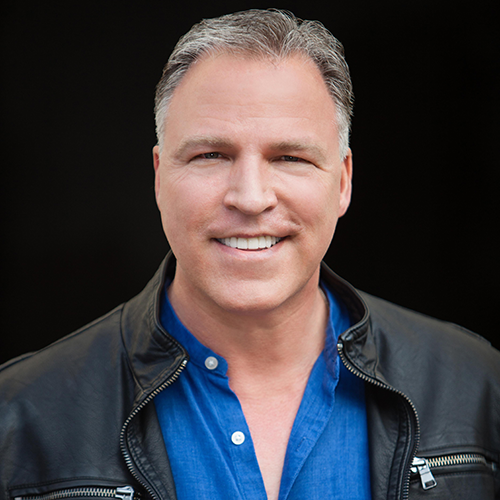
Larry Broughton is an award-winning entrepreneur and CEO, bestselling author, serial entrepreneur, keynote speaker, and former Special Forces Operator. As a former US Army Staff Sergeant, serving 8 years on Special Forces A-Teams (commonly known as the Green Berets), Larry has parlayed the lessons learned from his time in service to his country and applied them to the business arena attaining extraordinary success.
He is the Founder & CEO of broughtonHOTELS, a leader in the boutique hotel industry; and yoogozi.com, an inspirational online learning forum for leaders and high achievers. Larry has received several business awards, including Ernst & Young’s Entrepreneur of the Year®; the National Veteran-Owned Business Association’s Vetrepreneur® of the Year; Coastline Foundation’s Visionary of the Year; Passkeys Foundation’s National Business Leader of Integrity; and Entrepreneur Magazine included his firm on their Hot 500 List of Fastest Growing Private Companies.
Larry has authored several articles and books on leadership, team building and entrepreneurial significance, including his newest book, an Amazon #1 bestseller, VICTORY: 7 Revolutionary Strategies for Entrepreneurs to Launch Your Business, Elevate Your Impact and Transform Your Life, and FLASHPOINTS for Achievers. His upbeat, creative approach to business and life has been featured in newspaper and magazine articles across the country and he’s been a guest on news and TV programs on every major network, including multiple appearances on CNBC’s The Big Idea with Donny Deutsch, MSNBC’s Your Business with JJ Ramberg, and Travel Channel’s hit show, Hotel Impossible, and CBS News has called Larry “the nation’s foremost expert on leadership and entrepreneurship.”
Larry has presented to, coached, and mentored thousands of current and aspiring leaders and entrepreneurs across the country. He has delivered keynote addresses and training programs on topics including entrepreneurship, leadership, and overcoming fear and failure to Fortune 100 firms, universities, non-profits, medical facilities, and even the Pentagon’s Office of the Chairman of the Joint Chiefs of Staff.
Larry has attended the Executive Program at prestigious Stanford University; studied Russian at the world-renowned Defense Language Institute; and Political Science at University of California, Santa Barbara and College of San Mateo.
Welcome to the Athletics of Business, a podcast about how the traits and behaviors of elite athletes and remarkable business leaders frequently intersect. The real stories and hard lessons to help you level up your leadership and performance. Now your host, Ed Molitor.
Welcome to this episode of the Athletics of Business podcast and our guest today is Larry Broughton. Larry is an award winning entrepreneur and CEO, best selling author, serial entrepreneur, keynote speaker and former special forces operator. As a former U.S. army staff sergeant serving eight years on special Forces A teams commonly known as the Green Berets, Larry has parlayed the lessons learned from his time in service to his country and applied them to the business arena, attaining extraordinary success. He is the founder and CEO of Broughton Hotels, a leader in the boutique hotel industry and ugozi.com, an inspirational online learning forum for leaders and high achievers.
Larry has received several business awards, including Ernst and Young's Entrepreneur of the Year, the National Veteran Owned Business Association's Veterpreneur of the Year, Coastline Foundation's Visionary of the Year, Passkey's Foundation's National Business Leader of Integrity and Entrepreneur Magazine included his firm on their Hot 500 list of fastest growing private companies. Larry has authored several articles and books on leadership, team building and entrepreneurial significance, including his newest book, an Amazon number one bestseller, victory seven revolutionary strategies for entrepreneurs to launch your business, elevate your impact and transform your life and Flashpoints for high achievers. His upbeat, creative approach to business and life has been featured in newspaper and magazine articles across the country.
And he's been a guest on news and TV programs on every major network, including multiple appearances on CNBC's the Big Idea with Danny Deutch, MSNBC's yous Business with J.J. ramberg, and travel Channel's hit show Hotel Impossible. And CBS News has called Larry the nation's foremost expert on leadership and entrepreneurship. Larry, thank you so much for joining us today. It is an honor to have you here.
It's an honor to be here. Thanks for having me. Let's have some fun with this thing.
Let's have a lot of fun and you know, you have quite the journey and quite the story. So I want to take a step back here and get out of your way. It's really cool. I think our listener will absolutely love it. Just walk me through your journey from the time you entered the military all the way up through you got into the hotel industry and what have you.
Well, I'm probably a classic schizophrenic entrepreneur. You know, the journey kind of started before I even Went in the military after high school. You know, I was raised in what outwardly looked like kind of Mayberry, RFD kind of town, you know, very bucolic western New York, apple orchards and dairy farms, you know, but behind every, you know, see set at a movie, shooting of a movie, you know, you pull back the curtain and it's not all sunshine, lollipops and rainbows. Right, right. And so, you know, my life was not as childhood, was not as bad as a lot, but you know, there was some trauma and drama there.
And so my twin brother and I were martial artists at a young age and we'd moved out of my, I think I said my twin brother, we moved out of my parents house when were 17 and got an apartment and was studying martial arts. And I think it was like 1982. We went to or came to a national martial arts tournament in San Jose, California. And I had heard a rumor ed at that point that the army was going to be sponsoring the first Olympic Taekwondo team. And, and so I thought, gosh, that is my ticket out of, you know, rural New York, away from, you know, my hometown.
And so I, when I got back, I went down and spoke to the army recruiter and said, you know, went in this full on sales pitch on why I need to be on the army Taekwondo team. And he said, well, listen, dude, you know, you've got to actually be in the army to be on the army Taekwondo team.
Makes sense.
Well, yeah, well, if you think things through to the logical end, yes, but I didn't know that. And so I said, well, dude, I'm not an army guy. And so he convinced me to take the ASVAB test assessment, which is the Armed Services Vocational Aptitude Battery, which is basically an IQ and aptitude test. Because what they really want you to do is identify what your strengths are and then let you work in your strengths. Makes a lot of sense when you're on the outside looking in, right? Yeah. And so it turned out I scored really high on the darn thing, which shocked me. It shocked the recruiter because I barely graduated high school. Now that turns out I'm dyslexic. Didn't know that then. Wasn't diagnosed until I was in the military. And so I grew up thinking I was dumb.
You know, had plenty of teachers and counselors who told me so, reminded me so. Had plenty of report cards that showed it, confirmed it. Yeah, absolutely. And so it was very interesting in that martial arts and wrestling were really the only two things I ever felt like I was good at. And now all of a sudden, those were physical, right? Yes. There's the mental aspect that we know that goes into excellence in anything, right? I mean, to really exceed at any worthy goal, right, You've got to have stellar skills and killer confidence, right? That combination really creates awesome athletes, awesome entrepreneurs. Well, so this was the first time anybody said, wow, you're actually a smart guy. You got a high IQ on this thing. And so they. From hello, basically, right?
And so they said, listen, you scored so high on this darn thing, you can do whatever you want in the army. You know, you could even try out for Special Forces. And I said, wow, that sounds awesome, but what's Special Forces, right? And they said, well, it's the Green Brays. So after some back and forth, I decided that's what I was going to do, you know, try out for the Green Berets. And after a series of events and schools and training, I actually made it in to Special Forces into the Green Berets and did really well there. I just kind of really thrived. And I felt like I'd found my home. I had never experienced the camaraderie of a really elite team.
I'd never experienced working in my strengths and not worrying about my weaknesses, knowing that my brothers to my right and left were going to cover for my weaknesses. And I thought, wow, this is really kind of a phenomenal idea. Because I'd always been, you know, I get the bad report card, and then we probably all experience this. You bring the report card home in grade school or high school and you fail a grade, and what's mom and dad and everybody else want you to do? Focus on the weaknesses. They don't. You don't get all the praise for the good stuff, right? So I started connecting the dots. That's one thing I'm really good at. I'm not the brightest person in the. In the room, but I am really able to connect the dots. What are other people doing? What's making them successful?
So after traveling around the world doing Special Forces stuff, I started seeing the way some of these nutty countries were being run. And this will tell you how my brain works. I said, well, gosh, if that knucklehead can run this country, how hard can it be? I can do that. And so I got out with the intention of studying political science and maybe running for political office, maybe working in the State Department. And so I moved to California, and I'd been here for that martial arts tournament and just fell in love with Coastal California. So I moved to San Francisco, where I had a couple of friends living and started going to school. My first job was as a night auditor at a little no Tell Motel in San Francisco. And for those I know, you have a very pure audience, Ed.
And so let me explain what a no Tell Motel is, especially if they're a direct reflection of me. Exactly. We're all wearing these little halos and we're glowing. Yeah. Now, a no tell Motel, it was in the Tenderloin, which is where a lot of drug deals, prostitution happened. It was basically by the hour type of place for a lot of the clientele that was there. And your listeners can, you know, figure that out, connect the dots from there. But it paid five bucks an hour, and it was helped me pay the rent. You know, between that and the education benefits that I was getting from Uncle Sam, I was at least paying the bills, you know.
And so I had worked on a couple of political campaigns during that time on both sides of the aisle, because I was still trying to figure out who am I as a person. And after doing that for a while, I was just there for a few months and a young investment group came in to buy this thing and to renovate it and turn it into. With the intention of turning into this cool rock and roll hotel. And that was the beginning of a phase that's called the boutique hotel industry now, or the lifestyle industry. Nobody really used that term. And so that organization that I ultimately became a partner in was considered one of the vanguards, one of the creators of the boutique hotel industry.
And back then, you know, these independent boutique hotels might have made up 3% of the total hotel inventory in the country. And now it's pushing 10%. And yeah, so it's a pretty significant part of the industry now. And so for the listeners that don't know, a boutique hotel tends to be more service and style driven and an ideal world that really celebrates the location where it is. So, you know, we've all stayed at these nondescript branded hotels, right. And you don't know when you wake up whether you're in Boise or Baton Rouge or Bakersfield. Right. Because it's all the same design and ugly, nondescript stuff. So anyway, so were considered one of the creators of this lifestyle brand. So did that for several years. Met my then wife in San Francisco.
And then in the very late 90s, I started realizing, gosh, Ed, you know, my personality, the way I'm built, the way I think I'm really what I call a primary Leader. And I was stuck in a secondary leadership role. I was never going to be the CEO of this organization. I was the number two guy there, but I was never going to be the one calling the shots because, I mean, that's what my business partner did. And so it not forced me, but I made the decision with my wife. Let's step out, let's move to Southern California, where she was from, and let's try our own thing. And so it's been an amazing journey ever since.
Well, now, question for you to back up a little bit. You said something that really made. You were a staff sergeant. Correct. In the Army. Okay. So as a positional leader in the army and then going into the role as an auditor in the no Tell Motel, making that. I love that. And then making the transition and being the number two or the number three guy, how hard of a transition was that for you? And how did you. How were you able to still dial into your strengths like you did as a Green Beret into that career?
Great question. It was very difficult to be honest with you, and I'm not ashamed to say this anymore, but I used to be. I remember I had an apartment in the Tenderloin as well. So I remember going up on the roof. Well, first of all, the first place I lived in, we had a studio apartment. And I say we. There were three of us who lived in this little. It was probably less than 300 square foot apartment. Yeah. And I slept during the day and the other two guys worked during the day. And so, you know, it was like ships crossing in the night, but that's all I could afford. But I remember going up on the rooftop of that thing one night and just bawling my eyes out like, what the hell have you done?
You used to be in one of the most elite organizations in the world, and here you are around these drug dealers, these pimps, around filth and squalor. People are pooping in the street, and here you are making five bucks an hour. What have you done, dude? And I literally considered. Well, I considered a couple of things. One, taking a leap off the roof. Honestly, that was one option. The other option was, well, maybe I just ought to go into the police department. That would pay the rent. I said, well, that's really. But I put in applications. I lost track of myself, to be honest with you. And then if I'm being really transparent, I might as well be with you. I've listened to some of your shows and people do get a little transparent with you.
I appreciate that. Yeah.
I started abusing, you know, I would break, not break into, but I would like if I was at friend's house, I would go through their medicine cabinet and if there happened to be Vicodin or Percocet, I would actually, you know, pinch a few. And that's what I was doing. I was numbing the pain, I was drinking too much and I was functioning, but I was just abusing myself anyway. It was very difficult to be honest with you in the beginning, but thank goodness, I always feel like there's some kind of divine power that has its hand on me, that guides me even when I am making the stupidest decisions now. I get burned, I get hurt, I hurt people. I mean, crying out loud, I'm divorced and I burned through that relationship just doing stupid stuff.
And it breaks my heart today knowing that I'm on this side of it. But yeah, it was very difficult making that transition from being on this elite team, having respect, just walking onto a base, you know, a Green Beret, a team, when they go onto a base and you guys are walking around, you command respect from colonels, generals, anybody who's not in that space. And all of a sudden I was just a nobody. It was very difficult. And then it just ate away with me. As we grew that organization, I knew that I could do things better. And I think that's one of the blessings and curses of super achievers, right?
We always know that we can do better than what our current circumstance might have us at the time, you know, and I guess I recognized at the time when I was standing on the edge of that building, you know, in tears, I was like, damn. You know, there's this fine line between greatness and madness and I'm not really sure which line, which side of the line I'm on right now. In my entire career I've gone back and forth with that. But when you look at the super innovators out there in the world, the people have really had an impact on world, the world and culture. There are some people who think they're absolutely great and other people think they're out of their friggin minds.
And I'm not putting myself on that level, but I knew that they're, you know, the lines are blurry, so it was difficult, but I just kept persevering. I had to get really clear on what my vision was going to be for my life. And just because I was going through this temporary pain didn't mean that my vision did not have value. Right? And I think that if it's worth fighting for. If it's worth struggling for, then it's worth persevering. It's worth going through because it's going to. The vision of the greatness I wanted for my life and for my family and the impact I want to make in the world was worth the pain.
That's unbelievable. And I appreciate your transparency even. I'm going to go back to something you said. You lost track of yourself. I'm in a very similar situation where I had a point in my life where I got out of college coaching. I was immature and young and dumb, and I thought that's. The whole world revolved around coaching basketball, right? So I basically made the mistake. Fortunately, not a fatal mistake, although it almost was a couple times. But I identified who I was with, what I did, and that was a huge. That was a huge thing for me. But, you know, you said something that resonated with me. I really believe that people need to make a choice.
They need to make a decision, and what's going on with their circumstances, and somehow they have to figure out there's something better inside of them than you'd already live. That better with the green brace. How lonely was it when you were in the middle of that grind, the middle of the process, trying to figure it all out and you felt like no one understood what you were thinking?
Oh, it was like I was on a frigging island. It was terrible. Now, here's the problem. In the military, we call it squirreling up. Don't squirrel up. Don't go into a cave by yourself, you know, and if you see people that you care about love, you know, call them brothers and sisters. If your brother and sister is squirreling up, be willing to go kick the door in, because we know what that leads to, right? Isolation is deadly. It's deadly. And that's what I was doing out of pride. Out of pride. And it's happened to me a couple times in my life. You know, thank goodness I'm way beyond that now. But I will tell you this, that Even during the 2001 recession, I just started my own company in 2000. Okay, late 2000.
And so went into, at the time, the deepest recession we had since World War II. And I went from getting distribution checks from my former company and from all of my investments to they wanted capital call checks. Like, fuck up. We can't pay the mortgage. We can't pay rent. We can't payroll. Okay? Investors and partners. You have to, you know, fuel the machine. And it got to the point where I didn't have money, didn't have any money to do that. And when you're on a special Forces, a team, you're always planning for worst case scenarios. You're always developing contingency plans after a mission or after a training exercise. You come back and you do after action reviews. So there's tons of communication.
So I did that for a while when I was at my former company up in San Francisco and what I really started doing, I realized that, hey, if I was going to be a partner in this company, if I was going to grow in this company, then I was going to have to surround myself informally at least with people who, what I say are bolder and brighter than I am. I had to call people, be willing to, you know, humble myself, pick up the phone and call people who had more gray hair than I did. And to find, you know, hey, mentor me, share with me. What'd you do right? What'd you do wrong? How would you do it differently this time? But then when I went out and launched my own company, I started believing my own media, my own press.
And when the 2001 recession hit, I was by myself. I wasn't in a mastermind. I didn't have any confidants, I didn't have any accountability partners. I didn't have a mentor. And it got to the point where were doing very well financially. Like almost embarrassingly well financially. To. I had $84, I think it was in the bank. We had moved into a townhouse to downsize. My wife was pregnant. And then ultimately we had our daughter. And I didn't have any money, I couldn't payroll. And I was feeling very alone. And my wife was trying to be encouraging, but kind of pulled the tough love move. Like, dude, you're acting out in really stupid ways. I'm taking our daughter and I'm leaving you. And I was like, at my bottom, I was very alone at that point. I remember being in that townhouse.
It was very quiet, no one was there. And, you know, very negative things started going through my mind.
Sure.
And I kept hearing, all of a sudden, well, I'll tell you this, I pulled out our life insurance policies and looked at it and realized, I'm worth more dead than alive.
Yeah.
And it was a scary time. And I started hearing in my head this word surrender. And I was like, I don't know where that came from. But I kept hearing surrender in my head. And that was not a word I Had even was even in my vocabulary. Because to me, surrender was weakness. I give up kind of thing. What I have found over the years. Oh, by the way. So finally I realized I had this moment of clarity. It's like, no, dude, your best efforts got you here. Why do you keep pushing on the wheel like this? You know, there's a better way to do this, right? And so I kind of. I picked up the phone and I started calling people and said, hey, you know, this. These.
All the stuff I've been telling you about, that everything's great and it's all sunshine and lollipops. It's not. It's all a lie. I am struggling. I have no idea what I'm doing, and I need your help. I was so embarrassed to ask for help because I thought people would look at me poorly, they would judge me. And I had a buddy of mine who ended up becoming a mentor of mine. Greg Leith is his name. I will never forget him. I owe him my life. He said to me, listen. When I told him, I said, I've been so embarrassed to ask for help. He said, listen, if I were to come to you and ask for help, would you kick me in the teeth or would you help me? And as I said, of course that helped.
You said, well, everybody wants to help somebody. We're here to serve other people. There's no higher calling than serving other people. So reach out for help. But that's hard to do, I think, particularly for men. I think particularly for super achievers, who in some ways has come natural before to admit, hey, I was at the top, and I'm at the bottom. It's hard to ask for help.
Well, especially your background. I mean, what you did as a Green Beret and what you were taught.
And I mean, well, there's this myth, I think, out there, of the rugged individualist, the lone wolf. You know, we can do it on our own, but no one. No one reaches any level of success by themselves. We've all got coaches, we've all got family who are loving us. We have people who are supporting us along the way. You know, I say even snipers have a sniper buddy. You know, I don't care whether you're a swimmer. You've got coaches, you got teammates who are encouraging you. Even cyclists, right? You know, people who win the Tour de France, they don't do it by themselves. They do it as a team. You've got people who are, you know, helping you along the way. So it's an amazing journey.
So let's talk about that a little bit. You talked about accountability partners. You talked about mentors, you talked about masterminds. And something that I found with my clients is. And you said it as well, when things got going real well, you know, and sustaining that sex success. Excuse me, sustaining that success and growing through all of that, you really lose track of what got you there. How important and significant are those things that I just mentioned?
You can't put a value on it. I don't think when you start doing what I did and you start believing your own press, the end is near. A cliff is coming your way. When you are in the right mastermind, when you have the right mentors, they will speak the truth and love. They will tell you, listen, or they'll ask the right questions. My big thing right now is reality is your friend. We have to embrace reality. And I don't care how ugly reality is. But once we know what the battlefield with the landscape looks like, then we come up with a battle plan to address it. Right? But if we just live in this fantasy world that everything is perfect and I'm just going to figure it out while it's not, I literally. Literally.
And I know a lot of successful entrepreneurs, like billionaires, I don't know any of them who don't have masterminds or they're not part of groups or they don't have mentors in their lives. Right?
None.
Not. Not one. I can't name an athlete. And I know a lot of professional athletes. I know a lot of professional musicians who make, you know, millions a year. They've all got coaches, mentors, some kind of support mechanism in their life, even accountability partners. I know a lot of New York Times bestselling authors, and they have got accountability partners. Okay, how many words have you written this week? How's it going? Life is not meant to be lived by ourselves. Not for humans. Absolutely not. It's a journey. It's a community. And I'd forgotten that.
Yeah. And let's talk about that for our listener. How do you identify and go after the right mastermind, the right accountability partner, the right mentor? How do you actually make that an actionable step? Because I have found with especially my coaching clients, hey, here's what I'm going to do. I don't know how to do it. Okay, well, here. So could you talk into that just a little bit?
Yeah, that's a great question. Because I know a lot of us hear that we should do it, but we don't know what to do. It's basically dialing for dollars. There is not an easy way to do it except you put in the effort and the work. Because a mentor for me might not be the right mentor for you, Ed, but what we need to do is we need to have a mentor in our life or a group of mastermind members in our life lives who are just a few steps down the path beyond where we are. Let me just tell a little story here. I remember my young kids. I've got a daughter who's a senior this year in high school and I've got a son who's in eighth grade. And it was very similar. They had the same experience in first grade.
They would come home and talk about, oh, those fourth graders, they are amazing. They're so smart. First graders really looked up to fourth graders, right? Fourth graders look like gods to first graders. Right? But to the eighth grader, fourth graders don't know anything. Right? They're the little kids. Well, that's kind of the entrepreneurial experience, right? That's the experience for achievers. We just need to have people in our lives who are like fourth graders to us. They're just a little bit further down the path. When I first got into the entrepreneurial arena, for me to be able to pick up the phone and to be able to call some of the people I know now and I hang out with now, I never would even gotten through, right.
To pick up the phone with the Richard Branson or Dan Cathy or Kelly Perdue or Alden Mills. I couldn't do that back then. So I just need to find somebody who's further down the path than I was now. The type, I believe the type of mentors that we need to have, the type of mastermind members we need to have, they're almost willing to subordinate their own agenda for your own success. They're not in it to help you because they're going to get something out of it. They believe in you. They believe in your vision so much they're willing to help you to open up their Rolodex. As soon as it gets to a point where it's a totally transactional relationship, like I pay you and then you give me the stuff, give me the goods. I don't believe that's the best one.
I believe the best mentoring are those who love what you do. They believe in what you do so much they're willing to take that call at 3 o' clock in the morning.
Right?
Right. That's right. Those are hard to find, but it's worth the effort. To scour the Internet to ask people who's out there and then just interview them like you would a good doctor. You know, make sure that they, you share the same core values. Years ago when I got, I was in a mastermind. It's a pretty high end mastermind. I remember going in there and it just resonated with me where it's just the week before I went to one that was very popular, like everybody's heard of it, but we didn't share the same core values. To them. It was all about to the latter. The first one I went to, it was all about the bottom line, what's your net income? What's your net worth? What's your balance sheet look like? And that's where it ended. That wasn't where I was at this point.
I'd been through so many valleys in my life. I knew that if I didn't have someone who was also holding me accountable with my relationships, with my spiritual growth, with my emotional growth, then the financial stuff didn't matter. So if that's important to you, then find a mastermind group that works for you. If all you care about is the financial side, fine, find that mastermind group. I don't believe that's healthy. I don't think that's sustainable.
Right.
That's where you are in your journey and this is where I am in my journey. I'd rather seek significance than success. Success is a byproduct of a life of significance.
And that's so true. And I'll be very interested to hear how you answer this because we all know that we need people in our lives that will tell us what we need to hear as opposed to what we want to hear. Well, do you remember one of the first times that happened to you and how you responded?
Oh my gosh, I was very defensive. Now, however, I want people. This is why I say it's one of our mantras in our company. Reality is your friend. I want to know reality. This is why I don't encourage people to be taking their business ideas or their business challenges or their marketing ideas or their book writing ideas to family members. Family members have to live with you. They're going to tell you what they think you want to hear, right? Yeah. And it's fine, you know, I suppose, but they're not going to give you the real goods. So I just, I believe having mentors and mastermind members who speak the truth and love and I just say direct and respectful communication. As long as you give me the bad news In a respectful way.
I'm going to be open to it, but, you know, don't call me. Hey, you're so stupid. That's a stupid idea. Great. But let's talk this through. I think that's really powerful. You can't put value on that. And the thing that people come, you know, people say, well, I can't afford a mastermind or I can't afford a mentor. Dude, do that. You can't afford not to. I mean, what's the. What's the lifetime value of one good idea for your life or business?
Right, Right.
How do you put value on that stuff?
Well, that's one of the best things I had heard when I was first launching this business a while back. And I was going to hire a strategic coach and she. Wonderful woman. And someone said to me, can you afford it? And for whatever reason, out of my mouth came, I don't think I can afford not to hire her.
Yeah.
You know, and I think that's a way of shifting a mindset. But now, speaking of mantras, I'm going to throw one at you. Do the hard right over the easy.
Have you been to my office in our boardroom as far as you know? Yeah, that's right. They've been rummaging around it. If you go into our boardroom here, up on the wall is a big sign that says, choose the hard right over the easy wrong. So every supervisor, manager, executive in our organization knows that. I think that the alternative of that, of doing the easy wrong is what leads to chaos and moral breakdown in any organization. In society, the hard right is making those really tough decisions that you don't want to make. Letting a key team member go from the organization, really telling the truth in your investor reports, like, things aren't going so well. Telling a spouse or a significant other, this isn't working. I need more. That's really hard to do. And the truth is, it takes courage.
Courage when you can face it, when you can muster. We've all got it in us, but it's like any kind of muscle. Courage changes everything. Everything. Think about your life, Ed. And those things, you know, just look back at moments where you took the easy route instead of making the hard decision. How would your life be different? How would your goals be different? How would your business be different if you could muster the courage and do the right thing? And that's, you know, doing the hard right over the easy wrong is not my. I didn't come up with that. That's actually one of the mantras in the Army. In fact, if you go to West Point, there is a monument there that says. That's part of the inscription on that monument. To choose the hard right over the easy wrong.
But I think it's just a great way to live life.
Well, it is. And, you know, earlier you talked about core values. And one of my big things is you have to. Everything you do, terms of goals, in terms of your compelling vision, in terms of your projects and tasks and your daily. Whatever you do, they have to be aligned with your core values. And when it's aligned with your core values, it makes the right answer very simple. But it doesn't make it easy.
Right, Right. Well, core values are guiding principles. Right. And you're right. Any decision that you make in this organization, you ought to be able to hold up the core values next to it and say, okay, are we compromising these or are the core values enhancing this mission? The sad part is we know this from what we do. Most people. And I don't know what the number is. How do you measure this? Most people don't know what their core values are. They've never taken time to reflect. They've never written their own core values, and they've never written down core values for their organization or their goal or their mission. Right. Hopefully there's overlap in those two, or else you lack integrity. Right. They've got to be integral. They've got to be woven together.
And so if there's a takeaway from this, I would really encourage people to sit down, reflect, identify. What are your core values? What are those three to five elements of your life that you are just not going to compromise, no matter what, Even when the hard decisions need to be made. It's like, this is who we are as an organization. This is who I am as a person, and I'm not going to compromise those. If you're willing to compromise your core values. And it's not a core value. Right, right.
Yeah. I mean, I look at it as an unshakable foundation.
Exactly. That's a great way to put it. An unshakable foundation. That's a writer downer. Yeah.
Yeah. Well, you give me. You've given me plenty of those in our short time. But, you know, I think this. This segues nicely into something that I really want to talk about. You have a download on your.
Oh, yeah, okay.
Called Revealed. And I listened. I listened to as much of it as I could, which was quite a bit. And you talk about some things in. In making decisions. Can you Talk into a little bit about what that's about, fill us in and what unbelievable content is in there.
Well, listen, I thank you for saying that. By the way, I would encourage people to go to my personal website which is LarryBroughton Me. LarryBroughton Me. And right on the homepage there is a place to download this. It's for free and it's about an hour long audio thing and there's an action guide that goes along with it and it's called Revealed 8 Mission Tested Strategies for Success in Life and Leadership. Now I use the word success in here selectively. As I said a little bit earlier, I don't chase success any longer. I really chase significance. But if I were to, without an explanation, people are going to say, well, what the heck is significance but for our purposes of success. And I will tell you this before I kind of get into to what's included in that.
I have had easily a dozen people and Melissa will, my assistant will verify this for anybody who wants to know. I've had easily a dozen people have said I listened to that and it either changed my life or saved, literally saved my life. So all they are eight strategies that I've identified over the years that can take you from. Not to overuse this because it's a little bit cliche at this point where you are from good to greatness. And it's pretty simple stuff. Like you said, it's simple but it's not all easy. The first strategy is to define your vision and to work it with passion. You've got to do that.
Marcus Aurelius, who was one of my favorite leaders, warrior leaders, they say he was a third great emperor of Rome, has a saying that says the soul becomes dyed with the color of our thoughts. It's like the more you think about something, the more it becomes who you are. And so if you identify the vision that you want for your life that you aspire to be, who you aspire to become. You become it. The power of the brain is really for real. It's for real. And the second strategy, which I think is really one of the most important ones is I'll start it this way. It's talk about, you know, we all hear this. I think it's a lie. Knowledge is power, right folks? Knowledge is not power. You know, there are a lot of really smart people out there who don't have power.
They're depressed. You know, action is power. There's something about taking action, you know, the big mo. I call it momentum. That Changes so much in our life. You know, General Patton has a quote that says a good plan violently executed today is better than a perfect plan next week. Patton doesn't talk about, you know, a stellar plan. He doesn't talk about an excellent plan. Just a good plan executed now today is better than the perfect plan next week. And so just start moving, start in the right direction because you can always take course corrections along the way, you know, and you fine tune it. And so I just talk about each of these strategies and the next one is about self discipline. And a lot of the folks I know that don't give it all away though I'm not going to.
But a lot of folks who are your listeners will understand this. The self discipline is like a muscle, right? And what's, you know, when you're coaching basketball, right, there's some self discipline to get out of bed in the morning and do a workout, to go to the gym every day, to shoot those hoops, to stand there at the foul line, to practice the basics, you know, the blocking and tackling in football, you know, we have to do that. And so it's just eight different strategies that I've identified from speaking to super achievers around the world. And I've called them down. And it's just me talking like we're talking right now about what I've learned. And so it's pretty darn. I, I thought I was just doing it for my coaching members originally, and then we started giving this thing away.
It's too good.
It's powerful.
It really is powerful.
Part of it is just me. I don't know, sometimes I feel like I'm just channeling stuff.
That's when it's fun though, isn't it?
That's when it is. But I'll tell you where that has come from though. When I crashed and burned during that 2001 recession when my wife left me now, by the way, we got back together, we've since divorced and we're in great terms. But when I crashed and burned there, I came into my executive team the next day after we decided we're gonna get divorced. And I said to our executive team, okay, chief operating officer, you are basically our interim CEO. I am going to spend a lot of time, I am going to become a better person. And so for literally, without exaggerating, I looked at my full time job for six months of just getting healthy. I don't mean like physically healthy, that was part of it, but I mean everything. Emotionally healthy, spiritually healthy, mentally Healthy, physically healthy. And so I worked out.
I had accountability partners. I went to therapy. I met with the pastor of my church at the time. I went to my mastermind meetings, 40, did a lot of reading, journaling. 40 hours a week for six months I did that. And then for the six months after that, I did it 20 hours a week. And so it was like I got a master's in Larry. Larry Broughton, or a PhD. Who am I? Who do I want to become? And so this revealed CD and all of my writings since then have come from a place of scraping along the bottom for a long time and then coming out on the other side victorious.
So I'm going to ask you. This is on a very personal level, because this is something that I experience, you know, And I. We all have. I don't want to see tipping points, but we all have those aha moments when someone says something to us and it resonates. And someone said something to me one time that, you know, okay, I get it. You didn't choose to be in this situation. You didn't choose to have these circumstances. And I was like, okay, finally someone gets it. Someone understands. This is awesome. And I walked right into that bear trap, man. But the way you respond to your circumstances is your choice. What are you going to do about it?
But people, I think folks face circumstances and face challenges, and they become very overwhelmed when they look at that whole mountaintop, as opposed to the process and what I found. It's funny because still to this day, people say, God, it's good to see what you become. No, this is what I always was. I just had to figure out a way to pull it out of me. So. And I finally have given up trying to explain it to people, but you get it. So I'm going to. You talk about that a little bit. The people.
Yeah, yeah. I. You know, when you talk, you know, there are people that I'm just amazed at. And what. Some of these groups of people are sculptors, right? They've got a block of clay, or they've got this piece of wood or this piece of marble, and they create this beautiful sculpture, right? They could see what was inside there when everybody else saw a block of wood or chunk of marble. That beauty was inside that lump. Well, it's the same way with us. Inside all of us is greatness. I just believe that the universe conspires for all of us to be great. And so we have to surround ourselves with people who want the same thing for us. Jim Rohn has a great quote that Said he's passed away several years ago now.
But one of his famous things quotes was, you become the average of the five people you hang out with the most. If you want to be great, you better be hanging around great people. If you've got people in your life who are sucking your lifeblood and they lack integrity, then you need to exercise yourself from exorcise, not exercise. Exercise yourself from those sometimes. We're married to those. Those people. But I do believe that there is greatness in all of us. I do think that we've got to, you know, be forged by fire. We're going to have to go through this. But the way we do respond, listen, we could curl up in the fetal position and just become passive participants in our own lives. Or, you know, we can, the way I put it. Because it feels like this sometimes.
And you've been there, too, Ed. It's just. Sometimes it just feels like you have to put one dusty, bloody boot in front of the other.
Right? Right.
It just feels like life's a battle sometimes. But you do have to look at the mountaintop from time to time, right? Because if you're just looking down at the ground all the time, it gets depressing. You've got to lift your eyes up to the stars. And there are times where I physically have to do that. Like, there are times when I'm just feeling down. I have to, like, remind myself, dude, go outside, take your shoes off, stand in the grass, look up at the sky and just breathe. Right? Because so often, you know, the weight of bills, the weight of the pressure from our relationship and all that kind of stuff just weighs on us. And what do we do about it? Nothing. We don't go work out, but we know we should work out, you know?
But this is why I think accountability partners are so powerful. I've got a couple in my life right now, and, you know, I'm now in the best shape I've been in 25 years in all areas of my life, because I've got accountability partners who are willing to kick me in the rear when I don't have the strength to do it on my own.
Through your. Through your challenges, your struggles, your circumstances, how have you gotten better dealing at distractions? And does that start as the root of your ability to do that? Self discipline?
Yeah. Yeah. Well, I've gotten better. It's like any muscle, right? In fact, I talk about that in the revealed CD about the self discipline part. Start small. Don't expect that a change is going to happen overnight. Now, I'm in my mid-50s at this point. I can't go to the gym and push the same pile of weights around that I used to. But think about for anybody, most people I know you have a lot of athlete listeners. Think about it when you've not been to the gym for a month and then you go back and work out. Boy, it hurts those first couple of days, right? Well that's what self discipline is like.
Start small, like just get out of bed and you know, roll on the floor and do a couple of stretches and a couple of push ups and a couple of sit ups and that's it for the day. But the next day it's the consistency in anything is, that's the big change. You know Darren Hardy, one of his first books called the Compound Effect, right. That's powerful. Just those small incremental changes are going to make over time are going to make a bigger pack than some C shift change that you think you're going to put in your life. I'm never going to have another cigarette again. I'm never going to have another beer again. I'm going to start saving 15% of my income and put it into retirement. Start small, do the 1%.
This is what my twin brother who's a world class martial artist in several martial arts halls of fame, coach of the US Sport Jiu Jitsu team, he is a friggin stud. He talks about this all the time. It's the 1%. Just do 1% change in your routine each day and over time it's going to be a huge shift in your outcomes. I think that's a better way to look at it because it's less overwhelming to think, all right, I'm going to go in the gym today or I'm going to look at my finances today and I'm just looking for a 1% difference. That's it, right? That's it. And that will help. That builds self discipline.
Okay. You talk about transformational leadership, which is obviously we both believe in that wholeheartedly and you're very intentional about it. And we talk about the 1%. How do you relate the 1% at a team level and how did you have the ability? And I'm probably going to complicate this question, but if they go together, yeah, you get out of the Green Berets, all right. And you communicate with a different language, with a different intensity level, a different volume, everything. Different circumstances, different settings, different atmosphere. You get the picture. And then you go, eventually you get into the corporate world.
But everything that I've read, everything that I've seen and every video that I've watched, you take a great deal of pride in how you have the ability to communicate with your teams and you talk in terms of the strength finders and the strengths of your team. How did you have the ability to make that transition, to communicate this way as a Green Beret? And all of a sudden now at the corporate level, you can communicate at this level with your team?
Yeah, well, good question. But I'll tell you this. There is a misperception about the Green Berets. Yeah, they kick doors in and all that kind of stuff. And arguably the most elite military unit that you've never heard of because you don't read about the exploits of the Green Berets, because we do more covert stuff than the Navy seals, for instance. But. And it's a, we have more active missions. But anyway, it's a unconventional warfare unit. So surprisingly for a lot of people, you don't get into Special Forces, into the Green Bridge without being a good communicator. It is not the typical command and control that you see in the rest of the military. You know, so I'm on the team with 12 other guys. It's all first name basis. There is no sergeant.
You know, it's first name or last name or nickname kind of thing. You have to be a good communicator in Special Forces because what we do is we go into countries and we have to embed with indigenous people and understand their cultures, understand their customs, understand the hierarchy of the tribe that we're working with. And so it's not just a bunch of lunk heads who have low IQs and you know, we grunt and spit, that kind of thing. You know, that's the Marine Corps. Oh, I'm just kidding, guys. I'm just kidding. I'm just kidding. I'm just kidding. My best friends are Marines. But it is we. You have to communicate effectively. But any communication needs to be intentional. That's the thing.
I think that, you know, when people are having cultural problems in their organization, any problems, it always goes back to lack of effective communication. Again, I talk about this in this revealed CD as well, and I talk about it in my book, Victory is that communication is so important so we overly communicate. I'm just going to tell you, this is an audio podcast, but you and I are looking at each other through video camera right now. So we do video conferencing whatever we can in our organization because we're in about 15 or 20 different locations. I overly communicate. I do quarterly state of the company addresses to our company and I reinforce what our mission is. I reinforce what our core values are. I talk about the good and the bad and the ugly regarding performance of the properties.
I make sure we've got posters around the organization that reinforce all of this stuff. And so what I did realize, Ed, about the communication thing though is that we don't just do the strength finders assessment, which I would encourage everybody to do, we do the Colby assessment, which measures people's conative brain. And then in some circumstances I'm a big follower. I like Gary Chapman's five love languages and then he's got the corporate version, the five love or five appreciation languages. So that I understand as the leader, how do people feel appreciated and loved? It's my responsibility. It's your responsibility as the leader to bend your communication style, not the other way around. And this is where I think this is the difference between one of the differences between transformational and servant leadership and any other kind of quote, unquote, air quote leadership.
We have a moral obligation to help our team members get closer to their fullest potential. It's not the other way around. Right. By the way, we call them team members, not employees. It's not the employee's responsibility to make me money. If I help my team members get closer to their fullest potential, the end result of that is going to be I'm going to run a more successful business. And so it's flipped on its head and it's counterintuitive to the way a lot of people who aren't in leadership or executive positions in business think because there's just, for some reason it drives me nuts. There is this culture in this country that business owners are bad and they're exploiting the work of the serfs. And that's not the case. Statistics don't show that.
Can you talk a little bit about. I think one of the words that we use often and I always, when I'm speaking afterwards, I always get a question about this word over communicate. Over communicate. Can you talk a little bit about how you do that besides the video conferencing? But when, you know, like for me, I consider over communicating. I asked that next question that I'm just not quite sure about. You know, I mean, what do you mean by that specifically?
I mean that when I say I don't believe that there is such thing as over communicate if it's done in a respectful and direct manner, I think where people get frustrated is that they feel like, yes, I've already heard that. I've heard that before. So here's the thing.
I'm going to sound like my wife now.
Yeah. Well, here's the thing. Playing along with me, everybody. Let's say that you're. You said wife. Let's say that you're in a heated discussion with your significant other and she's trying to make a point to you, and you put your hand up and you say, I already know that. How is that conversation going to go?
Not well.
It's not going to go well. But isn't that what we do? Because when you put your hand up and you say, I already know that what you're doing is. You can feel it, right? The tension builds, your mind closes down and you're telling the other person, I'm dismissing what you have to say. Right? It's not going to go well. Friends, now let's flip this. What if instead of that, you were to say, honey, thanks for the reminder. Thanks for the reminder. Things would go a whole lot differently, wouldn't they? How many times do you read a book three times and you get something different each time? Or you watch a movie three times and you get a new piece of information every single time, there's a reason you are hearing it again. And so I think that it's really important.
When I say over communicate, I'm just talking about that. We communicate in a lot of different ways. Through posters, through words, through symbols, through phrases, through hand signals. We just make sure that people hear the message and it's reinforced over and over again. And that the same message that I say is the same message or the message that I deliver is the same message that other people on the team are delivering. And so we just make sure with our executive team that we may have a heated debate behind closed doors, but when we walk out the door, we're all singing out the same song.
We're on the same page.
When that doesn't happen, then it's time for me to do the hard right over the easy wrong and to pull that executive in and say, help me understand this. I thought that were on the same page. And so that's kind of what I'm talking about. Over communicating is just, you know, checking in on people, how they doing, asking tons of questions. One of the things that we often do is I don't tell our team members. How would I expect the results to be of anything? I don't say, this is what I want. It to be. I say, hey, here's what my expectations are. Let's do it to this level or better. I want people to be like, if they have a better way to do it, tell me nobody in this organization has ever lost their job for making a mistake. It doesn't happen.
It doesn't. But if they make the same mistake over and over again, then there's a problem. But part of the When I say over communicate, I'm talking about after we do a marketing initiative, after we do a key hire, after we let someone go, we get together with the appropriate players and we ask these questions. What do we do right, what we do wrong, and how can we improve the next time? Now, someone who doesn't have a communicative culture, a culture of communication, they're going to think, wow, that's over communicating. All right, fine. But this, ultimately, it saves time. It's a big investment. In the beginning, it's like when you said, you know, can I afford to have this hire this coach?
Well, when people look at anything, whether it's communication or hiring a coach, when they look at it as an expense or a cost instead of as an investment, big difference, big shift. So communication is an investment in the future, of achieving your vision and your goals.
Well, and I think that's a great time to talk about as we wind down here, your book Victory seven revolutionary strategies for entrepreneurs to launch your business, elevate your impact, and transform your life. What can you tell us about this awesome book?
So I wrote the first version of it about six years ago, and it was just a book for veterans who are trying to get into the entrepreneur space. I have a soft spot in my heart for veterans, particularly veteran entrepreneurs. When you consider that some of the biggest brands that we know of today were started by veterans, like GoDaddy, Little Caesar's Pizza, FedEx, Nike. And the list goes on and on. I thought, well, gosh, there's something to this. Why are these veterans aol? I mean, you know, it's a huge list. What are they doing differently? And so I just started studying them over the years and talking to these founders and realized that, as I said before, I'm really good at connecting the dots that there is a path here.
And so I wrote the book for veterans originally and it just was like a crossover hit. A lot of people who weren't veterans started reading this thing. I started getting lots of letters from people in emails and cards and, you know, things through social media saying, wow, this is such a great book. So I thought, well, maybe I need to. It was time to update it. And so I decided, well, maybe there's a broader audience for this. And as it turns out, there was. So I went through it. Took about a year, added about 30% additional content, changed some things up that weren't relevant any longer, took out the really super direct military language acronyms that most people wouldn't understand if you weren't in the military, and made it for a broader audience. And when it launched at number one.
And I've lost count of the number of copies we sold at this point. But it's just, even if you are not an entrepreneur, if you are just a leader in business, this is a great book for you. And I talk about not just launching your business and elevating your impact, but truly transforming your life. I believe that entrepreneurship is the real path to multi generational wealth in the country. I've got a couple of chapters in here that are really powerful and take the government to task and educate system to task. You've got nearly 50% of college graduates or college students right now who believe that socialism is a better brand of political process than capitalism. We got problems. And so I kind of take some people to task on that.
And then there's a chapter in here called Freedom Road, which I really try to inspire people to do greatness in their lives. And it's just kind of a roadmap. And I'm really blessed because J.J. ramberg, who is the host of the longest running cable show for small business owners, wrote the foreword for it. And then Anthony Melchiori, who is the host and founder of Hotel Impossible, wrote the afterword for it. And we got some great testimonials from all kinds of luminaries that your listeners would know about. It's a great book.
So let's wrap up with this. You're sitting here speaking to which I know you do, a phenomenal group of entrepreneurs that are trying to find their way through the muck and navigate their way along the journey. They've been banging their head against the wall. What advice would you give them that they'll find in that book? A little bit of a nugget. Of course. We don't want to give the house away again. What would you tell them?
Yeah, so the title of the book is Victory. So that's basically an acrostic, right? So each letter. So V is for vision, I is for intel, C is for coaching, T is for team, et cetera. Again, I won't give it all away, but I'll say that the V is very important and that's vision. You must have vision for your life. There's a proverb that says without vision, the people will perish. It's not just the people. We will perish if we don't have vision for our lives. And I know that there are roadblocks along the way to achieving the vision or whatever the goal that you have for your life. But I will just tell you this. I don't care how much talent you have, I don't care how much money you have. If you don't have tenacity, it's going to be futile.
Tenacity eats talent for lunch. Be tenacious. If your why is big enough. If your vision is big enough, then keep pushing forward. Put that one dusty bloody boot in front of the other and persevere. Because when you look at the multi generational impact we can have on the world, it's a little bit awe inspiring. We weren't put here on earth to be mediocre. We were put out here on earth to do great things and just move towards it. People strive on.
That is a great way to end this. I mean, I could talk for hours. I know you got things you need to do. I don't want to hog your time, but Larry, I really appreciate you coming on. And let's talk about where folks can find more information about you as well as Twitter handle.
Sure, yeah. So again, LarryBroughton me is the best website to go to. Everything is on there. It directs you to the hotel company, to the coaching company, all that kind of stuff. My favorite social media platform, although I'm on all of them, it's just the handle is LarryBroughton. But Instagram is where I hang out the most. It's where I interact mostly with people. But it's LarryBroughton or Twitter, Facebook, LinkedIn, Instagram. I'm on all of them.
Very simple. I like that. That is good. You know, and like I've said before, my commitment is to give my listener the best guest the most value possible. There is a ton of value in this, you know, in this time that we spent together. So I thank you. And if you want to learn more about the Molotor group, you can go to themolitorgroup.com check out the website for the podcast, the Athletics of Business podcast or excuse me, the athletics of business.com Twitter is @edmolator1 on LinkedIn. I'm Ed Molotor. We do have a Facebook business page. The Molotour group. And that is it for this episode. And, Larry, it's been. It's been a pleasure.
It's been a lot of fun. Thanks.
Thank you.
Thank you for listening to the athletics of business. Be sure to give us a rating and review so we know how we're doing.
For.
For more information about the show, visit theathleticsofbusiness.com now get out there. Think, act and execute at the highest level to unleash your greatness.