
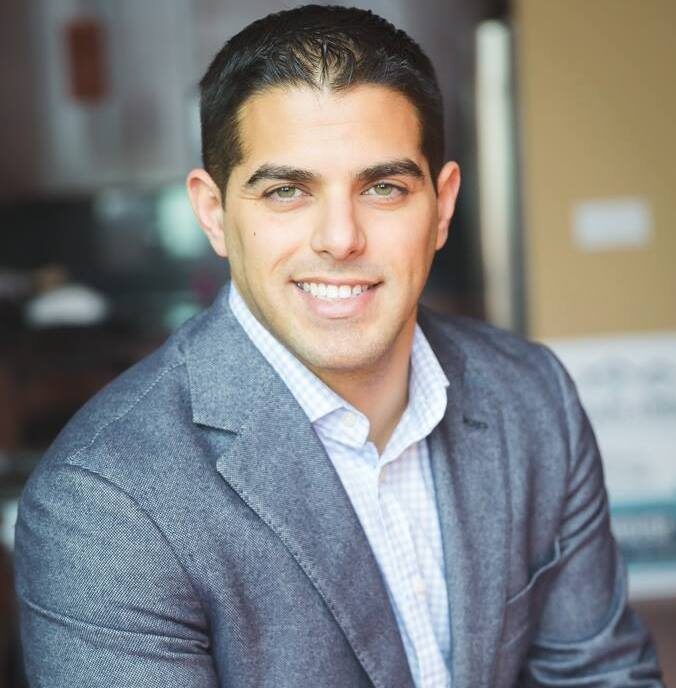
After he opened his real estate law firm in the tough market of 2009, lawyer Mo Dadkhah thought it might be a good idea to earn his real estate license, too. One thing led to another, and now he runs both a law firm and a real estate brokerage.
Dadkhah, broker-owner at Main Street Real Estate Group, works with all categories of buyers, from entry level to luxury. During the past year, on the legal side, his team worked on a very large condo deconversion. The sellers were happy with the outcome, a big accomplishment considering they came to Dadkhah’s team after they were unhappy with the previous company they worked with and had lost faith in the process. “We advocated on behalf of the sellers and were able to get them to a closing within 60 days, a feat in and of itself,” he says.
A Chicago Association of Realtors Top Producer, Dadkhah has been featured on the cover of Top Agent Magazine, named a Power Player by CS magazine and included on the Inc. 5000 list of the fastest-growing companies in the U.S. Most of his clients describe him as compassionate and hardworking. “I understand everyone’s search is a little bit different,” he says. “I tailor my attention to exactly what they need and work all hours of the day to get them the results they need.” Always accessible, Dadkhah knows a client’s home search is not happening only during business hours.
Being a lawyer affords Dadkhah the luxury of understanding the ins and outs of the process from both the real estate and legal sides. “I have always said that selling real estate is not rocket science,” he says. “Some agents will lead you to believe that you have to have some ‘it factor’ or some level of salesmanship. It really is about having a strong work ethic and the ability to stay consistent with your effort.”
Welcome to the Athletics of Business, a podcast about how the traits and behaviors of elite athletes and remarkable business leaders frequently intersect. The real stories and hard lessons to help you level up your leadership and performance. Now your host, Ed Molitor.
Welcome back to another episode of the Athletics of Business podcast. I am your host and CEO of the Molitor Group, Ed Molitor. And what an incredible conversation I had to share with you today with our special guest, Mo Datka, who is the broker owner at Main Street Realtor, the owner attorney at DACA Law Group and the host of AE Wheelhouse, which is a phenomenal podcast slash netcast. And we have the information in the show notes where you can find that just an outstanding list of guests, entrepreneurs doing just some amazing and we'll talk about that inside the show. Now, before I share more of what we'll talk about, let me tell you a little bit about Mo.
So after he opened his real estate law firm in the tough market of 2009, now think about this, okay, he opens his real estate law firm in the tough market of 2009. He also thought it might be a good idea to earn his real estate license. As you have it, one thing led to another and now he runs both a successful law firm and an incredibly successful real estate brokerage. And Mo works with all categories of buyers from entry level to luxury. As I mentioned, he's been very successful. He's a Chicago association of Realtors top producer. Mo's been featured on the COVID of Top Agent magazine, named a power player by CS Magazine, and included on the Inc. 5000 list of the fastest growing companies in the U.S. now, most of Moe's clients describe him as compassionate and hardworking.
And I love when he says, I understand everyone's search is a little bit different. I tailor my attention to exactly what they need and work all hours of the day to get them the results they need. Always accessible, Mo knows a client's home search is not happening only during business hours. Now, being a lawyer affords Mo the luxury of understanding the ins and outs of the process from both the real estate and legal sides, which, as you can imagine, makes his clients very comfortable and very sure of how things are going. And he's always said that selling real estate is not rocket science. Some agents will lead you to believe that you have to have some sort of it factor or some level of salesmanship.
And most says it's really about having a strong work ethic and the ability to stay consistent with your effort. And along with real estate, Mo's Other passions, and I love this, include auto racing, jiu jitsu, and boxing. He recently took up triathlons, and not only that, last year he completed this is insane, the Escape from Alcatraz Triathlon. And he has some great stories wrapped around that. And he competed in the Escape from Alcatraz Triathlon to raise money for autism awareness. Now, I know you're thinking, let's get to this conversation, Ed, so let me share a couple things that you can look out for. Mo's going to share with us how we figured out that at Main Street Realty, they could do business better than most of the industry by doing good by the agents with coaching, training, and an incredible value proposition.
And inside of that, he'll really talk to the customized training, how it's specific for each person. Okay. And Mo talks about why self awareness is so significant and how you can leverage it to plug your weaknesses and you can do that in the hiring process or who do you decide to be business partners with. Mo talks about how he builds trust. And this goes back to the training, how he builds trust through leading by example, letting his people know that he cares about them and coaching to their strengths. And I think it's really cool about Mo. And you'll get this from the conversation. He gets to know each person on an individual basis and what their story is, what makes them tick and what is their one thing, Right? And he finds a way to pull that out of them.
And then he talks about how they drive a culture with an abundant mindset in Main Street. If you know anything about the real estate industry, especially in Chicago, it's very cutthroat, right? And a lot of folks, when they fail in that business, it's because they operate with a scarcity mindset. He brings that abundant mindset to Main street, which in turn empowers agents to help other agents because they realize there's plenty to go around for everybody in their office. And finally, last thing I'll share with you, that this is what we talk about towards the end of the interview is the key to being great in anything, regardless of what it is in your life, is that you do it, you go after it, and you tack it with consistency. And that's something we talk about all the time on the Athletics of Business podcast.
So that's it. Get your pen and paper handy. I hope you enjoy this conversation half as much. I know you're going to half as much as I did recording it. Mo, thank you so much for joining us today on the Athletics of Business podcast. I Am humbled and fired up to have you here.
I'm humbled to be here. Thanks for having me on. This will be fun.
It has been a long time coming, so let's jump right into what you're doing now. Let's talk about Main Street Real Estate Group. Let's talk about all the other things that you have going for you.
So Main Street Real Estate Group is my real estate brokerage. I have a real estate law firm called Dadka Law Group. And it all happened kind of by chance. Main Street. I got out of law school in 2009. The job offers were just terrible. I was making more money as a personal trainer in college than I would have made as an attorney. I was getting job offers in the low $30,000 range. And I said to myself, what the hell am I going to do? I don't want to take these jobs. I remember calling my dad, being like, dad, what the heck do I do now? He said, I told you should have been a doctor. And I said, well, that's not an option now. So I opened my law firm right out of law school. No idea what to do.
I was at the daily center just with a clipboard and notepad and just trying to take notes to figure out how to practice law. If any of my early clients are listening to this, they're probably having a heart attack.
Sorry.
Yeah, I got a real estate license because I needed a second job really to make ends meet. And I never intended on owning a real estate brokerage. Never once. And it really was to make enough supplemental income to survive. One thing led to another, and a couple real estate or one big real estate failure with a failed business partner led me to do Main Street. And it was the best thing that ever happened to me. But it really kind of happened by chance. Failure and a whole lot of effort in between 2009 and 14.
So let's go back for a second. So 2009, you get into real estate law. Could there have been a worse time or a more challenging time? But what was your attraction to it?
So my attraction? Real estate, honestly. And it would come as a surprise now, if you know me now and every. Everything I do is real estate. I had no attraction to real estate. I get. When I got out of law school, I had an ex girlfriend that worked for my failed business partner as an assistant. And they kept telling me, well, why don't you get a real estate license? Attorneys don't have to take the class, they just have to pass the test. And I hated the idea of Being a realtor, because I thought it was salesmanship, and I'm not a good sales guy. If he took me and put me on a sales floor, I'd crawl in a corner, I'd hide. I would never come back up. So I said, I don't really want to do it, but I have to make money.
I don't want to go work in a bar right now with no disrespect to anybody that does. It just wasn't the hours to be able to be an attorney. And I didn't want to go back to personal training because it was weird hours that wouldn't work with being an attorney as well. So I said, okay, I'll get a real estate license. And at the time, I didn't even do real estate law. I literally would go on Craigslist and I would post it. I would cover status cases for attorneys, which means to show up and get another date for $50. And I just said, I'm at the Daily center trying to learn this stuff anyways. Why don't I just. And the Daily center, for those of you listening who might not be in Chicago, is our courthouse in Chicago.
So I was running around for 50 bucks covering people's cases, and attorneys were like, well, shoot, we don't want to hire another attorney if this young guy will go around and do a good job. From that, I got a lot of referral business, some of which was real estate, because I was a realtor and crazy enough. And it's a thank you to a friend of mine who might listen to this. Brian Grill and his dad, Chuck Grill, who's been an attorney for about 40 years. They trusted me with some of their litigation cases early on, and a lot of it was foreclosure defense work. So 2009, hot time foreclosure defense. And I quickly started doing a lot of those. I did a very large hotel here, purple Hotel, if you're from the area golf courses.
And that really gave me a big break into real estate law. And I'm forever grateful for those two guys for trusting me.
Well, that's unbelievable. So let's get. So how Main Street Real Estate Group, when you first founded it, what was your whole idea concept behind what you were trying to do?
A good story to lead into Main street is how I failed with my past business partner. So the person that I had started working for when I first got my real estate license, had a big brokerage, asked me to open an office with him in a suburban area, Northbrook in Illinois. And he turned out to be a really bad business partner, so I'll leave it at that because I'm not saying very much more, but I had at that point recruited on 12, 13 folks, and I could not be in the atmosphere anymore. I couldn't be in that partnership. And I knew I was going to lose a lot of money. I just invested into this.
I had signed a lease, I had bought furniture, but I wanted to take my 12, 13 people to some place that I felt was a good fit for them. I went and I sat down with some brokerages, and my full intention was to take our team somewhere. I sat back and I said, okay, what is a real. And I wish I had done this a year prior, but I hadn't. And off the heels of some failures, I said, what is a real estate broker and what is a real estate company? I said, well, a real estate broker is a business owner. They're an independent contractor. They're a business owner, and their company should be consultants on how to grow a business, specifically a real estate business.
And everywhere I went, they didn't really have a teaching vehicle, especially one one coaching and mentorship to teach the people that I was bringing on how to do this. So I sat back with the people I opened Main street with, and I said, I think we can do this better. And that was kind of a crazy thing to think. In 2014, the market had just turned and we opened Main Street. And it went from interviewing with real estate brokerages to we physically, Jeff, my business partner, and I, we physically drove our form down to Springfield so we wouldn't have to wait for snail mail. And we opened it. And since then, it's been fantastic. We've grown to 65 or so, folks, and I'm the luckiest guy in the world to be surrounded by just amazing staff, realtors, partners, everything.
At what point did you realize that you were about to hit a home run, that you really had something special?
You know, to be quite honest, I don't feel that home run feeling now. I just know, reflecting back, we've done some great stuff, the real estate market, especially locally. There's been a lot of kind of big fish just eating the little fish up. I won't name the big names, but they're offering your agents money to leave. They're buying small brokerages, and everyone told us we wouldn't last. And I think our biggest home run is proving to people not only have we lasted, we have grown through this. It's been almost like a real estate civil war. Here In Chicago, where people are just attacking each other. And we've stayed out of that. We just kept our heads down. We did good by our agents. We continued to coach and train. And I think that's been a great message.
And now we know we're resilient and we know we have a value proposition that people like. And we know that if times get tough, whether it be in brokerages, against brokerages, or if the real estate market gets tough, because every market that goes up will come down a little bit. Again, we know we'll survive. I feel like having that confidence that we'll survive gives me a little more comfort. Because every business owner, successful or not, they stay up at night sometimes thinking about that.
There's no question. But you talked about being resilient. You talked about. And I want to. You just nailed three things I want to go through. You're surrounded by a great team. Okay, let's talk about how significant that is and why it's significant and how you went about being intentional about surrounding yourself with the right people.
So I am very self aware and I think I wasn't when I was young. And I think self awareness takes, I don't know, probably three decades to figure out for most people. And you have to be honest with yourself. I know I have some strengths, but I also have a lot of weaknesses. And I always say, whether you're. First of all, when you're hiring and you're trying to partner with somebody, plug your weaknesses and have somebody who is better at your weaknesses, because you're not going to be great at everything. It's just not possible. And then build a great culture. Our big value prop to people is we coach and train, but also we have an incredible culture. Every six weeks we're out at a happy hour with our agents. We just have a good time with them. I don't have an office.
In my office, believe it or not, I sit out with my agents. I don't go sit in an office. I'm out working at the workstations with everybody else. I refuse to be the unavailable, unapproachable guy. So I want to build a culture where everybody is level. When somebody says, hey, you're my boss, I'm like, no, I'm your teammate. Because I don't want to have that feeling where people look at me that way. So I think I've been very purposeful about building a culture where people enjoy working with one another and hopefully working with me. But also I definitely am very aware of where I'm weak and I've been lucky. You know, sometimes you hire people and it doesn't work out. Sometimes you partner up with people and it doesn't work out. We've had a couple hires that didn't work out, but it doesn't.
Doesn't make us stop looking for the right folks. And I think we've gotten to a point now where we just have an incredible team. And if it wasn't for them, I would never be successful either at law or real estate. If it wasn't for my team, you know, my legal side set aside Main Street, Tim, Ali, they're rock stars. I could not do what I do on the real estate side if Tim and Ali weren't around, and I could not do what I do at Main street if it wasn't for the entire team there.
So let's back up real quick because you said something about self awareness that's so key. I believe self awareness is a competitive advantage. Right. And you mentioned that it takes three decades to acquire. It's really at a high level. I'm not going to disagree with that. I think we're all a little bit different. But how, you know, we know today's workforce wants three things. They want to know that they're valued. They want to know that the work they're doing is important, and they want to be coached. Okay, so you nail all three of those. But how with the younger group, how do you get them to buy into the fact that self awareness is benefit to them?
Yeah. And I think it was three decades for me. It could be different for a lot of people. And I don't know if it's a series of failures has led me to become self aware or just knowing that if I can't detach myself from. Not even detach, if I can't step out of myself, essentially detach from myself. And take a very honest look as an outsider in on MO and see what I'm good at, see where I can improve myself. I am never going to be an effective leader. And I think what people have to do is say, hey, listen, don't step out and step in your best friend or your mom's shoes. My mom, I'm five foot seven. My mom tells me, mo, you're tall, you're not short. My mom's always going to look at me as the greatest thing in the world.
Don't step out and step in your mom's shoes. And maybe don't step out of your body and step in your biggest critic's shoes. But Step out of yourself for a second and step in someone, the average person's shoes. Have them take a look at you, an honest look in you and see what you can improve on. Because you know, it's even in athletics, not every athlete's good at every position. You just have to be aware of what you're not good at and be willing to improve on that. You know, I know I will never get as organized as Jeff, my business partner at Main street. That is the man with systems. But he's taught me to become better at some of that. I've been open to becoming better at that. And I think a younger generation just needs to be honest with themselves.
Give yourself a critical look. You're looking at yourself. You're not vocalizing that all your failures and your downfalls to the whole world, just be honest with yourself.
What we work on a lot here with our clients is authentic and resilient leadership. It goes hand in hand. And self awareness is so key in that. Right. You're in a business of trust. Can you talk into a little bit about how you build that trust with your people?
Yeah, I think leading by example matters a lot. So everything that I try to coach and train people, I try to show them that I do as well. And one of the things I've told a lot of my, I don't even want to call them students, but my teammates is nothing I'm teaching you is something I wouldn't do myself. Now I know that if I'm teaching student A, we'll call him John. John might have some strengths and weaknesses that are different than Jennifer. And I have to coach to those strengths and weaknesses and build trust with him that I actually care about John as an individual and making sure that John betters his strengths and weaknesses as well. Because I think coaching and training, and I know you do this as well, I can't coach and train John and Jennifer the same exact way.
The two people, not only do they take to coaching and criticism differently, but they just might be at different places in their lives. When I do my coaching and training, I genuinely want to know what's going on in my student's life, my team member's life, because I had, for example, one of my team members say, I want to start a family in the next year or two. Well, I have to consider that. I have to consider the time and the effort that goes into that, maybe the emotions that goes into that. So I think they begin to trust me when they know I genuinely care about not just getting them productive so that I make a profit, but genuinely productive so that their life is better, then I'm genuinely interested in what's going on in my clients lives.
And you coach people from all different walks of life, all different backgrounds. I really do think your background and what you've experienced till the time you meet somebody, that is a very large indicator of how someone should be coached. You know, they have experiences that differ from person to person. And I really want touch on those things. I want to know what's led them to the coaching room where we're sitting in a conference room and we're talking. Because if I know more about them and I'm very open about myself, I'll tell anybody my story, I'll sit down with anybody and I share it. I have one of my new students and team members, he's genuinely maybe one of the most interested in my story people I've ever coached. And he just, he'll stop the coaching sometime be like, well, what about you?
And it's a great back.
Yeah, that's awesome. And you said story. And that's the, you know, when you work and realize each individual is different and everybody has some sort of story. Not some sort. Everybody has a story that are filled with crucibles and mile markers and however you want to word it. What are some of the ways. And you're going to know where I'm going with this. Some people are harder to crack than others. And when I say crack, I mean really figure out to know what makes them tick and what their story is. And there may be something that they're not telling you that could be quite powerful for you to know, can help you leverage that to really get them to the next level. Right. To maximize your human potential. What are some of the tricks or some of the.
What are some of the things you do?
So we spoke off air a little bit about some books and the one thing, like Gary Keller's the one thing great. And I try to figure out what's your end goal here. You know, everybody wants to be successful very quickly, I think. I don't know if it's Bill Gates or Tony Robbins that came up with it, but I've heard them both say it. Everybody overestimates what they can achieve in a year and underestimates what they can achieve in a decade.
Amen.
What do you want to do? What's the one thing you want to do in 10, 15, 20, 30 years? Let's break that stuff down and work on it week by week. Yeah, some People hold. And I'm kind of like that. I was kind of like that before I got into a lot of coaching and training. I held everything very close to my chest. And I think it's just everybody has a. I think everybody has a one thing, you know, what's your plan? What's the big thing in life? You know, it might be I want to retire and spend time with my family. It might be I want to, you know, travel the world. Whatever it is. I try to figure that out. What do people want to do?
And then what I can coach them on is how in their business to buy back time, you know, become successful enough that you can have the time to go ahead and do whatever it is you want to do. But I take their big goals, break them down into smaller goals, and then break them down into weekly goals, which I call winning the week. And my favorite quote in the world is a goal without a plan is just a wish. And I'm the plan guy. I'm going to try to help people come up with a plan. And I think the best way to crack that person is just figure out what it is they want out of life.
Because whatever that one thing is or whatever your big goal is, it could be five years, 10 years, 20 years down the line, or it could be a year from now. You gotta put a plan together to get there. So I'm very purposeful about telling people when we meet, we're game planning to figure out how to get to success. And then slowly, if they're tight chested with what they want, I'll slowly pull pieces of it out until we're there.
You know what I love about this conversation? When I got in the mortgage business, after we got fired at A and M in 1998 and I got in the mortgage business, it was great group of guys, right? Great group of guys. Good friends with a lot of them to this day. The business itself though was all about metrics, right? That was a refi boom in 98. It was all about metrics. It was all about numbers. There was no developing the whole person. There was no, you know, connecting and seeing more and others and they see themselves. There's none of that. And I love the fact that you speak to not just the business side of people. You're talking about, what do you want in 10 years? That's the whole person. And you bring family into it.
And I find that drives a culture that's worth fighting for. That's a big thing we work on, is driving A culture that's worth fighting for. Can you talk about your culture? Not just the getting together, you know, for happy hour, and not just the coaching and training, but how they have each other's back and how they're able to police themselves and what that means to attracting top talent, retaining top talent, and developing people.
Yeah, absolutely. You know, and it's happened, I think, organically, at least from a bit from me visualizing it. I've seen how often agents who are not owners of the company get together and help the other agent grow. And I think we've created a mindset in our office that there is enough to go around for everybody. Don't become overly competitive to the point that you don't want your colleague to succeed. There's enough success to go around for everybody, and we work better as a group to help each other go out and get that success and motivate each other. There's a couple agents in my office. I'll name one of the guys Andrew. Specifically. Andrew coaches and trains. He started with no background in real estate. He had a small sphere of influence here. He's a top producing realtor now, and helps the new agent out.
He says, I was in your shoes. This is what I've done. I'm five years in now. You know, things are going well for him and everybody looks up to him. And I love when people come in and I'm coaching them and they're like, I want to be like Andrew. I want to be like Lawrence. And five years ago, they had just started and they were that new person. I'm like, listen, they were in your shoes five years ago. And what's been fantastic is one of our agents, Lawrence, brought a book in for one of our new agents, Rory, the other day, you know, he wrapped it up and he had met him at the holiday party and said, awesome. I thought of you when I. When I read this book and I brought you this book, please read it. And that has happened now.
It makes me so happy to see it because they just work together and it's hard to show that to somebody until they come in and feel it. And, you know, when you're recruiting or if I'm sitting there and I'm talking one one with an agent, I'm pitching it. I'm pitching this, you know, this culture we have, and it's hard to show it to them until they get it. But we don't do a lot of hard recruiting. We've grown organically. And I think when our agents go out and Say we enjoy. We're at, we have a good time. They're at a realtor event and people see them happy. That shows the culture to everybody outside of us because we're not, you know, real estate broker owners call people, I get calls, they don't know I own my company.
And they say, hey, listen, we want you to leave your company, come to us. We never do that. We've grown to 65 agents by not doing that. And it's because our agents tell other people to come and join us because they're happy. And I think that's the biggest pat on our back for our culture. Oh, our agents are trying to help grow our huge.
Yeah, yeah, it's huge. And when your best recruiters, your own people, right. There's so much power in that. And there's so much power that. And again, I mentioned to you this earlier, before we started recruiting, it's like the same keys to success for it doesn't matter if you're a student, small company, a medium sized company, a hundreds and hundreds of millions of dollars company, it's the same thing. If you can create that culture where your own people are the best recruiters, there's so much to be said for that. Now with that being said though, you're still banging heads with some of the big dogs, right? I mean, in your own. Right, you're a big dog, but you're still banging heads with some of the big dogs.
How do you battle against that mean and stay authentic and keep, you know, like I didn't mention this, but I break authenticity down into three things. Honesty, integrity and vulnerability and integrity. Not being morality, but being your values, actions and beliefs are all aligned. How do you toe that line when you know, and I don't want to use the word dirt bags, but you know where I'm going with that, right?
Yeah. Listen, I will never speak back when I'm recruiting and I know when people come in to recruit with us or come in to interview with us, they're going to three, four, five people. There is never a time, even my old business partner who sometimes I want to talk bad about, I will never say a bad word about any of my competitors, ever. I try to show what we have to offer and then let them decide. I let people leave with the hey, if you're going to go talk to other people, I believe as a realtor, something you should value is the coaching and training.
So I would tell you if I was you as a young realtor, and I've done this in the Past when you go and you sit down, ask somebody if I have an issue with this in business or I have an issue with that, who do I go to and how do I go to them? And if the answer is we have classes for that, well, you probably shouldn't join there. If the answer is have a mentor, then fine. If that's a good fit for you, fantastic. Let that be a good fit for you. I've had agents in my office leave us to go to a big dog company and come back and the door is always open for them. You know, it's tough when you see the big shiny thing.
And we are, you know, it's funny, we now have crested the number of agents where we now have to. We're considered a large office, but we're competing with agent offices that have 2,000, 5,000 people and we're nowhere near that. But I compete with them from a point of I know my value, I know they don't provide that because they can't provide it to 2,3000 people. And I don't intend on being a 2,3000 person office because of that. My value add I will not change. I will make sure that everybody's coached and trained. I'd rather have 100 people that I have a connection with than 4,000 people. I don't. And there's no problem with that. They're doing a fantastic job with what they're doing. I applaud them. They're extremely successful. It's just not the way I want to run my business.
It doesn't make me comfortable. So I let people know that's how we plan on being. And I tell people our future, you know. Do you intend on being a 4,000 person brokerage? No. We could dial up the recruiting and get there, but I don't think I'd be able to give the value that I believe a broker should give a broker owner should give to their agents.
Right. A huge part of that is the mentorship. Can you talk about some of the mentors in your life?
Yeah. So I'm starting to try to become more purposeful about reaching out to mentorship and get more of my own because I've done it passively in my past. And I think every successful business owner should have people who are mentors to bounce things off of. My father has always been one of those guys that is a giant mentor to me. His story, and I won't get into it because they'll be 45 minutes. Incredibly immigrated here, learned the English language, couldn't get into medical school here because of politics at that point. So he went to Mexico, learned how to speak Spanish, started medical school here, came back here with nothing. When I was born, I was in a one bedroom apartment with my mom, my grandma, my dad, two dogs. We didn't have anything.
And he became very successful but went back and got an MBA as a practicing physician because he said doctors are bad business people.
Absolutely.
So I'm going to learn that. And I've just always had a relationship. If I can go to him and say dad, I got this idea, I got this problem and he will sit down from not just a father, son look at it just from a mentor look. And that to me has been so valuable and I'm very lucky to have that. And very recently I have a good friend of mine, Lawrence Dunning, who we've just become very close. We lived in the same building and he's just an unbelievable friend and he's been successful at everything he does. He works with me at Main street from a life coaching, you know, I think he's got, I look at him as a guy who has such an incredible grasp on living life.
I've been poor at doing that and he's incredible at, you know, the health side of life and taking time off. And I've been very purposeful about taking our friendship not just from being buddies, but from motivating each other, mentoring each other. You know, I read excerpts of books and things that he gives me and just going into 2020, we made a promise to each other that we would save down with one another more frequently. Not to just be friends, but to just help each other grow. So I think it goes back to the self awareness a little bit. If you do not have a mentor to then take a look at your at a very high level. You know, there's no secret to this.
When you get to a certain point in business, your abilities to improve are still there, but they become almost more specific. You have to zoning on certain things to improve on and you sometimes need again an outside look at that. And a mentor gives you that to give you a very honest and very honest look into your struggles, what you should improve on. And in 2020 I'm going to make a bigger push to do that.
Okay, that's awesome. Now you mentioned something and it's going to lead me to my next question. You do a lot of things outside of the office. Okay. You have an incredible amount of interest. One of the things that's always fascinated me about you and I think I've told you this a couple times is you have all these hobbies, all these interests. You're always pushing yourself outside your comfort zone, physically, mentally, emotionally. Yet you keep things so even. You know, you think with all you going, all that you have going on, you'd be bouncing off the walls. How do you do that? How do you balance the boxing, the jiu jitsu? We have to talk about the triathlon, the escape from Elton Petraz, I mean, your fundraising endeavors, you know, all the things that you do. How do you balance it all out?
So I wish I was doing more boxing and jiu jitsu lately. I haven't been doing. So it's been a couple years since I've been very consistent there. But you know, my big passion is auto racing. It always has.
And that's the one.
You know, when I was a kid, that's something I wanted to do as a career, but there's no money in that in the US My mom hates this quote and I say it to her all the time to tease her. I say, I'm here for a good time, not a long time mom, and she gets really irritated.
Understandable.
Yeah, yeah.
Being a parent, I got to say that's understandable.
I tease her with it and God bless her, she's dealt with me doing sports like that my whole life. She's been very supportive, but life is short. We don't know what's promised tomorrow. You know, my dad has one of his favorite quotes is, you know, plan for tomorrow but live for today. I know that I could leave here today and I could get in a car and something unfortunate could happen or I could live to be 100. My grandfather's 94. Got. There are things I enjoy and I want to do them as much as I can. And fitness for me, a lot of my extracurricular stuff is fitness related. I just enjoy fitness. I enjoy athletics.
And what I've been bad at very recently, especially the last year and a half, is I've gotten so busy that I've stepped away from that a little bit. Now I'm going to go right back to it. I did the triathlon at the beginning of the year, but I think the last six months I've been bad about it. I tore my shoulder. I'm just recovering from shoulder surgery, but I've gotten good at time blocking and I've gotten good at being able to just if I'm going racing or if I'm going to do something, I will just take my foot off the gas completely, go do that stuff and then come back and be full throttle again. No pun intended.
No pun intended. Yeah.
But I'm starting to time block, something I was incredibly bad at early in my even business career. I was sporadic, I was jumping around, running around. And now I time block, you know, And I think time blocking is something I've learned from people I've spoken to that are successful. If you're doing 10 things, you can't do 10 things at all times. Very purposeful in that moment about what you're doing. Be very present in what you're doing. If it's coaching and training, if it's talking to you, I do nothing else. I do that and then I go on to the next task. So I think I've become better at that as time's gone on. But I just enjoy doing things in life. Life is short, you know, we have one of them to live.
And whatever your belief is, you might have a belief that we come back at some point. You won't come back as you, even if that's your belief. So I want to enjoy me as much as I can. It's no secret Father Time's undefeated. I will get older. Doing jiu jitsu, boxing, triathlons will get tougher. It's already getting tougher. I just had a shoulder surgery because I picked up a kid at a wedding. You know, my shoulder, 10 years ago that wouldn't have happened. You know, I'm going through physical therapy because of picking up a child. I took a world bench press record and now I'm benching three pounds in pt.
How humbling is that?
Yeah, pink weights, too. My PT girl, she's great.
Talk about kicking a man when he's down.
I said, wait, you couldn't have at least made the 23 pound dumbbells blue or something?
Yeah, yeah. No, you need a picture of that. Yeah. So you said something as were talking about all these things and the auto racing. Right. You're really, you're successful at auto racing. It's not like you just sit there and whiz around a track. You're pretty, you know, I track you. You're pretty successful. You're pretty intentional, everything you've done. And I don't want to steal the thunder from your answer, but everything you've done, you've been really intentional about going and picking the minds of people that are ultra successful. Can you talk a little bit? How big of a key to your success that has been?
Yeah. So I think you touched on it earlier. You know, there's no secrets to success. The path to success is out there. You know, if you want to play, let's say, basketball, you should try to mimic a little bit of what Michael Jordan and LeBron James do. Not just on the court, but what they do in preparation. Leading up to that. Their athletics, their fitness, their regimen. The path of success in business is the same. Auto racing was one of those things where I was just. I had a natural talent in it, very young. And I kept on wanting to learn more, I watched it more. And auto racing is a tough one because it's a budgetary thing. If you don't have the budget, you can't go do it.
And my career kind of what would have been a pro career in my teens kind of came to a stop because the budget wasn't there and there's no sponsorship in the U.S. but I do everything that I think doing anything you do in life half assed is such a waste of time. And time is so valuable. So I seek out the best. You know, when I was, you know, my jiu jitsu school, Jay Valko, I wanted to do privates with him. I wanted to go there and I wanted to learn as much as I could when I was training actively. I always want to mimic and learn from the best I can. And then listen, in athletics there's some physical barriers.
I will never make it to the NBA even if I study Michael Jordan to the end of time because I stopped growing in eighth grade. So my basketball career ended then. But I do things that I think my body will lead me to be good at. And I hate wasting time. I think wasting time is one of the silliest things to do because it's your most important commodity. It's the most expensive commodity. You can never buy it back. And if I'm going to do something, there's no way I'm doing a half ass. When I started lifting weights as a kid, I was 15. I broke the world bench press record again. I took to lifting really well. You know, that's a physical thing. My body just changed really fast. Very early on eighth grade, I started lifting weights. But I got obsessed with it.
My parents dropped me off at the gym. I had a trainer. And once I started getting good at powerlifting, I went to a guy who was kind of helping me out with that. And I was obsessed. He would say, you can go home now. But I didn't want to. I was obsessed with it, right?
Out of curiosity, how many pounds did you throw up?
So my biggest bench ever was 375 when I was 15 and I was 130 pounds. So bench pressing as a. That was 300 pounds, not 375. Bench pressing in a competition is different. You know, if you bench, you touch and go in a competition, bench press, you bring it down, you hold it until either a buzzer goes off or people say press. So you're going from a dead locked stop. So I was probably benching 315 when I was in high school in 15, but I was. I was 130, 140 pound guy at that point.
That's unbelievable. So let's transition into Escape from Alcatraz. Never. You had never done a triathlon before?
So I did one in 08.
Oh, you did? Okay.
It was 11 years ago.
Okay. All right. So why not just jump into the bay, right? And let's just swim back to shore from Alcatraz. And that is insane. What made you do it? What was your kind of where your trigger? What. What encouraged you to do that? And what was that like? What was the preparation like? What was the mindset like? What were the adjustments? We talked about this. How was that?
The story of how we started it is conflicted. I was at actually my buddy Lawrence's work, laying on the beach, just him and I. We had a great day where everybody else went out to do things. We were reading a book. It was just me and him hanging out. And he claims I came up with the idea. You do triathlons all year long. You climb mountains, you're a professional fighter, you're an athlete. You think when I was drinking Tequila Lane, I came up with jumping out of Alcatraz and some of the shores. No way. So he mentioned it, and before I knew it, he had signed us up. And he signed us up for a. And it was for a charity. So you can't actually sign up for this triathlon unless you get. You sign up for a charity or you get picked.
It's one of those triathlons where you can't. The average person just can't sign up. He signed up for autism charity. And I've had two family friends with kids who are autistic, and I hold it very near and dear to me. And the other cool thing was we raised more money than anybody else in that charity. So him and I raised.
Which is not a shock, by the way. That is not a surprise.
Lawrence had his shirt off in all the photos. But it, you know, so I started training about four or five months out. And if you have done A triathlon. I know you're training for them and you've done them in the past to do a one and a half mile swim in ocean water, it's too soon. And I started in the winter. So here in Chicago I couldn't do open water swimming so I went to Lifetime Fitness. I just. Lanes.
Yeah.
And the swim terrified me. Honestly, I don't get scared of a lot of things. You know, by the time you competed in combat sports and stuff, like some of your fear goes away. Auto racing, some of your fear goes away. I don't fear death when I'm in a car. I was deathly afraid of jumping and I think it drove me to train hard. And when I started swimming, I did one or two open water swims here in Chicago and I was terrified. My sighting was bad and by sighting I mean looking for the buildings and looking where they're going, I just was terrified. And I remember the couple days leading into it when I was in San Francisco, I just kept looking at how far Alcatraz was. I mean if you've been to San Francisco, it just stares at you, right?
It's a two day reminder of I have to swim. And I did a test swim in the water the day before and I was terrified. The event itself, they put you on a boat to take you out there and you have six minutes to get off this platform because the current changes so much and you're in there like cattle. And the buzzer goes off and you come around the corner and it's about an eight foot jump into the water.
How many people on the boat waiting to jump off? It's unbelievable.
You're in there like sardines. Yeah, I'm looking around and everybody's nervous. Minus a couple lunatics who are like laughing and jumping around. And I was ignoring them completely. But I. It was maybe the first time in athletics I've had fight or flight. I literally, my body was starting to tense up and I was trying to move my arms just to get some heat in my body. As soon as the buzzer went off I said, well, there's nothing I can do now. I just have to jump in the water and swim. So jumped in the water and there's thousands of people in the water. Lifeboats are too far out to save you. People are swimming over you and people are starting to scream. I can't breathe. I'm drowning. Help. Help.
Help.
And I can't help them. I just get my head down and. And eventually I was just getting closer and closer. I Swam a stupid route because you're supposed to sight and I didn't sight correctly. So I swam 2.2 miles. I had a watch on that while I was swimming. Swim 2.2 miles before I got out of the water. But when I got out of the water, boy did that feel good. And I said, the rest of this is going to be easy. The rest of it was way worse. I would have done the swim three times over by the time I got done because bike was hilly and I had an old bike and the run was tough. My quad cramped up. I fell twice.
And it was strange in that I've had adversity in athletics before, but never to the point that I was going to quit. I've never quitted anything. I've lost jiu jitsu matches where somebody's just beat me, but I've tried till the buzzer to win. There's never been a time I've given up to defeat and just said, okay, that's it, I'm done. I will fight till the last bit. And I almost did. When my quad was rolling up, I just couldn't step up. I was massaging it out and Jocko Wolnick's video came up that a friend had sent me a week prior. And it was like, do you feel like life is tough? Good, you can learn something from it. Do you feel pain? Good, it's going to teach you something. I tell anybody, go listen to this thing.
And it's a great video of him saying, well, does this suck? Good, you're going to learn something from it. And I don't know why that thing started to play in my head and I'm so happy. My friend sent it to me and I just kept telling myself, good, get up, you're going to learn something from this. And I was towards the end of the finishers, but I finished. I limped across the finish line. It was one of the best feelings I've ever had in athletics.
So that persistence, that resilience, that attention to detail, that commitment to learning from the best, how much of a role do all those things play in your business? Success.
I think what athletics has really taught me is to be good or great at anything, you have to be brutally consistent. And I know with training and anything I've ever trained at, if I'm not consistent and I skip a beat, my success level is immediately affected. Now, I don't think consistency or motivation is a never ending supply for anybody. I think if you grab Bill Gates in business or you grab Michael Jordan in Fitness. There are times they're not motivated. They just aren't. And they're human beings like me and you and like anybody else listening. And they will lose motivation from time to time, what they do. And I always equate motivation to the energy bar of a video game.
I'm not a big video gamer, but when I was a kid, you know, you play an action figure and his bar goes down and he becomes slower, he becomes less effective, so his motivation drops, he's less effective. Fall back on your systems of consistency when that happens. And I think if you can take. If you can find a balance between motivation and consistency and kind of intertwine those two to say, okay, when I don't have the motivation to get up to go to the gym, I got to be consistent. When I don't have the motivation to get my marketing out, I have to be consistent. And whether it's business or athletics, the 8020 rule always applies. And fall back on working on your business, not just in it. And be consistent. I have learned from athletics. The moment I take a week off.
You know this.
You're training for a triathlon. Try to take a week off and then jump back on a bike. It's the same with business. And you lose motivation like I do. Just fall back on your consistency when motivation drops.
We're going to get into a couple things here before we wrap this up, but I want to ask you this. So you're so committed to your growth, right? To doing things outside your comfort zone as an individual. Can you talk about how significant how that important that is for a leader to their people? In other words, it goes back to what you're talking about, mirroring the behavior that you are not asking your people to do anything that you've never done before. So how important is it for you to do all those things for your people to see that?
Yeah, I don't ever want people say, oh, I look up to you, because that gives me a weird feeling. But I hope that when somebody is coming to coaching and training, they look at me as someone that could be a mentor to them they can look up to. And I do.
Really.
I think it goes back to leading by example. I. I don't ever want to be a crummy example for anybody. Somebody might not look at me even if they're coaching and training with me as like, hey, that's my mentor. But I want them to find something in me that motivates them too. And some of them do. Some of them say, I'm motivated. I want to be you. I want to do what you're doing. And I love that. It makes me feel good. But as a coach and I think it's whether it's athletics or business, you have to keep on evolving. You have to keep learning things. You know, fitness evolves. The game of basketball, the game of football evolves. And as a coach, if you're not looking at that, you're not able to effectively teach it to people. Business evolves.
I personally, if I don't grow, I will be an ineffective coach. I look at marketing right now and I look, you know, it changes every other day. Social media marketing changes every other day. I read more now than I did in law school and I read a lot in law school because I have to continue to grow. If I stop growing, I will never be an effective coach to anybody ever. And that motivates me and it's bettered me. Being someone's teacher or mentor has made me a much better person. My own business and my own life and I think we motivate each other. I think everybody I work with motivates me to better. And hopefully in turn, my growth has motivated and taught them something too.
So before we wrap up, can you go ahead and share with our listeners where they can find out more about you? Find out more about Main Street Real estate Group, DACA Law Group, and also, let's talk about AEW Wheelhouse as well.
So you find us at mainstreet real estategroup.com Datka law has a Facebook page. We're working on a website. Law firm websites really don't work, so that's why we didn't have. But you can find me on social media anywhere. Facebook, LinkedIn. I'm. My name Mo Datka. I'm sure it's in the title. Instagram. I'm herealmo.com because somebody had taken my actual name and made a fake profile of me and I had to change it. But honestly, I'm a very available guy. If anybody in the real estate business or in business in general wants to sit down and have a cup of coffee with me, you can call me. My cell is 847-431-6620.
I find myself to be one of the more accessible people, I think because even if I'm sitting down and having a lunch with somebody or having a conversation with somebody, I'm going to learn from them. There's a book that I love called the Go Giver. I'm of the mindset of givers gain. I think if you haven't read the Go Giver. It's a great one to read and I will sit down with anybody and talk to them about what they can do to better themselves and I'm sure I'll learn something from them. So I'm really accessible. Email me, text message me, call me. I'm happy to chat with anybody.
And if it's okay with you, we'll put all that stuff in the show notes. Okay, awesome. And we'll put the title of the book as well as the author in the show notes. We'll put all the links to the websites, social media, all that. I mean, mo, you are accessible. You give so much. You do so much and I appreciate that. So I'm going to ask you for one more bit of advice for you to give.
Let me touch on AE Wheelhouse too.
Oh, sorry about that.
Yes, no problem. It's my fault. AE Wheelhouse is my podcast netcast with my partner, co host John Lally. And what we do with AE Wheelhouse is we bring on and you've been a fantastic guest of ours.
Had a blast.
We bring on entrepreneurs, business owners, influencers, personalities, people that tell us their story. We just want to know people's stories, what led them to success similar to what you and I are talking about. We air it live every Wednesday at 3:00 clock on Facebook, YouTube and Periscope at Aewheelhouse. But we're also on iTunes, Spotify, iHeartRadio, Google Play, Stitcher, basically anywhere you can hear a podcast. But if you want to watch it live the livestream, check us out on Facebook. Follow us. I've had so much fun. Again. I've learned so much from spending time with the people on that show. It's unbelievable what you can learn when you just sit back and listen to somebody's story. I'm such a better person, mentor and business owner because of having the conversations I've had on Real House.
You've had unbelievable guests. And just can you give us a couple examples what you shared with me earlier about the type of guest and the stories they share on the show?
We've had everybody from the brand new business owner all the way to we had the gentleman who started Cards Against Humanity on a few weeks ago. We've had Paul Conrad from WGN Morning News on. We've had other TV celebrities on. We've had fitness folks. We had Gary McCarthy on when he was running for mayor. He was kind enough to come back when there was the runoff. This past couple weeks we had a prerecorded episode With a boy, Brody Burnell, and his mom, Jeannie Burnell. Brody had been in a plane accident at the age of 18. His mom got a call that Brody was in a plane accident. I'm not a parent, but I cannot even imagine getting that call. And his road to recovery. He was in a coma. Coming back, learning how to walk, learning how to talk.
If you look at yourself as an 18 year old, go back to when you were 18 to 21, best time of your life. This boy has been robbed of that and his struggle and his positive mindset of how hard he's worked for three years to just get to where he is. And then his mom's story of just having a shift to be a mom taking care of your son was so powerful. So we've had just so many incredible lessons from folks on the show. We had a. I'm actually staring at the book it's in front of me. I had a friend of mine on Brad Anastasia who wrote a book, Finding youg Way to Happy. I had him on to talk about happiness, how important it is to finding happiness in your life. And I've learned so much from everybody. And you as well.
You were on, we talked about athletics, business. I think it goes back to being self aware and wanting to improve yourself. You can learn so much from people. And this podcast netcast has been one of the best things I've ever done in my career.
Oh, you and John do such a great job and you have so much fun doing it. That's what's really cool.
I mean I texted John yesterday, we closed out the year and I said, you know, honestly, Wednesdays are some of my favorite days. Maybe my favorite day just being able to get in there. John and I banter a little bit and then yeah, you do just have a good time with our guests.
Yeah, yeah, no, it's fantastic. Check it out. A E Wheelhouse will have everywhere you can find it. We'll have that in the show notes as well. So the last question, Mo, how significant is it to you to be able to see more and I am going somewhere to see more in your people than they see in themselves. And once you are able to do that, because I think you have a great way of doing this. How do you go about pulling that out of them?
Yeah, that's a great question. I think I go back to myself a little bit. Everybody has self doubt. You know, when I was let's go back to college, I never in a million years imagined I would be here if I could go back to my 18 year old self I would have a lot to say but I had a lot of self doubt. I still have a lot of self doubt. It's a matter of teaching the people who have self doubt that anything is possible. Bill Gates and I keep bringing them up or Bezos, they're humans like me and you. There is so much success, potential for success out there and somebody has to. And I try to tell people you have the ability to be the best in Chicago. So I use the number one agent in Chicago, Jeff Lowe.
How is he different than you? He's just the most consistent guy for the longest period of time. You have to believe that you're capable of achieving incredible things. And I think if I looked at my young self I had a lot of moments of self doubt. So it's okay to have self doubt. And I see it in a lot of brand new business owners, brand new realtors that they doubt themselves. I don't think I do a goal setting coaching and training session with every new agent and most of the time it's probably nine out of 10 people, they sell themselves short. They say what's your goal? And I'll never tell anybody what their goal should be. I'll never change them, help them achieve it. I think to myself, man, you set that bar really low. And I think it's because they have self doubt.
And I think over time when successes start to pile up, that self doubt creeps lower and lower. It might always be there but the amount of self doubt goes down as success starts to achieve. And I try my very hardest to try to help get them small successes. I call it winning the week, just win the week. If I told you I had to lose 50 pounds this year, I'm getting fat enough that I might have to. That's a lot of weight. If I told you I'm going to go lose one pound next week, right?
One percent, let's go.
Yeah. So what? Don't eat Chipotle and go for a run, you'll lose a pound. A pound a week for 52 weeks is 52 pounds. And I try to keep that present in people's minds and once they get success after success, they win the week. They win the week, they win the week. Self doubt starts to creep down because they see they can do it on a smaller level. And managing self doubt is so important. I still have it, I'm sure you have it from time to time. But I've become better at managing it and I want to be able to influence whether it's a new or an older business person or older in their time as being a business person influence them not to let self doubt stop them. It's going to be there and it's okay. I have it.
I get nervous, I get anxiety every night. But it's okay, it's there and just manage it well.
Right? And it goes back to how we started this whole conversation. Self awareness.
Exactly.
Yep. It goes circles right back. Well Mo, I can't thank you enough. This was an unbelievable conversation. I really appreciate you taking the time, carving out the time to pour so much value into myself and our listeners and like all our podcast guests. Just unbelievable value. You can hear all the other episodes on itunes, Stitcher, Google Play or go to the website theathleticsofbusiness.com and we love all the feedback that we get from you. Appreciate the emails, Ed. The molitorgroup.com folks are doing a great job of commenting right below at the end of the show notes there on the podcast episodes. So Mo, thank you so much again. And hey, have a great 2020.
Thank you. I really appreciate the time. This was a blast.
Thank you for listening to the Athletics of Business. Be sure to give us a rating and review so we know how we're doing. For more information about the show, Visit the athleticsofbusiness.com now get out there, think, act and execute at the highest level to unleash your greatness.