

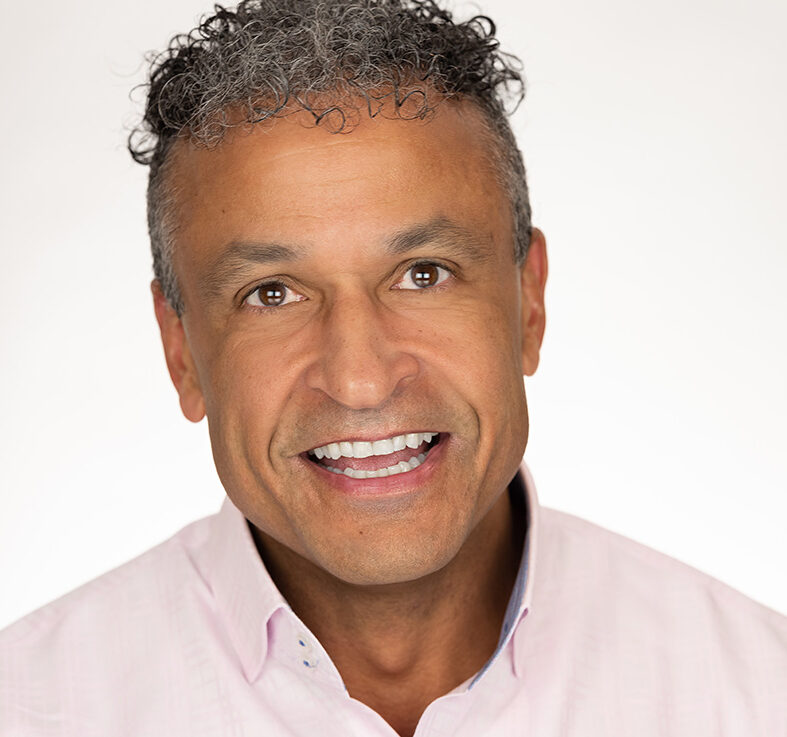
JeVon McCormick was born the son of a pimp father and a single mother on welfare. Poverty, abuse, eviction, and discrimination were a daily part of his life.
Today, he’s the CEO of Scribe Media, a multi-million dollar publishing company awarded the #1 Top Company Culture in America by Entrepreneur Magazine.
JeVon’s journey gives us a peek into a world rarely seen by those sitting around a boardroom table. His outsider upbringing and his tremendous success in investing, writing, and corporate leadership offers us an unapologetic, regret-free view of life and leadership.
JeVon’s leadership style is the opposite of exploitative. Human-centric principles drive every decision he makes. Hiring, coaching, and business development are all handled with a deeply personal affectation cultivated over a lifetime of hard work, learning from mistakes, and taking care of his people.
Modern corporate leadership increasingly requires a more nuanced new skill set. But what does that really mean?
It means there is a different way leaders can act that gets better results. JeVon shows us the value of supporting and serving your team. His people-first leadership attracts and develops talented people, and that’s had a huge impact on the bottom line for his operations.
Be like JeVon: Support and serve your team so you can enjoy your leadership role more and compound your team’s successes.
Welcome to the Athletics of Business, a podcast about how the traits and behaviors of elite athletes and remarkable business leaders frequently intersect. The real stories and hard lessons to help you level up your leadership and performance. Now your host, Ed Molitor
Welcome back to another episode of the Athletics at Business podcast. I am your host and CEO of the Molitor Group, Ed Molitor. This is episode 165 of the Athletics of Business podcast and I can guarantee you have not heard any conversation on any of the previous 164 episodes quite like, I mean anything like you're about to hear today with my special guest, Javon McCormick. And let me give you a little bit of background about Javon. Born the son of a pimp father and a single mother on welfare, poverty, abuse, eviction and discrimination were a daily part of his life. And he shares so much with us in this conversation. Now today he's a CEO of Scribe Media, multimillion dollar publishing company. Awarded the number one top company culture in America by Entrepreneur Magazine.
His journey gives us a peek into a world rarely seen by those sitting around a boardroom table. Javon's outsider upbringing and his tremendous success investing, writing and corporate leadership offers us an unapologetic, regret free view of life and leadership. Javon's leadership style is completely the opposite of exploitative. Human centric principles drive every decision he makes. Hiring, coaching and business development are all handled with a deeply personal affectation cultivated over a lifetime of hard work, learning from mistakes and taking care of his people. Javon talks about modern corporate leadership and that is a title of his most recent book, Modern Leadership, which we have a link for inside of the show. Notes. Amazing book. Loved it. I'm telling you, it's one of those books when you pick up, it's hard to put down and you want to share it with everybody.
Now, modern corporate leadership increasingly requires a more nuanced new skill set. But what does that really mean? And here's what it means. It means that there is a different way leaders can act that gets better results. And Javon shows us the value of supporting and serving your team, his people. First, leadership attracts and develops talented people that has had a huge impact on the bottom line for his operations. So the different way leaders can act that gets better results. And we'll talk about that. And Javon pours into us with how accountability and responsibility can turbocharge your career path. Okay, we're talking exponential growth. Why doing the right thing is a competitive advantage, why the language you use is extremely important in how to attract and develop the most talented people in your industry.
I'm going to go a step further with just the most talented people, the people that are passionate about not just what they do and why they do it, but how they do it and who they do it for. Javon talks about why mistakes are so valuable and how to inspire through teaching, mentoring, and coaching. Now I'm going to get out of the way. I hope that you have a pen and paper handy so that you can take some unbelievable notes with this conversation. And please enjoy this conversation just half as much as I did recording it. Javon, thank you so much for joining us today on the Athletics Business Podcast. I am beyond fired up to have you here.
My man. Ed, what's going on, sir?
It is so good. Now, I've got a. Let's dial this back a minute. When we first connected three years ago, three and a half years ago, it was J.T. McCormick. Yeah, right. And I pick up the copy of your most recent book months and months ago, which I absolutely love, Modern Leader. We'll talk a whole bunch about that. And the story behind Javon is so powerful and so meaningful and something we all can apply in our own world. Can you share that with us?
That happened early in my career. I was. I had my second job. My first job was cleaning toilets. My second job, I was the mailboy. I pushed a card. I was a file clerk. And, you know, I've been doing the role for maybe three and a half years. And I thought, man, there's. There's got to be more than this. I, you know, I don't want to be, you know, the mailboy the rest of my life. So, you know, I put my little, you know, resume together and I make the joke. This is back when you had to do work to get work. What I mean by that? It isn't like now where you just upload a resume and hope for the best. You know, back then, you had to actually go out to places, drop it off, follow up, cold call, knock on doors.
You had to do work to get work. So I could not get a call back, no matter how many places I dropped off my resume, how many places I tried to apply, could not get a call back, could not get an appointment. And one day, nice white guy picks up the phone and he says to me, he goes, hey, how did you get a black first name Javon and an Irish last name McCormick? Well, Ed, the funny thing is I didn't know my last name was Irish. So my mom got her last name when she was in the orphanage, my mom was raised in 1950s institutional orphanage. And she went in as a baby. She doesn't know how she got there, who put her there, anything. So she has this last name. We have no clue where it comes from.
And the only reason I have my mom's last name and not my dad's, when my mom went into labor, she had to walk herself to the hospital because my dad was nowhere to be found. And so my mom, not having any family, not having anything in the, in this world, no belongings, she gives birth to this mixed race child. And she said, well, I'll give you my last name. And so I have this last name McCormick to this day. Couldn't tell you where it comes from, but I didn't know it was Irish.
So I focused.
When he told me, he said, I was like, oh, shit, my life, this is amazing. But when I hung up the phone, it really hit me and I said, oh, shit. Okay. They see the name Javon. So my full name is Javon Thomas McCormick. I said, right? Then I go, okay, I'm going to go by J.T. McCormick, because you don't know who that guy is, right? And the next week, man, callbacks, appointments, invites, and I can't tell you how times I showed up at someone's office and they would go, J.T. McCormick. I go, yes. They go, oh, you're not who we expected. And I go, who did you expect? So. So that was really, you know, why I edited myself. And it was bittersweet, you know, it was sweet because I figured out, you know, I cracked the code.
I got into the playbook better because I edit. I had to edit myself, you know, J.T. McCormick. And that wasn't my name. And I remember for the longest, my mom hated it. She hated that I went by JT because my mom's the one that named me. So. So I always found it funny that people, you know, would say, you have this black first name. My mom got my name out of a French book, and so my white mom named me. But people will say it's a black name. And I'm like, okay, where did we make this distinction from? But fast forward, man. Right after the George Floyd murder, I remember just the disgusting amount of virtue signaling that was going on in our country. Blackout Tuesday on social media. Like, what the hell does that do to change anything? Move the needle.
And you know as well as I do, many people were only doing it because they didn't want to get called out for not doing it. And then were arguing over a syrup bottle and a damn syrup bottle. There was an article that. This is where it changed for me. And I saw this piece that said at the time there were only three black Fortune 500 CEOs. I said, oh, wow. Who are they, Michael? Look up their names. Roger Ferguson, Kenneth Frazier, Marvin Ellison. And as a bonus, the wealthiest black man in America is named Robert Smith. And so I. I laughed. I go, well, those are 4 ETH free names, if you will. But it hit me, and I live by this. Whatever. We're not changing. We're choosing. And so I was choosing to remain part of the problem.
I was choosing to remain part of the broken playbook. And so I had to make the choice. I said, that's it. You know, look, I'm not a Fortune 500 CEO, but, you know, I've done a couple of things. I've been named the best CEO in Austin. Ernst and Young named me Entrepreneur of the Year. You know, our company's been named number one company culture in America by Entrepreneur magazine. So I was like, okay, we've done a couple little things here and there. And so I said, that's it. I'm going to go by Javon and reclaim my name. But, Ed, I didn't do it for. For me. I built my career as jt. I did it for every kid out there. Name Rayvante, Martavius, Laquanda, Jesus, Rosalia.
What's looked at as ethnic names that maybe one day when they hit the business world, they can work next to a Javon and not just a jt.
I love that and the selfless thought process of that. I have to ask them, what was that feeling when you reclaimed that name? And what I love in the book you talked about, like, I didn't take it back from someone. I just picked it up. I'm the one who is responsible for dropping it for reasons that were very understandable. I mean, you had to build a career, but you wanted to pick that name back up. What did that mean to you? And what kind of statement were you making?
It meant several things to me, you know, and I appreciate that question. Not many people have asked that question, if any at all. I think maybe one other person. And so many people don't. Don't know this. So growing up with the name Javon, again, my mom named me, so my dad hated my name. And I'm going to use a slur here. And it's what my dad used to say to me. He refused to call me Javon. He said it sounded like a name. And he never called me Javon. He would call me Jevin. So he just kind of created his own, you know, call me Jevin. So my. My whole side of my dad's family would always call me Jevin. And then, you know, my mom would call me Javon. And then in the business world, there was jt.
So I had these three dynamics going on. Yeah. So. So when. When I reclaimed the name Javon, Multitude of things. One, it was proud to. To actually use the name my mom gave me, especially because she. She hated it. Like, she hated that I went by jt and she would always make it known that she hated it. So I was very happy about that. And again, I can't say more importantly, I just think about all the people out there who have had to edit themselves based on a name. And this just happened the other day. This is like a month ago, Ed, I saw a piece on LinkedIn where a lady, she had a quote unquote ethnic name. And the recruiter said that the lady then shifted her name and changed it.
And then the following week, they were able to get this lady all kinds of appointments. And I. And I laughed because I'm like, damn, here we are in 2022. That shit's still al big time.
Yeah.
So it's. It's. So. It's real. It. It was. There was no one feeling because there was just so many dynamics that came with re. Reclaiming my name. And it. What was interesting is it took time for a lot of people to get used to calling me Javon. Everybody was used to calling me jt And I used to tell people all the time, I go, look, man, you can call me Javon, you can call me jt, you can call me ass. Just don't call me broke.
That is awesome. Now, as you built your career and you built an amazing career as jt, how many people did you let inside your world of where that came from and the Javon that you had dropped and what your story was? Because your commitment to the fact that everybody has a story for me is so powerful, and I know for our listeners, so powerful. Can you talk about that a little bit? Like, what that was like? Like, here you are climbing a mountaintop, so to speak. Right. But, you know, there's a little bit more to the story that meets the eye.
Here's the best way I can sum that up, Ed, is my first book. It's called I, I Got There. It was a memoir that was written for my. My children that Was it? I. I never wanted that book to go public. I wanted five copies. That was it. So my great, great grandchildren would have a. An origin story. Because, you know, I. I've always been fascinated by, like, the Ford family, the Kennedys, you know, where they can track six generations, man, and I can't track 30 minutes. And so I wanted my kids to have this origin piece, this. This legacy of, hey, here's how dad got here. And I never wanted to be public. Through a lot of conversation, a lot of support, a lot of encouragement. People were like, you got to make it public. You got to make it public.
Well, why that was so scary for me is I avoided people knowing who I was. I didn't want people to know My dad was a black pimp that had 23 kids, and my mom was a prostitute, and I had been in and out of juvenile three different times that I'd been sexually molested by one of my dad's prostitutes, that I had been abandoned, homeless, ate from trash cans, you know, only have a ged, never went to college, and I didn't want anyone to know any of that. And so to answer your question, the best way I can sum this up is someone put a review on Amazon, and the review said, this book is a work of fiction. While many of the antidotes may be true, the great majority is not. And anyone that knows the author knows what I'm talking about.
Now, if you would have taken me back five years before that book came out, I would have been pissed. I'm like, f you. But when I saw it, I smiled, because here's why. Whoever wrote that review, it is a very accurate review, because they knew who I wanted them to know. They didn't know my dad was a pimp. My dad had 23 kids. They didn't know. I. You know, I only had a ged that I was homeless at times, abandoned in a house. They didn't know any of that. So for them, that review was very accurate because they knew who I wanted them to know.
How do you do that? And you talk a lot about that in your book Modern Leader, too, about the positives you pulled from the fact that your father was a pimp and the leadership lessons you actually did extract from that and learn from those. And often it was learning vicariously through his mistakes. How did you reframe that in that moment? I'm not sure I'm man enough to do that. I would like to think I am. But the fact that you had that type of grace reading that review when it was an insult on your world and what you experienced, you know, it.
Was and it wasn't. It was an insult because they were insulting who they knew, and they didn't know the full Javon McCormick. So the. The grace, it wasn't so much grace. It was. It was a little bit of laughter. Like, man, they really. They really didn't know who I was. And so. Because I'm sure if. If you knew a version of me and you read that book, you're like, wait a minute, I didn't know any of that. Well, I know you didn't know any of it. I didn't want you to know any of it. I mean, there's people who never even knew I. I was from Dayton, Ohio. It wasn't so much grace. It was a bit. A bit of laughter. Like, man, I did. Yeah, they. They're pretty accurate there.
Well, was that hard to do, though? Was it hard to shield others from the fact that your father was a pimp? 23 kids.
No, it wasn't hard at all. I grew up in Dayton, Ohio. I left Dayton when I was 15, and I hadn't spoken to my father since. You know, my dad died in. In 2017, and I hadn't talked to him since I had left Dayton, so. So I didn't have any relationship. I didn't, you know, you didn't know my. My family. I wasn't around any of my. My. My siblings. So that part wasn't really hard to shield at all. And more importantly, I don't know if I call this a shield or redirecting the focus. The big thing is I learned or taught myself to outwork you. That is where your focal point was like, man, this guy just worked. Like, damn, I can't. I can'. You didn't so much focus on the background. You could only focus on the fact that you couldn't outwork me.
Right. It's so funny. I was just about to ask you, what set you apart on your journey? You had this very unique upbringing, background, barely get your ged, yet you are a massive success in the business world, and your thing was your work ethic. What else did you do? Like, where else did you pull leadership lessons from? Like, did you model yourself after someone? Did you pick and choose? I like how she does this. I like how he does that. This is who I want. How did that evolve, so to speak?
I appreciate that so many people have asked, what. Did you have any mentors? The Society was my mentor. I paid attention. I watched what other people Would do. Why did they. They do that? Cecil, when I was at the insurance company, he was, I think he was like the VP of hr. And he was the first black man that I had ever seen in a suit in a corporate environment. And every time someone would say, hey, Cecil, how are you? He would always say, tremendous. I'm tremendous. And I learned quickly, oh, he's saying tremendous because he doesn't want to be the quote, unquote, troublemaking black man. And so he's always tremendous. So you never really know how he is. Well, what I did was I created my own word. So every time someone asks me, how are you? I always say, excellent.
I'm always excellent. Now, here's the thing. I truly mean it. I mean, I woke up this morning, I'm healthy. My. My family's healthy. I've got this amazing wife for healthy children, great home, amazing career. Shit. I am excellent. So. So I truly mean it. But I took that from. From Cecil and watching him. So society was my mentor and paying attention. Even. Even my dad, you know, my. Here's one for you, Ed. My dad was my first view into entrepreneurship. And I didn't even know it. I was nine years old, wearing my dad's red Cadillac El Dorado. And when I say red, it was candy apple red on the outside. Candy apple red leather seats. And Ed had candy apple red carpet. And so I'm nine years old, I'm in the front seat, and we're out collecting money from prostitutes.
And we go to the first prostitute, and she slides through this just stack of cash and hands it to my dad. And I remember it was cold out. I can still smell the heater. And she said to my dad, she said, okay, hey, I made my count. Can I come in now? And my dad, in the most loving way, oh, no, girl, get back out there. You want to roll? Keep it going. I'm going to come back around and get you. And he said this to her like it was a bonus or something. He goes, hey, when I come back and pick you up, you can pick where we go to dinner. Oh, how nice of you. And so we go to the next lady. And man, and it looked like she slid like $3 through the window. And my dad lost it.
He used every foul, derogatory word you could think of at this lady, and she started crying. And my dad rolled up the window, told her, you know, get your ass back out there, get my money, and don't be common. And. And we drove off. Two things came from that moment. One, we would Always hear our dad say, don't be common. He would always tell his prostitutes, don't be common. And what he was saying was, when you stand on that corner, don't stand like every other woman. When you dress, don't dress like every other woman. And when you get in bed, don't perform like every other woman. Don't be common. And that stuck with me was like, don't be common. Do it different than everyone else. And then the next piece was, as we drove off, it hit me.
I thought to myself, wait a minute, what if I was nicer to the prostitutes and they got to keep part of the money? Could I have more prostitutes that would work with me and I'd make more money in volume because I'm nice, they get to keep part of the money, so they're going to want to work with me. And then it hit me. I was like, oh, competition. There's going to be a lot of pimps mad at me because their women are going to want to work with me instead of them. I was nine years old formulating, okay, how do I scale this thing? And at the time, I know it's going to sound, you know, some people think it's disgusting, but this is the world I grew up in. I was also thinking, how do you put people first?
I was immediately thinking, how can I treat the prostitutes better? How can I treat them nicer? How can they get to keep part of the money? And so that was my first arena into entrepreneurship and in business, and I didn't even know it.
Wow. And when did it all start to line up for you? When did you start to realize when you were starting your professional career? Like, you know, I had this at an early age.
The more and more I was in the business world. So, you know, my first job was cleaning toilets. Again, lesson from my dad, I'm standing there in front of the toilets, I'm looking down at them in my. I came in every day at 9am it was a restaurant. And I had to clean the toilets from the night before. So they were always filthy. And I remember maybe I'm two, three months into this and, you know, would suck. And I looked down and I remember one day I said, okay, if this is my job and this is my responsibility, I am going to have the cleanest toilets in the state of Texas. And for the longest, I never admitted this, that actually came from my dad.
My dad, I remember, told me and a couple of my brothers one time, he said, look, whatever you do in this world, be the best at It. And he said, no matter what it is, if you're going to sweep the streets, be the best street sweeper, but be the best at it. And that stuck with me. So when I started cleaning the toilet, I was going to make sure my toilets were the cleanest toilets. When I got to the insurance company and I was in the mailroom, I wanted to be the best filer. I wanted to do more than anybody else. And so everything I did was, don't be common and be the best at it. Make yourself stand out.
And I'm going to insert this here real fast for me, in the country we live in now, it is easier to succeed in this country now more than ever, because everyone, no one wants to take accountability. No one wants to take responsibility. And people live on this dumbass phrase of work smarter, not harder. No, work smarter at working harder. And so I've always been willing to do what other people aren't.
Right. You know, I love that because people. I feel like people try to get away with one when they say, work smarter, not harder. Hey, keep grinding. Keep working hard. Hard, but doing it in a smart way. Right? Yeah. Now, it's amazing because you talk about be the best at it. Here you are. You are the best CEO in Austin, Texas. And There are phenomenal CEOs in Austin, Texas. Just an incredible place. But you drive a culture at Scribe Media. Tell us about Scribe. Tell us about the culture there. Tell us. And I really want to get into your code. I want to talk about your values. And people is always at the forefront of our conversation when we talk.
So it's interesting. I remember when I won the award and they announced, you come up on stage, you know, you're.
You.
You win this award, you're the best CEO in Austin. And I got up there and I laughed and I said, here's. Here's what's a bit comical to me about this is as CEOs, yeah. Do we make some decisions and you know, yeah, some. Some hard ones at times. And. And, you know, but let's call it what it is. You can, as a CEO, you can have the greatest plan, you can have the greatest vision. If you don't have great people to execute the plan and the vision your plan envision is shit. And so I'm only as good as the great people that I get to serve and support. So for me, as the CEO, my role is to serve and support. I'm just the foundational piece of the organization that serves and supports the people of the company who execute on the Work.
And here's a piece of it, Ed. If you go to most companies and you go to their About Us page, the first thing you see, C suite executives, founders, chairmans, board of directors, blah, blah. Now, if you come to our About Us page and you're looking for me, the CEO, I'm at the very bottom. You got to go through every person in the company that's actually executing on the work before you make it down to me. Because I'm just the foundational piece of the organization that serves and support the people who do the work in.
When you serve and support your people and they see you modeling the leadership that is going to take things to the next level. I have to believe the exponential result of that is pretty phenomenal for you. When you start to see that. And I don't want to say trickle down, because that's not the way you talk, right? When it works its way up and works its way through to culture, that's got to be pretty cool.
It is. You know, when. When you start hearing certain things that you say repeated back. And you know, I'm. I'm very big on language. And I'll give you a couple examples of this. Look at the business world right now. You'll hear people say, human capital, Ed. Human capital. If I'm. If you gotta beat me out. Human capital. What the. Are we trafficking people? Like, I'm not in the business of trafficking people. Why are we saying human capital? Right. No, that's. That's so disgusting. And. Or this people are our greatest assets. No, my stock trading account is my greatest asset. But. But here's the broken mentality, the broken playbook behind this. If you are still viewing people as your greatest asset, that's a plantation mentality.
Because when you owned a plantation and you had people out in the fields, yeah, they were your greatest asset because that's the only way your harvest was getting taken care of. If you're still viewing people and using that language, you got to take a look at yourself. And so many people have pushed back on me, like, well, that's. That's not how I mean. Then why are you saying it? If you don't believe it, then don't say it. Words matter. And then here's the last one. You hear people say this all the time. We want to recruit and retain the best people. Okay? Look up the word retain. I don't want to retain anyone. It means to keep possession of. I am not looking to keep possession of anyone.
We want to attract and provide we want to attract great people and we want to provide a phenomenal culture, a phenomenal work environment, great pay, meaningful work. But I'm not looking to recruit and retain anyone. Now, a smart ass attorney said to me, and I thought it was good, he goes, well, you know, I actually don't mind being kept on retainer.
Well, and that's the world you live in there, brother.
Exactly.
And you're spot on too. But that's not what we're talking about here. That is awesome. You know, speaking of language, two things in your book that I absolutely love that I highlighted. The language that you live by is the life that you create, so powerful. And then, and then the other one is the language that you use, which is exactly on point with what we're talking about now. Exposes how you think about people.
That's it, man. That is if you know, you hear people that. My team. My company. No, our team. Our company. Our people. The only time you hear me say my and I is if I'm taking responsibility for a mistake, right? Even this. Think about this, Ed, you know, in society, the business world, we just do some ass backwards. No one questions it. So think about this for a second. We have the audacity as a society. Everyone has heard this. You learn the most from your mistakes. Everyone has heard that. You learn the most from your mistakes. Okay, well then why the hell isn't everyone sharing their mistakes? No one shares their mistakes.
If you and I go to LinkedIn right now, any blog posts, whatever, we can find the top 10 list of top 10 things Steve Jobs did to be successful, top 10 things Jeff Bezos did. I don't give a damn. Give me the top 10 mistake list. So within scribe. For me personally, I teach, coach and mentor by way of 90% of the things that come out of my mouth are the mistakes that I've made is another one. We don't train. My personal belief, you train a horse, you train your body at the gym, you train a dog. No, we are working with people. We want people to be inspired. We want people to enjoy what they're doing. So we teach, coach and mentor. We don't, we don't train.
And I love that in the fact that you're so conscious of the language that you use because of the impact that it's going to have on the people that you lead. Right? And we know this, we know people, they want to be valued. They want to know that the work they do is meaningful and important and they want to be coached how valuable is that in your world as you teach, your mentor and you coach? How valuable is that with your people? What do you see in them when the light bulb goes on? You understand that they're getting it.
People feel respected, people see that they're actually cared for. And I'm 51. I came up in a corporate America where you left your personal shit at the door. When you hit the door, you came in and you worked and no one gave a damn if how bad your day was before you hit that door. And, and I find that a bit just flawed and disgusting. And here's why. So we've got about 120 people. And my belief is someone in this organization has experienced something that someone else may be going through. Well, how do we support one another? Be it in the office, be it outside the office with those things. Now, we don't force you to share, but we do want you to know that. Hey, and I'm gonna give you example.
We had a gentleman, he came to me, he said, hey man, I am $30,000 in debt. My wife and I want to buy a house and we want to have our first child and I don't know what to do. So we sat down and we built a plant, man. He had his debt paid off in nine months. And what was powerful about that is he came, he sat down with me and went through it. Now think of the stress that was taken off of his shoulders which then made him more pleasant at home. Took that stress off his mind when he's performing in his role. So I look at this, you know, we've got people who may have gone through divorce, we've got single parents, we've got people who have student loan debt, people who are buying their first home.
And if we can support one another through, you know, everyday life, aren't we all the better for it?
Well, and you create that psychological safety by your service. Right? Which, and I, I guess this would be a great place to talk about your code. Okay. And if you do right, you get right and how that leads into your values. I love that. If you do right, you get right. Isn't it simple? I try telling my 10 year old and 8 year old that all the time, but they keep thinking like somewhere that whole code is going to change, but it doesn't. You do wrong, you're getting wrong. Right, but can you talk about that? Because the psychological safety piece, and now more than ever is so significant. And I, I appreciate you as a CEO for doing that and having a culture like that.
Yeah. You know, for me it's why I do the same things with my kids. You know, matter of fact, when were just at Disney World last week, so we're, we're in the restrooms and you know, there's paper towels on the floor and I tell my 7 year old son, my hey man, pick those up and put those in the trash. And you know, he knows it. You know, we do right, we get right. And it's not a one for one. Doesn't mean because Ed held the door for me, that later on someone's going to hold the door for Ed. No, you do the right thing, period. So you do right, you get right and you don't look for anything in return for it. You do the right thing because it's the right thing to do.
Right now in our society, you've got so many people demonizing capitalism and profitability. And I tell people all the time, profit is not bad. Profit is good. Profit pays for this 100% health care that we provide as a company. The dental that the company provides, it pays for the 3%, 100% matching 401K. So profitability isn't bad. Here's the problem. Profits themselves aren't bad. What's bad is what are you doing with those profits? Or what aren't you doing with those profits? If you're just hoarding billions of dollars offshore to avoid taxes, you might want to look in the mirror and here's the thing, I get it, I hate paying taxes. But, but you, one has to ask themselves, why are we hoarding $200 billion in cash offshore?
And Ed, you got to give me this one, my favorite, because you and I were talking about CEOs earlier, right? I love John D. Rockefeller, love Andrew Carnegie, one of my favorites, George Westinghouse. But my all time Milton Hershey, my man knew he got it right. Think about this. Milton Hershey created the Hershey School. And the Hershey School is set up for kids that were orphans, kids that come from some just horrible home lives. And right now they have 2,000 kids that go through the Hershey School. 100% paid for your books, your backpack, your supplies, clothing, all brand new. Breakfast, lunch, dinner. You live there on campus. And here's what's Beautiful about this 2000 kids. It cost about $300 million a year just to put the kids through the school.
Now you've got the operational pieces of, you know, you've got the campus itself, you got the teachers, you got the all the homes where the kids live on campus and the parents that are, you know, the house parents that are taking care of them. So you throw in another $300 million. So you got $600 million a year to run this school. So Milton Hershey set this up in an endowment that pays for this year after year after year. And he took the profits from Hershey Chocolate to pay for this school. Now, I'm not saying any names, but there's a certain company that's a fruit that, imagine the amount of cash that they have, that all they have to do is wash, rinse, repeat what Milton Hershey already did.
And even if they wanted to be selfish, think of the loyalty they would build if they sent these kids through school, that when they graduate or whatever, where they want to go, want to work.
No brainer words, right?
So I, I look at that, man. Like I said, profitability is not a bad thing. It's what are we doing or what aren't we doing with those profits?
Yeah. And it wasn't about Milton. It was about the kids. Yeah. And that's what, to me, that's where the real power, because it comes back to people. And inside of your values, there's a word I really want to dive into if we could. And I want to talk about modern leader curiosity. Talk to me about that word and what that means to you.
Oh, man. So, so I got to give love to Mrs. D. Deck, my third grade teacher. So, so, Ed, I got again, man, I love it.
We're going back to third grade.
Oh, man, we're going back third grade, man. I got bused out to, I was part of the, you remember in the 70s, we had the integration of schools and the busings, all that. So the, you know, they took the poor kids in the low income neighborhoods and they bust them out to the, you know, these really nice suburbs. And it was funny. I understood the thought, hey, let's give these poor underprivileged kids a real shot and we'll send them out to the suburbs. It sounded good, but no one took the time to think about this for a second. So you sent these poor kids out to the suburbs. These kids that went, that lived out there were told, don't play with us. And then many of us who showed up when the teacher said, hey, who needs a piece of paper?
You had to raise your hand. Who needs a pencil? You had to raise your hand. And meanwhile you're sitting next to Jimmy's got the Spider man backpack. He's got the Spider man pencil, the Spider man lunchbox, and I'm waiting on Jimmy to start shooting web because I'm like, damn, this kid's got to be Spider Man. And I'm sitting there, broke his shit and waiting on the free lunch. No one took the time to think through that. Oh, great. You sent us out here, but you didn't equip us with anything. But Mrs. D Deck, back to your point. I remember she said there are no dumb or stupid questions and to always ask questions, man. Ed, I've been asking questions ever since, man, and so I've never been afraid to. To ask for anything.
The worst you can tell me, Ed, is if I ask you for something, if I said, ed, will you give me $10 million right now? The worst you can say is no. Maybe it's fuck no, but it's still no.
No, at the end of the day, it's still no, right?
It's still no. But what if you would have said yes? I'll never know unless I ask. So for me, curiosity is always asking questions. And why that's so powerful within the organization I share this with. With people when. When they're hired is what's key is if you make a mistake, I'm okay with that. Mistakes happen. We all make mistakes. I don't care who you are, you will make a mistake. The key is to learn, grow. Don't repeat the mistake. Now, if you make a mistake because you were too prideful and you didn't want to look dumb or stupid for asking a question that could have avoided that mistake, you can't work here.
That goes back to sharing our mistakes, learning from our mistakes, learning exactly through each other, you know, and back to the. Being bust in the big homes in Houston and the different areas you went to that. There was something, though, for you that sort of gave you a peek and a vision into the world that you wanted to live in. Can you talk about that? When. When you were riding through those homes and who you're with and when you looked at those homes, what you would.
Think to yourself, oh, Ed, man, you're. You're gonna put me on the sermon, man. So. So it's. It's one of the things that I. I really have a massive issue with our society of how we do things, that. What's that? The definition of insanity is to keep doing the same thing and expecting a different results.
Yes.
For me, what was so powerful? My dad drove me through River Oaks in Houston, Texas. Ultra exclusive, affluent neighborhood I was 10 and I had never seen homes that big. I mean 15, 20, 25 million dollar homes in one family lived in these homes. Like, like these houses were bigger than the projects I lived in. And like hundreds of people lived in those things. But what it showed me was possibility. My dad never said a word he could have been driving through for him, I don't know, he never said anything to me. But when I saw those homes, it showed me what was possible. And I remember saying, you know what, one day I'm going to have one of those. I didn't know how, what I was going to do, but I said I was going to have one of those.
And why that's powerful for me is right now. And just think about this for a second, Ed, because it actually pains me. Chicago, because you just mentioned going through o' Hare Airport. Chicago has gotten so bad that they've nicknamed the city Chiraq. We've nicknamed this a US City Chiraq because of the murders, the shootings, the poverty, everything that goes on in south and west side of Chicago. And here's what's sad. What if I went and told one of those kids, 10 year old kid, hey my man, one day you can be a forest ranger. Ed. A forest ranger? No, no knock on forest rangers. But the starting salary is 40 grand a year, so we're not talking about some amazing salaried position here. And then I tell this kid, hey, you get to work in fresh air, you get to work in nature.
This kid's not even going to know what I'm talking about. It's like, what the hell is a forest ranger? And that's sad. That's sad because these kids are growing up in poverty, murders, incarceration. You know, they see pawn shops, checks, cash, liquor stores, convenience stores. You know, we can tell you from the lower income communities, I can tell you what a food desert is, which is there's no grocery stores in our neighborhood. But I can't tell you what organic food is. There's no damn Whole Foods down here, right? And so that's sad because we expect people to become productive members of society. But how the hell am I supposed to aspire to be something when I don't even know what the hell exists?
And you know, you do some amazing work away from Scribe and in the community and volunteer. Can you talk a little bit about what you do and what kind of experience that is for you?
You know, I'm a God guy and I, I believe that I was given this great Gift. And I now have a deep responsibility to give back. You know, in the communities I grew up in, you had three options. Rapper, athlete, drug dealer. No one told me I could be an entrepreneur or an executive or, like. And I didn't even know what entrepreneur was until I was 29, 30 years old. So it. No one told me there was a fourth option. Rapper, athlete, drug dealer. And I sucked at all three. Now it's this deep responsibility to give back and show these kids what's possible. And so when I've gone in to mentor the youth, I've walked in and I've said, hey, we're going to role play. And these kids look at me like, what the hell are you talking about? And it hit me.
I was like, oh, man, I got to really go back to when I was 15 to 17 years old. And what was sad, Ed? I said, okay, everyone stand up. Let's shake hands. 60% of these kids, there's about 40 kids in the. In the halfway house here in Texas, and they're transitioning from the juvenile prison to the halfway house, back to society. None of these kids had jobs. And the executive director said, they need jobs. I said, okay. So I tell the kids, let's shake hands. 60% of the kids put their fist up, you know, wanted to pound me. And I'm like, they didn't even know how to shake hands. So I said, okay, now we got to learn how to shake hands. And then I said, okay, you're going to walk into Burger King because they're getting their first job.
What are you going to say? Tell me how you're going to ask for a job. Y' all hiring? Not you. And they're like, well, why not? I go, no. When you walk in, you're going to say, excuse me, ma'. Am. Excuse me, sir. Do you have any employment opportunities? And I said, and I promise you will probably have a job before you leave. And they're like, why? I go, because no one's saying that when they walk in there. And so it's really just teaching kids what's possible, these basic lessons. I have this incredible company I work with, and there's about 25 to 30 people within our organization who all went to Ivy League schools. And I've asked. I said, hey, do they teach you impeccable attention to detail in college? They're like, hell, no.
Impeccable attention to detail is one of the greatest things that I was taught from my Uncle Bobby. Punctuality, being on time, manners. Yes, ma'. Am. Yes, sir, may I please. Thank you. Or like you heard me say from my dad, don't be common. Don't do what everybody else is doing. Do it different. So, you know, teaching kids their, you know, what's possible. And Ed, I'll share this last piece with you. So I told the kids, I said, look guys, you know, because they're looking at me. I show up in a suit and they're not buying into it. I said, look, okay, I said, here, try this one. I showed up in a hundred thousand dollar car. I got on $2,000 shoes. My suit roughly $3,000. I got on a $50,000 watch.
And I'm not a rapper, I'm not an athlete, I'm not a drug dealer. And the one kid looked at me and he goes, what the are you? But when I put it out there like that and I told him, I said, look, my dad was a pimp, my mom was a prostitute. When I laid all that out there, oh, these kids got it. They're like, right, oh, wait a minute, now they're listening. And so I have this responsibility to give back because I have been taught something and given this gift that hey, you got to go back and show others what's possible.
That's so awesome. Now you're leading this amazing life with an amazing company, Scribe Media. What? Before I get to the last question because I know we're running out of time and you got a scoot, but what are some of the cool projects that you've worked on? What are some of the things that you really just like this was amazing.
I mean, you know, you got to put that, this one out there. You know, we had the incredible honor and privilege to do David Goggins book, the former Navy seal. We, we did his book. It's, it's one of the best selling memoirs of all time. I think Michelle Obama's memoir, only book that sold more as far as memoirs are concerned. We've got a second one coming out next week. So that was that. Of course. That one's cool. For me, there's two. We did the book for the first black woman in America to own a billion dollar company. Most people think it's Oprah and it's not Janice Bryant Howroyd. And she did it in staffing and that was pretty cool. And then the last one, just for me because I got a GED and I can't, you know, can't spell, can you?
An advert from an adjective. But I'm the CEO of a publishing company. God Bless America. We did the book for the Nobel Peace Prize committee. And I'm like, holy, I got a ged.
Yeah. Yeah. Came a long way from the nine year old. Right. Trying to figure things out, how to make things better on the street, which is. That had to be an amazing experience.
Oh, man. Yeah, it is. I mean, you know, even some of the other. Monty Moran, you know, he was the former CEO of Chipotle who took them, you know, IPO know it just some of the people I, I get to meet and conversations I, I have. I mean, think about this. This was pretty cool. Ey. Ernst and Young named the entrepreneur of the year. And I got to go out to their big event and I got to sit with Bob Nardelli. Okay. And so, you know, he was one of the three that were up for the GE job after Jack Welch. And then he went to be the CEO of Home Depot and then he went to be the CEO of Chrysler. And I had read about this guy for years.
Like, like, so I'm sitting with him and I start telling him things about, you know, okay, so when you were there, what'd you think about power and why did you guys do and you didn't buy all of Austin? And he looks at me like, how did you. I go, hey, I am a student of business and I've studied all the things you've done. So, yeah, the doors that I get to go through just based on. I work hard.
Yeah. So cool. I'm gonna wrap this up. Before we do, where can we find out more about Scribe Media? Where can we find Modern Leader? Anything? Everything. We want to find out about Javon McCormick. Where do we.
Most of the time, I, I share a lot of my mistakes thoughts on LinkedIn. That's really the only social media platform I'm on. Scribe Media, you go to Scribe media dot com. It tells you everything we do, how we do it. Every FAQ is answered on there. And then you can go to modernleader.com or Amazon to find the book on there as well.
That's awesome. And we'll post everything in the show notes as well. But story has obviously been a huge part of your life, and I find it very fascinating that you are where you are right now as a president CEO of Scribe Media because your mom was a firm believer and that everybody had a story. I'm going to get out of your way because I want you to talk about it. And the one thing that, you know, we connected on earlier, before we started recording. And if I can. And you can talk about the note. But sure. There's a line in the note that she left for you to find after she had passed and it said, please do not judge my story by the chapter you walked in on. That hit me. That is so powerful, so meaningful.
And here you are helping people tell their stories.
Yeah, she, I learned that from her. You know, everybody has a story. So don't judge because you don't know their story. Know, she would say that to me because were constantly judged. You know, my mom was white and here she had this mixed race kid. And you know, I would constantly hear my mom be called nigger lover and, and I was called Oreo cookie zebra chocolate vanilla swirl. And I know she would always say that to me is almost like a protection. Like, you know, don't judge people because you don't know their story. And you know, people didn't know my mom was an orphan. And what's so powerful for me is it became a, almost like a guiding light because I treat people as people. I, I don't judge, you know, to the best of my ability. We're humans, we all judge it some.
You know, somebody walks in, you look at somebody's shirt, you're like, that's shouldn't have worn that. But you know, we all jump. But, but what I mean by this, and I'll give you an example is again, 51 years old, back in the late 80s, early 90s, there was this big outcry that gays should not be allowed to adopt children. And I remember sitting there with my mom, were watching the news, I'll never forget this. And she goes, this is complete bullshit. And she goes, let me tell you something. When I was in that orphanage and no one ever gave me a hug, no one ever said I love you. No one ever tucked me in when we had to go to the restroom to conduct our business. We got three squares of single ply toilet paper.
Regardless of what business you had to conduct, she goes, I would have given anything or a gay couple to adopt me and give me a hug and say happy birthday. And man, that really just, it hit home. And I've known and I have felt what it's like to be judged. Many people are shocked. You know, my kids go to private Christian school and I tell people, yes, I'm a God guy. And people just can't get past the fact. They're like, well, but you're okay with gay marriage. And I'm like, look, first of all, it's hard enough to find one person loving this damn world. So if you whatever you find, do your thing. But more importantly, that really came from my mom of don't judge. And. And it's not my place to tell you who you should or should not marry.
And so when my mom put on there don't judge by the chapter you walked in on. You know, my mom was a prostitute. And she would tell me at times, you know, necessity sometimes has an ugly face. And I knew what she meant by that. And she passed away. My children loved their grandma. They missed their grandma, but they just know her as is grandma. So when she says, don't judge me by the chapter, you walk in on, well, if you go back to some of her early days, you know, it's a. It's a different chapter, you know, that's a. It's an ugly chapter. And so to your point, that hits home for me still when I read that was. That was her obituary. That was powerful.
It absolutely speaks volumes, right? And is a testament to the woman she was that despite everything she went through right from the start, she still had that outlook and still spoke those words and still raised you with all this love and the ability for you to move past so much stuff that you've had to deal with.
It's interesting, Ed. So many people will say this to me, and I find it offensive. People will say to me, oh, my God, you had every reason to fail. You had every reason to end up in prison. And people would have totally understood. And I'm like, kiss my ass. I had every reason to succeed. Because if you can get through that bullshit, the rest of this is pretty damn easy. It's such a write people off mentality. Like, just because I grew up the son of a pimp, the son of a prostitute, my dad, 22, don't write me off. And we're writing people off based on what they're born into. My kids, they live in a gated community, go to private Christian school. They won the lottery of parents. Hell, Ed, I didn't get a scratch off. And so.
But I worked with the hand I was dealt. I tell people, okay, if you know anything about poker, my five cards were a two, a three, a six, a nine, and a jack. And the only reason I got a jack is because my name's Javon and it starts with a J. But with that hand, I went all in. It just bothers Me that we write off part of society based on where people live, where they come from, what they know, what they don't know. And unfortunately, in those low income communities, there's just a lot of shit we don't know exists.
And the power that everybody think about as a leader, getting to know your people, getting to know their story, getting to know their vulnerable moments is so key to everything. How has that played out in the success at Scribe Media?
Again, it's supporting the whole person. You know, I'm sure you've heard this before, you know, whole self. How do we support the whole person? And again, we don't. You know, we're not going to force anyone to bring their personal things to the organization. But if somebody says, hey, I'm going through a divorce, yeah, there's people within the organization have gone through divorce. You know, hey, I've got an addiction issue. We got people who have gone through addiction issues. You know, I got childhood trauma, we got, hey, the CEOs got a few of those. So it's, how do we support one another? I just don't understand if people that you're working with and you spend such a huge amount of time with, why would we not support one another to the fullest?
Amen. Javon, I appreciate you so much. I appreciate your time. I kept you a little bit longer than I should have. I could talk to you for hours. I mean there's so much, I mean we connect on so many levels. But thank you for the amazing work you do. And you know, you speak it too. You speak the truth. You don't hold back. And I love that about you.
My man, Ed. I appreciate it. This was, this was awesome. Thank you, sir.
I look forward to seeing you soon and getting down to see what that's all about down there in Austin, Texas. Inscribed media and just the amazing team that you have assembled, man.
Looking forward, we'll take you on the office tour so you can see what we've built here.
Thank you for listening to the athletics of business. Be sure to give us a rating and review so we know how we're doing. For more information about the show, visit theathleticsofbusiness.com now get out there, Think, act and execute at the highest level to unleash your greatness.