
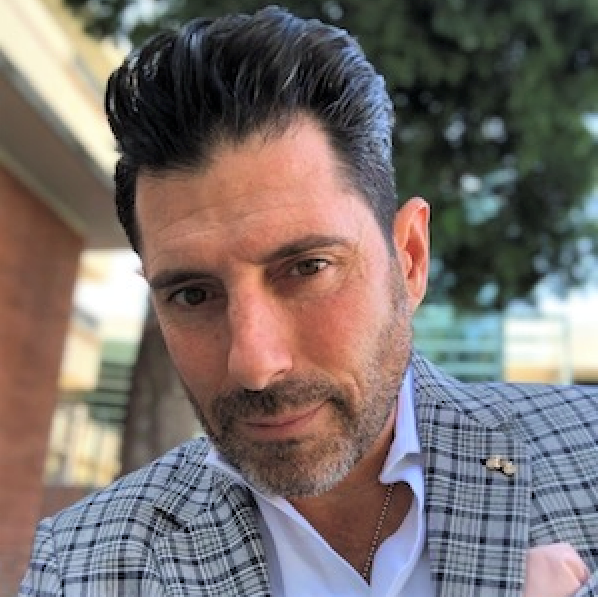
Andrew is the CEO and Co-Founder of Work Better Now, a virtual assistant company that is revolutionizing the talent recruiting industry. Before launching Work Better Now, he was a business advisor for the Goldman Sachs 10,000 Small Business Program.
Andrew and his partner, Rob Levin, saw a gap in the virtual assistant market in 2018. They knew that every business could have an assistant that delivers REAL value to their operation, but there was no way to connect affordable, top quality candidates with the businesses that needed them the most.
The business model was a natural fit for Andrew, and Work Better Now has hit 30% team growth in the last 6 months.
Andrew has a unique and inspiring journey. An entrepreneur at heart, he discovered early on that growing and scaling businesses was closely connected to helping others make things happen. Now, he’s at the leading edge of a new frontier in recruiting and business development.
Andrew is passionate about helping clients grow their businesses while also providing never-before-available opportunities for his team at WBN. Work Better Now connects top talent to thriving businesses in ways that weren’t possible ten years ago.
Welcome to the Athletics of Business, a podcast about how the traits and behaviors of elite athletes and remarkable business leaders frequently intersect. The real stories and hard lessons to help you level up your leadership and performance. Now your host, Ed Molitor.
Welcome back to another episode of the Athletics of Business podcast. I am your host and CEO of the Molitor Group, Ed Molitor. And today I just have a really fun, powerful, value packed conversation with Andrew Cohen. Andrew is the CEO and co founder of Work Better Now. We're going to share the journey, the story behind Work Better now and what is it? It is a virtual assistant company that offers full time dedicated remote support from Central and South America at an affordable price. And as a matter of fact, the way I was connected through Andrew is because my assistant Binette, who is a complete rockstar, a pro, you'll hear me talk about her and the work that we're doing together. I went through Work Better now to find her and I could not be more grateful.
Now a cool story that Andrew shares is the idea for the company and where it came from and how it was sparked through his experience as a business consultant in LA working with small businesses, startups and entrepreneurs. In one night, he and his business partner Rob Levin were out having drinks at a bar and they're talking about some of the things they were discovering and what the small business space needed that it didn't have. And Rob took out a napkin and now here I am giving away the story and wrote on the back of it that every business should have an assistant. But the story as Andrew tells it, is much better. Andrew also worked as a business advisor for The Goldman Sachs 10,000 Small Business Program where helped companies develop and implement high growth strategies.
We're also going to talk about inside of this some of the things that drive Andrew. And it's funny because Andrew and I, as the conversation developed and evolved and went on, we discovered something fascinating about him and that is that Andrew has won a wristband at the World Series of Poker, which is an incredible feat. And I pick his brain a little bit on what his poker mind and what his mindset, what that allows him to do in the business world. And we talk about that. I ask Andrew what are some of the keys that have been his success as a serial entrepreneur, if you will, and it was his stick to itiveness. He talks about that. He talks about his ability to just show up every single day and do the work.
And later in his career he finally learned how to enjoy the little wins. And here's Something that is a big piece of the conversation that I just urge you to have a pen and paper ready for because he shares so much here. And I think one of the best quotes of the conversation was, I really love people. I love motivating, managing, mentoring, coaching people, and that's it. And he truly believes, Andrew truly believes, that if you value your people and they know how much you value them, that they will work that much harder for you. Now, I'm going to get out of the way here. It's been a little bit longer of an intro. Please enjoy my conversation with Andrew Cohen. Andrew, thank you so much for joining us today on the Athletics of Business podcast. I am thrilled to have you join us.
I'm glad to be here. Thanks for having me.
You know, I filled the listener in on a lot about what you're doing now, but you have such a unique and inspiring journey. I'd love for you to take us back and how you ended up here in this space. Doing it is what you're doing and what you created.
Sure. I considered myself an entrepreneur my whole life, and I had started a business. My first really business that didn't take off the way I wanted it to was a men's skincare product line. And I launched it with a friend of mine and we got some distribution and were running across the country in department store chains. It was called Rods, Royal Treatment. I thought it was moving in the right direction. And then we at first were straight to market. We wanted to go direct to consumer and sell just online. And then we got this amazing opportunity in department store chains and this department store chain went bankrupt, bk. And we lost all of our distribution.
And I felt that at that time, it was the time for me to sort of figure out, I knew this company wasn't going to make it for me and I really wanted to take some time off and figure out what I wanted to do next. And at that moment, a friend of mine, Ted Hyatt, was the assistant regional director for the Small Business Development center, which is a wing under the SBA here in la. And he asked me if I would be a business advisor. So I was like, man, I've never thought about coaching or advising small businesses, but I do have a lot of experience running businesses and starting them and running them and understanding a lot of the different facets. I considered myself a expert at none.
But I've done everything you had to do in business because when you're an entrepreneur and a solopreneur, when you're first starting out, you really have to wear every hat, right? And then figure out what resources, human resources, you need for your company and bring them in. So he asked if I would be a business advisor. And this is about, I want to say in 2006, I mean, 2016. And I said, oh, sure, I'll try it out. And I ended up falling in love with helping small businesses and business owners start businesses, grow. Businesses really understand the dynamics that they were going through this the problems, the issues. I then be was asked by Goldman Sachs to be a business Advisor for their 10KSB program. And it's basically 10,000 small businesses.
They started this program which at the time was helping business owners that were generating about 500,000 to 5 million in revenue create growth strategies. And again, I was working with these successful owners, but really identifying ways to grow their businesses. What went into that? And I kept thinking to myself, how can I help small businesses grow now? At the same time, my current business partner, Rob Levin, who is my fraternity brother, my former college roommate.
You want to send a shout out to the fraternity? No.
ZBT Albany.
All right, there we go.
So, I mean, literally, we've known each other since 1987. Okay. And we've just been best friends all the way through. When we graduated from college, we moved into the city together. Then I ended up moving out to la. Rob came out to LA and went to the Anderson School of Business at ucla. And then he moved back to New York to start his career. And he's been in the small business market. He had a small business magazine. He has a content media company. He's just entrenched in small business. And were having a conversation and he said, what do you think about virtual. I have a virtual assistant. What do you think about virtual assistants? Now this is in. This is about four years ago, four and a half years ago, before the pandemic.
Just when it was sort of, people were thinking about it and I said, every business needs an assistant. And were in a part a bar, drinking, and I think he wrote down on the back of a napkin, every business needs an assistant. And that was it. That was where the idea was born.
I love it. Hey, tie back up for a second. Because you have this passion for working with small businesses and helping them thrive. What is it about that? What gets you going? What fuels you? Where did that sense of purpose come from with helping small businesses?
Man, I think anyone who has the drive to do something on their own, starting a business is probably the scariest thing you can do. If you're not Scared by starting a business? I don't know. There's so many variables. So there's so many variables. And I think that starting a business, if you have someone who has done it before or has encountered the issues or problems that you're going to face and can sort of help you avoid the potholes rather than just diving, you're still going to hit some, but maybe they're helping you avoid a lot of them that are expensive because we all hit common problems. I don't know, I just feel like. And it could sound corny to people, but America was built on small business, and we still need to support that and to nurture that.
And whatever I can do every time, you know, I still do business plan workshops and startups for these small businesses at the sbdc. And these business owners and entrepreneurs come in with such a passion and such drive, and they just need a little help. And I love doing that.
Are you able to. When they come in and you sit down and do the business plans, are you able to get a sense for, like, okay, who's got a really good shot at making it and who's got a shot at, man, they better back up and learn a little bit more vicariously through my failures and through what I have to say, or how does that go?
I mean, I agree. Yes. You can see some people really just are going to nail it, and then others have expectations that. I see a lot of people that have no experience in an area that want to, let's say, open a restaurant. It's a perfect example. Hey, I want to open a restaurant. And the first question is, have you ever owned a restaurant? No. Have you ever worked in a restaurant? No. Have you ever worked in a coffee shop? No. At that point, I say, I highly recommend either going to work in a restaurant, getting some experience or hiring someone who's done this before. You can tell what people bring into the first meeting if they have the skillset to pull it off.
Right. When you get that pushback, though, right when someone's got this thing, no, I want to do this. I really want to do this. Okay, let's. Like, how do you help them identify and navigate where the gaps are, where the blind spots are, where the pitfalls are?
It's by asking questions. You start asking questions to someone who's trying to start a business or build a business, and they don't have the answers, it becomes apparent, you know, that's why I say every business needs a business plan. Also, it's not because you might show that plan to Someone, but it forces the business owner to sit down and really ask themselves questions and think about the answers. And then do the research for these questions and find out more about the industry, more about their competitors. Write it down. The more time you spend on the plan, the better opportunity for success you're going to have.
And the thing that I found. And you know, you talk about having fear when you start a business. You absolutely do. But it becomes even more as you're running the business. But the struggle's awesome. I mean, the struggle's like where you get better. The struggle's where you grow. And you know, from the world I come from years ago in coaching college basketball, taking over a program, starting a program, it was fun because you could attach your mission, you could attach your vision to it. You can attach your sense of purpose to it. How much are you talking to that with small businesses?
I mean, I'm talking about that every day, and especially in my business. Your business grows and grows. Right. So we started, let's say at work, better now. I started with one employee and my partner, and then we grow to two, and then three. Now we have 17. When you build a team, and that's why I think of myself more as a coach to a team than any sort of athlete. I feel like everyone under me are the athletes. They're the ones really doing the hard work and driving my business. And for me, it's trying to inspire, trying to, like you said, push that mission, that vision, making sure we're all on the same road and we're. We all understand first and foremost what our goal is. And then once we have a common goal, how can we all work together to achieve that?
So let's go back and talk about that. So every business needs an assistant on the back of a bar napkin. Where did you guys go from there with that?
So from there we did a lot of research. Just like I tell everyone that's starting a business, we did a lot of research on the competition we provide virtual assistants located in Central and South America. So when our motto was every business should have an assistant, our thought was, how can we make it both accessible and affordable for small business? So when I was doing my research, I looked at US based virtual assistants and remote virtual assistants, and I wanted to see, where do we fit in this construct? What makes us different? Or what are our. What's our mission driving forward? How do I see our company? What's our vision for the company? And what I realized was again, we wanted to be affordable. We wanted to only offer full time and dedicated virtual assistants to a company.
Because what we realized were that's where the value comes in when you're able to onboard someone that really understands your business is there for you throughout the day, is able to take ownership. It's not like you're hiring someone for a project or a part time. They're really with you. Also they're not out there looking for a full time job or they're not looking for another project. They're just focused on you. So that was the first thing we realized. And then I said, how are we going to get the best talent possible? How is that going to separate us? And that was part of our mission, is to find the best talent possible. So Rob and I came up with this idea. We spoke to Jessica, who was Rob's assistant for four years before we started this company.
She's awesome.
And then and Jessica really helped us run with it. We started posting ads on LinkedIn in these countries in Central and South America. We started hiring directly VAs and you know, I started hiring my recruiting team and slowly but surely we started bringing in talent. And Rob, who is a master of this marketing and content, started reaching out to his book and I started reaching out to my book and the clients started coming in. Even to this day, about 95% of our clients are referrals.
I love word of mouth marketing. It's just the way I'm about warm introductions. I love referrals. But that's how I found out about you folks. I mean the differentiators you just mentioned are exactly what was communicated to me. And one of the things I noticed about work better now. And I've worked with VA organizations before. You shared them. You could say, well, you had me for 20 hours a week. They had me for 10 hours a week. And they had me for 10 hours a week. But who's to say that those 10 hours and those 10 hours are going to align with my 20 hours? And who's going to say that something of crisis isn't going to happen for her? That's going to pull on you and it's understandable. And the thing I love that you've said a couple of things here.
First, you came from a place of constraints with small businesses, right? You got creative with that whole idea. But you also said something I hate ordinary. If there's anything that I hate in life, it's plain vanilla ordinary. And you were intentional about figuring out what's going to separate you from the competition, which I absolutely love. At what point did it start clicking like, okay, we've got something here.
Once we had too many people wanting a va. Okay, so we started pre pandemic. There was a barrier to entry pre pandemic, where everyone was saying, can we work virtually? It wasn't like it is now. I mean, we almost forget what it was like two and a half years ago or three years ago. And then once the pandemic hit and people realized they could work virtually, we really just started getting. And I said, wow, went from 25bas to 80bas in five months. And then, you know, went from 80bas to 160bas in another eight months. And I realized once that demand started coming in, that we touched the nerve. And again, I just want to go back to the clients.
We really are focused on clients that need full time assistance and they understand that's what they need and they're paying a little extra because we're not the cheapest remote VA service out there either. But we want to deliver the highest quality and we want to pay our VAS more than any other company. So there's a lot that goes into the way we position ourselves. And my mission is to provide an amazing work environment for the VAs and pay them as much as I can, and then in turn, they'll provide the amazing service to the client. My motto inside the company is a happy VA is a happy client. Our BAs always come first. And that is really what drives this company.
Well, I love that too because we always talk about like customer first. It has to be your people first. Like if you people aren't happy, if they don't feel fulfilled, if they don't feel like the work they're doing is important, there's no way possible your client's going to see the end result of that.
Yeah, I mean, and to be honest, that's what really structured how we match our VAs with our clients. It's really the other way around. RVAs want to match with the client. So we will take a job description and we'll put it into our pool of. We're hiring vas every single day. So I have a pool of vetted trained VAs that receive a job posting internal and they'll apply to the job posting rather than us. Tell them they need to interview, and then we'll set up the interviews with the client and the VAs. But again, my goal is to find a VA a job that they really want to work in the long term and provide as much value as possible. Keep them happy. Yeah.
Let me ask you this because this is when I first heard about it, because I had been researching similar companies to you as I went through the struggle trying to find a new assistant. It's another thing I love about you folks is you don't just say, okay, here's what I have. Hopefully some of this works out. You go and get the best ones out there and like you said, they opt into what jobs fit their skill set and their personality and the way they do things. But what are some of the barriers if someone says, okay, I have these three VAs coming from and they're located in Central America. What are some of the obstacles you may have to overcome in that initial conversation?
Because I can be a ringing endorsement here in two seconds, which I will, but I would love to hear it from your vantage point.
Obstacles?
Well, is for instance, is distance. You know, sometimes folks don't like the concept. The idea of someone like across country is hard enough, but in another country it's something different. Right.
So there's a strange. And again, I don't blame anyone for it, but there's a stigma of possibly working with someone in a different country for security purposes. That's one obstacle that we talk about. And you know, we have an IT company that we work with and a cybersecurity company and our team is always trying to maintain safe data as we hope all of our clients are doing as well. And it's not because the VAS are working in a different country. It's anyone that you work with your organization. The risk of that is really similar to anyone working remotely in the US or outside of the us so that's one of the barriers. A lot of times our clients think there might be a barrier with communication.
And again, we're really testing and trying to make sure that all the VAs that we have, they're bilingual, they've grown up speaking English. We do even have VAs located in Jamaica and Trinidad and Belize that are English as a first language. So language really is something that may be an obstacle, but that quickly is dispelled as well. We're recruiting and hiring people that have a lot of experience working with US based businesses as well. So that the culture, there is a different culture in Central and South America than there is in the US and sometimes that takes a little bit of managing and setting expectations and it's a learning experience for both the client and.
Va. Well, in one of the pleasant and not surprised. One of the pleasant things about working with Viennette, who I work with, is they want to Be a part of something. Like, they want to be a part of what you're building. Right. They want to be a part of something special. And it's not, you know, you're not trying to do things in such a way to make it easy on them. They're actually doing things in such a way to make it easier on you to free up more time, to be more efficient, to be more productive. And it's amazing. So you were pre pandemic. How many months ahead of that were you?
We were about a year and a half. We probably came up with the idea four years ago.
Okay.
Put it into place three and a half years ago. And then said, holy, we stumble upon something here. We have to start building.
Yeah. So there's March 12th of 2020. Was it by March 15th you realized something was going to happen? Was it by April? How'd that go?
It took longer than that. Basically, what happened was. And again, I was also consulting for the SBDC and helping people really survive through the Eidl loans, economic injury disaster loans, and the PPP loans. And really, business owners were struggling just to stay afloat. Right. And figuring out how they were going to maneuver and handle these crazy situations that were coming up. About six months after that, it was time to figure out, first it was panic mode for everyone, and then it was time to figure out, okay, what are we going to do? And that's when we just. We really started seeing. And By December of 2020, were like, okay, this is. We're on fire now. Yeah, that's when it just all went up and were like, okay, we. We really need to get together. And we hired. We started hiring some amazing people.
And just in FYI, my company is made up of the same talent that all of our clients use. We found them the same way that we find all of our clients talent. It's really strange. What I've noticed is virtual assistants and VAs, their roles have completely changed in the last few years. It's no longer just someone who can be your assistant. Okay. It's no longer just an executive assistant. RVAs are filling roles for recruiting, for managing staff, for invoicing and billing, for marketing and social media. I have hired VAS to do all of these things, and we hired them to do that for our clients as well. I have clients that have six to eight VAs that are working in different roles. So again, the role of the VA has transcended from just the assistant to.
To really being able to staff a lot of different areas in your business.
So where do you go from here? I mean, it's just the potential is unlimited, truly. I mean, it's phenomenal from here.
We're dedicated now to educating our talent to higher levels. That's what we're working on now is creating these educational programs for internally to again help our clients grow and become the best they can be. It's been an amazing transformation.
And that's just the thing. You talk about educating your talent at a higher level. So if I come to you for A, B and C and I'm really interested in X, but obviously I don't need to hire someone full time for X, are you willing to develop or provide opportunities for my current virtual assistant to learn about that, to study that, to increase his or her skill set?
That's one of the things that's coming up in 2022. To be honest, we've really just been dedicated for the last three years, three and a half years to filling this one role that we've had. And in 2022, now we can breathe and we are starting to formulate these educational programs where we're going to be able to educate the VAs, help them grow. And we have some really exciting things in the works. So I'm very. I can't wait to.
Well, I look forward to that. I absolutely look forward to that. I look forward to sharing that because so far everything's been absolutely amazing. And the potential, like I said, the upside for something like that is unbelievable. Let's talk about you a little bit more. All right, sure. So I'm really curious. I'd love to unpack when you got to la, what you did, but where did this entrepreneur spirit come from? Is it something, I mean, do you have a lemonade stand when you're 4 years old?
How did that go, man? When I was. First of all, my dad was an entrepreneur. He had his own business. I worked in a boys suit store when I was 13 years old. I had a paper route, I umpired baseball games. I mean, I did it all. When I was 16, I was mowing lawns and I had met this 25 year old gentleman who's really good with his hands and I started a business called We'll Do Anything and I started getting jobs and he would do the jobs. I wouldn't even know how to do them. I would just get the jobs and price them and he would do the jobs for me.
What kind of cut were you giving him?
How much juice I was. Trust me, I've always been into paying people very well. Because I don't sweat the small stuff. I mean, I'm just into treating everyone as best as I can. Because again, like, same thing. A happy VA is a happy client. I mean, I literally understand that when you value people that work for you, they're going to work better for you, harder for you, and really bring back business at the end of the day.
Where did that come from? I mean, was that from your dad? Or was it from other experiences growing up? Was it from former mentors, bosses, Wall Street?
It definitely was not from Wall Street.
I put that ball in a tee for you right there.
Yeah. When I graduated college, I was on Wall Street. I got a job at Bear Stearns as a trade analyst. And I worked there for a couple years and realized it just wasn't for me. And it wasn't for me because I wasn't doing anything that I really felt passionate about. And again, at the end of the day, it's not just the money. And then I went to la, and again, I wouldn't say that I learned the value again, back in the day, when I was on in the entertainment industry, there was a big discrepancy in pay between where we started and who was making all the money. And I think that my mom really just taught me morals and integrity. And in Scarface, they said all we have are our word and our balls, and we don't break it either for anybody.
And I feel like that's how I really live my life. And you give respect to get respect, and those are really how I move through life in a daily way. And thank God, my partner Rob, who I can't say enough about, we have the exact same ideology when it comes to how to treat people.
Now. You have the exact same ideology. But I have to think there's some things about each other that complement one another. In other words, there's things he's really good at, some strengths he has, or maybe they're gaps for you and vice versa. Talking to that a little bit about with your business partners, Because I think there's not. I mean, it's not that common for someone to say, yes, my college dream, Eddie's, my buddies, we've been best buds for this many years, and here we are killing it together. And we're still talk, by the way. That's not that easy to do.
We're so different and we're so similar. So it's crazy. First of all, he's the visionary. I feel like Rob is just a visionary. He really understands small business. He understands how to Market to small business. He understands how to relate to them. He understands technology and automation. And he laid out where he saw the company. And I agreed with him. I wasn't like, oh, this is where I see us going? He's like, this is where I see us going. And I said, I agree. I'll get us there. So he's about the vision and I'm about the implementation. What I have that he doesn't, from my perspective, is I really love people, and I love managing people and mentoring people and coaching people and helping people.
So with my team, I really feel like I am able to put a lot of time in because he always asks me, what do you. Why do you have so many meetings with the team? And, you know, I'm always trying to figure out how to help them better versions of themselves. And I have someone that does that for me. I have a business coach also that I work with, that I check in with to question myself and become a better version of myself. Because if we're not working on ourselves and we're stagnating, there's no growth there. So Rob is the visionary, and I implement, and for some way, look, we butt heads. And there's a lot of times that he'll say, what do you think about this? And we'll have completely different views on it.
But he tells me that I'm the most rational person he's ever met, and I'll take that as a huge compliment. And he's a driver, so he's always driving us forward. And I'm trying to maybe pump the brakes and say, hey, we're going to get there, but I'm in the mix. I'm in the trenches. It might not happen the way you think it's going to happen.
Are you two able to turn it off? When you go to dinner, when you go have a drink, hang with the families, whatever it is, are you able to turn it off?
I think so. I mean, depends who you ask.
If you ask us, yes, we are. But yes. Yeah.
I still think that we really just respect each other. It's funny. For 30 years, every new Year's Eve, the day after. Sorry, New Year's Day, we'd go over our resolutions together. Think about that. Yeah.
You've really done it for 30 years.
Yes. And, like, now we're like. We don't have to go over them together. We already know what we're. Do you know what I'm saying? We already know what our resolutions are, where we're driving to, what we're doing. We have the ability to be vulnerable and open. And again, man, it's a learning experience for me for sure with the team that I'm working with and trying to always up my game and do the best that I can. You have to remember I have a lot of people depending on me. It's not only the 17 or 18 people that work for me, but it's the 160 or 180Vs out there that are working for us also. And that number is going to keep growing and in order to do the best job for them, I feel like I'm always a work in progress, you know.
And we talk a lot here at the moment, group about authenticity and the way we break that down is honesty, integrity and vulnerability. You just mentioned being vulnerable. Why is that so significant for you and how has that showed up in being one of the drivers to your guys success?
Well, it allows you to take your ego out of it a little bit and understand when you need help with something. Right. I don't have all the answers all the time. And I think that's something that we get caught up in as leaders, that we always have to have answer right away. So I think that being able to ask someone else's opinion, being able to understand when you don't have the right answer, being able to understand when you make a mistake and take accountability and responsibility, I preach that to all of my employees and I have to live by the same codes that I tell them. Also honesty, like one of your pillars. I'm all about honesty. Why mislead? Why lie? Why cover up? Take responsibility and make the change, make the fix the best that you can do and move forward.
We spend so much time talking about accountability, but think of how powerful it'd be if everybody just took ownership. I mean, accountability is a wonderful thing, but it would make all our jobs a lot easier if we just. If we took ownership and we made mistakes and we're able to move, were able to move forward from it.
Yeah. You know, it's funny, I think that starts I read a book called Extreme Ownership and it's really about taking ownership of the process and of the job. And for some reason taking ownership is scary for people, right? And making mistakes is scary for people. And it's up to me to create an environment where people feel secure, they feel safe, they feel vulnerable and they are able to admit and share and grow. And I'm sure as a coach that's something that you try to instill in your players as well.
It's that dance. Right. The ability to push people outside their comfort zone, support them, but provide that psychological safety. It's okay to make mistakes. It's okay to fail. Now, what do we. Where do we go from here? What are we going to do with that? Are these things that you picked up along the way in your. I don't want to use the word failure, but it's. It's how we learn. Right. In some of your failures or the way, you know, your distribution chain, the way that failed you.
Right?
Like, okay, you know, maybe you didn't see it coming. Maybe you didn't. Didn't act on it. I don't know.
Look, you know, and I don't mean.
To pull it out specific. I mean, the whole vulnerability piece and to own that.
No, that comes with age. That comes with age. Honestly, you know, I'm a much different person in my 50s than I was in my 30s or my 20s. When I was younger, it was. It was a lot harder to crack the shell and for me to admit being wrong. And, you know, you have children and you have. You just have experience and you grow and you realize that we're all human. And again, that's just comes from me working on myself as a person, trying to grow as a person, grow as a CEO or as a boss, as a mentor, as a coach, as an advisor, as a parent. It's one of the things I always ask my mom. I said, how do you think I'm doing with my daughter? Because I always want to get another perspective. I'm confident.
But sometimes we can't see what's wrong in front of us.
Right. And you just said something. We're Wiser in our 50s than were in our 30s. And I'm often asked, what would you tell your younger self? You know, my answer is, there's a lot. I don't know if my younger self would've listened, though. That's the challenge, right? That's why I love when I work with younger clients. And you see it. You see yourself in them or you see someone that you know in them, you know, from years ago. And now it's the like, okay, how do I get through to them? How do I connect with them? In a way, because it's not like I want to remove the struggle from them, but I want to pull a little bit of that pain away. I want to accelerate that learning curve. How are you able to do that with your folks?
Oh, I feel like the open communication is the most important thing, and I try to communicate with the members of my team and let them know that first of all, it's okay to make mistakes. What I really empower them to do is make come to me with a problem, but also come to me with the solution. So if you're going to come to me with a problem, come to me with that solution and I'll listen to that solution. And if I need to give you advice on that, I will. But I really want you to start thinking of it as taking control of that situation rather than just coming to me with it and empowering people. And again, giving them ownership and giving them the confidence to make their decisions is so important. Yeah.
I just think empowering your employees and letting them know also, like you said, it's okay to make mistakes. We all make mistakes. I don't know one person that hasn't made the mistake. And what I say in my business is, thank God we're not brain surgeons, because no one's going to die because we've made a mistake.
I'll tell you a story I've never told this story on the podcast. Matter of fact, I don't know if I've ever told my children this story. My grandfather was a Chicago fireman, lieutenant in Chicago Fire Department. My dad was high school basketball coach for 40 plus years. Started in the south side of Chicago, where he was from, in the Catholic League. And there was one parent who he had one of his players, star player, center, who was a great kid. Wasn't a nut. This is back in the 70s, so, you know, I mean, just kind of a crazy time. His dad was a surgeon, and Marty would grow his hair out and he would get himself in a little bit of trouble at school. And every now and then, his dad might kick Marty out of the house.
But one game, Marty's dad's riding my dad, I'm just riding him. And my Grandpa said, hey, Mr. So and so, and I know the last name, but I'm going to leave it out here. And he turned around, he goes, what's that? He goes, you know the difference between coaches mistakes and your mistakes? He goes, no, what's that? He goes, people die from your mistakes. Yeah. So, but that's it, right? Like, let's, let's make them. Let's figure it out and let's. Let's learn from it. Now what would you tell your.
Younger self, man, don't worry, it's all going to be okay. That's the first thing I'm going to tell myself. Stop. Just breathe. Yeah, you got to figure it out. My number one best quality is not that I'm smart or there's. I don't consider any of that or a good leader. My number one best quality is my stick to itiveness, my desire to show up every day and never give up. And I feel like, man, that's something that's just. I've tried to do everything I've been interested in my life, and it's led me here, with all this experience and just looking back, if I would have seen the future, I don't think I would have been so stressed out trying to get to where I am.
And wouldn't you have given yourself permission to maybe take a step back and work through something and feel instead of feeling like you had to plow through it, like, it's okay, I have a little bit more time to figure this out than I think I do. And I don't need the anxiety level to go, and I don't really need to worry about what others think of me in this situation, nor do I need to worry about how they treat me, because that's a reflection of their character, not mine.
Correct.
Wouldn't that have been just awesome if we could have figured that out at an early age?
I mean. Yes. And, like, if I would have just said, look, no one is thinking about you. They're thinking about themselves. That's the other thing. Everyone's so focused on themselves that when and when you're younger, you think, oh, everyone's talking about me, or everyone's judging me. They're worried about themselves. You worry about yourself, Right? Yeah. So worry about yourself. There's so much I would have told myself. But also enjoying the little wins, and I still say that now, enjoying the little wins is so important. Giving yourself the opportunity to just enjoy that success that you're having. And I don't mean grand success. I mean, you may have asked someone to do something and they did it well. One of your employees, and you're like, wow, that's amazing. I am. I. We just rolled out a new customer success program.
You're going to be seeing it soon. The customer success manager killed it. She literally presented to us this plan that she's got in place. And I was like, wow, this is amazing. And yes, I had the idea she had to follow through, and she nailed it. And I gave myself a little bit of, okay, this is great. Enjoy it. Right? She should enjoy it. I told her, you need to enjoy this time. It's the little wins that we have. To really enjoy.
Did you ever have trouble earlier in your career? So, I mean, I know sometimes we get wrapped up. I mean, I know as a college basketball coach, and still to this day, there's times I. I hate losing more than I enjoy winning, if that makes sense.
I'm also a poker player.
There you go.
So I want a bracelet at the World Series of Poker. I love playing.
See, these are the things you can't leave out. You need to tell me these sort of things here. I mean, that takes things to a whole other level.
Yeah. So I'm definitely into game theory. And I hate losing. Hate it. But I love winning. So I don't want to say I don't love winning. But again, the agony of defeat stings harder than the thrill of victory. And so you always remember your biggest losses, and sometimes we don't remember our.
Biggest wins, and that's unfortunate. You know, when you really look back at it, though, when you study some of the great ones, whether it be in business or whether it be in athletics or whether it be in the fine arts, whatever it is, their fear of failure is kind of what drove them sometimes, you know, just that. Absolutely. I refuse to lose. I refuse to fail. There's absolutely no way that I'm not going to be successful here. And sometimes that's what takes it.
That's this guy. Yeah, that's where I said stick to itiveness. And you just get knocked down, you get back up and you keep going. You know, this wasn't my first business idea. It worked better now, but it's something that. I think what happened was timing, preparation, met the perfect time. And all of my past experience, it just culminated with an amazing partner again. And it just was the right place, right time, preparation, and passion for helping. And then that just drove us to where we are right now.
And I truly believe if you work hard enough, long enough, and smart enough, you stay with it. Good things are going to happen at some point. Timing is everything. And I think people do this sometimes. Like, I got lucky. I know. You kept working at it. You stayed in the fight. Give yourself some props and some credit. And the timing is huge. So how does your poker face play into the way you go about doing your business? For anyone who doesn't understand poker and getting a bracelet, the World Series of Poker, that's like tipping your hat at that is a slap in the face. That is a huge accomplishment. And to do that, there's a. I mean, kudos to you. They can't see me bombing in front of you, but I am. It's unbelievable. And to be able to withstand.
Tell us a little bit about that because that speaks to who you are and the fabric that you're made up of.
Well, poker, man, it's a theory game, it's a numbers game. Mathematically, my mind just, I can just do the numbers. So that's just part of the game. But what I'm really good at is reading people and reading situations. Poker comes down to making the best possible decision with the information that's in front of you. I can make decisions, good decisions, based on the information I have in front of me. And that goes for the cards, but that also goes for the people and the actions and the movements and the eye contact and literally I can just read people very well. So that's really helped me in my poker career and I'm proud of it. I love it. It's, you know, as an old athlete and, you know, I played baseball, high school baseball, and then and soccer.
But this is where I get all my competition out. That lack of competition when we get older, there's a need for it for me, and that's where I really find it. And again, like you said that losing, I just don't like to lose.
I mean, you sit at the table for hours. How much mental toughness come into it for you? I mean, what you have to endure in the stamina. Can you talk about that? Because that absolutely shows up in your business.
Well, even the mental stamina, I know I still have it because there are days where I was on Zoom calls for 12 hours a day. And I know that sounds crazy, but at some point I was there and hitting those calls of day after day. When you play poker, you're on even if you're not in the hand. You should be observing everyone else at the table and what they're doing and how they're playing their role. And then once you do that, then you can make again better decisions against that player in the next hand. So I've played poker for 14, 16 hours at a time, straight through with breaks, with, you know, breaks every two hours. But it is mental fortitude because once you're tired, your decision making process breaks down.
I'm going to take you somewhere that I normally don't go, but I'm very curious about this. Right. So how do you draw the line from having those poker skills and reading people and reading the data and the information in front of you to not overthinking things? As business owners, we can go down that rabbit hole Right. As a college basketball Coach, you watched 25 hours of film for one game at 1 o' clock on a Saturday in ESPN and you'd be damned if you're going to miss a play call. But all of a sudden you realize you overthought the situation. Right. Like someone just made a great play. That's all that happened.
It's funny, this is another great thing between me and Rob, my partner. So I am someone who makes quick decisions and he's someone who sleeps on it, he weighs it all out and I'm ready to go. My philosophy, better to make a wrong decision than no decision at all. In business, it's amazing to have someone who, you know, he might be thinking about something for too long and I might be ready to go now. And together we come up hopefully with the. The perfect amount of time to wait.
Yeah. You know, and you swear there's gonna be no I told you so is when one of this, one of us is wrong in this whole thing.
Oh, yeah, there might be. You know, there might be. But again, I think our love, our real love, I mean, you know, for each other, supersedes all of that petty stuff that might be I told you so. We can laugh at it and keep it moving.
Yeah. Well, hey, listen, before I ask your last question, it's been awesome. I want to give you some space here so you can tell folks where they can find everything out that they need to know about. Work Better now. Not just the website, but social. Anything you want to plug right here.
Now, please feel free plugging it work better now. Workbetternow.com we're on Facebook, Instagram, LinkedIn. We're here to hopefully help your business thrive. If you're in need of remote work, staffing to fill positions from executive assistance to marketing assistance, social media management, invoicing, and QuickBooks. Customer service and business development. It's transcended just what a VA used to be. We are providing amazing talent and we love, we're passionate about helping the business, our clients grow and these VAs obtain amazing opportunities outside of their countries.
I can second, third, fourth, fifth what Andrew is saying here, because Vienna is, she's a rock star. She's a sweetheart, she's extremely hard worker. She wants to succeed. She has drive. But here's what she is, and I think this one, in this space, it's one of the best compliments you can give a person. She's a pro who still keeps trying to get better, which is awesome and I understand it now. Because I firmly believe that a team is a direct reflection of their head coach being you. And she embodies all the things that we just talk about. So thank you, Andrew.
Thank you. I mean, what you just said makes me so happy because I will go back and tell my team how amazing they're doing because they're in the day to day trenches, just like I'm in the day to day trenches. And if you don't share that, those wins just like were talking about earlier, this is a win. Every time a client tells me they're happy, I share it with the team because it's a win for the team.
Now, last question. You mentioned a book, Extreme Ownership, which is an awesome book. Can you share a couple books with us that you've read that have impacted you, even whether they're recent, whether they're 20 years old?
Yeah. I'm going to tell you guys the number one book that I've read for.
There it is. I didn't want to put you on the spot, but. Okay.
Supersedes anything else I've ever read. Traction. I don't want to say it changed the way I looked at structuring a business, but it made me start moving on it. There's an entrepreneurial operating system in there, and it's all about assigning numbers to your employees, which are basically KPIs that they have to hit and every employee should have a number. And then having all of your team leads come together in a common meeting and share challenges and opportunities and how we're going to really build the team a unit to move forward. And also, one of the most important things that I took away from that is you need the right person in the right role. And sometimes you might have the right person in the wrong role, but there's still a right person.
And we just have to figure out where they should be for them to thrive and help the company as much as possible. And I think that's one of the huge takeaways I got from that book.
I love it. I love it. So it's Traction by Geno Wickman, correct?
Yeah.
Yep. Okay. I'll have the link to that in our show notes, too. So when you get done listening, go to our show notes. You can click on that link and order it on Amazon. But, Andrew, I can't thank you enough. This has been awesome. I appreciate you. What I'd love to do sometime down the road. Okay. Is have you and Rob on at the same time because we could have some great banter and talk about how you complimenting each other and just really get a whole. I just think that would be great for some folks to listen to because it is. It's a challenge. I mean it is a challenge to do. What you two are doing have done is pretty phenomenal.
Thank you and thanks for having me. It was great.
Yeah, it was. Thank you so much and look forward to having you on again.
Thank you for listening to the athletics of business. Be sure to give us a rating and review so we know how we're doing. For more information about the show, Visit The Athletics of Business.com now get out there, Think, act and execute at the highest level to unleash your greatness.