

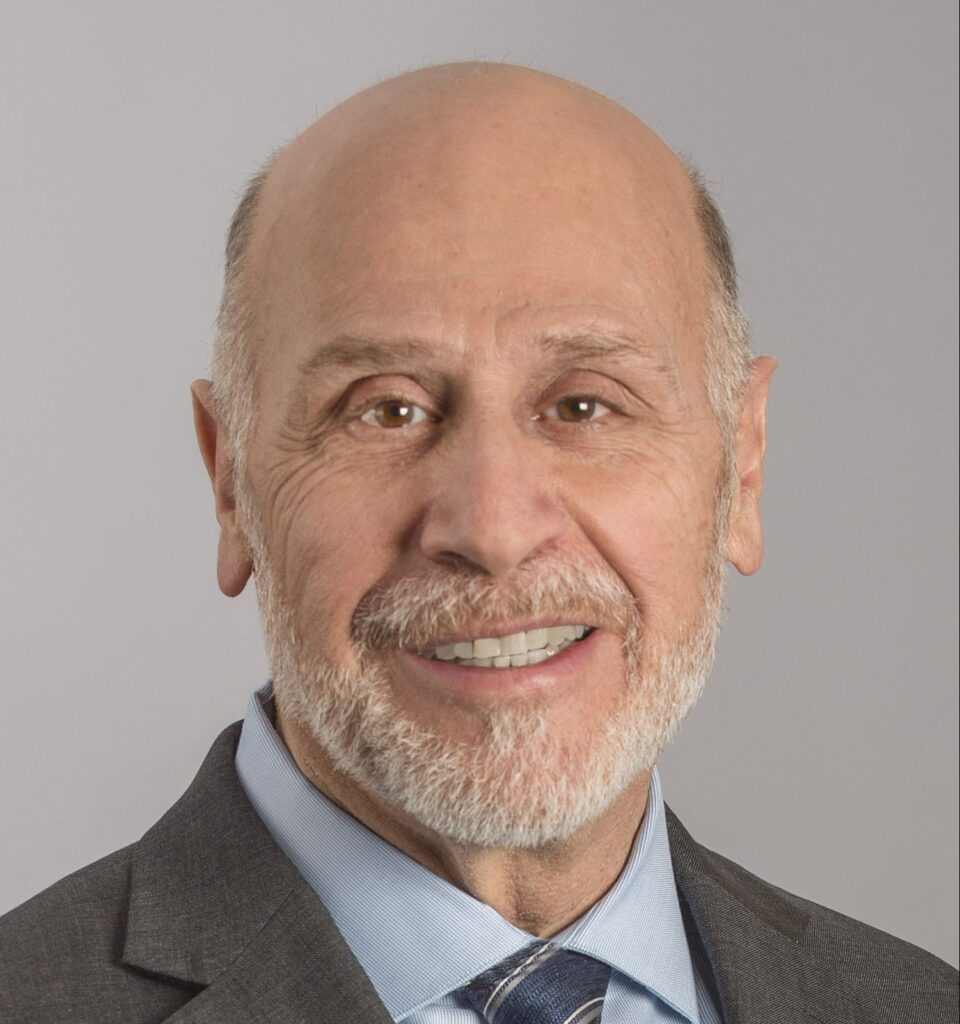
Rich is the Founder, President, and CEO of IPM. Prior to IPM, he spent 15 years with two
divisions of Johnson & Johnson in various operations and engineering management
leadership roles. Rich established IPM in 1988 with a focus on creating a values-based
company comprised of high-integrity top performers. Today, his focus is primarily assisting
in strategy development to address complex client needs, driving IPM’s own strategy, and
ensuring the preservation of IPM’s culture and sustainability toward its 100th-anniversary
vision. Rich is actively recruited by organizations to present his philosophies on business
ethics, organizational culture, strategy realization, entrepreneurship, and project
management excellence.
Reflecting the culture of integrity that Rich instills, IPM has been recognized over the years
with multiple awards, including one of Forbes’ 25 Best Small Companies in America, and
multiple years as one of the Best Small and Medium Workplaces by Great Place to Work®
Institute and Fortune magazine. Most recently, IPM was the recipient of the prestigious
2018 Malcom Baldrige Quality Award Excellence, the highest level of national recognition
for performance excellence that a U.S. organization can receive.
Welcome to the Athletics of Business, a podcast about how the traits and behaviors of elite athletes and remarkable business leaders frequently intersect. The real stories and hard lessons to help you level up your leadership and performance. Now your host, Ed Molitor.
Welcome back to another episode of the Athletics of Business podcast. I am your host and CEO of the Molitor Group, Ed Molitor and I am really fired up to bring today's special guest, Rich Panico. And Rich is the founder, president and CEO of IPM Integrated Project Management. Now prior to IPM, Rich spent 15 years with two different divisions of Johnson and Johnson in various operations and engineering management leadership roles. Okay then in 1988, Rich established IPM with a focus on creating a values based company comprised of high integrity top performers which I absolutely love. And today his focus is primarily assisting in strategy development to address complex client needs, driving IPM's own strategy and ensuring the preservation of IPM's culture and sustainability toward its 100th anniversary vision. And Rich really talks a lot about that and how powerful that 100th anniversary vision is.
Rich is actively recruited by organizations to present his philosophies on business ethics, organizational culture, strategy realization, entrepreneurship and project management excellence. And you'll understand why he's so actively recruited. Now, reflecting the culture of integrity that Rich instills, IPM has been recognized over the years with Multiple awards including one of Forbes 25 Best Small Companies in America in multiple years as one of the best small and medium workplaces by Great Place to Work Income Institute and Fortune Magazine. Most recently, IPM was the recipient of the prestigious 2018 Malcolm Baldrige Quality Award Excellence, the highest level of national recognition for performance excellence that a US Organization can receive. And some of the things we're going to jump into and I want to get to the conversation. So just a few highlights we'll talk about.
One of my favorite topics is self awareness and Rich and I both agree that self awareness is absolutely everything. We'll talk about leading with the heart in your soul and how that happens when you prioritize your values, why talent never trumps culture. And then we'll dive into why people need to be recognized more along the way as well as and think about this is so powerful as well as why they need to know what they are running towards. And another thing we'll talk about is how to be extraordinarily. Now you know I love words. How to be extraordinarily easy, effective as well as effective. Enjoy my conversation with Rich Pinnico. Rich, thank you so Much for joining us today on the Athletics of Business podcast. I am really excited to have you here.
Well, it's my pleasure, Adam. Looking forward to our conversation as a follow up to a short conversation we had briefly a week or so ago.
Well, short might be a bit of an understatement after we're introduced by our good friend Tom Walter, who, by the way, was episode number 80 on the athletics of Business podcast. I, I think we could have kept talking for hours in that conversation.
Now, if you got to know me better, you'd probably realize in an hour, short conversation.
Well, there you go. So let's jump into us. Tell us about integrated project management, what it is that you do, the history behind you, getting there, founding the company, excuse me, in 1988. Just take me through that.
Well, I'll start off by saying we've been extraordinarily blessed through the last almost 33 years. You know, I founded the company after being with Johnson and Johnson for 15 years and I had a wonderful career there. If I had to redo it, I would do it exactly the way I did it, Ed, because I had exposure to a major corporation and a great one at that. And I was able to move up the ranks at various levels up to the point of becoming chief engineer for the personal products division at 31 years old. You know, I didn't run away from the corporate world. I ran to my dream. And I had done a lot of analyses of companies in the U.S. some of our best companies, and particularly their abilities to execute projects and execute them well.
And what I learned was scary, that we just did not have a strong competency in executing critical projects. The interesting thing was it wasn't very visible or obvious because in many cases the companies that I studied were considered the top of their game and they didn't have formidable competition. So it's pretty easy to be the fastest person in a one person race. And I learned that over and over again later. We actually got to work for some of the companies that I actually studied. I cast that against the background of looking at what was happening to the economy. And this is during Reagan years and the world was shrinking, competition was increasing, and I felt that unless we became much better at executing that we wouldn't be able to compete, that we would get hurt.
So I gave Johnson and Johnson 14 months notice of resignation against all the advice I had gotten from all my colleagues because they all said, well, they're just going to let you go. And I said, well, this is who I am. I said, I've made my decision. I've accomplished what I wanted to accomplish. And J.J. was great. They offered me other roles. And it wasn't about different positions. It was really about pursuing my dream. And I've always been an entrepreneur since I was a kid with various business ventures, if you will. But IPM was created to be able to plan and execute the most critical projects for the best companies in the world. And my goal was to be recognized as first nationally, as the best, and being able to do that, and then internationally, and quite frankly, we're still pursuing that.
I'll also share with you that I created a goal that everyone thought was somewhat ridiculous as part of the vision, and that was that this company would celebrate its 100th anniversary and go beyond. And of course, the argument I got is, rich, you're not going to be around care. And it's really a reflection of my dad, Ed. And you know, my dad said the true test of greatness is that it lasts, whether it's a building or whether it's your own reputation. And that has really placed an indelible mark in my mind. My dad's words. And I've lived my life that way. I mean, reputation to me is right at the top of my priorities. And doing things that you're proud of and doing things that are righteous, things that are honest and ethical. A little bit more about ipm.
Our largest client base is in the life sciences industry. So the pharmaceutical, the biotechs, device companies working on critical projects, which we love because it has such an impact on society. When we're working on cures for cancer and other deadly disease, we also are focused to healthcare, meaning hospitals, as well as consumer and industrial products. But our top priorities are life sciences, healthcare and consumer and within consumer food and beverage. These are all industries that really touch us personally and really have an impact on society. And we're very proud of that.
And that has to add a lot of meaning to the work that your people do in terms of getting that emotional engagement, knowing what industry you're serving.
Oh, absolutely. At the end of each year, as part of our annual plan, we actually put together through our marketing department and our CCS department that does all of our creative content. They put together this wonderful presentation, all the projects we worked on, but identifying the social impact of those projects. And I tell you, it is probably the proudest moment that we experience in each and every year.
Yeah. Now, so speaking of that, COVID 19. I mean, we're living in a time right now. The last three months has altered and changed our world as we know it. How has it impacted not only your industry, but IPM specifically?
I'll start off by telling you what I have already said. We've been extraordinarily blessed. The company's actually having a record year now. Part of that is because of our target markets. The other is because I believe during times like this, during times of crisis, two things are critically important to prospective clients and the clients critically important. And one is confidence, and the other is trust. And trust and confidence are very different because someone may have the skills or another company may have the skills, but they may not be or have the level of trust that is critical at a time like this. So during this Covid crisis, first of all, we've been working remotely now for 14 weeks. We have not missed a lick in that period of time.
I shared with you the multiple client testimonials we've gotten during this period about our ability to be able to not only perform at the same level, but actually take it to a new level, actually help them be able to manage their own business virtually and have meetings virtually, to be in the position where you can trust and have confidence in your people to do what they have to do. When we're spread across the United States, we're at seven different offices, but then all of those people are working from home. Honest to God, I have never for one minute questioned whether my people were doing everything that they could do to not only meet but exceed client expectations. The other factor that I think is critically important, Ed, is that for 32 years, almost 33, September will be our 33rd birthday.
But we've been very fiscally conservative, and we have built cash reserves to the point of being criticized by our tax accountants for keeping too much cash in the company. And they asked me, rich, why do you do this? Because obviously, it's privately held company. I could take the money out. I treasure being able to have peace of mind and sleep at night. And someone asked me recently, it was actually in another interview, Ed. Someone asked me at the beginning of this year if were prepared for the impending recession. Now, at that point, Covid wasn't even known. And I said, well, you must know something I don't know, because all the major economists are projecting less than 30% chance of a recession downturn in the economy. But I said, you need to understand something, that I expect a recession every year.
And he kind of laughed. He said, what do you mean? I said, no, that is how I plan. I want to know that we can be strong in any recessionary time. So in 2008, when we had that recession, at our staff meeting, my organization asked me, well, Rich, what are we going to do about the recession? And my response, Ed, was we're not going to participate. It's a bold statement, but I didn't state that out of arrogance. I really stated it out of knowledge, data, and information. The fact is, when I look at the size of our business and 205 employees, the size of our markets, our market share is many decimal places removed from 1%. Okay?
So if we're as good as I believe we are, if we're as good as we believe we are, we should be able to grow during a recession because the market's there, even if it shrinks, it's huge. So it's a matter of getting what others can. And growing up on the south side, I've always loved challenges. So, you know, it's in our nature. And in 2008, weren't unaffected by the recession, but part of it, again, is because we didn't have to go into a reactionary mode. We had the cash on hand. We let our people know that they were secure. Focus forward. Don't be concerned about your security. Be concerned about getting the job done and doing it well. And quite frankly, it's the same strategy. Through Covid, we've communicated every week. Every Thursday, I've sent announcement out for the last 14 weeks.
Here's our financial situation, here's how we're doing, here's what quality looks like. You know, here's the information we have on Covid. Here's when we expect to move to. We call phase two, which will be on July 6th, where you can come in if you want to come into the office. We've got the offices set up, but a tremendous amount of flexibility. So I'll leave it at that. Otherwise, I keep kind of.
Well, no, and I'm going to go back to the recession. You plan for the recession every year, right? And you operate like there's going to be a recession every year. And it goes back to the cloth that you're cut from. And you mentioned the sell side and you mentioned your father, and you mentioned doing things the right way so that you are prepared, that you aren't caught off guard. And one of the things that I've grown to really admire and respect about integrated project management is the fact that you are so intentional about leading with the heart and soul, right? And you're getting. You're serving your people. You're not just Engaging their intellects. Okay, you're engaging the heart. Can we talk into how that has also contributed to the success and really the sustained success through the highs and lows?
Well, you know, I will tell you that it's something that has always been a personal goal of mine. Even going back to this teenager and the group I hung out with, I think affinity, creating a family. It is really important. I could show you notes in all my emails for 32 plus years, and every one of them starts with Dear IPM family member. And they're not empty words. You know, it's a selfish objective. You know, I wanted to create an environment that I love and then I wanted to find others who wanted to be in this kind of family environment. I happen to believe that engaging the heart drives performance to the optimal level. Honestly, I'd rather have a person with an average IQ who's had to struggle, who's experienced hardship, who is faced with great challenges, who are.
Who leans heavily on what they have here in their heart because those people never fail. And quite frankly, I believe I'm an intelligent person. I believe I'm the smartest. No, I never was. I got good grades, but I wasn't never close to being valedictorian, but I would outwork anyone. When I committed to doing something, I was going to get it done or die. I used to tell clients, we're either going to achieve this for you or we're going to die in the process. I would use those words to express the commitment to that we had. We have as part of our performance appraisals, our managers have to measure Heart index.
Yeah. How do you do that?
By understanding where people are, by having very transparent conversations. By having those conversations that strip away all the crap that talk about, tell me how you're feeling, tell me what you think about the company, tell me about this engagement. Are you engaged? And you have to develop a relationship to be able to have that kind of conversation for that number to be right. If I see a heart index, that's 7, that's on a scale of 1 to 10. That's troubling, you know, because I want to understand how can we engage this person more? But I think this idea, you know, I refer to ipm, what differentiates us is our heart and soul. It's this deep caring. And it's a caring that is extended by and between, you know, all of our IPM family members. And then it's extended to the outside.
I believe that one of our greatest differentiators and client side is this caring. The greatest compliment that I get work done with a project from a client is when they tell me that this was a great experience. You know, Ed, it's really, you can get to the finish line, you can accomplish the objective. But you know what? If you created an ugly wake in that process, that's what they will remember. Regardless of whether you got to the finish line or not. People will never forget when you made them feel good about the team effort. You know, that team that wins a Super bowl, that teams the team that wins the World Series, what they will remember is how they felt, the exuberance of that effort and how they gelled together.
And I will say that heart is created by finding people, recruiting people that share our values, that really share our fundamental values, you know, that begin with honesty and integrity and caring and yes, excellence and spirituality. People are always blown away. Even candidates, they say, well, spirituality, what's that about? Kind of sad when somebody says, what's.
That supposed to talk about?
That. Yeah, well, you know, I decided a long time ago, something's good and it's righteous. I'm not going to stop talking about it. I'm not afraid to tell someone I believe in God. You walk in my office, you know my faith. And I will tell you that I really don't know how many different faiths we have in the office. Doesn't matter to me. But I will tell you, when we get together as a company, which we do four times a year and which we did virtually for the first time a month ago, even at the beginning of that virtual meeting, I asked everyone, regardless of where you're at, bow your heads. We are going to thank God for all of our blessings. And again, I don't know whether they're praying the same God I'm praying to, but I think that helps drive our culture.
And I tell candidates, hey, if you don't like this, it's okay. We can be friends. I'll even help you find a job. But you know what? And we're not going to change. You're joining our team, we're not joining yours.
And, you know, it goes back to doing the right things for the right reasons, the right way. Right? And you talk to speak to your core values. And two that obviously jumped out at me, and we talked about this in our previous discussion, were honesty and integrity. You know, when I take the word authenticity, I break it down into three pieces, and honesty and integrity being the first two, and I'll get to the third in a second. Can you talk about honesty and Integrity and how that plays into what you have built at ipm.
Well, it is everything. And I'll go before I pm because I have a file here of letters I received when I left Johnson and Ed. I could share those letters with you. And almost every letter talks about my honesty and my integrity. And they didn't talk about my accomplishments. They talked about who I was. They talked about my conduct. I mean, if you want validation of what's important, okay. And what people remember, that's what they remember. Everyone in my organization knows that they can make mistakes. They will make mistakes. Just don't compromise our values. Don't ever. If a client wants you to any way distort the truth, you just don't do it. If we need to lose the client, we'll lose the client. Everyone knows that. They also know that if they're disrespected, call the client on it. You know, that's not acceptable.
It is not acceptable because we don't treat you that way. Honesty and integrity are really driven by how I was raised. And my dad. I refer to my dad as someone who could not be bought. Someone had asked me what I want on my tombstone. That's what I want on my tombstone. Cuono Richard Panico. Someone who could not be bought. That's very important to me because we live in a world where almost everything is for sale. And that's ugly. That is really ugly.
You shared a story with me about this exact conversation we're having right now about people with that mindset that everybody's for sale, that everybody can be bought. Everybody has a price tag. Can you share that with our listeners?
Yeah, I think what you're referring to is I get many calls from private equity individuals who. They study us, they see the different recognitions we've received. And so there's a pretty constant stream of inquiry. And I don't like entertaining, and I don't entertain those conversations. But I had a guy from the west coast who just was very West Coast. Yeah, yeah. He wouldn't give up. I mean, he kept bothering me. And he said to me, he goes, rich. He said, everything's for sale. It's just a matter of hitting the right price. And I said to him, I said, you know what I said, you just brought out the effing street in me. And I said, that ain't a good thing to do.
And then I shared with them, I said, I feel really sorry for you because what you just told me is that you would sell your own mother. And I Said we have no need to ever talk again. I enjoyed that, by the way. I mean, I think it's really cool. I feel like I'm making my dad proud. My dad's been gone almost 12 years, but I really feel like I'm making my dad proud when I can reject what a lot of people would jump on. And I told my organization over and over again, I will not sell this company to anyone outside. So my goal is to preserve it. I want it to go on for 100 years, which has put a lot of. Driven a lot of focus to succession. Growing organically, having the right people who could move into critical positions.
And failure to do that to me would be a huge failure. So many companies have forgotten how to grow organically. I've even had companies approach us that wanted to be acquired by us. I did not want to do that either, because I want to protect the culture. I'd rather compete with them than to buy them, to be honest with you.
I love that. And then can we go back to your dad for a second? Because we. I really want touch on what your mom and dad meant to you. And being from Italy and their work ethic and their passion for the family and their pride. Right. In doing things the right way. And obviously that shows up every single day at ipm. And I want to talk to. You know, can you share a little bit with our listeners about your family and about the history there?
Interesting. My dad was actually born in Chicago. When my dad was 2 years old, his family, just him. He was the only child at the time. They moved back to Italy. My dad didn't come back till after World War II. You know, my dad was 31 years old. So my dad, he was not truly an American. He was American by citizenship. He didn't know America. He was an immigrant, and my mom was an immigrant. My dad was a brilliant person. He never had the opportunity to be schooled beyond our equivalent of eighth grade. But my dad was reading all the time. I mean, his understanding of politics, history, the arts, not the sciences, he didn't have. So I don't know where that. Where I got that. Probably from somewhere else in the family. But my mom and dad were both perfectionists.
They worked really hard. My mom, for almost two decades, worked at a company called Formfit. It's long gone. It was a sweatshop. Had things been different, she could have been a designer on Michigan Avenue. Because my mom designed wedding dresses and made clothes for brides, made clothes for my sisters. That's what she did in addition to working her regular job. But they were both perfectionists. They both taught us that regardless of what you do it to the best of your ability. Then you assess it, and you determine how you could do it better. And I've always been driven by that. I mean, so, you know, it's continuous improvement. It just flows through my veins. As I said, my dad was one who was very proud, but it wasn't a pride that created negativity because he was a very humble man.
But his pride was really driven by being honest, by being a person of integrity, by doing the best he could. My dad ended up in the printing business and actually retired from the American Society of Clinical Pathologist. And he ran their print shop because he was an extraordinarily intelligent guy. My dad's handwriting. I mean, the way he signed his name. I mean, if you look at how I signed my name, I still take great pride in signing my name, because my dad said, you signed your name as though you're proud of it. And, I mean, he had a beautiful penmanship because he felt that was a reflection on himself. And I'm the same way. I look at the things I write. I take great pride in my writing.
Yeah, I'll share something else that I think has been a huge competitive advantage to me for halfway through grammar school. I grew up in Little Italy, which is where UIC is. I grew up in an apartment that did not have hot running water. We did not have our own bathroom in the apartment. There was one bathroom that was shared by three apartments out in the hall. So if you got up in the middle of the night, you went out in the hall to the bathroom, you come back in. My mom, when were children, my mom had this big pot she'd put on the stove, and she'd heat up water, and that water then would be transferred to this tub. And my sisters got to take their baths first, and then I got to take my bath. Ed. I still own that tub.
I still own that tub.
That is awesome.
Damn straight. I own it, and I'm proud of it. It's a reminder of where I come from, and I'm proud of where I come from. It has given me a huge competitive advantage because I relate to everyone. Quite frankly, the people who I had to learn how to relate to were people who were, say, more wealthy, more educated. When I moved into the corporate world, my boss had a hell of a time to get me to stop calling people Mr. And Mrs. Because that was my world. That wasn't my world. It was a new world. I had no training in it. But when it came to being able to relate to people, I had a huge competitive advantage. And when it came to facing challenges, I had a huge competitive advantage because I had a lot of that on the street.
And I love the fact you refer to that as a competitive advantage because you and I both know that there's so many people out there as they listen to that story. Like, God, that's awful. But no, you completely reframed it. The lessons that you learned and the values that you pulled away from it. The sister's taking the bath first, right? Your mom, how talented she was, yet still worked in a sweatshop, yet still heated up the water to transfer it to the bathtub. I mean, that in there, That's a leadership book right there.
I'll share with you funny stories. My first entrepreneurial venture was. Was an absolute flop. And I was just shy of 8 years old. That's honest to God truth my sisters still laugh about. Was right after Christmas was at the apartment. You know, I was roaming the neighborhood, and people were putting out their trees, the Christmas tree. I started collecting all these Christmas trees, right? And I planted them. Not planted them physically. I posted them in front of the apartment building because there was a bench out in front of. And there was a space between the wall and the bench. So I must have had, you know, a dozen Christmas trees lined up there. And I made a sign, for sale Christmas trees right after Christmas.
My dad used to get off the bus on Harrison, you know, when he come home from work, and I see him, you know, in the distance, and he approaches us, he goes, what the hell is this? I'm selling Christmas trees. Get all these damn trees clear out of here. You know, And I learned that if you have plenty of supply and no demand, you're not a good business.
No, you're kind of screwed.
Yeah, kind of screwed. My second venture, though, was successful because it was shining shoes. And again, I was 8 years old, and I had this little shoe box, and it was 5 cents. And I made sure that there was supply. And I said, I know there's supply because everybody wears shoes. From that point on, I made sure there was always supply.
Yeah, yeah, there's demand.
Always a demand.
Yeah, there's a huge demand. What were some of the things you learned from shiny shoes and some of the conversations with the older guys that you must have had?
Oh, yeah. Well, first of all, I wasn't unique in that neighborhood. Kids did this stuff. I mean, we would go to the. To the candy store and buy penny candy, and we would buy Kool Aid and we'd make Kool Aid and go to construction sites. We were kids. So my shining Shoes, what it taught me was that I could have an impact because at a very young age, I had this guilt complex. I felt really bad that my mom and dad had to work so hard. I wanted to contribute. I also developed kind of this pride in work. I think work is so essential to our human nature. When people talk about, yeah, I've got it made, I don't have to work, or, you know, people who have been dependent that don't need to be dependent, I think they're losing out.
But what I learned Shining Shoes is that one, I could do it. I learned how to do it well. And I also learned that there were people that showed appreciation and people that did not. Back then, I don't know, people forced you to grow up. They truly did. They didn't soften messages to you. That's what we refer to as tough love. But I don't know how much tough love exists anymore. But boy, I tell you what, my dad was all about tough love. I never saw a weakness in my dad in correcting me or being soft about messages. In fact, his messages were sometimes more mechanical than verbal. Yeah.
So he made the nuns seem like a walk in the park then, didn't he?
Oh, yeah, absolutely. In second grade, though, my dad had to go to school with me because he. Now, this is in the old neighborhood, so a lot of the nuns actually were bilingual. But I was a very distracted person in grammar school. My mind was like, everywhere. Was not necessarily a good student. I actually didn't start being a good student until sixth grade. Kind of turned the corner there. But I remember the nun telling my dad that I just wasn't smart. And that stayed with me. I attribute the good Lord to. Because I don't know why I didn't accept that. And sometimes I get choked up thinking about it, but I didn't accept it. There was something that was in my heart that I wouldn't accept. Limitations that others were putting on me.
And I experienced that other times again, really in fifth grade with a specific teacher who goes trouble anywhere. If I was near it, I was it. I remember her calling the house, and to my dad, you know, that was an insult. It was a blemish on the family. And I remember. And I got my butt beat for that. And she didn't have a clue what was going on, you know. And then I decided I'm just not gonna say anything, do anything. So very quiet. And about a month goes by, she calls the house again, told my dad that I was a bump on the log. And my dad didn't even know what the translation of that was. Okay.
It didn't sound good.
Yeah, it just didn't sound good. So I did it again. I don't attribute it to me. I attribute that desire and willingness to just pursue what I believed I needed to accomplish just to the good Lord and Blessed Mother. I don't know what faith you are, but being Italian, I grew up with a strong faith in a blessed Mother. And I will tell you that before class in second grade, that's pretty young. I would go to church. I'd go to church, the back of the church, and I would pray because of what I was going through emotionally. But I always felt like I was being hurt. And I think it established foundation for my faith. One of the things not good that came out of that is I just hate when people make excuses for themselves.
It's so hard for me because I see the capability, I see the potential, and yet they just refuse to pull themselves up and get it. And. And that's hard for me to accept. When people don't use those gifts, like I said, to a fault.
There's no fault about that, because that's a great segue into the third piece of the puzzle for authenticity for me, that go together with your honesty and integrity, which obviously are a complete result. Those values of your childhood, of your mother and your father and your faith. And the third piece for me, and we talked about this, is vulnerability. And you had the ability that. Where you knew you were capable of more, but you. You needed to figure out how to get there. And you talk about. People who make excuses often are the same people that want to have all the answers. Instead of being a part of the collaboration to come up with the solution, they want to be the one with the answer as a part of the solution. And they don't have the ability to make themselves vulnerable as a leader.
Okay. Regardless of whatever their role is. And you touched on a couple things, a few things about why people fight vulnerability. And then we. Can you talk about that a little bit?
You know, I don't know how you separate vulnerability from authenticity. I know you don't. And just being truthful. So we all know how important it is for leaders to gain trust, gain confidence. You can't do it without being truthful. And if you don't know something and you don't express that you don't know something. You're not being truthful. So obviously you're not expressing a vulnerability. Human beings typically respond to someone's need for help. I think it's in our nature. Vulnerability is an expression. It's an outreach of I need help. Okay. And that's not a bad thing, unless you've been raised in such a way that defines it differently.
If vulnerability is an expression that you believe brings down your stature in an organization, so you're not the leader, you're something less than that, or your capacity to lead is somewhat diminished by that, you're going to default to just pretending. And when you pretend, it gets worse because you're going to have to keep pretending. It's the lie that keeps growing. So I don't know if I'm expressing it as well as I can at this moment.
I mean, absolutely. And that's the thing. And people often look at vulnerability as being powerless, when really it makes you more powerful.
There's also a satisfaction in being vulnerable. Don't hope that really makes sense to you. But there really is. I mean, for anyone who has expressed their vulnerability to a group they're leading, it's almost like taking the handcuffs off and releasing a change because it allows people to come in because people want to help. Unless your reputation is one where you know you've been arrogant, you. You haven't been respectful. Well, of course, at that point in time, if expressing your vulnerability is a moment in time and not your natural behavior, well, you're not going to get people all of a sudden say, whoa.
All of a sudden you've got a little integrity slippage because you're not really being true to yourself. You're true to your values. Well, you know, and here's what's interesting. So we know today's workforce wants three things. They want to know that they're valued. They want to know that the work they do is important, and they want to be coached. So let's take number one and number three, let's go back to number one, where they want to know that they're valued. So if you as a leader, make yourself vulnerable to someone on your team, okay? So whether it be a leadership team, whether, regardless, okay, you're showing that, first of all, that you respect them, you respect their experiences, you respect their skills. And you're also showing that you trust them because you're opening up to them. Right.
And here's what I would love to get your take on what I have found. And this comes from My world of athletics and coaching, basketball, as well as the great men that I play for, was when you make yourself vulnerable to someone, they are in turn going to open up even more to you, make themselves more vulnerable, which, as a leader, will give you the information you need to figure out what really makes them tick. Right. And really be able to put them in position to be as successful as they possibly can be. Have you found that to be true?
Absolutely. I wish I would have said it for you. Absolutely. I mean, what you've done is elevate their self worth. You've elevated your respect, as you said, for them. Yeah, absolutely.
As we sit here and we start winding down here for the next several minutes, one thing that you and I just connected on right at the end of our conversation and felt like, oh, God, we need another 30 minutes to talk about this. Let's talk about the significance that self awareness has played in your career.
Oh, man, that's a great one. It is everything. I know who I am. I don't want to be anybody else. Not because there aren't people who have some wonderful skills that I wish I had, but I learned through going through my early trials and tribulation that I like being me and I don't want to be anybody else. And how can you be authentic if you're not introspective about yourself and understand your strengths, your weaknesses as a leader? What's one of the most important thing we have to do and that bolts through our capabilities with those who have the skills and talents that we don't? If you don't understand your own strengths and weaknesses, how can you possibly be successful building an organization? Because you're going to need to cover those deficiencies with individuals who do.
A while back, I wrote a chapter for a book, and I was interviewing two executives, and one was the former CEO of Baxter, and the other one was the CEO of McDonald's. And when I was interviewing the CEO of Baxter, he said, rich, I saw your presentation in Notre Dame. He goes, you're really hard on CEO salaries, publicly traded companies. And so he asked me, he said, can I interview you? And I said, sure. And he said, so when I was offered his job, he said, they offered me a compensation package. He goes, I just accepted it. Should I have told him it was too much? I said, no. And he goes, well, so I'd like your take on it because you're critical of publicly traded CEO salary. And I said, yeah, Bob, I am. I said, well, here's the answer.
I said, I don't believe that any CEO is worth more than a million dollars a year. I said, because if they're that smart, they're going to surround themselves with people who are smarter than them. And I really believe that. And I said, secondly, there ought to be an upside. The upside should be how the company does four years after you leave that position. I said that would change the whole spectrum of how companies are run. So in effect, the rewards are the sustainability of the company. So I know I got off track. Sorry.
How did he take that? Out of curiosity.
He thought that was very interesting. But again, something we talked about earlier, you got to be willing to just say what's right, you know, instead of everybody being afraid of it. You know, we've become so paranoid that people are just afraid to express what is generally just good. And I certainly don't want to do that. And quite frankly, I have some very strong feelings about capitalism. And I think capitalism is wonderful because I learned from my dad what it's like growing up under a dictator, under Mussolini. But capitalism really requires people to be leaders, to be honest and ethical and have a strong moral compass. When they don't, it becomes a game for their benefit.
And unfortunately, I think we have a lot of that today, because when you look at CEO salaries, they don't own these companies, but yet, even if they screw them up, they make more money than you and I will ever see in 10 lifetimes. It's just not right. It's moving young people to believe that capitalism is not. Is in and of itself evil. It's not. It's like any organization, including a church, okay? We have leaders that are evil. Yeah.
Well, you look at some of the things we've been through in our Catholic Church. I mean, it's there. You know, it doesn't. It doesn't mean that the Roman Catholic faith. It doesn't mean that it's a bad faith, but you got to root out the evil. But you just said something. And I've got to tie this back, because this is a conversation is very pertinent to something that I've wanted to ask you about. The ability to be honest with others and to have the tough conversations. And I have to imagine over the course of your career, you've had some difficult conversations with your leadership team. What are some of the keys? Whether it be the setting, the way that you deliver the message, or the question, what are some of your keys to having those difficult conversations? Besides operating with honesty, integrity, vulnerability. Right.
And that. What are some of the keys to that?
I'll start with obligation. You have an obligation to the organization to address issues. And often those issues are people related issues, whether it's performance, whether it's conduct, what have you. I think the second thing, and you said setting. So maybe I'll put this under the setting. And that is to be very respectful. I think that's important. I think another very important is not to mince words. I have for years coached people. If someone's on a program and you don't tell them that, ultimately this may result in termination. And if you don't use the termination word, they won't get the message. I've learned that over and over again. It should always be done in a respectable manner. Your intentions should be understood as intentionally good for the company and intentionally good for the individual.
Because there should be one of two outcomes, and they should both be, in effect, good outcomes. If someone's not a fit because they don't have the skill, you need to relieve them of the burden of struggling with trying to perform in a role that they're not designed to perform in or that they really don't want to be in. And the other is the good for the organization because you have to think about the greater family and the impact on standards. Especially in an organization like ours where we're continually trying to drive high standards. It's not a game for everybody. There were sports that I tried out for. I didn't make it okay, doesn't make it bad. It was a good experience. But you learn that, you know, you have skills.
Maybe not in this sport, but in another sport, maybe it's not sports at all. And I have found that if you do it right, if you're compassionate, if you're objective, you give people an opportunity. That's the other piece. People should never be surprised that if you're leading them properly, if you're a supervisor or an executive, your direct reports should never ever be surprised because you're providing them ongoing feedback. And in providing that feedback, you're also identifying methods of development and correction and giving them the opportunity to evolve. Because there's been some great success stories in our organizations with individuals who, man, they just turned it on, but they needed that help, they needed the tools, they needed the additional attention in particular areas. And I think that's very critical.
What about going into that conversation and having the ability to understand before being understood? So in other words, you have the ability to go in there and yet, yes, you're prepared. I mean, out of respect. Should Be prepared. Okay, you go in. But because you're prepared doesn't mean you come off shooting off, you know, shooting from the hip. Right? So the whole seat. First, understand how significant is that in the difficult conversations?
Well, it's critical. It's listening, because we all have biases. And it's critically important to acknowledge your biases and understand that your biases are going to influence the conclusions that you reach. And you don't want to walk into a discussion like that without considering your biases and without stopping short of reaching a definitive conclusion, because the situation may not be what you anticipated it to be. And again, this depends on where you're at in that whole process. Because again, I'm assuming that you didn't go from no conversation. All of a sudden I'm sitting down with somebody, just all of a sudden dumping all this information on them and telling them I'm unhappy because that's failure. If you're doing that, it's failure. I mean, there's the person, they think they're doing really well and not have gotten any feedback at all.
So I think the consistency of communication is critically important. I can think how many situations I've been in because of the information I was given. It was like, I know what to do. And then I go into a meeting. I started listening. This happened the other day. I started listening and my perspective was different because now I was getting input from three individuals. And I said, you know, I see this person's position differently than you three. And I explained it to them and it caused them to pause and say, wow, okay. But that's all listening. I mean, that's one of the things I had to learn, quite frankly, when people ask me about my own development and they asked me, what is one of kind of your great development milestones? I said, listening. Learning how to listen really well.
When did you realize you needed to work on that? Or when did you really make that commitment to go all in on the listening piece?
After I started ipm and a reason. I mean, if you look at my trajectory in corporate America, 15 years, started right after my 22nd birthday. Started IPM at 37 years old. And my history convinced me that I learned a lot and I knew it all. That was a blessing. It was also a curse. The blessing is when people said, aren't you afraid about going off on your own? My response was, absolutely not. I wasn't. I didn't fear going off on my own. Part of it is because, again, where I came from, because I thought to myself, I was pretty damn happy when we didn't have hot running water. And I was a kid in the old neighborhood, so I was pretty damn happy. So what am I losing? All right? And I'm educated, so I've got options.
So the blessing was that I felt I could do anything. The curse was I felt I could do anything. So it's. I had to learn that, you know, this was like a whole new world. I could have probably alleviated some of the pain and suffering had I listened more. But that's really where it started. I mean, not that I didn't listen to J and J, but I think it was a significant shift. I said, you know, wow, I've always surrounded myself with the best people, even when I was in the corporate world. And I said, why do I do that? I do that because I want to be armed with the best information and the best talents and the best skills. So why wouldn't you listen to it?
Right?
Well.
And everything you speak to contributes to your resiliency, Right? And the resilience of ipm. If someone were to sit there today and say, hey, listen, Rich, I'm new to this, Rich, can you tell me what it takes for me as a leader to become resilient? What would the advice be that you give that person?
First thing comes to mind and it is discipline. Do you have self discipline? Convince me you have self discipline. If you don't, somehow you're going to have to develop it. Because when you're up against adversity, I really at the top of the list. I think you need self discipline. You need to have what you talked about earlier. You need to have self awareness. You need to understand where your gaps are, where, you know, where are the shortcomings are. You need to be brutally honest with yourself to start with. I think you also, you need to believe in yourself, which is different than being arrogant. It's different than thinking you know it all or what have you.
But one of the toughest conversations that I've had with people over the years has been people who I put into a leadership role is when their confidence started waning because I moved them up. And I remember at least one individual, I remember telling them, you know, I can help you with a lot of things, but I can't help you with self confidence. I said, my assessment, you have every reason in the world to be confident based on what you've done, your intellectual capability, you're caring for others. That's not what's emanating from you. You know, those conversations, they were Tough for me. Not from the standpoint of communicating, but tough for me because I couldn't wish someone to be as strong as I knew they had the potential to be. I feel like I'll use the word fix.
I feel like I can help fix a lot of things, Ed. I wish the hell I could fix self confidence in people. Because when you lack self confidence, people read it. You can't fake it. You can fake it maybe for a very short period of time. I told my group when I just. When I left J and J, because I loved them too, I was able to build groups there. But before I left, I said, you know what, guys? And ladies, you guys would be shocked at how many times you guys followed me because you thought I had the answer. And the reality was that my confidence was based on my confidence in you being able to help me get done. And then I gave them all the examples.
I mean, in one case, I actually told the person who I reported to out east I wanted to introduce new technology. They did not want to do it. I felt it was a big mistake. And I told them, I will give you my resignation ahead of time. If this doesn't work, I will resign. And the response was, are you being crazy? I said no. That's how strongly I believe I went back to my organization. I said, guys, based on your analysis, I believe that it's right. This is a situation. I told them that I would resign if this doesn't work. You think were going to fail? Well, shit, there was no way we're going to fail. And that technology ended up being adopted throughout the corporation. So. Yeah, but it's this whole thing that they thought they were leaning on me.
I was leaning on them all the time.
Right. Isn't that the trick, though? You think about. And that's what's made you such a great leader. Your ability to inspire others to do things they might not think they're capable of. So that's the big trick. Like, how do we help them develop this sense of self belief and the self confidence? And I truly think it goes back to what you said, the self discipline. Because the self discipline leads to self control, which leads to self confidence, which is what we're all after. The self realization piece. And what were some of the key factors? And we're going to close with this because this is awesome. What were some of the key factors in your ability to develop groups at jj like you just said?
Yeah. Again, first thing comes to my mind is caring. I care deeply. Initially, I listened. I kept my eyes Open, because I walked into positions where I was new to the organization, like when I headed engineering at Personal Products. And I observed before I committed. I think it's really important to listen, to observe, to understand. But I think the greatest factor was expressing a sense of caring and not confusing caring being in conflict with high standards. Because I had to make a lot of changes. I had to draw the line. And a lot of people weren't real happy about that. I had people write to corporate saying, oh, I've never had a problem before, you know, and, you know, Rich comes in, and all of a sudden, I'm not doing this right. I'm not doing that right.
I had one of the tradesmen, because I had all the engineers, had all the crafts. I had one of the senior guys who had a heart attack, and he went to the hospital. He's at Loyola. And I went there to see him, and I found out later his wife. Because I ended up going to his funeral. This is after I started ipm. I went to his funeral years later, and his wife came up to me and she said, Mr. Panico, it was Mrs. Holloway. I said, yes, I'm really sorry. She goes, I have to share something with you. And I said, what is that? My husband never forgot what you did, because no one ever did that, you know, And I didn't think I was doing anything, Ed.
I mean, I went there to the hospital to see the guy, but there was just this. Management has created this separation between the two. And I got very close to people at very high standards. You know, we got to the point where when they would install machinery, they titled it Pinnacle Proof, which meant that it met my standards. But in the beginning, there were a lot of battles, but I had to combine that with communicating that this was all about elevating them. And they developed a great sense of pride. But it took me longer than I anticipated to get next to them, to win their hearts. It took me four years. And I came out of a city where we had hardcore union, where the people just trusted me to death. I mean, I was racing a stock car.
The guys go out to watch me race, you know, when I could discipline somebody and they understood, still respected me. So I go to this whole new environment where I'm management. And I remember at points it was frustrating to me because they would misread. You know, like, I invited all the guys who rode motorcycles to go for a motorcycle ride, and the president of the union accused me of trying to usurp. It was just crazy. It was a crazy world. But it took a long time, but I steadfast. I just continued to be me and I showed great consideration for the people, but at the same time defining my standards. I think that is so critical for a leader because if you don't do that right out of the gate and try to change it later, God bless you.
Now, Bill wrote, I mean, I don't care where you go. People will tell you I've always had extraordinarily high standards. When we did the build out for our new facility here, everyone was kidding. Well, who's going to manage this project? You know, because they know I'm like. And Christine Keltner did the project. She did awesome job because she's as anal as I am. But it was like, oh, Christine, you're in for it. You know, managing project Rich's stand is really high, but I don't know if I've gotten off track there.
No, no, this is. This has been awesome. I really appreciate your time. I mean, went a little bit longer than I thought. And you're so gracious in your time and your stories. I absolutely appreciate it. And this is another phenomenal conversation here in the Athletics of Business podcast. Please go to itunes and rate and review the podcast so we can reach even more people. We're in over 40 countries right now, but love to blow that up. Rich, I cannot say thank you enough.
Well, as I said when we talked last time, deeply appreciative of the work you're doing. And the reason I am is because I think that we have never had a greater need for strong, moral, ethical leaders who truly are selfless. Believe me, I'm perfect. I'm not perfect. I got a lot of flaws and I know it. But you're doing this hands on, very focused, and I think you can make a huge difference. And I appreciate that this is your vocation.
Yeah, well, I appreciate that it's funny. That's a word that's been. Been coming up with recent guest vocation. Right. And. And I really appreciate that and appreciate your kind words.
You're welcome.
Thank you for listening to the Athletics of Business. Be sure to give us a rating and review so we know how we're doing. For more information about the show, visit The Athletics of Business.com now get out there. Think, think, act and execute at the highest level to unleash your greatness.