

This is the Athletics of business podcast.
Episode 16.
Welcome to the Athletics of Business. A podcast about how the traits and behaviors of elite athletes and remarkable business leaders frequently intersect. The real stories and hard lessons to help you level up your leadership and performance. Now your host, Ed Molitor.
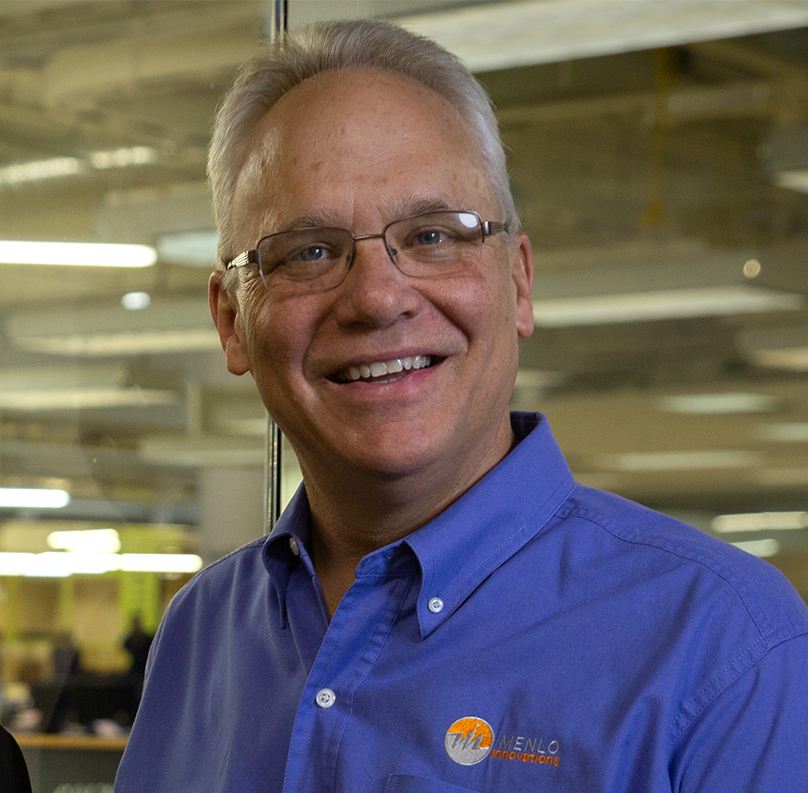
Welcome to the Athletics of Business podcast. I'm Ed Molotor, CEO of the Molotor Group Editor and your host. Today's special guest is Rich Sheridan, CEO of Menlo Innovations. Rich had an all consuming thought during a difficult mid career in the chaotic technology industry. Things can better, much better. He had to find a way. His search led him to books, authors and history, including recalling childhood visits to Greenfield Village every summer. The excitement of the Edison Menlo Park, NJ Lab served as his siren call to create a workplace filled with camaraderie and human energy, creativity and productivity. Ultimately, Rich and his co founder James Goble invented their own company in 2001 to end human suffering in the world as it relates to technology by returning Joy to one of the most unique endeavors mankind has ever undertaken, the invention of software.
Their unique approach to custom software creation is so interesting that almost 4,000 people a year travel from around the world just to see how they do it. In 2013, Rich and his publisher, Penguin Random House took a chance that a business book with the words joy and love on the COVID might have impact. His best selling book, Joy How We Built a Workplace People Love, now has Rich traveling the world speaking about joy, creativity and human energy in the workplace. His second book, Chief Joy Officer, is due out December 4th.
Rich, thank you so much for inviting me into this fabulous environment here at Menlo Innovations. And I really, I'm humbled to be here and I really appreciate you carving out some time to share all the things that we're going to talk about today.
Well, thanks for making the drive, Ed. It's fun to do these in person rather than over the Internet.
Well, it absolutely is. And the tour that you gave me today of this unique facility and we'll get into it. You talk about inspiring you to do something different with your office. The environment and the setup that you have here is quite dynamic. But I'm a big fan. I'm a huge fan. Obviously were introduced several months ago and reading everything I could in reading the book Joy Inc. Your story is very fascinating to me and that might be an understatement. Can you just take us back as we sit here? You're 17 years old now here at Menlo Innovations have quite the journey. Could you start us from the very beginning with the fantasy baseball league, you bet.
So I got a great start in the software industry. I didn't even know what computers were. And in ninth grade I was 13 years old and our high school up in Macomb county, just north of Detroit offered computer programming as a course for high school freshmen. First time that it ever happened in Macomb county schools. And I took the class, I didn't know what it was all about. I typed in a two line program to begin sort of the first day of class and typed the word run. And the computer came back in a roll of paper, that's the way they used to work in those days, and clacked out, hi Rich. And that's what I told it to do. So I thought, oh my gosh, this is so cool, I can command a machine.
It was a very heady moment and quite frankly, my life has never been the same since. By 10th grade, I decided to type all the major league baseball players out of the baseball register into the computer so my friends and I could play baseball, pick our favorite teams, play them against each other through the cold winter Michigan months.
What year is this again?
This is 1972.
So I have to ask, how long did that take you to type in all those names?
Oh my gosh, you know, I, I can even remember what I did was I, I created this little log and I went through every page of the baseball register, but. And then I hand wrote all of the players names, their average, whether they batted right or left, what team they were on, what position they played. And then I took that handwritten copy and then started typing. And There were over 500 players at the time. So I'm sure it took me a couple of weeks to type all the players.
Remember, was it the rotary baseball game or you'd slip the card and then you hit the spinner and then you.
Yes.
I mean, so you took that to a whole different level.
Whole different level. And it was just, it was a delight. I mean, the first time that I could sit down with my friends, with a creation of my own thinking and start playing the game of baseball on the computer was kind of mind blowing. My teacher at the time said, hey, there's this international programming contest, why don't you enter your game into that? There's a gaming category. And I won the gaming category. And so by 1973, I'd won this international programming contest. Still couldn't drive a car at that point. And the place that was supplying us the compute power, the director Came to visit our high school and he said, I want to see the kid who won the contest, right? And he sits down with me. His name is Tom Hartzig. And Tom said, would you like to come work for me?
And I said, doing what? He says, programming. And I said, you get paid for doing this? And he said, yeah. He says, I'll pay you $3 an hour. And I'm like, big money. It was. I was making two bucks an hour as a dishwasher at Big Boy up to that point.
Programming sounds like a lot more fun, too.
It's. And so that launched a career, and I've never looked back since. Eventually came up here to go to Michigan, got a couple of degrees in computer science and computer engineering, and launched a career after graduating with a master's degree in 1982, and fell in love with Ann Arbor and been here ever since.
I can understand that. Yeah. That's amazing. Did you ever imagine that this, as I'm pointing out to the floor here, that this was what it would culminate into?
You know, oddly, yes. It was kind of a surreal moment for me when I was a. When I was at Michigan, when I was a student. There's a place nearby here called Nichols Arcade. And I can remember one fall afternoon walking by there and thinking about, where do I want my career to go? What do I want it to be? Where do I want to work? What kind of environment do I want to work in? And. And I had this picture in my head about a team filled with camaraderie and energy and innovation and all this sort of thing. And it was a pretty well crafted picture in my head. And quite frankly, and that was probably about 1980 or so, and I tucked that picture away, never really even thought about it again.
And then about six years or seven years into Menlo, so this would have been. So that was 1980, and now we're at about 2008. So we're almost 30 years later, right? I walk into Menlo one day and it hit me and I looked. I'm like, oh my gosh. This is the thing I had imagined 30 years ago. I did it right, and it was almost like this little, like Jack in the box popped out my head, you know, kind of wiggled back and forth and said, congratulations, you accomplished your dream. And it was mind blowing to me because it wasn't like I woke up every day and said, how do I get closer to that? It was almost like there was this little guy in my head just steering me towards the goal. I didn't even realize it, but yes.
So I had imagined this, and I can tell you it is as joyful as I had imagined back when I was a student.
Well, and it's funny because it sounds like it was a straight line, but we both know that success is not a straight line. You know, the journey and you think about the whole. All the different decisions you had to make over the careers, and we'll talk about those. From turning down the first offer to be a vp. I mean, all sorts of different things. And how surreal. But I have to ask. When you first had that vision in your head when you were back in college, was it because you were taking a class and someone told you to, or did you just know? Did you just have an idea that this is something I really would love to create, and this is a place I'd love to create it.
Yeah. You know, I think what I. Now, I think I understand myself better today than I did back then. I think I was in pursuit of something, and I'm not sure I quite knew what it was. But I think what. This works this way a lot in my life. I may not know where I'm going.
Right.
Exactly. I'm not even sure how I'll get there. But what I do know about me is when I arrive, I will know it when I see it. And so I think probably that little guy who's steering my head is steering me away from certain things and towards others. And in the bumpy road that you have, there was a point where it got very scary for me. I didn't want to be in the industry anymore. I was in what I call a personal trough of disillusionment where I started taking long drives to work. I kept driving past my workplace, and I was. I was a leader. I was. At a certain point, I became a vp and I just didn't want to be there anymore.
What. What. Let's talk about what led to that point, because there is a story behind that. In your professional journey. And. And I have to believe and imagine that when you first got into the professional career of getting paid to do what you love for a living, it was nothing. But in. In Joy, you know, you were the happiest person.
Absolutely.
Floating on cloud nine. How did you get in? And I've heard you say it before, how did you get from joy to fear?
Yeah. You know, when I graduated From Michigan in 1982 with a master's degree, I'm 11 years in from that first program I wrote. So I am qualified, I'm experienced I had about three and a half years of professional programming at that point. I've now got 2 degrees from 1 of the most prestigious universities on the planet. And I'm in an industry that's about to take off because in 1982, the IBM PC came out. So now there's going to be a computer on every desk, Right. And so I'm. I got the ticket, man. I'm going to the show, right?
Yeah.
And I thought, this is going to be the coolest profession ever. I love what I do. I'm going to. It'll carry me and my family for a lifetime. And very quickly, after graduating from Michigan, I started to see the dark side, not just of our industry, but of industry in general, where suddenly it was long nights, time away from family, blown deadlines, crappy results delivered to customers, people pounding fists on tables and meetings, unhappy sponsors of projects, unhappy executives. And it was seemingly, at least in my profession, it was seemingly all our fault. We weren't listening. Right. We weren't hearing what they wanted. You know, they asked us to build them X, we built them X. And now they tell us X isn't what they want. And somehow that was our fault. And so I kept. My optimistic nature was to keep fighting this.
But at a certain point, I just felt defeated. And I was actively contemplating getting out. And it's actually a true story of my wife. Laughs every time I say it. I was contemplating starting a canoe camp in the boundary waters of Minnesota.
I did not know this.
Yeah. And you know, and my wife looks at me, she's like, did you really think we have three daughters?
Did you. Do you actually have conversations with her about it? Like, honey, no, I think this is really what I'm going to do.
No, I was smarter than that, Ed.
Two degrees.
That's right. But I will tell you, there's a lot of guys I've said this to and they'll pull me aside later and they're like, hey, how far did you get with the canoe camp?
You know, we could still do this. We could pull it off.
Exactly.
Menlo can run itself.
That's right.
Yeah. Yeah. Wow. So what changed? What pulled you back into the industry? Mentally, I should say.
Yeah. I think part of it is there is my co founder, James, loves to call it my inferno optimist. I call it my eternal optimist. When I find myself in a room full of manure, which is where I was, I know there's a pony in there somewhere.
And you start digging.
And I started digging. And so I decided to start reading books.
Okay.
Not books on technology, because, quite frankly, technology is trivial compared to how to organize human teams. So the books I was drawn tom Peters book In Search of Excellence, Peter Drucker's book Management, Peter Senge's book, the Fifth Discipline on the Art and Practice of Learning Organizations, where I learned about systems thinking. And all of these books were, in some ways pointing away to a brighter future. They didn't necessarily tell me how to get there, but they at least planted a seed in my mind that something different, maybe very different, was possible. And again, I didn't know how I was going to get there. I did know that I would know it when I saw it.
Right, right. And you didn't necessarily know exactly what you were looking for, but you knew what you wanted that end result to be.
Yep. And in what I wanted, and I didn't use this word back then, but what I wanted was joy. And joy for a software engineer, for a technical person, for any engineer, is actually very easy to define. What we want to see as technical people is to see the work of our hearts, our hands and our minds get out into the world and delight the people it's intended to serve. What an engineer wants more than anything else is to have somebody stop them on the sidewalk, somebody they don't know who is somehow using that creation of their mind, and say, wait a minute.
Really?
You did that? I love that thing. I use it every day. You made my life better because of what you did. That's what drives the heart of an engineer.
Right, Right. And on that note, and I've read a couple of things that you've been a part of, what are. And there's probably hundreds of them. But what are a couple of the projects that you worked on at Menlo that you hold near and dear to your heart?
Yeah. One of our most famous, and it's a project we still work on to this day after 14 years, is the Accurie Flow Cytometer. It was originally intended to be a cancer research instrument and AIDS and lymphoma and leukemia. So it allows a scientist who's trying to discover either cures or treatments for those diseases to analyze blood samples. And so it takes a 96 well plate, kind of like what you might see in a CSI episode or something like that, and sip the blood cells out of each of the 96 well plates. And the scientists themselves are putting drug compounds in each of those wells to see if they can combat the growth of the cells or destroy them. Our team built the software that allows the scientists to analyze what happened.
It's amazing.
And so we worked for three and a half years on that project with our customer startup company here in Ann Arbor called Acuri, launched the product and within three years they had captured 30% of the worldwide market share in flow cytometers, Even though we didn't know anything about flow cytometry, and quite frankly, neither did they. And there were two big players in the market at the time who were astounded that this little startup company could so quickly revolutionize an industry. And it was really a personal flow cytometer where the world had been driven by the equivalent of mainframe flow cytometers. So this was a desktop flow cytometer with software on the PC next to it. And so suddenly now the whole world of flow cytometry had changed and the cancer research industry just kind of mind blown, right?
They're like, now we don't have to spend a half a million dollars for one of these and put it in a special room with special staff like the old mainframe computers. Now each researcher can have one on their desktop within months. We're getting people literally here in Ann Arbor because this is the kind of work that happens at a place like the University of Michigan med school. And that saying, wait a minute, you guys did the software for the accurate flow cytometer? I love that software, I use it every day. You made my life better because of that. And within three years, we had so working with our customers, so captured that market that they got acquired by one of those big players. And that big player, Becton Dickinson, still uses us to this day for advancing it.
Now that product has moved from research to clinical. So now it's used to monitor the treatment of people who have those diseases.
It's amazing. So let me ask you this then. You know, back to what were just talking about with what you were after, with the joy and the culture here, what made you different than the other ones, trying to do that in terms of this small startup was able to do this in such a quick turnaround time. Why were you, besides the obvious geniuses you bring on board, but why were you able to do that? What did you create environment wise and team wise to make that happen?
Yeah, I think when I talk about this with the world and I talk about how actually relate human organizations now to aircraft, I have a private pilot's license. And so I look at the four fundamental forces that allow a plane to fly, and you've got lift, you've got Thrust pulls it forward, provided by the engine. You've got weight that holds it down and drag that slows it down. And the simplest version, I can tell you is that we as leaders need to focus our attention on how do we lift the human energy of our team. How do we diminish the weight of bureaucracy as much as possible? How do we increase and make clear the thrust of the purpose of our organization? And how do we minimize, as much as possible, the drag of fear on our organizations?
And so the thrust of purpose, I believe, is why we win here the way we do and for us. When we talk about joy at Menlo, we define it very simply by posing two questions. Who do you serve? And what would delight look like for them?
Wow, that's powerful.
And so that external focus, everyone here understands our heart is to delight the end users of the software we're creating. And I can even go all the way back to the creation of the first aircraft and say, why did the Wright brothers win? A couple of guys in a bicycle shop down in Dayton, Ohio, and Langley, Samuel Pierpont Langley, who was well funded in Washington, had, I think, 50 PhDs on his team. And here's these two guys, these two bicycle guy. Bicycle shop guys in Dayton. Why did they win and Langley failed? Because interestingly enough, as soon as Wright brothers won, Langley quit, which is just mind blowing to me. Right, right. And I think the fundamental difference was Langley was trying to build an airplane.
Right.
The Wright brothers wanted to fly, and for us here, we want to fly.
That is one of my favorite things that, you know, I've heard you say, because, you think about it, we get so caught up in, we need to produce this, we need to meet, you know, to meet this metric. We need to do this. And the bottom line comes back to what will delight the end user.
I think humans, human teams. Because quite frankly, the problems we're solving today in business or anywhere are so vast and so complex, we need to bind people together into effective teams. It's no longer that the individual hero can accomplish anything. So now we've got to figure out what are the team dynamics. And you're looking out at Menlo here. This is a different kind of company.
It's really cool.
We have, you know, filled with introverted engineers, just like you'd expect. And yet they're working in an open room, talking to one another all day long, collaborating in pairs. And people are always astounded by that. And they're like, how do you get that to work? Tell them. I said, look, they understand why we're here. They understand they have a chance to experience that kind of joy in their lives that I was seeking in my own. And I will tell you, this is a very selfish invention on my part, this whole thing.
How so?
This is the place I want to come to work every day. And you know, I think it's that's a good kind of selfish. Right. It just happens to be about 50 other people want to join me in this journey and allows us to do what we do well.
And I would be remiss if I didn't describe what I'm looking at. So we're in this really cool conference room with an all glass wall that I'm looking at out. We have sliding barn doors, except these barn doors are actually glass. Okay. And you're looking out at appears to be folding tables.
Yes, they're just lightweight aluminum tables made by Southern Aluminum. We like the. They're five foot by two and a half feet. Okay. Which. Having a table that's twice as long as wide allows us for a lot of different fun geometric combinations of tables. But the tables themselves are light enough so that anyone can move them. And this space changes in small ways every single day. The team is in charge of that. There is no facilities people, there's no space police here. If the team wants to change the space, they just change it.
Yeah. Or if the team has to change the space a little bit like something you and I have in common that I have failed to mention. MASH. It reminds me, the MASH 4077, when it was time to move, man, they could, they can move.
Absolutely. And you know, and I. Yeah, I. I loved that show. Well put together. What I appreciated too, and I think you see a lot of this here as well. Someone once sort of anointed us and said, you guys are whimsically irreverent here at Menlo. You'll see later that we run our daily standup meeting with a two horned plastic Viking helmet called by a dartboard on the wall. We call ourselves Menlonians. We don't have. We don't use electronics. When we communicate with one another. We use what we like to call high speed voice technology. We plan with paper handwritten index cards. It's amazing. They're all over the place here and everything we do is different. We had to reinvent the standard way of doing what our industry does because weren't flying. I mean, simply put, our planes never got off the ground.
If you have too much weight, not enough lift and let's just equate it to engagement disengagement statistics. If we accept the numbers that Gallup has been putting out for decades, that only 30% of your team is engaged and 70% is disengaged, what does that actually mean? If you think about it, in my aircraft metaphor, that means you're only producing 30% lift and you're 70% weight. You know what? Your plane will never get off the ground.
Yeah.
It will just never get off.
That's an amazing analogy. Yeah. Yeah. And before we get to your new books, I want to talk all about your. Your new book, Chief Joy, Officer Joy, Inc. I loved it. There's so much great stuff in it. And you.
I loved writing it.
I mean, how about that? And that was. And you had told me that was a bucket list in and of itself to write it, let alone live it. And there's a chapter in there, you have growing leaders, not bosses. And it's alive out there. I mean, it's exact. Can you tell us, tell our listener a little bit about that, the fact that there's no bosses out there?
Yeah, yeah. A lot of people are astounded by that we don't have a hierarchy. We don't have an org chart. We don't have VPs or directors or managers. We have a team.
Right.
And funny, going back to my baseball metaphor or my baseball love back in the old days, you think about a baseball team, right? Are there leaders? Of course there are. There's leaders on the field. There's leaders in the dugout. Sure, there's a manager, but you know what? Manager's not playing the game. Right. And once those players go out on the field, it's them. And the catcher doesn't report to the pitcher doesn't report to the first baseman. And what's neat, I love about baseball, too, is when somebody hits a ball down towards first base, pulls the first baseman off the bag, the pitcher becomes the first baseman. And because the catcher knows that's a dangerous play. What's he doing running with all that equipment? Probably bad knees to boot.
He's trying to run as fast as that batter is running down the bag, just in case they make a mistake. And so now you've got this picture of a team that says, hey, this isn't about individual heroes. We're going to succeed if we succeed as a team. And it doesn't matter if, you know, if at the end of the game, everybody says, well, you know, you got an error. And I didn't Right. Which is how we run most of our corporations.
Right, right, absolutely.
The annual performance review is I only succeed if I run faster than you. So I, my job is to outperform everybody else in the team.
How is that a team? Right, right. God, I love that analogy. As you can see, I'm taking notes here. I mean, that's an amazing analogy. And that's just that, you know, in our, and we talked a little bit. Our brand is the athletics of business and that's the mindset that the skills, traits and behaviors deployed by elite athletes and high performing teams are key to your success. And I've always believed if you can tell when you are successful as a coach, if you walk into practice 10 minutes late, say you had an interview, say you had a phone call, say something to have, or you had a meeting with academics and you walk in 10 minutes late and your team is running practice, they're not playing grab ass, they're not sitting there talking, throwing up half court shots.
Because I've always believed that players, coach teams are much harder to beat, much more efficient, much more powerful than coached. Coach teams, coach teams, if you will.
So let me torture that one just a little bit because I had a moment like that in my early career where I was the boss, you know, and I was kind of climbing the corporate ladder. I was probably, I'll call it a director at this point. And I had what every boss had. I had the dreaded Monday morning status meeting, right? It's at 9 o' clock and we're all going to get together in a conference room and everybody's gonna report out status. And quite frankly, if I recall those meetings, I think you know what everybody was trying to do. They were trying to figure out who the longest pole in the tent was, who's more behind than me, right? And if somebody else is more behind than me, thank goodness, because they're gonna get all the attention. So there's no teamwork here.
There's just simply jockeying for, oh, they're in more trouble than I am. So I'm safe for this week, right? So one morning, one Monday morning, there was something going on at home and I had to deal with it and I couldn't even call in for whatever reason, it took me away and I didn't show up and the team didn't know I wasn't coming. So they formed in the conference room at 9 o' clock like they normally did. And I showed up probably an hour or so later and I grabbed One of my senior team members. And I said, hey, did you guys have the Monday morning status meeting? And they're like, yeah, we got together. I said, well, what'd you talk about? And they said, the weekend vacation plans. You know, we waited about 20 minutes, and then we realized you weren't showing up.
We just went back to work.
Right.
Kill those meetings.
Yeah.
If your team is only doing them because the boss is there because the boss told you to do them, kill those meetings. What the team was clearly communicating to me was those meetings had absolutely no value for them. It didn't help them do their work. It was simply them placating the boss.
Right.
And so I have learned over time, find those things, kill them.
Yeah. And just going through the motions for the sake of going through the motions. And you do see that. And yet there could be powerful use for things like that. But how gratifying would it have been, though, if you asked them? Okay, so what happened in meeting? And it was just boom, boom.
We ran it without you. We know how to do this. We know you know, and I will say that, you know, that's the effect we get here. This. Nobody's going to be lining up outside this glass door waiting for me while we're talking here. I travel a lot now. I speak all over the world about joy in the context of business. This place runs just fine without me.
So I don't want to just tease our listener. We talk about what you do. Let's talk about how. So how do you grow leaders besides just a setup here? How do you encourage that, you know, daily?
Yeah. First of all, what we want to make sure is we want to start with that purpose. We want to clearly understand and define for everybody who's here what our purpose is. Now, we have a few unnatural advantages now to do that for the people who are joining. There's a new guy here, Steve. He's here first day today, right? First day today. He joined us from another firm. He's actually pretty serious, seasoned programmer. He's been in the industry for a few decades now, so we're really excited to have him here.
You have a new dog here today, too, don't you?
We do. We have Egon here today.
Ego's a cool dog.
Yeah, she's great.
I was able, as you put it, I was able to see Sunrise at Menlo this morning.
That's right.
The introduction of the new dog. So I digress. So back to growing leaders.
Yeah. So, you know, and it's funny because, Steve, like most programmers in Anywhere, but certainly here in southeast Michigan, had another offer on the table. And so when were interviewing him, he was juggling. And in the midst of that conversation with him, were trying to say, hey, we really want you here. He goes, oh, I want to be here. If you want me here, I'm going to be here. I'll just tell the other people. And what did he say? He said, I read your book, Rich. And he spent a day here interviewing. Because that's part of our interview process. If you want, we can talk about our interview process. It's weird and different, but he spent a day here. As a second interview. We paid him. He did work.
And the first thing he said, and this is important, he said, yep, I read the book, and I see consistency with what I read.
The authenticity of it.
Yep, yep. And so one of the values of leaders is authenticity.
Yes.
You know, I think authenticity is probably one of a human being's most finely tuned sense of smells. You can smell it when it's there and you can smell it when it's not.
Yes.
And for whatever reason of evolution, I fundamentally believe that we have learned, do not follow inauthentic leaders, because if you do, something really bad is going to happen to you, not to them.
Right, right. Isn't that the truth? And I like to break authenticity down. This could be an hour conversation between us. I like to break authenticity down to honesty plus integrity. And I got that from James Kerr, phenomenal book, Legacy, written about the All Blacks, the New Zealand Rugby Club. But in. In that this, say the sense of smell is. Is a great way to put it, and it's very intuitive. You can tell when someone's inauthentic. But here's the thing. What about yourself? You know, be true to yourself, too. And if you're not being honest with yourself and to have the ability to develop this culture and put it on them. So one of my big things is recruiting winners. Okay, you get winners, but also recruiting winners to a culture that attracts them. And you're talking into that right now.
How much do you leverage the culture you've built? And this is a foolish question because even the listener already knows the answer. But I want to hear from you. How much do you leverage that culture in the recruiting process of folks like Steve?
You know, leverage is an interesting word.
Capitalize on it.
Well, no, what I want to capture for you is that it isn't. It's powerful. Right, Right. But it's not powerful because we're putting it out there. It's powerful because it exists that it's palpable. You felt it when you walked in the room this morning.
And when I was here. There's only three or four people here. But you feel it right when you walk in.
Yeah, and I often talk about that palpable human energy the minute you walk. Let's paint the picture for your listeners. This is the windowless basement of a seven story parking structure.
I didn't get to that part. My description, you're correct, which is a big part to the description right now.
But you walked in and I bet there was like most people walk in the door for the first time. There was kind of a wow moment. Yeah, right. And so we can pull that off in a pretty bleak space. Right. We get wow.
Yeah.
And so that power is part of how we attract talent. In fact, I will tell you that the greatest source of talent for us, people regularly send us their children. And a lot of people laugh when I say that. And they're like, no, I'm serious. Parents come here with their corporations because we get about 3 to 4,000 visitors a year, come from all over the planet to see us. And at the end, people, oh, where do you find your people? There's a talent shortage. Not for us. We don't have a problem with that. And they're like, well, where do you find them? I said, well, people regularly send us their children. And I said, and they're like, what do you mean? I said, well, parent comes here and you're like, my kid would love to work in a place like this.
And I often liken it to a desperate scene on the deck of the Titanic where the parent is handing us their child, saying, I've lived a good life, but I want a better life for my child. Let them work here. You know, it's too late for me, but save my child. And you know, for us, I think that's the power of the culture and the fact that everybody here, we do tours. We do hundreds of tours a year for thousands of people. The tour guides are the team members.
Yeah. And when you were telling me that this morning, I asked you, is that a distraction? And you very simply said, it's just the norm.
Yeah, it's just the norm. In fact, I think if the tour somehow stopped for some weird reason, the team would all be like, hey, where's the uncomfortable silence? Right, exactly. Like, why are we not interesting anymore? But what's fun about all of that? And again, back to culture and purpose. And it's another element of how do we grow leaders not bosses. Storyteller.
Right.
Storytelling is so critical. My playful title here on my business card is Chief Storyteller.
Right.
You're probably getting a little bit of a sense of this just in this discussion.
Yeah.
And. But what I realized one time on a tour that I was leading, and Ian here was the one who said it to me. I was getting a review of, you know, they were giving me feedback. Team was. And Ian was in it. He says, you know, Rich, every time you give a tour and you're near me and you're telling your stories, I stop and listen.
Right?
He says, I don't know how you do it. He says, you tell the same stories over and over again, but it's like you're telling them for the first time. And I just can't help but stop whatever I'm doing and listen to the stories. I love hearing them every time. And it dawned on me in that little interaction with Ian. I thought the stories were for our visitors. No, the stories are for the team. Right. This is how we build the culture. Because what do we do? We curate the stories as a team, as a community. I don't care what you are. You're gonna hang on to the stories that are the most important, the ones that most evoke the values you're pursuing, or maybe evoke the negative side of the values and say, let's not do that anymore.
So the storytelling component of our culture is very powerful.
And I think that some of the power of that, and a good deal of power comes from that. We all need to be reminded every single day of what drives us. And, you know, we talk about joy, and we're going to get into that right now with the chief Joy officer. But we talk about. We talk about joy, but. And you. You've said this to me. I've read quotes by you. I've seen interviews. It's still a grind, you know, there's still a reality to situation of adversity and failure and distractions and things that.
Are out of your control. Real business in a real economy with real people.
And you still have an edge. You still have a swagger about you. You still compete to do what it is you set out to do. And you also mentioned there's a difference between joy and happiness.
Big difference.
Yeah, let's talk about that.
You know, look, are we happy here?
I think the dog has the Viking helmet. So right now, everybody just the alarm clock on a dog. And everybody just got up from their desk and walked to. Now we can't see them they're at the other end of the basement of the parking garage, and they hold a Viking helmet. And they. They talk about what's going on and what their wins are, what's happened. And the new dog just spoke, so we can't see it. But I'm guessing the new dog has the Viking helmet. So I'm sorry. Back to joy versus Happiness.
Yeah. So it was fun. When writing Joy Inc. One of the most difficult parts of writing a book is coming up with the subtitle. The title can be pretty powerful. Joy, Inc. I thought was a powerful title. Chief Joy Officer, I love, but it's that subtitle that can really communicate things. And I was. I entered into an argument with my editor at Penguin because the first proposed subtitle was Take a Peek inside the World's Happiest Workplace. And I said, oh, no. I said, that's not Joy. Joy and happiness are two very different things. And she said, what do you mean? And I wrote her an email describing the difference between joy and happiness. And the fun thing about the email, she says, oh, this is really good. This has to be in the book.
And so there's a whole section in the early part of the book where it talks about joy and happiness are not the same thing. And it was direct result of the email I sent back to her, my editor. Happiness is important. We want happiness here as much as we can get it. But for us, this is hard work. This is work that takes years in the making. This is work where we're going to get frustrated, we're going to have setbacks, we're going to run into problems we didn't expect. We're going to blow an estimate or something. We're going to have a difficult interaction with the client. Again, real world stuff we do here every single day. And software often holds the lives of people in its hands. And. And we have worked on things.
Software that literally holds a lot of people in his hands. It would be unnatural to be happy every minute of every day. That would require medication. Joy is a much longer arc. Joy, is that the cathedral builders picture, right? The three guys laying bricks, right? He asked the first guy, what are you doing? He says, I'm laying bricks. The next guy, I'm building a wall.
And.
And the third guy finally says, I'm building a cathedral. And what I love about that story, which is a timeless story, is the guy who said, I'm building a cathedral in those days, knew he'd never see it. He'd never see it completed. It was gonna Outlive him. Right. Or he wasn't gonna.
The project would outlive. Yes, yes.
He wasn't gonna see it completed. He would never worship there. He wouldn't baptize his kids in that cathedral. So he was doing this long term view. That said, this is a worthy pursuit. Even if I never get to enjoy the fruits of my labor, descendants of mine will. And so I think that's the thing as leaders we need to keep reminding our team of, is that, look, we're going to struggle, we're going to have human interaction issues, we're going to have crucial conversations, as Vital Smarts likes to say. But if we remind ourselves, why are we here? What's our purpose, what are we pursuing? It's amazing how much that takes off the table, all the creature comfort things. Right. You know, nobody's worried about how comfortable is my chair and do I have a big office and you know, that sort of thing.
Right, right. That's, that's. I mean, and that's something. People mistake joy and happiness, you know, all the time. And, and you can't, I mean, every single day is going to be. Especially when you create what you do. And you just mentioned things, three or four things that can go wrong every single day. You're going to have losses, you know, and you're going to have losses and.
You'Re going to have errors. You know, we can keep torturing the baseball metaphor. Right.
By the way, that is one of my favorite. I mean, that was outstanding. I'm going to go somewhere that I didn't plan on going today in our time together. But you've said, we talked earlier about retention and you don't have a lot of turnover because of the culture.
We have normal turnover. We really do. You know, there's. This isn't magical nirvana where people come and they stay forever. Some we ask to leave. Right, right. They don't work out. They're not. They never got it enough to stay. And I mentioned Ian. He's one of my favorite stories. Ian has left three times and we've invited him in four times. So he's still here, but there were gaps. And the first time he left, quite frankly, were probably two weeks away from firing him. And he was on the border of insubordination. And I can tell you this story because I got approval to tell this story in the book. So you'll read about it and you'll read about Ian. He's like, oh, yeah, Rich, you can tell this story. He says you were actually Too kind in the way you wrote it in the book.
You guys should have fired me. And Ian didn't believe. He didn't believe in why we did things the way we did them. He thought were over the top and all of our focus on quality and attention on the user and how we craft the team and all that sort of thing. So he left. And about two years later, he calls us up and he says, hey, I'd like to come back. And were dubious to say the least, and were cautious. And finally the team's like, yeah, let's give him a chance and. But we'll run them through our same three week trial we run all of our new candidates through. And he came in. Shining star.
Yeah.
And within months, he was one of our most revered leaders. And I pulled him aside and I said, ian, what on earth happened while you were gone because you knew were going to fire you? He goes, oh, yeah, I can't believe you hung onto me as long as you did. And he said, you know, Rich, I got out in the real world, the world that you and James, my co founder, described to our tour guests about what can go wrong in software and how bad the projects can go. And he says, quite frankly, it's the only place I ever worked. I didn't believe you. I didn't believe it could be that bad. But then I got in the real world and found out it was. And then as a leader, I tried to fix it. And you know what I was doing?
I kept pulling in little pieces of Menlo every day. He says, do you know how hard it is to build menlo?
Sort of.
He had maybe just a little bit. And he says, then one day I woke up and he says, why the heck am I trying to rebuild menlo when I could go work at Menlo? Then he comes back and of course now he has this broader understanding. So we have this policy, I guess, that we don't really have policies, but we have this pattern of behavior that says you can come back if you leave. We're a birdcage without bars. We don't encourage people to go. But if you decide you want to try and come back, and not everybody gets to come back, you know, we're a real team as well, but we'll give you a chance. And one of our core values, leadership values and team values is take a chance on people. And so we did.
Ian left again a couple years later, joined a startup with another Melonian. We actually encourage that activity that took its natural Course, after a couple years, he came back again. The next time he left, he went to one of the big automotive companies here in southeast Michigan for a 50% pay increase.
Wow.
5, 0. Wow. We couldn't say no to him. He's got a son, he's got a family. He's got bills to pay. We're like, go. He lasted about a year, and it was kind of like, they're not human here. So he came back, and we couldn't match the 50% he got, but. But he got a pop when he came back. Every time he left, he came back a better Ian, wiser, more experience, broader view of the world, able to bring those lessons back. It's probably one of our.
Which is pretty dynamic that you're able to do that. And that's all part of what goes into being a Chief Joy officer. And let's talk about this book. And let's talk about what inspired you to write this book. Inspired the title, Chief Joy. How Great Leaders Elevate Human Energy and Eliminate Fear.
Yeah. My publisher came back. So as we talked about earlier, there were probably in my work life, if you will, I had two big bucket list items from kid on. One was to be an entrepreneur and start a business. Boom. Check did that. Second was to write a book. I always assumed everybody wants to write a book. I found out that's not true. My wife looks at me, she says, I'd never want to write a book. Okay. But I wanted to write a book. So I got it with Joy, Inc. And so, boom. Two bucket list items off the list. And the book took off.
Right.
It's doing incredibly well. Penguin was thrilled with me, both the content as well as the performance of the book in the marketplace. And so they said, we want you to do another one. And we started speculating with each other. And they said, you know, you should talk about this crazy leadership system you have there where you don't have any bosses, you just have leaders. Let's take that chapter of growing leaders, not bosses, and talk about how do you do that? And so Chief Joy Officer is about the leadership elements that are beyond just the normal culture here, if you will. If you think about a family, you probably have values within your family, but the parents themselves have to subscribe. They're signing up for a different set of values. Right, right. And so same here. They're additive to the normal values.
And so for us, what we talk about, what I talk about in the book is what are the values we expect of leaders here? And then what's the systems and practices we put in place to grow a culture of joyful leaders. Wow.
Wow. And did that the whole process of writing the book was it. Did it just start. The ideas just start flowing out of you and the stories just start flowing out of you because of all the experiences you have had doing that?
Yeah. I think the storytelling component of Menlo helps a lot with that. And quite frankly, writing the first book was an incredible learning lesson for me. So I think I kept a lot of the void voice of the first book into the second. It took me a while to develop. You know, quite frankly, what I had to do in Joy, Inc. Was get to my authentic voice.
Right.
I think I probably started writing like I think authors should write. And then I realized I gotta run into that. Yeah, I gotta run into, like, what is in my heart and spill that out on the pages. And I felt very successful at doing that.
You know, that begs me to ask, did you remind yourself of a few things you may have gotten away from when you were writing the book and you're trying to get back to your voice and you're like, man, I forgot we used to do it that way. That was really good.
Not so much that I forgot we used to do it that way. But I will tell you, it deepened my love for what we created here. It was funny to see how the writing confirmed those little kid dreams, the dreams I had as a student in Michigan about what I wanted to create and what we had actually created. I think I actually developed a more profound respect for Menlo after having written the book. And quite frankly, I was nervous about writing this book because what I didn't want to do is come out to the world and say, we've solved the leadership issue. We've got the one true way. This is a real business. We've got real challenges here. So basically, both books are. Look, we're not. We're not here to tell you should make yourselves look like us.
Yeah.
This is a real business. Take a peek inside. Take away any lessons you want that could work for you. We're very clear on that. On tours, we tell people, this is simply an example. Come look at it. There's nothing in our heart that says you should make your business look like ours. Just come here, you know, because I think a lot of times people go to conferences, they read books, they talk to colleagues, Maybe they have little, you know, sessions somewhere, but every once in a while, somebody says, you know what? An example right about now would be really helpful. And I think that's what we are for the world. The thousands of people who come here every year, the tens of thousands of people who read the book. We're a living, breathing example of an actual organization.
And like you said, the folks that give the tours are the. The ones that are here, and they're the Melonians. I mean, thousands, 3,000 times a year, you're reaffirming what you do and the way you do it. And, you know, and one of the things I want to ask you, Creativity. A lot of people think to be creative, you have to be locked in a room, it has to be quiet. You have. You can't be bothered, don't you know? And I go down that rabbit hole with my kids sometimes when I'm trying to do something so simply, like, so simple as write a blog or an article or something. And it's like, don't knock on the door, Daddy's days. But then I'll find, like, I'll go, let's say I'll go to Starbucks, grab a cup of coffee. All of a sudden your.
Your creativity's on fire, and you don't even realize that things are. How do you do that there? How do you tap into the creative juices of these folks in this dynamic? And it's not really loud, it's not obnoxiously loud, but there's a buzz, there's an energy here.
It's coffee shop level. Yeah.
So how do you do that?
So I think the key to. To unlocking the most human part of our teams has to do with eliminating fear. I think one of my key roles as a leader here at Menlo and the encouragement I have to give other leaders is to pump fear out of the room. Because fear produces a physiological effect. Adrenaline and cortisol in small amounts dropped into the bloodstream channels. Blood away from the most human part of our brain turns us into reptiles. All right, now we're in fight or flight mode. And the part of our brain that gets shut down is the biggest oxygen consumer in our body, the prefrontal cortex. And by shutting that down, what we're losing is creativity, energy, imagination, invention and innovation. Right? Those are what everybody on the planet wants these days. Right. There isn't a business on the planet.
Sears could use a little bit of this. Right? Right. You know, Borders Books, who was headquartered in this exact space when they first started franchising. Borders did not know that. Yeah. Borders was Ann Arbor Company. Tom and Luke Borders started in a.
Little storefront just a block, but not this exact Space?
No, this exact space was the headquarters, world headquarters for Borders Books before they moved out to a couple of miles from here, Varsity Drive. This was their headquarters. Right. And so. And you know, Borders had Amazon put out the first website 1994, to sell books.
Right.
Borders had started in 1972. So they're 22 years old, Amazon comes out with the first website, and Borders goes out of business in 2011. Borders had 17 years to figure out a response to Amazon, and they never did.
Wow.
And I had a deep enough peek inside of that organization because they had come to us when they decided to go back to their own website and pull it back from Amazon. And my wife said, how'd the class go with Borders? I said, they're doomed. She says, what do you mean? I said, they will be out of business in five years.
And what made you say that?
There was so much fear in their eyes that it was clear. You could see the glazed look. They were just so afraid. And I said, they can't hear anything I'm saying and they will die. Interestingly enough, when I looked at the Chapter 8 filing, when they sold the last bookshelf to the last, you know, auctioneer, there was a date of death for Borders Corporation, and there was a date of that class when I predicted five years, I was too optimistic. They died four years, nine months later.
Wow.
When I made the prediction, they had 1100 stores and 20,000 employees. And I could see they're doomed. And it's just so clear the negative impact that fear has on organizations, especially now.
Yeah.
Right. I mean, this is, you know, maybe it could work. In the old days, you know, I was taught in my earliest managerial career to manage with, motivate. I motivate people with fear.
Right.
You know, I'd say I was taught to. Hey, Ed, how's it going?
Yeah.
What you working on? Hey, Ed, are you coming in this weekend?
Yeah.
You know, I do this at conferences and I look at people and like, is your blood pressure rising? Right. Because I'm really good at this. I was actually taught walk up to. If you see two people talking in a corridor, you know, in a hallway, just walk up and stand there. He says, they'll get back to work. Now, I've institutionalized two people talking here, so it's hilarious how far I've come from those days.
Yeah, that is something else. So, you know, and we all know when you read a book, there's a way to get something out of it. And certain authors are certain ways to get, you know, out of their books. What is the best way? If I sit down and I. And I, as our listener says, I just want to squeeze that sponge dry, you know, I want to get the most out of this book out of Chief Joy officers I possibly can. What's the best way for someone to go about reading the book?
Yeah, I think there's. You might imagine there's some stories in this book, and one of my favorites is a story about MassMutual Corporation. And they are a 169-year-old life insurance company. 30 billion in annual revenues, pay out $3 billion a year in life insurance claims. This is a big deal, old time stodgy organization out on the east coast. And they had invited me in to speak to their leadership team. And I delivered a message at the end of my talk that I've delivered all over the world. And I'm pretty sure it's had impact, but I had no idea how much until I saw what happened inside of Massmutual. And the message was simple. And it's message of this book, Become action oriented. When you have an idea, act on it. Run the experiment. Okay. And that's what I told him.
And I tell this great story about a famous experiment here at Menlo about inviting newborn babies into the workplace. We've got one here today. Little Josiah's here somewhere.
Right over there.
Yep. And so Josiah's menlo baby number 22 in the last 11 years. So we're counting as a prolific crowd here.
So if you want to have, if you want to work at a really cool place and have babies, come to Menlo.
That's right, exactly. And you know, so we'll ignore that part of the story. The, the more important part is I said, look, try stuff. Just run the experiment. Stop forming committees and writing policies and having meetings. Go try stuff. And I had no idea how much of an impact this was going to have. They invited me back six months later. They said, rich, you got to see what happened. I said, okay. What?
What?
They said, no, you got to come. So they brought me back in. They treated me like royalty, which was weird. I'm walking into these rooms and there's copies of Joy Inc. Everywhere. And they were like, oh, my gosh, Rich is here. And I'm like, that's weird. And then finally I get together with Amy Ferraro, who's the VP of claims. She says, rich, I'm going to show you where we do claims. And she said, when we walk into the room, which was probably about 100,000 square foot facility of people in halfway cubicles as far as the eye could see. She said, you're going to see helium balloons taped to desks. I said, oh, cool. What's with the balloons? You know, I'm thinking celebration party, that sort of thing. She goes, no, everyone who has a balloon taped to their desk is running an experiment.
And the balloon is declaring that. And then it's an invitation. Come ask me about the experiment I'm running. I'm like, oh, my gosh, that's so cool. I can't wait to see. And we walk in and. And ed, there are balloons as far as the eye can see.
Wow.
And I'm thinking, this has only been six months. And so I walk up to Erica. I said, erica, tell me about your experiment. She says, well, says, I thought were taking too long to pay out claims. She said, simple claims. You know, there's different kind of claims and, you know, if there's a single beneficiary, clearly paid up policy, you know, easily identifiable beneficiary, we should be able to pay those off faster. This typically takes us about 4, 4 weeks to pay out a claim, But I thought we could do better. I said, awesome. What's your fastest claim so far? She said, 13 minutes.
Wow.
Mind blown, right? And I'm like, wow, congratulations. And she. It was really cool. That is because she said, oh, no, no, Rich, this wasn't me. And she points her hands, all the people around her says, we couldn't have done this without the team, right?
Yeah.
And so awesome. So then I run over to Susan, like, susan, tell me about your experiment. She says, well, we got this quality process when we're paying out claims and we do step A, step B, step c. And she said, I realize if we make a mistake at step C, we wouldn't have had to have done step b, which is kind of a complicated, long process. So she said, I just rearranged the steps. Now we do a C, then B, because B is the most expensive part. And it sounds pretty simple, right? But she's beaming with energy.
Yeah.
I said, susan, how long have you worked here? She says, 19 years. And I said, have you always been like that? She goes, oh, no. She said, I used to hate my job. I hated coming to work. I said, what's different now? She says, well, now, you know. I said, what's different? And she said, well, in the old days, if I had an idea like this, it'd have to go up five levels, over down five lovers. Every idea died before it ever got back to Me, after a while, you just stopped coming up with ideas. And she says, now we can run the experiment.
It's unbelievable. Yeah, think about that. And then the energy that created the idea was probably gone by the time it got up and down the food chain and back to you.
Probably either a never came back, or by the time it came back, it was so twisted around through committees, policies, and meetings that didn't look anything like the original idea. So you know what? People just stopped coming up with ideas.
Well, and think about how many lost learning opportunities there they are when you, by your leadership style, your people are encouraged to stop coming up with ideas. Maybe not intentionally, but, you know, so now they run all these experiments.
And here's a woman who told me, kind of a perfect stranger, right? She knew who I was. I used to hate my job, and now I love my job. She said, I can't wait to get to work. We flipped at least once the disengagement statistic to an engagement statistic, and that plane can get off the ground.
Wow.
Wow.
Think about that. That's. That's powerful that has to put a big smile on your face at the end of the day.
It was like, mind blowing for me to think that a simple exhortation of run the experiment could have that much of an effect. And, and here's my big point when I tell this story to the world and your listeners need to hear this because a lot of people come here to menlo and they're like, oh, this is so cool. But it could never work for us because. Because I'm. We're too. Fill in the blank. We're too big. We're too governmental. We're too regulated. We're too. And I'm like, oh, no. If 169-year-old MassMutual Corporation can make this much change in six months, you can too. I'm not letting you off the hook. Go run the damn experiment.
Because every excuse possible is inside of MassMutual.
Absolutely.
Including comfort zone size.
You bet. Longevity to get to retirement. You know, I do what the boss tells me to do and all that kind of stuff.
Well, if someone is interested in being one of the 3,000 organizations or groups of folks that come here every year, how can they find out more about coming here and getting a tour of menlo innovations? How do they go about doing that?
Yep. Easiest thing to do. Write an email to experiencenloinnovations.com. You can get to that by going to our website and it'll say, you can say experience Menlo by visiting and so. And for people who can't come, they've got the books.
Right.
And the website is menloinnovations.com M E N L O. Like Menlo Park, New Jersey.
Absolutely. And the new book can be found.
Yep. Wherever books are sold, both the print and the audio version will come out on the same day. December 4th, I'm really happy to say. I got to read the book this time, which is awesome.
That is so cool.
And the foreword is by an author who inspired me in my earliest days, Tom Peters, who wrote In Search of Excellence. That's really. That book is where my journey started. So I'm so. How fulfilling was that, having so geeked about that now? Tom's a funny guy, you know, he's got strong opinions about stuff. And one time he. He wrote me a note and he says, rich, I love everything you're doing. Don't screw it up.
It's like a parent would say, there's something. Yeah.
He says, I talk about joy wherever I go and I talk about you. So the fact that he A, wrote the foreword is awesome for me and B, he actually read the foreword for the audio version, which is just. I haven't even heard that yet. That's just mind blowing for me.
That is great. Well, I want to thank you again for having me in, showing me around and talking about, talking to me about your culture, what you have done. I've learned a great deal today. If you want to learn more about what we do at the Molotov Group, you go to the molitorgroup.com obviously the athletics of Business podcast is on itunes. It's on stitcher. Go ahead and download it. Write us a review, please. Positive, negative, indifferent, I don't care. Feedback is awesome and is much needed. And also our website for the podcast, The Athletics of Business.com you can find me on Twitter. The handle is Hemolitor Group. We do have the Molotor Group Facebook page, as well as an Athletics of Business community, which you can request to join.
And really, I spend a lot of time on LinkedIn and you go to my personal LinkedIn page, which is Ed Molotour. And I just think that's an incredible platform. So, Rich, thank you. It's been an absolute pleasure.
I'm so glad you were able to come here and do this in person.
Thank you for listening to the Athletics of Business. Be sure to give us a rating and review so we know how we're doing. For more information about the show, visit theathleticsofbusiness.
Dot com.
Now get out there. Think, act and execute at the highest level to unleash your greatness.