

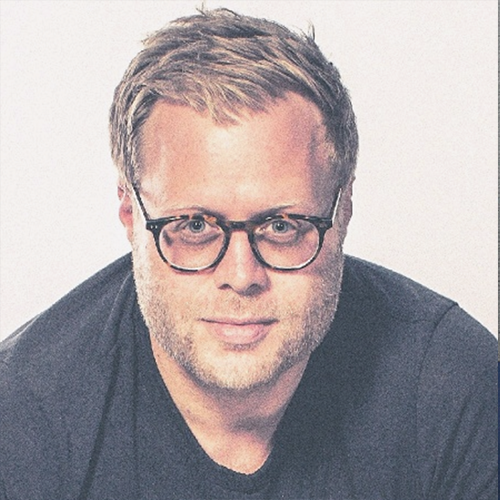
Rob Emrich is a serial entrepreneur and the CEO of Gimbal Inc. Gimbal Inc. is a marketing technology that unites the physical and digital worlds. The company counts over 10,000 end customers, from global giants like Ford, Citibank, Walgreens to small neighborhood businesses. Gimbal has received over $90 million in investment from institutions like Qualcomm, AEG, Zebra Technologies, and SK Group.
The company was recognized for its remarkable growth #66 on the Inc 500 and #34 on the Deloitte Technology Fast 500. Before Gimbal, Rob started five other ventures and has a lifetime record of 4 wins and 1 loss. Rob has been featured in the The New York Times Bestselling book The Lean Entrepreneur & 21 Questions for 21 Millionaires. He has been recognized by the Ernst & Young Entrepreneur of the Year Award and ‘Forty under 40′ (at age 25).
He is an active member in the Young Presidents’ Organization and a member of the Digital Advisory Committee at The Alliance for Audited Media. Rob has done more community service than courts demand of white-collar criminals. In addition to serving on corporate boards, Rob has sat on nonprofit and community boards of various Jewish organizations, The Tobacco Public Policy Center, The Alliance for Nonprofit Insurers, the PBS Documentary on Pediatric Cancer A Lion in the House, and continues his philanthropic work with his family through The Emrich Foundation, a donor-advised fund at The American Endowment Foundation.
Rob received a scholarship to attend The Ohio State University Honors Program, and graduated with Research Distinction. He loves adventure travel and backcountry camping and has walked over 1,000 miles of the Appalachian Trail from Georgia to New York.
Welcome to the Athletics of Business podcast. This is episode 27.
Welcome to the Athletics of Business, a podcast about how the traits and behaviors of elite athletes and remarkable business leaders frequently intersect the real stories and hard lessons to help you level up your leadership and performance. Now your host, Ed Molitor.
Welcome to this episode of the Athletics of Business podcast and today's guest is Rob Emrick. Rob is a serial entrepreneur and the CEO of Gimbal Incorporated. Gimbal Incorporated is a marketing technology that unites the physical and digital worlds. The company counts over 10,000 end customers from global giants like Ford, Citibank, Walgreens to small neighborhood businesses. Gimble has received over $90 million investment from institutions like Qualcomm, AEG, Zebra Technologies and SK Group. The company was recognized for its remarkable growth. Number 66 on the Inc. 534 on the Deloitte Technology Fast 500. Before Gimbal, Rob started over five other ventures and has a lifetime record of four wins and one loss. Rob has been featured in the New York Times best selling book the lean entrepreneur and 21 questions for 21 millionaires.
He has been recognized by the Ernst and Young Entrepreneur of the year award and 40 under 40. At age 25 he is an active member in the Young President's Organizations and a member of the Digital Advisory Committee at the alliance for Audited Media. Rob has done more community service than courts demand of white collar criminals. In addition to serving on corporate boards, Rob has sat on nonprofit and community boards of various Jewish organizations, the Tobacco Public Policy center, the alliance for Nonprofit Insurers, the PBS documentary on pediatric cancer alliance in the House and continues his philanthropic work with his family through the Emmerich Foundation, a donor advised fund at the American Endowment Foundation. Rob received a scholarship to attend the Ohio State University Honors Program and graduated with research distinction.
He loves adventure travel and backcountry camping and has walked over 1,000 miles of the Appalachian Trail from Georgia to New York. Rob, thank you so much for joining us. And there's pages of more stuff that I could put on there, but I really appreciate you being here with us today.
Sure, happy to do it.
Well, I'll tell you what, I want to jump right in and I want to share your journey with our listener because it is so fascinating to me. You know, I like to know what makes people tick and what's moved them from where they started off to where they are today. You know, moves them from good to great, what goes into their purpose and what drives them. So can you take us back what influenced you, impact you in your younger days and tell us about that.
Sure. You know, I think from the outside, if someone were to look at me when I was in elementary school or high school, you know, I was not. I was like a smart kid. I think that, you know, there's so many, like, TED talks now about sort of, you know, different educational tracks for different people. And I think one of, like, the common themes that I hear all the time is that a lot of entrepreneurs, whether they're successful or not, learn differently, they process information differently, they act differently. And I think that those type of differences are not always favored by sort of the traditional educational system.
I think I did okay in school, but certainly, yeah, I mean, for the most part, I was like an obstinate and then also angry kid, just with a death in the family that I was going through at the time. And. But yeah, I don't. I don't know that. I guess I don't think any of my teachers or classmates would be surprised at what I do now, but I also don't think they would be surprised if I, you know, ended up in jail or something like that.
Would that be, hey, would that be for a white collar crime? Because you've done plenty of community service.
I gotta tell you. And I need to pay homage to Artie Isaac, a good friend and mentor of mine. I took that line from him and he does way more community service than I do. Okay, well done.
Yeah, no, that's great. And as I was sitting here getting ready for prepping for this podcast, I couldn't help but be amazed at some of the experiences you've had, some of the journeys. But if it's okay with you, I want to go back to what eventually led to you setting up the Emmerich foundation and obviously an awful situation you went to. You know, it's funny, I was sitting at the. Not funny excuse. Excuse that it was eerie. I was sitting at the bus stop today with my 6 year old and I had my 4 year old there standing next to me. I was thinking about what you went through at an early age with your sister and how that must have impacted your life and the fact that you made something so incredibly positive out of that.
Can you, can you share that with us?
Sure. I mean, you know, I was seven when my sister passed away, which, you know, I understand now was like, I don't think that there's any good time to lose a sibling. And I think probably even more difficult for parents to lose a kid. But it was a Particularly difficult time. I didn't quite understand the world, not that I do now, but it was just. It's a difficult thing to go through as a kid. And I think that it really has informed who I am in good and bad ways. I choose to try to look at the good ways. But yeah, I mean, what led to that was that, as you alluded to, I had a sister who passed away from pediatric cancer, which is a non preventable type of cancer is what she passed away from. It's called neuroblastoma.
Interestingly, I believe now most of the kids that get neuroblastoma live. So it was quite a while ago that she passed away. I'm 39 now and I was 7 when she passed away. So I guess 32 years ago. So survival rates for at least that type of cancer have improved dramatically. But it was just a major part and informed a large part of my life. I got a chance to see how my parents dealt with that. And you know, they're still married and they're still together and I don't know how, I can't imagine what that's like. But you know, doing something just seemed like one of the things I needed to do in order to move on. Right. As I mentioned, I was like a really, I think like a very angry kid.
It took me, you know, leaving Cleveland where I grew up, I took a year off to travel. That's when I hiked the part of the Appalachian Trail that I did. I lived on a kibbutz in Israel for a while. And it really just sort of, you know, I'm so happy I did that and had a chance to process and also just. I think one of the big takeaways for me from that year is that the world doesn't owe me anything. You know, if I want to be angry kid and be angry adult, if I want to be angry adult. But it doesn't change any of the facts that like as I said, the world doesn't know.
Right.
And I think that was an important mindset change. And there's a few things that happened over the course of that year that really led me to.
There was a certain event in that. I mean, when did it really dawn on you? I mean, did it take some time to all of a sudden come to that? I mean, we've all had those, you know, different things in our life that it was adversity and things that we didn't ask for, that we probably didn't think we deserved at the time. But all of a sudden there's this epiphany where it's, you know, okay, now you have a choice of what you're going to do with the circumstance that happened to you. What was it when it started to really resonate with you? And I guess, for lack of a better term, the light bulb went on.
Sure. I mean, I think that there's two events that happened that year from the two different experiences I had. The first was, as I mentioned, I lived in Israel. I lived on kibbutz. Ostensibly were there to do archaeological digs, which we did, but that was a really small part of the experience. Anyways, on the second day that I was there, I had taken a bus into downtown Jerusalem. The kibbutz I lived on was the southern outskirts of the city with a friend, a new friend from the UK. And we walked off the bus and maybe within 10 minutes, three bombs went off. And weren't. I wasn't named or anything like that, but there was a lot of carnage around me.
And it made me really think, quite frankly a lot about the minds of the people who did it and the minds of the people who lived through it. And just I think I saw a little bit more complexity in that situation than perhaps others did at the time. I think that was really informative for me to try to appreciate life.
Wow. Yeah.
And then the second was probably a little less dramatic, but I was walking on the Appalachian Trail. I think I'd been going for like two or three weeks. I think I was in somewhere in like northern Georgia. I must have been in North Carolina or Tennessee. But I remember, you know, basically I would get restock at like gas stations or grocery stores for a week at a time. And then, and I remember being like two and a half days or three days into, you know, what was going to be a seven day trip. And I thought I was miserable. I mean, I had just like been walking in the rain for two and a half weeks. I was disgusting. I just wanted to. I just thought, I don't want to do this anymore.
And so I remember sitting down on a rock in like a driving rain and thinking, I don't want to go anywhere. Like I'm not going to go anywhere. I want like a helicopter to come pick me up or something, you know, like I'm not. I sat there for a long time. I mean, I don't remember exactly how long. Could have been three minutes or it could have been five hours, I really don't remember. But I just remember realizing nothing was coming. There was no helicopter that was coming, right?
Nobody.
You know, even if some other random person happened to walk by me, no one's gonna, like, you know, we're gonna call.
Yeah. Throw you on their back.
Right? Like, get your ass up and start moving. And so there are really two directions I could have gone. One was to turn around and walk back to where I came from, which was like three days away. And then the next was to keep going to the next road, which was like three days away. And, you know, just not having any other option and needing to persist through that, I think was. It's not like some dramatic event, but it ends up. It stuck with me. And I see that a lot. You know, even in the current company that I have two co founders who, I mean, they quit along the way, ostensibly for health reasons, but it's a stressful environment, being in the startup world, and it's hard.
And so persisting a little bit longer is probably one of the best lessons that I've learned in my life. But, yeah, I think it comes in some ways from that experience.
So let me ask you this. You wrote a blog. I believe it was the end of May, like, May 29th. Great blog. In terms of, you know, the default of entrepreneurs is failure. You know, that's sort of our default setting because we. We have losses every single day. And you, I love the four in one, by the way, in your bio. That's outstanding. But you. You continue to come up with new ideas and you continue to create and you continue to have startups. What. What drives you to do that? I mean, what. When the default is failure, when you have done so much and accomplished so much, why go back to. With an other, with another idea and start at zero? And I think it's awesome that you do it. I'm just curious, what drives you to do that?
I don't know. And you know, I don't, because I think there's, like, a question in our sector, like, are entrepreneurs born or are they made? Like, do they learn this behavior? I don't know that I know the answer to that, but one I think a lot of people know of. Steve Blank from his work on the Lean Entrepreneur. There's a lot of other writing that he does about the psychology of entrepreneurship, and one of the things he talks about, which I think is really interesting, is that entrepreneurs are more comfortable with what other people perceive as chaos. Like, they almost want it. And a lot of times they came from a chaotic childhood environment, so they're just more comfortable with chaos.
And when I say chaos, I don't mean like the ceilings are falling down, but things that other people are not necessarily comfortable with. And so, yeah, I think I'm not as turned off by the chaos of starting something new that maybe somebody else is. I just don't look at it as a. As an impediment in the same way. I don't know if I'm right about that. But, you know, at least I think also some of it too is when I was coming up as an entrepreneur, like I started a. This nonprofit organization right out of college, but that was also like right around the time of the recession, I guess, 2001, I think when I was starting my first for profit companies was right around the time of the recession. And it just watching my.
My father was a research chemist growing up and as the companies that he would work for would change their goals or whatever it was that they're working on, I think it became clear during his generation that you don't work for the same company for their whole life. So I just started to view getting a job and working for another company as less stable than perhaps other people did. So I just thought if it's going to be up to somebody else or me who like to determine my success, I prefer to have it be me.
Right, Right. So how do you do that then as an entrepreneur when you're constantly dealing with failures and growing through those failures and learning from them, how do you mentally process that and just keep going? And I love the exercise Three Good Things. But before you came up with that, what was it that made you so resilient?
Three Good Things is like a principle of positives, or not a principle, but a method in positive psychology, which I've studied a lot and including a lot of the work that Martin Seller made does. I don't know how active he is, but it is about resilience. And that's a. I'm still not quite sure. I mean, resilience is like part stubbornness, you know, that's a huge element. You know, it's all like people interpret resilience as grit or just only positive. But. But I think a lot of it is truly about just being stubborn when you believe that you're right. So I think that's part of it in terms of resilience, but also I just don't think that these are like new ideas. Right. I think that a lot of old philosophers talk about the same thing. Right.
Like don't inherently trust authoritative figures with what they're saying. Because it may not be right. That's Socrates. I mean, there's just. I feel like I'm just more of an observer and synthesizing a lot of things that have been in the. That have been known for a long time. And I also, I think, do my best to not put myself in situation where I'm going to be subjected to, like, group think in a way where it's easier to quit. Right, right.
You know, and I'm going to ask you kind of a trick question here. Not intentionally, but it's the only way I can think of to word it, because I'm about to ask your one loss, you know, what did you learn from it? But in the back end of that question, the reason I'm asking that, because I'm also going to ask you what you learned from your wins and how do those lessons compare in value? Because I think we spend so much time when we have success in our feedback loops and we don't celebrate the small victor. We don't sit and, okay, why did this work? We spend so much time banging our heads against the wall when things don't work that I don't understand. I think sometimes we miss the value in the victories. But if we could start with.