

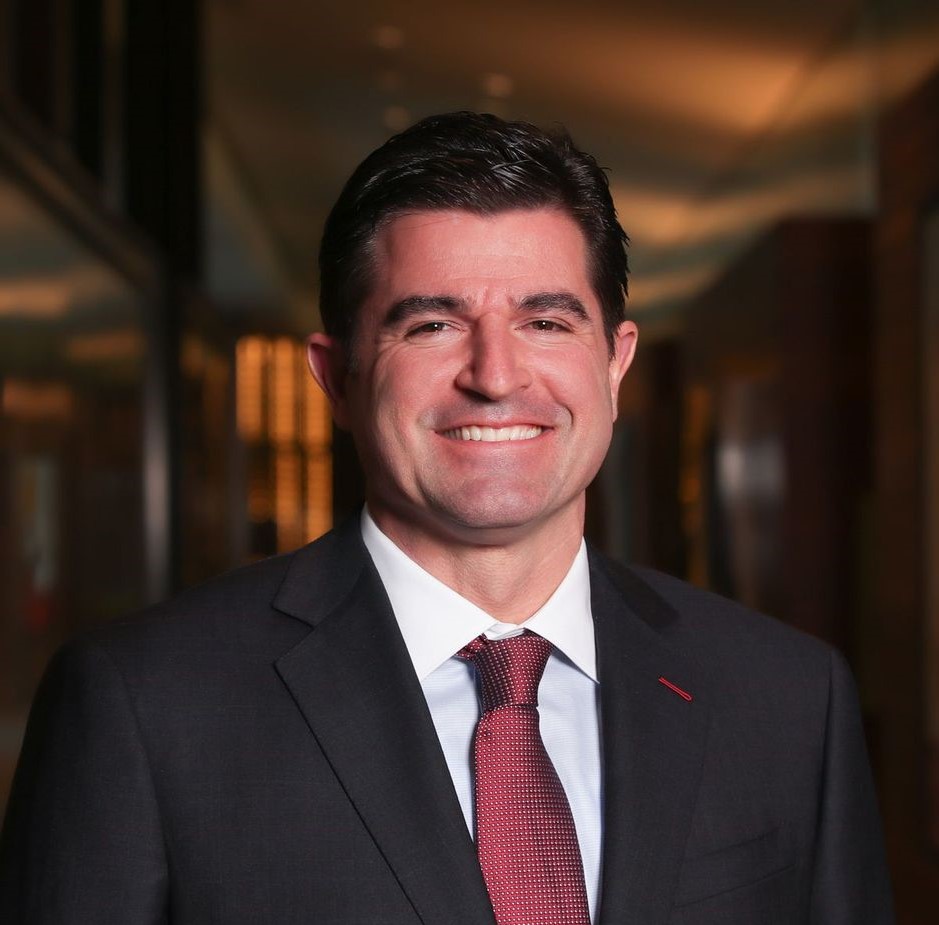
Scott O’Neil is the Chief Executive Officer of Harris Blitzer Sports & Entertainment, an organization with the mission of building passionate, high-performing teams that inspire people to enhance the communities where its teams live, work, play and win.
O’Neil is responsible for the organization’s leadership, strategic vision, operations and global ambitions, including the pursuit and acquisition of sports, entertainment and consumer-facing properties. He is the acting Chief Executive Officer overall properties within the organization’s portfolio and under the ownership of Managing Partners Josh Harris and David Blitzer, including: the Philadelphia 76ers (NBA), the New Jersey Devils (NHL), Prudential Center, a top five-ranked performance venue in the U.S. located in Newark, New Jersey; Dignitas, an internationally renowned esports organization which includes Clutch Gaming, the NBA 2K League’s 76ers Gaming Club, the Sixers Innovation Lab, the GRAMMY Museum Experience Prudential Center, the Delaware Blue Coats (NBA G League), and the Binghamton Devils (AHL). He is an acting Co-Managing partner for Elevate Sports Ventures, a sports and entertainment agency created in partnership between HBSE, Live Nation | Ticketmaster, the San Francisco 49ers and Oak View Group.
With more than 20 years of experience in the NBA, NHL and NFL, O’Neil has earned a reputation as a leader of leaders and is one of the most connected, dynamic and driven executives in the industry today. Previous executives whom he has mentored and managed run many of the top organizations in sports and entertainment today; those he currently manages are poised to lead the industry into the next generation.
O’Neil’s reputation for authentic leadership, unparalleled drive to innovate and emphasis on the importance of corporate culture has placed him at the forefront of the industry vanguard. In merely six years overseeing operations for the properties in HBSE’s portfolio, O’Neil led the Philadelphia 76ers to sign the first jersey patch sponsorship in “Big Four” sports history; construct the most technically advanced training complex in professional sports, the Philadelphia 76ers Training Complex; establish an industry-leading Innovation Lab, and become the first U.S. professional sports franchise to acquire a world-renowned esports team. In that same period, under O’Neil’s ambitious and aggressive leadership, Prudential Center has become a top seven and top five most-played venue in the U.S. and the world by Billboard and Pollstar, respectively, and welcomes over 1.75 million fans and event attendees through its doors annually.
Of his professional accomplishments, O’Neil considers his organizations’ corporate culture and dedication to community service his greatest successes and future legacy. The Philadelphia 76ers have been named one of the “Most Innovative Companies” in the world by Fast Company magazine (2018), one of the “Top 50 Cultures” in the U.S. by Entrepreneur (2017), three-times named a “Best Place to Work in Philadelphia” by the Philadelphia Business Journal (2016, 2015, 2014), twice named a “Best Place to Work in Pennsylvania by the Central Penn Business Journal (2018, 2017) and twice named one of the “50 Best Companies to Sell For” by internationally-renowned Selling Power Magazine (2019, 2018). Prudential Center was named a “Best Business” by NJBiz (2016). O’Neil’s belief that those who steward iconic sports and entertainment brands have the responsibility and privilege to use those platforms to mentor the next generation of leaders and make the world a better place is the driving force behind HBSE’s community engagement initiatives.
Recognizing the important role HBSE’s properties play within its communities, O’Neil’s employees individually volunteer 76 hours of service annually in the communities where their fans and patrons live, work and play, resulting in more than 30,000 hours of dedicated community service each year. The Philadelphia 76ers’ charitable endeavor, the Sixers Youth Foundation, has additionally raised more than $1 million for Philadelphia-area youth last year alone and is leveraging sports to help children in need.
A former President of Madison Square Garden Sports, O’Neil was the key architect in some of the largest venue sponsorship deals in history while overseeing iconic sports properties including the New York Knicks (NBA) and New York Rangers (NHL). O’Neil spent seven years as the Senior Vice President of the NBA’s renowned Team Marketing and Business Operations group, where he advised NBA, WNBA and NBA Gatorade League teams on all business operations, CRM Department and NBA Canada business. Earlier in his career, O’Neil served as the President of HoopsTV.com and held positions with the Philadelphia Eagles (NFL) and New Jersey Nets (NBA).
For almost a decade, O’Neil has served as an Alternate Governor for the NBA and NHL. In 2015, 2016, 2017, 2018 and 2019 the Philadelphia Business Journal named O’Neil to their “Power 100” list of the “most influential people” in the greater Philadelphia region; he additionally received Philadelphia Business Journal’s “Most Admired CEO” honor in 2018. In 2019, The Hockey News named O’Neil No. 37 on their list of “100 People of Power and Influence.” In 2019, Hashtag Sports honored O’Neil with an award for “Leadership in Supporting Diversity in Sports.” Sports and technology outlet, SportTechie, named O’Neil as 2017’s “Most Innovative Executive”; in 2016, Philadelphia Magazine declared him one of the “Most Innovative Leaders” in Philadelphia. He has been twice named to The NJBiz “Power 100” list. As a young executive, O’Neil was thrice recognized at Sports Business Journal’s acclaimed “Forty Under 40” Awards; launching him into the publication’s renowned “Hall of Fame.” He additionally received “Forty Under 40” honors from Adweek and Sporting News in 2006 and 2005 respectively.
O’Neil’s influence and experience have earned him a place at the podium at some of the largest industry conferences in the world, delivering keynotes at events such as: Leaders in Sport, Beyond Sport, Sports Business Journal’s World Congress of Sport, the IEG Pivot Conference, the Ivy Sports Symposium, Sports Marketing Association’s Conference and more. O’Neil’s leadership practices have been chronicled and applauded in The Outward Mindset by the Arbinger Institute, publishers of The New York Times Best Seller, Leadership and Self Deception, The Orange Revolution by Adrian Gostick and Chester Elton, and Potato Chip Ticket Sales by Kathy Burrows. He has made numerous appearances on CNN, CNBC, FOX Business Network, and has twice co-hosted Bloomberg television’s Bloomberg. He also interacts daily with his nearly 20,000 Twitter and 35,000 LinkedIN. He serves on the boards for the March of Dimes, Zoomi Inc., the Sixers Youth Foundation and the Sixers Innovation Lab.
O’Neil earned his bachelor’s degree in Marketing from Villanova University and his master’s in Business Administration from Harvard Business School. He currently resides in Pennsylvania with his wife, Lisa, and three daughters.
Now your host, Ed Molitor.
Welcome back to another episode of the Athletics of Business podcast. I am your host and CEO of the Molitor group, Ed Molitor. And if there has ever been an individual on this podcast who absolutely screams the athletics of business, brand and what it represents, it is today's special guest, Scott O'Neill. I could not be more fired up to bring you this conversation I had with Scott. Scott is the chief executive officer of Harris Blitzer Sports and Entertainment. Now that's an organization whose mission is to build passionate, high performing teams that inspire people to enhance the communities where its teams live, work, play and win. And one of the things you're going to recognize right away early in the conversation is how genuine Scott is in despite all his amazing accomplishments in his professional career, none of it is about him.
It's always about the folks he works alongside and the folks he works with. Now, Scott is responsible for the organization's leadership, strategic vision, operations and global ambitions, including the pursuit and acquisition of sports entertainment and consuming facing properties. He is the acting CEO over all properties and there's a whole lot of them within the organization's portfolio and under the ownership of managing partners Josh Harris and David Blitzer. Two of those include the Philadelphia 76 ers and the New Jersey Devils. And we'll talk a lot about his work with the 76 ers. But you know, and we're going to share a great story about how Scott and his team went about changing the landscape of diversity and inclusion when he took over the 76 ers, and how applauding talent. Now listen to this.
This is just the intro.
And wait to hear the conversation wrapped around this. How applauding talent, rewarding character and celebrating both teamwork and teammates has earned Scott the reputation for his authentic leadership and having an unparalleled drive to innovate, as well as the emphasis he places on the importance of culture of he does such an incredible job and this is something I admire about him so much. He does such an incredible job of prioritizing and balancing his life as a father, husband and sports executive, and he'll share how he does that inside of this conversation. And one of the things that you'll kind of laugh at when Scott says it, but then when you hear his philosophy and his thought process behind it makes so much sense.
But why he's so intentional about hiring people for leadership roles when maybe they're a little bit young and not quite ready and how that's turned out. And he is so well known and so well respected for his ability to develop his executive leadership team. And we'll talk about that, what his process of recruiting and retaining incredible executive talent is. And then Scott will also share with us the three biggest takeaways he had from his time working alongside David Stern. So I'm going to get out of the way here and let you enjoy this conversation. I absolutely, highly recommend, as long as you're not listening to this while you're driving or working out, have a pen and paper ready, because there are so many takeaways in this conversation with Scott O'Neal.
Scott, thank you so much for joining us today on the athletics of business podcast. I'm really fired up to have you here with us.
I couldn't be happier, Ed. Thanks for having me. Let's have some fun. I'm looking forward to digging in, talking a little leadership, some lessons learned, and hopefully I'm learning a few from you.
Well, I'll tell you what. We have enough to talk about, that's for sure. But let's start with your journey. I mean, let's talk about where you're at today in this world that you're living in, how it's. It's a little bit different. There's a lot of different balls in here that you're juggling, and we'll get into your journey. And what's led you here? Cause you have some phenomenal stories, some lessons you've pulled from mentors, from experiences all the way going back to your. Your first job interview. So just walk us through that.
Yeah. Well, I will say I'm currently the 76 ers and devil CEO, and I run this company called HBSE, a whole bunch of fun investment businesses, and we're in esports. But generally, the story I've got of how I got to here is a little bit of an adventurous start. So I don't think too many would have predicted it with my marketing assistant job that landed out of college. So I started, literally as a marketing assistant for the New Jersey Nets. For me, it was a dream come true. The pay was good. It was 15 grand back then.
You're making big bucks, huh? You're looking at cars. You're looking at everything.
No bonus, no benefits, no vacation. My kind of gig. So I remember I was living in a. In a three bedroom apartment in Hoboken, New Jersey, with seven guys, and we'd rotate for that. One month. You sleep on the couch. It wasn't great, but the other month was awesome.
Does it get any better than this? Guys, do we ever have to go anywhere else?
Yeah. Or what could possibly go wrong? But I loved it. I fell in love with the business back then. I was the first one in, last one to leave. I seem to find myself in situations where I didn't have anything else. I was 22 years old, and when you're young, you know, you have work. That's what you have, that's what you have to do. And so for me, I found myself in plenty of situations. The Nets had, if you're old enough, Kenny Anderson and Derek Coleman and Petrovich. So it was a good team. A good nets team. Relative to other Nets teams. We didn't have a lot of big fan base. We had this incredibly dynamic leader, John Spoelstra, who really engaged the young people. And for me, that really set the tone for me in my career.
What lifts me up and energizes me is helping to develop the next great generation of leaders. And I got that from him, like, squarely. And so he invested in about five of us. I was one of them. Fortunately, Howard Newchow is another one who's now running CAA sports, and Brett Jormark's another one who just was running Brooklyn sports and entertainment. So it was quite a. It was a very young crew, but quite a crew have gone do some really fun things.
And, I mean, look, from there, I went on to the Philadelphia Eagles and then left to go to grad school at Harvard, and then I went back to the Eagles, failed in the startup, which was just quite an adventure, and then went to the NBA, and where I was at the league office for almost eight years and had this incredible experience working for the current commissioner, Adam Silver, and David Stern, the past commissioner. I went on to be president of Madison Square Garden, which is the world's most famous arena with the Knicks and Rangers. And now I'm here, and it's been, you know, if you go back to when you were a kid and you say, what do you want to be? Well, I wanted to be a point guard in the NBA. That wasn't happening.
So other than that, this is about as good as it gets. I feel blessed, I feel fortunate. I've been married in two weeks. It'll be 25 years. I've got three healthy, incredible daughters, Alexa here and Eliza. So my personal life's pretty strong. Work outside of this year, which has been really difficult is fantastic. I get to work with some of the most incredible people in the world. I wake up and I get to learn every day. You know, no day has ever been the same. And like I said.
So much to talk about. First of all, happy anniversary. 25 years is amazing. Compass.
Thank you.
Wonderful family. But I want to go all the way back to when you're with the Nets. And kudos to you for being young enough to realize that John was investing in you.
Right.
Like, at what point did that resonate with you? Because I know right now you have a commitment. You have several commitments to your workforce. But the millennials, and I'm sure part of that's a result of how John invested in you. At what point, at the age of 22, 23, or 24, did you realize he's really pouring into me and I've got a huge advantage here, or a huge opportunity, I should say.
Yeah. I mean, it was a. Several of used to take out to. For drinks, dinner, drinks once a month. And I think about that commitment as president of a team, all you have to do. And I think about. I do a lot of kind of lunch and learns, and whenever there are new sales classes come in, I make sure I sit with them and do some Q and A and have some fun and bring in bagels. But I think more people need to do it. I think you've got to spend time with the people that come into your organization and are closest to the customers. And were. That was the first part. The second part was, I was working on a Saturday. And you think about now it's different that now you can work from anywhere.
Back then, email was kind of just striking a chord. And so, anyway, so I was in on a Saturday working, and the only people that were in were the president, John, Jimmy Lamprello, who was the COO, Ray Schatzel, who was the CFO. And so. And me and a kid didn't ask me to come in. I just came in. And so I was around all the time because I worked all the time and I loved it. And the reason I had work to do was not because of my core job, but I was volunteering for these other projects with these other groups. Cause I wanted to learn and do anything other than take dictation and pick up dry cleaning. So I was literally. I would have done anything else to get a job that was. Used my brain a little bit.
Right.
But anyway, I was. I was on my knees with my sleeves rolled up, and I was fixing the copier and John rolled by and he's like, what's your name again, kid? I was like, Scott. Scott O'Neill. He's like, yeah, what do you do here? I was like, well, I'm the marketing assistant. He's like, oh, okay. I said, well, I set up this welcome party for Chuck Daley because we just hired the Olympic coach, Chuck Daley, which was a big deal in New Jersey. I set up this welcome party for 300 CEO's. He's like, that was you? I was like, what was my idea? I mean, a lot of people. I said, oh, and I did that sponsors kids day two weeks ago, too, where I brought the kids at the sponsors and said, that was you? I said, well, I did.
A lot of the coordination was my idea. I wrote the business plan. So like, huh? He's like, well, what are you doing with the copier? I was like, broken, trying to fix it.
It's what you do with broken copiers, right?
You fix it, right? So he just, like, kind of shakes his head and said, come to my office. And I am honestly walking his office, thinking, like, I'm getting fired. You know? Like, think about, like, your mentality. You're 22. Like, if he said hello to me in the morning, walking past the hallway, I was like, okay, it's a good day. I'm happy. If he didn't, I'm like, I must have done something wrong, right? And again, as a leader today, you forget these young kids are two 2232-425-2627 they're looking at what you wear, your mood, your energy level. And by the way, it's hard. My job's hard. Like, I have stress, right? You know? So how do you. How that all puts together? So I'm walking in there thinking like, well, this one lasted, and this is seven months into my career.
I think it's over. Like, sit down. I was like, okay. He says, what do you want to do here? I said, I want to sell sponsorships. So, like, why do you want to sell sponsorships? I said, well, I see a lot of the young guys selling tickets, and I see a lot of the older guys selling sponsorships. He's like, what do you know about sponsorships? And I said, well, I've been. That's what I'm doing here today. I'm putting the proposals together for the salespeople. He's like, huh? Okay, you're hired. And I said, I'm hired? He's like, yeah, you promoted. Just take that office across the way. I was like, I get an office. He's like, yes. I was like, all right, when do I start? He's like, how about today? I'm like, okay. And I think about that story a lot because.
Not because I was no wizard, right? I wasn't a genius, but I did work. I controlled what I could control. And it's a good lesson for life, too. It's like, what can you actually control, how hard you work? You can absolutely control. Seeking out learning, asking for new projects, you can control that. Your attitude, your energy, you can control that. So whether it was just plain old dumb luck or John saw something special in me, I'll take. I'll take either. But it gave me an opportunity, as I like to say, to fail at something else.
Right.
Which I did.
But you got an office, so. Right. Life is good, but the learning was just really getting going because you started to learn about the business side of it in terms of all the different dynamics and things that could happen. And sometimes just because you work hard doesn't mean you're always rewarded or put in the best situations.
Yeah, I know. I think life. I think as I get older, I'm 50 now. So as I get older, and I've been through the paces, I've been through the battles, I've made some mistakes, I've had some good things happen to me. But throughout it all, the one gift I've been given is just I've fallen in love with learning. And I think once you fall in love with learning, life stays interesting, you know? And I said to my wife the other day, I haven't been home a lot. You know, we've been married a long time. I was kind of, like, trying to articulate that I love her and that I appreciate her and that I'm glad she's great. And I'm kind of learning that again, you know? And so because we're spending a lot more time together now, I said something like, you're really interesting.
And she literally laughed in my face. And I said, no. I mean that, because, you know, when you're in your daily grind of life, I mean, I'm out the door early. I'm, like, working 100 some odd events a year, you know, and I'm on the go. And so I hadn't been home for. I'm home for dinner every night for the last eight months. What a gift and blessing just to check in and, you know. But what I love most about Lisa, my wife, is that she's a learner. It's podcasts, articles, stories. She's well read. She understands politics. So she loves to talk about them. She understands, she's got a really strong faith. She's got a really good base there. She understands development, child development, leadership. And I'm thinking like, yeah, it's a great model for us.
It's like, you know, how much time are we wasting? How much television, how many television shows can you possibly watch to veg out? What are you doing during your workouts, especially right now?
There's so much discretionary time because of what.
Yes. How are you using that and packaging that and just getting in that phase? And so when I know I get this first job at nine, I didn't know what I was doing. I'd had a bunch of mostly labor jobs growing up, like digging pools and working landscaping and all that stuff, but I had two sales jobs. One was selling magazine resubscriptions in college. Terrible gig, but I was okay at it. And then my dad had a business, eventually failed, but it was a real estate development training class, so I sold classes on the farm. So that's the extent. But I had no sales experience effectively.
From our previous conversation, one of the things I loved, and you talked about being a continual learner in the things that youve taken and pulled away from the mentors that youve had, the situation you put in. And one of the great crisis managers of all time is David Stern. And when you worked with David, you were so intentional about how you went about learning from him. It just, I love that piece of our last conversation. Can you share that with our listeners, how you went about the learning? But what you pull from him for sure.
So God rest his soul. He passed away, unfortunately, 18 months ago, but a dear friend and mentor to the end, and clearly one of the great mega minds of our time, certainly in the sports business, but I would argue of our time. So I got the NBA, and I think I was 28 or 29, maybe 30, and he was at the sort of like starting to be at the south side of the hill in terms of his career. And he had a reputation of being a pretty tough guy. And I was on the other end of some of his calls and some of the meetings that were pretty rough. And he definitely had that old school, bare knuckle brawler, eighties type management style. But what struck me about him was talk about a learner.
So I traveled with him a bit and oftentimes traveled on a private airplane. We would get on a plane and everybody would run to the back because they didn't want to take the pain. And I would sit right across from that guy. And I would think to myself, how many times am I going to get in my life to be around the greatest of all time? Probably not many. Okay? And as long as I worked there, almost eight years, I said, I don't know. I probably had 50 trips with him. And of those 50, at least 40. I was sitting right across from him. And look, he would put me on the grill and flip me over five times and ask me 15 questions and. And get me down to the point where I didn't know anything at total socratic method of just ask.
But what struck me more than anything else was he would get on a plane, and there'd be an eight inch stack of articles. Life science, geopolitics, world history, business, some sports. But he was much less interested in that. And I just remember, like, I had this vivid memory of him asking me if I knew what Wifi was, which, of course, is Wi fi now, but nobody knew what it was. He did. He was reading it, right? Yeah. You know, and he's the guy who. There's the AIDS epidemic, and he's the guy who says, magic Johnson, you can play, you know, Carl Malone. Well, you can't say that about Magic Johnson. And so he's a guy that, like, if he's not doing what he's doing, okay, now you're thinking, like, just focus on basketball.
Just like they tell, you know, in old school, just tell the players. Very different today, where our players are using their platforms for incredible good. Just focus on basketball. He's not just focusing on basketball, because basketball is, in many ways, just like hockey or most sports. It's very much a metaphor for life. And so for him, if he just did basketball, basketball, basketball, and the AIDS epidemic comes up, what is he doing? Who is he calling? But instead, he has this network of incredible health experts. He's well read. He has an interesting perspective. He's reading red medical journals. What? At that point in time, early 2000, who's reading medical journals on AIDS? He is, because he's curious, he's interested, he's intellectually interested in knowing what is happening in the world.
And I think he and very much magic Johnson changed the trajectory of how we saw people with AIDS. And I know that's a huge leap to say, okay, Scott, you're on a plane with this guy. He's reading. I'm like, no, it's not.
No.
Right from the start, you know, I remember, you know, these incredible stories about going to Georgia, Tbilitsi, which is typically kind of anti Russia independent type, part of Russia, and then booing the Red army and cheering the Atlanta hawks and Spud Webb and him thinking, like, what is going on here? But he doesn't just say, what's going on here. He asks 20 questions. And what he gets is, hey, there are pirated tapes of spud web. You just wanted a slam dunk contest. They're huge. They put them in local languages. They're out of turkey. His view is, I think there's a business in Europe for the NBA. And think about that.
Yeah. How powerful is that?
Now you're thinking. Now you fast forward. It's like a third of the league is from Europe. Where did that come from? It's like his intellectual curiosity. So he's a tremendous example of what it means to keep learning and keep growing. You know, I think we get so tunnel visioned and, like, you're in sales, you want to be an expert in sales. Well, you know what? When you're in sales, you gotta be an expert on all the companies you're working with. Maybe an expert on, like, what's happening in the economy, unemployment, COVID, you actually need to be able to talk to the people you're talking to and step in their shoes. And I don't know how you do that. One, not learning. Two, working all the time, which is another issue I had early on in my career.
And three, just being a subject matter expert in what, you know, because the world is different. Like, there are all these different factors that have come into it. So I owe him much more life than just learning. But that was the key, learning from him.
It's unbelievable what you took from him, though. You wrote a great article for LinkedIn, and you talked about the three things you learned from David Stern, and you just hit on two of them, right? You talked about leverage, the platform of sports to change the world, the AIDS epidemic. Right? Making basketball a global business. Never stop learning. And then the first one you pointed out was the relentless pursuit of perfection. Just tell us about that.
You know, that was a mantra that he mentioned just about in every meeting I was in with him. And so that is how he lived and how he drove the organization and a lot of what you see in the NBA today. You know, Adam Silver worked for him for, I think, 20 years or so. And so. So he has that same drive that everything has to be perfect all the time. And it is. It's an incredible environment to work in. What I think you learn is, what did I learn? I learned that if you have a group of people that are committed to doing extraordinary things. And you can provide as a leader that vision to be the best in the world of what you do and have that relentless pursuit of perfection.
It's an incredible ride when you walk into change organizations to change. Several of my jobs have been, I get the jobs because they're not going very well. And that's where, again, over time, I think I've learned that I could be a little more patient in delivering that vision and making sure that the people there have an opportunity to live that and fulfill that and drive and share the values. I tend to come in and very quickly assess, here's what we're going to do. Here's what we're going to accomplish. Here's what we're going to do. Are you on board or not?
And I don't ask the question because you can see it in the body language, you can see it in the actions and in hindsight, going backwards, you know, going back ten years, twelve years, I definitely could have been a little more patient in getting people there because I think the converted are your best advocates. And I think from, for me, that's. That's a big learning for me that I've taken. Yeah.
And you think about it, though, and this just popped in my head, really, the quality of the lessons we learned from our failures, is the quality of mistakes we made. And really, if that's the worst thing you're doing, is trying too hard and going too fast, it's not such a bad thing with a lot to be learned from. But I want to really jump into, from the moment you and I started talking the first time, I was like, this is as genuine and sincere and authentic as it gets for a leader. How he cares about his people, how he celebrates his people, how he lifts his people up, how, honestly, it's like, you may leave from the front, but you step in the background and you empower these younger executives to go do these amazing things.
Can you talk a little bit about the culture that you've created as a team? Cause I know you won't take the credit. Okay. But the culture that you created as a team and what life is like at Harrods Blitzer, sports and entertainment.
Yeah. Yeah. So I appreciate that. I will say I have worked in all kinds of environments, some that have been kind of warm and fuzzy and some that have been increasingly demanding, and others have not been very welcoming. And what I said growing up through the business, I just always said something would happen. I'd say if I ever have a chance to run a company? I'm going to do x. I said that a thousand times. And then you wake up one day and you're like, all right, big shot, you run a company. What are you going to do? And so I'm really. I mean, this organization is filled with incredible people. We always say talent and character we hire for, but not necessarily in that order.
And so we have wonderful human beings and things that are in many ways, like, the organization is built and shaped in your likeness if you're the leader. But that's just like, it doesn't really reflect life and reality. I can't say. There are some things I do that I think reflect. Like, I'm a dad, okay? And I'm always gonna be a dad. And I want. I think it's harder for women who are moms to say that. So I say it like I'm a dad. Like, there's a parent teacher conference, I'm going, there's a school play. I'm going, they're terrible, by the way, middle school. By the way, the band, the middle school, I don't understand it anyway, but I go, there's a basketball game. I coach my kids. I coach them all only through until they get out of school.
They're on their way in high school. But, like, I want my people to be moms and dads. I think it's important. I think that activism is important. So when you come to this organization, you pledge 76 hours of service in the community, and we'll shut down the office once a month. Or did pre COVID to go that we could go serve together, but you don't have to do that. You could teach, mentor, coach, do beautification projects, whatever you want to do. I just think there's some core attributes that I, or values, I think are really important. I think giving of yourself is one. I definitely drive a growth mindset. I want people to think differently.
I definitely chase talent, and I give ridiculous opportunities to people who are way too young to get them, because that's what I wanted whenever I was their age, right? People would say I'm way too demanding in terms of what my expectations are. We usually hit them, but I don't.
Know how that works.
Unrealistic goals. I will tell you, though, like, the one key element that I think, you know, on my worst day, I forget, and on my best day I live is we've got to have more fun. I'm so fortunate. And, you know, how many people in your business will listen to this? And be in sports. But, man, we have this platform to bring people together in a world that's divided. What I do for a living is bring people together and help them high five and hug and celebrate and dance and sing and cheer and, you know, that's what we're selling this, you know. And so I think that's part of it. I also think I remember this one time were not in our current. We built this incredible training complex, but before that, were. We were split up into two offices, which I didn't love.
I always love the organization together. And my CFO, Andy Spies, no longer with us, retired. He runs in. He's like, scott, we've got a real issue. And he wasn't a really, you know, some people is chicken little. He's not. He was just steady. So we need a problem. I was like, oh. And in my business, problems come every day. It's different shapes and sizes. So he says, I think we're going to get evicted. And I was like, what? He said, yeah, I got a letter from the landlord, and they're saying if we don't change our behavior, we need to get evicted. And I was like, hey, man, can you just call the guy and just find out what the deal is and see if we can get some details?
So I got my senior team together, and I said, hey, look, I don't know what is happening. Cause we are two floors, but I just wanna. I wanna make sure that, you know, like, this is. These are our partners and, you know, we need to respect what they do. So I don't know if there's something going on. So, anyway, so the CFO, next day comes back, he's like, yeah, apparently there's a DJ on Fridays. Now. This was a bad team when I first got there. Okay? So the fact I didn't know there was DJ on the other floor, it's even funnier, right? But that was a time went through a three or four year period where were the worst team in the history of the NBA over a period of time. And we had this one young manager. His name was Jake Reynolds.
He's now president of the devil's. I don't know how old he was, 25, 26. And he made it fun. You know, they were riding around on hoverboards, ringing bells. Somebody would sell something, and they would all jump up on a table and sing or dance. It was like a circus, right? And he transformed this company as a. As a 25 year old. He wrote, he rose the ranks really quickly because he could do really naturally what other people spend, you know, time reading thousands of books and going to seminars and getting trained and getting executive coaches. He's got it. And he has this incredible gift of building culture. And his people know that he cares about them deeply. They know that he's focused on their development, their professional executive development and helping them with their careers and, but it's fun.
And like, why can't work be more fun? And you might define fun differently if you're a surgeon in a hospital or if you're a plant manager in a steel plan or if you're working on a sports team. You define fun differently. But we need to bring, like, if there's ever a time in the world, we need to bring some fun and some smiles and some life back. It's now we have this practice, my executive team, during the beginning of the crisis, we're getting together every morning at eight. And I had a friend of mine who runs Dave Preschlack, he runs Sportsnet. So he had called me at eight while I was on the meeting. I texted back, I said, I'm having my daily setup, briefing, whatever, and he said, it's 08:00 a.m. What are you doing? It was like one of those things.
I was like, yeah, right. I could do seven, nine. Like, because some people are morning people. I am. I'm a morning, right. I can't help it. Like, I pop out of bed, I'm happy. I go, I don't need coffee, I don't drink anything, you know, but I was, you know, it's like you get these little like tests and to start these meetings now, it's a rotating system, about 15 people on the call, okay? And each day somebody has an exercise or a thought or an article to read or something or a picture to post. And today was, find somebody to help. In the next five days, I'm like, where is that pure, you know? Another, another one was, hey, give us your most special moment from the weekend. Another one was, give us your most special sports moment.
Another one was, hey, here's an article on optimism. Tell us about a time when you were most optimistic in your life and how we can replicate that. So every day, and I'm not doing.
It, like I said, it rotates the person who does it. Is it someone new who does it every day?
And here's the beauty of it, that then, so they have this baseline. So even if you're chiseled out of stone and you don't have you know, I'm, you know, you're soft side, which I have. If you don't have that's okay. You can just repackage this cut and paste and send it to your team. Yeah. And so now, that's awesome. Two times a week, they're getting something from you that says, I'm a human, I care about you. And you think about turnover and why people leave organizations. People leave organizations because of their boss. That is why people leave. People say, no, I got more money. I got.
But you're only looking, in my opinion, if you're not feeling valued, if you're not feeling challenged, if you're not in an environment where you feel like someone cares about you, because you can have all those things, like, why would you go, Jeff?
And your work's making an impact. Right. And your work's important.
Yes, yes.
Yeah. I want to go back. You do have a ton of fun, but you're talking about Jake. And as you built this culture. Am I wrong in this? If I remember correctly, for three years, you guys were at the bottom of the league. I mean, just. And when I say bottom, they try to create a new bottom. Okay.
Yeah. Historically low. Yeah. Yeah.
Thank you. That was a better way to put it. But didn't your season ticket sales or your ticket sales overall, didn't it go up?
Yeah. Our story.
How do you. How do you stay consistent and true to that and keep the vibe going and keep the energy going?
Yeah, yeah. You know, listen, I. Those days, I mean, look, I'm. Look, now we're. We led the league in season ticket sales this year. We led the league in Tennessee. It's kind of crazy. Now we have a good team. And so once you have, I guess, premium gasoline in that car, it goes a lot faster. But during those days, you know, the bar was so low in terms of what we had done in the past, and I think it came down to, like, I honestly, look, we hired a lot of people, and I credit that team. This woman, Jill Snodgrass, as well, was running the service team at the time. She's now gone on and been promoted to some other part of the business. A quick little aside on Jill. I don't even know if Jill knows this story.
Hopefully, she won't listen to this. But I wanted to clean out the place. I wanted to clean it out. I want everybody out personally. Like, I was like, we're not doing this now. Of that group, I think twelve people are left in an organization of 250. So a lot of people are gone. Now. But I didn't, at that time, had a lot of patience for what was happening. And, you know, it was a group that was. We were not successful. We weren't successful on the court. We weren't successful in the office. We didn't have hope. We didn't have vision. Like, were not set up for success. And so Jake comes in as a director, I think. And then quickly, his boss, I think, was, was moved on, and then he rolled into his job, and I was like, new management team. Let's go, Chu.
Let's go. Let's go. He's a young guy. I mean, he's young, and I'm like, find a new management team. You know, that kind of. Yeah, that kind of not so nice direction. And he kept saying, like, no, Scott, Jill has a chance. Like, Jill's really talented. And I was like, jake, I don't have time. You know, whatever. And so I was hitting him really hard, and at one point, he looks at me. He. I think he was. I don't know how old he was. I don't know, 27, 26, whatever, young guy. He looks at me, goes to my office, he's like, let me do my job. And I looked at him, I was like, all right, now you're in the game. Now you're in the game.
Yeah.
You know, and I literally. I was like, all right, welcome to the team. And so that's generally the. You know, the type of culture we're trying to build is one where you engage and you debate. And I manage. Much like a partner. I don't manage. I'm not addicted manager. Although in the beginning, I do dictate a lot of stuff for the first six months after that, I'm your partner. I'm your coach. I'm your partner. If I'm making mistakes, and I do, quite often, my best people will be like, hey, Scott, heads up. When you said this was the impact you had. I suggest you do x, y, and z. I'm like, okay, got it. Thank you. So there's no ivory tower, there's no. No white glove service here, but I'll never forget that moment. Like, let me do my job.
That was a game changer right there.
Jill becomes, like, one of the stars of the organization. Like, so he's right. He knows he's right. He's much closer to it than I am. He's seeing her every day, and I'm just. All I want is change, because I don't want to be slow. I don't want to be sloppy. I want to be world class. I want this thing to be the best in the world. And if she can't hit that bar, I don't want here. He's like, whoa, back off. We tend to manage like this philosophically. Everybody has a different philosophy. But I always felt in school growing up that they managed to the bottom 5% taking attendance, you know, doing all this crap. And as you go through school, like, if you think about it, they just manage the bottom 5%.
I never want to manage the bottom 5% because I want to manage the top 5%. That, to me, is. That's a culture setter, right? Yep. And so we have unlimited vacation. Okay, so think about that. Like, you take. I can take vacation for the next two months. Do you think it gets abused? No, of course not. Because the people here are engaged and driven. They want to be the best in the world at what they do. Now, some of the people I have to tell you need to take vacation, because I believe in vacation. And anything I believe in, I roll mile, just so you know. Like, so I take vacation. I love vacation. I love to travel. I love to escape. I love to be way down. Do I shut it down? I wish I was better at it. Okay?
Do I compartmentalize it better on vacation? Of course I do. I get a really early in the morning, set the tone, do a little check in the afternoon, and then do some night if I have to after the kids gone to sleep. So I am a lunatic, dont get me wrong. But I vacation. So when I have this incredible chief operating officer, Laura Price, she was not good at taking vacations, and then I started getting on her. Shes like, youre the only boss I ever had. Thats forcing me to take a vacation. Im like, thats right, because we need to see differently. So you go on vacation and you read a book, and you never have time to read a book, okay? You go on vacation and you watch the sunrise. You go on vacation.
You go for a hike and have some meditative time. Go vacation. Maybe you work out six days in a row and you feel better. So kind of mind, body, soul. Maybe you go connect with an old friend. Maybe you see, but, like, that experience will help make you more effective. When you come back into the grind, because your perspective has changed. You're not staring at that tree anymore. Maybe you get a little bit of perspective. Now you can see three trees. You might not see the whole forest, but I can see a little bit more.
But I'm curious, because you do such an amazing job at developing this young talent. Right. This young executive talent you talk about identify, recruit, develop, retain, and replace. But how do you have so much talent with so many aspirations and goals and career ambitions and still get them to be so cohesive and work together, you know?
Yes, great question. Great question. Cause we're generally a, we're a big sales and marketing organization. We have these huge brands, but the businesses aren't that big. Like the actual number of people, 500 some people, 2000, if you can, are part time workers, but it's a relatively small group. And again, I think this comes back to the very nature and core of who we are and who we aspire to be. And so one of our core tenets is root for each other. I know that sounds simple. It's one of my core tenets in my house, for my daughters as well. That doesn't always go as well as it doesn't work.
But generally, what I say here, when you come in, as you know, people come in here, they have to read his book, leadership and self deception, and it's just a book about treating people like people. That's the coordination book. And then what I tried to tell, and then they have to write me a note, and I always respond back. And sometimes when the classes come in at 40 people, it takes me a little longer than I would hope, but I get through. And I generally say I respond to whatever stories they talked about, and oftentimes they share personal stories. And then I generally say there are three things that make you successful here and keep you successful. One is just working unreasonably hard. And the second one is being intellectually curious, and the third one is being an extraordinary teammate.
Those three simple things, if you do, you're going to have a wonderful career at HBSC or elsewhere. So I think that's one part. So when somebody wins here, everybody wins. If somebody gets an award, everybody gets an award. And I don't mean, like, in you soccer. It's not like that. Okay. You know, we had, our marketing team just won six clios, which in this marketing, it's amazing. It's unheard of. It's insane. That was a win for the company. Now, the creative director. Go, go, team, the head of marketing, Katie O'Reilly, Brian Adams. Awesome. Great job. But, like, truly, the organization was thrilled for them and celebrated them. If somebody sells four season tickets, it's like there's a party. And so it's emails, it's singing, it's song, it's dancing.
It's like we get recognition emails from the heads of sales, Ben Cobley and Brian Norman, who run the Sixers and devil sales. They have the biggest. They're the young guys as well. I think they're 30 and they run 100 person teams. And these guys, like, every week goes up to the senior executives, you know, the top, whatever, 15 some odd people, and then their whole team. It's like, here's the first line for hockey, and here are the MVP's for basketball every week. And you'll see all the executives responding. Amazing job. Way to go, Alyssa. Outstanding work. No surprise. With all the work you put like. And you're like, okay, again, we're celebrating in terms of culturally, we're celebrating what we're role modeling, what we want to see be this organization. And I think that's kind of that combination.
I'm not sure what the secret sauce is, other than having managers and directors and vps and svps that care about each other. And I have to say which, if I say one more time, I'm sure some people virtually throw something in my head, but I would say, like, you don't have to like each other, but you have to love each other. And I know love is not a word that people use in a corporate context. I do, but most people don't. They're uncomfortable with it, but love it. Like. Like, I don't have to go out for a burger with you or, you know, want to hang out with you on the weekends, but if I love you, it means I care about you. If I care about you, I'm gonna catch you before you fall. I'm not gonna kick you when you're down.
And I think to the extent that we can drive people who have that spiritual, I think the better off will be. And how you promote people, how you fire people. Like, think about who you promote and when you promote them, how much that speaks. Think about it. You know, everybody knows. There's no secrets. If a person is a terrible teammate, they don't hit deadlines. They only. They only respond to the bosses. They're great up, terrible down. They're bad sideways, you know, like, everybody knows. So if that person gets, or take your best salesperson who's not living the values you make, that personal manager, just cause they're best, by the way, chaos. So it doesn't mean we're. Of course, we make mistakes there. That's a given. But I think generally, the people leading our teams, they love, you know, and.
One of the things you're so committed to and you're so consistent with. Cause, obviously, we talk all the time about how the magic is really in the consistency and is the diversity inclusion. Excuse me. And the commitment that you've made to that and what you folks have done, there has been nothing short of amazing. Can you talk about that and talk about the whole process of when you started to really dial in and focus on that?
Sure. So I started at the Sixers. We had 75% of our staff were white men, and 95% of the VPN ups were white men. And so I used to talk about. In meetings, I used to say, hey, I think we have great diversity here. We have old white men and young white men, and everybody would wince, and I would make everyone uncomfortable. And I started talking about, this is 2012. So I started talking about it back then, pretty aggressively, and then we put a kind of simple rule in place. I had done this at MSG, and I've done it at the NBA. In my group there. It's like, half of the final candidates have to be diverse. They cannot look like you. And I didn't have to say they can't be white men because everybody was white man. Okay.
We have one VP as a woman, and I look forward now. I'm proud of where we are, by the way, are we where we should be? No. But white men are no longer the majority. That's a great outcome. I've got 18 women in VP roles now. That part is terrific. I think in terms of African Americans, I mean, I'm working in a sport where 80% of the players are black or people of color, and we need more African Americans in leadership roles, and we've made tremendous progress. Now, is 30% of the team or our business team? Should it be 40? Maybe should be 50? I don't know. Like, I don't know. At this point, we have enough volume that we can relax some of our pressure, because you generally.
I know people don't like to hear this, but you generally feel more comfortable with people who look like you. That's just a fact. Okay. It's okay. It doesn't mean you don't have black and brown friends. Of course you do. Doesn't mean you don't hang out with women. Of course, like, you have friends that are women. But, like, generally. And so we have to break that pattern, and we have to work a little harder, and we have to do our work. And if one person ever says to you in your organization, do you want me to hire the most qualified candidate, or do you want me to hire a diverse candidate? I'm like, yes, 100%, yes, I do. I want you to do that. And so, now, have there been situations where I've said to executives that they cannot hire white men? Yes, I have.
Is that wrong? I don't know.
There's always going to be someone that argues one or the other.
There's always, yeah, no, I'm okay. Like, I'm okay with it. And I know, you know, and are there situations where a white man might say, do I not have the same opportunities here? I just think back. My dad was a leadership development trainer, so is my mom. And my dad was doing some work with Xerox. This is back in the seventies, and there was a guy named Rafer Johnson, who's a gold medal winning Olympiad. And he told my dad, and this is back when affirmative action was right on the edge of starting to be pervasive in America. It was a hair controversial back then. And he said to my dad, he said, they called my dad doc. He said, doc, here's the thing. We're not asking for a head start, but you got to get us to the starting line.
Now, again, this is decades ago, okay? But I look at that as an organization and fast forward again. All those experiences and lessons impact and influence who you are today. Whatever you learn, then I don't care who you are. All those lessons are kind of part of who you become. Having worked for Adam silver to tremendous champion for diversity. If you look at the NBA and what that league office and how diverse they are, and we made a commitment, and it's better. And I think that we as an organization and we as an industry and we as corporate America need to do better. Like, we need to do better. And I worry.
I had a friend of mine, you know, who was lamenting, he's a CFO at a big company, was lamenting his boss's policies he's putting in to try to feels like he's being put at a disadvantage. And I said to him, I said, yo, welcome to the world. Like, there is a lot of pressure on a lot of people. And my sigh of relief is that because I know how long this takes. Like, you can't build a diverse organization in 6 seconds or six minutes or six months. Try six years. That's if everything goes well. And by the way, none of us are hiring. So think about, like, right now. It's hard if you're starting from ground zero. I would say that I think that diversity. I just want to just make sure I distinguish this before I break this topic.
It's like it's not because it's the right thing to do. I think it is the right thing to do, but it's not. You don't do it because of that. You do it because it's a competitive advantage and it's a sustainable competitive advantage. And it's like if you have a room with people who look like you, sound like you from your same background, think of the creativity quotient versus people who've come from different backgrounds and have that diversity of thought and diversity of opinion and diversity of experience. That's where creative problem solving to complex problems comes in. And so you either have to drive that because it's not going to happen by accident, either have to drive it and celebrate it or not pretend it's important. And for us, it's one of those things that's very important, and it's a journey, and it's not over.
And we have a long way to go. And the leaders we have in place, women, African Americans, Asians, like those groups, they're setting up employee resource groups so that we can get extra development, extra training, extra mentoring. I'm like, yes. And so again, it's that culture that's happening. And I wish it was me, like, marionetting this thing and, hey, I got to direct this and direct it, you know, I haven't directed any of that stuff in three years, four years maybe. And so that's in motion and happening, and it's awesome. It's something I'm really proud of.
And it's really a great segue into, you know, speaking of hires and speaking of making change and speaking of being a veteran who's seen a lot of change in a champion for change. One of my favorite guys in the NBA, and I've known him since I was a little guy, you know, in Chicago basketball, doc Rivers. I remember him coming to speak at a basketball camp I go to every summer that my dad would coach at the old medalist camps. It'd be Hank Raymond's, Majeris, Al McGuire, you know, those guys. And, and Doc would tell the story about when he was in grade school and he had to get in front of the class and say, what do you want to be when he grew up? And he said, I'm going to be an NBA basketball player. Long story short, she sent him home.
Dad was a Chicago police officer. Brought him back. Doc said the same thing. I want to be, you know, an NBA basketball player. And Doc would talk about what his dad taught him and don't be a victim right. And always, you know, finish the race. So you've brought Doc on now to the 76 ers. Talk about what a person like that means to the younger guys you have inside that organization on that team. I just think that's such a powerful lesson for leadership right now and it really speaks in everything that we're talking about.
Such a great question. I can tell you having spent a bit of time with him, you find out really quickly, you have a big town leader on your hands. Big town leader. I remember when Doc was hired, got a call from Donnie Walsh, she's the longtime president of the Pacers and we'd work together at the Knicks and he said, boy, man, you got some talented coach there. And I said, oh, thank you. We're thrilled and you know, gracious. He said, but I got to tell you, he was some sob on the court. That's the fiercest competitor, Reggie Miller going toe toe. And then you look back at his career and he played for Atlanta and Orlando and some other teams. Next. Not teams that have been great juggernauts on the court.
I think he made the playoffs nine out of eleven years as a player and that's not an accident. He was a fierce competitor, a tremendous leader. And I think the one thing too that struck me that I've talked to him about a couple times is he's an introvert. And it's so very rare that an Alpha is an introvert. And I think we have some introverts on our team and I think he'll be able to connect with them differently in a way that others might not. He understands accountability and leadership. He's a tremendous coach, he's won a championship. But more so we can talk all we want. Preseason. I'm just excited for him to get the opportunity when camp starts in a few weeks just to see what he does. Look, he's a tremendous person.
He's got tremendous coaching, pedigree playing, pedigree, character, integrity and leadership. I don't think you can get a better mix for this team.
I look forward to seeing what you folks do there. It's be pretty interesting. It's be great. And I know we're running out of time here and as we wrap things up, Scott, I have to. And I want to have you back on when time permits. Somewhere down the line. I know the season's coming up, which is it was fantastic. But you folks share a very unique shared language there. Okay. And yes, I did read the book. Okay. Leadership and self deception. You recommend? Unbelievable.
Okay.
Yeah, I mean, it's an incredible book. I mean, it moved me the first night I sat in my chair to read it. You know, I'm sitting here taking notes. I got a piece of paper written out. I'm going through different scenarios and things. But can you talk a little bit about the shared language inside your organization, where it comes from, what it is and what you mean? Just real quick, Jeff.
Yeah, so we have, obviously, from the book we have in the box, so that will happen in meetings. So some people often say, start a comment by saying, okay, I just want to tell you, like, I'm in the box, which, if you read the book, you know that the only way to get out of the box is to recognize that you're in the box. That's the secret, to get out. But that's kind of a language that we use with each other to recognize that we're maybe out of sorts or aren't seeing people like people. That's one. We use APIs, assume positive intent, which is as useful in the house with kids as it is in the office. I actually have it inscribed into slate, and it's over our door.
So every time you leave the house, that's the last thing you see, my kids see. But we use that quite a bit, and all that means is just give people the benefit of the doubt. Like, stop the madness and stop judging. If somebody sends you an email that's quick, it doesn't mean, hey, you jerk. It's just like, hey, I need help. And so there's some of that. Let's see, we have WMI. You'll hear that quite a bit. What's most important, and so, palms up is another great one, which means, it's like, you physically are not, like, arms crossed. I know everything. It just palms up. I'm here to listen. I'm here to learn. I'm here to grow. I'm. I'm with you. I'm your teammate. I'm your partner. So there's all that and where that comes from.
I mean, a lot of them is for me. For me to be honest with you and my. My neuroses, but a lot of them is from the. From the team. They just kind of. Kind of build. They. They build part of the lore, I think. You know, I think any great team or any great organization or any great group of people have ever accomplished anything, they have that tribal familial language, just like you do in your house. And when that's positive and uplifting and allows you to cut through it's helpful. It is a little bit adventurous when new people come in because there is definitely a common language that they have to learn that's perfect.
And I know you've got to run. And Scott, you have a LinkedIn series of articles that's absolutely phenomenal. Be where your feet are. I'm going to put a link in our show notes. I highly recommend listeners go read the articles. I mean, it's about as much as business and family as is about sports is about life. There's so much there and I appreciate all you do. I appreciate that you take time to share that kind of stuff on LinkedIn because not everybody at your level would do that. And I'm also going to put a link for the book in the show notes as well. Leadership and self deception. I'm telling you, I had heard of it but didn't really know much about it until he mentioned.
I'm like, well, if Scott mentioned it, then I, I think I should at least take a look at it then, you know, then my family's like, are you going to put the book down eventually? So we'll put all that in the show notes. But I can't thank you enough for your time. I mean, I really mean that. I know you have so much going on in this world. Thank you for what you do, and not just for your organization, but for everybody who wants to be a continual learner, listening to my podcast, reading your articles, whatever it is.
Thank you very much. And I appreciate what you do, providing a platform for leaders to come on and it helps us actually think through and work through what we're doing and how we're doing it. And you make it so easy to help it make sense and sound, hopefully logical. But thank you. I appreciate you, appreciate all you're doing in the world and I wish you the best.
Thanks, Scott. And I hope I will reach out to you here somewhere down the road, and I hope we can get you back on because there's.
Let's do it again.
Yeah, there's so much more here to talk about, but thank you and good luck this season.
Be sure to give us a rating and review so we know how we're doing. For more information about the show, visit theathleticsofbusiness.com. Now get out there.