

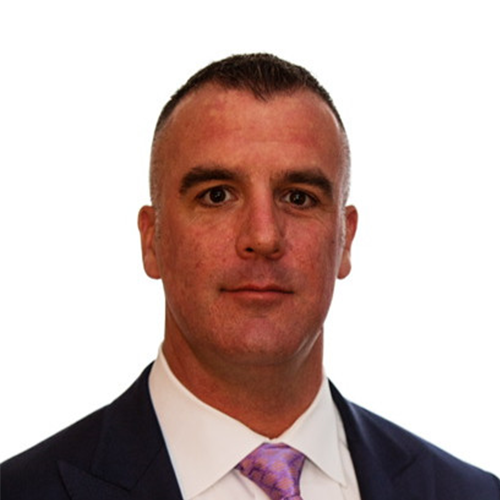
Shaun Jacob is the Founder of Yoga2.0 whose mission is to elevate and completely re-define the current group fitness yoga experience. Shaun brings almost 20 years experience to the table and is a proven Business Builder & Revenue Generation Expert with a consistent record of success building multiple organizations from startup to multimillion-dollar established enterprises through national expansion. A transformational leader with the ability to streamline processes, establish controls, and drive revenue through the creation and execution of strategic initiatives that result in key-to-the-mission events. Shaun is a strategic thinker and regularly called upon to provide thought leadership to formulate unique business solutions for game-changing market penetration strategies. He has trained, mentored and managed hundreds of sales reps and is adept at building national teams by exercising the tenacity and forethought to attract, recruit, manage, and retain productive employees. Tenacious at developing new revenue opportunities, securing customer loyalty, and forging long term relationships with external and internal business partners that fortify, drive, and sustain shareholder value.
Welcome to the Athletics of Business, a podcast about how the traits and behaviors of elite athletes and remarkable business leaders frequently intersect. The real stories and hard lessons to help you level up your leadership and performance. Now your host, Ed Molitor.
Welcome to another episode of the Athletics of Business podcast. I am your host and CEO of the Molitor Group, Daniel Ed Molitor. I am really fired up to bring you today's guest, a longtime friend of mine, another brother Rice, high school product from the south side of Chicago, an incredible businessman whose career I have seen evolve over the years. And if you ever think that you can't move from transactional to transformational in leadership and to all of a sudden find yourself doing things you never imagined possible, just sit tight and listen to this episode in its entirety because you will not be disappointed. Today's guest is Shawn Jacob. Shawn is the founder of Yoga 2.0 whose mission is to elevate and completely redefine the current group Fitness Yoga experience.
SEAN brings almost 20 years experience to the table and is a proven business builder and revenue generation expert with a consistent record of success building multiple organizations from startup to multimillion dollar established enterprises through national expansion. A transformational leader with the ability to streamline process, establish controls and drive revenue through the creation and execution of strategic initiatives that result in key to the mission events. Shawn is a strategic thinker and regularly called upon to provide thought leadership to formulate unique business solutions for game changing market penetration strategies. He has trained, mentored and managed hundreds of sales reps and is adept at building national teams by exercising the tenacity and forethought to attract, recruit, manage and retain productive employees.
Tenacious at developing new revenue opportunities, securing customer loyalty and forging long term relationships with external and internal business partners that fortify, drive and sustain shareholder value. Sean, thank you so much for joining us today on the Athletics of Business podcast. You have no idea how fired up and how humbled I am to have you here. This has kind of been a long time coming. We've been working on this for a bit here. How are we doing today?
Good, Eddie, I really appreciate you taking the time and likewise, energy's right back at you. Super excited to talk to you today and thanks for fitting me in the schedule.
Absolutely. Sean, we've been connected for quite a while and you know I've always been a big fan. I've always been not just a big fan but an admirer of how you go about doing things, how you did things in your personal life, your professional life. But can we really want to dive into Yoga 2.0, but I would love for you to take us a little bit behind the curtain and tell us about your professional career and what that was comprised of after you got done playing basketball at St. Ambrose University.
Yeah, so I got out of Ambrose. I did my undergrad in biology, psychology. I originally thought I wanted to get into physical therapy and decided quickly that wasn't what I wanted to do after graduation, went back and got my master's in business. So I had the business background and the biology background. So I jumped into medical device sales and I did that for about eight years. Worked for a couple different firms, and late 2007 ran across a physician owned small mom and pop company out of South Florida. They did point of care, medication dispensing for workers comp. So all prepackaged meds in the office increased care and compliance for the patient. And then the physician kept the revenue, which was the game changer. The two docs had this company for seven or eight years. They were just barely doing 8 million in revenue.
No website, no collateral material, 35 clients in Florida that were basically friends of theirs. And I was lucky enough to get hired. I was one of the first four reps to get hired there. And super long story short, I became their VP of Sales and took them into 42 states, built a sales and service team of over 100 people and took them from 7 to 125 million in four years. Had an epic run, learned a ton. I was in my early 30s at the time and was involved with all of the C level executive management strategy meetings. We went through a private equity transaction. I got a lot of exposure there and interaction through that process. And one of my teammates at Ambrose, who, you know, Ben Conan, he was one of my regionals and an integral part of the team there.
We kind of looked at each other like, all right, we did this for somebody else. And you know, we had a good run along the way, but weren't the guys that started it, so what can we do for ourselves? And we decided to get into the toxicology space. So we ran in parallels with the tox labs and highly competitive, completely commoditized, much like group fitness and what I'm doing now. And basically all we did was take the top three or four complaints and fix them. And we went out, we raised money. We literally built a brick and mortar lab. Ben and I knew nothing about what laboratory toxicology testing was. We were the development guys. We partnered up with a couple other Individuals that had operations and labops down.
We opened the doors and in less than three and a half years were in 22 states doing over 25 million in revenue with a very healthy EBITDA clip. So had a great run there. And this one was ours. And we got approached. Our original plan to our investors was five years and then were going to sell it. So three and a half years in through one of our supplier contacts at Siemens, they had a relationship with a firm out of California that they heard was looking to acquire a boutique tox lab. We engaged them. All we had was audited financials, we didn't have a book, we didn't have an investment banker, nothing. And they did initial diligence on us and gave us an offer to purchase the company less than four years after we opened the doors for pretty much walk away money.
And super long story short, we got an LOI and they wanted 90 days of deep dive diligence. 40 days into the process, they walked away. They wouldn't tell us why they were walking. And it came through an internal investigation that one of my partners was manipulating the diligence information that went back to them because he thought were undervalued. So the deal went dead. And I was about 39 at the time when that whole process started. So approaching 40, had this number in my head that I wanted to get to by the time I was 40 and this transaction would have got me there, that went away. I was turning 40. I just got out of a very unhealthy personal relationship for five years. And Eddie, you know me, I'm. I'm type A and I'm as wound as tight as you can get.
Sort of one of my good friends is like, go to, you know, you need to go to yoga. And I kind of laughed. And I had done classes at east bank and some other gyms before. Never really got anything out of the yoga experience. I went to a class in the West Loop at 6 o' clock in the morning and had a absolutely phenomenal instructor who's actually part of my staff now at Yoga 2.0. And I immediately got hooked and I literally started going every day. And it wasn't only the physical challenge, but the mental release. For an hour I just went in a room and all I could focus on was not passing out and not falling over. It's 98 degrees, it's humid, high intensity classes.
And quickly got addicted and then got into the whole mental aspect of it and meditation and some of those things to Help me de stress and unwind. So as I started to get into that about six months after going, you quickly realized that I don't care what group fitness experience you go to, Orangetheory, SoulCycle, any of these spin studios, yoga, 90 plus percent of your experience once you enter the room is predicated by the person that's leading that class. And I think in yoga specifically, their market really under appreciates the value of the teacher. And I was spending 20 minutes a day going through five to seven different yoga studio schedules trying to find one of these elite instructors because I know what a good class can do for you.
And if I don't, by the time I'm in the city, if I travel there, I got to park, I got to go to class for an hour, shower, come home, I'm wasting an hour to an hour and 45 minutes of my life. So the initial Precipice of Yoga 2.0 was I wanted to create an experience that fixed all of my frustrations with what I was doing every day. First tenet in that was quality and consistency of instructors. So all of these yoga studios generate a lot of money off these teacher trainings. So they charge anywhere from 2 to 5 grand for 12 weeks of, I think it's like 12 to 15 hours a week that these individuals go through training and then they don't guarantee them a job.
So I would go into some of these other yoga studios and I walk into a class and there's an individual that Maybe has taught three or four classes in their life where everybody at Yoga 2.0 not only has hundreds upon hundreds of hours of training, but they have thousands of hours of teaching experience in front of the room. So I call them the goat squad. So our members or people that visit our facility will know every time they walk, they don't even have to look at the schedule, just walk in and you know that you've got a quality, high class, all star group fitness instructor leading the experience.
And it's interesting because as I look at the whole process and the whole development in how your career evolved, I mean there was a lot of transactional stuff in the beginning of your career, right? Going from 7 to 125 million. And then with the toxology company and what you dealt with there, and all of a sudden the solution to where you're at when you're 40 was yoga. And all of a sudden here you are developing this and we're going to really dive into how unbelievably powerful what you're building is. It seems it's more transformational than it is transactional. Is that safe to say?
100%. 100%.
So I'm sorry, I sort of interrupted you there, but how much did those lessons that you learned early on with the other companies, did that help you in this development of Yoga 2.0?
Yeah, I think for sure this has been a very interesting process, as you and I alluded to before. I mean, I've. I've built two companies before, I've had incredible teams around me, but I've always been focused more on operations and business development rather than this thing literally started from ground zero, from a commercial build out to dealing with H VAC and electric and two phase versus three phase. And I mean, it's. It's a language that I didn't know coming in and it's been drinking from a fire hose. But I think learning how to get into the pharmacy game, how to get into the toxicology game and quickly adapt to those markets was transferable over into this space as well.
Well, and you speak to. I mean, you come from the south side of Chicago, went to Brother Rice High School, and if, when you graduate from Brother Rice and you go to college to play basketball, when you graduate from Brother Rice, if they said, sean, here's what you're going to be doing in 2019, my man, you're going to be opening up the premier yoga studio in Chicago and you're going to call it Yoga 2.0, and here's how you're going to do it. Would you have thought that they completely.
Fell off their rocker 100%?
Because you speak to how you grow and how you evolve and what successful people do. Right. You just keep learning and you keep growing. Can you talk into all that adversity you went through, how you actually grew through it, you didn't just focus on getting through because you were. Once you had a good experience with yoga, you got real intentional about what you did with it.
Yeah, for sure. And then that was the biggest thing I wanted to create an experience that solved all of my frustrations because everything that frustrates me was frustrating. A lot of the other individual students that I was becoming friends with over the years, going to yoga every day.
So, so how did that. So bring us right back to what you are now, all the different things you're learning and how you. How challenging is this for you mentally and emotionally being an A type person?
Eddie, this is the hardest thing I've ever done in my life by an unquantifiable multiple and hey, if you've ever.
Gone through a Coach Richardson basketball practice at brother Rice, that is saying a lot.
That's a close second. And give him a quick shout out. We know we both coach pretty well, but next to my father, I tell him this all the time. He's the most impactful individual that I've ever had in my life by far.
And I'm blessed to know a lot of Brother Rice guys. And ironically, let's put this into context. So Pat's older brother Tom, who had a great coaching career, played for my dad back in the mid-70s, I believe it was 1973 was his senior year on Ameris team, which if you're not from Chicago, Maris and brother Rice are about how far apart?
It's about 1.2 miles and it's one of the greatest high school rivalries in the country.
Oh, it's unbelievable. So. So, you know, and I hear this a lot with guys that I know that play for Coach Richardson and brother Rice. Let's talk about that. Let's jump on that whole athletics of business brand right now. Real quick. What, what did you learn playing for a Pat that still, you know, play a role in the way you do things today?
I've never encountered an individual in my life that has a better attention to detail than Coach Richardson. It's. I remember the four, five, six hour film sessions and breaking down. You know how you come off a screen down to the inches away and the shoulder. You know how far your shoulders are when you're coming off of a cut. His attention to detail on the way he approached the game, from scout reports to preparing us, it was. It's like nothing I've ever seen. So my biggest takeaway from him was attention to detail. And then second was his work ethic. That guy was relentless. I. There would be many nights that I'd be out with friends and driving home at, you know, 12:30, 1:00 clock in the morning and his car was still in the parking lot at the office breaking down film.
Did you understand that back then? Like what you were being exposed to and what you had access to in terms of a coach with that passion and commitment to you guys and what impact that was going to make on your life.
I definitely appreciated and respected him when I played for him, but had no idea what I was going through. Until you start to get older and mature and go through life and you look back on it now and, you know, it was just epic being able to play for a guy like that for four years.
Well, and let's circle back to what you're telling me before I sort of interrupted you. The attention to detail and all the things you have learned as you open yoga 2.0. What are some of the things that you're like, okay, so, you know, I need to nail this, I need to know this, I need to understand this that you never in a million years imagined you'd be worried about.
I mean, it's crazy, Eddie. Everything like, you know, the H Vac system, from air handlers to air return units to CPFs and CFU that pulling in and out of a room from electric two phase versus three phase and 208 versus 240 and you know, laying floor. I mean, the things that I've had to go through here are, you know, and again, I'm speaking an entirely new language with people that have been doing this for decades. So I'm a rookie talking to a bunch of veterans that have been in the game for a long time. And it's been quite the learning experience for sure.
So I remember in the old days when I was in the mortgage business when I first got out of coaching, and it was the old fake it till you make it, but at some point in the game when you're at the level you're at, you have to actually dive in and learn that stuff and be able to figure out the language. Can you share with our listener how you went without losing your mind?
Well, I think this actually brings up a good point. I've told you about my buddy and a good mentor of mine, Thad Johnson. So Thad's in his early 70s, distinguished career in managing major medical practices, CEO level. And something he told me a long time ago was never be afraid to find All Stars and then get out of their way. Give them the ball and let them score points. And the team that I was able to put together here from my management staff has been, I tell them this every day. If I didn't have them, this would be an epic and colossal failure.
Right, so let's go back to, let's put both those together, find All Stars and then get out of the way and let them score. But you have put together this group that has an amazing culture. Okay, so how do you do that? How do you tie that? How do you go get these rock stars, these superstars and develop this compelling vision where they're going to not just survive, vibe together, but to feed off each other and have this culture that's just going to create this positive energy when people come to Yoga 2.0.
Well, so when we start from a management staff, I've given them all an opportunity to earn equity based off of performance indicators over a relatively short period of time. So I want them all to be owners in the business because I've built companies for people before and made them a lot of money and, you know, kind of felt like I was left out. And I never want anybody that contributes to our success to feel that way. So they're bought in from the top down. Every one of them has an opportunity to earn in and be an equity owner. Second is the appreciation for the instructor staff. So you're going to. Absolutely, your jaw is going to drop when I tell you this. But the industry average for teaching a yoga class is 30 to 50 bucks.
And most of these facilities require the instructor there a half hour before and a half hour late. So they're getting paid 15 to $25 an hour to teach yoga. So I pay them. It is, it's crazy. So I pay them 50 bucks to show up. My numbers turn revenue neutral at about 16 people a class. And that's when I start to bonus them. And then it's like an incentive comp plan for sales. The more people that show up for a class, the more you get paid. If you sell out our main studio room with 50 people, they can make over $200 a class. So if I've got a teacher, a full time yoga teacher teaching 12 to 14 classes a week, averaging 40 to 50% occupancy, they can make 80 to 100 grand a year teaching yoga 30 hours a week.
Knowing you, Sean, and knowing where you've come from and the way you do things, you're amazing at relationships, right? And this isn't just a, this just isn't a monetary appreciation though of your yoga instructors. Talk a little bit about the bond and the closeness and the unity that you guys have that you're all in this together. Because that's not easy to do in that space.
No, it's not. And you know, one of the things that's been interesting is these. They're literally like little mini local celebrities. There's not one of my instructors that doesn't have 2, 3, 4, 5,000 followers on Instagram. You know, they're known walking down the street. So I wouldn't say that there's, I mean they're all amazing individuals. But you know, you're dealing with a high profile celebrity type clientele and no one's ever really appreciated them before. So that's One piece. We were also very selective in establishing our first group of instructors because we really wanted everybody to be a family. And everybody brings the same mindset and closeness and they all understand what the goals are and what we're trying to do. One of my other frustrations. And we'll get into all the Tenets of Yoga 2.0 and what makes it different.
But while we're on this topic, you know, yoga at its foundational core is all about community. Yet all of these group fitness yoga places just pull and push people in and out of class and they don't really do anything to highlight that community aspect. So we've got a number of different things that we're going to do to bring to the market to create this community hangout. It's more than a workout. You're really joining and becoming part of a family.
Well, and that's. And you learn this in athletics. And we the real successful organizations, the real successful cultures aren't the ones that are like family, they're the ones that are a family. Right. Makes it a safer environment. By safe, I don't mean soft. I mean you're able to get outside your comfort zone and grow. And you're saying all these things. You talk about the tenets of 2.0 and then you talk about the tenets of a powerful culture. You talk about family. Okay. You talk about the vision, you talk about your values, you talk about making it a real community. Let's talk a little bit about something that I love is your place. So in other words, your facility, the environment, the energy. Talk a little bit about what you've created there.
So one of the things we wanted to do is the analogy I give people that haven't been to a group.
Fitness yoga place before is we're trying to do what SoulCycle did for spin. Spin was around for decades and then all of a sudden SoulCycle came in and changed the game and created an.
Elevated high end experience.
Then you had Barry's bootcamp that came into the treadmill floor. So you've got Orangetheory and Shred 451 and all these different group fitness organizations out there. And Barry's came in and took it to another level.
And my analogy is that or the equivalent of, you know, there's a market.
For LA Fitness and Crunch gyms at 19 or 20 bucks a month. They're very successful organizations. But there's also a market for an Equinox or an east bank club and a very high end facility. And there's really nothing like that in the yoga market right now. So our facility, from the floors to the lighting to the spa like locker rooms, I mean we did not spare an expense or miss detail on making.
Sure that we brought that high end.
Facility to back up the really high end experience. And one of the things I tell my instructors is we want our people to leave as mentally motivated as they are physically challenged.
I love that. Say that again. I absolutely love that.
I want, you know, one of the.
Goals that all of us have at yoga 2.0 is every time a student comes into class, we want them to leave as mentally motivated as they are physically challenged.
And we've got three different class formats.
So one is strength, which is a.
Little bit of yoga and a lot of high intensity interval jumping around, burpees,
Push ups, sit ups, there's weights. In the class we have what we call flow, which is more of a Vinyasa type traditional yoga.
And then we've got Revive, which is.
More of a restorative yoga type class. So when I say physically challenged, it doesn't mean that you necessarily burn a.
Thousand calories during that hour. If you go to a revive class,
You might hold eight different positions for five to seven minutes apiece to get you through that hour, but you're going to leave just totally physically taxed through that stretch process. But we also want them to leave being mentally motivated as well. So one of the things we've done to try to encapsulate this community and.
Family is I brought in a dear.
Friend of mine who's actually coming in town this week. Dr. August Lemme, who I think you've spoken with before. He's a clinical psychologist, Ph.D. out of the east coast, played college football, recovering.
Addict and absolutely amazing guy. I don't even know how to begin to explain the level of admiration I have for this guy. But he specializes in compassion based high performance coaching and executive and leadership training. So We've worked with Dr. Lemming and he is going to facilitate two short videos a month and it's going to be called the Warriors Way Series and it's dedicated to our unlimited members only. So month one is on mindfulness and presence and it'll educate our students on some of the key aspects to mindfulness, grit, resilience, various topics like that. He'll also put in a 10 minute guided meditation once a month that the members will have access to reinforce those principles that he's trying to teach. And then my instructors will theme their classes. So at the beginning and end of every Yoga class. The instructors are.
You're laying on your back or doing breath work. We're getting ready to go through the experience and the workout. But there's really never been. In the four years that I was addicted to yoga, before Yoga 2.0 opened, I'd go to a class in the morning and they'd be talking about motivation. I'd go to a class in the afternoon and they'd be talking about compassion. There was no consistency. We know, for that month here at Yoga 2.0, the first month, every class you come in, everyone is themed the same way. Then students will be talking about how that impacts their life. Our instructors will all be giving the same message to our students. Our students can access the learning modules from Dr. Lemming. So I think that's going to be a significant value add to our membership and something that the market's currently not offering.
That's unbelievable. I mean, you think about that because now all of a sudden, you're sitting in your office right in the middle of the day, and you just refer back to something that you learned from Dr. Lemming at the. I mean, that's just. It's beyond the value add, isn't it?
I think it's an incredible value add.
Yeah, yeah. How. How much of a role you talk about? Mindset, grit, resilience. With Dr. Leming, though, how much of a role have those three things played in your professional career up until this point?
I mean, it's everything, man. You know, it's. It's funny. Nobody likes to talk about the negative, and I'm not going to either. But there's been some dark days through this process, man, where I'm sitting at home with my head, my hands going, what did you get yourself into? And what are you doing?
And let's talk about that real quick, though, because that's the thing, like, you know, being an entrepreneur and doing things and really getting outside your comfort zone. People think it's really cool until they do it.
Yeah.
And then when you do it, and we've had these conversations, and we've. We've had these conversations, when you're up, I'm down, or I'm up, you're down, or we're both down or both up or whatever it is. And it's. There's got to be a consistency, right, in your grit and in your mental toughness, and the resilience is going to be a byproduct of that. But let's talk about some of the things that you've done to. Not again. To not get through that adversity, to not get through those challenging times, but to actually grow through them.
So I think that's one of the biggest lessons I learned from Dr. Lemming is which I still have a long way to go on is self compassion, is don't be afraid to have a bad day and don't be afraid to admit that like you know, man, what did I think I was getting into and embrace it and feel it rather than ignore it and let it compound over time. And you're going to have bad days,
You know, you're going to have good.
Ones, you're going to have bad ones and it's a roller coaster. But embrace the good, but also don't be afraid to embrace the bad.
And how much does that play into, I mean with the self? Because that was hard for me. I mean that was brutally hard for me. Right. And that I think that goes back to a lot about how were raised not in a negative light, but in other words expectations of certain things and the self compassion but yet having the ability to still tell myself what I needed to hear, not what I wanted to hear. So self compassion, not being pity but being, what would you say, almost empathetic with yourself or how would you describe it?
Yeah, I definitely don't think it's pity, I just think it's acknowledgement. Right. And not don't beat yourself up. Hey, you know, it's, I had one of these last night. There's so many little fine tuned things that need to be done here and it just, it became overwhelming and rather than ignore it, I was just like, you know what I told my staff, I'm like I'm having a bad day and they help you get through it, you know, then they're trying to pick you up. And that's the biggest thing I can tell anybody that's trying to start their own business is don't be afraid to acknowledge that you're having a challenge and don't be afraid to go ask for help and you know, just be kind to yourself through the process and don't beat yourself up.
You know, we're used to expectations and trying to perform at a very high level on a relatively consistent basis. And when you don't do that, it's very easy as you mentioned, especially with the way that were brought up through athletics and the environments that we came through, to get very negative on yourself very quickly and you know, that's key not to be Able not to do that to yourself.
Well, in a self compassion, let's talk about how that goes hand in hand with accountability. Because everybody thinks when you talk about holding themselves accountable, it's like this negative thing, right? And it's not, I mean, it's how you figure things out, isn't it? It's how you get better, it's how you improve. So how do you, how are you able to tie that self compassion into still being able to say, okay, Sean, dammit, this is what we need to get. This is what we have to do. This is how we have to do it. This is the process and you strayed from it. Can you talk about that a little bit?
Yeah. So that's the big thing. When you do acknowledge that it is a bad day, you can't stay there. Right. So don't be afraid to sit there and be with it, but then figure out how you're going to get yourself back out of it and get back on that high again.
Okay. See, so like we talk about, everything's a work in progress and. Yeah, and Sean is continually upgrading. Hey, we're always under construction, aren't we? So tell me about how you do that though. How do you hold yourself? What are the things you do where you have the acknowledgment and you get yourself out of it. Do you have something that you do that's kind of like your go to, I don't want to say exercise, but almost a routine.
So it's one of two things. And that's actually all kind of come from my yoga experience because that's a combination of physical and mental. So if I'm in that spot, whether it's sitting down, meditating, or just sitting down and breathing and trying to shut my brain off, or just going in and getting a killer workout, it's something to physically and mentally challenge myself, to get the adrenaline going again.
That's it. I'll be sitting here some days. Don't you feel like if you just sit still too long, you're not going to get out of the funk that you're in? Regardless whether the funk is created by you or by someone else or just by, you know, weather, whatever. But when you get up and you move and you figure out a way to go have some small victory, does that help?
100%.
You know, it's funny. Dave Deal, good friend of mine, brother.
Ice guy, played for the Giants for a number of years.
He sent me, I'm sure you know, this Guy and I'm forgetting his.
Name, but he was an admiral in the Navy and he wrote the book about.
First thing you should do every morning is make your bed. Easiest win of the day and it's just something little like that, right? So you're having a bad day, shut it down, go to bed, get up, make your bed, put your feet on the ground and get going again.
I love it. I love it. So let's, let's do a deep dive right now into Yoga 2.0. Tell us about it. Tell us where folks can find information out about it and what they can expect.
Sure.
So Yoga 2.0's website is www.yoga y o g a the number two, the word point p o I n t 0 the number zero dot com. So Yoga to the word point, the number zero dot com. And full schedule opens up tomorrow. We're open seven days a week. We run seven to nine classes a day. Goat squad's here, ready to roll. We've got a beautiful lobby, high end locker rooms. Come early, bang out some emails, sit down after class, calm down before you go back to work. We want this to be as much of a community hangout as we want it to be in athletic and workout experience.
That's cool. Where are you guys at on social? Are you on Facebook? Are you on Twitter? You on Instagram?
Where are you guys at?
Facebook is yoga 2.0 Instagram. Our handle is @yoga2.0 studio. Those are our two social channels.
And you know, we'll do this will all be in the show notes obviously. But if you want and I think we should do this, get us all of your instructors handles as well.
Yeah, for sure.
We'll get those in the show notes. That'd be a really cool thing to do. Awesome. That'd be great. So really cool access so that you, it's pretty when you take a step back and you look at what you have built and not just you, but everybody. Right. Where do you see, where do you see yoga 2.01 year from now, three years from now, five years from now?
I mean, you know me, Eddie, I don't like to do things small. So we didn't come into this with the idea of just opening a yoga studio in river north in downtown Chicago and hanging out. You know, we've got to prove that the model works, which is store number one. Then we've got to prove that we can make an impact in a market which will be three to five facilities in Chicago and then it's scale nationally. So how quickly that will happen will be predicated on, you know, how the market responds to the first product that we're bringing forward. And we're going to have a lot of tweaks and some things that we're going to have to work out. But our ultimate goal is to roll this across the country over the next five to 10 years.
I love it. That's awesome. So if you're. Sean, I'm going to close with this. If you're standing in front of a classroom of college seniors getting ready to graduate and they think they have all the answers, I'm not saying that they all think they have all the answers, but they think they know what they want to do and they want to be entrepreneurs and they want to get out there in the business world and they want to do big things. What is your advice to them going to be?
One, Find a mentor. Sorry, go ahead.
No, let's talk about that a little bit. Find a mentor. And obviously you had mentioned Thad, but who have been the best mentors in your professional career, in your business world, business life?
So Thad Johnson for sure would be number one. My father, number two, former teammate at St. Ambrose, not really a mentor, but more of a, a confidant would ben Conan. You know, we were ride or die partners for 10 years through our whole medical careers. And those are probably the three people that I've leaned on the most throughout my professional career.
Okay, so number one is find a mentor. What's number two?
Don't be afraid to surround yourself with people that know a lot more than you do in areas that you're deficient in. And I think that's, you know, my director of operations at Yoga 2.0 has been managing studios for 10 years and she does things that I can't and don't know how to do. And it allows me to focus on the business and the things that I'm really good at. And through the process, learn from her and everything that she's good at. And it's a nice little vibe, Dolly, back and forth. So I think that's a huge aspect, is never being afraid to surround yourself with people that are a lot smarter than you.
And that's a big statement come from you, Sean, because you've learned new things in each stop along the way in your business career, have you not? For sure. Talk about that. So how much humility, you know, how hard was that for you early on in your career? Because, I mean, hey, I'll be the first one to admit when I was coaching college basketball in my 20s, I was a little bit selfish and self centered. Right. You know, you want to think that, you know, for whatever reason we, we at our younger ages, we align being a leader with having the answers as opposed to figuring out a solution to get the answers. How hard of it, how big of a challenge was that for you early in your career?
Definitely a significant challenge, as you said in your 20s and then into your 30s. And I think as you mature and you get a little bit older, it's a lot easier to leave the ego at the door.
So what, how do you do that though, at a younger age? Like I would have loved to have been able to do that when I was 28, 29, 30 years old. If someone sits, if you're a mentor to someone, right, what do you say to your mentee? Like, hey man, I mean, besides knock the crap off, what do you say?
Yeah, but you know, it's funny you bring that up, Eddie, because think about how many times when you were playing in high school or college and someone said, like, cherish these moments, man. When it's over, you're never. And no matter how many times you can tell somebody that they're never going to understand it until they get later in life. And I think it's just a matter of time. I don't think that there's a message that you can give a 22 or 23 year old that's really going to overtake just experience in life and going through things. Because as much as you want to tell them that they're just not going to buy into it.
Well, even if they believe you. That's right. Even if they believe you. Until you really make a mess of something and have to figure out a way to put it all back together, you know, until you really fail and you actually experience those emotions and you can have self compassion or you can have accountability or you can have greater mental toughness and build resilience. You don't really, you don't really get it.
Agreed. 100%.
All right, so you've got those two. Would there be something, would it be a number three that you tell those students?
I would break back down to, you know, be kind to yourself. You're going to have really bad days and be prepared for them and figure out a way on how you're going to respond and bounce back from them.
How hard of a lesson was that for you to learn?
Probably one of the Toughest things I've ever had to learn in my life.
Did you. Did you. When you were kind to yourself? This is something, I mean, I felt like I was being soft. Right.
And Eddie, I still struggle with this every day. I'm 43 years old, I'm soon to be 44. And I, you know, it's funny, I forget who I was talking to about this recently, but. Would you ever treat someone the way you treat yourself? No.
Or say the things to them that you. You stay in your head?
Never.
Yeah, you never would. And it's. It's a matter of stopping and it's hard to do that. And you acknowledge it and I know it every day. But yet you still, you know, it's that habit. We, that's the way we. It's the way we've been brought up. So it's a tough habit to break. It's just a matter of being cognizant and aware of it and just trying to correct it as much as you can.
I love it. Well, Sean, hey, I cannot thank you enough. This has been awesome. Yoga 2.0. We will have everything that Sean told us about social where you can find that'll be in the show notes. You can listen to this episode and other episodes of the Athletics of business podcast on itunes, Stitcher, Google play. You can always go to both The Athletics of Business.com our podcast website as well as the Molitor group website which is the moliour group.com youm can find me on Twitter at the Molitor Group Facebook, the Molitor group Ed Molitor, my personal Facebook page and LinkedIn. I love LinkedIn and you can just go to Ed Malta right there please itunes after you listen to this podcast. This was an awesome visit with Shawn Jacob.
Please go ahead and rate us and you know, the better ratings, the more we get, the more people we can reach and share this with. So Sean, again, I cannot thank you enough and I look forward to following up a year from now. I want to do a one year anniversary yoga 2.0 and talk about the massive success. Hal, you might have three more open by then.
I love it. Eddie, I appreciate your time. I have mad respect for you and everything that you're doing at the Molitor Group. You're not only a good friend, but you're an incredible confidant as well and I really value your friendship. So thank you very much. Doors open tomorrow and who's ever listening, come on by.
All right, thanks brother. Appreciate it.
Thanks, Eddie.
Thank you for listening to the athletics of business. Be sure to give us a rating and review so we know how we're doing. For more information about the show, visit theathleticsofbusiness.
Com.
Now get out there. Think, act and execute at the highest level to unleash your greatness.