

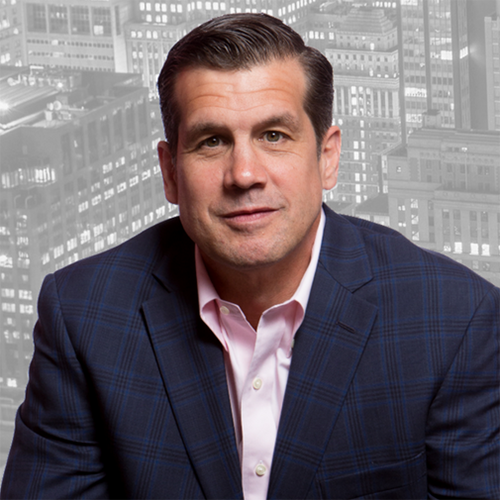
The One Powerful Question That Will Help You Be More, with Ed Molitor

Ed Molitor

Episode 70:

In the last 26 years, Ed Molitor has developed his leadership skills in both athletics and business. From working as an NCAA Basketball coach at Texas A&M to becoming the Vice President of a national recruiting firm, Ed has taught countless athletes, coaches, and business leaders how to THINK, ACT, and EXECUTE at an elite level. Ed has a unique set of skills to deliver leaders across the country a purposeful, positive, energetic, and refreshing experience to unlock their true potential.

In 2016, Ed launched his company, The Molitor Group, in order to reach and add value to a larger sphere of ambitious individuals and help them achieve their goals every day. Through The Molitor Group, Ed has guided all types of leaders to achieve success. From entrepreneurs and executives to teams and companies, The Molitor Group specializes in empowering individuals and groups to achieve at the next level. Through Leadership Performance training, coaching, and speaking, Ed’s goal is to supply people and organizations with the necessary tools to move forward from where they are now to where they want to be.

What you’ll learn about in this episode:

  • A powerful question which you can ask yourself each day to help you become all that you are capable of becoming
  • A break down of that question that will provide you with deep insight on how you can draw meaning and power from each part
  • What the difference is between my best vs. the best
  • What it means to ‘Be More’, how that can show up in your life, and what the by-product of a ‘Be More’ focus will be
  • The power of being most valuable even when you are not most valuable
  • What does it mean to be indispensable
  • Why it is so powerful and possible to make yourself indispensable
  • What perspective Ed gained from the tragic helicopter crash involving Kobe Bryant, his daughter and seven others
  • Some of Ed’s 50 powerful lessons he would share with his younger self as he documented for his 50th birthday
  • How perspective changes over time and at the end of the day it is so important to focus on what truly matters

Additional resources:

Podcast transcript

[00:11] The real stories and hard lessons to help you level up your leadership and performance. Now your host, Ed Molitor.

[00:19] Welcome back to another episode of the Athletics of Business podcast. I am your host and CEO of the Molitor group, Ed Molitor.

[00:27] And it is about that time for just you and I to hang out and do a solo cast. There's so much I want to talk about, and I'm going to try and keep it as simple as possible.

[00:37] And what we'll start off today with is the one question, the one focus that I have for myself and for my clients and for the folks that I present to in 2020. And there's a lot of layers to this question, goes way deeper than it appears, just on the surface, but there's been some pretty cool stuff going on here at the group so far here in the first few months. And one of them is I decided it's time to get way outside my comfort zone. And I mean way outside my comfort zone. And I've done a number of Olympic distance triathlons and sprint distance triathlons. And I am now registered and training for a half ironman in Traverse city, 70.3, which I'm extremely excited about. I've been training for it now for a couple of weeks.

[01:16] It's still 25 weeks away, which seems like an eternity, but everybody assures me that it'll be here before I know it. So that's been really exciting. And the one question I'm going to share with you today ties into something I focus on every time I get in the bike, every time I go out and run it, if it's feasible to run in this weather here in Chicago, if I get on the treadmill or when I jump in the pool, it all ties together. And another thing that happened, I'm going to call it cool. Some of you might laugh and say it's not so cool, but I turned 50, which has been pretty awesome. I had an incredible weekend with the family up in northern Michigan at Boyne.

[01:48] I have a family place up there and went skiing and just spent a lot of time just hanging out. Took kind of an extended vacation for a few days. And I sent the letter out to my vip list with some reflection from 50 years. And you see this all the time, right? When people turn 48, when people turn 40 and 50, whatever. So instead of just doing the usual, you know, 50 things I learned in 50 years, I wanted to really peel back and think about what I would tell my younger self and what I would tell my younger self in each decade that I was alive. So zero through 1010 through 20, or, excuse me, eleven through 2021 through 30, 31 through 40, and 41 through 50.

[02:28] And eventually, I'm going to work on seeing the unseen and work on my vision, what I think I want to tell myself at the age of 60 about my fifties. But anyhow, I'm going to share some of those things with you as they tie into our focus here on this podcast episode. And I'll tell you what, the podcast so far here in 2020 has been unbelievable, and there's been some reoccurring themes, which I would love to take credit for that, but I'm not that smart. All right? I'm not smart enough to say that I had that orchestrated. But things that keep coming up are being invaluable without being most valuable and the ability to make yourself indispensable. And it came up in our last episode with Mark French, Junior.

[03:05] It came up in the episode prior to that or a couple episodes prior to that with Randy Ecker. As a matter of fact, it's a quote heard from his old boss when he was coaching college basketball, whose father had passed it along to him. So making yourself indispensable and being invaluable without being most valuable, it shows up so much. And we're going to talk about that today. And I will share some of the things that I put on my list of 50 things I would tell my younger self. Here's a question. The question that I ask myself every day, and the question that I ask myself every night that I ask my clients is, am I doing the best I can with what I have to become the best I am capable of becoming? Okay?

[03:46] So I ask you, are you doing the best you can with what you have to become, the best you are capable of becoming? And I like to break that question down into three different parts. Am I doing the best I can? Thats where you really have to focus on doing my best versus being the best, right? So I think so much, we get caught up in looking at the mountaintop, say, thats where I want to be. I want to be the best. I want to be the best. Hey, man, theres nothing wrong with wanting to be the best, but okay. Kevin Eastman and I talked about this a lot, and this is where this comes from a lot. On his podcast episode, my best is truly the best that we can do, right?

[04:21] Thats where we tap into our potential, thats where we become the best version of ourself. Thats where we access our physical and emotional abilities. Excuse me. Okay, and our strengths, but am I doing the best that I can? Next is with what I have. And you think about with what I have. Okay? Think about the resources, think about the time. Think about the energy. Think about your circumstances. Again, this is going to talk into eventually, you know, circumstances. We don't let those define us, but we do choose how we respond to them. Okay? Am I doing the best I can with what I have? With what I have being my strengths? And yes, I have flaws. We all have flaws. But am I doing the best I can with what I have? Am I doing the best I can with those?

[04:57] And then to become the best I am capable of becoming? We truly will never know our potential. It's impossible. Okay? But we can work towards it every single day, you know, and sometimes we can be our own worst enemy with our self limiting beliefs and behaviors. Are we intentionally pushing ourselves outside of our comfort zone daily? And all we do, you know, am I doing that? And that's one of the big reasons I signed up for the Traverse city 70.3 because I knew this is something I've never done. So each day I am doing something different than I've ever done before in all the years of working out. To me, that's exciting.

[05:31] Now, one of the things I love about this question, as a leader, you can take this question and you can say to yourself, okay, am I as a leader, doing the best I can with what we have to become the best that we are capable of becoming? And I think that's really significant. When you sit down and you take the time to write things out and to really answer this question, what are the things that you are doing? Well, can you do them a little bit better? Right. And what are the things that you could be doing that are within your control that you may not be doing for whatever reason? Identify why you're not doing them. And number two, identify what it's going to take for you to start doing them. And then number three, consistency. Develop the habits, the mindset.

[06:09] Make it become a way of life. After 66 days of developing that habit, to continue doing the things that are going to help it become the best you are capable of becoming. So that's the question for 2020 that I pose, and really that'll be the question for 2122-2324 because I think that really sums it all up because that's what we're all after, isn't it? As leaders, don't you want to find a way to pull the best out of your people, to tap into their human potential? Okay. It's a human element of leading coaching. We spent a lot of time in 2019 in the last few solo casts talking about developing a coaching mindset, moving away from just a manager's mindset into a coaching mindset, because we know that today's workforce wants three things. What are those three things? Okay.

[06:49] They want to know that they're valued. They want to know that the work they do is important and has meaning. And they want to be coached. They want a leader who's going to take the journey alongside them, not just tell them what to do. And I think that's so huge and so significant. And this leads right into something that I know if you're listening to this podcast, it impacted you because it impacted everybody on a global level. And that was the death of Kobe Bryant and his daughter Gianna and obviously all the others that were involved in that helicopter crash. But, you know, with Kobe being Kobe, there's so many storylines and there's so many lessons. And as a father of a seven year old girl, there's something, if you're a dad out there and you have a daughter, you get what I'm saying.

[07:25] There's something really unique and cool and dynamic about having that father daughter relationship. And obviously, we're not traded for the world. And the story impacted me. I'll never forget exactly where I was. It was a Sunday. I was getting my hair cut because I was traveling that week to go speak, and my schedule is very compressed. And I got in the car and Jim Nasos, whos a very good friend of mine who is our head basketball coach here at Batavia High School, texted me. He goes, Kobe dies in helicopter crash. Question mark, question mark. Im like, did he fall and hit his head? Whats going on? And then he sent me the link to the TMZ. Im like, whats TMZ? There could be no validity to that whatsoever. And Im still sitting in the parking lot and I hit TMz.

[08:05] Then I google kobe and then I google and I start going through it and going through, an hour later, I'm still in the parking lot sitting in front of the spot to get my hair cut. I wasn't with my kids, obviously. And all I wanted to do is hug my two kids, Maddie and EJ. Cause I'll never forget all the thoughts as a parent and then all the thoughts as my memories of Kobe. You know, I wasn't a huge Kobe fan when my guy Michael was still playing because of all the years of the comparison, right. But I grew to love, like, really respect Kobe and love his work ethic and the stories about his relentless pursuit of excellence and how committed he was to it. And I truly believe, and I'm not in the minority here saying this, I know that.

[08:39] I truly believe Kobe's best years were ahead of him as a father, as an entrepreneur, as a coach, as a leader of youth. I mean, everything that he had going on, and I truly believe his best years were ahead of him. So it was a weird week, and I had to present to an organization. I was, I had been looking forward to it for two months, and I kept tossing around my head, like, how does this affect my presentation? Because you don't want to go in, and you're going in there to fire them up. And, and Plains company, just an amazing organization. We were talking about creating a culture we're fighting for and growing through change and leading change and rowing the boat together, their theme, which is awesome.

[09:14] And I just knew, though, in my heart, that I had to bring something up about Kobe, and I had to bring it up in a way that was still positive and upbeat. And so the night before I presented, I'd gone out to dinner with John Sabbatello and John Plains, two amazing men, and had a great time. And I went back to my hotel and actually went for a run. I ate so much steak, I had to get it out of me, and I went for a run in the treadmill, and then I was a little bit wired, so I couldn't go right to sleep. So one of the things I do not do when I'm in a hotel room, I'm on the road and it's quiet. You know, it's just, I can just detach from reality for a few minutes.

[09:43] I don't watch tv before I go to bed. Matter of fact, I don't even do it here unless there's a great game on. But for whatever reason, I picked up the remote and I started channel surfing. I stumbled across TNT completely unaware of what time it was, forgetting the fact that was the night the Lakers were supposed to play the Clippers, and they canceled the game. And they're sitting at a half court, and I hope I get this right, it was Derek Fisher, Rick Fox, Shaq Ernie Johnson, one of my favorites, Kenny Anderson, Charles and D Wade. And they're sitting in director's chairs, and they're sitting across half court and they're just telling Kobe stories. And there was laughter, there was tears. And D. Wade shared a story that I'll share on another solo cast that is directly related to Kobe's who work ethic.

[10:24] That's an amazing story. That's one of the stories I shared with planes that day. But then Derek Fisher said something because they talked about Kobe in his early years, where he maybe was a little bit. I don't want to use the word selfish, but he had his agenda, right? It was, he needed to be about Kobe. He was the warrior. He needed to be his franchise, his team, and he was ruthless on his guys, a little bit like MJ was back in the day in practice and in games, and, I mean, he was just hammer him. I think it was. Ernie asked Derek, when did you first see the change in Kobe? And he said, honestly, he said, I noticed the first change in Kobe when his first daughter was born, which it kind of gave me a pause.

[10:59] And at this point, I wasn't turning the tv off anytime soon. He realized that he had to be more for his family. He had to be more for his wife. He had to be more for his daughter. And in realizing that, in recognizing that, in becoming aware of that, he somehow realized that his teammates needed him to be the same thing, be more, not do more. They didn't need him to score more points. They didn't need him to get more steals. They didn't need him to hit more game winners. Well, maybe not. Maybe they needed him to hit more game winners. But you get the point, okay. They needed him to be more. And what do I mean about that? Okay. They need him to be. To be more present, to be more empathetic, to be more selfless.

[11:40] They need him to be more positive. And that triggered a thought in my head, and it stayed with me because still, the rest of the week, the following two weeks, were so weird. I'm just so. It was like this. It wasn't even a cloud. It was just like this feeling you had. Just like, you really reflected a lot on what happened and who was involved, who's affected are the stories of everybody and where am I at? And what kind of father am I being? And then it led me to believe that ties right into my question, because when we talk about, am I doing the best I can with what I have to become, the best I'm capable of becoming, we kind of naturally, by default, start thinking, I need to do. Do more. Okay. No, how about we focus on being more?

[12:17] Because think about doing more. We're all. How compressed is all of our time? How compressed is your time? You're already working your lips off. Heck, you're probably listening to us either while you're driving, while you're working out, while you're in the shower, or sitting wherever. You may sit, but you just don't have time in your day. So how are you supposed to do more? But what if you focused on being more okay, be more passionate, like I mentioned with Kobe, be more present. Be more empathetic with your people, with your family, with your friends, with the folks that you lead, the folks you work alongside. Being more selfless, be more persistent, resilient, and loving. How about be more positive, be more authentic? Which means you're going to be more honest, you're going to be more integrous, and you're going to be more vulnerable.

[12:58] And the key is be more consistent, because when you do all of that, okay, the byproducts, it's just going to be, you're going to better, right? You're just going to better. And more importantly, you're going to make those around you better. And that goes to the next thing that I want to talk about is being invaluable without being most valuable and making yourself indispensable. We all focus on the great ones, right? What do the greats do? What. What makes the great ones great? And I love studying greatness. I love studying the great ones. But there is so much to be said about the people on the teams and the organizations that not just accept their role, they embrace their role while working towards when nobody's watching. All right, you know, what do you do when you're in the gym by yourself?

[13:39] What's the work you put in the unseen hours when no one's paying attention? They work towards that next step in their career, but they embrace their role and they make everybody around them better and, you know, share a little story with you. And again, it goes back to something that I sent out to the list. One of the things I do in my routine is Tony Dungey has a book out, uncommon. Okay. He also has a daily book where it was like a daily reading, okay? Daily passage. And it shares stories, and it talks about life lessons. It's tied to a scripture. And I read it, and I've been reading for about three years now. The same book? Yes, the same book every day.

[14:13] Reading it for three years and February 20 seconds, one of my favorite ones, because inside of there, it tells a story about Jamie Carroll. And who is Jamie Carroll? Let me get to that. But years ago, I think it was about 15 years ago, the Colorado Rockies had just resigned, a former player, and free agency market was coming up. So they asked this player for his input. Now, this player had been in the bigs for about 16 years, okay? Play for six major league teams. I think it was six different major league teams, which. What does that mean? He had hundreds and hundreds of teammates. He was a teammate to hundreds and hundreds of guys. Right? So he gets what's out there in the free agency market. He knows the reputations. He knows their ability. He knows what kind of teammates they are.

[14:51] So he literally told the people sitting there in the meeting, he said, the most indispensable player. He literally used that word. The most indispensable player in this year's market will be Jamie Carroll. If we don't get anyone else, we need to get Jamie now. The folks were shocked because then Jamie was a five foot nine inch, 170 pound middle infielder the prior season who had batted 251 with zero home runs and only three stolen bases. So they asked him what it was about Jamie that made him so indispensable, and he completely doubled down on his advice. They were almost questioning. He says, listen, he makes everyone around him better. He does little baseball things like hitting behind runners, bunting, and other personal sacrifices that don't show up in the box scores. Right? And you hear me all the time talk about that.

[15:35] You have to do something that doesn't show up in the box score and the newspaper might not write about. All right, let's get back to this player talking about Jamie. Then he says, but in the process, everyone around him rises to a higher level. He's the best teammate I've ever had. Where are you at in your career, or where are folks at on your team? How can you make yourself indispensable? I know. You know the old adage that if you want to know how much you're missed, stick your fist in a bucket full of water, pull it out, and that's it right there. Okay? I don't agree with that.

[16:05] That means you're not doing things the right way, because there's something about you, there's something about me, there's something about you, there's some about all of us that we can lock into that nobody else can offer our organization. As long as we're doing everything else that we're supposed to be doing the way we're supposed to be doing it, we're leading authentically, right? And we're competing our lips off every single day. But there is something that you can do. And it goes back to what I talked about, gosh, three or four solo cast ago eulogy, virtues versus resume. Virtues. What do you want people to say, you know, at your funeral, the old Stephen Covey? Begin with the end of mind. What is it? I mean, if you're driving, think about this right now. Say this to yourself.

[16:39] What is it about me that makes myself indispensable to my organization? And if you don't come up with something here within the next few hours, then you've got to figure it out. Then you have to figure it out. That doesn't mean you stay the same. It doesn't mean you can don't continue to get outside your comfort zone and grow. But there has to be something about you that makes you indispensable. And as a matter of fact, the podcast that was released last week, Mark French, junior. And I forget the exact title, but I think it was making yourself invaluable without being most valuable. He is in a situation where he is as indispensable as anyone I've ever known. So a little backstory about Mark. I first met Mark, I was introduced to Mark by his dad, Mark French Sr. A wonderful man. Mark Sr.

[17:21] Had read an article of mine two years ago during Loyola's final four run that was on LinkedIn, and it got about 33,000 plus views. Okay? He reached out to me and we struck up a conversation, and eventually it turned into a business relationship, which eventually turned into a wonderful friendship. And I've now known Mark for two years. And when I first met Mark, he was still a walk on a text saying, I'm for Billy Kennedy. And they really struggled. You know, after the following year, they really struggled. They come off a sweet 16 year. The following year, they were. They were going to struggle. They lost some games. They lost some identity. They lost some character on the team. And I got to know Mark through some real challenging times.

[17:58] But last season, Mark's junior year, he earned a scholarship from Billy Kennedy in the second semester. All right? Now, most people, when they hear about walk ons earning scholarships, they think, oh, that's really a great story. It's neat. They must have had an extra one laying around. Someone must have got hurt or transferred. Let me tell you something about Mark, okay? Mark played at two high schools, played at Briarcrest High School right outside Memphis, Tennessee, where as a freshman he played. I think he started on a state finalist team and won the best state championship games in the history of Tennessee basketball. His senior year he transferred to Dallas, moved to Dallas, went to high school in Plano, Texas. Okay. Westwood Christian, and won a state championship.

[18:34] Ton of awards, ton of accolades in his high school career, combination of four years, scored over 1200 points, over 440 assist. And now I'm going to forget the last number was like, over 200 steals. Amazing numbers. His dad would take him to the best playgrounds in Memphis to find the best pickup games. I mean, Mark could flat out play. He was fast, he was strong. He's only five nine. But he earns his scholarship and he gets some playing time. I know from folks down at a and M, they always wonder if Mark had played a little bit earlier, what that season would have ended up like. So now Billy ends up getting fired. Billy's an amazing man, great coach, better person. Billy ends up getting fired. So Mount Mark, starting back at scratch. Okay.

[19:09] You've got to understand, if you understand the world of college athletics, and especially major college athletics, when a new head coach comes in and brings a new staff and brings a new culture and brings in a new way of doing things, it is hard for someone from the previous year who wasn't one of the top three, top four players, producers, to survive. They need space. So Mark had to start back at ground zero. Okay? And he became a walk on again. And I'll put it in my show notes, there's a video on Twitter that buzz put on Twitter of Mark on January 9, being awarded again by a second coach, a scholarship for spring semester this year.

[19:48] And it is so cool to watch how his teammates react and to look on Mark's face, because I'm gonna tell you what, I've been around a lot of hard workers, a lot of great kids. I mean, not a kid. He's a young man, and Mark is as good as a young man as I've seen in college athletics of staying true to the process, to the grind, to his values, to staying grounded. And what made him indispensable was helped bridge that gap between Billy and Buzz. Billy and Buzz, two great coaches, two wonderful people, two totally different styles, different personalities. And Mark helped keep the seniors heads down in a positive way. In other words, keep working, keep grinding, keep locking in the process. Remember, we're a part of something bigger than himself.

[20:25] And Mark embraced the new guys, welcomed with open arms, never felt entitled. He never felt like he was owed anything. He understood he had to start from scratch. He battled through injuries in the preseason. He had a tough injury here about a month ago, which that was in February. And he never whines he never complains, keeps doing what's ever asked of him. And you'll ask buzz, can a and m basketball be where it's at? Going to be making its amazing run this year at the end of the season without Mark French, Junior, he'll tell you, no, he's indispensable, okay? And that, to me, is indispensable. So I asked Mark on a podcast, I said, what makes you invaluable without being most valuable? And it really talks into being indispensable as well. And he says, you got to be a tireless worker.

[21:04] You have to be a tireless worker, okay? And you don't have to tell people how hard you work. They'll see it. They'll recognize it. You have to always be helping others, not when you just feel like it, not when it's comfortable, not when you're interested. You have to be committed to always helping others. You have to stay humble. You have to stay humble in tough times. You have to stay humble in the best of times, okay? And fourth, obviously, you need to have a set of skills, all that hard work, all your humility. You have to have a set of skills where they know that you can contribute and continue to contribute, and that's what's going to make you indispensable. So let me again, go back. Are you indispensable?

[21:39] Are you willing to be selfless and do what it takes to raise those up around you? And are you a great teammate? Are you a great office mate? How about, are you a great business partner? Have you ever sat down, really, to think about what you need to do in order to make yourself indispensable? And something I have my clients do, and I'll encourage you to do, is sit down, write a list of what it is about you that could absolutely not be replaced or replicated and what you can do more often. Then go do more of it. Okay. And then take time to be honest with yourself about what is missing in your game. What else are you capable of doing? Something inside your control again, that can make you indispensable.

[22:14] And then, as a leader, who on your team is indispensable, and who on your team is capable of being indispensable? What are you doing as a leader to bring that out of them and speaking into that? So, part of my letter with my 50th birthday, as I mentioned, was a list of the 50 things that I would tell my younger self. But I want to share a few of them with you that tie into what we talked about on the solo cast. And then I will let you go. And again, I will put a link to Mark's podcast episode, to the video of Mark, and another episode that speaks right into this. Two other episodes. Okay. Randy Eckert, he brings that being indispensable to the forefront of his amazing career in the sports industry, focused on technology and Kevin Eastman.

[22:53] I cannot say enough about Kevin and Randy's interviews. Kevin Eastman, just an amazing conversation. He has an incredible book out there. I would go back and I would listen to those as well. So here are some of the things, and let me explain you. When I was putting this list together, because I had like 100, you know, 150 things, obviously, there's a lot of things I want to tell my younger self that probably would have straightened me out a little earlier in life. But were driving up to northern Michigan to go skiing. And we left today early. We left Wednesday night and my daughter had Friday off of school. So yes, I was that dad that pulled EJ out of kindergarten for Thursday and Friday, pulled Maddie out Thursday and said, you only turn 50 once. Lets go skiing, lets have some fun.

[23:30] But on Wednesday night, we only got a couple hours into the ride. So from where were at outside Chicago, that took us up to Benton harbor. And theres a couple trucks, Jack Knight, one on its side. And I can only drive by so many accidents without my wife just calling me out on it. So I pulled over. Stayed at the greatest courtyard by Marriott I've ever been at, indoor pool. But the family, I dropped them off to eat at McDonald's. We were living high class. Dropped them off to eat at McDonald's while I looked in the area. It was one of those areas has a bunch of hotels. I like to negotiate my price in person. So I walked into courtyard by Marriott and this very nice woman was working, spoke a little bit broken English. So she apologized about that.

[24:05] And I said, listen, here's what I was offered down the street. Can you beat it? And she looks at me and she smiles and she goes, how old are you? So I saw this as an incredible opportunity to leverage the fact I was about to turn 50 and maybe earn some sympathy points and get a little bit less of a rate. But I was not prepared for what she was going to say next. When I told her why were on the road, why were on vacation, were going to celebrate my 50th birthday, she smiled, she winked at me and she said, perfect. Thats why I asked, I can get you the senior discount. I mean, she thought that it was a lot funner than I did. Granted, I did laugh, but. So that was the start of that weekend.

[24:38] But anyways, that morning I got up and got a real early workout in and I finished narrowing down my list of my five decades of lessons into what I call my 50 for 50. And here are a few of them. Okay? And if you want the whole list, if you want to get on the vip list, because really, every week there's some really cool stuff that goes out and the feedback and the comments I receive back on it every week just make me smile because I know that the content is serving folks continually, consistently, I should say. So here are several of them that I pulled out that I thought were very relative to what we talked about. Compete every single day and in every facet of your life. Okay? Compete every single day and in every facet of your life.

[25:18] Like we live in a time when people are afraid to say the word compete. And winners and losers, screw that. Go get after it. Okay? Success, to me, is easily defined, and you'll now know where my question comes from. Success, to me, is easily defined as doing the best I can with what I have to become, the best I am capable of becoming, and in doing so, help others to achieve things that they may never have thought possible. Number 33. Of course, make yourself indispensable. Which leads to number 34. The key is to make yourself invaluable, even if you are not most valuable. And then we're going to go just fly straight ahead, right? Looking at the ones I'm skipping over, see if there's something that I might want to throw in there.

[25:58] Well, number 46, in order to be something you've never been, you have to do things you've never done. Number 49, you may not have chosen your circumstances, but it is your choice how you respond to them. Control the controllable. And number 50, the last one, sort of sums everything up. And it's each day as a gift to be embraced, no matter what the circumstances. Attack each day with a focus and energy that will make those around you better. Be present in your thoughts and conversations, make a difference. Find the joy in the process, and get comfortable with getting way outside your comfort zone, because that is where great things happen. Celebrate your wins. Learn from failure and grow through adversity. The more you grow, the more you can impact people, because you cannot give what you do not have.

[26:43] All right, folks, that's all we got for today's solo cast. Again, if you want to get on the vip list, reach out to me via email ed at the molitor group.com. That's ed at themolitor group.com dot. Let me know that you want to be put on the vip list. I would be more than happy to do so. You'll get a weekly letter. It's not a sales funnel. Okay, it is not a sales funnel. This is me just sharing content that I work on each week. As we work towards the athletics of business book, as we work towards all this other cool video content we're putting out, I just have a treasure chest full of great stuff. Appreciate it. Appreciate you. Keep doing great things.

[27:25] Thank you for listening to the athletics of business. Be sure to give us a rating and review so we know how we're doing. For more information about the show, visit theathleticsofbusiness.com. Now get out there. Think, act and execute at the highest level to.