

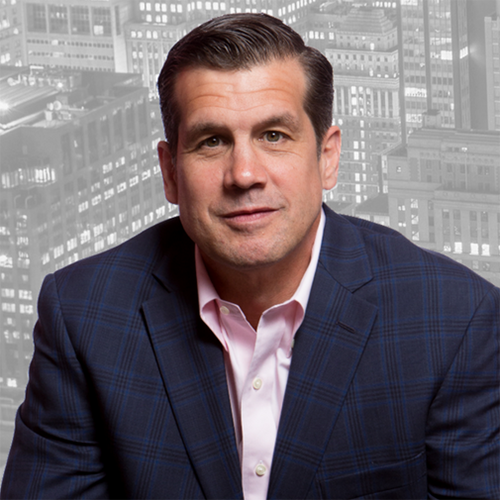
In the last 26 years, Ed has developed his leadership skills in both athletics and business. From working as an NCAA Basketball coach at Texas A&M to becoming the Vice President of a national recruiting firm, Ed has taught countless athletes, coaches, and business leaders how to THINK, ACT, and EXECUTE at an elite level. Ed has a unique set of skills to deliver leaders across the country a purposeful, positive, energetic, and refreshing experience to unlock their true potential.
In 2016, Ed launched his company, The Molitor Group, in order to reach and add value to a larger sphere of ambitious individuals and help them achieve their goals every day. Through The Molitor Group, Ed has guided all types of leaders to achieve success. From entrepreneurs and executives to teams and companies, The Molitor Group specializes in empowering individuals and groups to achieve at the next level. Through Leadership Performance training, coaching, and speaking, Ed’s goal is to supply people and organizations with the necessary tools to move forward from where they are now to where they want to be.
Welcome to the Athletics of Business, a podcast about how the traits and behaviors of elite athletes and remarkable business leaders frequently intersect. The real stories and hard lessons to help you level up your leadership and performance. Now, your host, Ed Molitor.
Welcome back to another episode of the Athletics of Business podcast. I am your host and CEO of the Molitor Group, Ed Molitor. This episode is going to be extremely special to me because we're going to continue Building on episode 44, my last solo cast, where we talked about the power of managers who coach their people and how the workforce today wants to be coached. Okay? They don't want to just be told what to do. They want to be coached, and they want to grow. And they. They want to know that they're. They're needed, that they're important, and that their job has meaning.
So I'm going to push the planned content to the side a little bit, but we're still going to build on that lesson because we're going to honor a man that has meant a great deal to me and will always mean a great deal to me and unfortunately, recently passed away Tony Brony, which we will call Coach B from here on out, because that's what he is to all of us. And Coach B was my coach at Creighton. He was also my boss when I was one of his assistant coaches at Texas A and M University. But more important and way more important than that, he has been a friend and a mentor for the last 31 years. And I was blessed to know him for many more than 31 years, as he was a friend of my dad's as I was growing up.
But truth be told, our relationship started to take shape when I started to play for him in 1988. You know, and when I think about it, regardless of your field of endeavor, the path you have taken to get where you are today, there are people who come into your life and impact you in ways you cannot imagine. They represent something to you. Think about it. It could be hope, belief, resilience, persistence, joy, struggle. It could be passion, loyalty in family. Now, very rarely do you have someone that comes in and represents all of that, too. And I was blessed because that's what Coach B was. All of those things that I just talked about, that's what Coach stood by me. That's what Coach represented to me. Now, let me give you a little bit more background on Coach B.
So you don't just know him as. As my coach, as my boss, but after graduating from Duke University, where he played on A Final Four team and was an academic All American. He coached. His first job after Duke was St. George High School. Now I'm going to try and get these all right, because he has an amazing resume. He also coached at Mount Carmel High School in Chicago. He went back to Duke University. He coached at Gordon Tech. He coached at St. Rita. And then he was an assistant at Bradley before he went on to Creighton University. And that is where he really made a name for himself, as he had back to back 20 win seasons. We used to joke around and call it 2020 vision. Then it was 202020 vision, even though there's no such thing.
But after Creighton, he went on to Texas A and M. And then after Texas A and M University, he was with the Memphis Grizzlies for, I want to say, 12 or 13 years in various roles. He was the interim head coach when Hume Brown had stepped down. He was in player development. He is responsible for leading the charge and drafting Paul Gasol. Not a bad pick there. So a lot of roles with the Memphis Grizzlies. And like I said, I played for coach at Creighton. And I was able to experience the highs of college basketball while I was there with them because we won the Missouri Valley Conference regular season, won the Valley Tournament, went to the NCAA Tournament. My second year there, went to the NIT tournament.
And then on the flip side of that, when we reunited six years later, when I coached for him at Texas A and M, I experienced the lows of the business with him as he was fired in our last year there in 1998. Now, that event right there, when he was let go of Texas A and M, really changed the course of my life. And that event and what followed only deepened the relationship that Coach and I shared. Here's the thing about Coach. Coach's impact on me and countless others. It transcended the game of basketball. And when we gathered his. His funeral was on the north side of Chicago, okay. Which not too far from Wrigley Field, where he was a bat boy growing up, which explains his unconditional commitment and devotion and love and loyalty to the Cubs.
But that doesn't mean he wasn't shy in his opinions of certain things. But it was really a cool. It was a cool day in the sense that there was a lot of stories shared. There were some tears that were shed. But I'll tell you one of the coolest things. His son Brian is a head basketball coach. And this doesn't speak volumes to what coach meant to people. His son Brian is a head coach at Southern Illinois University, Edwardsville. And on the way to the church, I stopped and picked up a former teammate of mine, Bob Harstad, to drive in. He flew in from Oklahoma and we drove and were talking and just telling stories, talking about life in general as we turned the corner.
If you know the north side of Chicago, there's a lot of one way streets that are very narrow and it's hard for even one car to get through. And I look to my left and all of sudden I see this huge bus with siue on the side of it. So Brian's team, I mean a bunch of 18, 19, 20 year old guys got up early on a Saturday morning and made the trek from Edwardsville, illinois, down by St. Louis, all the way north up to Chicago just to honor coach and obviously in support of Brian, their leader. But they love Coach. Coach was around when Brian was assistant coach. Would work a couple kids out, he would talk to him, he would get to know them personally.
And that's just what Coach was, you know, And I mean, if I could, if I had a dollar bill for every time I heard. Remember when as the stories, you know, were told over and over again. And I. And as I sat in the church, I looked around as the service was going on and I was looking at different people and identifying where they fit into Coach B's life. And when you're around someone for 31 years, like I was, you get to know most of the players, so to speak. And I don't mean literally players, but most of the people, most of the figures that have a huge part of Coach B's life. And I was trying to imagine what must be going through their head. And then I got inside my own head and I realized I kept retreating to.
Back to a place and God, you know, I wish we could do it all over again. And sometimes it's funny the things you take for granted, the Cubs games we would go to the rounds of golf that sometimes we just tried to get through all the hours we spent watching film and just talking hoops in general. But you know, and the thing about coach, like all of us, okay, he was not perfect. He had his flaws, but his heart, his sense of humor, his infectious smile, his passion for the game and his passion for people overcame everything. Think about Coach, he could light up any room, he could light up any gym and he could light up any referee. But as the day went on after the church Went back and had a lunch.
And as the day went on again, more stories were shared. People grab a microphone. But there's two things that stuck out to me that I think we can learn from and we can talk about managers who become coaches, because I think there's. There's two things that just. If we could do those every single day, okay, it would get people to really work towards maximizing their potential. The first thing Coach genuinely cared about and was interested in how you were doing. It didn't matter whether or not you could ever help him with win games or land a player. He was always asking people about their families, sending handwritten notes, picking up the phone and calling and sharing a laugh with whomever he happened to be. Be sharing a conversation with. And the second thing he would do. And this. This was powerful.
A couple of his former players got up and said, this gentleman that coached with him got up there and said this. But he said, coach. They said, coach had the ability to see things in you that you cannot see in yourself. Then he had the ability to get you to achieve these things individually and collectively. You know, even some things that you may not have ever imagined possible for you to achieve. And Coach did a lot of, you know, he did a lot of cool things to create a certain type of culture. Okay. When were creating, we had Operation Blue Jay, where we fed the homeless. Coach. Coach got really tired of hearing all the negative things that were surrounding college athletics, okay, Specifically college football and college basketball. I don't remember exactly what it was, but he just.
He wanted to take a stand and he wanted to do things and teach us that were about way more than just basketball. And we had a platform where we could contribute positive to the community. And so what we did on Thanksgiving morning, really early in the morning, went and we fed the homeless and went down in the shelter. And it's funny, because we are supposed to be. And I know. I believe I've talked about this on the podcast before, but we're supposed to be on the Today show, okay? So all our families all over the country, they're wide awake Thanksgiving morning, and they're glued to the TV. Channel 5 glued to the TV. There was no DVR. I guess you could have VHS or VCR, recorded or beta. I don't know what it was. It was so long ago.
But anyways, we get there, and all the homeless people are on the street, and Coach B kind of looks, and he walks inside with the pace that only Coach B could do with his head down where you just don't get in his way. And after a little bit of investigating, he finds out that the homeless people were kicked out of the shelter by the Today show so they could set up their cameras and get ready to video us feeding them. So that's not why were there. That's not what were about. So needless to say, were not on the Today show. Coach kicked the Today show out and went about our day. We got to know them. I mean, we sat. We actually ate. We ate breakfast with them, but it was a dinner we ate. We ate Thanksgiving dinner with them for breakfast.
We played cards with them, we talked. We got to know their names, we got to know their stories. And then the other program he started, which was a lot of fun, was Booking with Brony. And it was a. It was a program that encouraged reading in grade schools in greater Omaha, in the city of Omaha. There was a contest. There was some great rewards, some great recognition. And one of the other things we did, player, we would go and we would go in pairs, I believe it was, and we would go sit and we read to different classrooms and in different settings. So that was a lot of fun. But those programs taught us the power of serving our community and to use our positions of influence to positively impact others. We became closer as a team.
We learned some things about ourselves along the way. And then there's a basketball side of things. And you know, it's funny because it's hard for me to sit and try to keep this a concise tights podcast and really tell you everything that coach meant from a basketball standpoint, what he taught us from a basketball standpoint. Excuse me, specifically what he taught me. But you know what? I'm going to try and do the best I can with that. And the first thing he talked about was dreaming big, alright? He believed that to be the best, you had to beat the best. My sophomore year, we beat Notre Dame, Iowa State at Iowa State, Virginia Tech in Hawaii in the Rainbow Classic for the Constellation Championship, and we beat Nebraska. The next thing he would talk about was do more.
It was on the back of our shorts. Myself, were do more. Okay? And it was about getting one more rep, getting one more shot off being a better teammate. The next thing he taught us was to believe in this. If there was. If there was the biggest takeaway that I had from coach, it was developing the ability to believe in yourself again, individually and collectively. It didn't matter who doubted you, as long as you locked into the process and focused on controlling what you can control, then you had no reason not to believe in yourself. And, you know, going back to my freshman year when we won the Missouri Valley regular season title and the Missouri Valley tournament, were picked to finish second last. Now were also put on NCAA probation for something they had nothing to do with us.
That was lifted a little bit after Christmas. That's another story all in of itself. But bottom line, were behind the eight ball. Nobody gave us a chance. Nobody. And we just focused on the things that we can control. And it comes down to the last game in the regular season, for the regular season title. We're playing Drake at Drake, and we know. I mean, we know what's on the line. We win, we win the Missouri Valley Conference tournament or Missouri Valley Conference title. That means we're the number one seed at the tournament as we go to Wichita State, which we happen to end their win streak at home. That year, they had the longest home winning streak, something like 31 or 32 games. And we beat them in overtime at their place.
But going in there with the number one seed would be a big difference maker. So we're getting drilled in the first half. I mean, we got punched in the face and we just couldn't recover. And then Matt Rockenberg hits pretty close to a half court shot, like a jump shot from half court, just. It buries it at the buzzer at halftime to cut it to something like 10, 11 or 12. And right there, that. It was like a switch went on, right? We. Everything just came back. Our whole swagger came back. That belief came back. The whole process came back. Everything that we had been through, everything we had done, went into halftime. Coach did, as usual, fired us up, did some teaching points. We went out there and we just kicked the snot out of Drake. Kicked the snot out of him.
So we win. We cut down the nets. It was unbelievable. I mean, it was. It was a feeling that I'll never forget. But then we go in the locker room, and this was Coach, this is the best. So we go in the locker room, you know, we're still doing our thing, and coach yells us to sit down. Everyone's telling us to sit down. Coach Fick, I mean, just so we sit down, Coach looks at us and he gets this smirk on his face. All of a sudden, he rips open his dress shirt. I mean, just rips the buttons off, doesn't unbutton it, rips it open as long as he could. And Underneath, it is 1989 Missouri Valley Conference champions. He wore the conference championship T shirt that he had made up the week before. He wore it the entire game.
Now, I don't want to think about what would have happened had we lost that game, but that's the level of belief he had in the way we did things, why we did things, and what the end result would be. So believe just to believe in yourself and believe in your team. And then family culture, I talk about this all the time with my clients and the organizations I work with. It's not about, you know, having a culture that's like a family. It's having a culture that is a family. Here's the thing. What do you do for your families? You fight for your families, right? When your back's against the wall or someone goes after someone in your family, you're going to fight for your family. The same thing with the culture.
When you build a culture that's not like a family, that is a family, you are going to fight for that culture. Some of the ways we developed the family culture, we spent Thanksgiving together like I talked about, but we also had Thanksgiving dinner at Coach B and Mrs. B's house. We had a ping pong tournament. We spent the summer in Omaha just working out, hanging out, doing things. We just, were always together. Christmas time we would have grab bag gifts where we actually have to put thought into getting something funny for our teammates and just so many different things. And Coach was always looking for a way to bring us closer together. And of course, there was the adversity. And went through a lot of it.
Every single day of practice, he would put us in adverse situations that honestly, quite frankly, sometimes they were brutal, you know, and along those lines with Coach, there was a vision, an established set of expectations. And if we did not meet those expectations, were absolutely held accountable. But he loved us and he cared about us and he really cared about us away from the basketball floor. I mean, he showed that care away from the basketball floor, which is not always the case when you start talking about people in positions of leadership. It was that care, it was that genuine concern for you away from basketball that truly made coach special. And I'll never forget about a year and a half ago, it was a night before Loyola played Bradley, the second to last game in the regular season, Missouri Valley.
And this is the year Loyola went to the final four. So 2018, okay? And I had gone to, I went to Loyola's practice that day. And afterwards I was going out to dinner with Mrs. B and coach B to a Little Italian restaurant up on the north side. Great, great spot. And we have a really nice dinner. And I can tell Coach is struggling, but he'd been struggling, right? And he's. He's a fighter. So we're just gonna have some laughs and have a good time. And he said some really kind things and talked about being proud of me and how I endured some things and was able to have this vision for the Molitor group and then to go, you know, add value to other folks. But I said to Coach, I said, coach, you don't know this.
I said, but the greatest thing that happened to me, or one of the coolest moments I should say, that happened to me while I was at Creighton, had nothing to do with basketball at all. Because that whole conversation that even was wrapped around basketball and Loyola's great season and what was going on with everybody else that we knew and how things were shaping up for March. And he looked at me, kind of tilted his head. I said, no, I go on there. I go, Coach, I said. I was leaving the library and there was a baseball game. And it was at that time Creighton's baseball facility was, you know, across the street, down the street, I should say from the Circle. It was new at that time, their new turf stadium. And I walked out of library, and I was walking.
I was walking across campus, and I. And I saw. I saw in the Circle, which is a drive that pulls up to right by St. John's Cathedral. I saw in the. In the circle, coaches yellow Cadillac. We call it the Banana or something like that, which meant Coach was nearby. Okay, well, it was in the spring, after basketball. There's nothing against Coach or any of the coaches, but you didn't want to see him. You want it. You just did not want to see him. Okay, you got a little break from each other. I'm sure they felt the exact same way. And for whatever reason, campus was. Was somewhat quiet. There wasn't a whole lot of people. People out. And I was walking close to a slow jog, okay?
I mean, I was moving briskly, let's say, to the baseball field and still had a ways to go. And all of a sudden, I heard Coach call out my name, but he didn't say Ed already. He said, molitor. It's a name I think I sort of adopted, or it was passed on to me for what they used to call my dad. But anyways, he said, molitor, where you going? His only coach be canceled. So you don't know right now you don't know if he's pissed at you. You don't know if he's playing with you. You don't know if he doesn't even realize how he's talking to you. And you turn and look, and he doesn't have a sweatsuit on. He's got some dress slacks on, his golf shirt, which I can still picture which golf shirt it is. And he's with Coach Fick.
And I look to my left, I look to my right. I got nowhere to go. There's no one like, to say, hey, act like I'm walking with. I mean, I'm. I'm done. That's it. So he comes up and he goes, what's going on with English? And I'm telling this to Coach. Coach still looking at me like, you know, I'm half off my rocker. He goes, what's going on with English? I said, I don't know. What are you talking about? And I. It was weird because I had this English class that I loved, and it was a great English professor. It was a smaller class. We worked in groups. It was more of a writing class, an actual English class, so to speak. And. And I've always loved writing. And Coach, I don't know, did, you know, did a test come back bad?
I thought it was going okay. And he was Molitor. I got a letter from your teacher. He goes, apparently, you have her, fool, because she could not stop saying all these great things about you. She says, you participate. She says, you're pleasant. I mean, come on. You're not pleasant. She says, you're early to class, your last to leave. You know, what's going on? And I looked, and all of a sudden he started, and he sat there and he talked to me, and we talked for only three or four minutes, right? But that had an impact on me because that. That. That honestly meant way more to me than him telling me I threw a nice pass in basketball practice or that made a good cut. It just. Or, you know, good job getting back on defense. That. That just. That impacted me.
And that's something I think everybody can learn from. You know, you think about it when I talk to these teams and these leaders, and I say, okay, I've got an hour. I've got to go do some coaching. Okay, well, you know, I get that, but sometimes the most effective coaching you can do are the unscripted moments, okay? We. Sometimes I call them bumps. You know, you just. You happen to just stop by and say, how are things going? How are you doing? Or nice job. And this. Oh, by the way, did I tell you those are some of the times. And that's. That's what Coach would do, you know? And the thing about Coach, one thing I don't like about funerals is like, oh, this could be the last time.
There's no last time, you know, because the impact he had on me will always show in the relationships I have with my family, with my kids, with my friends, and with strangers. Coach was amazing with strangers, and he was amazing with my friends. With your friends, you know, to two quick stories like, you know, I have one of my best friends, Chris comes out to. Flies down to College Station my first year there and wants to golfing. And we're going to golf. We're going to go play Pebble Creek. His flight's a little bit delayed. Coach gets caught up doing something. We tee off a little bit late with about five holes to play. It's dark. And I mean, it is dark, okay? And I'm like, guys, we could. We could call it a day. Coach is like, hell, no.
He's like, your boy did not come down here to golf or to not golf. He came down here. It's cold in Chicago. He came down here to have a good time. We're going to. We're going to go off. And every time. And Kristin, this day will tell me, every time Chris would see Coach, whether he came watching the game at Iowa State on the road, Coach always made him feel a part of the family simply because were friends, you know? And then I was actually reminded of something recently that I wish I had remembered. The weekend of the funeral and the lunchings. I would have shared this story because this is quintessential Coach, A good friend of mine, Mike M. Coach B. Myself, and I forget who our fourth was. We played in a golf outing here in Chicago.
Coach and Mike had never met. Okay? Mike's a very successful Allstate Agency owner. And they talked the whole round of golf, and coach called me up and said, hey, where? What? Give me an address. I can send Mike something. I like to send him something. And Coach, as coach always does, a wonderful handwritten note that probably took him three minutes. Put a Memphis Grizzlies. He was with the Grizzlies at the time. Put a Memphis grizzlies and a FedEx envelope, sent it to Mike. And to this day, I mean, this many years later, it still meant the world to Mike. And that was Coach.
I really think as a leader, it's critical for you to realize the opportunity you have in front of you to positively impact all of your team members life in such a way that you let them know that they are important, that their role is valued, and that what they are doing has meaning that extends well beyond the boundaries of work. And that is what Coach did for me. That is what Coach did for us. Here's the thing. I say this often. Do not ever sell yourself short as a leader. The impact you have on your people, the confidence they gain, the mental strength they build, the joy they get from the laughs you share, and the resilience that they build from all the adversity that you grow through together, that's going to show up in all aspects of their life.
And you know, what does that mean? That means that's multiplying the impact that you've had on them and that's multiplying the leadership lessons that you shared and the value that you poured into them. As I told Brian, Coach B Son, who's the head coach at siue, I said Coach could have been extremely successful in any career he chose to pursue because very simply because of his ability to genuinely, and I mean genuinely connect with people, to see the best in others. And he was great at setting expectations for his team, holding everybody accountable. And then he was masterful at getting others to achieve things they may never have thought possible. So I encourage you, no, I challenge you to take a page out of Coach's book and get your people to stretch themselves. Believe, find joy in the process.
When you learn to love the process, you're going to love what the process gives you. Right to have purpose in what they are doing and become something that they may never have thought they could become. And in doing so, again, multiply your leadership at home, in the community and with the teams that they will lead in the future. Well, thanks again for listening to another episode of the Athletics of Business podcast. I would love to hear what you thought of not just that episode of previous episodes. And you can go to itunes and you can rate our episodes. I would love any comments. Please feel free to share comments with me at Ed the Molitor Group.
And again, if you're interested in our executive coaching programs, our leadership consulting, our team coaching, or bringing me in as a keynote speaker, feel free to reach out to me@edemolitor group.com as well. And I would love to hear from you. And if you found this episode, you know, to continue paying it forward, to continue Coach B's impact and influence he's had on not just my life, but countless others. I would love for you to share this podcast episode if you could. All right, so that's it for now. Keep doing great things.
Thank you for listening to the athletics of business. Be sure to give us a rating and review so we know how we're doing. For more information about the show, visit theathleticsofbusiness.com now get out there. Think, act and execute at the highest level to unleash your greatness.