
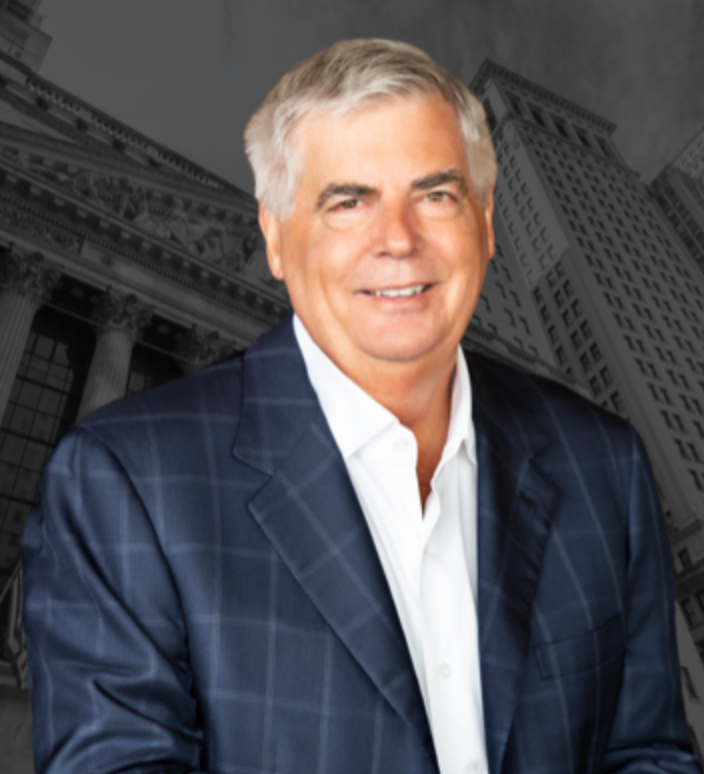
A recognized expert in preparing for IPOs, Steve Cakebread led the financial teams that took Yext, Pandora, and Salesforce to successful initial public offerings (IPOs). He serves on the board of Bill.com, which went public in December 2019, and sat on the boards of SolarWinds, and Ehealth, as they made their initial public offerings. Earlier in his career, Steve served as CFO for Autodesk, vice president of finance for Silicon Graphic (now SGI), an director of finance for Hewlett-Packard. Steve earned his bachelor’s degree in business from the University of California, Berkeley, and his MBA with a focus on international finance from Indiana University Kelley School of Business.
Welcome to the Athletics of Business, a podcast about how the traits and behaviors of elite athletes and remarkable business leaders frequently intersect. The real stories and hard lessons to help you level up your leadership and performance. Now your host, Ed Molitor. Welcome back to another episode of the Athletics of Business podcast. I am your host and CEO of the Molotor Group, Ed Molitor. And I am beyond thrilled to be joined by today's special guest, Steve Kbrad, author of the newly released the IPO Playbook, an insider's perspective on taking your company public and how to do it right. And Steve is a recognized expert in preparing for IPOs. He has led the financial teams that took now get this Yext, Pandora and Salesforce to successful initial public offerings. That's amazing. Not just one, not two, but three amazing companies to their IPOs.
He serves on the board of Bill.com, which went public in December of 2019 and sat on the boards of Solar Winds and E Health as they made their initial public offerings. Earlier in his career, Steve served as CFO for Autodesk, VP of Finance for Silicon Graphic, now SGI, and Director of Finance for Hewlett Packard. He earned his bachelor's degree in Business from the University of Cal Berkeley and his MBA with the focus on international finance from the esteemed Indiana University Kelley School of Business. Now, in addition to his amazing book which I've read, we are going to jump in. We're really going to talk about his story, his journey and how that fed into his success in the IPO world.
We go all the way back to his days of working in his parents auto garage as well as their winery which is now Cake Bread Cellars, the highly acclaimed, just very successful winery. We're going to talk about what made Steve walk away from his career in established companies to join a startup and what gave Steve the confidence. I asked him this question. I love his answer because he goes way deeper than you think he's going to go.
What gave Steve the confidence that Salesforce, Pandora and YEX could actually go the distance when he joined them in their early days and why it is so important for the leaders and these startups to talk to your people about where they see themselves in three to five years and most importantly, not only having those conversations but what is a frequency which you should revisit that conversation and we'll jump into what it means to have a founder team that is really committed to a vision and not just any vision, but a vision that is changing something. And finally we're going to Talk about how Steve has stayed so even mentally, physically and emotionally over the years in the stress pack startup role. Now I say finally, but there is so much more. Have a pen and paper handy if you're not driving, not working out.
There's so much content, there is so much value. So I'm going to get out of the way and let you enjoy this conversation with Steve Cagbread. Steve, welcome to the Athletics of Business podcast. I am so excited to have you here. I thank you for taking time out of your busy schedule. I know you have a lot on your plate, but to join us today.
Great, great to see you and excited to be here. Thank you.
I have filled our listeners in on your background, your journey, what you're doing now, the incredible book that you are releasing. But I want to jump into to a little bit about your journey and how after years of being at established companies, you joined the startup world and what attracted you to that?
Well, that's a good question. You know, I had worked obviously at some great companies like Hewlett Packard. Actually it was a startup when I joined it was a $200 million business, albeit at public, and when I left it was an $18 billion business. So I've had experience in a large corporate area and when you live in the Bay Area, in Silicon Valley, startup fever kind of gets in everybody. And I had a great opportunity, met with Marc Benioff and it just looked like an opportunity for me to make a shift from large corporate to small and be able to build businesses. And as you know, my family background with my parents have been building businesses and that was kind of in the DNA.
Right. What did you see when you moved from the large businesses to the smaller startups? How did you take, how did you pull some of those skill sets in the larger organizations and implement them?
Yeah, that's a great thing because, you know, I joined Salesforce when It was a $20 million business and I was employee 66 or 67 leaving Autodesk with a couple billion and employee 10,000. And you want to bring some of your background and experience, which was what Mark and I had talked about. But you have to be really careful that you bring the flexibility and the realization that you're working in a startup, not in a multi billion dollar company. And in the book I talk about some of those transitions. But Mark was very clear. You know, he had a vision and he needed people to help him implement that vision, which was great for me because I could execute on what I knew best. But he Also tested us some of the large corporate people he brought in.
For example, when you're in a multibillion dollar company, an executive role, you have an assistant or maybe two assistants, and they schedule, et cetera. He said, until we get to $100 million, you get to do your own calendaring and know that we're just a small business. And were. The good background was my parents had started the winery and it was a small business. So I could make that transition and understand what. What does small business look like, but where were trying to get Salesforce to be a much larger business. And today it's 18, 20 billion dollars from 20 million. So, you know, bringing those skills from a big business, but realizing small businesses can't afford all that overhead was a great benefit to me in both areas.
So as Salesforce grew and all of a sudden became larger and there's more balls in the air, how did you stay true to those skill sets that you were trying to, you know, implement?
Yeah, great question. Part of it, you know, and we've talked about this before, it's the people you hire. You want to make sure you hire good athletes. They may not be specialists at the early days, and I talk about some of the hiring in my book, about what you should be looking for. But in the early days, you need generalists. You need people that can do a couple different things, but as the company gets bigger, you need specialists, you need people in technical areas that you may not be strong at. I always hired people that complemented my weaknesses because I don't know everything, but I also knew I didn't know everything. So I was on the search for folks that could do better than me in the roles that I had them to play.
But we really did go from generalist to specialist over time.
So when you move them from generalist to specialists, and I think, and it's very interesting you said to hire athletes, right, obviously, with the Athletics of business podcast. But how were you able to encourage them, for lack of a better term, to continue to work on specific skill sets while they're still operating as a generalist? Like, how did you give them that vision and that thought that we're going to be moving towards this and this is the area you need to be working on.
Right. Some of them, to be quite honest, don't make that transition so you have an opportunity like, you know, I'll use football team or basketball team, you can bring in better sports stars and specialists as you lose the people or move them out for those that stayed it was been very interesting. It was a conversation, where do you see yourself in five years? We at Salesforce used V2MOM, which is have a vision, have values, have methods and an opportunity and measures to grow. It's kind of like mbo. So your conversation with your employee is, where do you see yourself in three to five years? What other things do you want to do? And then can we help you achieve those goals within the strictures and confines of growing a public company?
Most often, those folks that aspire to grow and have different careers and grow their career were more than willing to take on those risks, learn stuff they may not know. The flip side is, and it's just again, like any sports team, you need rock solid people to do jobs consistently and excellently and may not aspire to run the world at the end of their career. What they want to do is be the best at their position. And so the trick is to find both of those, because you need both. You need position players and you need people that can grow from one role to another over time.
I think it's so powerful. And it's funny how there's no secrets to success. The best do the same things. They may do them in different ways with different language. The fact that you invest in them as humans and you talk about where do you see yourself in three to five years? How often do you revisit that conversation? 12 months, 18 months, or what's the frequency or cadence?
It's usually 12. Because you want to make sure you've looked backwards and say, okay, are you on the path we set up? And then you need to look forwards because the business is changing. At the same time, opportunities to grow change and. And you want to make sure you're checking in. So I found about every 12 months. And quite frankly, a lot of big companies have performance reviews, et cetera. I've always defaulted to the conversation because if you're not performing well, then I'll go to. It was Malcolm Gladwell's book on outliers. Not everybody fits in every system, right? And so it's not that you're a good or bad employee in the system you're in. It's that I need to make sure that you're being successful in the system we're developing. So that conversation once a year is probably good.
I've had experiences when I was at Pandora, some of the folks that I did not hire but were there, and we're killing themselves. We're contributing greatly to the success of Pandora. When I sat down with that annual review, it's like, hey, you know, I don't want to be doing this. This is something. It's too hard on my family personally. We actually had two or three of them. I worked with them to get them jobs in other companies and other areas. And to this day I still get jobs, you know, holiday cards, et cetera. Saying thank you. The best thing that happened was for me to help you get into another role. So it's a little bit about putting yourself in their spot and saying, if I understand what you aspire to, how do I help you get there?
And how as an executive, can I make that happen for you?
The thing I find fascinating about that, in the startup world, we're so driven by metrics, like there's certain things we have to. I mean, it's just the way it is. It's the reality of the situation. Right. How is that balance, that juggle? Because I've got to imagine that there's that dance, if you will. I've got to imagine there's certain leaders that say, hey Steve, that's great, but you know what, we've got to nail this. So they either can or they can't. What's that dance like?
Exactly? Yeah, that's part of it. I mean it is quite frankly, you just have to find people that are willing to work very hard, slay dragons, put their head down and get to it, but always find time for making that step forward. It's not this startups in the IPO book I talk about. It's not a sprint, it's a marathon. And you do have to grab water in a marathon as you go past that table once in a while to re energize. I'm very much, and I learned this from Mark at Salesforce. You know, were very much in tune with ourselves personally and the team organically because you do have to work together and sometimes you rely on your team members to pick up some of that slack and cover an area. But there is that demand.
But you have to really enjoy what you're doing and all of a sudden it's not that demanding. It's just something that you love problem solving, you love building, you love making the systems better, more efficient.
Well, a lot of this has to go back to your background. I mean, you started in your parents auto garage, did you not? I mean you talked about small business and then with the winery and is that where a lot of this human element comes from? And a lot of like figuring things out as you go along and having that whole Startup. And. And I don't like using the word survival, but sometimes we kind of. We've got to put our backs against the wall. That's what we're doing. Is that where that all comes from?
Yeah. I mean, small businesses are hard to run, as you well know. I mean, it takes the same amount of energy and attention to run a small business as a large business. It's just a different scale. I mean, you learn every step of the way. So you're right. I used to sweep the floors at the garage. I used to be the grease monkey that would change the oil and change the tires. I learned a lot there. One of what I learned is I don't want to do that. That's not my career path.
And, you know, your parents were very happy about that, too.
Oh, yeah, of course they were. It was a family business. And the day I told them I was going to go work at Long's Drugs in the camera department was traumatic. But, you know, we got through. We got through that. And then I went to off to graduate school indiana and they bought the property up in Napa, and we're going to start a winery. And the couple things you learn there is you have to have passion. I mean, whatever you're doing, if you don't enjoy it, you shouldn't be there and don't do it. My dad grew up on a farm in San Joaquin Valley, so he loved farming. He was doing. He was doing an almond orchard with his. With his dad. So he loved the farming aspect of it.
And at the time, wine, you know, were winery number five in Napa Valley when they got started. So it was, you know, early days, but they love the farming. And the one thing I will say that we always agreed on is it we'll make wine. We had some of the best people to help us. Robert Mondavi, Mike Girgich, Joe Heights, et cetera. I mean, industry leaders.
Yeah, yeah.
But the mantra was always, we'll make wine that we like as a family, because if nobody else buys it, at least we have one hell of a wine cellar. And, you know, I mean, I think that kind of speaks to that.
Yeah.
Be true to yourself and what you're doing and enjoy it.
So let's jump right into that with the IPO playbook and with the IPO and the mindset of the startup, because it's so easy to get distracted from the passion piece. Right. And the purpose and the why. What are some of the things you've seen over the years and how people get Pulled away and how they get reset, so to speak, and get back on track.
Yeah, that's it. I mean, one is you've got to have a founder team that's really committed to a vision that's changing something and you need to keep testing that vision. I mean, I had great conversations with Mark and I do with Howard about where are we going, what are we doing? I'm the advocate for thinking differently about what's going on in your vision. But their vision has to be where the company follows. You can't question that vision, but you can enhance it, you can improve it. And so conversations around that get to be really important.
And making sure that the team, as best you can, as it grows, appreciates and understands the vision you're trying to get to, you know, and with that, I think you get continuity of decision across an organization as it grows because they understand where you're trying to get to at the end of the day. And continuity of values. I mean, one thing I had grown up at hp, which was clearly a people orientated company. Bill Hewlett and Dave Packard, that was the big thing. We got donuts and coffee in the morning. The problem is cultures change as people, as you add more people to it and you need to monitor that and change is good.
I mean, I rue the day every time in startups, you know, went from 20 million to 200 million and people say, no, it's not the same Salesforce, well, it can't be, otherwise it's going to fail. And so you've got to have, you've got to find people that enjoy change and can help make that change. And I often say in hindsight I wished I'd gone and be taken psychology courses because a lot of this isn't about me knowing accounting or knowing technology. It's about helping people make those changes in being successful as the company grows and not leaving it behind.
And your ability to, and your awareness to recognize that and act on it has to be a huge competitive advantage in your marketplace.
When I get to talk to people and we're talking about jobs and opportunities, I will say I think I have a reasonably good reputation, Even after almost 50 years in the industry of being able to find the right people to work with and make them successful. The two measures that I have of myself as I go into a startup are, one is the people that I hire. And yeah, we all make mistakes and I'm going to do that, but the people that I hire need to be there for the long term. And I'm Helping them create their careers. Case in point, when I left Salesforce, There was about 10 key hires that I brought in over the nine years I was there. They were still there.
And in fact almost all of them are still there today, from $40 million business to $20 billion business. So hiring the right people to stay through the company gets that experience and knowledge and culture. The other one was you're here to grow a business. Businesses need to, particularly in technology. They need to continue to expand. And if you look at my opportunities, and they were opportunities for me between Salesforce, Pandora and Yext. When I joined, the value of those three companies combined was about $300 million.
Wow.
As of today, the value of those companies, Salesforce even is crazy, but is over $50 billion of value that I added while I was at those companies. So it's not about what the company does. It's about creating value for the employees, for the investor and making sure that the company continues to grow. And for me on the investor side, it's really allowing individuals to be able to invest in these companies, to go.
Back to number one, hiring the right people that are in it for long haul. Because we know today's workforce and the younger executives. And we recently had Scott O', Neill, the CEO of the Harris Blitzer Sports and Entertainment Philadelphia 76ers, New Jersey levels on. And one of the things he prides himself on is hiring amazing young people before they're even ready and then watching them grow into executive roles. And it's a totally different space. I get that it's a different industry, but what do you do to make sure that you are able to keep those folks locked in on board for the long haul? Because that is so significant, especially for these companies with this growth curve.
It is. I think a lot of it for me has to do with, as I described before, conversation with them about their long term career. And quite frankly, at least I've been fortunate enough to garner a reputation where people want to stay and keep learning from me all the aspects of running a business. You know, I hired a gentleman at yext, Darrell Bond, great person right out of public accounting, never really worked in a corporation. And he's still here with me because every year as a company grows, there's more things that both I learn about the business, but he can learn from me about how to continue managing that business going forward and whether he wants to leave. At some point that'll be fine.
But he will have an educational experience between the two of us because we have a good Dialogue about how the business needs to run. But the fortunate thing of me having seen some of these plays before gives him more education faster than if he had to do it on his own.
So let's flip this for a quick second and we have someone listening who possibly is on the other end of this. Right?
Right.
How prepared is he to pick your brain to ask questions, to absorb the fact that you've been there before, you've done that, learn vicariously through your failures, if you will, as well as your successes? How prepared is he for that?
Well, that's a great question, Ed, because one of the things I look for in hiring people is do they ask questions and are they good listeners? And so working with Darrel, he asked good questions. He's a great listener. When I joined both Mark at Salesforce and Howard Lerman at yext, part of what my test was is how good do you listen to me? Both Mark and Howard, at the time I joined them, I was 2x older than those guys. And you know, how many 30 year olds listen to their parents? But the unique ability of individuals that can listen well, ask questions, it doesn't mean they have to go do what we said or I said, but it's take it in.
If you can take it in and then modify it to the environment that you're in, you're going to be really much more successful. And Darrell's been able to do that. You know, I enjoyed working with Mark and Howard and I've. The flip side is you have to be a good listener because they're giving you information you need to learn from and act on as well. And that's the fun part of why I enjoy doing what I'm doing.
Yeah. You know, we've mentioned, we mentioned Salesforce, we've mentioned Pandora. Now you're at yext. What did you see in these companies? And you talked about where they're at when you join them versus where they're at now. What did you see in these companies that indicated to you that they were going to be wildly successful?
I guess it's always the same, better lucky than good. But the couple things that I looked at, one is the visions I was fortunate enough and interestingly enough to work with. Like I said, Bill and David, Hewlett Packard, Jim Clark at Silicon Graphics, and then Carol Bartz at Autodesk. Autodesk was, there's nothing interesting and exciting about engineering software, let's be honest. I mean, it's drafting and all that stuff. But Carol had an ability to create a vision of where the company should be in five to 10 years. And it changed the game. It, it, you know, it reduced the cost of the software. It added value to the customer. So when I talk to Mark Benioff or I talk to Tim Westergen at Pandora or Howard, it's one is, what's your vision? What's the game changer here?
And how are we going to do that? And, you know, both of those attracted me. Cloud computing at the time, when I was talking to Mark, it was called utility computing because we had no other way to describe it. And Pandora was streaming content and music in particular, which was at the early days of that as well.
What year would that have been about?
It was 2010, sorry, 2011, 2012. You know, there were other alternatives, but Tim had brought a unique discovery tool to where you could listen to music, and he could tell you, if you're listening through Pandora, what other music you would like. Because if you remember, itunes had a massive library. To find music you enjoyed was difficult.
You had to go find it.
You had to go find it. Tim had algorithms which were very astute at the time to help you discover music in the Pandora library. And then Howard. It's just been about changing how people search. I think, you know, were all enamored with Google search in the early days, but quite frankly, it never answers the question I really want answered. It just sends me off to ads. And so we're in the process of changing that game as well. So a lot of it about the vision, a lot of it about how the game is changing. And quite frankly, the other part is a lot about personality. I'm not an aggressive individual in terms of behavior. And so one of the things we always. I always look for was, you know, you're not screaming and yelling doesn't get you anywhere.
In fact, it's probably two steps back. And all three of the gentlemen I've worked with are focused on making success, not making themselves important.
It's amazing. Those were the indicators at the early stages of the companies. Now, vision is so powerful. When you can have the ability to create this compelling vision, it's so powerful, sometimes it evolves, sometimes it changes. And the people that are the best at allowing their vision to evolve, what do they do? How do they go about doing that?
Well, I think there's a couple things that I've observed in all of the gentlemen I've worked for, and even before that at Autodesk and others, they're again, very good listeners. They're again, very in touch with their customer because quite frankly, you're in business to make somebody else successful in some form or fashion. Enjoy a glass of wine, have a great dinner. Use technology to make your business more successful. So I think the good listener aspect is critical. And they got out and met all three of them met customers. Pandora, yeah, it was our end user listener, but it's also asking them and the bands, you know, how do we make you more successful? So it's that ability to listen, it's that ability to modify your vision slightly based on what you're hearing, but also push forward to that next step.
Beyond where most people envision what could.
Be a startup is. So there's built in stress levels, right? There's built in anxiety and there's going to be the adversity. I mean, it's going to be such a fluid situation in a startup. What have you done over the years to stay even and what have you seen the best people to do to stay even though emotionally, mentally, to be able to access that decision making ability?
Right. Well, I used to have my moments at work, particularly at Hewlett Packard. I mean, I was a young aspiring executive, you know, manager, trying to demonstrate my abilities. A couple things I learned is, you know, if the captain of the ship starts to panic, everybody else is off the boat. And so that doesn't really do you much good. I mean, so staying calm under really tough conditions is important to me. You know, you've got to keep your mind, you've got to make sure that the folks that are working with your team, players, you know, understand that there's a way to win the game, Even if it's 38 seconds left to go and you're behind by a score. So staying calm is one of those aspects. Getting some free time as well.
Because I think, at least for me, a lot of my problem solving occurs when I'm in my own private space, if you will. Part of this is making sure that you're not stressing yourself out. Consistent days to where you don't grab 15, 20 minutes, half a day to just reflect on where you are and what you need to get done, right. And how to do that. So you have some reflection time. And then like I said, you know, particularly as I got into the startups, I mean, I used to at Salesforce, in my first startup, I would have night sweats. I'd wake up at 2 o' clock in the morning just drenched in sweat because I honestly didn't know what I was doing. I mean, Mark took a big Risk that I was learning on the fly.
But it also put me more in touch with my physical being. So working out, eating right. I now make sure that I get one week off every 90 days, both because it's family time. The family sacrifice a lot. I think there was the one thing about Silicon Graphics and Jim Clark and team. We recognized that the family sacrifice was almost greater than the employee sacrifice. And so recognizing that and making sure I got that balance was really critical.
It's funny you say that, because that was one of the things about coaching college basketball that you learn and growing up a coach's son. And you sell it with my mom, you sell it to family. I mean, it's such a huge sacrifice. And we talk about time and we talk about being busy. Which brings me to the next question. Okay, so CFO of Yext, you're on the board for Bill.com I can't imagine you have a whole lot of discretionary time to yourself. Why the book? What was your passion about the book? What drove you to write this book, and where did you find the time to do so?
Yeah, well, first off, I had a great group of people help me get through this. I'm not a great writer, so Mike Malone helped do the heavy lifting, if you will. But writing does take you to a different space, and you need to kind of get in your own space and do that. It helped me form the ideas and the processes about what to look for employees, what companies to look for, what's the processes that people don't, will never see. And because most people only take one company public, it's a one and done, and you do something else. So I've had a unique experience where I participated in a lot. Bill.com, i obviously wasn't doing all the heavy lifting, but I did get a chance to work with the CEO and CFO about what some of the processes were.
You know, it was a chance to take all of that knowledge, put it down in a book, and be able to share that with people in areas that they don't typically think about when you're going through an ipo. So I wanted to make sure some of those corner areas and things that you should think ahead of were known and available to people.
What are a couple of things that folks don't think about?
Yeah, that's a good question. Well, you know, if you're the CEO and cfo, there's all this push to get bankers. And I describe in the book the approach that I take to looking for bankers and how I Select them and how we need to do research people and making sure you're getting people that understand your business vision and story and not just focus on a spreadsheet. You need to have a longer term game plan here, just not what an Excel spreadsheet tells you answer. So that's one area I focus on a lot in the book, obviously we've talked about hiring. That's a critical part of running a business. As you add people. The other one is just quite frankly being respectful of your own employees. I'm a big person and it's debatable sometimes, but I want to put information systems early.
It tends that it's cheaper. But I never grew up. Most startups will, particularly in the tech area, will hire a bunch of people in finance or sales operations to move data around on spreadsheets. And even I didn't ever envision I was going to be my career was to take data off of one Excel spreadsheet on screen A and move it to screen B. The way that goes away is putting in today's cloud based systems so the people you can hire actually can learn the business and help the business grow rather than just move data around and not provide anything valuable. And so it's those kinds of things that you spend your time on. Yeah, yeah.
And you know, it's funny because it seems so logical, yet it just really wasn't the way things were done. Right.
Exactly. Right. Well and to be fair, systems were expensive. They've rarely worked, I think with the cloud. The cloud is a game changer and allows everybody, even the winery is on some of the cloud solutions because it's just more efficient and effective and helps everybody. Because one of the things you didn't have in old style information, whether it's spreadsheets or systems, was a sharing of the data. And I don't think anybody would disagree that the more informed employees are about what's going on in the broader aspects of the business, the better decisions they're going to make about their desk. And so information and sharing that information.
And I described this in my book, there's a transition where smaller startups have employees that think they keep their job because they know everything about their job, when in fact they need to share that information to make them successful and the company successful. So it's a different paradigm, I think.
That really fits into being one of the three things that we know the workforce wants today and that's to know that A, they're value, but the second one, that the work they do is important and that it holds a high level of credibility and significance and they have an ownership stake in the success of the organization.
That's exactly right. And it also helps them see their career path because you see more vectors. Right. And obviously say, well, I was doing this but I really want to try that. And so I think that the sharing of information within a business is really critical for its long term success.
And who knows when what's going to resonate with you because you do so many different things. Which leads me to my next question. You beat me to the punch when you said most people only do one startup, right. They only launch one stuff. You multiple, what do you credit your success with that to? And I'm not asking you're a very humble person. I'm asking to brag on yourself. I'm asking really, what are those characteristics, those traits, those skills that gave you the power to do that?
Sure. In reflection, one of it is I, in the finance function or world am a higher risk taker than most other accountants and finance people are. And I attribute that to the fact that somehow in some part of all the careers I've had, I gained a self confidence that said no matter what I do, I can always fall back on other skills. I'll give you an example. When I joined Silicon Graphics, I joined as a vice president. First time I was ever vice president. You know, big title for a kid coming out.
Sure, absolutely huge.
The thing is that they also had a quarterly meeting and then they would talk and introduce the new vice presidents of which I got introduced and there were 65 of us. But at that same quarterly meeting we thanked the vice presidents that were letting go. So you started to learn that one is you're replaceable.
Replaceable.
If that's the case, you better have some skill sets to fall back on or have enough confidence that you can get a job. And I'd always, I just built that confidence over time saying look, if it doesn't work, it's not like I'm out of work. I'm a hard working individual with good high standards. I'll go find a job someplace else. And so the risk profile, because I wasn't the first choice for Salesforce, it was not the first choice for Pandora, and I was not the first choice at yext. But nobody else wanted to take those risks. And so it was a combination of having some personal self confidence and the ability to at least find great people with great visions that I could contribute in the near term and still learn in the long Term, did that.
Bother you that you weren't the first choice? And did it give you a little bit of an edge?
You know what? It didn't really matter. I mean, it was one of those things where. Yeah. I mean, the stories are legendary at Autodesk when they were looking for a CFO and the recruiter calls, or I called the recruiter actually, and said, I want to throw my name in the ad. She said, oh, no, you'll never fit Carol looking for somebody with experience. And as it turned out, I drove past the headquarters on a weekend and left an envelope with a guard and said, please give us Carol Bart's on Monday. By Monday at noon, I got a call because I was exactly what she was looking for. Right. And I learned from them so much.
And so I think some of it too is, you know, it's an old adage, you take the best away from everybody that you meet and you learn their shortcomings and don't bring those along with you. And I've been able to.
Powerful. Yeah.
And it's just been. Yeah, it is very powerful. But it's been humorous because every time it's salesforce to the recruiters, they were. I was like 10th on a list. They'd gone through it. Mark was. I won't say desperate, but, you know, I got hired by Benioff. I didn't get hired by the recruiting firm at all. Yeah, you know, you gotta. The flip side, I guess, is you gotta create your own circumstances and situations and. And if it doesn't work, fine. Didn't work.
That's a perfect segue into my next question. Let's jump into the book a little bit more specifically. Who should be reading this book? I mean, it's a fabulous book and I do appreciate the copy that I received before it was released. Who should be reading this book?
Yeah, I think there's a couple constituencies here. One is people that founders, potential founders that want to do startups to understand what their options are and how it's going to take, what it's going to take to get there. CFOs or potential CFOs or aspiring CFOs for sure, because it is orientated to the financial functions of ipo. The other one, quite frankly, are potential investors. It's hard to ferret out successful companies. In all modesty, I think I've done a pretty good job at finding the ones that make it work and are successful. Some wildly and some not so wildly. But it gives an investor an inside look into what the management team is trying to do to get ready to go public. And then lastly, it's quite frankly everybody in the startup industry, because going public isn't any harder than running your own family business.
And I know that for a fact. You can look at the success of the winery, but trust me, it's hard work. And we do have an outside board, and there are all kinds of legal filings you have to do, and there are all kinds of employee things that you have to do with the laws in the states. It's no different whether you're private or you're public. And so I'm trying to encourage people to think differently and get their companies public. But as I said earlier, the number of listed companies in the United States has dropped by 50% over the last 10 years, which means there's less opportunity for an individual to create wealth through investing because these companies come out at 100 or 200 or $300 a share. Every company I took out was $10 to $12 a share.
And that was intentional?
Well, it was the value we had at the time because went early, went out at $100 million. And so $1 billion valuation was there, but the stock price would be 10. You take an Uber and even Google that went out with Salesforce went out at 85 to $100 a share. The opportunity for us normal individuals to invest in the stock market goes away as the price gets exponentially higher.
How do we change that?
Well, I think it's entrepreneurs and businesses getting their act together, but getting public sooner so the prices are lower and letting the world participate in your growth, not only yourself, but your employees and potential investors. And I think we continue to look at how we can make it easier for companies to go public. Now, I know there was the emerging growth act and that helped, but there's some pitfalls in that too. But anything to help businesses get public. And quite frankly, part of the book is to debunk theory that in the venture world these days that it's too expensive, it's too hard, and you should just build a company and then sell it to somebody else. Why would you do that? I don't know.
Well, it's funny, on episode number 84, I had Matt Ishbia and Matt's phenomenal owner of United Wholesale Mortgage. Great story to the family business that his dad started years ago and he decided to go into that instead of going into coaching when he was with Coach Izzo. And more and more lately, I've recognized spacs and it could be the law of attraction because that's what United Wholesale Mortgage did, and now I'm more aware of it. But is that a better approach or an easier way to manage an ipo, or can you tell us a little bit about that?
Sure. So I'll just be straight up here. SPACs are for a very limited set of circumstances, not a generic IPO. I view SPACs as mostly a money transaction game, not necessarily getting a good business going. There's exceptions to that. But in general, what happens is a money manager takes public at $10 a share on an exchange, a company that says, I'm going to go find another company to buy. And so I very much view SPACs as if you're a founder and you have a company that you want to sell, you should do a spac because you lose control of the business, you don't have the long term vision, and it's very difficult. And quite frankly, you have to do all the same stuff when the SPAC buys your business.
You still have to be SOX compliant, You still have to do all the SEC filing. There's no real difference. And I think what happens is it's just a transfer of power and money from a founder to a money manager at that point in time. And yes, some founders stay on, but a majority of them don't. And I really believe if you're going to start a company, it is about having a great startup, but it's about being responsible. As we've talked to your employees, to your customers, to your investors, and quite frankly, the area we haven't talked much about. But I do go into the book and would encourage people to read Marc Benioff's books on investing into the community, because at the end of the day, business is going to make the communities better over time.
So if you want to sell out, that's okay. And a lot of people do. And it's hard, but I would bet some of the people that sold out their businesses to Facebook and others wish they didn't because it would be more valuable both to themselves and to the community over time.
Yeah. And I want to get back to here once. And that's why I was so curious about SPACs because Matt retained the majority ownership. I mean, by large margin. He is so huge in the community, and that's what triggered the fact that he is so huge in the community. So it's almost rare, right? It's almost rare what he's been able to accomplish that. But let's get into that, because the organizations you've been with and Giving back to the community and how that feeds into the vision of the organization and the culture piece of it as everything evolves over time. Talk a little bit about how significant that is.
Yeah, I think to a large degree, I would argue that's know at least one third of why you should have a business is to help the community be successful. Now, when I joined Salesforce, Mark's vision, and this is it gets back to founder vision is critical. He had already started the Salesforce foundation, and we had a program which I think is brilliant, called 1-1-1, where we gave 1% of the company's stock, 1% of the employees time, and 1% of our funds to the foundation to help it get started. And, you know, quite frankly, there's a lot of institutional investors, pooh. The community thing, they say, oh, it just costs the company money. Here's what people missed in all that. First off, it improved the community where your workforce works. I mean, let's be honest.
And we made it very specific to help the communities where we set up offices. The second thing is, as workforces change in their value system, and we talked about Millennials, there is a sense of trying to give back to the community and be part of that community, whether it's helping the homeless, feeding the poor someplace. I mean, there's all kinds of programs. And so I think it actually helps attract and retain employees as you grow because it's part of your company culture. And then, quite frankly, it extends it. Inclusion and diversity become a core value because you're helping a diverse community. And so it multiplies on itself. And I think companies that go with the approach that it is about business, but the business as well has to give back, are going to be a lot more successful over time.
And it just enriches your people's lives. Right. The workforce lives and the relationships that they develop and the. That they get to see that they normally wouldn't get to see by doing that.
And I think it's great because at Salesforce, you know, I was an important executive there. You know, people would shudder when they come in my office because you don't want to talk to the cfo. But they always found it humorous when I was picking up trash on Ocean beach in San Francisco and. Or I was helping one of the. We were working in a old people's homeless shelter, trying to help them get on the Internet, find jobs and go around. So, you know, it puts. It puts you as an executive and it really becomes executives. Got to buy into this, into a more human position with your workforce. And I think the more you can do that, the more better dialogue you have about their careers, the more enjoyable the workplace is.
And it just shattered the image that I was some stodgy old CFO sitting in a room and I was only going to say no to everything because we never did that. And so it helps as an executive anyway. Helps the workforce understand you're a real person too, and care.
Yeah, yeah, that is. That's phenomenal. And as we wind down here, I have one question, because as we record this podcast, we're ready for the release of your book. And we're going through a really challenging time and we're going through something. It's unlike anything we've seen in our lifetime. And you've seen a lot of emotional highs and lows in your business, right, and in your personal life. And I sort of alluded to this question earlier related to another subject. How have you been able to do it on a personal level? Right. Because, you know, when I was coaching college basketball, I'd always say, you know, how you do things on the court is how you're going to do things off the court. Right. So how have you been able to do that?
Connect your personal world to your business world, whatever that may be, whether it's vulnerability, whether it's just peace of mind, however you've done it.
Well, I think, you know, particularly as I got into yext and there's a younger generation and you know, quite frankly, I'm most of those employees, grandfathers at this point in time in terms of age. But there's a couple things. One is family for me is really important. My wife helped me get through all these. And as we described before, the family sacrifices are huge and you need to recognize and reward isn't quite the word, but respond, I guess, to those sacrifices and be conscious of it. It is being real with the people that I work with. I mean, I'll start off some days, particularly when I have heavy travel schedules. Know yourself, because I know if I've done around the world tour the first Monday back at 8 o' clock in the morning, I'm probably going to be grumpy.
So we'll start the meeting with, look, whatever you ask, the answer is no, at least until 2:00 clock this afternoon. So you may want to just hold that question. So, you know, being really honest with yourself and true about that and communicating that to the people surrounding you, whether it's your family, the people that you work with, the potential customers. After this, I'm going to be doing a wine tasting for yext special customers in about an hour.
Perfect.
It's just being honest with yourself and then communicating that. But like I said, I only work with nice people. There's no reason to get into an argument because it's not going to move the ball forward here.
Right, Right. Well, I mean that's all really good. It's really funny how over time we learn the value of being honest with ourself and knowing when we get in a 2am flight that we're printing, we're going to be a little on the grumpy side the next day. What advice would you give on that note? Because I know for myself personally when I was young and I was coaching it was, I don't want to say play hard, but work hard. Play hard. But it was like put your head down, just get things done. And you didn't really realize how you're impacting people in just the simple conversations.
So if you were to give your younger self when you got that first VP position and they gave you the shot across the bout, the first meeting when you said goodbye to the VPs there, letting go, what would be that advice you gave to yourself?
For me it's be thoughtful about your comments about other people because oftentimes you're living in a contextual world and you think everybody else is with you when in fact they're not. So I think be respectful for sure. But for me it's really make sure the stuff that comes out of my mouth is somewhat appropriate for the context situation. I mean we learn it as executives. You know, jokes are not necessarily funny to everybody. I'm not a good jokes person so I actually stopped that because being funny isn't one of the strengths that I have. But I, but I think it is recognizing the people around you and the age old thing. You need to treat people the way you want to be treated. And what I need to do is put myself in their shoes and say what would I like to be hearing?
How am I going to take that comment and go from there?
Well, thank you Steve. I cannot thank you enough for this time. This has been an absolute blast. I can't believe that our hour is already up and time has flown by. So much value here. The link to the book will be in the show. Notes everywhere you can get it, all the information. I appreciate you, I appreciate your time and everything that you shared with us. And the name of the book is the IPO Playbook. An Insider's Perspective on taking your company public and how to do it right. And that's the big part right there, isn't it? How to do it right.
How to do it right. Absolutely. Ed, thank you so much. I really enjoyed the conversation. Look forward to doing this again sometime.
Absolutely. I would love to. Thank you for listening to the athletics of business. Be sure to give us a rating and review so we know how we're doing. For more information about the show, Visit The Athletics of Business.com now get out there. Think, act and execute at the highest level to unleash your greatness.