

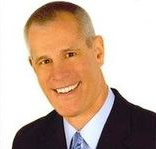
In many ways, I believe I am just like any of the billions of people existing on this planet.
I have reinvented myself frequently over my professional career. After I graduated from college at The Citadel (where I played NCAA Division I basketball), I was employed in the Marketing Department at the corporate headquarters of Wendy’s International in Dublin, Ohio. From there, I worked in hospital administration for Riverside Methodist Hospital in Columbus, Ohio. After getting married and moving to California for my wife’s job, I became the Customer Service Manager for an academic publishing company in Santa Barbara. After our daughter was born and we moved to Cincinnati, Ohio, I became a police officer with the Cincinnati Police Department, where I was a SWAT Hostage Negotiator. Following a family relocation to Texas, I started a school security consulting business and coached high school girls basketball in Houston. Each time I took on a new job, I had to develop new skills and faced different challenges. There was always a significant learning curve with every new position.
But my greatest challenge began in early 2012 when I was diagnosed with a rare form of cancer called Acral Lentiginous Melanoma, which presented on the bottom of my foot. By the time the melanoma was detected, it had metastasized to a lymph node in my groin. Because my cancer is so rare (only about 6,500 people are diagnosed with this form of malignancy in the U.S. each year), I was treated at the world-renowned MD Anderson Cancer Center. I had two surgeries to remove the tumors, and after I healed, I was put on a weekly injection of the drug, Interferon, to help keep the disease from coming back.
I took those weekly injections for four years and seven months before the Interferon became so toxic to my body that I ended up in the Intensive Care Unit with a fever of 108 degrees. Fortunately, expert medical care saved my life.
The Interferon gave me severe flu-like symptoms for two to three days after each injection. I lost fifty pounds during my therapy, was constantly nauseous, fatigued, and chilled, my ability to taste food significantly diminished, and my body constantly ached. This misery went on for over 1,660 days!
One thing I learned during all my pain and suffering is that you have two choices. You can succumb to the debilitating discomfort and misery, or you can learn to embrace it and use it to make you a stronger and better human being. I chose the latter.
Welcome to the Athletics of Business, a podcast about how the traits and behaviors of elite athletes and remarkable business leaders frequently intersect. The real stories and hard lessons to help you level up your leadership and performance. Now your host, Ed Molitor.
Welcome back to another episode of the Athletics in Business podcast. I am your host and CEO of the Molitor Group, Ed Molitor. Now, before we get started, I'm going to ask you a favor. Please share this episode with those folks that are important in your life, whether it be coworkers, whether it be peers, whether it be mentors, mentees, family members, whatever. Because this is impactful. This will be probably one of the more special episodes you've ever listened to here on the Athletics of Business podcast and may ever listen to on the Athletics of Business podcast. I'm so fired up and excited to welcome today's special guest, Terry Tucker. And Terry and I go back a long way.
Last time we spoke before a couple months ago was in 1975 when his family had moved to the south side of Chicago and he was going to Marist High School. He's going to play for my father his sophomore year in high school and suffered a significant setback with a knee injury. And knee injuries back in the mid-70s weren't quite as fast healing as they are today. But anyways, Terry's had an incredible career professionally. So many different things that he has done. I'm just going to give you kind of an overview here. I want to get out of the way. I want to get out of the way and I want to let Terry tell his story and share his lessons and talk about his book, an unbelievable book, Sustainable 10 Principles to Leading your Uncommon and Extraordinary Life.
And to say Terry has reinvented himself frequently over his professional career would probably be a bit of an understatement. After he graduated from college at the Citadel, where he played NCAA Division 1 basketball, he was originally employed in the marketing department at the corporate headquarters of Wendy's International in Dublin, Ohio. From there, he worked in hospital administration for Riverside Methodist Hospital in Columbus, Ohio, got married, and then moved to California for his wife's job. There he became the customer service manager for an academic publishing company in Santa Barbara. After their daughter was born, they moved to Cincinnati, Ohio, where he fulfilled a lifelong dream of becoming a police officer at the Cincinnati Police Department, where he was a SWAT hostage negotiator. Some great stories inside of there. He is not done.
Following a family relocation to Texas, he started a school security consulting business and coached high school girls basketball in Houston and each time he took on a new job, he developed a new skill and faced different challenges. There was always a significant learning curve with every new position. But his greatest challenges began in early in 2012, when he was diagnosed with a rare form of cancer called acrylicinous melanoma, which presented in the bottom of his foot. And by the time the melanoma was detected, he had already metastasized to a lymph node in his groin. Now, because his cancer is so Rare, only about 6,500 people are diagnosed with this form of malignancy in the U.S. each year he was treated at the world renowned MD Anderson Cancer center, where he had two surgeries to remove the tumors.
And then after healed, he was put on a weekly injection of the drug Interferon to help keep the disease from coming back. And I'm going to let Terry pick up the conversation from there and tell the story and bring us up to speed inside of our conversation because that's just the beginning of an unbelievable journey. He now he is in fact, in a fight for his life. And we're going to talk about some amazing things in this episode, just like I said, a couple of them. How he came to appreciate that he could use his hurting and anguish to make him stronger and more resolute. We're going to talk about how an unexpected letter from his dad during his freshman year at the Citadel changed his life. What caused him to battle his mind for supremacy.
And very interesting part of the conversation is why he struggled so much with self confidence on the court in high school and college, even though he was a great basketball player. And then Terry will get into what he has learned during the fight for his life. And we're going to talk about the journey to writing his amazing book again. His amazing book, Sustainable Excellence 10 Principles to Leading youg Uncommon An Extraordinary Life. Enjoy this conversation again. Please share those important people in your life because there is so much here for everybody. Terry Tucker. Terry, thank you so much for joining us today on the Athletics of Business podcast. I am beyond fired up to have you here.
Thanks, Ed. I appreciate it. I'm looking forward to it.
It's been a, it's been a minute since we saw each other last and I did reference that in the introduction, but I, I believe, I don't want to try and do the math, but it was 1975. 76, so it seems like yesterday.
Yeah, I was 15 years old the last time I saw you, so. And I'm 60 now, so I'll Let your viewers do the math.
Well, hey, I'm so excited to jump into our conversation.
Thank you.
And I briefed. I briefed the listeners on your journey. Okay. But I really want to hear it in your words and bring us up to speed to where you're at, what you're doing, what kind of path things have led you down. And I want to dive into your work and into the book because there's so much incredible value here for everybody.
Well, I think the best way you talked a little bit about my cancer experience, and that certainly in my life, has been the biggest challenge. But basketball athletics has been a central part of my life growing up. And I played on the varsity team when I was a freshman in high school in Columbus, Ohio, before I moved to Marist as a sophomore. But the summer between my freshman and sophomore year in high school, I tore cartilage in my knee. And. And I had surgery to remove it. And this was a time shortly before arthroscopic surgery was available. So I have the large zipper scar on the right side on the outside of my right knee. After the surgery, the wound became infected. I developed a high fever.
And it was speculated that because of this infection, that scar tissue didn't grow in the area where the cartilage was removed. So as a result, when I went back playing basketball, I experienced that discomfort of that bone on bone pain. And because of the trauma to the bones, the joint continually swelled. And it got to the point where I was having the fluid drain from my knee every few weeks. So my surgeon was puzzled. He's like, you know, I don't understand why this is going on. So let's do an exploratory operation. And again, this was a time before MRI and CAT scan imagery was available. So I had a second exploratory operation. And the outcome of that surgery was the removal of 25 pieces of my bone that had chipped away, some of them as large as pieces of rice.
Now, after surgery, I was placed in a cast from my hip to my ankle and told that my basketball playing days were pretty much over. And then I might not walk normally again. And I was in that cast for the entire summer with nothing to do but wait and wonder what the future held for me. Up to that point in my life, I was, like, 15 years old. The only success I had experienced was on the basketball court. And because I wanted to continue doing something I loved and that I was good at, I refused to accept the doctor's prediction. And I knew I had to at least try to play again. So when the cast was removed shortly before school started in August, I was faced with a thigh muscle, a quadricep, that had significantly atrophied for months of inactivity.
So after the doctor examined the wound, he proclaimed the surgery a success, which I thought was kind of funny. He then handed me a piece of paper with exercises described in words and drawings for my rehab at home. He then shook my hand, he wished me luck, and he went to leave the exam room. And I started peppering him with all kinds of questions. How many repetitions should I do? How often should I do these exercises? And my personal favorite, what happens if the knee swells again? Now, his reply was intended to specifically address my knee rehab, but it was profound in its far reaching impact on my life. Unfortunately, it took until I was much older before I understood what he was really trying to explain to me. His response was short and to the point. His name was Bob Hamilton.
He was the team doctor for DePaul, and he told me to listen to my body for guidance regarding the number of repetitions I should do and how often I should do these exercises. If there was no pain, he told me to exercise more frequently and perform additional repetitions. If the knee hurt or swelled when I trained, I. I should use less weight and do fewer repetitions. Your body will tell you what to do, he said. Listen to it. So that's what I did. I went home and I began doing these exercises three times a day, every day. And as my leg grew stronger, I increased the amount of weight I was using and the number of repetitions I was doing. And once I was able to build back my quadricep, eventually I was able to start walking.
And then walking progressed to jogging, and jogging led to running. But the one constant, and I know that's kind of a long setup for this, but the one constant in all this was my mind. Every day, I had to battle my mind for supremacy because my brain was allowing doubt and fear to creep into my thoughts. It left me wondering if I'd ever make it back on the basketball court, it filled me with uncertainty and insecurity. My mind knew my fears, it knew my vulnerabilities, and it knew my weaknesses. But by listening to my body, as my doctor had said, and then struggling to stay positive when my mind was putting that doubt and anxiety into my thoughts, I was able to play basketball again.
And despite a third, rather minor knee surgery, I got a scholarship to play Division 1 basketball at the Citadel, where I lettered all four years and co captained the team my senior year. So that's kind of the setup for my battle with cancer.
Right. And that's a lot. Like you mentioned, all your success that you had known up to that point was on the basketball court. And all of a sudden back then there were so many unknowns about what you had today. It's very concise, very clear cut. Here's what you need to do when you do this. This is what's going to happen. So you go through this and it was very impressionable years. And you go to the Citadel in your book. And I don't want to give away too much without you talking about, but I absolutely love the book. Sustainable Excellence. 10 principles to leading your uncommon and extraordinary life. I love it. And you absolutely nail it in the book. But there's a story about when you were at the Citadel where you considered, you know what, maybe this isn't for me.
Maybe I'm not good enough. Maybe this isn't. Even though you're a hell of a player, an incredibly tough person, can you talk a little bit about how that showed up in your world?
Yeah, the Citadel was a. It's a different kind of school, you know, I mean it's a military college. At the time it was still all male. It's co ed now. But it was extremely tough. And just because you were an athlete, you didn't get a whole lot of special considerations. So I can't tell you the number of thousands and thousands of push ups I did as a freshman being at the Citadel. So, you know, it's freshman year, they have what's called cadre. And cadre is they have athletic cadre and they bring in the freshmen who are athletes. They bring them in before they bring the rest of the freshmen. And they teach you how to march, how to salute, how to do all that kind of stuff.
And one of the first things they did back then is shave your head so you're a cue ball. And part of that is they don't want you to quit. And they figure if you look like this, you're not going to quit and go home. But I really had gotten to the point I was so in my head and I mean that in a negative way because one of the things that. And we'll talk about this a little bit later, but what I was thinking was, I'm not good enough. I had about a year and a half to two years where I didn't play high school basketball. And I kept thinking, you know what? You're not good enough. You're a Step slower. You're this, you're that. Even though I was recruited by. He wasn't Coach K then, but Mike Krzyewski when he was at Army.
I literally remember one morning, we had come back from playing St. Joseph's in Westchester on a Friday night. It was a Saturday morning, and I wanted to sleep in, and my mom comes in and wakes me up. I get up. I'm like, I don't want to get up. What's going on? Get up, Mom. I'm not getting up. Get out of here. Well, then my dad came in. My dad was 6 foot 5 by 250 pounds, so he was kind of like Fonzie. He never hit you. But he knew that if he did, he'd probably kill you. He comes to the door, get up. Well, oh my God. Dad said it. Okay, I get up. Why am I getting up? Well, Joe B. Hall, the coach of Kentucky, who had just won the national championship, was on the phone, wanted to talk to me.
Like, why didn't you say that? I would have gotten up for that.
You know, throw me that bone. I'm out of that.
Really? Tell me why you want me to get up. I'll definitely get up for that. And so anyway, so, I mean, I was being recruited by Division one programs, and so. But somehow my mind wasn't like, well, you must still be good enough. So anyway, so I go to the Citadel, and finally I get to the point where it's like, you know what? This isn't for me. And I am literally walking over to the field house to tell the coaches I'm quitting. I've never quit anything in my life. And I thought, well, you know what? I'm going to stop by Mark Clark hall, which was kind of the student area, and I'm going to check my mail. And so there's a letter from my dad. My dad had never sent me a letter in my entire life.
And so I took the letter and I went to the field house and I went way up in the far stands in the corner where nobody would see me. And I started reading. And I may get emotional now. Cause I still this.
It's powerful. It's very powerful.
I started reading, and my dad, in a handwritten. You know, he didn't type any. He handwritten, had written seven pages to me, basically saying, pull your head out of your butt. You have an unbelievable opportunity in front of you with great coaches, a great school academically, and you've called home seven times since you've been down there, and not once have you ever asked about how anybody here is doing? How's your mom? How's your brothers? How's your girlfriend? It's all about you. Stop making it about you. Pull your head out, focus on why you're there, and get this done. And I mean, literally, when I was done, I was crying like a baby. Thank God I was so far up in the rafters that, you know, maybe the janitor would have got me, but other than that, I was good.
Yeah. So you went and sat at the top of the gym and read?
I did. And I read this letter with just tears rolling down my. You know, my dad was so proud of me. You've overcome all these knee surgeries to play Division 1 basketball. Nobody ever thought you'd make it. You know, you did. You know, everybody looks up to you. You can do this. Make it happen. And I literally pulled. You know, every Citadel cadet was required to have a handkerchief in their back pocket. And I pulled that handkerchief out, I wiped my eyes, I blew my nose, and I'm like, okay, I'm going to do this.
I got this.
And that was. You know, again, I believe in God, and I think God puts you in positions now. You don't have to go down the path God wants you to go. You can go on your own path. But, you know, I'm smart enough to realize that if somebody's directing me in that situation, I probably ought to listen. So I didn't quit, and I ended up playing. It was not easy. I had a fourth surgery right before my senior year and literally went home for Thanksgiving. Had the opportunity to come back at Christmas. I still wasn't able to play. And I remember the trainer, Andy Claussen, who was just a hilarious kind of guy. He's like, you come back, the rest of the team's going to go wherever they're playing. You stay with me.
We'll rehab, and at the end, I'll put you through your paces. If you can go, I'll tell the coach, you can go. If you can't, you're done. And I'm like, I can't be done. I mean, as much as I was hurting, I mean, I remember the very last game my senior year, just crying in the locker room. I'm like, it's over. So just a very powerful thing. My dad was my hero, you know, and just to get a letter from him, basically saying, you can do this. I could do it.
Well, and, you know, speaking of your dad being your hero, let's talk about that, because it's in the Book and another powerful story is so your journey. I mean, you've had a heck of a journey. Your career, your professional career has been a heck of a journey, and it touched a lot. But everywhere you went, you were successful and you had an impact, right? And that's. That's what's about. And we'll talk into all that stuff, but talk about you get done in the Citadel now what happens?
So I, you know, I go home to find a job. You know, when I graduated, there was no Internet. There was no anything like that. So, I mean, you got a job back then by either who you knew or grabbing the newspaper and going through the want ads.
But at home now I should say, you were. You weren't in the south side of Chicago anymore.
We weren't. My dad had. We had. My parents had moved back to Columbus, Ohio. So my. My dad was actually the senior vice president for. For Wendy's in the real estate area. And when were in Chicago, he was the national real estate manager for McDonald's. So we get back, and here I am. I'm the first person in my family to graduate from college, and I'm all set to make my mark on the world with my newly obtained business administration degree. I knew nothing. I knew nothing. And so here I am. I'm going to move home, I'm going to get a job, I'm going to get an apartment, getting a car. My life's going to just flow out this way. And then all of a sudden, it didn't. Because my grandmother, my mom's mom, was living with us.
And my grandmother and my dad literally both got cancer at almost the same time. My grandmother had lymphoma. My dad had breast cancer, which was incredibly rare back then. And so I spent the next three and a half years living with my mom and dad, helping my mom and my brothers. They were kind of in and out with going to college and stuff, basically care for them until they die. I mean, my dad was diagnosed literally in stage four cancer. I mean, they should have just said, here, go home and die.
But he kept going to work, though, didn't he, for a while?
He did. He did. And I really believe so. I mean, it's funny because my routine every morning was I would get up, I would go into my mom and dad's room, and I would empty my dad's urinal. That was the first thing I did in the morning because he couldn't get out of bed. And literally, with my first paycheck at Wendy's, I I bought a cordless phone where I kept the receiver in my bedroom. And my dad had the base right next to his bed. So if he needed to turn over in bed, he would just hit a button and it would ring in my bedroom. And I'd come in and help him turn over. That's how sick he was.
So I would do this urinal and then I'd go to work, and I'd come home at lunch and I'd help my mom finish getting him dressed. And then we would put him in my car. I'd drive him back to the office. Because my first job was at Wendy's. I was in the marketing department. So I would drive him back to the office, get him to his office, move my car around to the flunkies parking lot, and then at 5 o', clock, I just reverse that. I drive my car back to the front of the building, get him out into the car, home, upstairs, undressed into bed for the night. And that went on for three and a half years. But I really believe.
Three and a half years?
Yeah, I really believe that his ability to go to work, to feel like he had a purpose, really kept him alive. Because like I said, he was diagnosed at stage four. There was really nothing they could do for him. They tried a bunch of things, including removing his testicles because they thought that cancer was. Breast cancer in women is hormonal, so. Well, maybe it is in men. So we'll remove his testicles. I mean, they tried all kinds of stuff. They were throwing stuff at the wall, see what would stick. And I really think that he lived that long because he had a purpose. If he hadn't, he would have died much sooner.
And we'll get back to the purpose because that shows up a lot, you know, in your book and in your story. So then when you were done with Wendy's, then what?
What.
Where was your next venture? Because I know deep down inside, I don't want to give it away, but you always wanted to be Secret Service.
I wanted to be in law enforcement. My grandfather, my dad's dad, was a Chicago policeman from 1924 to 1954. So he was in Chicago during the Capone days, the Prohibition, and, you know, the gangsters and all that kind of stuff. But he was shot in the line of duty with his own gun, taking a bank robbery suspect who had killed a guy during the bank robbery back to the lockup. He was a detective at the time. The guy saw the press at the end of the hallway, asked my grandfather for his comb. My Grandfather reached into his sport coat, and when he did that, the butt of his gun, which was in a shoulder holster, came out. The guy grabbed it, they wrestled, the gun went off, shot my grandfather in the ankle.
But my dad always remembered the stories my grandmother told about the knock on the door, you know, Mrs. Tucker, please grab your son. Come with us. Your husband's been shot. And he never wanted me to be in law enforcement. Never, ever. Did everything he could to prevent me from being in law.
He literally did do everything he could.
He did. He worked his butt off to make sure I didn't do that. So I did what every good son did. I wait till he passed away to, you know, pursue my dreams.
You know, respectfully so, too.
Absolutely. I'm not going to poke the bear when he's sick. That wouldn't be good.
So what happens next?
So after Wendy's, I go to work for a healthcare organization. A large hospital. 1,100 beds, 5,000 employees. I was there for about 10 years. Met my wife, we got married, and we moved to Santa Barbara, California. And my dad had died by this time. My grandmother had died by this time, moved to Santa Barbara. I get a job as a customer service manager for an academic publishing company. But I find an ad for a class at the City College to become a reserve police officer. And I remember sitting at the table one night with my wife. Our daughter hadn't been born yet. And I'm like, hey, I know we've been married for three, four years now. You've known me eight to five, Monday through Friday, kind of guy, suit and tie. I think I want to try this. And she was great.
She's like, if you want to try it, do it. So I took the class, got on with the Santa Barbara PD As a reserve officer. I. I would work all week at my normal job, and then Friday night, I'd come home after work. I would put on my uniform, go to the department, go to roll call, and then basically patrol from 7 at night till 7 in the morning. And I would come home exhausted, but I had this big grin on my face. And my wife was like, you obviously love this. This is a passion. And I did. I loved going out. So our daughter was born, we moved to Cincinnati, and I kind of turned to my wife again at dinner. I'm like, I'd like to do this full time. And she was like, okay, you know, yeah. Just had a daughter.
Daughter was young, you know, And I'm like, yeah, I understand. You know, this is something entirely different. And I Worked as a policeman in Cincinnati for almost 10 years. And I was, I worked nights the whole time. I started in patrol after the academy, then went to the drug unit, worked nights there, then became a boss. I was a sergeant and went back to running a relief and being a boss at night there. And I was even on the SWAT team as a hostage negotiator. So I got to do a lot of fun things, a lot of cool things. But I mean, my wife used to say it never went right on. Sunday night she'd make a nice big dinner, we'd sit down and my pager would go off. It'd be a SWAT call up. It's like, I gotta go.
So was it everything you thought it would be?
Oh, it was more. It was more. And you don't get into that line of work. You don't stay in that line of work. You may get into it because I used to talk to the recruits at the academy because we would train every month, the negotiators down at the academy and occasionally say, hey, will you talk to the recruits? Sure. And I used to tell them they're going to give you six months of learning how to do all this stuff on your belt. But the two greatest weapons you bring to this job are your brain and your mouth because you can turn a yes person into a no person by what you say. But, but you can also turn a no person into a yes person by how you do it.
And I always told them that, like if you're here to, you know, kick ass and take names, I guarantee you there's going to be somebody out there that's going to be bigger, stronger and faster than you. And you're going to get your butt kicked or somebody else is going to get their butt kicked, or worse, somebody's going to get killed. And I mean, I've been to plenty of police funerals and you know, they're great, but that doesn't make that person any less dead.
Right?
So I loved it. I worked with great people. You do that job because you want to help, you want to make a difference, you want to have an impact on your community. You don't do it because of the money you make or anything else like that. And it's, you know, despite what people think today. And I can tell you I had a partner who was in the academy with me and were kind of the hot car. We were a two person car. Cincinnati ran mostly one person cars and we got all the hot runs, the drug runs, the gun runs, the domestic violence runs. I mean, if it was violent, we got it.
And she was, she had a master's degree from Marshall University and she'd done counseling before, but she was a self proclaimed hillbilly and she sounded like a hillbilly, but she was smart as a whip. And we worked an entirely African American neighborhood for three and a half years on nights. And we let our relief in everything, you know, felony arrests, misdemeanors, DUIs, guns recovered, dope recovered, wanted people, the whole nine yards. And we never got complained on. And I think the biggest reason why is we knew how to talk to people. You know, we knew how to tell, you know, this is why we're doing what we're doing. Right. Oh, okay, that makes sense. You know, so many cops are like, you know, I don't need to talk to you. You don't need to, but why wouldn't you?
You know, I mean, the danger's over. This person just wants to know why they got stopped. Well, your car matched the description of, you know, robbery suspect, and we thought it might be him. It's not. Thank you for your cooperation. Have a nice night. That's all you got to tell them. They get it, then, oh, I understand why I was stopped. I wasn't stopped because I was black. No, you were stopped because your car matched the description. Well, if you don't tell them that, then they walk away or drive away saying, oh, they just stopped me because I was black. No, just talk to people.
Yeah. So you saw a lot. I mean, you saw a lot in Cincy, in some unbelievable stuff there, but then you're not done. Most people who listen to this podcast say, God, that was a great career, but you are not done by any stretch of your imagination. So where did you go from there?
So my wife lost her job in Cincinnati and she's the primary breadwinner. And, you know, I've always believed you do what you do for your family. And as much as I love being a cop, we had to move. She couldn't find a job in Cincinnati. We moved to Houston and I started a school security consulting business. And so I, I worked with private independent schools around the United States to improve their physical security. Right. Their policy. I wrote their policies and procedures, I trained their staff. I did all kinds of stuff like that. And, and then I also coached girls high school basketball. We have one daughter who got my height and is 6 foot 2. So I coached her team in high school, freshman, sophomore, junior year, and then we moved again to Denver. So I did not coach her. Her Senior year.
So, yeah, you know, those were pretty much. I was a consultant one hand, which was great because I was my own boss. And I could say, no, you know, I'm going to kind of slow the business down to coach basketball, and then when the season was over, kind of ramp it back up.
So you took all these experiences and then the struggles that we'll talk about, and I'd love for you just kind of set the table. 2012. You know what happens and what rocks 2012?
You know, I'm coaching basketball, and I have a callus break open on the bottom of my foot, and I'm like, well, you know, I'm on my feet all day. You know, practices, games, all that kind of stuff. And so, you know, eventually, you know, a couple of weeks, it didn't heal. So I went to a friend of mine who was a podiatrist. I'm like, hey, what's going on? Oh, I don't know. Give me some pads. Well, that didn't work. It might be infected. Give me some antibiotics. That didn't work. Well, you might have a cyst in there. So he cuts out this cyst and he shows it to me. It's just a clear sac with, like, a jaw.
We remember how painful those were, too, playing days.
Yes, I do.
Even though you couldn't see him, those things were painful.
Yes, they were. They were very. So he cuts this thing out. He's like, I've seen a thousand of these. No big deal. But I'll send it off to pathology anyway. You know, a couple stitches, you'll be good, you know, in a couple of weeks, super two weeks later. And like I said, this guy I knew, he's a friend of mine. And I get the phone call. I was literally. I was walking out of. I remember this like it was yesterday. I was walking out of FedEx. It was in the morning. I just sent one of the schools I've been working with a final report, and my phone rang, and it's him. I'm like, oh, great. Okay, I'm ready to get this behind me.
I get in the car, turn on the air conditioning because it's Houston and it's roasting and it's humid, and he's on the other end, but he can't talk. And the more he can't talk, the more frightened I'm getting. And finally, he's like, I don't know how to tell this to you, but you have a rare form of melanoma that's on the bottom of your Foot. And there's only about 6,500 people in the US that get this form of cancer every year. He's like, you need to go to MD Anderson to be treated. Now, MD Anderson is the premier cancer hospital in the world. People come from all over the world to be treated there. And I'm like, no, I'm just a basketball coach. I'm good. I'm living my life like everybody else.
No, I don't have this, you know, so it was the whole denial thing, and then you kind of go through the whole, yeah, I get mad, and, you know, oh, my God, now I'm scared. You know? So that's pretty much the biggest challenge of my life. And I've been dealing with that ever since. I, you know, I learned that most of us, you know, melanoma. I got a mole on my skin. That's the vast majority of melanoma. Then the second type is the one I have. It appears either on the palm of your hands or the bottom of your feet or in the nail beds. And then there's even a third kind, which is even more rare, that appears in your mucous membrane, so in your nose, your mouth, things like that. So I learned more about melanoma than I ever wanted to know.
But it was okay. You know, Like I said, never quit anything. And I can't quit this. I don't have the luxury of quitting this. So now I got to fight it and went home, told my wife. We told our daughter, who was in high school, and we told her that. It's like, we'll tell you the truth. We will never lie to you about what's going on with dad or how bad things are or how good things are. We'll tell you the truth. So I got into MD Anderson. I had two surgeries. One to remove the area of where the tumor was. They injected dye in, which went up to the lymph nodes in my groin. They took out three lymph nodes, send those off. One of them came back positive for a microscopic amount of cancer.
And I was highly encouraged to remove all the lymph nodes in my groin, which I had another surgery for that, and then a skin graft on the bottom of your foot. And here's another thing I didn't realize. All the skin on your body is the same, except for the skin on your hands and your feet. And so they took a piece from my thigh and grafted it onto the bottom of my foot. Well, that wasn't the same toughness of skin. So I was Constantly having the callus part grow up to the graph. Where I would have to. Well, my wife would, because she was. She had a much easier time doing it than I did. Where I would you basically once a week have to cut off all this kind of callous skin without trying to cut the graph at the same time.
So it was quite a feat. But she was, she got very good at it, right?
Yeah. God bless her.
Yeah, yeah.
I mean, and then an unbelievable fight ensued there. So after that, what?
So after that, I was. I was put on a drug called Interferon. And I knew people who were on Interferon, they were on it for hepatitis. It's a drug that they use, but they're on it for about a year. I'm like, great, I could probably do this. So I talked to my oncologist and I'm like, I can do this. I can probably do this for a year. And she's like, I want you to be on it for five years. I'm like, excuse me, you want me to be on this drug for five years? So this drug for me was horrible. It was nasty and it was debilitating. I had to inject myself every week. And I would do it on a Saturday night. Our family would go to mass on Saturday night, and then Saturday night I would inject myself.
So Sunday, Monday and Tuesday, I basically felt like I had the flu. I was throwing up, I was cold, I had the chills, I had a headache. Everything you can imagine about what the flu is. So picture that every week for four years and seven months. It was like 1,660 days. And then the other days you start to feel better, but you still were chilled or you were nauseous. I mean, there were times when my wife would cook a meal and I would just be. She's like, you know, at least come to the table and sit with us. I can't. I'll throw up. Just the smell of food. I lost my ability to taste. I lost £50.
I used to joke that I was so skinny that I felt I could go hang gliding on a Dorito, you know, I mean, I was literally so skinny. My brother in law bought me a heated vest that had a battery in it that, you know, I could try to stay. It'd be 90 degrees outside and I'd be freezing. And this went on for four years and seven months until I ended up in the intensive care unit with a fever of 108 degrees from the medication. It had just gotten so toxic to my Body. Thank God. I was at a level one trauma center, and they were able to stabilize me before they got me to the icu. So that happened. It was like, okay, the interferon, we're done with that. And then they suggested, well, the disease came back shortly after the interferon.
They said, well, we'll put you on a biologic medicine, like, okay, we'll try that. That didn't work. So my only option was the amputation of most of my left foot. And that happened in 2018, 2019, came back again, had two surgeries then, and then in 2020, earlier this year, right in the middle of a global pandemic, I had a undiagnosed tumor in my ankle that grew large enough that it fractured my tibia. So the only option there was the amputation of my leg above the knee. And they also did more testing and found that I have multiple tumors in my lungs. I didn't really want to do chemotherapy. We kind of had a family meeting about it. I'm like, you know what? I'm done. I don't think so. Of course, my wife and daughter. Yeah, you're not done. You're not done. You're doing chemo.
So I did chemo, and I've been doing chemo. It has shrunk the tumors in my lungs. I'm feeling much better. But now my doctor wants to put me in a clinical trial. I just went a couple days ago for some pre screening. I'll go again in a couple of weeks for more screening, but it looks like I'll get into that trial. But the drug that they want to put me on kind of mimics the same symptoms as interferon. It might make me nauseous and tired and cold and all that kind of stuff, but it's designed to. Does nothing to the cancer. It's designed to rev up the immune system to get your body to fight it, which is really what they're trying to do.
Yeah, well, it's tragic what you've been through. It's incredible what you've been through. But what's even more incredible is your ability to establish motivational check, which I'd love to talk about to write this incredible book, and I'd love to go into the story behind where the book came from, because athletics continue to show up in your life and the relationships from it. But I can't say now, first of all, I can't thank you enough for doing what you do, because the authenticity, but the level of realism, this isn't just someone writing A book. This isn't someone life. This is it. This is a fight for your life, literally. And you're preparing people every single day to. Some people don't like to hear we're going to go to battle today. Right. Well, guess what? At the end of the day, that's what we're doing.
Especially what we're going through right now during this pandemic. But I'd love for you touch on how you came about founding motivational check, why you did that and how that led to the book and the stories that led to the book.
Sure. Well, let me kind of back up just because there's a great story that I like to tell. I've always been a big fan of westerns. Growing up, mom and dad used to let me stay up and watch Gunsmoke and Maverick. And my favorite was Wild West Jim west and that. And in 1993, the movie Tombstone came out. And it starred Val Kilmer as John Doc Holliday and Kurt Russell as Wyatt Earp. Now, Doc Holliday and Wyatt Earp were two living, breathing human beings that actually walked on the face of the earth. They're not characters made up for the movie. And there's a scene at the very end of the movie. And Doc, they called him Doc. Cause he was a dentist by trade, but he was pretty much a gunslinger and a card shark. And Wyatt was just the opposite.
He'd been a lawman his entire life. And at the end of the movie, Doc is dying of tuberculosis in a sanitarium in Glenwood Springs, Colorado. And Doc Holliday died in that sanitarium. He's buried at the Glenwood Springs cemetery. And Wyatt, at this point in his life, is destitute. He has no job, he has no money, has no prospects for a job. So he comes to visit Doc every day. And they play cards to pass the time. So the two men in this scene are talking about what they want out of life. And Doc says, you know what? I was in love with my cousin when I was younger. She's all I ever wanted. But she joined a convent over the fair. And Doc looks at Wyatt and says, what about you, Wyatt? What do you want?
And Wyatt says, I just want to lead a normal life. And Doc looks at him, has one of the greatest lines, I think, in a movie. Doc looks at him and says, there's normal. There's just life. And get on with living yours. Would I like to not have cancer? Oh, God, I would love not to have cancer. But these are the cards that I've been dealt with. And so I have to play them. So you decide. Where do you want to go? And I made a decision a long time ago that I was never going to. No matter how much I hurt, no matter how bad I felt, I was never going to project that on to a nurse, a doctor, a technician, somebody who was doing stuff I was never going to do that I was going to try to be positive.
And I remember laying in bed after I got my foot amputated, and I was really kind of where. Why it was. I had no goals. I didn't have a job. I didn't have. And I'm like, you know, I'm kind of looking up at the ceiling, like, all right, God, what do you want me to do? You know? And I was expecting. I was hoping the clouds would open. And, you know, God, you will do this. And, you know, there's that old Lily Tomlin joke that says, you know, when we talk to God, it's called prayer. When God talks to us, it's called schizophrenia. So I'm kind of glad I didn't get the response. But people were like, you know what? You should write a book. You should write a book. I'm like, no, I'm a cop. Cops don't work.
I don't want to do this. So I. Eventually, enough people said it again, kind of like the letter from my dad, you're going this way. I want you to go this way. Kind of the same thing.
Yeah.
You've got nowhere to go. You're kind of asking me what you want to do. I'm telling people to tell you what to do. I want you to go this way. So I spent a year writing an entire memoir of my cancer experience. And I'm like, okay, that's great. I got this 400 page book of my cancer experience. And I go to the agents and I'm like, hey, will you market this? And every single one of them told me the same thing. Publishing companies will not publish a book about cancer unless you're famous or you have a large platform. Well, I don't have a large platform, and I'm a nobody. So I was like, I kind of like, God, really? Fordham paid a whole year of my life, and I came to the conclusion that God said, write the book.
He never said publish the book. So I wrote the book, and I'm glad I did because it helped me get to this book we're going to talk about. And so I'm like, well, okay, write a book. What's next? Well, you should start this blog. And I'm like, I'm 60 years old. I can barely turn my cell phone on, and you want me to write a blog? I mean, I got to put a blog together. It took me four months to do four pages. Because I would read something. I'm like, I don't know what that is. So I had to go research it. Okay, well, now I'm here. Okay, well, now I don't know what that means. Now I got to go reset. So, I mean, literally, it took me four months to do four pages of motivational shot. Then I needed a name.
What do you call this thing? And I remember back in the police academy, when were being. We do defensive tactics, and I mean, we ran. I mean, the guy who taught us defensive tactics and physical fitness in the academy was animal. I mean, this guy, he was amazing. And I remember there was. So if were doing something and somebody was at the end of their rope and they were exhausted and they can't go on, all they had to do was yell out, motivational check. And the rest of us would be like. We would yell out 84, which was our class. We were the 84th recruit class. And it was just. It was something to let people know, hey, you're not alone. We're here with you. We're sucking it up just like you are.
You know, if you're having a hard day, believe me, we're having just. Just as hard a day. So I thought, I mean, that's a great, you know, motivational check. That'd be a great title or, you know, for this blog. So that's kind of how motivational check came to be.
I love it.
Now, the book itself. The book is, as you said, called Sustainable excellence. You know, 10 principles to leading your uncommon extraordinary life. And it really was born out. You mentioned athletics. So when I was a high school basketball coach in Houston, I had a point guard, little bitty girl, you know, who was just darted all over the place, was just a great kid. Played softball as a pitcher, you know, and she ended up going to University of Georgia, and she and her fiance moved back to or. They moved to Denver after they graduated. So we got to spend some time together. And I sent her a text message one day. I'm like, really glad you're. You're in town, and I get to watch you find and live your purpose. And there was this pause.
And like a half hour later, she comes back to me. She's like, what do you mean by that? What is my purpose? And I remember I gave her a quote from Mark Twain, said that the two most important days of our lives are the day we're born and the day we figure out why. And I said to her, I coached you. I don't know what your purpose is. That's something you have to find. You have to lead with your heart. You have to put it out there and find it. And I told her, I said, now remember, there are people who, like, they're born and they're, I'm going to be a doctor, or I'm going to be an engineer, or I'm going to do whatever you're going to do. There are those people, but most of us are not like that.
We don't know what we're going to do, or we can't get there right away. I said, so make sure you lead with your heart. But remember this. Kentucky Fried Chicken was founded by Colonel Sanders in his 60s. I don't know if that was his purpose in life, but I'm assuming that it probably was. So just don't stop. Because I think so many people stop doing. You know, they stop looking. It's like, I'm frustrated. I just got a job. It's no big deal. I'll just live my life. Those are common and ordinary people. Common and ordinary people do nothing in their lives.
So I had this conversation with my former teammate, and then I have a basketball player at the Citadel who reaches out to me on LinkedIn and says, hey, what are the things that I need to know to not only be successful in my job, but to be successful in life? And I talked to him a little bit about. And I'm working on a second book, and I talk to myself. You know, success is great, but I think you really want to lead a life of significance. You know, success is, I was successful. I did something. I founded a company. I led a company. I led the part, whatever it is. Significance goes much deeper. Significance is I helped people. I was significant in other people's lives. I made a difference in their lives. And I told them, I said, you can be both.
You can be successful and significant, but I think it's more important to be significant. So I thought about this for a while. I'm like, I didn't want to give him the classic, show up early, work hard, listen more than you talk, whatever. And I started writing stuff down, and eventually I had these 10 principles, and I thought, well, I've got a story about that in either my life or a friend of mine or somebody I knew. Oh, I Got a story about this, I got a story about that. I got a story about that. Okay. And literally between the time I had my leg amputated and the time I started taking chemotherapy, I wrote this book.
And that was. How long was that? What was the duration that?
So April 21st was my amputation. So April, May, and I started chemotherapy, like, late June. So, like, two and a half months.
That's amazing.
I wrote this book.
Yeah.
I don't know how. I mean, I look at. Like I said, that's it.
I mean, because it comes from the heart. The book was already written, really, when you think about it, the book was already written in your mind and your heart. I mean, it was already there, and that's what makes it so. That's why I found it so powerful. And the book comes out. This podcast will release, I believe, either right on or the day after, but on October 20, the book was released or will be released.
Will be released the 20th.
Yep. And we'll have all that stuff in the show notes. But when you read the book, there's no choppiness to it. It flows. Everything really resonates. Right. And it's the 10. And I don't want to go into the 10 principles and give it away, but I'd love for you to dive into one of them and share a story.
The one I really like is. I think it's the second principle in there. I mean, they're really not in any particular order. You can move them around, and they don't really necessarily build on each other. And I talked a little about this when we're talking about the knee surgery. So I am loaded with confidence. When I'm 15 years old, I'm loaded. I mean, I could walk on air as far as I was concerned. I mean, there was nothing I couldn't do on the basketball court. And then I have these knee surgeries, and one of the principles in there is the majority of people, and I'm certainly guilty of this, and we probably all are. People think with their fears and their insecurities instead of using their minds. That's one of the principles. And that was me. You know, I'm like, I'm on top.
And then I have these three knee surgeries. And, you know, my mind knows my fears, it knows my worries, it knows my anxieties. And I start buying into that crap. I start buying into, yeah, you're not good enough. You've lost a step. You're behind the eight ball. Whatever was playing out in my mind, like I said, I'm still being recruited by Division 1 coaches, even after three knee surgeries. But my mind is like, you're not good enough. You're not good enough. And I bought into that. That made me much less of a college basketball player. I mean, I played for one of the greatest coaches, Les Robinson, super guy, took over for Valvano When North Carolina State got in trouble. Was an athletic director at three Division 1 schools. Just a superhuman being.
I mean, he came and sat with my parents and said, I know your knee situation. I'll guarantee you a four year ride at the Citadel. You blow your knee out day one, doesn't matter, I'll stand behind that. A guy of integrity, a guy of character. And I'm like, I should have been a better player for him because he stuck his. He stuck his neck out for me.
And it's hard. So how do you move past that? Right? Because everybody does at some point. We're so driven by fear, whether it's we're conscious, whether we're aware of it or not, we are. And we need to do a better job of increasing our awareness. But to the point, how do you begin to pay attention to your mind, to direct your mind, to control your mind instead of controlling you, and to not be driven by your fears?
I think part of that is you mature. I think when we're young, like I said, I graduated from the Citadel, first person in my family to do that. I'm all set to make my mark on the world with my business administration degree. And like I said, I knew nothing. I knew nothing. But here I am thinking I am all this. And I think as you mature, you come to the realization, especially if you're in the things that you do, whether you're coaching, whether you're running a department, you're running a company, whatever you're doing, you start to realize that, you know what? People are relying on me. You know, people for their livelihoods, for their paychecks, for their insurance, whatever it is, they're relying on me. And then that starts to spill over into your personal life.
And I think you start to realize that it goes back to, well, yeah, I want to be successful. When you're young, I want to be successful. Well, as you get older, I want to be significant. I want to have that impact on people. I want to make a difference in their lives. And that's kind of where I am right now. You know, however much time I have left, and according to my doctor, it's not very long, I want to make a difference in the world. I want to make people's lives better. And if I can put a saying up or a video up or a story up on motivational Check where people will say, hey, that resonated with me, then you know what? I'm good with that. And it's funny because I had my very first podcast.
The guy asked me this question at the end. He said, how do you want to be remembered? And I thought about it for a while and I was like, I don't. I mean, I don't have any great. I mean, nobody's going to name a street or a basketball court or, you know, anything after me. I don't necessarily want to be remembered. I just want to do the best I can do. Because I can't imagine standing in the presence of our creator after I die and be unable to account for the gifts and the talents that he gave me and that I didn't use to make his world a better place.
And I think if we all kind of looked at that, I mean, when I talk, when I used to speak to people, my very last thing I asked them to do is for the next 30 days, everybody you come in contact with, imagine that they'll be dead tomorrow. The person who cuts you off in traffic, or the coworker who takes credit for your work, or your 16 year old who constantly defies you, imagine that they'll be dead tomorrow. And if you do that for 30 days, you'll have so much less stress in your life. You'll just see everybody more positively. I'm going to put some love into this world instead of hate. There's a whole lot of hate going on right now for me. I'm going to put as much love into this world as I can with whatever time I have left.
And it's so powerful. I mean, the word love is so powerful and unconditional love. But you just talked about a life of significance. And I think when you do that, you really enjoy the journey a lot more.
Oh, absolutely. I mean, you'll work your butt off for significance. I mean, you work it off for success too. I mean, if you're following your passion, you're following your heart, you know, you found your purpose. Yeah, you'll work your butt off. But it's fun. I love it. I was like being a cop. I couldn't wait to get up. Let's go. What are we going to do today?
Well, you know, before, I want to read something to you that's actually in your bio. I want to read it and I just Want you to comment on it as we wrap things up here. But before we do that, where can folks find out, you know, motivationalcheck.com, where can they find out all your social media put great stuff up on LinkedIn, whatever your social media platforms are, as well as most importantly the book.
So if you go to motivationalcheck.com on the right hand side, there's my Twitter account, my Facebook account, my LinkedIn account, you can just click on those and it'll take you to those. If you want to send me an email motivational checkool.com I mean, I respond to everybody that sends me something. So, you know, that's probably the easiest way. And then you can access the book through motivational check. But it's available on Amazon, it's available on barnes and noble.com it's available on ibooks and that kind of stuff. So it's out there if you want to find it. Or you can go to motivational Check, click on the link on the first.
Page and we will have all of that in our show notes here too, as well. Okay, so they'll be in the itunes, they'll be on the website, all that and they can go to that as well. Now, I want to read something to you because I think it's so pertinent to what we're going through right now. I think it's pertinent every day. I think it's very significant every day. But right now everything is so magnified, right? And like you said, there's so much hate, there's so much anger, there's so much blame going around. You know, in the old days they had words for stuff like that on the south side, but we'll let that be.
Yep.
But in your bio you talk about, I understand what it was like to fight for your life. And one thing I've learned is that as long as you do not quit, you can never be defeated. However, I came to understand the responsibility for altering your life is entirely up to you. Now, forgive me if I repeat some of the things we've talked about, but this is so significant. Whining, complaining and blaming others for your plight will not enhance your experience. Motivation alone will not cause you to progress. You have to want to make the change and commit to it every minute of every day. There are no days off when attempting to make significant and lasting improvements. Just as fire strengthens metal and lifting weights until exhaustion grows muscle, use the pain and discomfort you are experiencing to harden your mind.
And make you a better and more determined individual. Keep fighting. No matter how many setbacks you have or how bad you feel, believe in yourself and know that there will be light at the end of your journey one day. Remember, you are never out of the fight. No matter how often you fail or how many obstacles you face. Stay positive and keep moving forward. Can you just wrap this up with a comment on that? Because when I read that, I sat there, I put the paper down, I highlighted it and I walked and got a bottle of water, came back down, I sat there and I will always have this. At some point in the time in my child's life, this will come out and I'll throw it in front of them and I'll just, I won't even read it to him.
I say read it. You figure that out. And they're, you know, God bless them, 8 and 6. They're doing a pretty decent job for their age. But that is such a significant three paragraphs. Can you talk about that just a little bit?
So I have a post it note right here on my desk that I see every day and it's got three points on it. Number one, control your mind or it will control you. Number two, embrace your pain and suffering and use it to make you a stronger and more determined individual. And number three, as long as you don't quit, you can never be defeated. I see those every day for as long as I'm at my desk and you read the same thing over and over again, you hear the same thing over and over again, you start to internalize that. And nobody's going to make you great, nobody's going to make you successful, nobody's going to make you significant. That's on you. God gave you. We're not all born with the same gifts and talents.
We can't all be Albert Einstein or Bill Gates or Jeff Bezos or we can't. But we can all be the best person that we're capable of becoming. And I read John Wooden's They Call me Coach book when I was in eighth grade. Probably the book that had the biggest impact on me outside the Bible. And I remember seeing his definition of success. Success is peace of mind, which is a direct result of self satisfaction in knowing that you did the best to become the best that you're capable of becoming. And I'm like, there you go. That's on you. That's not on your coach, that's not on your parents, that's not on your teachers, that's not on your socioeconomic status. The Color of your skin, that's on you. None of that other stuff matter.
But we constantly, I mean, I used to hear it all the time, you know, I can't do this, I can't. I hated that.
I.
If I had a. When I was coaching high school basketball, I told my players, I don't like to run for punishment. I want to run for a purpose. And we did drills where we did a lot of conditioning. But we're not going to run because I'm mad at you. Except for one thing. If I hear anybody say the word can't, I can't do this. You're running. That's the only time I'm going to do it. Because I'm going to punish you for that. Because I don't want to hear that word. And I just kind of felt that I have been so sick and I've been in so much pain that there are days literally I prayed to die and I didn't die. So obviously I'm not done with my journey.
And this whole thing with motivational check, like I said, am I doing the right thing? Am I helping people? I don't know. I think I am. But when I wrote that book, I gave it to some friends of ours, young people in their 30s, young kids. He was a former Navy Seal, she's an attorney. And I thought, these people are so squared away. I mean, I've had more conversations with them about the impact of those 10 principles on their life. Am I doing the right thing? I'm thinking, you're a Navy seal, you're the toughest person in the world, you're an attorney, you were a prosecutor, you now have your own real estate business. This book can't possibly have impact for you. Oh yeah, book have impact for me. Even my publisher gave it to his 13 year old twin daughter. Said, hey, read this.
They came away. And then I knew, maybe there's an impact here. Maybe these stories can have a positive impact. But again, they're my story. If you take them and you run with them, that's great. If you don't like, that's a nice story that's on you. If you don't use this to make you better, that's on you. I can't make you better.
And that's what it's all about. But obviously just such a great game plan. You put it all out there and it's the real deal. I mean, this is the way it is. This isn't anyone trying to hack success or hack happiness. All that BS that we hear this legitimately is how to succeed and live a fulfilling life of significance when your back's against the wall. And Terry, I can't thank you enough for your time, for what you do, for who you are, and I really appreciate you.
Thank you. I've enjoyed it and I hope your audience gets something out of it.
Well, they certainly will, and we'll be sure to forward you all that stuff. But again, motivationalcheck.com everything will be there. The show notes will have everything Terry has been so kind to provide to us. It'll be there as well. And it was a very. I don't want to call it an easy re because sometimes people mistake that for just kind of you zip through it. It was a very powerful read, poignant read, and it was something that I could not put down. And I appreciate you giving me a sneak peek too, by the way.
No problem. I enjoyed it.
Thanks, Terry.
Thank you.
Thank you for listening to the Athletics of Business. Be sure to give us a rating and review so we know how we're doing. For more information about the show, visit the athletics of business.com now get out there, Think, act and execute at the highest level to unleash your greatness.