
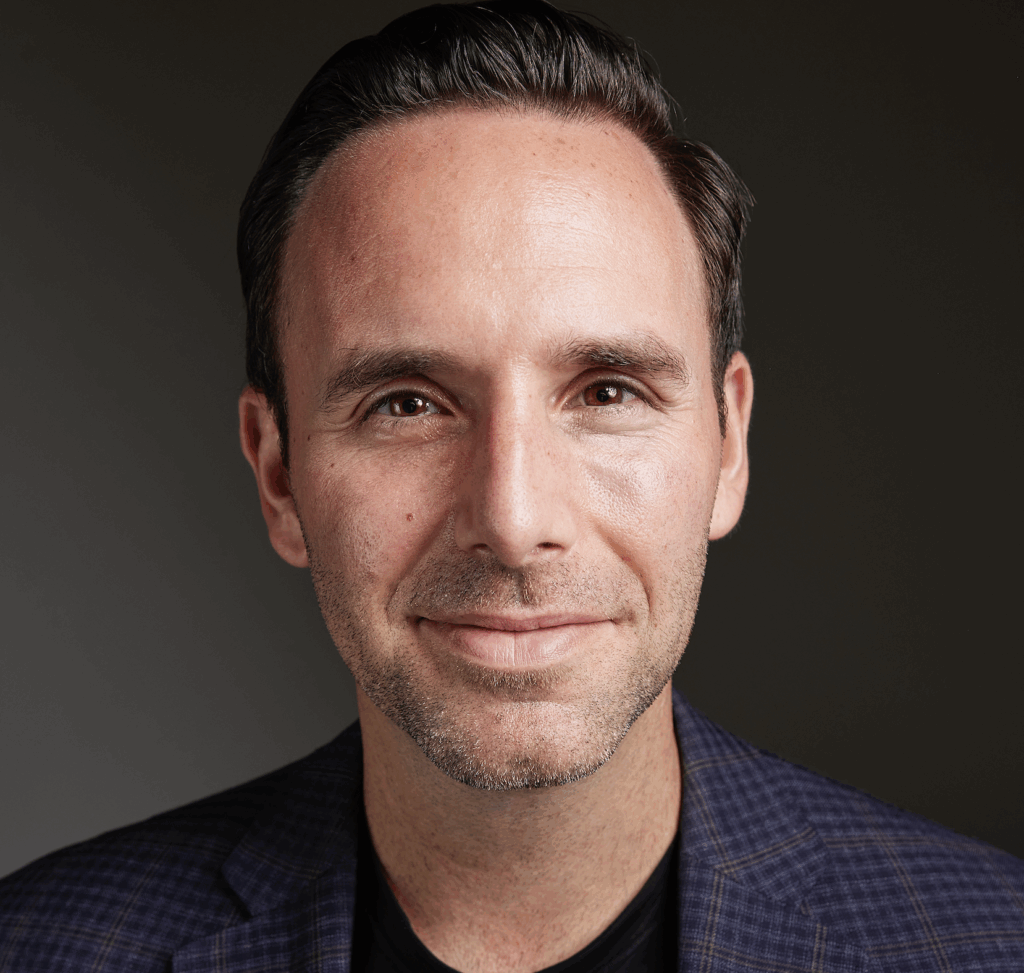
Geoff Woods is a visionary business leader, bestselling author, and founder of AI Leadership. He’s the host of The AI-Driven Leader podcast and creator of The Collective, a vetted community of executives who are using AI to create future-ready businesses.
Geoff previously served as Chief Growth Officer of Jindal Steel and Power, where he helped grow the company’s market cap from $750 million to $12 billion in just four years. Earlier, he co-founded the consulting company behind The One Thing, advising businesses from $10 million to $60 billion in revenue.
His book, The AI-Driven Leader, offers a practical guide for leaders who want to harness AI strategically—not to do more busy work, but to think bigger, move faster, and lead in ways that truly matter.
Geoff Woods
Ed Molitor
Foreign.
It's not about how advanced you are or how long you've been playing the game. You can learn something from everyone if you show up looking to give, not looking to get, and you show up asking the right questions. It's tough to read the label when you're inside the box. I'm in my own box. There's still stuff that I do where I catch myself, like, why am I doing this the old way, relying on my own human processing power rather than harnessing AI as a thought partner. The more I learn about this technology, the more I am aware of how little I know. But I've also made peace with that because I think trying to know everything about AI is how you lose. What are the God given strengths that makes Ed or makes Jeff?
And how do we harness AI to enhance what makes us?
Welcome back to another episode of the Athletics of Business podcast. I am your host and CEO of the Molitor Group, Ed Molitor. And the gentleman I'm about to welcome here to the Athletics of Business podcast is someone I have a tremendous amount of respect for and absolutely hands down, the reason they say the longest journey begins with the first step. And our special guest today, Jeff woods, is the reason I took that first step with AI. He is a visionary leader with a proven track record helping companies grow through strategic thinking, an AI driven solution. He is the number one best selling author of the AI Driven Leader, host of the AI Driven Leader podcast, founder of AI Leadership and the AI Driven Leadership Collective, which is absolutely mind blowing, the great things those groups are doing together.
And we talk a lot about that here inside this conversation. It is a highly vetted network of executives collaborating to harness AI to build better businesses and better lives. Now, as a former chief growth officer of Jindel Steel and Power, Jeff's strategic leadership helped the company grow its market cap from 750 million to over 12 billion in just four years. Another story that we jump into that's phenomenal. And prior to that, and this is where I first connected with Jeff. Prior to that, he co founded the training and consulting company behind the one thing advising businesses ranging from 10 million to 60 billion in annual revenue. Now I'm going to get out of the way and let you listen to this incredible conversation and I hope you get half as much out of it as I did recording it.
Jeff, thank you so much for joining us today on the Athletics of Business podcast. Man, this has been a long time coming and I am glad to finally have you here.
It's a pleasure to be here. Ed, good to see you.
How long has it been now since you. Right before the book was coming out. Right. The AI driven leader were talking in the amount of success that you share with me, that you have had since you launched the book is phenomenal. But I need to go back a step further. What turned you? What made you all of a sudden not just realize the significance of AI but embrace what you could do with it and how you could help others flip the script on the way they thought about it?
It's a series of events that happen gradually, then suddenly. Let's go back to college. My senior year, I'm doing an internship. And right before graduating, Ed, I sat down with the CEO and I asked him what job he thought I should get after school. He leans in and he says, jeff, you're asking the wrong question. You should be asking, what are the skills I can master that are so valuable they'll serve me no matter where I go? Then go find jobs that will help you build those skills. Best career advice I've ever received. And little did I know that one of the skills that I would master throughout my life was the skill of asking the right questions. I moved to Austin in 2015 to co found a training and consulting company based on a really popular business book called the One Thing.
So the co authors, Gary Keller and Jay Papasan, wanted to turn the book into a company. The problem was Gary Keller's one thing was running Keller Williams largest residential real estate company in the world. And then his co author, Jay. His One thing was writing books with Gary. They needed somebody whose one thing would be the one thing. I had to learn to master the art and science of asking the right questions to executive teams to get them to go from all the things they could do in an organization and narrow their focus down to the one thing that if they just did that, everything else would be easier or unnecessary. That became a superpower of mine.
By 2022, I sold my stake in the business and I ended up getting recruited to go in house with a company I had been coaching called Jindal Steel. I was the coach to the chairman of the board and the whole executive team. This is a global steel company based out of India. Operations across India, Middle East, Africa, Australia, 100,000 people globally. The chairman asked if I would come in as chief growth officer. I saw it. I realized that in order for me to be successful there, I would have to become an elevated version of myself. I had helped a lot of companies grow by coaching and advising the executive teams. But I had never driven that growth from the inside, let alone a company of that size, let alone own truly non US footprint. And at the core was asking the right questions.
So sitting down with the C suite of every operating company around, what's the business that'll put you out of business? What would it look like for you to build it first? What's the business plan that we can focus on this year? That if we stayed focused on it would lead to us occupying that competitive advantage in the future? And then here's this one rocked my world. I realized you have strategy, which is your competitive advantage, you have execution, which is your business plan. You then have people. The purpose of your people is to achieve your goals. And I found myself asking, how often do our goals change every year? At a minimum, how often do job descriptions change? Not every year. So we had a hundred thousand people rowing in different directions.
How might I realign the entire workforce and keep them in alignment with our goals? Big question that led to technology. It was December of 2022 when I saw ChatGPT for the first time. When I saw it, I saw the next skill. But like a lot of leaders, I thought, I'm busy, I'll get to this later. Or you know what, I'll delegate this to my tech team. But then I thought, what if this was a skill worth mastering? What if this might serve me no matter where I go? That question led me to dive in and start prioritizing using it. Problem was, I was asking myself the wrong questions around use. Because I was asking, how do I use this to write a better email? Or how can I use this to replace Google? It was the wrong question.
And so I asked a better question, which was, how might I use this to elevate my ability to think strategically or make faster, smarter decisions? That was the great unlock because I realized the real value in using generative AI was not asking it questions, it was turning the tables and getting it to ask me questions, which for people listening, this just went, wait, what? And they just hit rewind. Listen again. I don't ask AI questions. I get AI to interview me. That was a huge unlock in terms of value. And long story short, the chairman put me in charge of AI for the company when I knew nothing about AI. But one of the things I learned from Gary Keller is anytime you're hitting a ceiling of achievement, you're just missing a person.
So instead of asking, how can I drive this through the company, I asked a better question. Who can I get into relationship with that if I were in relationship with them would enable me to drive this through. The company that became Google, I partnered with them. I started going to their headquarters in Delhi every quarter when I was india. And I learned a lot working with them. And as I drove it through the company, I started just to see a bigger opportunity because you know, how many people know that AI is the future, but they still don't know where to start or what to do next. And then they feel like they're falling behind.
And I thought if I could write a book about who you would have to become as a leader to cast a vision for the future, to define your strategy to win and how to lead that change, everything else would be easier, unnecessary. January of 2024, I resigned as Chief Growth Officer. During my tenure, the market cap, by the way, grew from 750 million to.
12 billion, which is absolutely mind blowing.
Yeah. And then wrote, the AI driven leader is number one in the world now. And have built a company called AI Leaders where our whole focus is bringing the smartest AI driven leaders in the world into an executive network called the collective, so that we can collaborate on how we're driving this in our companies and gaining a real advantage.
How were the conversations when you started to reach out to folks to join the Collective? We had one of those conversations, right?
We did.
Was there a lot of pushback? Was there open arms? Was it kind of trace? What was it?
Before I even knew about the Collective, I ended up interviewing over 200 executives as research for the book. What blew me away was that 100% said AI was the future and that they would adopt it. But less than 5% had done anything that floored me in. That was the key problem. Leaders know it's the future, but don't know where to start. There's a lot of great books about AI. There's a lot of great people speaking about AI. But what I often hear from C level executives is no one has shown me how to use this in a way that actually matters. That insight said, I'm going to be the person that's going to show a CEO or a CXO how to go from 0 to 1 using this in highly strategic ways that are massively impactful for the business, yet still being wildly simple.
And the moment I cracked that code, I remembered thinking, I've built a career on asking people the right questions. If I'm not purposeful, I could quickly become a consultant where I'm paid to have the answer, which has never been my strength. People talk about product, market fit. I Thought about founder market fit. How do I build a business that is designed around my strengths and that was I'm a super connector and I'm a world class asker of questions. So how do I leverage my superpower of getting into relationship with some of the smartest people in the world? And how do if we have a shared interest, which is harnessing AI really strategically to create business value, how do I stand in the center of that room, ask the right questions and unlock collective knowledge?
So it's not just about what one person is doing to drive AI. They're surrounded by a hundred other executives in a cohort where you're learning how a hundred different companies are harnessing this and you get to cherry pick the things that you're going to take and drive into your company. Your competition does not have that advantage.
I have to imagine that you've learned quite a few things from the collective.
It's truly blown my mind. We have over 100 people in the first cohort. We've closed that one down because we've got to maintain intimacy and we're already scaling the second one. No joke. Ed. I watched people who started like our first off site was the first time they touched AI. We come back together three, four months later. Seeing how advanced they are harnessing it has blown my mind. And it's really a testament to. It's tough to read the label when you're inside the box. And if you're trying to figure out AI on your own, you've already lost. It's developing and moving so fast and 99% of the stuff that's out there is a straight up distraction. It will not be a 20% priority. That's going to drive 80% of your results.
So to be in a cohort of people who are thinking really strategically, shunting away all the distractions, focusing on the core 20% that drives the 80, and then seeing how different people are using it and sharing those best practices. You accomplish more in a year than most people will do in their lifetime.
I have to think that the shock of what you learned wasn't limited to you. It was to the folks inside IT collected. What's some of the feedback you received?
So this one blew my mind. One of the guys who's in IT most of the companies are mid market. We have some enterprise and then we also have some small businesses that a lot of them are venture backed and they're just growing real fast. What blew my mind, the chairman of Domino's Pizza for China is in the collective he's an American, by the way. I had him up on stage and he was talking about the ways that they're harnessing AI in China and how vastly ahead they are. What blew my mind was when he sat down with another member who was in their first 90 days of using AI, but that new member had been using it in a super strategic way. The Domino's chairman was like, oh, my gosh, we gotta be doing that. I'm bringing that to my next board meeting.
And that's when I realized it's not about how advanced you are or how long you've been playing the game. You can learn something from everyone if you show up looking to give, not looking to get, and you show up asking the right questions. It's truly remarkable. We had another company, the CEO and the cxo. They don't have a technical bone in their body, but an interaction with one of the other guys in the collective, who is technical, basically showed how you could use ChatGPT to write code. They're in the recruiting business and they had a super big problem. Like, every time they locked down a new hire that they had to make, there was about eight hours of manual, like, after interviews, like data entry and all this stuff.
And they just could not figure out how to get their applicant tracking system to stitch together with other things. And then they remembered, oh, yeah, AI could probably help us do this. And they knew how to write the prompts because one of the other members had taught them. This person who doesn't know how to write a line of code ended up writing a whole lot of code that they put into the back end of their ats. And their applicant tracking system is now behaving in an entirely bespoke way. They're collapsing. Eight hours of work per new client they bring on to 10 minutes. I mean, that's a game changer in terms of the throughput and the amount of clients they can take on now, which is driving top line impact. Which is driving bottom line impact.
The story that they tell with that, right? Like the fact that they were able to do something with AI that they had no skill set whatsoever to do. What kind of like, excitement does that bring to the collective and everybody around it?
The consistent theme, and this is something I'm experiencing myself firsthand. Every time I think I'm thinking really big about the future, I realize I'm still thinking too small.
Does that surprise you?
Not anymore. But, Ed, my goals are pretty big. So every time I set a goal that feels borderline impossible, but I say hey, I'm going to set the goal and I'm going to ask who do I have to become to put my thinking and my actions on a trajectory three to achieve that goal. Then I realized the slope is still too shallow. I can be thinking bigger. I can raise it even further.
Interesting. As I was reading the book, one of the things I was thinking about, like, here's a person I have grown to admire tremendously and his ability to build companies and to have a vision and set eye goals and lofty goals. As I'm reading section three, right, I'm sitting here thinking, he's writing this book and he's living it right now.
Totally.
He's living as he's building. Can you talk about that a little bit?
Yeah. So part three of the book is building an AI driven organization. And a lot of what I talk about is leading with strategic clarity. A lot of leaders live in operational overwhelm, not leading with real strategic clarity. Where you are clear on the competitive advantage you're building in the future. You're clear on the focused business plan you are staying focused on. You are clear on how you and every single person in your organization, the exact priorities they need to be focused on a weekly, monthly, quarterly, annual basis to drive the business plan to fortify that competitive advantage in the future. Most leaders don't have that. And I have figured out how to wield AI to accelerate that level of strategic clarity and to frankly enhance your leadership. And it's wild. I'll give you a real use case.
So most people listening to this probably have a business plan. This blew my mind. One of the guys in the collective sent me his business plan and he said, hey, I just got this done. Can AI help? And I said, well, have you asked AI to act as an aggressive, growth minded board member? Feed it your strategic plan and have it conduct a ruthless interview of your plan to identify where it's strong, where it's weak, where it's insufficient. The things you're doing that you should not be doing, the things you're not yet doing that you probably should be doing if there's a faster path or easier path to achieving your goals. He goes, no. What would that even look like? I have a framework for all the prompts I write. It's called crit. C R I T stands for context, role, interview, task.
If you only take one thing from this episode, this is it. Rewind and listen to what CRIT stands for. I literally wrote the prompt for him. Context. This is my business. He's built A very successful business flipping houses. I recently cast a 10 year vision for my life, professionally and personally. And here's what I want it to look like. And I had him in vivid detail describe what he wants his professional life to look like in 10 years. What his personal life should look like in 10 years. Based on that, here's the business plan I've put together for this year. And I'm trying to identify if this plan actually has the sufficiency not only to deliver the results I want this year, but to put me on track for the kind of life I want to be living in 10 years, professionally and personally.
That was the context section.
Role.
Your role is to act as an aggressive, growth minded board member with deep expertise in my industry. Interview me. This is the interview section. Ask me one question at a time, up to five questions. I want you to pressure test my thinking. Does my plan have the sufficiency to drive the results? What are the things I'm doing that I shouldn't be doing? What are the things I'm not doing that maybe I should be doing? Is there an easier, faster path to achieving my goals this year in alignment with the life I want to be living in 10 years? Then your task is to give me feedback. What do you like about my plan? What don't you like about my plan? And what are the top changes I need to make to my plan?
That was the prompt he conducted an interview Ed and it came back and said while you've been wildly successful scaling your business of flipping houses and it will put you on track for the life you want to live in 10 years professionally, it's going to absolutely violate the kind of personal life you want to be living. Instead of scaling your house flipping business, I suggest you stop flipping houses altogether and instead focus on acquiring multi family real estate and the service based businesses that surround it. Here's why. And it made a very compelling argument to why he should be acquiring multifamily and the service based businesses around him. That wasn't the coolest part. In the next 30 days, Ed, instead of getting another house under contract, which he was netting about 10 grand per flip, he got a building under contract.
But he bought it at such a steep discount that the moment he closed he netted a million dollars in equity. It was literally a million dollar prompt.
Had no idea that's what it's going to be.
No, that blew my mind. Now I've normalized it. I mean I watched last week a guy AI gave him the idea to do a spend analysis of his spending for the last two years and he used crit, context, role, interview, task, and it showed a clear path to cut $4.6 million in expenses without touching headcount, without affecting revenue, without affecting production. Just wasteful spending. $4.6 million. It found one prompt.
Those two examples right there is what amazes me. It's not mind blowing stuff. When you really look at the solution that you come up with, like you go back to the gentleman that bought multifamily housing and the service businesses around. It makes total sense, logically, intuitively. I mean, it makes total sense, but yet we don't get there sometimes ourselves.
It's tough to read the label when you're inside the box. I'm in my own box. There's still stuff that I do where I catch myself, like, why am I doing this the old way? On just relying on my own human processing power rather than harnessing AI as a thought partner and giving me superhuman strategic thinking, I still catch myself.
Now I'm going to ask you a question in a second that talks about why people might still push back or what their trepidations are, their fears are. My favorite lines from any song is the more I learn, the less I know. To me, that is the landscape right now of AI. Like, the more you really jump in and commit to it, the more you're going to realize you don't know. And then you make a choice. Do you get excited about it or do you get discouraged?
Are you familiar with the Dunning Kruger effect?
Absolutely.
Yeah. So for those who are not, I want you to imagine a graph. Like imagine you're on a roller coaster and as you start moving forward, you start to go up the roller coaster. And this is what happens with AI. People start to learn itty bitty bit and all of a sudden they think they're Steve Jobs and super like just crazy expert when they know very little. But then as you learn, you plummet down the other side of the roller coaster and eventually it plateaus and it comes back up and levels off. That's what's happened for me is I have knowledge, the more I am aware of how little I know. But I've also made peace with that because I think trying to know everything about AI is how you lose.
What do you mean by that?
It's moving so fast. If you write a prompt and send it and then you copy the prompt, open a new chat and paste the exact same prompt and hit send again, you are going to get a different answer because the AI Model has already improved itself. This technology is shifting so fast and I mean, you couldn't have imagined Google or Uber or social media marketing or Shopify or Amazon before the Internet. That's where we are right now. It's so early. So trying to learn everything about what's the latest tool? What are all the ways that I can use this? What are all the use cases? What are all the prompts? How is it going to augment human strengths? What are the things that we're doing right now that are going to be augmented or automated away?
What are the things that we're going to hold on to? You're just going to lose versus realizing AI adoption is not your goal. Building a better business and better lives is. Stay focused on the 20% priorities that help you build a better business and better lives and figure out how to use AI to enhance you in those core areas and then just be surrounded by other people who are playing the same game and ask the right questions and tap into collective knowledge. If you take that approach, you automatically shunt the 99 of distractions because it just goes by the side and you stay focused on what actually matters and then you learn from everybody else.
Listening to you talk, I have to smile because I absolutely see your world's connecting here, right? Oh, totally. Talking about the 20. Like, I'm going back to the one thing right now, right? Like you've absolutely connected that to this and how much is that sped things up for you, right? Compared to the folks that get distracted like you're just talking about.
I had a conversation with somebody I respect deeply when I was thinking about writing the book and building AI leadership into a company and he said, jeff, you've literally been groomed for this in everything I learned building the company behind the one thing, I learned how to think strategically. I learned how to ask the right questions. I learned how to focus on what matters most. But that was from an advisor coaching standpoint. Stepping into Jindal Steel as chief growth Officer, I had to learn how do you actually define your strategy? How do you articulate a competitive advantage and make sure that it's actually defensible? How do you turn that into a business plan? How do you align a large workforce? How do you augment human skills? How do you harness technology to do it?
How do you ultimately drive throughput, drive top line and bottom line EBITDA contributions? It was such a difficult different scale. But if all of that I could sum up to strategy. I learned how to master strategy and execution. But then when I started to Learn AI I learned how to marry my intelligence around strategy and execution with the power of artificial intelligence. That's the intersection I sit at now.
After that conversation with the individual, I said, you were groomed for this. Was that more just confirming what you already believed and then trying to strategically figure out how you're going to move forward with it?
Oh, man. I had such massive imposter syndrome.
Really?
Oh, yeah. This will blow your mind. So it is. Today is 5-20-25, 2-8-24. One year, three months and 12 days ago. Year and a quarter was the day that I said, I'm going to commit to start writing a book. And once I'm done with the book, I will start building a company. How long will it take me? I have no clue. My goal was to get to a first draft by the end of the calendar year. When I made that commitment, Ed, I was scared because I didn't feel qualified to write the book or to build the company. Even though I'd done all this stuff with Jindal, I was so clear on how little I knew. I was at the bottom of that roller coaster in the Dunning Kruger effect. I was like, I am not worthy of writing this book.
But I asked myself a question. Do I become worthy and then start, or do I start and use it as a forcing mechanism to become a global expert on the strategy, execution and alignment with AI? And I used it to force me to become that kind of person, which is why I interviewed over 200 executives. I was playing with that technology every single day in really strategic ways. Like I put the time in. I had no idea that I would go from start to finish with the book in five months. I had no idea that it would hit number one immediately upon release. I had no idea that I would scale the company as fast as we've scaled it. It's a testament of if you become an AI driven leader, you remove the ceiling over your achievement.
I would put my team up against a team 10 times or 100 times our size, and we'll kick the crap out of them.
What is it about your team and the way you go about doing things that give you that type of conviction?
Traditional teams rely on expertise that they have. AI driven teams use AI to tap into expertise of the world, and they use AI to turn their personal strengths into superpowers. So, real example, our chief experience officer, she does not have a technical bone in her body. She has never built a software product. She has never been a chief product officer. She has never met a chief product officer. I had her write the technical requirements for a tech product we're building. How can that be possible? Well, simple. She knows our customer and the experience that they're looking to deliver. So she used CRIT and from a context standpoint said, this is the type of experience that we are trying to deliver. These are the problems our members face. These are the results we want them to have.
This is what we want that experience to look and feel like. Your role is to act as a Chief Product Officer who's world class at interviewing me and pulling all the detailed nuance and context out of my head that you would need to create a tight document outlining the technical requirements that we could give to a real tech team so they could actually build the product. Interview me, ask me one question at a time, as many questions as you need to gather all the context you need. And when you have enough context, your task is to generate the product requirements that we can hand to the dev team. Here's why it works. If you think about how many books you've read in your lifetime, a hundred, five hundred thousands, what percent of that collective knowledge can you recall and apply right now?
If you're lucky, it's like 0.1%. These AI models have currently been trained on anywhere between 200 to 500 million books worth of data. Imagine what 200 to 500 million books would even look like. Now imagine when you write a prompt, it literally scans through every single page to pull the context for your specific use case and generates a response. And it takes it under a second. That's how powerful this technology is. So she does not have to be a cpo. She can get AI to act as a cpo, to interview her, to ask the right questions, to then combine her context plus the context it pulled, plus all the data it has on how a CPO would think and act to then lay out the technical requirements.
This is why I say it's going away from relying on expertise that you and your team have to realizing that you have access to expertise of the world at your fingertips. And this is when you realize that, okay, expertise is being democratized now. It's about what makes you. What are the God given strengths that makes Ed or makes Jeff? And how do we harness AI to enhance what makes us? That's when you turn strengths into superpowers.
Exactly that. Strengths into superpowers. And what you had was a chief Experience Officer who had the ability to reverse engineer exactly or as close to exact as what the customers want. I mean, I'M a firm believer in reverse engineering success. Right. What do you want it to look like? What do you want it to feel like? What do you want touch? What do you want it to sound like? Right. And to be able to do that with AI. And here's the other thing that's happened to me, which one of the greatest feelings ever. I stopped going down rabbit holes because I trusted the process and I trusted the AI. So whereas I might get paralysis by analysis trying to think through strategic initiatives, I was like, okay, that's why I have ad because it's a thought partner. It's a lot smarter than me.
Let's go with it, and let's see where this takes us.
The key there is recognize that it's the thought partner. It's in the passenger seat. You're the thought leader. You're in the driver's seat. So you still apply human judgment, you still apply discernment. Like, we don't blindly copy and paste or follow, but when you use it that way, it's massively powerful. Can I share a crazy example of, like, using AI to turn my strength into a superpower? One of my superpowers is communication. I have found that I have an ability to make complex things like AI feel simple. I have used AI to enhance me as a communicator. Here's an example. I took five of my last keynotes and workshops that I did. I always have an AI notetaker running, meaning I have a transcript of everything I've said for the last two years.
I pulled the most recent five transcripts from me speaking on a stage and gave it to my AI board. I have built an AI board custom built to guide me based on my strengths and weaknesses as a founder and a CEO, to advise me on how to get where I want to go for the next 10 years. One of the people on my AI board is Steve Jobs. I have literally built a detailed personality profile for Steve Jobs based on deep research and all these other things. Things. He advises me on vision strategy, product design, and showmanship. But he has limits. He's not allowed to give me advice on being a husband, a father, or a leader. I'm dead serious, by the way, which is.
I know, and it's phenomenal, by the way.
I had Steve Jobs review my transcripts, and it said, steve nods but does not smile yet. And it called out a section that AI Steve felt was unremarkable. And it was like, right when I get to the end and I'm talking about the collective and like, Asking people to apply to join it. And he started asking me questions about what I could do to change it. And eventually I flipped it and I said, how about you pitch me my pitch, Steve? And I kid you not, Steve Jobs turned the table and pitched me my pitch. It was so remarkable. When I read it, I got goosebumps. I actually implemented it. It doubled our conversion rate. That is an example of using AI to enhance me.
I don't. We're in the process of putting a pitch deck together for investors. Just. It's something that we're thinking about. The fact that you did that and Steve Jobs pitched you, it's. I do love the unremarkable comment too though. That's phenomenal.
The things was like. It was like. It was narrating like Steve walks to the center of the st, lights go dark, but keeping a dim light on his face. He nods but does not smile. And I'm like, oh, I can totally visualize this.
That is great. And you really do. You feel like you've scratched the surface and what's possible.
I feel like I've scratched it. I said this the other day. Everything we know or even perceive about adopting AI is not even the game yet. It's the ticket to get into the game. Because again, you couldn't imagine Google, Uber, Amazon before the Internet. We're still thinking like industrial leaders and industrial workers. We're still thinking about the business that we used to have versus reimagining what our business can become. Just learning what AI is and how you harness it. That's the ticket to play the game where you get to build the business that will put you out of business at that point.
This is something fascinating what you just said. We're still thinking about the business that we used to have, not meaning we sold it or got rid of it like what it was yesterday. We're still thinking about that business as opposed to creating the path forward. When you start looking at different organizations and different companies, folks that are in the collective and they're implementing this, how much has AI helped them with that departure point? Right.
Like one of the things we have built our own AI thought partner that we actually just announced to the collective, this is an AI model finely tuned really to think and act like me. All the stuff that I used to drive in companies, I have trained AI to do. And one of the things that it did was with the click of a button, they didn't even have to write a prompt Ed. They literally clicked a button and AI executed a detailed three page long prompt that was embedded on the back end of it that I had architected where it conducted a 10 minute interview of the leader and identified that company's source of a sustainable, defensible competitive advantage in an AI driven future, and turned it into a single simple statement that leader could share with their whole team.
That becomes a brand new North Star to align the entire workforce behind that was a 15 minute use case. They didn't have to write a single prompt. They clicked a button. When they realize that AI can do that's when their mind gets real open and they go, okay. Because it also says like, this is the business that will put you out of business and here's what it would look like for you to build it first. And it's clear and it's vivid and it's emotional. They can see it and they can feel it and then they go, oh, game on, let's go.
I love that whole concept that this is the business that will put you out of business. Right? You sit there and you talk about all this and you talk about the speed in which it improves itself. So we go through this, it gives you the one cheater, let's call it right, that you can share with your whole organization, but 10 minutes later, would that be a different one cheater? Would it be, you know what I'm saying? I mean, how long can you run with that piece before you got to run it through again?
Well, this is what we're building out next is how do you have agentic AI on the back end that is scanning that and constantly looking at shifts in the market, shifts in competition, your goal versus actual, and being able to give you insights on where your strategy is still defensible and where it has cracks. And based on that, what do you need to do differently then?
Would it be safe to say you can get notifications on this thing that, hey, we pick up on something that you need to know. I don't want to get ahead, you know, put the horse in front of the car. But am I safe to presume that.
There'S a lot of things we're building right now? Guess how many years I studied coding for?
0.
Yeah.
And I have been able to architect these experiences because I knew how to talk to AI with context, role interview, task.
How did you know when it spit out what it spit out? Right? When it produced what it produced, how did you know that it was correct? Were you able to troubleshoot it yourself or did you?
I actually used it on some members in the collective where I copied and pasted the prompt like it wasn't embedded on the back end of a thought partner yet. I copied and pasted it and like literally sat and just watched a CEO do it and watched what it spat out and it blew their mind. And they said we did this five years ago and it was a full day workshop to get this. That just took us under an hour. And then I did it again and then I did it again. So I've done it enough times to know that it worked and then we embedded it in the and made it better.
I want to ask you a very serious question to wrap things up here but where can folks find out more about the AI leader the book. We'll put everything in the show notes obviously social media and the collective.
Thank you. So the book is the AI driven leader. Go on Amazon. It's also available on Audible. It is actually me reading the book, not my AI voice, it's me and then ebook as well. You can get it anywhere that books are sold then our website is AI Leadership. I highly encourage you to get on our newsletter we write emails for CEOs that don't read emails and we have an over 66,0% open rate every week because every week we share a real use case that a real C level exec faced and the actual prompt that they used because we know you know it's the future but you don't know where to start. So we just this is constantly giving you ideas.
If you do decide to purchase the book, if you send the receipt to bookieleadership.com I will automatically send you a full blown prompt library. I probably have 40 different prompts highly strategic around strategic planning, business planning, performance reviews, AI board simulation. That's all embedded into it that you can get access to. And if you are regarding the collective it's really not for everybody. It is application only and we interview every person then we invite the right ones to come in and you have to be C level so you have to have a C in front of your title. You have to have decision making authority in your business to allocate budget. You have to be the person that is driving vision, strategy, leading change. This is not for technical people. This is not for you to become a chief AI officer.
It is for you to become an AI driven leader where you learn how to cast a new vision for your organization, how to define what your strategy is so you win and have a defensible moat and how are you going to lead the change When AI is literally going to change every single thing you know about your business in under five years, you've got to get in the driver's seat. This is where you go to do it. About that@AI leadership.com and if they buy.
The book, they want the prompt library, right? Where do they send the receipt again?
Bookiladership.com so we'll put that in the.
Show notes as well. We'll get everything in there in social post as well. All right, so the last question to wrap this up and thank you so much again, Jeff, You're a damn smart person, incredibly talented. You are a connector. You nothing short of genius. But let's go back 25 years when you're just kind of forging your path in the world. You know, what we as grownups call the real world. 25, 30 years. Did you have any idea that you would be able to accomplish the things that you do today with the technology that you've executed at.
I'm 39, so it was 17 years that I entered the workforce. No, not a chance. And this is when I realized that Jim Rohn quote that you're the average of the five people you spend the most time with has been really transformative because at the time, I was surrounded by people who fought. Not like employees. They were employees and they had certain types of goals. Deep down in my bones knew I was meant for more. I knew. I'm not saying that's bad. It just wasn't for me. I wanted to be a business owner. I wanted to be a founder. I wanted to scale something that made a dent in the world. But I looked at the five people I was spending the most time with and realized I had five amazing friends. But they were not my mentors.
They weren't living the kind of life I wanted to be living. My whole life from that moment on has been a journey of surrounding myself with people who are where I want to be, surrounding myself with the right people, asking them the right questions and tapping into their knowledge. I've now built a business around that.
Congratulations on all your success. I cannot wait to see where this all goes.
Me too. Me too.
Jeff. Thank you. Appreciate you, my friend. It's been great. We're gonna have you back if you can find time on your calendar for us. I look forward to connecting again soon.
Thanks, Seth. It's my pleasure.
Thank you for listening to the athletics of business. Be sure to give us a rating and review so we know how we're doing. For more information about the show, Visit TheAthletics of Business dot com. Now get out there. Think, think, act and execute at the highest level to unleash your greatness.