

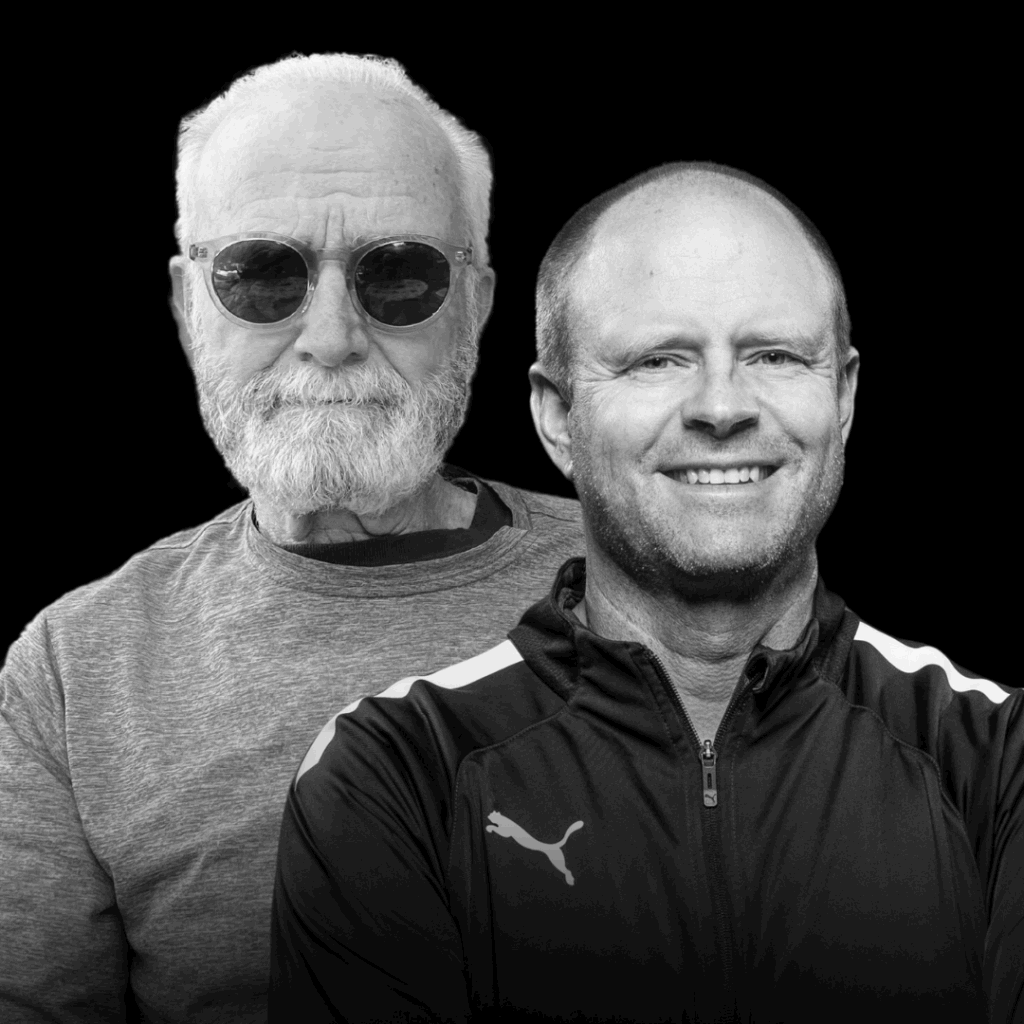
John O’Sullivan is an internationally known TEDx Speaker and the founder of Changing the Game Project, which he started in 2012.
He is the author of two #1 Bestselling books Changing the Game and Every Moment Matters. He is also a leading youth sports blogger and the host of the Way of Champions Podcast, one of the top-rated podcasts in the world for coaches.
Former collegiate and professional soccer player, and has coached for over 20 years on the youth, high school, and college levels. He has consulted with US Olympic Committee, US Soccer, USA Football, US Lacrosse, USA Swimming, Ireland Rugby, Aussie Rules Football, and many more.
John is on the National Advisory Board for the Positive Coaching Alliance and the National Association for Physical Literacy.
Dr. Jerry Lynch first learned about extraordinary performance and excellence as a nationally ranked competitive athlete sponsored by Nike, running world-class times from 5,000 meters to the marathon, setting an American record in the half-marathon, winning a National Championship, and many other races against athletes half his age.
He took what he learned about himself and life from his competitive days and parlayed it into a dynamic successful career helping athletes and coaches in all sports to use his performance and leadership strategies to up their game and discover the best version of themselves.
Dr. Lynch has been recognized as one of the top five in his profession nationwide. He has worked with teams, coaches, and athletes in the NBA, Pro Lacrosse, Major League Soccer, with men’s and women’s basketball, lacrosse, soccer, tennis, golf, and other sports at the universities of North Carolina, Duke, Maryland, California, Syracuse, Stanford, Harvard, and Middlebury.
Dr. Lynch is the author of 15 books in over 10 languages and the founder and director of WAY OF CHAMPIONS, a human potential and performance consulting group helping others master the deeper inner game for sports, business, and life. Jerry is a dynamic, entertaining, inspirational, provocative, and humorous teacher and speaker with topics on leadership, coaching, team culture building, winning the relationship game, and core value development.
Welcome to the Athletics of Business, a podcast about how the traits and behaviors of elite athletes and remarkable business leaders frequently intersect.
The real stories and hard lessons to.
Help you level up your leadership and performance. Now your host, Ed Molitor. Welcome back to another episode of the Athletics of Business podcast. I am your host and CEO of the Molitor Group, Ed Molitor. Now, my commitment to you as a listener of the Athletics of Business podcast and thank you very much for continuing to support us over the years. We are closing in on episode 200, but my commitment to you is to add as much value to your life as I possibly can as you work towards becoming or building upon being a high impact coaching leader. And if you're anything like me, or maybe this was your previous part of your life or it'll be your life in the future. New sports is a significant part of your life right now. Maddie is 12 and seventh grade. EJ is 10. In fourth grade.
EJ plays football, basketball, baseball, soccer, Maddie soccer and basketball in just lessons all over the place, left and right. Constant competition, constant growth, constant struggle, constant development. And I am not talking about skills. I am not talking about private lessons. I am not talking about the best of the best. What I am talking about is the value that youth sports can bring to our kids and developing them into high performing, high growth, positive mindset. Young men and women who are going to be our future leaders, who are going to be the ones that are resilient, that can collaborate, that can be cohesive, that can be authentic, that can do the right things for the right reasons. And youth sports is a tremendous platform for them to learn those lessons. Unfortunately, us as parents often get in the way.
News flash for you, today's special guest which I couldn't be more excited about having the background I would have them on every week if I could. They're just incredible human beings. So smart, so knowledgeable and so giving. News flash. Though they will share with you multiple times throughout the episode that how your child performs on their playing field playing surface is not indicative to the quality of parent that you are okay. So your worth as a parent is not a reflection of the talent or skill level of your child.
Another thing we talk about inside this podcast episode with Dr. Jerry lynch and John O' Sullivan and is FOMO, the fear of missing out in FOPO, the fear of other people's opinions which blows me away that it's a constant struggle with grown adults inside of you sports, FOMO and fomo, you know, specifically like fear of other people's opinions. We spend an inordinate amount of time as adults worrying about what we think other people think or say about us based on how our kid plays in sports, based on what teams we take them to. I am so beyond the emotional roller coaster of trying to decide which team our kid plays on, which club they go to, etc. Etc. What I look for, who's coaching our kid, what's the experience that they're going to have?
Are they going to be not only allowed to, but are they going to be encouraged to fail and to learn from it and to be a great teammate? That's it. If our kids learn to be great teammates and learn how to work hard and develop positive growth mindsets, everything else is going to take care of itself. Everything else is going to take care of itself. And I've had Dr. Jerry lynch and John O' Sullivan on the podcast three previous times. Episode 64, John joined me for talking about coaching and shaping the lives of young athletes. On episode 176 was both John and Jerry where we talked about the champion teammate cultivating growth and collaboration in leadership. And in episode 179, we talk about the mindful coach with Dr. Jerry Lynch.
Every single thing we have talked about is contributing to the growth of young athletes, which as parents and as leaders in your professional life, isn't this what we want at the end of the day, isn't that what's going to build them into strong people and strong leaders? And isn't that what's going to really drive a healthy parent child relationship, the fact that you have this ability to navigate these waters of constant growth and failure and success and all of that, you know, on a daily basis. So here's what we're going to talk about inside this conversation. Okay. We're going to talk about their new book, the Champion Sports Parent. Incredible book. Grab it. There will be links for it in our show, notes to click on and to purchase it.
But John and Jerry delve into the crucial role parents play in youth sports, highlighting the importance of allowing children and not again, not just allowing, but encouraging children to experience failure and fostering their emotional and mental growth. Hear them discuss how self awareness and parenting can help build healthy relationships with your kids while balancing support with the freedom for them to navigate their path. Also, we're going to talk about John and Jerry are going to talk about emphasizing the significance of positive communication with coaches and creating an environment where children can truly thrive both in sports and in life. So I hope that you enjoy Listening to this conversation half as much as I had having it again. Dr. Jerry lynch and John O' Sullivan on the Athletics of Business podcast. John.
Jerry, thank you so much for joining me again on the Athletics of Business podcast. Timing is everything in life, is it not? And the fact that I have the opportunity to have you join us to talk about your newest book, the Champions Sports Parent, and to dive into that. We were talking before we started recording. It's really, it's where Nancy, my wife, and I are at right now. And it's. We see this every weekend. We see it, you know, during the week at practices. This is something that's so significant and so important. And what I love about it inside of this book is you talk about the positive impact that youth sports can have, not only on the young athletes, but also on the parents and the family. So thank you so much for joining us.
Yeah, excited to be here.
This is a triple opportunity that we're talking about here for you, John and I, you know, I'm honored to be here. And I always love the energy that you give Ed. And I'm like, wired right now, so I've got to calm down. And I know John's feeling the same way. But the thing is, this book, we're writing this book because we know it's going to make a difference in people's lives. And the thing is, it's one thing to have a child who's playing sports and then trying to parent that and navigate that uncharted waters of sports parenting, but what about a book that will also help you become closer to your child, have a relationship that's really deeper? Imagine that. What a concept. That's what this book is going to do. It's not just about once the game is over, life is over.
You know, it's all about continuing life with good relationships, parent and child together. So we're stoked about it, you.
Know, and I really think that Steve Kerr summed it up in the quote that you have at the beginning of the book, right. When you talk about the dance of sports parenting. And he says this, and give me one second here and I'll read this. If you want to help your children to succeed in sports, or anything else for that matter, offer support, love, and perhaps more than anything, and I love this, the space to experience and learn on their own. Maybe sitting back, enjoying the game, observing your kids in action, you can help them learn the game faster and enjoy it more. Just a thought. And I love how he throws it in There at the end. Just a thought.
But I mean he hits it right there because it is, it's, you know, every practice, every game, every car ride, every conversation is an opportunity for you to become closer to your child and have a better understanding of what's important to them. An opportunity to just listen.
Yeah, 100% and maybe just, you know, in that as well. Let them experience failure, let them mess up, let them lose, let them learn from all these opportunities for growth that in this day and age, because parents are so afraid that this is going to be on their quote, permanent record, you know, we sweep in and remove the obstacles, plow them out of the way and then kids get no reps and you know, in the business world and all the executives you work with add like, you know, the scariest thing for someone in business is a 24, 25 year old who's never failed, who's never experienced adversity before because their parents have taken care of it and now they're thrown adversity and work and they don't know what to do.
And they don't let them sit there in it, right. Like they don't let them sit there in their emotions and actually navigate it in their own head and their own heart and try to figure what they need to do to learn from it and take that next step. You bring up a point like the life lessons and how do we bring parents back to center? There's some amazing sports parents, right? But how do we bring them back to center to realize the significance and not only the skill development physically, but the skill development mentally and emotionally? How do we do that, Gary?
Well, we, you know, not only physically, mentally, emotionally, but also spiritually. And, and by spiritually, I just throw this out there, this concept. I'm not talking some kind of religion here. I'm talking about, you know, raise your hand parents, if you don't want your child to be courageous, if you don't want them to be fearless, patient, if you don't want them to be able to persevere and have tenacity and have fortitude. Fortitude wins world wars. This kind of approach that John and I are taking, Bill, helped build all those virtues and all of those wonderful qualities. And so it's a multi dimensional approach. But I went off there, maybe on a tangent, I know it's related, but I sort of lost track of the question.
Well, no, you didn't. You nailed it head on. I mean, spot on. Because you just compliment in the spiritually to the emotionally to physically. Right. And the mentally. But you know, one of the things, and I want to make sure we get to this right at the beginning. So I think this is very important, and you mention it in the book, that it isn't just about the results that you two have produced and in what you have done over the years with all the clubs and all the teams that you've worked with, but it's also the fact that you've lived it as a sports parent. And I love your transparency and your openness, how you shared your own stories. And I myself, I mean, Maddie's 12, EJ's 10. I myself have failed at moments, right? Like I, I have this constant struggle.
Like, how do I teach the life lesson, but how do I give them space and let them be a kid? Right? You know, dad, I don't feel like going to my workout today. Well, why? Well, I got a chest. You know, my chest hurts. No, your chest doesn't hurt. Right. Then it turns out my daughter has pneumonia for two weeks, so I guess her chest did her, you know, but talk into that a little bit, if you will. Like, it's okay to fail as a parent, but it's not okay to stay that way. Like, how do we work towards being the champions?
Well, I, I think understanding what it means, what failure really means, and I think here's a chance for parents and kids to learn at the same time with the parent doing the guiding. For instance, when your child fails or has a setback or loses on a Saturday afternoon on the pitch, on the soccer field, a great question a day later or two days later is, so after that loss, why are you a better athlete today? Or why are you a better person to be able to share with people your setbacks and errors and failures. This is a wonderful opportunity to learn that struggle is how we become who we are. I am who I am today because of all my struggles, all my setbacks, all my failures. My best books were rejected for publication multiple times.
And I learned from those rejections how to write a better book. And so a parent here has this wonderful opportunity to really have self compassion and let the child see that it's okay to fail and to admit, to be vulnerable, to be open. And this book will help you do this. Be open to the child and say, you know what, Sean, I blew that. That's on me. That's my mistake. I'll try to be a better dad next time. I'm sorry for that. And I love You. And, and. And so there's a way back. There's a way back into the relationship. And what I'm trying to say is, look, failure is a good thing. You know, we lose yet in this way win, and we win all the time if we have the right perspective of embracing failure as our greatest teacher.
So, yeah, I mean, you know, Ed, I was just going to say, you know, I do yoga, and I am not flexible.
Right.
And I go into yoga and you see these people and like, I'm nowhere near that. Right. But what I love when the teacher says, you know, it's called a yoga practice, not a yoga. Perfect.
Right.
It's a practice. And I think parenting is that too.
Right.
And so you're going to mess up. Jerry and I talk about in the book screwing up numerous times, and I do it all the time. And. But you just, like you ask your athletes, like, mess up, tidy up. Well, sorry, that was a mistake. That came out wrong. That was the wrong time to talk about that or whatever that is. And so I don't think a parent should not feel guilty about saying the wrong thing at the wrong time as long as they can show that vulnerability to say, you know what? I'm sorry, that was wrong. That, that's a great lesson for your kids.
That's far less damaging than, again, intervening on all their difficult moments when they're struggling with the coach and you take over the conversation because, you know, instead of letting them have that conversation with the coach and things like that, I mean, there's far more damaging things than, you know, messing up once or twice. But, you know, hopefully what this book does is helps people sort of look at different areas and be like, yeah, that's kind of describing me right there. In that moment. I gotta take a step back into.
Segue into this. What I, what I would love to do is just. You broke the book into four parts, which I love. Right. I mean, it's clear as day what the progress is. Can we lean into a little bit part one right now to be a better parent, be a better you? And I think cleaning up and admitting we made a mistake is a step. But what does that mean, to be a better you?
I mean, it starts with self awareness, right? Take a good hard look at yourself. And, you know, I think this is something I think is very common for coaches, but also for parents. Do you have unfulfilled things that you think you should have done in sport, and now you're going to have your child accomplish those things for you? Right. So you take a step back and look at yourself and say, am I too tied up in this? Am I? You know, if. If, you know, you're saying, oh, you know, we scored 25 points tonight. No, we didn't. My son did or my daughter did. Right. We didn't strike out 10 people, you know, my daughter struck out 10 people, you know, and so it's things like that, are you too attached?
And that your child is an extension of yourself instead of this, like, independent human being. And so I think that's kind of where it starts, is like, the whole first part of the book is, can I take a deep look and understand, well, what is the purpose of sport in my child's life? And am I doing the thing? Am I in the right state of mind emotionally, physically, spiritually, to facilitate their journey in sport? Or am I taking it over for some other reason because of some deep down thing that's not healthy about me,
You know, to sort of take off on what John just said, which was really spot on. I believe that this is a wonderful opportunity to be a sports parent. It's an honor, and we have to look at it that way. But wouldn't I hear anyone who's a parent who's listening to this podcast? You're a good parent. You're all good. I mean, we're not trying to say, read this book and we'll change the way you parent. What we're saying is when you read this book will influence the way you think about parenting, and then you will make the decision as to how you want to parent based on what you've learned from the book. Some might work for you, some might not work for you, but we're all good parents. And what it really starts with an intention.
I want to be the best version of myself. If you start as a parent with that intention, your kids will pick that up, and then you could actually be a better teacher for your kids to be a better version of themselves. So this is about bringing everyone together, and everyone's going to see these changes that you're making and wonder, you know, what's in your Kool Aid, you know, what are you drinking? And the thing is, what we're doing as parents, all of us, John and I, together with you, together Ed, with your young children. And all of my athletic children are a lot older now, but still, I'm. I go out to dinner with them last night, I'm still parenting. They still need to hear that same message that, you know, we're here for you.
We love you and what's going on with you and how can I be a better dad for you? How can I be a better parent for you? So the relationship is solid and after all these years I can say, my kids and I, we have a solid relationship. There's a lot of trust there. How was that built? That was built from everything. We're talking about going back to parenting kids when they're on teams that they learn the lesson that you model, you have self compassion. You don't get down to yourself. You don't measure your self worth by the outcome of whatever your son or daughter does if they don't get the next train to Stanford. So what big difference does that make?
And what's more important than anything is that solid relationship that we have where we can create connection and caring and love and we empower our kids to better versions of themselves and ultimately have great, a great deal of respect for each other.
How often, Jerry, I know your kids are older. John, your youngest is a senior, you have another one in college. How often do you guys go back and talk about the quote, unquote, old days, right, the youth sports days or when your son was running and he was younger. The, the story that you share in the book about when he was running at Colorado, Jerry, like do you guys ever go back and touch on that and have a smile or a laugh or talk about how the relationship evolved from there?
Yeah, unfortunately we do. We'll be sitting around on a Friday night dinner, which we do weekly with the family, we all gather and invariably a story from their childhood comes up and it's usually about the sports field and it's usually something that dad did that was ridiculous. Like in that story I tell with my running son, like jumping out on the race course and running with him, you know, just to make sure he makes the right turn at the moment and all of that and being told by the race director, hey, if you keep that up, you know, you're not going to be able to attend these races anymore. Totally embarrassing. But what a lesson learned. You know, the lesson for me is let go and let be and let him develop. And we're sitting there laughing about that now.
Yeah. You know, and your heart was in the right place though, wasn't it? I mean.
Yeah, that's all.
So how is it though? Like his parents and the champion sportsman's like, I want to better. I understand that maybe what I'm doing is misconstrued. That's What I always hear, well, they just don't understand. I'm coming, I'm coming from a good place. How do you get folks to understand you're coming from a good place, but you might not be going about it the healthiest way and the most productive and positive way for your child.
Being open to learning. I mean, at that moment when I was busted and I felt so foolish, I was open to learning from that experience. And God knows, I mean, I never did that again and anything close to that. And so I became a better parent because of it. And I think what happens is the real deeper lesson is you learn to listen to your kids and you learn, this is it. You learn to let be. It's like being a good waiter or a waitress or now they call them servers. Picture, Picture being in a restaurant and you're there having an intimate dinner with your wife, Ed. And you're really enjoying the food and your mouth is full of food and your wife's mouth is full of food and there's the waiter at the table every second. Hey, how's the dinner? How's it going?
You're trying to hide the food, you know, and all that. That's not being a good waiter. A good waiter is you wait in the wings and you watch and you listen. You watch to see where is this table at? Are they eating their food? Well, if they're not, I'm going to go over there and find out. Is everything okay? Can I help you? Is there anything I can do? If they are eating, I let them alone. That's all good. That's why they're there. If their glass is empty and I look at that, I'll go over and fill the glass, but I'm not going to go over there with a thing of water after they've had 2 ounces of water out of glass and fill it up again.
Because I need to feel like I'm worthy of my role or that I have a job to do all the time. My job is to stay in the background as a good sports parent. You're off in the wing watching and waiting and listening for your entry when they invite you in. So we just let them play, you know, we let them have a good time and we let them enjoy things. You know, when I was a kid growing up in Brooklyn, New York, I never saw my parents from 8 o' clock in the morning till 8 o' clock at night, other than for dinner. And in that neighborhood, that one neighborhood in Brooklyn, New York, we had five guys go Pro. I wasn't one of them, but five guys did. And, you know, they didn't have any parent intervention.
You guys just played and you competed, right? And if you lost, you wanted to play again.
Oh, like we competed for. For prizes. You know, you lost lunch.
I. I think the big thing is, like, you know, 0% of people who get this book don't love their kids, right? Or listen to a podcast about parenting or, you know, they love their kids, and we just sometimes love them in unhelpful ways. But, like, you know, for example, like, there's. I don't know if a couple years ago you saw that HBO documentary Trophy Kids, and there's this one scene of a dad in the front seat just berating his son in the back seat, you know, for playing poorly and all sorts of stuff. Now, that dad loves his kid and he thinks he just wants help. So, you know, I'll show that at a talk, and I'll just look around the audience and you can see the people who in that moment say, oh, my God, that's me. That's my kid's ride home.
And I'm not doing it because I hate them. I'm doing it because I love them. And I think it's helping. But there's this kid with tears in his eyes in the backseat because as he says in that thing, it feels like every time I get in the car, I did something wrong.
Right?
And so it's moments like that where just like Jerry on the race course or me with my son, you're love, and you just want the best and you're holding them accountable and you have high standards. But maybe that's not the moment. Right? But it doesn't mean we don't love them. It just means that it's just not, you know, the timing's off. We're not taking into account our emotions or their emotions or things like that.
So let me ask you about the fine line. Okay? So I just had this conversation with my daughter. My daughter's at the age now, she's in seventh grade, young seventh grader, but she's at that grade where she's playing soccer, she's playing basketball. She loves them both. She's having a blast. But we talk about the fact that if you don't put in the work, if you don't put in the extra effort, you can't expect certain things like people are going to pass you up. And Nancy, my wife and I talked about this. I go, you know, when I give her a hard time for not Going and do what she says she's going to do in terms of getting shots up or whatever it is, or it's not because I want her to be a great player.
That's about discipline and commitment and that's about developing habits and that's about keeping your word to yourself. And that's what it takes to excel in school. That's what it takes to excel as a friend, as a family member, down the road, as a worker. Like, how do we make sure that we're navigating? Because I mean there's days like I'll have a talk, my God, did I do the right thing? Deep down inside, you know you did it. You know you delivered it the right way. But you don't know that in a 12 year old middle school girl's mind it's landing. Like how do you monitor that? Do you watch body language? You wait for the next conversation to see what they say to you. How does that work?
I mean, I think first you start with sitting down with a 12 year old and saying, what are your goals? Like what do you want to do long term in basketball, right? And then what are your short term steps to get there? But if your 12 year old says I want to go play college basketball, right? And then they never pick up a ball after outside of two practices a week or three practices a week, that's when you say, hey listen, you said you want to play in college? Here's what I can teach you about people who are trying to play at the next level. This is what they are doing. They're taking a thousand shots, they're starting to go to the gym.
Maybe not a 11 year old girl or whatever, but you know what I mean, like this is what it takes to get there. So if you want to really do that, like you're saying to me, let's come up with a program and let me help you. And then I'm pushing you towards your goals, right? But then if you don't. And I had this conversation with my kids and I remember my daughter used to be like, I want to be a college soccer player. I'm like, well you see that teammate and that teammate, right? They're doing extra training, they're working with an extra coach, they go to the kickback wall, they bring a bag of ball to the fields. You when do you do that? And then so my daughter would do it two days in a row and then would stop again, right?
And so then finally like she came to the realization on her own, like, yeah, I don't really want to do it that much. Which is great. That's perfectly fine.
Right.
You know, she still had a great high school career and a great club career and did everything, but she didn't want to do what it was going to take to get to the next level. And that's where I think as a parent, you have to be honest. But again, I'm not saying you're going to be a college soccer player. I'm saying you told me you wanted to do this. Let me help you and push you towards what you said you wanted from me.
Yeah. And get them to self select. And, you know, I'm back. Back to Jerry. You had mentioned something earlier about your worth as a parent, as a person is not how your child produces on the field and how they perform. It's still, to this day, blows me away. Yet I understand it because it creeps into all of us. Fomo, the fear of missing out. When I see grown parents and they, their children's not going getting, you know, they're not going to pay a thousand to go get extra reps six months before their season starts, but you know what? They are. And that's my daughter's friend, so maybe I should, too. And you know, gosh, maybe there's something going on there that I don't know about, that if we don't do it, then we're going to be missing out.
Like, how does that happen and what do we do with that in youth sports? Yeah.
Well, that's a good reason to read this book because that's what we're looking at. Right. I mean, I have to come back to that. There's so many parents out there that are afraid. They're. They're very fearful. They think that they are missing out or they feel like their kid is missing out. And then we have what we call fopo fear of people's opinions. They're going to think that I'm not a good parent. You know, their opinion is, well, look at the molitors. They're just, they don't care about their kid. They're not parenting, they're not helping their kid get better. They're over there just sort of clapping and smiling and all of that. So there's a lot of pressure out there. Not only is there pressure for the kids, but there's pressure for the parents and there's a pressure for a coach.
So if on any given Saturday afternoon, we have pressure, we have anxiety, we have a lot of stress going on. On a soccer field or on a lacrosse field or wherever you might find yourself on ice, working with a hockey team right now, a hockey organization. Wherever you find yourself, there's going to be pressure. And what we have to do, and that's why we wrote this, part of why we wrote this book, is to find ways to develop confidence in what you intuitively know is the correct thing to do, to trust yourself. And if you see that, we have these examples and we have these stories that validate that, we're hoping that gives confidence to the parent to go ahead with what they intuitively know is the right thing to do with their children.
Because I really do believe in the parents and their capability of doing this. And I really do believe that parents are thrown by other parents who are just afraid. And I think the fear is driving the train and the fear of whether the kid makes that next Stanford scholarship or whatever it happens to be, or we're going to be looked upon as not being good parents because our kids are failing and they're crying, whatever, you know. So it really is about getting that confidence and trust in yourself to go forward. And that's where I'm at with it.
Do you two see this piece that we're talking about right now? More relevant in one particular sport than others, that age group in the youth, or does it cross over into every single sport?
I haven't seen a sport where it doesn't exist at this point. I think it's all sports. Right, because you're a hockey player. Well, there's speed skating camp in the summer or spring hockey or whatever it is. Right. In basketball, there's always something more you can do, right?