

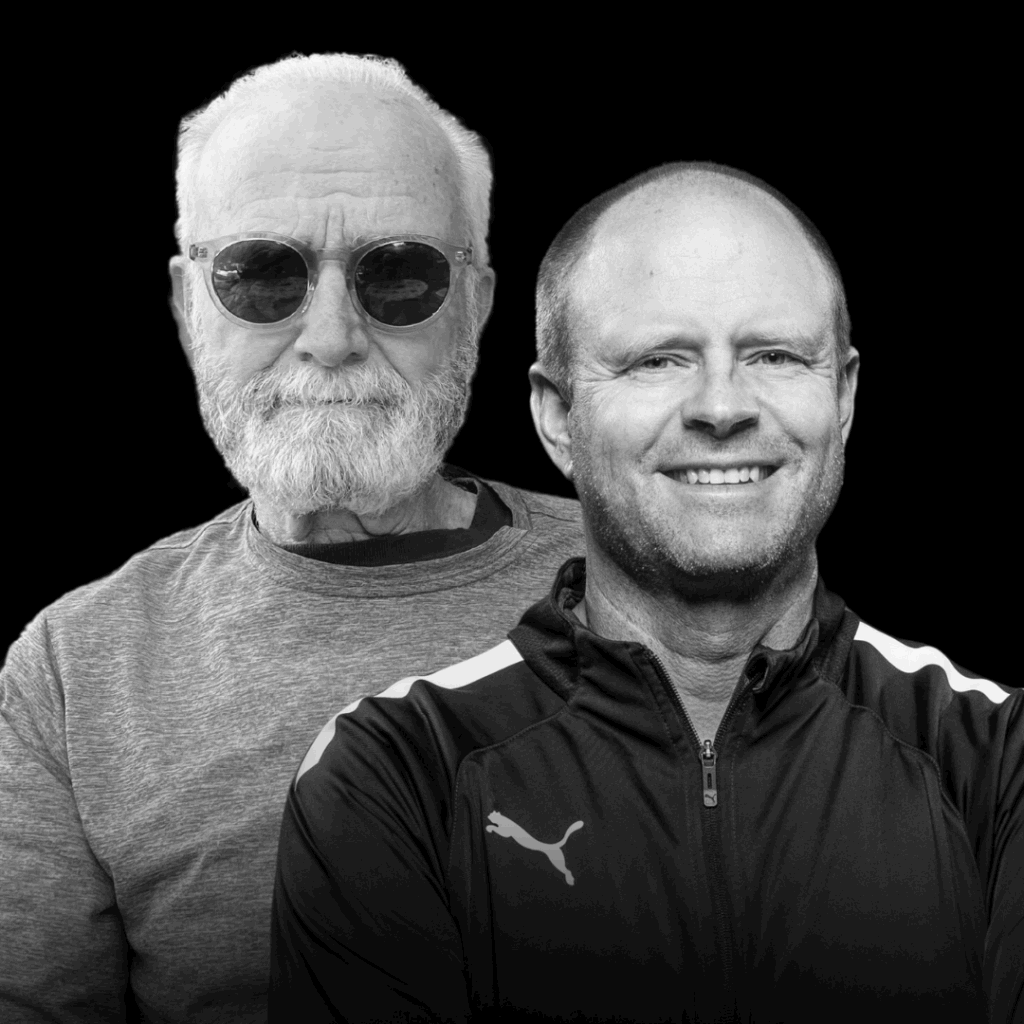
John O’Sullivan is an internationally known TEDx Speaker and the founder of Changing the Game Project, which he started in 2012.
He is the author of two #1 Bestselling books Changing the Game and Every Moment Matters. He is also a leading youth sports blogger and the host of the Way of Champions Podcast, one of the top-rated podcasts in the world for coaches.
Former collegiate and professional soccer player, and has coached for over 20 years on the youth, high school, and college levels. He has consulted with US Olympic Committee, US Soccer, USA Football, US Lacrosse, USA Swimming, Ireland Rugby, Aussie Rules Football, and many more.
John is on the National Advisory Board for the Positive Coaching Alliance and the National Association for Physical Literacy.
Dr. Jerry Lynch first learned about extraordinary performance and excellence as a nationally ranked competitive athlete sponsored by Nike, running world-class times from 5,000 meters to the marathon, setting an American record in the half-marathon, winning a National Championship, and many other races against athletes half his age.
He took what he learned about himself and life from his competitive days and parlayed it into a dynamic successful career helping athletes and coaches in all sports to use his performance and leadership strategies to up their game and discover the best version of themselves.
Dr. Lynch has been recognized as one of the top five in his profession nationwide. He has worked with teams, coaches, and athletes in the NBA, Pro Lacrosse, Major League Soccer, with men’s and women’s basketball, lacrosse, soccer, tennis, golf, and other sports at the universities of North Carolina, Duke, Maryland, California, Syracuse, Stanford, Harvard, and Middlebury.
Dr. Lynch is the author of 15 books in over 10 languages and the founder and director of WAY OF CHAMPIONS, a human potential and performance consulting group helping others master the deeper inner game for sports, business, and life. Jerry is a dynamic, entertaining, inspirational, provocative, and humorous teacher and speaker with topics on leadership, coaching, team culture building, winning the relationship game, and core value development.
Welcome to the Athletics of Business, a podcast about how the traits and behaviors of elite athletes and remarkable business leaders frequently intersect. The real stories and hard lessons to help you level up your leadership and performance. Now your host, Ed Molitor
Welcome back to another episode of the Athletics at Business Podcast. I am your host and CEO of the Molotor Group, Ed Molotour. Today's podcast episode is absolutely one of my all time favorite conversations, which is saying a lot because we've had so many amazing conversations and guests here on the Athletics of Business podcast. This one is special. I am joined by John O' Sullivan and Dr. Jerry Lynching. John previously was on episode 64. If you have not listened to that, go back and listen to it. That was also an incredible conversation. Let me tell you a little bit about John though, in case you did not check that one out.
Help you level up your leadership and performance. Now your host, Ed Molitor welcome back to another episode of the Athletics at Business Podcast. I am your host and CEO of the Molotor Group, Ed Molotour. Today's podcast episode is absolutely one of my all time favorite conversations, which is saying a lot because we've had so many amazing conversations and guests here on the Athletics of Business podcast. This one is special. I am joined by John O' Sullivan and Dr. Jerry Lynching. John previously was on episode 64. If you have not listened to that, go back and listen to it. That was also an incredible conversation. Let me tell you a little bit about John though, in case you did not check that one out.
John is a former collegiate and professional soccer player and has coached for over 20 years on the youth, high school and college levels. He's also consulted with the U.S. olympic Committee, U.S. soccer, USA Football, U.S. lacrosse, USA Swimming, Ireland Rugby, Aussie Rules Football and many more. He is an internationally known TEDx speaker and the founder of the Changing the Game project which he started in 2012. And as if that's not enough, John is the author of two number one bestselling books, Changing the Game and Every Moment Matters and Leading you Sports Blogger while being a host of the Way of Champions podcast which with Dr. Jerry lynch, it's one of the top rated podcasts in the world for coaches. Dr. Lynch has been recognized as one of the top five in his profession nationwide.
He has worked with teams, coaches and athletes in the NBA, Pro Lacrosse, Major League Soccer with men's and women's basketball teams, Lacrosse, Soccer, Tennis, Golf and other sports at the Universities of North Carolina, Duke, Maryland, California, Syracuse, Stanford, Harvard and Middlebury. And Jerry first learned about extraordinary performance and excellence as a nationally ranked competitive athlete. Sponsored by Nike, running world class times for 5,000 meters to the marathon, setting an American record in the half marathon, winning a national championship and many other races against athletes and half his age. He took what he learned about himself in life from his competitive days and parlayed it into a dynamic, successful career, helping athletes and coaches in all sports to use his performance and leadership strategies to up their game and discover the best version of themselves.
Dr. Lynch is the author of get this 15 books in over 10 languages and is the founder and Director of Way of Championship, a human potential and performance consulting group, helping others master the deeper inner game for sports, business and life. We talk about so much in this podcast, let me give you a couple things. We have an insightful sneak peek into their new book, the Champion Teammate, and the story behind it. We talk about the impact of teammates realizing and embracing their individual ways of connecting, competing, and leading. We talk about the concept of being an elevator, which that means is creating an environment that feels safe, elevated, and conducive to teamwork, both in sports and everyday life. I can go on and on about all the things that we discuss.
I'm going to get out of the way and let you listen to this amazing conversation with John O' Sullivan and Dr. Jerry Lynch. Jerry, John, thank you so much for joining us today on the Athletics of Business podcast. And congratulations on the new book, the Champion Teammate Timeless Lessons to Connect, Compete, and Lead in Sports and Life. Welcome, guys.
Thanks, Ed. Great to be back, man.
Pleasure meeting you today, Ed. And it's an honor, trust me.
Now, you two have done some amazing work together over the years. I know the story. I'm familiar with it. But I would love for our listeners to hear it from you. How did you two first connect and begin this journey of just being amazing teammates together?
You want to take that, John or.
Jerry Cole called me.
I did.
The truth comes out.
It was very nervous that he wouldn't answer.
Yeah, it was, you know, back, like, now your cell phone says, like, potential spam. It would have. I just would have ignored it. But back in the day, it didn't say that, so I had to pick it up. And yeah, Jerry called me and, you know, we. We just had this great chat and, you know, turned out we're, you know, we're both New Yorkers and both our dads were New York City firefighters. And so we had a lot of stuff in common, both products of New York Catholic high schools and universities and all this sort of stuff. And, you know, so similar upbringing. So we hit it off. And it just turned out also that I had a trip to Colorado coming up right after that, and Jerry was in Boulder.
And so we decided to get together and go for a hike and hash out different ways we might be able to do some stuff together. And for me, you know, that time, Ed, I had written my first book, Changing the Game. And I knew there was a ton of research and a ton of evidence of if you create the right environment, people will thrive. But as you know very well, there's also this very transactional nature to sport and even youth sport now, where it's like, nah, you know, you just focus on winning. Things will take care of itself or whatever. And who cares about the people and who cares about the destroyed souls afterwards?
And.
And what was great about meeting Jerry was he'd been in this space for decades, working with top collegiate programs, professional athletes, and everything that I had written about and changed in the game he had been implementing and doing, winning NCAA titles at University of Maryland and Duke and Carolina and all these huge schools. And so he had sort of the evidence to say, oh, yeah, by the way, you'll also win.
Right.
And so it was a great combination of ideas, and Jerry's been a great mentor and friend to me, and it's been a great journey together. Like you said, podcasts and conferences and everything we've done together.
So cool. Now, Jerry, what attracted you to John? Like, what was it about John that you really connected with?
I really liked his hair.
I knew you were going to see that.
Yeah, it was really just beautiful.
And the flow.
You know, Brooklyn does have a sense of humor. What attracted me to John was, first of all, that he was doing the kind of work that I've been doing for a long time, and I couldn't find many people that really understood that. And I had been searching for a partner because my work started taking off and I needed help in some way, and I didn't know how that help was going to come. And when I. When I research people, I kind of look at their background and try to find out if indeed we're really on the same page, or do they just want a piece of what I'm doing because it's working, or they have this idea, they want to make a lot of money, and that's not me. But when I talked, I reached out to John.
All I wanted to do, John, was. And I think I did, was congratulate you on your book and congratulate you on a podcast that I really enjoyed and. And let you know that I'm here in the background as a support system saying, keep going, guy. Keep pushing this because you're on target. And then that's when John said to me, well, could we meet? And then I was going to meet John, and we met in Boulder. I had a home there at the time as well. And I wasn't sure where this would go, but John was very. You were very direct and told me what you wanted. And I thought, well, yeah, this might evolve into something really cool. And it did.
You know, how many years ago was that, Jerry?
Maybe eight or nine years ago. But I knew right away that John was someone that I could trust. Maybe it was the Catholic background or the fire department background or coming from Brooklyn, coming from New York, wherever. But I just had a good sense. And there were no fewer than 10 or 12 others, people who wanted to get on board with way of champions because they saw the back, they saw the championships, they saw this, they saw that, and they wanted to get be a piece of it. But I didn't want that. I wanted someone who was really deeply in their heart on the same page and understood what I was all about. And then the more we got to know each other, the more we realized how similar our thinking is. I'm different and John's different.
You know, we're kind of yin yang, you know, but boy, what a balance. And people tell us that all the time. And again, that gets back to the whole idea of teammate. And by the way, that wasn't my idea. And I'm going off on a tangent here, but the book itself is the result of John approaching me saying, I want to write a book about teammates. I think it's really important. And I didn't have that vision that wasn't like I wasn't thinking that way. Then I said, wow, that is a good idea. And then, John, you invited me to be part of that. And I was honored by, and so happy that I became part of that work with you to write a.
Book together that's really, I mean, for lack of a better word, that's really cool. And that part of the journey is really cool. What was it like working on the book together? It has to be a bit of a challenge with different schedules, the different directions you're all being pulled in, and to find time to collaborate like you.
Did John, you're going to tell the story. He's just waiting to tell this because it's really interesting. Go ahead.
You know, it's funny. So, Ed, we had first broached this idea a couple of years ago, actually. And then, you know, life gets in the way. And I think that was, you know, right around Covid, and went down the road of doing some online conferences and stuff like that, some teaching, some things like that. And then so it kind of got put in the background and then sort of like late fall this year, November, I had a big sort of hole in my schedule with no travel and stuff, and Jerry sort of had some probably a little less time than I did. But I just said, if I'm going to write like this is a good time, I, I, I can't just dip my toe. I Want to dive all the way in. And I think Jerry's kind of the same.
And so we hashed it out and we said, okay, let's do this. What would it look like? What would the topics be? Right. We outlined probably at the time, 20 ish topics, 24 topics. And we said, okay. And we split them up and said, okay, you'll write this and I'll write that, and said, great. And then I went back to my normal, you know, just doing what I'm doing, and two kids in high school and coaching and this and that. And all of a sudden I get an email from Jerry, like, all right, I did 50 pages. And I'm like, oh, crap, I've done nothing. I haven't even written a word. So I, I gave Jerry the old, oh, man, this is awesome. Yeah, I'll have something for you soon. And then I just started getting up at 4:00am and writing and.
And the book, I think, for both of us, came out very quickly. And as you write, you also say, oh, you know what? This would be another good chapter, and this would be another good way to do things. And so, yeah, it was really funny to sort of go through this process. And then I would send him some stuff. I think, actually I wrote. I think I have to give myself credit. I did write a first chapter, like a sample chapter, and said, this is how I envision the chapters to be. Short, sweet, a story, some ideas and some questions at the end and discussion questions. And then Jerry sent me back 50 pages, and in order for me to keep up, I had to write 40 pages. And next thing you know, the book was pretty much done.
I love the format of the book and the stories. And John, we connected years ago. And one of the things I still pay forward in my clients was you introduced me to the book, the Power Moments with Chip and Dan Heaton. And I still hand that book out, and I still work through some things with them. And one of the things I loved about that book was the stories that they tell from a perspective that a lot of people don't see things through. Right. The lens people don't see things through and stories we may not be familiar with. And the stories that you have in this book are awesome. And it starts right from the start.
But my question was, with all the experiences, Jerry, that you've had with the championships, John, with all the work that you've done, was it hard to decide which incredible stories to put in the book and which ones that you had to pull out?
For me, all My work is about stories. You know, when I'm doing a clinic or a workshop or a conference, I'm not up there disseminating information and giving factual stuff. I mean, part of that is ingrained in the system. But it's all about a story. I'll tell you this. I was. I have a monthly checkup with a doctor, and the checkup is he's just really good, and he just does some really good stuff with my body, you know, And I got to meet his wife yesterday, and I got to tell him the story. And the story that I told them brought tears to their eyes, both of them, and they couldn't believe that was the case. That story took me two minutes to tell. And in that two minutes, it touched their hearts and will change their life forever.
And I'm saying that because that's what they told me. I know that potential, and I know the power of a story, and John knows the power of a story. And, you know, the power of a story. My thinking, body, dancing mind, tons of stories in there. Because the editor said to me, you've got to understand the power of the story. And so we learn from stories. People will forget what you teach them, specifically concepts, a lot, but they'll never forget a story. And you could always relate a story to that particular situation. We have a story, a chapter in there called Grab the Hose. That was John's title, I guess, but it was my story. So a good team approach there. And that story is powerful. And the points we're making in that chapter will never be forgotten.
If you can remember that story, and you will, because it touches your heart. John and I decided, okay, so in the format. I think this is your idea too, John. You had all the ideas for this book. I think what you did was you said, let's introduce each chapter with a story, which I think is a brilliant idea because that really brings people in. So we start with a quote, then we have a story, then we have the material, and then we end off with some kind of a pragmatic way of getting people to do some work about it right away. So that's the story issue. John, do you want to add to that?
Yeah, I mean, I think we also wanted a mix of stories of, as you know, Ed, you know, there's athletes we've all heard of in. In there, and then there's people you've never heard of. Right. So we wanted to tell stories of teams we'd worked with or athletes that we had worked with individually, and then stories of people of A Steph Curry or a Tim Duncan or a Leo Messi or something like that everyone's heard of, right? And knowing that it's sort of that mix, right? Because sometimes, you know, if it's, you know, if all you talk about is Kobe Bryant's relentless work ethic, and I'm a 14 year old average basketball player, Kobe's so far away from me, right?
But if I can tell the story of, like I told a story in the book of a Jordan Black, right, a reserve goalkeeper at Fordham University who scores the biggest goal in the program history, everyone's like, you can see yourself in there, right? And I think that's the important thing about, you know, stories and teams and cultures and programs is you have to, the people coming into it have to be able to see themselves in the shoes of the person that you're telling a story about. And so we wanted to mix that. But yeah, I mean, people won't remember the exact lessons, but they do remember the stories behind them, I think, a lot.
And let's talk about the lessons inside of the book, because there are so many and how you broke the book down and what made you decide that. And, and really, we can start with what is a champion teammate.
This was a big. I'll, I'll let Jerry start because this was a big thing of him saying, like, we need to really define what a champion is. In the introduction of this book.
You did a great job of introducing what and explaining what a champion.
Yeah, well, let me, let me try that again. Let me see if I can recall to me being part of 115, 118 championship teams, cultures, I didn't tell them how to be champions. I learned how to be a champion. And all I'm doing in my work is I'm passing that on. That's why I told you before we even recorded this that I was a. I see myself as a hole in the flute without those athletes and those coaches and without the permission to be part of their program. I couldn't have helped build the culture. And I wouldn't really know what a champion is. And John and I went back and forth with this, but I felt it was really imperative to have the word champion somewhere up front and let people know what champion really means. Champion is not something you become.
So if I do, if you read this book, you're going to become a champion. No, that's not what we're talking about. We're saying if you read this book, you are being a champion because Champions read books. Champions integrate books into their life day in and day out. A champion is an everyday proposition. It's a commitment when you wake up in the morning to make your day a masterpiece. Being a champion is a masterpiece that's developed from intention. And so what we simply do is we give people the roadmap. If they have the intention to be a champion, you never become a champion. All those championship teams were being champions. They were imitating, modeling, implementing champion like behaviors. Oh, so this is a champion behavior. Great. If I do that today, I'm being a champion, right? Absolutely. So that's what this book is.
It's a whole bunch of champion like behaviors so that from the moment you start reading it, you're being a champion, if for no other reason than you're reading the book to get better, a better version of yourself.
Is it safe to say, Jerry, that approach, that mindset and that belief is a reason that some of the folks that you have worked with that have that mindset and that belief have been able to sustain such a high level of success over a period of time that requires them to be incredibly resilient.
That's a very brilliant, insightful question. There's a lot to unpack with that question. In terms of the answer, the short answer of it is yes. The longer version is I watch that. And what I notice about champion like behaviors is these people are lifelong learners. You know, even at the age of 18, you can detect it. They want to learn. They want to. They're a sponge. They want more. And then, of course, you have athletes on the team. They don't care. They think they're there. They arrived already. I got all the stick skills down. I have all of this down, everything else. And they're too busy with themselves to want to expand and learn more. So one of the characteristics of a champion person is they have this desire to learn. It's like this endless feeling of, I want more.
What else can you tell me? And you know what's interesting is when I work with these iconic coaches, like Steve Kerf as an example, he's doing the same thing with me. It's like I'm his coach at times, giving him what he wants to learn. And he's learning all the time. That's a champion coach. Not because he's won four championships. The four championships are the byproduct of him being today a lifelong learner. That's an important ingredient. So champion itself is a word that I hold really dear to my heart. I've used the Name champion in several, three or four of my titles in my books. And John now uses it all the time. And. And what we do is we educate people that, hey, don't worry about it. You don't have to become a champion. You want to be a champion?
Let me show you how right now.
John, it's safe to say, is it not, that some people that achieve an incredibly high level of success and pull the most out of them, that have the ability to be their best, even when they're not at their best, may never actually win a proverbial championship? Right. They may never get a trophy, they may never get a medal, but those sometimes are the greatest champions of them all.
Totally. And I think, especially in sport where there's only one winner, and, I mean, we had this wonderful example of it, and you're a basketball guy, and so I know you saw the whole thing with Giannis when the Bucks got knocked out of the playoff this year. And, you know, the reporter sells him, this is a failure. And he's like, how is it going to be a failure? Like, you know, well, whatever. We won X amount of games. We're the number one seed.
We.
We just lost, right?
We.
We just lost, like, you know, two years ago, we won it all. You know, last year we lost. This year we lost. And it's like, you know, and I think athletes who make it to that level understand that. That struggle and that. Call it failure, if you want. Yeah, sure. Like, of course you want to win it all, but depending on your sport, you're not going to win it every year, right? Michael Jordan won six championships. Was he a failure 10 other seasons or whatever? Of course not. And I remember, you know, one of my favorite stories was the golfer Paul McGinley, that someone asked him, like, what was one of his most powerful moments of his life.
And he actually roomed with Jack Nicklaus son in college, and he was becoming a pro golfer, and he got to meet Jack for the first time, and obviously, you know, the great at that time, certainly the greatest golfer of all time, and maybe you can still make that argument. And. And Jack Nicklaus said to him, let me give you one piece of advice. He goes, I'm the best golfer who ever played, and I still lost 90% of the time. So if you want to be a pro golfer, you better get used to losing, right? And it's such a. It's such an amazing story. Like, that's it right there.
And yet we have this whole culture of sport, youth sport, high school sport that kids keeps Telling kids, if you don't win, you're the first loser, instead of you're the learner, and you get better because of this and stuff. And so we wanted to write a book because the college teams that I work with or Jerry works with, you don't win a championship every year, but you can still end that season. And people feel this incredible sense of fulfillment and joy and camaraderie and friendship that lasts decades. As you know, Ed, from your own playing days and everything like that, Right? It's like that sticks, right? And that's a champion right there.
Well, two things. John, let me just get on your coattail there for a minute, because you're really pulling me along here. One of the things I remember the expression, you don't win silver, you lose gold. That's just something that came across my wavelength here. But back to Giannis. One of the reasons he's a champion is not just that interview, but after that, he had mentioned that. You know what? This is really going to drive me to be even better next year, this loss. We have learned so much from getting knocked out in the first round that we're going to come back with a vengeance. We're going to be much better, and we're going to find out ways to better. Now, that's the principle in the champion teammate. That's about loss. And loss is our greatest teacher.
As the dao to jing lending from Eastern philosophy once said, we lose, yet in this way, win. How brilliant is that? Right? So they lost, but they really won. Watch out, Milwaukee. Watch out for them. Next year, they're going to put together an amazing season because of that defeat.
What's amazing about what you just said, how old is that saying?
Oh, that coat. I stopped counting after 2500 years back before then. So 2,500 years ago, they were saying things such as this, and I think it's. That's why I lean on a lot of that Eastern thought, because it's so relevant today. We don't want to miss it. Somehow we've gotten off track, like with competition. You know, we compete against each other to crush each other, put you down, to annihilate you. That's what we're going to do. And if you go back in time with language, you know the Latin root of competition, the word is compatier, which means all those going to Catholic schools, we probably have heard this in Latin. The word in Latin is compatieri, and it means to seat together. What a concept. I don't have to show up to beat you up the hill.
I can show up to be the best I can be, and maybe I beat you up the hill and you learn what you need to do to get even better. So I'm a teacher for you or vice versa? You're a teacher for me.
And that's why I think. That's what I think makes the nuggets so fascinating. Because Yokik, that's exactly where he comes from. I mean, his whole. His whole approach. And it's funny because my kids were rooting for Denver, which I found interesting because I knew nothing about Denver. Every now and then you have that little glimmer of hope that you're doing something right as a parent. Correct. So I Finally said, E, E.J. I said, E. I said, what's up? I go, you jumping on the bandwagon? He goes, no, I heard you talking to coach the other day and you were talking about the joker. Sounds like a pretty cool dude. He just plays like, you know, and you realize your kids listen to you. And we sat there and Maddie, who's about to turn 11, EJ, who's about to turn nine.
The three of us engage in a conversation about what made him such a special player. And it honestly comes back to the concept of the fact he's an incredible teammate.
Yeah.
Yeah. It was bizarre. It was. I swear, I get goosebumps telling the story. I don't think I did his story justice, but it was like, as a parent, it's almost like an out of body experience that your little ones are sitting here. You know, it's not about, for a second, it's not about TikTok, it's not about social, it's not about anything. It's about what really counts.
And there's a teammate who values his, you know, he's, you know, maybe a modern day Bill Russell. Right. Like, I make people around me better. I do the little things. I play defense, I rebound, I block. And yeah, of course he can score points and whatever, but it's like if I make everyone on the court around me better, we're a better team. And I think kids are bombarded with this message of get your stats, get your points, score your goals. Right. Some of them are paid by their parents for every point or every goal they score. And they're given the wrong message over and over. Now, becoming a successful athlete is this balance of. It's a balance of selfishness and selflessness.
On the court, I have to be selfless, but I also have to be selfish to protect My time, you know, he can't give every interview. He's got to take care of his body. His family has to make sacrifices to get him, you know, let him do what he wants to do. As a coach, it's the same sort of thing. It's finding that balance. But, yeah, I mean, I just think there's a lot of good examples of teammates, and we tend to highlight the people who say, look at me, look at me. Let me get mine. And it's not a great message for kids.
The Joker carries that concept that you're really hitting upon, which, again, is another amazing observation. He carries it off the court. If you saw what he wanted to do, immediately, like, he didn't even want to go to the parade. He wanted to get home to his family through his mother, his father, his uncles, his aunts, and they did. He finally said, I'm going to go to the parade, because that was his commitment. But he immediately wanted to get home to the family. And what that's all about is being together, being with each other, having priorities. This book, the Champion Teammate, talks about that, and we talk about being an elevator. Ed, when I met you today, I'm thinking to myself, I want to create an environment where that feels safe, that feels elevated, so that we can do our best work.
So, in a sense, I immediately, right before we met, did my visual on how am I going to be the best teammate so that you and I can be together? Not you putting me up here or me putting you up here. No, we're going to come together and be teammates. How can that happen? Well, we need to implement certain concepts in certain ways and values and virtues that really allow us. And when you look at an athlete like the Joker, you have to see that it goes beyond just scoring baskets. And that's what John and I are hoping to do here, is take it away from the court, take it away from the pool or the track or the pitch or whatever it is and say, look, this is all applicable to life.
That's what we say, connect, compete, and lead in sports and life. And we have great examples of people doing and being that way out there.
Can I ask you, because I think you said something that's so significant is people. We have a tendency as society to make things very dramatic, Right? Like, everything's a big deal. You said before we get on the call, you did your visual. How can I help elevate and make this an environment where we can both be successful in the conversation. How long did that take you to do that.
About three minutes.
Yeah, that's.
But I have training. I have training. I've been training my mind and my heart and my body and my. My intentions. I want to go about being intentional. Like, John and I are putting on a conference the beginning of August 4th, 5th and 6th, in Denver. And before I. Every day, when I wake up, before I get out of bed and before I go into that room, I'm going to take four or five minutes and I'm going to feel intentional. I'm going to feel myself connecting with the audience and John and everyone that's there. And I'm going to feel the elevated emotions, the positivity, being present, being together, being facilitative, being who I need to be in order to make the environment not only safe but fun and enjoyable and a learning environment that comes from intention. Otherwise, you walk in, life is life.
You know, I could be walking in and see something terrible or think of something terrible just before I walk in. If I don't prepare that mind, I'm flipping a coin. I might be on, I might not. So I want to maximize that possibility. So meeting you today was an opportunity to say, okay, so I'm going to meet Ed, where Ed's at. And what we're going to do is we're going to elevate and take this conversation up higher. And my assessment of it was, I thought we did a good job, you and I both. And your mindset was right there, and it's fun.
And that is actually a great lead into my next question. How important is it for teammates to realize the way they do that and the way they're intentional about elevating situations? Right. Being being a thermostat as opposed to just a thermometer. How do they understand that the way they do it, the way they connect, compete and lead, is going to be different than the way Bobby does it. It's going to be different the way. Right. Julie does it. In other words, I have my way of doing it, and I'm going to be intentional about making sure that I do it, and I'm not going to get caught up in the comparison gap. And that whole trap of trying to be like someone else. Like, I'm going to embrace my role inside of this team and do it. How important and significant is that?
I mean, it's massively important. And I don't think we spend enough time with our young athletes or their young people teaching them that everyone's different. Right. And so let's just go, like, introvert versus extrovert, right? I'm a pretty extroverted person. When I was growing up, I loved the pasta feed the night before the game, the team coming together, whatever. I thought people who didn't want to be a part of that didn't care, but that's not it. Some people are just introverted and the way that they gain energy is to go off by themselves, to relax, to watch a movie. And then that's how they focus and get ready. No one taught me that, hey, you're both care just as deeply. You just approach this different ways. And so I think things like that is just understanding the diversity of your team.
Forget racial or religious or whatever. The diversity of I work quickly, someone else needs more time, I work independently, they work collaboratively. And understanding that in every locker room there's this whole group of people. And the more that you bring in their strengths and understand what drives them, the stronger the team's going to be. And then recognize that there's going to be moments where you have to lead, right? Where it requires you to be that thermometer, that thermostat, the one who raises the temperature or lowers the temperature. And there's going to be moments where you have to follow and follow someone else's lead. So I just think these are the things that coaches on the collegiate level, the high school level, the middle school level, things like that can really talk about with kids.
And even, I mean, I coach, I have a group of 48, nine year olds, I'm not asking them to read this book, but I'm still teaching this book to them of when you show up here, you know, what does it mean to respect your teammates? Because eight, nine year olds have a problem, they seem to as soon as the coach starts talking means that they're going to start talking, right? And so it's like, hey, how do we create something where we are teaching them about life? And it's funny, like my group, I had a friend made a suggestion and it was an awesome suggestion. And in the spring we set up a bingo board, right?
And we did a month long competition with the kids of basically if you fill everything on the bingo board, you're going to win a prize at the end of the month. But it wasn't just like juggle a soccer ball four times a week or learn a new move or watch a game. It was make your bed seven days in a row. It was go 24 hours without screens. It was write a note to a teacher or coach saying thank you. And all the Kids got into it. Of my 40 kids, I think 27 filled the whole board, which was. I was thinking, like, five might, right. But the parents were like, can we do this every month? Yeah. This is awesome. My kid just baked me cookies. My kid just took out the trash without being asked.
And so I think sport is about human development. And we use basketball or soccer or lacrosse or whatever. That's just the vehicle. But these kids aren't turning pro. Maybe some of them. Maybe once in a while one might, you know, maybe once in a while, some of them will go on to college. But they can all better human beings because they've been part of this group. And you can start teaching kids that at a very young age.
Yeah. A lot of people are puzzled by this, John, and they're saying, oh, yeah, but how do we develop them emotionally? Well, this is exactly how you do it. When you teach them about selflessness, or you teach them about being able to an elevator or a thermostat, whatever you're teaching them, they're learning not only mental strength, but they're learning to be emotionally strong. And so many kids. Problems today in schools are they're not emotionally equipped to handle the bullying. They're not emotionally equipped to handle the distractions. This makes people. What we're writing here has a beautiful byproduct of making people who are reading it strong emotionally, so they could handle the ups and downs of a very volatile, uncertain, complex, and ambiguous world of sport. Gee, the more we have this conversation, the greater is.
I see the depth of what we're trying to accomplish here, even though we didn't start out to do that, John, I think there's a lot to be said about that aspect during this time of life as well.
Well, I think, Ed. What, Ed, you know, what you do is you take these lessons that. I mean, athletic sport is something that a lot of people resonate with. They all cross paths with it somewhere in their life. And so. But teams are teams and people are people. Right? And so whether it's a basketball team or a sales team, it's still, you know, if I'm the leader, how do I get a group of people putting aside their own self interest to achieve a common goal? Soccer and sales are the same thing. Right. I think that's the thing. And I think what's been really cool is not only the coaches who have said, hey, we're going to need 30 of these books. Just read it. Whole team's going to read this.
But like, I got one today that said this is the best leadership book I've read. I'm buying it for my business, you know, for everyone who works for my business. Right. Like, that's the kind of cool things that really resonates with me the most. Because people are people. And if we, and we're part of teams our whole life, whether it's your family, it's your church, it's your community that you serve, a board that you're on. If we teach people to better teammates from using sport, we're setting them up for success in life. I mean, all the years that you worked in high level basketball, did you ever say, man, that guy's talented. But, you know, his coach says, what a great teammate. We don't want him. Like, no, of course not. Right, right. That's just, that's just like, he's too good of a teammate.
We don't want him here. Right. No, of course not. And so I think this is important.
And I want touch on something that I think is really significant. I appreciate the comparison to soccer and sales teams and, but the emotional, being emotional, preparing these young athletes to be emotionally equipped to handle adversity, to handle challenging times. And we also talk about psychological safety. And I think one of the big mistakes, when people really don't dig into what psychological safety truly is, and creating this environment where you can push people outside their comfort zone, Right. And they're not afraid to take risks, they're not afraid to fail. They understand the significance of it. And emotionally equipping them to get punched in the face. Not literally, obviously figuratively. And I, and I see this all the time in these sports. And John, your head is ringing.
Your voice is ringing my head quite often on Saturday mornings at soccer games or on Wednesday nights in the baseball dugout or on the bench basketball games. I'm coaching. But it's this right. Part of being a champion teammate is helping create that psychological safe place for your teammates. Like getting outside of your own feelings in that moment and being there for them. Like, if there's a young man, my son's 90, baseball team, crying after he strikes out, I send D.J. Down there to put his armor. You go take, forget the fact you struck out twice already, go take care of him right now. Like, go get him. You know, that's my thing. Go get him. And I think we're missing that right now as a whole. I mean, there are some amazing youth coaches, amazing youth parents, every level of sports.
But can you guys talk into that a little bit because I'd love to hear your whole team take on how significant being a champion teammate is into creating that psychological safe environment and how we need to allow our athletes to do that.
Wow, what a question. Holy Christmas. I mean, seriously, what, John, that covers so much of what we're doing. Let me just start with something here, John. Ed, it's a lot easier for people at the pro level or collegiate level to take on the responsibility of creating safe environments, but it really does start all the time, whether it's the pro level. I mean, a Phil Jackson coaching the Bulls. And you're going to love this, back in the 90s, had his hands filled with Dennis Rodman, but he wasn't relying on Michael Jordan or Steve Kerr or Tony Kokich. He himself went to Denis and he gave him the reassurance. He made it safe for Dennis. He made it psychologically safe, emotionally stable, because it could have been completely blown apart the antics of Dennis and what he would do and what have you.
So my point is, especially with the younger ages and John, you can speak to this better than I, because you're coaching at that level right now. It has to start from two groups, parents and coaches. And unfortunately, here's the problem. Unfortunately, parents are measuring their self worth as parents based on whether the kids succeed. And coaches are measuring their self worth based on whether their team succeeds, meaning winning. You know, parents are in the background hoping that their kid gets the next train to Stanford. You know, let's get on that train. What's happening there is everything is focused on outcomes and results, which in the book we talk about. You can't control those things, but their focus is on outcomes and results. We have to get the parents sometimes even up to the collegiate level.
I've had parents come into a coach's office in the collegiate level and say, why is my daughter not getting the minute she deserves? She was the star on her team as a senior in high school. We have to do a job of getting the parents and the coaches to do this kind of reading or to take a deep dive into their own. Why? You know, why am I doing this? Why am I saying that? And what is it that my child really needs? They need emotional safety. Is, is it emotionally safe if you're up at the plate and you're worried about getting a hit to knock the winning run in or on the front end of a one and one in a on a foul shot situation and it's the high school championship game, if you're Worried about that. That's not safe.
That doesn't feel like it's. It's okay. When it comes to losing and winning, parents need to understand, coaches need to understand there's a lot that we can teach these kids indirectly. So on Monday morning, after we lost a big game on Saturday, you know, my conversation with the team to make it emotionally safe is go in there with a smile on my face and say, you know what? Why are we better team today than were on Saturday after that loss? What did that loss teach us? How are we a better team? And. And so now the kids are starting to get the message, you know what? Geez, Coach isn't coming down on us for losing or not shooting that basket.
What they're doing is they're helping us understand that we're winners if we can find out ways to learn from our setbacks, failures, mistakes, and all of that. So there's a lot in your question, and I just wanted to start it off by saying we have to educate parents. Parents can be creating, indirectly an unsafe environment for their child, and they don't even know they're doing it by asking the wrong questions of the coach. When is my kid going to get more playing time? That's setting a kid up for failure.
Yeah. I mean, I'll just sort of take a step back and look at this whole thing of just look at your own life. Right. When do you perform your best? Right now, you can get compliance from fear and intimidation in the short term, but you'll never get it in the long term. If you create an environment where this is a learning environment, mistakes are okay. Mistakes are supposed to happen. If you're not making a mistake, you're not trying hard enough. Right. You're not pushing yourself hard enough. If we don't do that as coaches, I think the worst thing a youth coach could do at, you know, the age your kids are at is. Is go 10 and 10. And, oh, you're in the wrong league. Right. Or you're in the wrong tournaments or whatever. Like, I need to teach kids how to lose. And.
Because then all of a sudden, they become afraid to lose because they're going to dis mom and dad because they see how proud mom is that the team's 8, 0 or 9 and 0 or 10 and 0. And then I think also if you put a kid on the court or on the field and tell them, if you give the ball away, I'm yanking you out, they're going to give the next ball away. You can't play that way, right? You're too tight, you're too tense. And so creating this place where people have a voice, where they're given the opportunity to fail and where they're picked up when they fail by their team, they're right that, hey, we love you no matter what.
That gives the a kid the best chance to make that, you know, one one free throw or hit a penalty kick in a shootout at the end of the game when, especially when like they're an underclassman. I always say to high school teams that I work with because I think they struggle with it more than college teams, are you going to need some freshmen or sophomores to play for you to be your very best this year? Yeah. So what are you going to make them feel like? Are you going to treat them poorly, dismiss them, make them pick up the cones and balls, get the water, be a second class citizen? Well, what if that's the kid who has the one one to win you the state semifinal and go to your first final ever?
Have you set him up for success or have you set him up for failure versus we love you. You're part of this group. We're here to serve you. And whatever you do, right, as long as you're meeting the standards of the team, we got your back. That kid's far more likely to make that free throw. That kid's far more likely to score in the shootout, whatever it is. And so I think coaches really need to be more intentional about this because I just see so many programs, well, why do you do it that way? Well, it's because it's always been done. And how's that working for you?
Right?
It's not working for you. So why don't you do something differently? And it's funny, I like, I'll ask like seniors who were treated terribly as freshmen about their experience and they tell you how awful it was. And then I say, but you're going to turn around and do it to someone else next year? Well, it's our turn. At some point, someone needs to break the cycle, right? Your culture's broken, right? You got to break that cycle here.
Two more questions, if I may. But one of my pet peeves, when I sit there at these sports sporting events and these youth sporting events and my, and Nancy, my amazing wife, laughs at me. Every now and then she catches herself saying this. And more importantly, I overhear her saying, this is the word. Unlucky. Unlucky kid strikes out. That was unlucky. Now he swung a ball 10ft over his head. And it's an opportunity for us to teach him. You know, I think we try to sometimes as a society and when we talk at the opposite end of the spectrum, whereas coaches and parents can be too hard on their kids, I also believe sometimes we dismiss failure too soon for our youth, and they don't get the opportunity to grow from that.
One of my pet peeves is in these youth soccer leagues is at the end of the season, everyone gets a trophy. And it's like, what is that teaching us? Well, you don't even have to show up. You're going to get a trophy. You don't have to play, you don't have to effort, you don't have to do any of that stuff. And we all get trophies. Almost like not teaching your children what life is all about when we're looking at sports as parents. If you want your kids to be a champion, if you're a coach with youth sports, if you want your kids to be champions, embrace failure, embrace setbacks. Don't be rewarding a lack of effort. Think about that. Oh, so when I don't give an effort, I still win? No, that's not the way life is.
In fact, we don't give medals to everybody. There's one winner, and that doesn't mean the others aren't champions. How about teaching them the effort? And why not? Instead of goals scored or baskets made or times lowered, instead of using that as a gauge, how about we have a list of other things that teach them life skills? Like, we get something for effort, we get something for intention, we get something for being selfless, we get maybe you don't get anything, but maybe you get just kudos, you know, for being selfless, maybe for being an elevator. So what we're doing is we're helping these young athlete people to learn that this is how you actually become better and better. You don't become better and better by just learning skills of the game, which obviously is something that needs to be taught as well.
But at the same time, we can be teaching these youngsters. And by the way, at the same time, we could be teaching these overzealous parents who want the next train to Stanford. We can be teaching on that. Your son and daughter are getting so much more than what you see on that field out there. They're learning how to put out a supreme effort, and they're going to be called out for that in a positive way. I'm going to blow a whistle. I'm going to get the team around. And I'm going to say, did you see what Ed just did up? Did you see what John just did? Or Sally or Marthy? That's the effort that I'm talking about. Now all the other kids want to get the whistle blown for themselves. We're teaching that. Or blow the whistle when you see some selfish act.
Or at the end of practice. I like the way you means a lot to us. That means you're part of this team in a big way. So there are ways to get away from that. The winning, we can teach them. And the outcome scoreboard are the byproduct of all these other elements that go into what we call being a champion.
I mean, just. Just ask Ed, right? Like, what's good about this? That's all. What's good about this? What's good about we lost today. What's good about striking out three times this game? Because what's good about this turns the focus on, what can I learn, Right? And. And like you said, if you just say, oh, you were unlucky, well, no, maybe you were just not competent enough.
Right?
So let's go get better. And those who develop the most competence also seem to have the most luck. We tend to attribute competence for luck or luck for competence, and it's really not right. The guy who just won the US Open wasn't lucky that he won the US Open. He was darn competent, right? And could play under pressure and things like that. So, yeah, I mean, that's one of the greatest gifts, you know, One of the greatest gifts that my. My own dad gave me was when I was frustrated in high school with my. My playing time on my high school soccer team, you know, And I said, you know, it's just not fair, dad. Like, these guys are playing go, you know, go talk to the coach. And he was like, do you show up early? I was like, do you stay after?
No. He goes, are you the most fit you've ever been in your life? No. No. He goes, well, if you do all those things and you're still not playing, then maybe I'll go talk to your coach. But right now, you're not even doing the things that are required to earn your time, so go do that. And that's always stuck with me. When a kid, you know, starts pointing at some other kid or whatever, it's like, no, what do you own that you can be awesome at? And if you do all the things that you own and something's still not working, then maybe we'll consider it. But I think so many parents are just so quick to intervene. Right? Just like, you know, in. In my little program there with my bingo game, 27 kids did the whole thing. 13 didn't.
One kid was upset that they weren't getting a prize. And the parents, like, you know, they're a little upset. I'm like, well, they didn't do the bingo game. Like, congratulations, you did 20, but all those other kids did 25. So they all got a T shirt or a jersey or a prize. And your kid didn't. But they still did 20. Why don't you just say, man, that's 20? Because when you. When a kid tells me I didn't do them all, well, what did you not do? I didn't make my bed. Don't tell me that you can't. That you are incapable of making your bed. Right. Don't tell me you're incapable of doing that. Everyone's capable of doing that.
And that's it. And before I get to the last question, I have to ask, where can everybody find. The book's doing amazing. Okay. You guys have an incredible podcast together. You do so much great work together. Where can our listeners find out more about you collectively, individually? Where can we go get the book?
I mean, the book's on Amazon right now, exclusively. We'll be releasing the paperback here at the end of the summer or so, and then that'll. That'll be on Barnes and Noble and everything. But Amazon doesn't do extended distribution for hardcover books. Yeah. So that's the best place. And then changing the game. Project.com is the mothership for John O' Sullivan and way of Champions for Jerry. Not to talk over you there, Jerry, but that's the best place. And you can find links to our podcast and conference and everything on our websites.
And I can't thank you two enough for the work that you do. And this last question, I think, is so significant. You don't have to be the best player to be the best teammate, but how powerful is it when you are the best. The best player and you also are the best teammate?
By the way, you. You introduced this question as. This is the most significant. All of them that you've asked have been significant. I have to say, I'm amazed at the depth at which you've taken some of this stuff. It's a pleasure for John and I because we're on a lot of podcasts, and sometimes it's just, like, very superficial. So I love this. Now I'm going to say, what was your question?
You don't have to be the best player to be the best teammate. But how powerful is it when you are, in fact the best player on your.
And then you're also the best teammate, Right? So what you do there is. You're saying you have the whole package. You have this, the skills, the physical skills, you have the mental skills, the emotional skills, and to some degree, the spiritual skills. By spirituality, I mean courage, selflessness, joy, and those kind of wonderful concepts that Steve Carr talks about with his team all the time. Compassion and what have you. It's very powerful. It's very powerful. It's like maybe the difference between I feel I have good teammate skills, John has good teammate skills. We walked into a room. That room is our team. In fact, I even go out of the way and I even say, you know, you're my athletes. Will you give me the honor of being your coach today?
An example is, I'll walk into a room and I'm going to be the best teammate I can be. I'm going to do all the things that we're talking about in this book. As I practice in my life, I'm not always successful, meaning I don't always accomplish what my intention is, but I'm going to be walking in that direction. But I have to know my stuff. Compared to an athlete, you're saying you've got to be one of the best or you are the best athlete on a team physically. You have all the skill set to make you a champion physical, champion athlete. So I have to know my stuff. John has to know his stuff. We walk into a room and it's not good enough just to know your stuff and not connect with the people.
If you're not connecting with the people, you might as well not show up or just send people a manuscript for everything you're going to talk about and let them. They don't have to come and spend all that money. There's something else going on, though. What we're doing, what John and I are doing is we're connecting, and that's part of our leadership. And we connect with people they know, you know, when you're in our company that we really care for you. And it's not a gimmick. It's genuine. I mean, I really do care. When people walk in that door, I'm greeting them. I'm up there with them and telling them how important they are to me and how much I value them. And I'm so happy that they're here. It makes my day. It's great to have Both.
And so that athlete that you're talking about has those skills. Everyone, like, oh, my. They admire this athlete because he's so talented. Talented physically, but when he's also. Or she is also a great teammate. Omg. It's like the whole package. It's like, people will follow you beyond your greatest dream. People will go the distance. Your teammates will go the distance for you. I think coaches can understand that, and I know you do by asking the question, John, what do you want to add to that?
Well, I mean, I was just thinking about Jerry, and I had a call with Steve Kerr not so long ago, and he was just talking about, you know, we asked him sort of like, who are the best teammates you've been around? And one was Tim Duncan, and he said. And second is Steph Curry, right? And one was a teammate, and one was a. Been his coach. But he just said that they're so humble, right? And they did. You know, they're the first one in the building. They're the last one to leave. They eat, they. They take care of themselves. They act professionally. They treat people well. They. They're so humble. They don't expect to be served all this sort of things. He's like, when.
When you have someone like that who's that good, who's the league MVP and all of a sudden does everything, you can't help being that person's teammate to be like, oh, man, I need to raise my game right? I need to raise it here because I'm not getting it done. Or to have the league MVP in the gym before you showing up, working harder in the weight room than you are, that just goes, man, I got to do more here or now I've learned what it means to be a pro when you have the opposite. When you have the kid who cuts corners, doesn't work hard, right? Relying on their, quote, talent, which I would say they're not even talented. They just have some ability. It's a cancer to the team. And I think when we're in the sport for development space as coaches, right?
When we're working with people, when we're working with a young employee, we're shaping behavior. We're teaching them it's our responsibility to shape their behavior in the right way. Now, it might not work out, but we still have to condemn poor behavior or we're condoning poor behavior. And so we have to over and over just push against that behavioral thing. And if you do it enough, behavior changes, or maybe the kid leaves and they'll go become someone else's problem. But when you okay it, when you turn your back on it at the youth level, you're just setting that kid up for failure at some point. When Phil Jackson does it to deadness Rodman, as Jerry was talking about, well, that's the pro level. And there's a little.
There's something more there about the focus on winning a championship that isn't nearly there at 12 years old or 14 or 16 or 18. Right. This is just what I think. So it's awesome when that happens and it's great to coach those teams, but sometimes it doesn't happen. And that's when you really earn your money.
Gentlemen, I can't thank you enough. I hate the fact that we run out of time. This was amazing. I mean, thank you for taking the time to jump on together and to share this and thank you for everything you do. Share. The work you do is so important and so significant in all the success that teams, team members, teammates will realize is absolutely a byproduct of the great work that you two are doing. Thank you.
Thank you, Ed. Appreciate it. This was really fun.
Thank you so much, Ed.
Thank you for listening to the athletics of business. Be sure to give us a rating and review so we know how we're doing.
For more information about the show, visit.
Theathleticsofbusiness.Com now get out there, Think, act and execute at the highest level to unleash your greatness.