

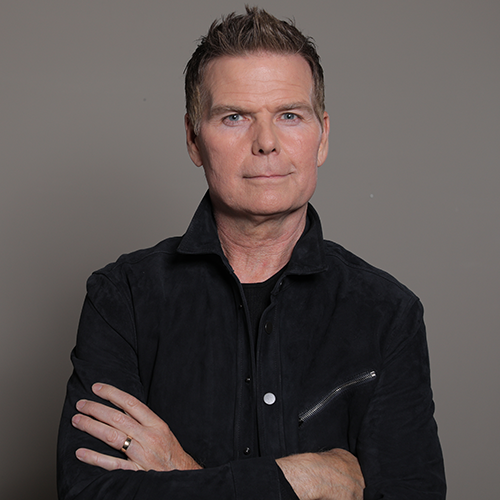
Bo Eason started his career in the NFL as a top pick for the Houston Oilers. Continuing on with the San Francisco 49ers, during his 5-year career Bo competed beside and against some of the greatest players of his generation.
In 2001, Bo wrote and starred in his one-man play, Runt of the Litter, which he performed on Broadway to rave reviews. The New York Times called it, “One of the most powerful plays in the last decade.” Bo toured with the play in over 50 cities and it is now being adapted as a major motion picture.
Now in his third act, he speaks to and trains some of the most successful people in the world—athletes, artists, entrepreneurs, C-suite execs—on how to communicate for maximum impact and success. He has consulted for clients like Advisors Excel, Morgan Stanley, Dimensional Fund Advisors, Mass Mutual, Guardian, and Merrill Lynch.
His book, There’s No Plan B for Your A-Game: Be the Best in the World at What You Do, hit the Wall Street Journal, Washington Post and USA Today bestseller lists.
Bo’s training programs on leveraging the power of personal story have transformed the way experts, entrepreneurs, and leaders communicate.
We talk about sacrifice a lot. Like what are you willing to give up? But I think the real thing, and you just spoke to it, is how much are you willing to endure.
Every great quarterback in the NFL, they all have the same exact story. They're never superstars in high school, they're never the best athlete, they're never the golden boy. They're forgotten, they're rejected, they're dumped by the prom queen. Those are the people who build a muscle. When you hit a boxer who's unseasoned, not used to being hit, and you hit him in the face and they go like this, oh, wait a second, I didn't sign up for this. This hurts, I'm bleeding, look at me. And now they're doing this and you're punching them again. That's what our world looks like now. And that is what you've got to fall in love with. You don't have to fall in love with it feels good because it doesn't feel good. You have to fall in love with that grind that no one else will do.
Welcome back to another episode of the Athletics of Business podcast. I am your host and CEO of the Molotor Group, Ed Molotour. I am thrilled to welcome back today's special guest, Beau Easton for the second time since we've launched the Athletics of Business podcast, which seems like a thousand years ago. Bo, first join us on episode 53. If you have not listened to that episode or even if you have, I encourage you to go back and listen to it. There is so much there was right around the time his book there's no Plan B for your A Game Launch where it talks about being the best in the world at what you do. And we'll talk about that whole mindset and that execution here today inside this episode as well.
Now, O started his career in the NFL as a top pick for the Houston Oilers. Continued on with the San Francisco 49ers during his five year career until a career ending injury altered the course of what life would look like for him. Now, in 2001, Beau wrote and starred in his one man play Run to the Litter, which he performed on Broadway to rave reviews in the New York Times called it one of the most powerful plays in the last decade. Now, the reason it was so powerful, because that play was written. Bo wrote that about his life and again, a one man show on stage in Broadway absolutely crushed it. And he shares a really cool story about Al Pacino inside of this episode.
Now in his third act, both speaks to and trains some of the most successful people in the world, whether they be athletes, artists, entrepreneurs, se suite executives, on how to communicate for maximum impact and success. He has consulted for clients like Advisors Excel, Morgan Stanley, Dimensional Fund Advisors, Mass Mutual, Guardian, Merrill lynch, just to name a few. We're going to talk about an incredible event he has coming up here in a few months that takes place in La Jolla, California. So be sure to hang on towards the end of the episode where we'll talk about his three day personal story, Power Bank. And we spend a lot of time talking about why your personal story is so important when it comes to building meaningful relationships and the people that you sell to, the people that you work with you lead.
And why your personal story isn't just about ending up at the top of Mount Everest, so to speak, but it's about the journey and what you endured to get there. So I'm going to get out of the way. This is just an incredible conversation. Bo is one of the most genuine, giving human beings that I know. So I hope that you enjoy this conversation half as much as I did recording it. Oh, welcome back. Thank you so much for joining us again on the Athletics of Business podcast. Despite how crazy and chaotic our world is, all is right for the next 45 minutes because we have you in studio. Thank you, Beau.
That's nice, Ed. Thank you. I love coming back on.
It's been a heck of a run for you. You identify now as being in your third act. And before we jump into that, I have to ask you, right, we first had you on an episode 53, which seems like a lifetime ago. A lot of things have occurred since then in both of our lives. But it's been amazing for me to watch your family grow and the impact that the way you did things when you were younger, right, creating that 20 year vision when you're a nine year old and want to be the best free safety in the game. But, but to see how that's impacted your children. How is the family doing? I love getting the Christmas card every year. It's awesome. But how is everybody doing?
Bo, they're amazing. It's so funny. I see people, parents like wanting their kids to go off to college and like getting down on their knees and going, finally, I, we're alone in the house and we're, you know, we're empty nesters and they're off to, I'm like, I feel the opposite. Like I'm trying to hang on to them as much as I can. And my oldest daughter is over In London and she's studying abroad and doing amazing stuff. And then my son Axel, he's going to be the quarterback at UC Davis next year. He committed there.
Oh, that leads me to two questions. And, and we'll get to the third child in a second here, but as a girl, dad, she's only in seventh grade, right? She. I'm trying to slow down time like you said. Yeah, but how is that having a daughter studying abroad? I mean, how are you sleeping at night?
I know it's not easy. A lot of texts going back and forth. She's studying a lot of this stuff. She's studying English, but so they're traveling and they're going to where Shakespeare wrote this play, or Shakespeare did his play here in this particular theater, and they're watching shows in that theater. So. So she's doing a lot of the stuff that I wished I did and kind of did here in the States when I was going, you know, when I was writing a play and opening in New York and all that kind of stuff, doing plays. So she's doing that now. So I'm kind of living vicariously. But you know what, here's the great part, because I married a gal who is so hard headed and just driven, you know, like, I was going to.
Go with amazing, but.
Amazing. Yeah, you go with amazing. It's probably, it's probably better for you and me. But, you know, dawn, my wife, is just, she's kind of unstoppable female, you know, moved to Milan, Italy when she was like 17 to model and to act and lived in New York City alone when she was that age 17, 18 years old and could really handle herself. And Eloise, our oldest, she's a lot like dawn in that way. They get what they want. They don't take any crap from anybody. You know, they're not pushovers. So I feel pretty good about that. So you'll face that here coming up pretty soon when they go off. So you just want to make sure that. Look, I just remember this one thing, Ed. It's funny you asked that, because I remember when were young parents and we had little kids, right?
The kids were little. I remember dawn pulling up in front of a sandwich shop or a coffee shop and telling the kids to get out of the car and go in and order this and order that and pay them and then come back and get back in the car. And they would go, well, I don't know how to do that, mom, won't you come in with Me. And she would go like this. No, you go in, you handle it. And so my kids, since they were really young, like too young, I wasn't forced to do this at that age. Walking into a coffee shop going, can I get a double latte and a sandwich with this knot on it? And. And then learn how to take care of the people working there and handle things.
And I remember sitting there in the car going like this, Don, they're too young to go in there. You shouldn't have them do that. I never did that at that age, but she made them do it. And now I understand why. Now they're older, now they're out there in the world, you know, handling stuff. They know how to book a hotel and travel to that city and stay in that hotel. I'm like, really? That was all taken care of for me when I was an athlete, you know, I don't even know how to do that stuff today, but my kids do. So there's one tip for you.
It's funny you say that, because that's discussions here that we have all the time. But speaking of athletes, now Axel follows in dad's footsteps to UC Davis, right?
Yeah.
I mean, that's where things really change for you. What was the recruiting process? And we'll jump into the other stuff here in a second, but I'm so curious, what was that like for you? Like, how did you know where to step in? How did you and Don know where to not step in to let him experience it, let him process it all. And what was that feeling internally when he said, dad, I'm going to UC Davis?
Yeah, that moment that he said he was going to go to UC Davis because he was being recruited. So he was going all over the country being recruited by some big time schools. And that moment I was actually shocked because I didn't really think about him going there. I just didn't. And even though I had a lot of success there and my roommates had a lot of success there, I just didn't think about him going there. Anyway. When he did tell me I was on a zoom call with clients, like I'm coaching them on a zoom call like you and me are doing right now, you know, I knew he had a meeting with the head coach at UC Davis. I knew the coach was coming out to see him throw.
I couldn't be there because I'm on this call and I looked down at my phone and it's a text from Axel saying that Coach Plow offered him a scholarship. I swear, Ed, this Has never happened to me before because usually I don't even have my phone there.
Right.
But I just saw it. And then Axel called. And as I'm picking up the phone and I'm telling my clients, you guys, can you hold on for one second? And they're like, cool, because they know the story, right? They know Axel.
Part of it's pretty cool too, as your client, right?
Yeah.
Let's not kid ourselves.
Yeah, yeah. And I answer the phone and I just. Axel tells me how it went, that he just offered me a scholarship there. I just start bawling my head like a baby in front of my clients. We're still. The coaching session still going, right? And afterwards we hung up. I was so happy. I had to pull myself together. And my clients were like, I apologize to them for taking something personal without them. And they got to see it. And they go, that was the best coaching you've ever had, Bo. Because we got to see in real time kind of how you handle that situation and how you celebrate that situation or are surprised by it. Anyway, that recruiting process was really cool because me and my brother, even though we're top picks in the NFL, we didn't get recruited. So no colleges recruited us.
So we didn't know how it even went. But in today's world, the whole recruiting process, it's like a social media game, which we're not very strong at. Like, we always tell Axel, me and my brother coaches Axel a lot at that position, and we always say, God, our Instagram game is not great, but lucky for us, the position of quarterback is played on a field with grass under your feet. So we're good at that, but we're not so good at promoting that. You know what I mean? So most of Axel's peers in the quarterback world are really good on Instagram or what, you know, Twitter or whatever it is. And we call them Instagram quarterbacks because they're really good on Instagram, but as soon as a 350 pound lineman hits you in the face, not so good on Instagram.
Right now you gotta do what we've been training Axel for, which is the grass under your feet in those real positions where you're getting smacked in the face. So the whole recruiting process was like, first time for me going through it. And so it was fun. I mean, they really take care of you and they really, you know, they let us sit on, in on quarterback meetings and watch the film and watch practice. So it was really cool going through that with him. And I basically Just kind of just backed off and let him kind of go through it. I would always give my feedback, you know, like, oh, I like the way this coach, what he saw in you. I like this guy's philosophy of this position called quarterback.
I would give my feedback and my brother would give his feedback, but we wouldn't be making, you know, decisions. We would give our feedback, but that was it. Anyway, so it was fun. The game is different now, Ed. I mean, you know, I played in pro football in the 80s, so I played high school and college during the 70s and 80s, you know, so the game is a lot different. I like our way of playing it better, just so you guys know. I do. I think it's a better game. I think the more you try to regulate something, the worse it gets. I think it just hurts the sport, the nature in which the sport was intended to be played. So football in this case was invented for this certain way to play this game.
And now they're so far away from that, the intent of which the game was invented to be played in the first place, that it's become now mostly about the regulations and the officials. And I just think that's not a good look.
Takes away from the integrity of the game. But speaking of different. Each child is so unique, right. And then there's Yla, who I believe is a sophomore and volleyball is her thing.
Yep.
How has she navigated her way with having a sister at Colgate who's a cheerleader and now studying abroad and.
Yeah.
Brother who is a football stud and. And here she is, you know, this beautiful young woman finding her way. What's that been like?
You know what? She benefits from the bloody noses that the older two went through. Right. Like, she sees where they stepped in a bear trap and then she sees where they didn't. And I'm the youngest of six kids, right? So I saw my older sisters. I have four older sisters. And then my brother's a year older than me, so I got to see them make every mistake in the world going toward their dreams. So I just avoided those bear traps, if you will. So it was kind of cleaner for me. It was easier for me. At the same time, you are the youngest, you are the smallest, and you gotta grind, man. You gotta. You gotta work your butt off to get any kind of attention. And so Lila is like that. She's the runt of the litter.
She is so athletic, and she so wants to win, like, old school wants to win, you know, like, whatever it takes. Like, not just. Yeah, you know, that what they say about winners is it's not so much they like winning so much is that the distaste that they have for losing is so strong that they win. And that's kind of how she is. So she works her butt off. She figured out very early that she was not going to be the tallest girl. She's not going to be 64 playing volleyball. She's not going to be 62 playing volleyball. So we decided as a family, okay, Lila, that's good for you. You're going to be 5 8, right?
That's perfect.
But to make up for that size difference, you gotta play bigger. And that's what we came up with very early. You just gotta play bigger. So she would come home and complain about, dad, I'm not as good as that girl. She's six two. And I go, yeah, okay, you just have to play bigger. You have to play like you're 6:2. So that means you have to get off the ground higher. Then the girl who 6:2 gets off the ground, that's called a vertical jump. You have to be faster than her. You have to jump higher than her. You have touch your hand over the net higher than the six two or six four girl does.
And right when we gave her that permission slip like a dog and a pant leg, she took it and she figured out her advantage, which was, I'm only 5 8. That's my advantage. Now I'm going to out jump them all.
It's funny you say it. So my daughter, you know, bath ball and soccer have become her two sports. Basketball, she's. She's decent. She's pretty good and small. But that's the one thing we've talked about quite a bit, is how that is to your advantage, how you bring them down to your size and how, you know, what are the little things that you're going to do differently than everybody else. You know, anybody can shoot, everybody can handle it now, but can they defend? Right? And they're willing to sacrifice their body. But it's interesting because this segues great to what we're going to talk about is identifying the power of your personal story. Right? And we talked a little bit before we started recording is where we are in our world, in our organization, in the biopharm, biotech, life science spaces.
We're teaching these leaders, both frontline, second line and executives, the significance of how to coach their people and how the force multiplier in that is the relationship piece and the relationship piece they have with everybody to drive that trust and how important connection is and to your point into what you talk about is how powerful your personal story and the role it plays in connection. Can you talk about that? Like when you first, obviously you have an amazing story on episode 53, when you're kind enough to join us the first time we talked about, you know, after your playing career and being a playwright and starring in a one man show, so to speak, run to the litter and everything that's happened since then and how your story has helped. We talk about reinventing ourselves.
But I also look at you as you've evolved, right? You've become what you were meant to be. How important is that personal story in the connection piece?
The dreams that I've had, the visions for that I've had for my life and the visions that I've had for my personal life or my athletic life or my parenting life, I've built those all with story, with the intimacy of story, because that really carries the day and it bonds you. The greatest thing about stories is it bonds, it puts people together. I noticed this when I did my play. You know, when you do a show in a theater, all you're doing, you are telling a story. So the people that are in front of you that have paid a lot of money to travel and come to this theater in New York City or whatever city we're in, and there's one person up telling their story, well, there might be 15,000 people in the audience, there might be seven. I've done both sizes.
What you find out is that you tell a story and 15,000 people think they're joined at the shoulder now, their arms are interlocked now because they're experiencing something together. Same thing goes for when it's a one one. If everybody would just think back to the first date of the girl that they married or the guy that they married. Do you remember the first date? And that is always an amazing story because they ended up with this person. So we all had a lot of first dates that you didn't end up with that person, right? They were bad, you dumped them, they broke up with you. It didn't work out, whatever. But there's only one person that first date did work out, right, like the Super Bowl. The reason that happens is because of the story of these two people on that date.
How one told their story, the other told their story. And somehow these stories just brought them together. And then here's the greatest thing about everybody's personal story, how powerful it is for one I just think it's the most valuable thing that we all have, and I think it'll pay you the most. It is the most valuable. Meaning it pays you the most. It also gives you the most influence. It also gives you.