

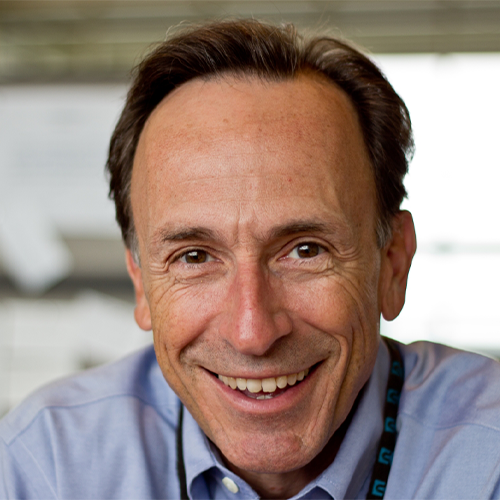
Tom is the CEO of Tuthill Corporation, a privately held and 4th generation manufacturer of industrial products. His role is to bring to life the COMPASS of the corporation. The COMPASS is Tuthill’s version of a vision and mission statement, however, it is radically different from the norm. Their version is all about “ALIVENESS” with a “Purpose to Wake the World.” This HUGE undertaking requires a culture where folks want to live into their full potential not only for the company, but for their families, their communities, and the world.
Welcome to the Athletics of Business, a podcast about how the traits and behaviors of elite athletes and remarkable business leaders frequently intersect. The real stories and hard lessons to help you level up your leadership and performance. Now your host, Ed Molitor.
Welcome back to another episode of the Athletics of Business podcast. I am your host and CEO of the Molitor Group and Ed Molitor. And what an episode we have for you today with our special guest, Tom Carmazzi. Tom is the CEO of Tuthill Corporation. Now let me tell you a little bit. Before I tell you about Tom, let me tell you a little bit about Tuthill. Tuthill is 125 year old manufacturing company is a fourth generation family owned by Jay Tuthill and his son. In fact, the fifth generation of Tuthills works at the Tud Hill Springfield, Missouri plant. Now the company started out making bricks in 1892 and the raw clay for the bricks was extracted from quarries using horses.
As the quarries got deeper and deeper, Tom will explain in this podcast episode, it became more stressful on the horses and they started dying. Then Mr. Tuthill bought a pump to replace the horses and save their hearts. Which is why Tuthill thought thinks about the heart as the original pump. Now where does Tom come in? Well, his role, simply stated, is to bring to life the compass of the corporation. The compass is Todd Hill's version of a vision and mission statement. However, I assure you it is radically different from the norm and it is very cool. Their version is all about aliveness with the purpose to wake the world. This huge undertaking requires a culture. Now listen where folks want to live into their full potential. Not only for the company, but for their families, their communities in the world.
Tom has been active on not for profit boards in the past. However, currently he's spending his time sharing the Todd Hill story in a variety of venues. And as you listen tom, you'll understand why, because it is so powerful. Some of the things we'll talk about in this episode is the shift to leaning from the heart with Tom. He'll tell a little bit of story about as a leader he's got to be real and he had to throw away the CEO Persona and the whole smartest guy in the room and the feeling like he always had to have all the answers because it's just not true. And he'll share a story about a manufacturing plant he ran years back. Years back, a 1 million square foot manufacturing plants. Okay.
And the numbers were telling him that they needed to downsize, and he ran every single scenario he possibly could. And they needed to downsize. Call the meeting. And at that meeting was the union president who stood up and challenged him. He says, I get the charts and the graphs. I get that you're smart. The problem is we think you don't care is exactly what he said tom. And then before Tom can respond, the president continued. There's 23 people here. Why don't you tell me their names? I'm going to let Tom pick that story up on this episode because it is amazing. Then they talk about conscious company at Tuthill. And a conscious company is about being aware and awake. And Tom mentions, you know, are you aware and awake to your surroundings, your dialogue with others, and importantly, you dialogue with yourself.
And this awareness includes anything from the dynamics of your marketplace to how you are feed feeling. Personally, awareness and responsibility is about deciding what do you really want first and foremost and of course, from your heart. Enjoy this interview with Tom Carmazzi. Tom, thank you so much for having me here today and joining us on the Athletics of Business podcast. I'm humbled and I am fired up.
Well, gosh, Ed, thank you so much for being here. I'm truly honored. You know, we met a couple weeks ago and it's just a great time that we shared. And so I'm excited to be back with you and to talk with you.
Yeah. Let me add a little context to our audience. So a couple weeks ago, I was supposed to call you Tom. You know, I had that flashback to the old school Catholic guilt when I wanted to call my buddy four doors down and my mom said, get your butt out. Walk down the street and see him. Go talk to him face to face. So that's what I felt like I needed to do, and I'm glad I did. I mean, what a beautiful facility you have Here we are at Tud Hill's headquarters here in Burr Ridge, which is right outside Chicago. So thanks for having me here.
Oh, gosh. You know, we built this facility back in 1999 and so it's 20 years old, which doesn't seem long for a company that's 127 years old. But we're very blessed here. Again, the facility is fantastic and yeah. So thank you. We really love it. It looks out over a pond. It's got to mix in with nature. It's a great little spot for us.
It is, it is. So why don't we go ahead and fill everybody in Tuthill? What you do who you are, what you stand for, the journey, everything. Can you do that in three sentences for me?
Wow Ed, challenge me. So no. Tuthill is 127 year old manufacturer make vacuum systems, blower systems and pumps, industrial products. So nothing that you would find in your home. It's 100% owned by Jay Tuthill who's fourth generation, fifth generation is running one of our businesses. And so it's just wonderful being again family owned business. Heavy duty manufacturing. You tour one plants and you're going to see a lot of machine tools. And we actually love that as a part of our version of a vision, mission values brand, which we call the compass. In our mission it says we make real things that really make a difference and that make is all about manufacturing. And so that's what we do.
And in terms of me, I'm the CEO, but in order to align with our compass, which is all about waking the world, I am the chief aliveness officer and the spirit of that is to link back to the compass and our purpose which is all about coming alive. And so I've been with Todd Hill for 20 years and the CEO CAO for the last gosh, 2011. So eight years. Holy cow, Ed, man, time flies.
It does. And we're going to talk a lot about heart today. Can you align that conversation we'll have wrapped around the heart and Tut Hill's history and how you evolved into being a pump company. It is a fascinating story.
Well, thanks Ed. So Tuthill started out as a brick maker. And so we had quarries in which the horses would help us pull the clay out of the quarries in which to make bricks. And as the quarries got deeper and deeper, well, by golly, the hearts of the horses were giving out. And so Mr. Tuthill at that time ended up buying a little pump which helped fuel a steam engine which replaced the horses and basically saved their hearts. And so one of the things that we like to say is that were really about the heart from the very start. And what we're wanting to come alive now is the perfect pump. You know, we're a pump company which is the human heart. And so the heart really has been part of our legacy from the beginning and that's how it links for us.
And also in this compass, which is again our vision and mission statement, it talks about going heart head, hands versus head and hands, which we talk a lot about being like minded. We like to think about being like hearted.
I love that. And let's go back to the heart, head, and the hands for a second. Because you and I, just before we started recording, were talking about what our default, our personal default methods are of solving things. And when you have a tendency, not you being specifically you, but people in general, when they think from the head first or they make the decisions from the head first, what usually happens?
Well, I know for me, Ed, it's very linear, it's very logical. My creativity is less. I find that when I start with my heart, I tend to be more open, creative, calmer. And I want to believe that my decisions are more thorough when I come with my head. For me, also, speed can really come into play and that I got to make this choice now and it's got to affect the bottom line. And so when I. When I back up and really come from my heart, it's holistic as well. And so we have this thing called the four sticks, which starts basically with the leader, and then it goes to the team, then it goes to our processes, and then it goes to the results. And we say that it goes left to right.
Basically it's starting with the people model before the business model. And I think that's all about going heart, head, hands.
And I read somewhere where you said that if you get the people model right, you will crush any business model.
That's my belief, yes. I mean, because again, having been someone that focused on the business model for years and years and quarter to quarter kind of a thing, what I found is that when I can focus more on the people model, it's much more sustainable. And I don't mean sustainable at a mediocre place or mediocre place. It really is sustainable at a level that we think is pretty dash darn good. And I'm highly biased, Ed, so. But, you know, we're doing well financially, but it's all driven by the people model.
Well, and let's talk about that. Let's go to you. I think this is a great segue into awareness and a conversation we've had before. And your shift from being a quant guy to where you are now. Can you talk about that a little bit or a lot of it for that matter? Because that is. That is a big piece to the puzzle.
Well, thanks, Ed. It so my background is undergrad accounting major, got my cpa, public accounting, was out in business for about seven years and then went and got my master's, University of Chicago, so kind of the epitome of being a quant jock, and then got into, you know, M and And, and I just loved cranking the numbers. And, and you know, as I mentioned to you previously, I really saw figures versus faces and that just, it didn't even dawn on me that there was something else. So as I made very, what some people would think would be very tough people choices, it just was the numbers. That's just that's just the facts of it. There wasn't any people involved in any of my choices and yet they all affected people.
And so I got to this place that I ran a million square foot plant, 1200 machine tools, two foundries, iron, aluminum, about 2,500 people in the bargaining unit. And so, gosh, to hit the numbers, I was going to what I called a reduction in force. 200 people. I had done the charts and graphs of the models and this was a no brainer, it's what had to be done. So I got together with the executive committee of the bargaining unit. And I walked through the charts and graphs and all of a sudden the president in the back of the room raises his hand. And I said, yes, Guy. His name was Guy Raymond. I said, yes, Guy, what's your question? He said, first off, it's not a reduction in force. That's what you guys called, it's called a layoff.
And he said, secondly, we get that you're smart, but the thing that really bugs us is you don't care. And I was immediately reeling and quite frankly, he kind of caught me so much off guard that I was trying to think of a quick, you know, rebuttal, like, oh gosh, I really do care. But he didn't give me that luxury. He very quickly said, and Tom, to prove my point, I'm going to ask you to tell me the names of the 23 Executive Committee members sitting in this room and I'll make it easy for me. Why don't you tell me their first names? I knew three, Ed. Three?
Yeah.
And now I truly was in panic zone. And I don't remember what I said from that point on, except for when I left the room. For some reason I looked over at Guy and again, this was an act of God. I looked at him and I said, thank you. And to this day I don't know why I said that to him except for God realizing I needed help. And so I went home that night and I was still rocked. And I walked in to our home and my wife, who knows me extremely well, just looked at me and said, gosh, what's the matter? And I Told her the story, and she says, well, you know what you got to do. And I said, no, Deb, I really don't. I've been rocked. I don't know what to do.
And she says, well, you need to go back in that plant and work in every single department. And I knew being a quant jock, I couldn't even turn those machines on. So I was scared to death. But I knew that she was right, and that's what I did. And so for the next three months, starting back in the core room, I literally worked my way all the way to shipping, and I got to know those people. And I'm not in any way going to kid you to say that. Geez, you know, I was their best friend. But that was the beginning of the shift from figures to faces. And yet, Ed, I wish I could say, and it was an epiphany, and I never went back there, but my patterns were very strong.
And so I've been very fortunate to have a lot of people that cared about me and care about me and give me feedback on a somewhat regular basis when I will backslide and get more focused on the numbers than really what's necessary at that point in time.
So is it safe to presume that the layoffs did not occur?
No, they did not occur. And the thing that happened as a result of that, which was really interesting, as I started taking my business card and writing on the back of it, we will never lay off as a result of getting better. And of course, there can be things happening in the economy and stuff like that which will cause businesses to lay off. That's not what I'm talking about. What I'm talking about is were on a journey back then. It was called Lean or the Toyota production system, and were doing some amazing things with it and freeing up a lot of folks. But that business card was being passed around basically saying, and you know what? As you helping us get better, we are not going to ask you to leave.
What we're going to do is we're going to redeploy you or put you in other parts of the business to help us grow. Because that's the key. These businesses, when we free folks up, we got to get them to grow. And, and so, so, yeah, no, that was something that, when I walked out of there, I, I knew that I was making a big mistake on multiple fronts. Unfortunately, Guy Raymond had the, had the courage to step up and let me know it. And so, yeah, we, we continued on there and did well, it is.
It's truly a remarkable story when you sit there and look at it and not. Not just the fact that it all happened, but that you were aware enough and comfortable enough and humble enough to. To grow from it and not just be stubborn and plow forward. And what. What stage of your career was that?
That was, gosh, about 20, 22 years ago. So. So I was. I. I was really very pigheaded, one might might say. And it was very driven and basically knew how to make the numbers happen. And that's exactly what I was going to do. And no one was going to pull me off of that. And so I was again, just very fortunate that someone in a public forum had me or invited me to think differently. Although at that time, I didn't think as much of an invitation. But that's what Guy did. And I been very thankful.
Okay. That people model first. I want to get back to that. Can we. Can we talk about the four sticks?
Sure.
In a little bit more detail because there's so much. There's so much there that's just powerful.
Yeah. So these four sticks and Ed, we're really clever with our names of what we think of our icons. And so, yeah, we call this the four sticks. And so the first stick is all about leadership. And as we think about it, you know, we call it the conscious accountable business leader, or cable. But we're also really digging into aliveness and that we want the leaders that are alive. And when we talk about that, it's not about just energy. We talk about the full continuum. Sad, angry, scared, happy, excited, tender. And in our compass, which, again, is our vision and mission statement, it talks about when we come alive, the world comes along. That's actually part of our makeup as humans. We're built to be in relationship, and there is a chemical in our body called oxytocin that is released when we're in relationship.
And so although that's a wonderful phrase, it's very true. And so if you think about these four sticks, and the way we talk about these is that as the leader climbs, he or she invites the team to climb. And as the team climb, the team is the second stick. As the team climbs, then our processes and structures get more sound, they get more firm, you know, stable. And that's the third stick. And then the fourth stick is the results. And so basically these go left to right or from leader to the results. And again, as a leader climbs, the team climbs, the teams climbs, the structures climb. And as the structures climb, then we get the results and they're sustainable. And one of our metrics that we go after, Ed, is we talk about the top 1% of manufacturing companies.
And so every year we look at 300 publicly traded manufacturing companies, and we're looking at the ratio between EBITDA and operating working capital. And so, geez, when we started this journey, I don't know if we're even top 50%, but right now we're top 13 and last year, top 15. And so we continue to climb here and do. And do very well, focusing on that people model first or those first two sticks first, which is, of course, the leader and the team.
So when we first. When we sat downstairs and were talking, I was. I mean, I was biting my tongue, so I was letting you talk. But my. My big thing. You just said it. Talk about measuring, like, metrics, like, how do we. I mean, how do we. We can qualify, but how do we quantify this? But as you had that growth period when you first implemented this system and really started digging into this, there had to be some times like, okay, is this working? My heart tells me it's working. My gut tells me it's working. It's too soon to really see the results. Can you talk about that time a little bit and how you kept everybody moving forward?
Well, so, you know, were there. Were there challenging times? Yeah, absolutely. I mean, most of the folks probably on this podcast can remember back to 2008 and 2009, very challenging times for us as a business. And so Jay Tuthill, the owner, got all the business leaders into a room and said, hey, you know, we're basically, you know, negative cash flow, and we need to think about how we can turn this around. And one of the first people to raise their hand said, well, gosh, I know how we can do this, or one of the things that we can stop doing.
And that is what all of this leadership training stuff, you know, I mean, it cost you a lot to fly people down to Florida or, you know, suburbs and Chicago area, and it's tens of thousands of dollars just every time you do it, Jay. And so let's just stop that. And Jay calmly didn't get angry or anything, just looked at everyone in that room and said, we will never stop that. Never. And so, you know, that was a time that the owner was pressured to pull off the course for the sake of the fourth stick. And he said, no, we will not do that. And you think about the commitment and the courage, because literally Every dollar we're spending is coming out of his wallet. And yet he did that.
And so the other thing that happened during that period was getting very clear on this, making real things that really make a difference because we had businesses that were more assembly, more fabrication. And so 2008, 2009, we reduced our size by 60% in order to get focused really on the compass and the alignment. Although we didn't call it the compass then, were just really getting focused on how we can add value and how we can get these folks aligned on a very consistent theme. And I remember, gosh, it was probably five years after that, I was interviewing someone and I said, do you have any questions of me? And he said, yeah, I do. He said, I understand that under your watch you shrunk this business by 60%. He said, I don't. I know of no CEO which has done that intentionally.
And I said, well, you know, I get the nature of the question. I got to tell you, I didn't think about it. I knew it was what was right for the business. Right. Right for our. For our folks. And that's what we did. And so it just, it really has not been about the fourth stick once we get on this journey. And yet we're not foolish. I mean, we will be top 1%. We're on that climb now. And so we're not benevolent, but it's a yes. And that we want to have that people model. And as we create that, we will get the business model. But just like as I said before, it was about the heart from the very start.
So we talk about authenticity and we talk about self awareness and how I like to break authenticity down into honesty, integrity, and vulnerability. Can you talk into a little bit about how that's played out in your journey?
Honesty, integrity. I'd like to be, I'd like to believe have been a big part from the beginning. And the way that shows up, I think for a business leader, I don't think anyone steps into a conversation and intentionally lies. I just, you know, and whoever does that, just a very small percentage. But for me, it shows up more in making a commitment that in the moment, I absolutely believed I was going to keep. But something happens that I can't keep or don't keep, that's one thing. But where I think for me, integrity comes into question is when I don't tell anybody. It's like I already know I'm not going to make it, and yet I kind of keep it a secret. So it's.
I Think for business folks, it is about that when you know you're going to deviate from the course that you've set, how quickly do you let folks know, ask for help, and get back online? So that's been something that, gosh, I've really wanted to live into from day one. The vulnerability is one that has really only been the last three or four years. And it all came from a book that I read called the Advantage by Patrick Lencioni. And in there, he says something, and it was so simple and yet so powerful. And he said, the leader has to go first when it comes to vulnerability. And of course, I had read books, you know, the leaders are the last to talk, the leaders are the last to eat, the leaders are last in line. And.
And that's the way that I lived because it made sense to me. And when vulnerability, you got to go first, scared the living daylights out of me, but yet that also made sense because here I'm asking people to be vulnerable, and I'm not modeling what that looks like. And so as I started stepping into that, I was very fortunate again, that someone on the leadership team came up to me and he said, tom, never stop doing that. And I said, why is that? He says, because it allows the rest of us to do it. And that was a really big deal for me. And it started out with just simple things like telling a room full of business leaders that as CEO, I'm not the smartest guy in the room. I don't have all the answers.
And being very frank about that and true about that and actually not believing it in my heart. And people would come up and say, gosh, we've never heard a CEO say that kind of stuff before. And it's like, well, I'm not making it up. It's true for me, regardless of my background and my education, it's true. And then another thing that I share that really kind of shocks folks is that from 12 to 16, I was a world class stutterer. I took up golf because it was the solitude. I didn't have to talk to anybody. And so when people hear me speak today, especially publicly, they don't believe it. But oh my gosh, for me, I was terrified. 12 to 16 to literally I became a hermit on the golf course. Yeah. So. So vulnerability for me is. Is.
Is really big as a leader. And truth matter is, folks already know it. I'm just. I'm just telling them what they already know. Yeah, I mean, they already know now,
At least now that, you know, and that's really, you know, when I get at the honesty piece, that's what I mean is the honesty with yourself. So you made that shift from a quant guy to where you're at now. Was it a challenge for you to, to have those conversations with yourself and to be able to tell yourself, hey man, this is really where you're at.
You know, scary, you know, and the thing being is that, Ed, you picture I have this ability training, education that it is about the numbers and it is about the quant side. And gosh, I'm getting promoted, I'm getting rewarded, I'm getting bonuses. It's like, why the heck would I want to change? And yet I just feel, felt this, I felt this hole. And as I started making the change, the thing that started happening is my emails started reducing. I used to wear a pager. This is how bad I was. I had a pager.
The strange thing was it was 2012,
So I had a pager. All of a sudden my pages are becoming less and less phone calls, less and less, voicemails, less and less. And I got scared. I said, because that was how I perceived my value was how many voicemails, how many emails, how many pages. Well, that means I'm really important. And I literally went to Jay Tuthill and said, you no longer need me. And he's like, what's the matter? And I told him and he said, tom, this will be fine. Just basically stay the course. He was much wiser than I was. And so there were times that absolutely I had doubt, Ed, because again, I thought that's how I earned my keep. That's how I paid my salary. And if the phone isn't buzzing and people aren't asking me what to do, I'm no longer needed.
And the truth of the matter was I got them into that conditioning because I wanted to be the hero. And we talked about hero, victim, villain. And so I love being the hero. It was an adrenaline rush. And as I talked to folks today, I'm a recovering hero and I fight that every single day.
Right. And can you talk into that a little bit? Because I love the hero, victim, villain, because C level leadership, I mean, leaders in general have a tendency when they haven't hit that point like you have, they want to have all the answers. They want to be the hero when they don't realize their job is actually to help facilitate the solution. And vulnerability is one of those ways. But what a lot of us, the mistake we made was by being the hero. There's the victim and the villain.
Yeah, yeah. So, I mean, well, gosh. So a relationship that's very much out there in the public, and I'm not bashing unions, but if you think about the relationship between the union leadership, the business leadership, and the folks in that union. So for the union leadership, they're the hero, the villains are the company leadership, and the victims are the employees in the bargaining unit. And that runs. I mean, and it has to run or else it breaks down. Right. So if all of a sudden leadership is not the villain, well, there's no one to be protected from. And so you no longer need a hero. And so certain of these dynamics are required for things to happen. You think about reality tv, it's this running in spades. Right? That's exactly what this is.
And I was speaking at a university and I said, so what percent of the organization in which you're in today do you think people are operating on this? Victim, villain, hero. And the guy raised his hand, he says, it's 100%. And I said, oh, my gosh, where do you work? He says, I work at a law office. All right, point will take. I'm not bashing anyone. It's just the nature of some of these relationships. And so for me, obviously, first it was showing up around the numbers and that, okay, here's what we need to do in order to make the month happen. Here's what we need to do in order to make the quarter happen. And the thing is that all I was doing a. Was getting that rush, but I was holding those other people small.
I was telling them that they couldn't figure it out. They weren't capable. They needed me. It just wasn't true. It just wasn't true. And the thing. And then you're like, okay, so they're the victim. Well, who the heck's the villain? I'd make him up. You know, it could be Jay. You know, Jay, Gosh, you know, if we don't start hitting these numbers, Jay's going to get mad. Jay rarely has focused on the fourth stick. He's truly a visionary and focused on the first two. And so, but. But that hero in me had to have that dynamic running. And so numbers was a great way to step into the arena and say, okay, man, let's, you know, let me show you how this works. And it's. It's just. I just cringe thinking about it now. So.
So you make that shift from hero to. And I believe this Was your baby this? Living our common values, Creating the uncommon where it talks about a life full of curiosity, clarity, grit, grace, gratitude and love.
Yeah, so that's back to that Compass document and so on. Our compass it has five categories. The first is our purpose which is to wake the world. And it's all about this. When we come alive, the world comes along. The next is about our vision. And the vision is to really have a legion of light hearted with astounding impact. And in there it talks about an ingenious company supporting flourishing families and communities and notice. Ingenious company the company is supporting. It's not the end game. And then it goes into the mission which is this part about making real things that really make a difference. Talks about heart, head, hands. It talks about daring to make better. Then we go to our way which is about creating the uncommon. And just as you say, a life full of curiosity, clarity, grit, grace, gratitude and love.
And you know, when were working. I'm sorry. And the fifth part is our brand which talks about who we are, what we do and what we say. And it all starts with me here now, but back to the our way. When Jay Tuthill and I were working on this with a group of 20 other like hearted folks, you know, I took this to a friend of mine who was a consultant and I said hey, you know I'd like you to take a look at this. This is something that we're thinking about. And he looked at it and he says y down here in the roa section, this love, you got to take that out. No, that's not going to work. You just don't see that in these documents. And I said thank you so much. And what else?
And so long story short, I took it back to him about a month later and said hey, we've made some tweaks to it. What do you think now? And love was still in there and he didn't mention it. And so when were finishing our breakfast I said I'm curious why you didn't mention love still being in there. And he said no. I knew the first time I brought it up I was going to see it for the rest of the time. He said I knew you weren't going to take it out. And so there's a part of those last three words, Ed, the grace, gratitude and love that were for me because I knew this was not part of my leadership and I call it leadership. I was much more of a manager than I was a leader.
I wasn't made up of the grace and gratitude and love. And I knew that if they were in this compass, something I was going to stand for, that I was going to have to model that to the best of my capabilities. And there's days I want to do over. But yeah, so the grace and the gratitude and the love is really that calling forth for us to come alive really for the sake of others.
I love that. I do a lot of work with the C level executive coaching that I do. Talking about coaching your people, not just managing your people right. And the grace, gratitude and love shows up so much because we know the workforce is changing significantly. And you know, people want to know that they're, that they matter, that their job's important, that they're valued and that's all part of it. Can you speak into that a little bit? The significance of coaching your people, not just managing your people.
Well. So gosh, I, I see this ad as something that is best for me done one one. And it's really spending time in dialogue, not discussion. And we're very big at tuthill at differentiating between the two. Dialogue is two way, discussion is one way. And so we talk a lot about being in dialogue. And so as an example, I just this morning gave a mid year employee of evaluation and it was three hours. Okay. A lot of times it's like gosh, let's just get this over. But in the employee evaluation, the first section, so there's four sections. The first section is these our way behaviors. The curiosity, clarity, grace, gratitude and love. And we walk through those slowly as to how are those are showing up for you in your role. And so it's that type of coaching.
And what I like to think of it Ed, is it's not in any way pointing out, you know, what you did wrong like should have to, ought to. It's more of talking about what they're capable of versus what we're currently seeing and how do we get more of what they're capable of. And again, that's a shift for me, Ed, because I was more of a pointing out the gap and how you're going to close it and when you're going to close it buy that's a much different feel than, you know, gosh, Ed, I've seen you before show up in this way and the effect you had on others was tremendous. And so how do we get more of that, Ed?
You know, and so it's more of that kind of a dialogue versus Ed, I saw you show up and you were just a complete Goofball, you know, don't ever do that again. You know, even though I've done that a zillion times, I found it shuts people down all of a sudden. And when it happens to me, I'll just speak for me. I don't listen when I've been shut down. I'm in a fight or flight mode and my attention is really short.
Well, and that's it. And we'll be the first to admit it but, and people will tolerate being told what to do, but they want someone who's going to, you know, push them and get them outside their comfort zone and facilitate growth which I mean you do it in group basis too here with the university.
Yeah, we do. And so this is a group of light hearted folks which we've put into a university called Awaken University. And they run various leadership training sessions that are three days in length as well as do personal coaching. And one of the things we talk about this personal coaching is it's not about fixing anyone. It truly is an honor. And so we coach folks to help them in their climb and that climb is back to the our way behaviors. And so yeah, that university, we believe it is uncommon as well and that it's all focused on the people model and it's also starting with the heart.
So someone's listening right now thinking, gosh, I wonder how that university works. I wonder if that's something we can implement on a certain scale here at our organization. Can you tell us a little bit more about how it works?
Yeah. So we hired a dean of Awakened University. And the cool thing about this guy is he was a practitioner and then Most recently spent 10 years at a university helping them create what is the number one doctorate program in the country focusing on values driven leadership. Benedictine University. So first starts with the leader and again we want the stuff that we teach. Even though we start with the heart, it's going to go head hands, it's going to get to traction. And so we brought on Gus and he right now is in the process of forming his team. So we have the curriculum that's focused on the heart and who we are. And what we want to do now is to blend that in or breathe that in to a curriculum that's going touch on the other parts of our compass.
And so let's go back to ingenious company which now is more of that traditional company stuff. And so absolutely it's a balance sheet and income statement on time, delivery and quality and inventory turns and all that stuff that we're very familiar with. But again, it's who are we being while we're doing that? And so it's Awaken University is structured to have these trainings in context so that we blend into there the our way behaviors with something that can tend to be very mechanical. So an example of that would be a Kaizen event. You know, it's very common for us through the Kaizen events. And so in these Kaizen events, what we do is we start right out with talking about how this Kaizen event ties back to the compass or how this links back to the our way, the behaviors.
And so it absolutely gets some astounding impact in terms of the productivity or something of that nature. But it's also in this very intense, focused, time based effort. Who are we being not what we're doing, who are we being inside of?
Inside of the Kaizen process?
Inside of that Kaizen process. And what we did in a very recent one is we asked everyone what was their intention. And it wasn't about hitting the productivity target. It was about who they were going to be during the next four days. And at the end of each day we checked in. On a scale of 1 to 10, that's the quant side of me. On a scale of 1 to 10, how are you doing on your intention, which deals with who you are? And that just worked really well. And so got a lot of heartfelt while were making some pretty cool things happen out on the shop floor.
How long have you been doing the Awakened University?
Awakened University, Gosh. So that would have probably come online, I want to say in 2009, 2010, it called awakening University. We started that really in its current form in 2015. And as I say, Gustafson came on board this year in November.
Let's talk success stories from the university. You and I sat downstairs when were here the first time and we shared some different stories that people have told. You have shared with others. I found them quite fulfilling and quite amazing and very rewarding for you, I would imagine.
Yeah. And so these are stories about people in the heart and there's not a single number in them. So the first one was. So for our three day leadership retreats, every now and then I will be at the front of the room, not as the expert, but to build relationship, to show the support and also for my own personal growth. And so there was a woman that was in our first session and I was front of the room. Then she came back for the second session about two months later, and I just happened to be in front of the room for the second session or second retreat. And she came up to me before the second session, and she said, you saved my marriage. And I said, holy cow, Annette, thank you. First off, but I know I didn't do that.
You did that, but just tell me more. She said, well, my relationship with my husband was much different before I went to the first session. And after that, I was able to have dialogues that I was never capable of having before. And I know that today my relationship with my husband is much better than it's ever been. And I just want to thank you for that. That's an example. I had another story that just happened the last couple months. Someone came up to me after one of these sessions and said, you know, Tom, there's something I want to share with you. I said, yeah, what's that? He said, well, my daughter told me that I was different. And I said, well, gosh, so what do you think she meant by that?
And he said, well, I asked her, and she told me that I listened. And, I mean, even today, it kind of brings tears to my eyes. I just think about just a simple power of listening to someone and what it meant to his daughter. I didn't have the courage to ask him how old she was. You know, God forbid she's, you know, 16 or 17. But just the effect that he was having on his daughter was just something that seems to be so simple but yet so powerful. So that's another one. You know, there's stories. So we've had a case of. So this is kind of funny in that I thought people would never leave us. This is so cool. They'll never leave.
And so, sure enough, you know, we had folks leaving because they got very clear on what was the most important for them. And it was almost always about family. And so we had someone leave, and when he came back, he said, I left for my head, but I came back from my heart. And in the last 18 months, we've probably had 10 to 15 folks which have left and wanted to come back. And to me, that's just a huge statement for what the folks here are creating that I fully get. We're all offered things that in that moment are like, man, that's got to be really cool. And I know for me, too many times, I really underestimate what it is that I currently have. And so I go scurrying off.
And so here these folks are like, wow, I'm really missing out on something. And so they want to come back. And for the most part, we do invite them back. So there's other stories, Ed, that I could go on, but I think that kind of gives the audience a feel for the nature of how this journey is having an impact on others.
But. And that's why it's so sustainable, isn't it? Because you're really developing the whole person. And we know nowadays that work and personal life blend in. You know, who you are at the office is going to be when you want that consistency. It's going to be who you are away from the office as well. And when you. When you pour that much value into people and develop them, I mean, what a great. What a great place to be a part of.
Well, thank you. I know that I've taken this home and it gets funny because my daughter, you know, will say things like, now, I don't want you using that on me. You know, kind of like she thinks I've got, like, Jedi. So it's fun.
Well, hey, before I ask you the last question, I want to just turn it over to you to where folks can find out more about. You can find out more about Tuthill, whether it be your website, whether it be on social media. Yeah.
I mean, gosh, so we're on Facebook and Twitter and LinkedIn. Or you can just go to Tuthill T U T h I l l.com and there's some really cool stuff there that you can learn about our company and our folks.
That's great. All right, now, last question as we wrap up. This has been fantastic, but someone's sitting there right now driving, listening to this, being like, you know what? But I think this is a shift we need to make. A lot of that makes sense. In other words, their awareness was increased. Right. And you have something on the compass document that says, with an awareness comes choices and responsibility. Can you talk about that, please?
Yeah. So someone that's driving along and listening to this and wants to start this journey, the first choice be made as yours, you have to make this choice for me. It's not something I can go tell someone else to go do. I have to be the first one to make the choice. And I have to model it to the best of my abilities. And the other part, and it's interesting because this is back to our compass is this thing of grace. And that knowing that you're stretching out there, you're on the skinny branch, you know, it is going to break. There's going to be days you want to do over and the grace starts with giving yourself grace. I was very good at beating myself up. Okay. And quite frankly, that didn't work very well.
And so it starts with, you know, hey, Tom, what did you learn? What are you going to do different? Not. I can't believe you did that, Tom. You know, that was really stupid. So in terms of choice and responsibility, it is. The first choice has got to start with you and your unwavering commitment, even in the bumpiest days, to stay that course. And then I would say that for me, I find I got to give myself grace first before I'm any good at giving it to others. And also on this journey, give yourself grace.
And is it safe to say that helps you become a more resilient leader?
Geez, you know, I haven't thought of it in that way, but that makes sense to me, Ed. You know, and that I know that when I'm dusting myself off and looking forward and learning, I'm much quicker to get back on my feet than if I'm there just beating myself up, pounding the ground, beating my fist into the sand, like, I can't believe I did this. And beating myself up. Just the energy drains out of me when I'm in that place versus when it's like, okay. And literally, I will laugh at myself. It's like, okay, what'd you learn from that? Because that's gonna leave a mark, you know? Okay, now get back up and let's go. You know, I'm just more ready to do that. I'm more resilient to do that than when I stand that dark place of beating myself up.
So at some point, it will all come to an end. You'll step away, you'll retire.
Yes. That's six months from now.
Okay. I was gonna see. Okay, so it's six months from now. From now. What's that feeling going to be like? Is it going to be the proud papa? Looking back on the great work that you folks have done here, while you're here, it's going to be God curious if I should stay another year and just see what else we could do, or are you just. Are you pretty? And I don't want to use the word content, but are you pretty fulfilled and satisfied with what you've done?
Well, there's a part of me that, you know, I'm never satisfied. And of course, that can be an area that I can be tough on myself. But I think the folks here have done some wonderful work. And yet I have planned this date out over a two year period. I'm as ready as I'm going to be. I know the person that's going to take my place is going to do an outstanding job and is going to take it to places that I haven't or very possibly couldn't. And so I think that this transition is perfect in terms of its timing for the business, for the individual and for me. And so Regrets? Gosh. I'm certain some of that stuff will creep in, but it's not going to hang around long. I got some stuff that I want to do.
Someone asked me, said, tom, are you retiring or are you going to go work some other place? No, I am retiring. I've been blessed with my 42 years in business. I've had a lot of fun. I had a lot of folks that watched out after me and made me a better person. And I'm forever thankful for that. And now it's time to try something else.
That's great. Well, Tom, I appreciate all your time and all your insight and all the value that you shared.
You're very welcome, Ed. It's truly been my honor. And thanks for your time as well.
You can find other episodes on itunes Stitcher, Google Play. Please rate this podcast. It helps us reach more people. We are currently downloading 18 countries. What a phenomenal conversation we had with Tom. And again, you can find other great conversations like this on itunes, Stitcher and Google Play. You can find out more about what we do at the molitor group@themolitorgroup.com and to see more about the podcast, you can go to theathleticsbusiness.com and feel free to reach out to me personally, Ed, at themolitorgroup.com thank you.
Thank you for listening to the Athletics of Business. Be sure to give us a rating and review so we know how we're doing. For more information about the show, visit.
Theathleticsofbusiness.com now get out there.
Think, act and execute at the highest level to unleash your greatness.