

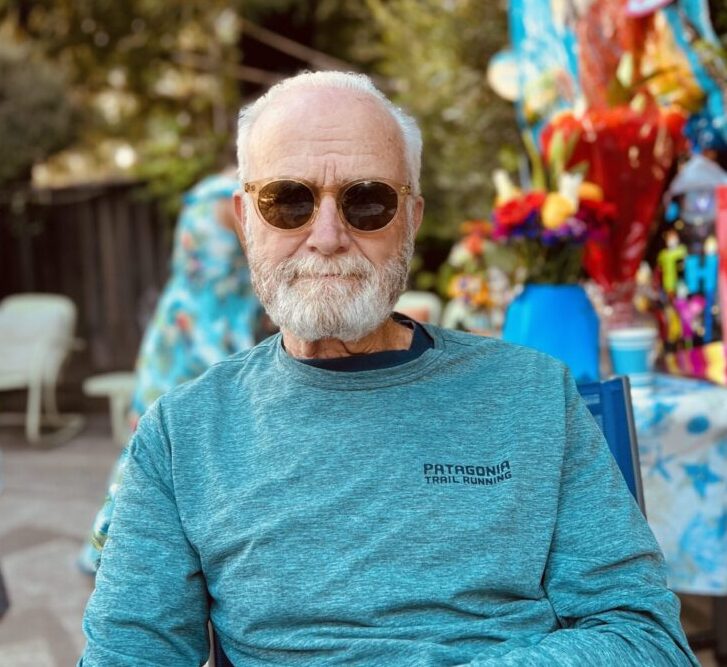
Dr. Jerry Lynch is a performance coach, author, and PhD in psychology who has spent decades helping athletes, coaches, and leaders access what he calls the champion’s soul—the inner foundation that drives how we show up when it matters most.
Jerry has supported more than 130 championship teams across professional and collegiate sport, and his work is known for going beyond traditional sports psychology. While mindset and mental skills matter, Jerry’s approach centers on something deeper: meaning, purpose, courage, love, and the lived values that shape performance under pressure.
His perspective was forged early—not just in locker rooms, but through years as a runner in Colorado, where long mountain runs became a training ground for philosophy, self-awareness, and the kind of inner work that competitors often avoid until life forces it.
Jerry is also the author of 20 books, including Unlocking the Champion’s Soul, which brings together his lifetime of coaching, research, and lived experience into a practical path for anyone committed to becoming their best—on the field, in business, and in life.
If we're going to perform at our highest level in anything we do, business, sports, life, whatever, that we're going to have to go deep, get to know ourselves, who we are, get to ask the big questions. Who am I? You know, where am I going? Who am I taking with me? When you feel you belong and you feel heard and you feel seen and you feel relevant and important and valued and you feel empowered and respected, oh, my God, you're gonna go out there and you're gonna die for your coach. There's nothing in the world like sport to not only get us in physical shape, but to get us into spiritual shape. Every sport experience is an opportunity to develop that spirituality within. As a coach and a leader, I want to prioritize you. I want to foster genuine connection and caring.
I want to demonstrate that to you. I want to tell you that you're important to me.
Welcome back to another episode of the Athletics of Business podcast. And my special guest today needs zero introduction, as it is his fifth time appearing on the Athletics of Business podcast, third time solo. Dr. Jerry Lynch, I can't thank you enough for taking the time to join me today to talk about your 20th book, your newest book, Unlocking the Champion's Soul.
Well, I don't want to give any small talk to that introduction, but it's an honor for me. And were just talking about this before we came on, you and I. I think the big value of coming on your podcast, all these books, I don't know how many there have been five times we've been on with books. And truly being able to be friends with you and have meaningful friendship type of conversations is the outcropping of all of this stuff that we do. Right. So I'm thrilled.
Yeah. And I said this to you as well. You know, my bucket list, one of my bucket list things to do four years ago is to have one conversation and be fortunate enough to have one conversation with Dr. Jerry Lynch. And here we are four years later, and I consider you a dear friend. I have learned so much, and it, you know, it goes without saying I'm a much better person for having you in my life. So thank you so much for pouring into, you know, to our listeners. By pouring into me, you pour into my family, you pour into the coaches that I work with, the leaders I work with, and you pour into the kids that I coach and use sports and could not appreciate you more, my friend.
Yeah, well, my whole mission in life is to make a difference, and who better to provide that than you? And I know we're singing each other's praises, but seriously, I love being part of your work and your life, and it gives me that wonderful opportunity to be who I need to be, which is a servant for all people. And this is the best way to serve for me. So thank you so much for having me on.
Oh, it's a pleasure. Is all mine. And you do a phenomenal job serving. And this latest book, I mean, all of your books are, but this one. It just so happened that, you know, you sent me a copy right around Thanksgiving time when all the Christmas shopping was starting. And I. I didn't need a present once I got this book. And I remember one morning I was up before the family. True story. Had the fireplace going, right. Dogs sleeping in their bed. I'm reading the book, and it was one of those books you just sort of melt in your chair, you start to read and you can just really let thoughts go through your head. And the way the book is structured, to be able to take notes, to be able to have exercises, things you can apply daily is incredible.
But it just, it allowed me to connect to what I felt and as a coach, what I felt as an athlete, and how that applies to me in my daily life now with those that I lead. But what I love about this is how you start the book out. And we've talked about this story before. I'm not sure if we've talked about it on a podcast episode, but a defining moment for you when you realized all of this, like, when this started to come to fruition. And I would love for you to share that story. And if I remember correctly, it was on page 13. You would do. Is it the 14ers is what they're called?
Yeah.
By the way, you're nuts for doing that stuff. We're just out for a 25 or 30 mile run. Yeah.
Well, thank you for the compliment. I enjoy being nuts. It's perfectly fine with me. And I think people understand when I'm saying that, you know, honestly, I didn't have a career at that moment. That was back when were living in Boulder, Colorado. And yes, I was a runner, and that was my background. And I was training, working in Frank Shorter's running store in Boulder, Colorado. Frank Shorter was the gold Olympic gold medalist in the Marathon in 1972 in Germany. It's amazing, connecting all the dots, looking at that time in my life. I mean, we would call it a peak of the week. And this running buddy of mine, and there was several, because I worked in Frank's store and there were seven Olympians there.
So when they were going out for an easy workout, they'd invite me because they knew that I would hold them back otherwise. But this one gentleman, this one guy, he was a professor at the University of Colorado and he taught Chinese philosophy. He's a PhD in philosophy and I had my PhD in psychology. So it kind of went together. And then we had another guy who ran with us. He had a PhD in physics. So there's three different subject areas beginning with P, all with PhDs, all runners running the mountains of Colorado. And we would pick a peak of the week. And what that meant was there's something like 57, 14ers, 14,000 foot peaks in Colorado and in the whole world, I think, I don't know, in the United States, including Alaska, there's only like 59 or something like that. So Colorado is loaded.
And we would pick a peak of the week and we would run it. But the nice thing about those runs, we would be up at altitude, up around 12,000, 13,000ft and it's tundra, there's no trees and there's runoffs with water coming off the snow cap mountains. And this John Visveda was his name, would give lessons in Chinese philosophy as were running. Unintentionally, he wasn't up there to teach us, but he couldn't help but teaching us. I mean, he's looking at these wild berry bushes and he says, oh, we have to eat these berries because these berries will give us nutrients and we'll be able to finish this long run. The runs were long. I mean, five hours.
I mean, come on, you know, after the runs he'd go back and teach a class at 3:30 in the afternoon and tell a class about the run. And I was exhausted.
I sleep for a year.
Yeah, right.
So now when he talked while you guys ran, what were the things that he would talk about?
Okay, so here's the thing that really turned me around. On, on all my life, I would tell him, I'd say, you know, God, I ran a race last week and it was just absolutely God awful and I should have won it and I didn't. I had everything I needed to win and I just fell apart at the end. And he said, you know, Jerry, he said, why are you a better runner? Because of that. This is on a run? Yeah. And I said, what are you talking about? He said, well, the Tao Te Ching, the ancient book of Chinese wisdom and leadership written 2500 years ago, says that we lose. Yet in this way win one of the verses we lose, yet in this way we win. And I thought to myself, oh, my God, he's right. I am a better runner.
I learned something from that. I'll never do X, Y and Z again. Never. And so I'm a better runner because I learned that it was a lesson. So I said, is the whole book like that? He said, you got to read it, Jerry. And sure enough, I read the book and I saw early application of ancient Chinese philosophy to sports today in this world. And then, of course, I went into other philosophies like Buddhism and then Christian mysticism, the Native American tradition, and other cultures. And I brought that into my work. What the interesting thing about this, your question, is that I was going down the road of psychology when indeed it was all about philosophy. And that's what it taught me. And so, you know, I lasted a little while in sports psychology, and then I got divorced.
You know, were married for a while and I got divorced and let her go and still come back. We're still friends, but it didn't go deep enough for me. Those runs taught me if we're going to perform at our highest level in anything we do, business, sports, life, whatever, that we're going to have to go deep, get to know ourselves, who we are, get to ask the big questions, who am I? You know, where am I going? Who am I taking with me? And the whole idea is to deal with those kind of obstacles in life in a deeper way. And that deep away is more of the soul. Whereas psychology deals with the mind trying to help you against obstacles externally, soul work is dealing with the very deeper spiritual qualities.
Looking at grit and fearlessness and tenacity and these kind of values and courage and what have you to fight. What to fight self doubt and fear, which is rampant in sports. And that's one of the biggest obstacle in all of sports. The biggest obstacle is fear, and that's it. And there's no other bigger obstacle. And the way to fight that is you've got to get down deep into the soul and unlock what champions do. The reason why they're champions is because they're coming from their soul and they have grit and they have all these things. Anyway, no, I love this.
And I have two questions that come from that. The first one is this. As a sports psychologist, did you ever. Were you ever in a situation where you're working with an athlete and they get up, they leave the room, or you hang up the phone, whatever it is, the conversation ends and you feel Like, God, I just feel like there's something left on the table. I feel like I'm not going. You mentioned deep enough. I feel like I'm missing something. First question, and if you could segue the answer into this is there a connection between. And a transfer from psychology to the philosophy, to the spirit of sport?
Yeah, absolutely. Great questions. Let's take that first one. I did feel that way. I did feel something was missing. I would look at my colleagues, and they were so caught up in tested measurements, in the psychology of winning and the whole idea of performance being a mental thing. I see that. I get it and I use it, and I rely on it sometimes. But in my work, because of who I am and as an athlete at the time, I realized it was something deeper. Like when John, on those runs would say, you know, you lose, yet in this way, win. I mean, that's kind of an interesting, deep concept. And so I was always looking philosophically, without even realizing it, for ways to go deeper, because I really felt it was more than just a victory on the scoreboard.
Right.
And so I tried to pursue that path. And I discovered, you know, 20 books later, here I am. I'm talking about the soul of the athlete. Well, indeed, all my books talk about it. And so it's a good thing that happened. But the second question I'm losing touch with.
So the second. No, the second question was, is there the connection, Right. Is there a transfer from the psychology piece to going deeper to the philosophy? And do they actually connect? Like, can you allow your mind to get you to a place where you're experiencing what the soul is giving you?
Yeah, yeah, exactly. They're all connected. Everything, you know, everything's connected. We're talking about whether it's psychology, philosophy, quantum physics. You know, I could bring quantum physics into the whole realm of sports and performance and leadership. You look at the principles of that or music. You know, I gave this talk in Iowa. I told you about. A big part of that right in the middle of my presentation was presenting them with music. And I presented them with music because it was transformational. It took them from that place where I was giving them information to a place which they would be accessed the way they felt. And I don't want to overlook this concept. Yes. To answer your question, yes, they're all connected in some way. I've got to make decisions in my brain that I want to go deeper for certain reasons.
And the reason I want to go deeper is that's where the gems are. That's where the performance really shines. Deeper means feeling. And so all the science right now is proving what I knew intuitively 20 years ago, Ed, and that was feelings equal function. And how we feel is how we're going to function. I mean, if you get out of bed today and you're feeling down and you're feeling like you don't have any confidence, you're feeling unimportant and irrelevant, and you're feeling depressed, it's probably not going to be a good day for you. You'd have to agree.
But if you get out of bed and let's say you feel confident and energized, you had a good night's sleep, and you're feeling important and relevant, and people can't wait to hear what you have to say, and you're really looking forward to your podcast, and you feel you've done your homework and you're prepared, that's going to be a decent day. This is true of all athletes. So you have these coaches out there trying to hire psychologists to teach athletes how to prepare themselves mentally. And I'm saying you have to prepare your soul. And what you have to do is you have to create as a coach, the best way to do that is to create a safe environment, an environment where people feel free to fail because they're going to learn from it. An environment where they feel relevant, where they feel they belong.
These are all feelings. When you feel you belong and you feel heard and you feel seen and you feel relevant and important and valued, and you feel empowered and respected and, oh, my God, you're going to go out there and you're going to die for your coach. You'll go the distance all the time. And this is really the essence of this book, is to get in touch with your feelings through a series of chapters which discuss philosophical tenets, which will open up your heart, leading to your soul, and then let the rest take care of itself. So psychology has its limits. It approaches the soul. It's connected, but it doesn't quite get there. It needs another step, and that step is to deal with the issues that this book is talking about to unlock that champion.
So all champions that I've worked with, and I've had over 130 teams that have won world national state championships, I've learned from that.
It's pretty amazing. I don't want to just gloss over what the folks that you've worked with. Right. Can you just kind of give a little bit of a list? I just off the top of your head, starting with the Maryland women's lacrosse team. Right. That's where it all began at the collegiate level.
We actually began at the collegiate level with University of California men's tennis. And we won.
That's right. I apologize.
And after those championships, I thought it was an accident. And then Maryland hired me. We won seven consecutive championships. When Steve Kerr came to the warriors, we had a consultancy. And the first year he won a championship, the first time I worked with the mammoth men's lacrosse team, the very first year we won a world championship. And then someone said to me one time, jerry, you seem to know a lot about winning championships. And I thought, maybe I did learn something from all this. And that's when I wrote the book the Way of the Champion. It is the way. It's a way of being, it's not a way of doing. So you're being a champion. How do you do that? You do it each day by your habits, by the way you go about your day.
The first thing I do when I wake up in the morning is I make my bed. If I make my bed, the day's gotten off to a good start. And then I talk about what I'm grateful for. And those are the kind of things that start a day, that make the elevated feelings that allow the environment to be safe. And I worked with a ton of people, and I still do to this day. And I'm so fortunate to have been part of people who had really good athletes, but were very open to the message that I was delivering. And the combination of both really created that.
And you talked about that. Right. The champions way and the way of the champion. And it's funny, because you know this better than I do, but oftentimes people will win a title or they'll win a championship, and when it's over, they feel empty. They feel, what do I do today? Right. And when I first read. And I forget where I first read it, when you wrote it, that a champion is not something that you become, it's something that you are day in and day out by how you do things.
Yeah. Yeah.
And those are the people that when they win the championship, they're like, well, they're the ones that go to work the next day. They're the ones that pick up the phone and call the people that they normally call. They're the ones that make their bed. It's who you are. It's who you become. It's in the fabric of your soul.
Yeah. I say to people, when they hire me, I just want to make sure that you Understand, you'll never become a champion. And it's like, well, what the hell? We want to win a championship.
Why don't we hire you?
Yeah, what the hell? And I say, no, no. You can be a champion, and we'll make that decision right now. Let's win the day, and you win the day by these certain behaviors. So let's adapt our environment. Let's create the safe environment. That in itself is living the life of a champion where you can fail and learn from it and let it be your teacher. That's a beautiful way to start the champion journey. And then at some point, you might literally win A championship, which 130 of my teams did. But to your point, three weeks later, it's done. You know, it's like you don't even think about it. So you got to get on with winning the day and creating a life. That makes a lot of sense. Yeah.
You know, one thing I don't want to skip that you and I have talked about previously, and then I had made note to talk about it today, was the spirit of the sport and where that comes from you when you talk about that, who you talk about. Right. And what that means. Because then you mentioned a little bit earlier in this conversation, you know, great. It's such an overused word now, but it's such an important word. I like to talk about resiliency, and inside that resiliency. When I was raised and, you know, my roots are right, we talked about this. It was, you know, mental toughness sometimes was confused with physical toughness. It was sometimes confused with, like, you puke and you get back in the drill. Right. Which there's something to be said about that. But, you know, how hard do you work?
How long do you work? Right. You know, how many times did you work out today? Or whatever it is, physical exhaustion, but the resiliency piece in terms of the mental and the emotional and being able to deal with reality in real time and to do that and to find joy in the process. Right. And to do that internally. Can you talk about that a little bit in the spirit of sport?
Well, yeah. You know, what you're talking about here is extremely important. I'm here to tell you that having been fortunate enough to be with so many champion, individual and team athletes, that all those champions have what we call the spirituality of sport. And so sport is a physical endeavor. And what we are as athletes is we're spiritual beings having an athletic experience. That's primary. We're not human beings having a spiritual experience. We're spiritual beings. So if we're a spiritual being, we have to tap into that spirituality. And by spirituality, we're not talking about religion, although religion can be a spiritual experience for many. I know for me, growing up religious, I was born, raised in Brooklyn, New York, as a Catholic. I never really had much spiritual experience, and yet I was a spiritual being.
So religion doesn't define spirituality, although spirituality can be religious. I just wanted to make that clear.
Yeah, absolutely.
But when I'm talking about spirituality, you know, we go back to those mountain runs. I told John one time one of our runs when were up at 14,000ft at the top of Longs Peak in Colorado on the Front Range, I remember feeling so like, holy is a word. I mean, I'm not a holy guy, but I felt holy. I said to John, I said, you know, this is interesting. I feel closer to my maker than I ever do in a church. And running became my church. It became a place I would go on a Sunday for a long run and lose myself to get in touch with myself. You know, who am I and what am I doing and where am I going to ask the bigger questions in life?
There's nothing in the world like sport to not only get us in physical shape, but to get us into spiritual shape. Every sport experience is an opportunity to develop that spirituality within. And I think in this world today, one of the things that we're really lacking, I mean, it's getting better and better. But when you see problems in the world, when you look at wars and you look at controversies and everything else, there's a spiritual void. I see there's a lack of the spirituality. And for instance, you know, like courage. Courage is a very deep spiritual experience to experience courage. And by the way, all of these values can be taught and therefore learned. So my work, especially in this book here, the Champion Soul, is I'm really teaching people how to access these spiritual qualities and traits.
And by the way, I want to ask every one of your listeners to raise their hand if they don't want to be connected to the spiritual aspects of their life. And if they don't want to feel courageous, if they don't want to feel connected to people, raise your hand. If you don't want to be cared for, raise your hand. If you don't want to feel fearless, raise your hand. If you don't want to feel grit. You know, everyone wants to feel it. They just don't know how. And my work is to teach that. And when I teach it, then people can demonstrate it. And what we do is we implement it by come, I'll say to you, okay, so, Ed, you want to be more courageous out there on the field or on the court, the basketball court? You want to have more courage?
What are the five things you could do to demonstrate courage? I'm going to crash the boards. I'm going to die for the 50 ball. I'm going to get in your face and play defense. I'm going to box out like crazy. These are the things played in your face. Defense. This is courage. And so now we have courage defined, and now we have five ways to implement it. So what am I doing? I'm teaching courage. Why? Because you want to be courageous. Raise your hand if you don't. So I'm teaching things that everybody wants, but they just don't know how to access it. And sports is the perfect vehicle for diving into these deep values and virtues that apply to all of life.
Everything we do, it takes so much courage to go out of the house these days, you know, so we need to look at the relevancy of sport as a teaching vehicle, as a way to become a better version of ourselves ultimately. And that's the soul.
And I think this segues really nicely into the next question I have for you is Mike Murphy, right? In his book, what was it? Golf in the Kingdom. Golf in the Kingdom. And he talks about being an astronaut of the inner space, of your inner space. And when I first read that, and I started to think about what outer space means to us and the curiosity that we have attacked, you know, that with, and what we go after and the amount of money and time and energy we spent on learning about what else is out there. But if were an astronaut of our inner space and we invested in that, how much better off that we would be?
Well, you know, those runs again up the mountain. I had to confront my biggest fears, and I had to take on all these lessons of life. To answer what you're saying, how much better would we be? Well, we wouldn't be in the situations we are right now in the world. We can spend a whole hour on this one, Ed, but.
Well, we will.
If we did that, we wouldn't have world hunger. That's how big this is. And I don't want the listener to think that it's an easy solution. I mean, going inside takes work. It takes work, and you have to be willing to do the work. To me, it's worth it. I mean, I don't want to just Be here to collect money and write books. It goes beyond that. And I really believe so much in this human development, developing the human being and taking that deep dive. Because if we do the. If we examine someone once said, life unexamined is not worth living. And it's true. We have to find out, you know, like, why is there world hunger? Answer that question.
Well, if you get down into the soul and you look at, you know, this whole idea of connection and caring as spiritual qualities and love. Let's not leave out love. I mean, my last book that you had me on was Lead with Love. You want to get athletes to go the distance, you lead with love. You let them know that they care, that they matter, that they're important, that they belong. Everyone wants to feel that way when you feel that way, you know, so we're refining the whole process in life, and I think that the world would be a better place if we had more of the examination of the in here.
As we talk about spirituality, we talk about soul. We talked about. You had mentioned safe environment, right? And I relate that to psych safety. We're not talking about being soft, right? And this is what I like. You talk about soul a lot. The ineffable soul defined. Embrace the Champion soul as an extraordinary opportunity to compete. It's not soft, right? Lead and live in such a way that we grow physically, mentally, emotionally, and spiritually. It encourages us to raise our work ethic to be more present and to lift our collective levels of performance to excel in all of our endeavors. So can you walk us through what soul really means?
Well, you know, some people, I talk about this, and they look at the title, or they talk to me about soul. They think it's a place inside the body. You know, like, let's cut open the body here. Oh, there's the soul there, right next to the heart, right? Soul. It's not part of your body. It's the spirit of the human being. It's the spirit of the human being. It is ineffable. Ineffable meaning. It's very difficult, if not impossible to define, but we know it's there. It's a conceptually. It's about what I'm talking about. It's about community. It's about connection, caring. It's about competing, winning, losing, understanding what that means and how we learn from these wonderful opportunities that sport gives us in one hour of time. Let's get back to the soul.
Your soul is tested in one hour exponentially more than it is in One year if you're not involved in sport. So sport accelerates the process of accessing what we call the soul. And so the soul is a combination of everything. It's a combination of brain, the mind, the heart, the feelings. As I said, feelings equal function. How we perform is going to be directly related to how we feel. Feel is part of the soul. It's the soul of you. How do you feel and who you are. You know, who am I? It's all related to the soul, all under one umbrella.
Is it safe to say that soul drives our purpose and it's what brings meaning and passion to the work that we do?
That's an interesting question. Let's talk about it. Because is the soul driving the meaning or is the meaning and the purpose in life exposing the soul?
Right.
I tend to think that meaning is discovered. We're not born with meaning and purpose in life. Although other people might disagree. They say, yeah, the purpose of life is to serve all well and good. Bravo. I like that. But I don't know if a baby is born with any of that. And I think what happens is we discover it in time. And I think we all gravitate to something that has meaning. And something that has meaning, purpose and soul is meaning. And purpose is a soul related experience. And so we gravitate toward that. Everyone wants it. A we're not aware. We want it. But let's say you become aware by reading this book. You become aware that's really important. Number two is you don't know how to get there. Well, number two is this book's going to help you to get there.
Number three, you're afraid of it. This is why there's resilience to this kind of conversation. We're unaware. The book makes you aware. You're not only unaware, but let's say you become aware, then, hey, you know what? I don't know how to do that. You know, well, I'm here to teach you. The book is here to teach you other people out there. It's not just about Jerry. Ed, you'll teach people and you do teach people through your mechanisms of podcast and other work that you do. But number three is people resist it because they're afraid. They're afraid of losing control. It's too unknown. They look at it as squishy or something you can't wrap your head around or grasp. It's very vague to a lot of people. And I'm trying to do what I can to help people understand. You have soul.
Right now, everyone Does. There's Soul Food, There's Soul Train.
Great show.
Great show, right? Oh, my God, I love watching the reruns on that one.
Yeah, absolutely. Saturday, Sunday mornings. I remember that. That was.
All right. Chicago, here we go.
That's right. And those clothes. Come on. You can't match those clothes, baby.
I still have some of those clothes.
Oh, we got to break those out. We didn't have a.
You break them out for like, Halloween or some other.
There you go.
Or some other. You have a.
There you go.
You have a 60s party or what have you.
Yeah, you know, you've mentioned something a handful of times, and often when leaders get to the level you're at and work with the folks that you work at, people tend to forget that you had your own fears, that you still have your own fears, but you had your own fears that you had to run to the fight on. And when you had your fears and you started going on these runs, the peak runs with John, and you realize the role that the soul played in it. Right. That you know, you lose, and in this way went, you won't. Okay, what happened to your fears? How did you start to realize that those could help your in did. Was it that the fears went away or that you got better at managing?
Look, you're opening up some great stuff here. Again, the limitations. Being a. A host on. A co host on a podcast myself, Way of Champions podcast. The frustration sometimes I have with a guest because, God, I want another owl with them. You know, back to your point, it doesn't go away. But what you're opening up here is the way I view life from 30,000ft. I'm going to invite everyone to come up with me. You know, we're going up to 30,000ft. Hold on. It's going to be fast. Now we're up at 30,000ft. We're looking down at the world. And what you'll notice is that globally, like a big umbrella, there are two things that you see. One is fear. There's a lot of fear in the world. You know, the world is volatile, it's uncertain, it's complex, it's ambiguous. And that all relates to fear.
So there's a lot of fear going on in the world. Look at this. These people are afraid. Everything that happens when there's a mass shooting, when there's a war going on, it's all based in fear. The other aspect of life is love. As a result, the opposite of fear is love. And by love, let me define it by love. Love is not A Kumbaya moment, you know, it's not like the 60s were. Well, I'm not talking about that. Although that was lovely too. Touchy feely, Kumbaya, great. I love it. But that's not the love I'm talking about. Fear for me is always replaced by love and love is replaced by fear. So it goes back and forth. So it depends where you put your attention. The love I'm talking about is prioritizing other people's well being.
As a coach and a leader, I want to prioritize you. I want to foster genuine connection and caring. I want to demonstrate that to you. I want to tell you that you're important to me, Ed. You're important to me. And why? Because you're delivering my message to thousands of people and that's important. In other words, to help me do something to change the world. Love is about empowering each other. Love is, as I said before, creating a safe, supportive environment where people feel they belong to something larger than themselves, where they feel accepted, they feel relevant, important. And love, actually, love is when I demand from my athletes something more than what they're giving. And I'll tell them, you know what? I know you could do better. I'll say to them, I'll empower them. I believe in you.
You can do a better job here. Anyone here believe that? They can't. No one's going to raise their hand. They all do better. So it's a safe environment where I can demand from them, from those I lead the best version of themselves. So going all the way back to your original point, what happened to the fear? I don't have fear in that kind of environment. When I'm feeling all of those things, I'm functioning at a high level. Fear is not an element. I'm afraid we go into a championship game, I'm afraid we're going to lose. I'm afraid I'm going to be at the front end of a one and one on the foul line, with the game on the line. I can't be afraid of that.
I can have love and I can come from a place of caring and connection and feeling confident that even if I miss this shot, I still belong and I'm still good enough and I'm still worthy. I'm not afraid you can't have one and the other at the same time. They're mutually exclusive. That's my take on that.
And you mentioned, and I love this, and you mentioned one of the struggles as a podcast host is time.
Right?
It's One of our restrictions that we really get ticked off about, because time always gets in the way of what we're really trying to dive into. So before we have to start winding this down, we're not quite there yet. I want to jump into what really was a part of the book that resonated with me, where I'm at right now. So, as you know, we launched our new company, Co Effects, yesterday. One of the driving forces behind that is a coaching performance equation, which, you know, I read it like this. I believe that relationships are the force multiplier. Okay? And the impact that you can have in the performance that you can drive. And so we take R, which is relationship times, the sum of order plus complexity. So inside of that order is your ability to communicate.
Right.
And provide structure. Complexity is pushing people outside their comfort zone with skill development, with challenges. Okay, but that relationship is so important in your chapter on relationships. I love how it opens. Extraordinary. Coaching begins and ends with one word, relationship. It is the single most vital aspect to successful coaching. Top coaches have figured out that the way to get ahead is not simply to win games, but to win relationships. Can we talk about that?
Yeah. Well, you know, the first time I came across that's not a Jerry lynch discovery. I had been talking with my dear friend Steve Kerr, and this is after he won his first championship in 2015. And so I said to him, naively, I said, so, Steve, what was the most important game up to winning that championship? And I thought he was going to say, well, you know, Jerry, the OKC game, were down 3:1, and we're playing the game. We lose that game, we lose, we're out. I thought he would say that next game to win the second game. Or maybe how about the final against the Cleveland Cavaliers? They were down 2:1 in Cleveland. Oh, my God, that's got to be the most important game. But he said, no, no. None of that.
The most important game, Jerry, I won that year was the relationship game, and it just knocked my socks off. I mean, he would fly to Australia to be with Andrew Bogut and his family and sit down for dinner with the family around the table and tell Andrew that he wants him because he's important to him and he's important to the team, and. And he has a role. And he would fly back, and he'd go to Atlanta, Georgia, to be with Andre Iguudala, and he'd tell him the same kind of thing. In his own way, he established these relationships. And because of the relationships, the environment was filled with joy. And one of his core values, by the way. Talk about spirituality. Joy is at the top of the list. And selflessness, another one. And compassion and competitiveness.
These are the kind of values that he has for the team and the team embraces. But the thing I learned most from that was the importance of soul. The importance of, you know, a relationship is the business of the soul and the heart. It's not a head thing. You don't analyze it, you feel it, and you feel the connection, and you go ahead and you develop that connection. And so when athletes feel that way in a relationship, on a team, if the coach and the leader is making the relationship a high priority, you're going to feel wanted. You're going to go the distance for somebody. When I first met Dean Smith, Coach Dean Smith, Basketball, North Carolina, several national championships. I was working with other teams. I was working with some of Anson's kids. Dorrance, soccer, women's lacrosse and what have you.
And I, speaking of championships, yeah, I think we had.
I think he just had about 22. That's all. But anyway, having said that, I walked into the office of Dean Smith, who was retired, but he still kept an office where he would give advice to the coaching staff and what have you. And I walked in there and he came over to me. I didn't even think he'd come out, because who am I, right? He came over and he said, Dr. Lynch, he said, I'm so honored to meet you. What? I mean, the honor truly is mine. I mean, I'm talking to my hero. My hero leader, coach, you know, since the 1960s. And he's telling me that he's honored to meet me. And he went on and proceeded to make me feel like I was the most important person in his life. And I know I wasn't, but I felt that way.
I felt like I was important, relevant and valued. And before that, I left that office, I knew I was in the presence of. Of a leader. A leader who could make me feel so good that I would do anything for him. I mean, I literally would have gotten down on all fours if he asked me and licked the floor of the dust so that they could practice, because you can't practice on a dusty floor. I would have done that, but he didn't ask me what I did. Was I. Instead, in the next year, I wound up writing and publishing a book, told that story in the beginning and dedicated the book to him called Coaching with Heart, because that's what he was doing. It was the relationship game. That's all soul work. That's really deep, and I'm learning as I go.
I'm a work in progress.
Which is amazing that you say that because you have so much knowledge. Can you. As we're on relationships, before. Before I have to say goodbye, can you talk about your acronym river and how that relates to the relationship piece of unlocking the champion soul?
Well, look, it's hard to remember everything I know, but there are some things you just don't want to forget. So what I have done is I've created acronyms. Everybody knows what an acronym is, right? Well, I don't call them acronyms. I call them jackronyms. And the reason is because they're geriacronyms. I made them up, and I made them up for myself. But what I notice is that people love these jacronyms, and so coaches are using them. Every time I'm visiting with a group, I'm talking about the River Effect, and that's what you're asking me. And the River Effect is a jacronym, and it stands for relevant, important, valued, empowered, and respected. Five elements which encompass so many more elements. If you think about it, you know, if you look at importance and how you can break that down.
All right, so I like to say to an audience, so raise your hand. Anyone who does not want to feel relevant, important, valued, empowered, and respected, raise your hand. I was in Iowa. I told you this at the top of the recording. 557 coaches, no hands went up, and I said, how come I don't see any hands? It's because everyone here craves that. What river. So what I want to do for myself is whenever I'm being in an environment with others, whether it's my family, my friends, or my cohorts or whatever is, I want to be conscious of the River Effect, and I want to try to marinate people's souls in the river. I want to douse you in the river. I want to baptize you in the river.
I want to wet you all down and make sure that you feel that way with me. Why? Because feelings equal function. If you're feeling the river, you're going to function at a higher level as a coach. When I walk into the locker room, I'm going to make sure that at least one athlete is going to get one comment from me that's going to raise their level of play by elevating their emotions. Elevated emotions will elevate performance. That's feelings. Motions. Emotions are feelings. So the river is so powerful, I Don't want to forget it. I have several Jacronyms that I go with, and I never have to worry about whether I forget the most important thing, which is the relationship came.
I love that. The river effect. And you think about it, you could literally. That's a whole book, right? It's a whole book of life lessons, a whole book of stories. It's a whole new. Coaches do it. And what happens when the river runs dry? You know, then you're. You're in bad shape when that happens.
Well, sometimes, or there's no river at all. And, you know, like some people, they're not aware. And again, coaches, that they're not aware. So let's make them aware, number one. Number two is they don't know how. I'll teach you how to make kids feel important. I can teach anybody how to make people feel valued. So it's a learned thing. And the third thing is people are afraid that, oh, if I douse these athletes in the river, they're going to take advantage of me. I'll lose them, I'll lose control. Quite the opposite. You gain control when you use the river effect. Someone told me one time, and it's an old, ancient concept, a Buddhist concept, that if you want to control the cows, and I'm not telling you that athletes are cows, but it's a group of people.
If you want to control the cows, move the fences back. Move the fences back. Give them more space. Don't be worried about losing control if you move the fences back. So fill up the room with love, connection, caring, where people feel important, valued and relevant, empowered, and then watch what they do for you. If you're coming to me as a coach saying, I've got this kid on the team, he's amazing, he's the next Michael Jordan. But he's not delivering it. He doesn't come and deliver it. I teach him the river effect and I tell him, you know what? It's all about the relationship. Because if you get him to feel good, he's going to perform at a higher level. It's all connected.
The thing I like about this book, and I don't think we have much time to get into it, but what I did was the structure of it is. Every page after the introduction is a paragraph of wisdom that I have accrued over time from, whether it was philosophy or whether it's from a coach or athletes themselves. And I present this paragraph, which is lovely because if you read the paragraph, it will really stir up inside you spirituality. You cannot read any one of these paragraphs without becoming spiritual. So if you're worried about the spirituality piece, I'll direct you through this book. And what you'll do is you'll have space beneath it to write your thoughts and ideas that come up, because you know what's going to happen is you're going to forget them. So this way you can record them, write in a book.
And my publisher was kind enough to give me that kind of space because every page cost them money, and I was giving them blank pieces of paper, and they said, what the heck? And I said, no. We need the readers to be able to write their thoughts and their feelings if we're talking about that kind of stuff.
Yeah, it truly is like a spiritual handbook, right? I mean, when you're talking about unlocking the champion's soul, and when you really take time to write down and it makes a difference, it truly makes a difference when you start to write down how this applies to you in your daily world and the book. And forgive me, because I wanted to talk about the structure, and I got so excited about all the other things that were talking about so much. Yeah. So many things to talk about. Jerry, I can't thank you enough for taking the time and pouring into us as you always do. I look forward to our next conversation offline, but I also look forward to the next time because I know you can't sit still and not write a book here sometime soon.
So I look forward to our next conversation on the Athletic Business podcast.
You mentioned that. But I've got a note to myself here. All right, A possible book coming early or at least in 26 next year. So I've got to seem to have a book going all the time. And the reason is because I've been blessed to be given the opportunity to be with so many people that just fill me with all kinds of wisdom. They fill me. I mean, I'm on the shoulders of giants. You know, this isn't Jerry Lynch's brilliance. This is the brilliance of others. And I'm like a hole in the flute. And those the breath of a Dean Smith or the breath of a Mike Krzyzewski or Cindy Timshell. It comes through me, and you get it. So I'm just writing based on what's still here. Maybe someday it runs dry. I don't know. You know, but right now, the river is.
I don't. I don't see that happening, Jerry.
The river is wide indeed.
I don't see that happen. Well, hey, thank you so much for Being again, a guest, an amazing guest on the Athletics of Business podcast. I can't thank you enough for all you. You do, all you share. But most important, I can't thank you enough for your friendship.
And I want to just invite people, if they're interested, to go further to go to my website. It's a wayofchampions gmail.com and it'll have all of my products, but it'll have a lot of interesting things. It's very interactive and it's a fun website. So it's not just information. You'll go to the website and you'll get some lessons and learn some things and have some fun with it, and that's where you can.
And I love what you've done with the website, too. It's phenomenal. Like you said, it's fun, it's great. And also for the listener, we will have a link to Jerry's website and a link to purchase the book and his other books on our show notes. And you'll see it pop up throughout social.
Perfect. Perfect. All right. Thank you, Ed.
All right, Jerry.
What a wonderful way to start my day in California.
There you go. That and a little bit of sunshine in the background. A lot better than what we have here in Chicago.
Take care, buddy.