

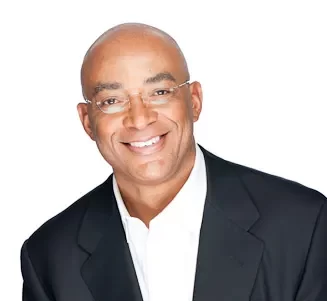
How does a poor kid from the housing projects make it to the corporate boardroom? For Steve White, it’s the result of an uncompromising attitude and work ethic.
President of Comcast’s West Division for eleven years, Steve launched his career in 1996 as Regional Vice President. A commitment to his why and the influence of mentors enabled him to demonstrate consistent growth for his teams and divisions, which led to increasing leadership responsibilities. Driven by continuous learning, radical responsibility, and unwavering commitment to excellence, Comcast’s West Division became a pacesetter by delivering industry-leading results.
Steve White was responsible for all Comcast Cable operations in the Western U.S., leading nearly thirty thousand employees, serving almost eleven million customers, and driving annual revenue of nearly $18 billion. If the West Division was a stand-alone company, it would be one of the top 150 companies in America.
Today, Steve serves the role of Special Counsel to the CEO of Comcast Cable, the largest division of Comcast Corporation and one of the top 20 companies in the U.S.
Giving back and paying it forward are two of Steve White’s life values. He has lived in Denver for more than ten years and champions causes related to family and education, such as the Denver Scholarship Fund. He serves on the board of directors for New Leaders, which focuses on the development of public school principals.
Steve recently published his masterpiece of a book, Uncompromising: How an Unwavering Commitment to Your Why Leads to an Impactful Life and a Lasting Legacy. Inspired by the lessons from every stage of life, and the people who influenced him along the way, form the basis of his overarching message: An uncompromising life is one where you stay true to what is important to you, what you believe in, and what you love.
An uncompromising approach to life means you are fiercely independent, radically responsible, scrappy, and possess an undistracted mindset. It also means you have an unwavering commitment to your fight, which is defined by your core values, passion, and purpose.
You uphold the courage of your convictions, stay locked in on your goals, get up when you fall and continue to forge ahead.
Get the Book “Uncompromising”:
Buy on Website
Buy on Amazon
Welcome to the Athletics of Business, a podcast about how the traits and behaviors of elite athletes and remarkable business leaders frequently intersect. The real stories and hard lessons to help you level up your leadership and performance. Now your host, Ed Molitor.
Welcome back to another episode of the Athletics of Business podcast. I am your host and CEO of the Molotor Group, Ed Molitor. And I cannot put into words how excited I am to be joined by today's special guest, Steve White, special counsel to the CEO of Comcast Cable, the largest division of Comcast Corporation and one of the top 20 companies in the US and Steve is also the author of his newly released book, how an Unwavering Commitment to your why Leads to an Impactful Life and a Lasting Legacy. Incredible book. We'll dive into it. So, so many stories to share and one of those is how a poor kid from the housing projects makes it to the corporate boardroom. And for Steve, it's the result of that uncompromising attitude and work ethic. Now, he was the president of Comcast West Division for 11 years.
He launched his career in 1996 as Regional Vice President. A commitment again to his why and the influence of mentors enable him to demonstrate consistent growth for his teams and divisions which led to increasing leadership responsibilities driven by continuous learning, radical responsibility and an unwavering commitment to excellence. Let me say that again. Driven by continuous learning, radical responsibility and an unwavering commitment to excellence, Comcast West Division became a pacesetter by delivering industry leading results. Steve was responsible for all Comcast cable operations in the Western U.S. leading nearly get this, 30,000 employees serving almost 11 million customers and driving annual revenue of nearly 18 billion. If the west division was a standalone company, it would have been one of the top 150 companies in America. We're going to talk about why finding.
Your purpose is so important and how.
Steve's hardships, and trust me, he had enough of them, influenced his life and business core. How positive influence and reinforcement is essential to unleashing potential and how setting the bar of expectations. This is showing up so much now. Expectations. How setting the bar of expectations right can be a powerful driver for growth. And Steve really dives into what the.
Seven pathways to success are.
Now I'm going to get out of the way. Get a pen and paper handy. I hope that you enjoy this conversation half as much as I did recording it with Steve.
Steve, thank you so much for joining us today on the Athletics of Business podcast.
I am so excited to have you here.
Ed.
I'm so great, so Happy to be here with you, the athletics of business. I'm really excited about our conversation today.
You know, there's so much to talk.
About, but what I would love to.
Do and where I would really love to start is you just take us a bit through your journey and, you know, we're going to jump into your book. And congratulations, by the way, in your book, amazing book, Uncompromising.
We're going to talk quite a bit.
About that, but let's start at the beginning. Yeah.
Well, let me first start off. Ed, thank you again for having me. I was set up to be the perfect victim. Single mother. She raised four boys by herself. Housing projects of Indianapolis. She had an 8th grade education. When she left my father, she had a marriage license, but didn't even have a driver's license. So we're talking about the perfect setup to be a victim. And sometimes, Ed, and this is not to be critical, and sometimes people can get comfortable with being a victim. There was no victims allowed. And so my mother, wonderful woman, 8th grade education, born in Upson County, Georgia, about two hours outside of Atlanta, south of Atlanta. She met my dad, Linton White. She got married when she was 18 years old. So she found the Lord at 14.
And five years later, she was walking down the same aisle with my dad. And they were on their way. They moved to Florida. They raised three children. I had a fourth child. My fourth brother came along later in life, but she raised four boys by herself. But clearly as were growing up, my dad, who was an honorable man, who's no longer with us, hard worker, very determined overall, a good man, good father, but lost his way. He became an alcoholic, hanging out with the wrong folks, but he owned his responsibility. And my mother made the difficult decision, Ed, that for her boys to grow up and have a better life, she had to make a change. She had to get us out of that environment so she could raise us the way she thought we should be raised.
And I didn't understand, Ed, what was going on, this idea of finding your purpose in life. And I truly believe in the Mark Twain quote. The two most important days in your life is the day you're born, and the second is when you know why. I didn't understand that. My mother was trying to answer that question, but she made the difficult decision to move to Indianapolis, Indiana, where she had a brother, and said, I want to create a better life for my kids. And so she made that difficult decision. And I must tell you, at 10 years old, I was not in favor of this move. I still Wanted to hang out with my dad. I wanted to be around my cousins. And I'm sure we did not make it easy for her, but she was very focused.
She had really answered that question, why am I placed on this earth? And it was to raise and create an environment for these four little boys that they could have a better life.
Wow.
So we moved. Her first job was cleaning motel rooms. Now, Ed, this is motel with an N, not hotels with an H. There's no spot.
I got the picture.
Room, dining. I think you know what I'm talking about. Pull your car up and your doors right there. And it's one level and you go in and that's what you do.
Well, I think it's important also to.
Point out that I was right across.
From Indiana State Fairgrounds.
That's right.
That's taking a motel to a whole other level, too.
That's exactly right. And the people that came there's something about people going to motels. They treat it like they would not treat their own home. But. But I learned some very valuable lessons. So my mother was cleaning motel rooms for three years. That was her first job indian and Ed, she graduated to become a high school janitor. And she did that for 35 years. And now she's still with us. She's happily retired, and she gets to go around the country visiting her grandchildren. But for three years, every weekend, Ed, because she couldn't afford babysitters, because during the week were all in school. But on the weekends, we would go help her clean these motel rooms. At first we would just sit there, stay out of her way. But as we got older, she said, you know what? I've got free labor here.
I better put these boys to work. But Ed, I learned some very, very important lessons. Hard work, commitment, attitude and effort matters. Although people did not always treat my mom with great respect, she never allowed that to impact her outlook and her approach. And I learned about family. And while I didn't know I was learning this, I was learning about living a life of purpose, Living a life that makes a difference. Living a life that's not about you, about someone else. I didn't know I was learning that lesson, but I was certainly learning that. And that's that journey. And so as went along, my mom graduated to become a high school janitor. She could afford a little bit more. We moved out of the housing projects to a two bedroom home.
She turned the garage into a third bedroom, and that became our home for a number of years. We went to high School and college was not even in our realm of thought. My mom just wanted us to grow up to be honorable young men, pay our taxes, hopefully get married. She would have a bunch of grandkids and that would have been success. And for me, watching the postman, that was going to be my job. Being working at the United States post office was a glamor job. But something happened along the way, Ed. And this is why I believe America is a great country. While we certainly have our issues, but the more I gained exposure, the more people gave me a hand up. Not a handout. A hand up is an opportunity to display your talents.
And so along the way, I tried out for the basketball team. I was not good enough. It was a large inner city high school with 5000 kids. My class was 1200 alone. But the coach said, I see something in you. Would you be interested in being our basketball manager? Now, at the time they call these ball boys, so that was not a great way to get dates. But we quickly, over time, changed as we're basketball managers, not ball boys, because we did, you know, we had a number of duties and I know you've been in and around basketball for a large part of your life and you know those basketball managers play a significant role in helping the team be successful.
And along the way, as Coach Hudson was helping these leaders find colleges to go play basketball, he started asking me the question, well, where are you going to go to college? And I said, coach, I've never even thought about it. He said, steve, I truly believe you can be successful in college. So that was an example of Ed of a hand up, someone planning to see, helping me find those opportunities. And from there, I just moved on, joined corporate America, starting off carrying a sales bag and ended up being president of Comcast west, leading amazing, almost $18 billion, over 30,000 employees, serving 13 million customers, running our business for the entire western part of the United States. So that journey, starting in that motel room to the highest levels of corporate America has been quite a journey.
But a lot of hand ups, not handouts, have allowed me to reach that goal.
You talk about that in your book. Not handouts, hand ups. At what point did you start to connect the dots when you got into the business world? Like, something's happening here. I'm making some progress because like anything, race does get involved in the grind. And you talk in the book about being exhausted, not in a bad way, not in a negative way, just the reality of what you had to do to get ahead. When did you start to connect those dots? Steve?
Yeah. You know, it's so interesting, Ed, I truly believe this. All of us come into this world with a little light. And based on who we meet, people can make that light dark. But you can also meet people that make it bright. And so at every opportunity, when challenges were presented to me, people communicated, they believed in me. And then when I started to accomplish things and I started to gain confidence and I got more and more responsibility, that light only got brighter. And then I started dreaming it. I started thinking about, well, maybe I can do this. And then when you take a dream and you write it down and it starts to happen, it just feeds on itself. And that is why I believe leadership always is about positive reinforcement. That does not mean I don't give you hard coaching.
That does not mean I don't give you tough feedback. But I'm doing it because I care about you and I see something in you that you don't even see in yourself.
Right?
And Ed, I was blessed with leaders who saw things in me I didn't even see in myself. And when they started talking about that and I started enjoying success and I started accomplishing things, my dreams just got bigger. And so that's how it kind of goes. And the final second point on that is, and I truly believe the power of expectations is a very important thing. When you raise the bar, not unfairly, where people can't reach it, but you want the bar to be just high enough where you're always striving to better. And when you can be surrounded by teammates and coaches and leaders and family members that are always challenging you, that's an important thing.
And the final point I'll make on the set, someone asked me the question, said, Steve, if you could go back and give the 15 year old Steve White advice, what advice would that be? I would say surround yourself with people that pour into you in a positive way, because I promise you're impacted by your relationships more than you even know.
Right?
And so when you can surround yourself with positive people that are pouring into you're on your way. So those are some of the things that allow me to realize my potential and get me to the point where I started believing that I could do more.
Who are some of the folks along the way that you surrounded yourself with before you earned that first leadership position? Who are some of the people that really impact you and saw something in addition to the high school basketball coach, which I think is phenomenal? Who are some of the folks?
Alice Goodrum. She was my speech teacher and Ed, what she would do is I would pop in the first row and she saw a little light in me. She started bringing me to her home along with other kids that she believed in. And she just started exposing us because that was my first time seeing grass. Right. She lived in an area indianapolis called Fall Creek and she had a nice yard with green grass projects and in another part of town where it was only concrete. And I'm being a little funny and a little silly, but you get my point. She was exposing me to the possibilities of what's out there beyond the little world that I was living in. So Alice Goodrum was a very powerful person.
My mom, who was smart enough, although we didn't have a dad, she made sure that were exposed to honorable men. And so she enrolled us in big brothers and big sisters. And I had a big brother who was an IBM executive who would take me to basketball games. I talk about in my book, my stepdad, who at the time, when my mother moved to Indianapolis, she was not interested in a long term relationship. So he was smart, he worked through the kids, he would bring us ice cream, cookies.
That's what you call recruiting right there.
So he was a positive individual. Although he only had a sixth grade education, he was smarter than most men and women that I've met. So I had enough role models because my mother understood the power of influence. And so therefore, in putting positive influences in and around us really made a difference. Let me tell you an example of how that has manifest itself today as now that I'm a dad. I have a nine year old son, his name is Stevie. And Ed. I was at Harvard Business School five years ago for a training program and I called my wife and I said, hey, give me Stevie's size, I want to get him a T shirt or something.
And she gave me the size, but something hit me, says Steve, don't just buy him one shirt, buy him seven or eight, but let's buy him in different sizes. So Phoebe started wearing Harvard Business School gear when he was five years old. And now at nine years old, he's still wearing Harvard gear because I bought different sizes. So the power of expectations, whether he goes to Harvard or not is not the point. But the point is he's already talking about now, dad, when I go to Harvard, do I have to become a Red Sox fan or Celtics? And I said, no, we hate them. No, I'm kidding. I like all Boston teams. But he's already saying, dad, do I have to become a Celtics fan? But the expectation the influence already being set.
So those lessons I learned at 15 and 16 and 17 years old, I'm now applying this in my own life as a dad, creating that positive influence for my son so he can realize his full potential.
I love that. And now I have to go out and buy more Creighton gear, right? I have to go buy some more sizes for my 9 year old and 7 year old. Dang. I thought I was done spending money for a while, but no, I absolutely love that. Now how do you align that in business? So you're developing as a coaching leader.
You're bringing someone up that you really.
Believe is going to make a great leader. That power of expectations, how do you do that? And you've touched on it, right? Because you want that discomfort there. You want to get them outside their comfort zone, but you also want to make it a place where they can take chances, fail. And they're there. You're there for them. You can also support them. Why did you go about doing that?
I'll give you a good example. As you probably mentioned, I still work for Comcast, but I stepped out of my role as president of Comcast West. I did that for 11 years. My replacement was someone that I developed, who had worked for me for 10 years. And he is now the president of Comcast west, which was a very proud moment for me, certainly for him, but certainly proud for me. But always start with getting to know the person first. Let's get beyond business. Tell me about you. Tell me about your hopes and dreams. Tell me what you envision for your life. What kind of relationship do you want to have with your family and your kids? What's your greatest hope for them?
Because, Ed, once I start to understand what's important to you, what are your goals, what motivates you, then I start to shape our conversations around helping you reach your goals. Now if you say, look, Steve, I'm good, you know, my goal is not to be the CEO of the company. I just want to be a great employee and a great dinner. Then great. There's no problem with that. But everything first starts with, you know, who are you and what are you trying to get done? Then the second thing is that we work very clearly by objectives. What is it we're trying to accomplish? We define success early and often. What does success look like? So there's no misunderstanding around what winning looks like. In basketball is pretty straightforward. Do you have more points then the other team at the end of the game?
It's very clear. But in business it's not always as clear. So you have to go to great lengths to define success. Once you've defined success, then you lay out a plan. Okay, let's talk very candidly now about your strengths and weaknesses. Because if I did, number one, right, if I develop that relationship with you, Ed, and I've developed that level of trust, even when I'm giving you difficult feedback, you know, it's coming from a place of love. You know, it's coming from a place that you only have my best interests at heart. And so now we develop a plan, and then, number four, you provide feedback early and often the positive with opportunities. And I always tried to outweigh the positives with the opportunities. So I always talked about the four or five things they were doing really well.
And then I pick one or two things and really focus on that. And the goal was not always to make those weaknesses go away. It was to neutralize them. So therefore, when you neutralize the opportunities, it allows the strengths to show up even more. I'll give you an example. This gentleman that replaced me, his name is Rich. And I wrote about this in the book. I saw early on that this young man had great potential. And he was younger than me, about 10 years younger. And we had an event where were with the mayor of the city. We were doing a big kind of a company event where were giving back in the community. And I was dressed in nice jeans and, you know, nice shirt, representative of meeting with the mayor of Denver. Well, Rich joined us.
More kind of a young hip hop look. He was dressed sharp, but I pulled him aside and said, look, based on our conversations, you have a vision for your life to be here, but you're dressing like here, and that's fine. But if you want to be here, you have to look the part, you have to act the part, you have to be the part. And so based on that relationship, were able to have a very frank and honest conversation about what is it going to take for him to get to be the best he can be. And that's where the feedback early and often the good as well as opportunities are critical in developing men and women.
On your team and how important for him to receive that feedback. How important was the trust factor and where did that trust come from?
It was absolutely clear because most people, Ed, we don't want to be coached. We don't want tough feedback. We only want to hear the good stuff. And so for you to hear the opportunities, you have to know that I'm coming from a place of Caring about you. And you can't do that if you don't establish that relationship is very important. It's just like a parent. The things we're doing now, raising our young children today, they might not pay dividends right now, but when they're 16 or 17 or 18, when they're faced with some difficult decisions because their peers are doing one thing, what they're going to rely on is those relationships. And do I feel comfortable coming home and telling my dad and mom what happened tonight?
And the decision I was faced with and the decision I made, whether it was good or bad, if you don't have that established, that opportunity is not going to be there, or it's going to be very difficult to recreate.
And I want to get back to winning and defining success and defining what victory means to you personally. But I want touch on something, because it's very apropos for this part of the conversation. Vulnerability, how significant is that piece of the puzzle for you as a leader, is critical.
You know, in writing the book, I'm very vulnerable. I share some things, not everything, but certainly share enough to show my flaws for everyone to read. But I think it's important to show people that, look, if you think you can go through life and be perfect, you're mistaken. If you're out there trying it, if you're out there, as Teddy Roosevelt says, if you're in the arena, you're going to make mistakes, right? But then giving people the confidence that it's okay to make the mistakes, that's how you're going to grow. Because let's think about this, Ed. In my entire life, there are only 12 decisions. I literally wrote them down that are really battered. All the other decisions, if I make a mistake, I can easily recover, right? Maybe I joined a bad company and I had a bad boss and it didn't work.
I can go get another job. So life is about making decisions, learning from those. Because if you're not winning, you're learning. I say that again. If you're not winning, you're learning. There's no such thing as losing. And the only way you learn is you got to put yourself out there. And the more you can share that with your teammates and other leaders that are around you, it gives them the confidence that it's okay to make mistakes. You know, Ed, somebody asked me the question, and it was such a good question. He said, steve, if there was one characteristic that you had as a child that you wish you had it in abundance right now. When I was A kid, I never thought about failure. It never crossed my mind.
And so think about, if you can go through life knowing you couldn't fail, what would you go do? But somehow along the way, as adults, we get a little bit more cautious. We get a little bit more in our head. And so as a leader, we have to share with our team. You're gonna make mistakes, you're gonna make them. The key is, don't keep making the same mistake, because that's when you get in trouble. If you make the same mistake over and over again or if you hire the same kind of people over and over again, that's when you get in trouble. Take every mistake as a learning opportunity, and that's how you grow and be successful.
I love that. And then. What a powerful question that is. Back to the vulnerability piece. I really think as leaders, and you've mentioned this a couple times in different ways, you want to know what makes your people tick, and you want access to what makes them tick so you know how to best put them in position to maximize their success. I've always found if I open up to you and don't try to come across as I have all the answers. Instead, I seek help, I ask suggestions. I'm open. I share my flaws or shortcomings or things that happened along the way, you're going to trust me more and you're going to open up to me more. And there's that. Access as a leader. Sometimes people view access as a negative word, like, oh, you're trying to leverage. No, I'm not trying to leverage them.
I'm trying to do what's best for them. And in order to do what's best for them, I need to know what's going on.
That's exactly right. And if you think about the men and women that had the biggest influence on you, not the easiest. They were tough, they challenged you, but you knew in your heart they cared about you. For all of our listeners that are listening to us today, do a mental inventory right now. Think about the top five or six people that have had a massive impact on your life. You will say, I know they cared about me, but, boy, they were tough, too. They didn't give me the easy road. They didn't tell me all how great I was. They challenged me to be the best that I could be. And I always felt it was coming from a place that they genuinely cared about me.
Right.
And my hope is all of us can do a mental inventory and identify at least one or two people that have had that Impact. And I, I bet 99% of the time we will see those common things. They cared about me, but boy, were they tough.
Yep. And it helps you ground yourself. Right. It helps bring you back to center. Like am I emulating them? Am I, am I imitating them? Am I living? Am I living those out? You know, you just talked about hiring for a brief snapshot there. But I'm curious if you were to build a team right now, like right now, they said, steve, we need you to build a team, a dream team. What characteristics would you look for in that team?
Three things. I love that question. Now certainly they have to be capable. They have to functional, have to have skills.
Yep.
But let's talk about the top three. Number one, they're team oriented. It's not about them. They get more joy when the team wins and versus them individually. You've probably seen this. The team is losing and the guy scores a basket or scores a touchdown and he does a victory dance and somebody looks look at the scoreboard. So one is, I want them to be team oriented. I need them to be smart. And let me tell you what smart means. They have a curiosity. They have this quest to dig more. They're just not satisfied with surface level answers. So there are book smart people, valedictorians that are very smart. They can tear apart books. That's not the smart I'm talking about. That's great too. But I want that natural curiosity. They're always pulling the layers off it.
They're trying to find a better solution and a better answer. I call it curiosity. Somebody else might call it something else. But you've got to be smart to withhold judgment when somebody gives you a recommendation to go dig more. And number three, I want somebody that's hungry. I call it a good chip on your shoulder. I walk around every day with a good chip on my shoulder. Not a bad chip. I'm hungry. And let's talk about what does hungry mean? I am hungry because I am comparing myself to myself. I'm in competition with me. I'm not in competition with Ed or the next executive or the business leader over here. I'm looking myself every day in the mirror and I'm asking myself, did I give my best yesterday or did I give my best today or when I'm doing it at night?
When you can find leaders that are constantly competing against themselves. Ed. So now let's think about this. They're team oriented. They've got a curiosity. We're going to call it curiosity smart. And number Three, they've got a hunger, they got a chip on their shoulder. They want to prove something not to somebody else, but to themselves.
Right?
Woo woo. I'm ready. I'm ready for battle.
Now.
They've got to have the functional capabilities, all that you give me. Men and women with those three traits, I'll take on any team out there.
I absolutely love it. I have to jump in looking at time. I want to talk about the book uncompromising and I want to talk about what uncompromising means. I'm not going to read it. Even though I was all prepped highlighted to read. I wanted to leave your lips because I just think it is amazing.
But let's talk about the book, where.
It came from and when all of a sudden the light bulb went on like it's time, like now is the time to write it.
Well, it's been a journey for me, something I wanted to do. The purpose of the book and the reason I wrote the book right now is the right time. Because I've lived three lifetimes. I've lived 25 years plus, you know, as a poor person, I've spent 25, 30 years as a married man, I've spent 30 years now as a successful corporate executive. So I think I've lived three lifetimes and I still got more to go, I guess. Yeah, a long time. But I wrote the book because there were so many men and women that gave me a hand up. So what better way to write a love letter to all of those men and women that helped me, that provided an opportunity? What better way to honor them than to share my lessons with others?
Because if there's a famous quote, we all die twice in life. We die the first time somebody puts us in a grave. The second time is the last time someone mentions our name. So how can we create an environment where I can share these stories and these men and women that gave me a hand up, their name is being mentioned long after they're gone. So that's the love letter. And the reason for the title, uncompromising. Now we know life is all about compromise. Is that the two most important days in your life? This is a Mark Twain quote that I love, is the day you're born. The second is when you know why. Ed, when you find out why you've been placed on this earth, whatever your purpose is, that is what you're uncompromising about.
That is what you're ruthless in your pursuit of living out, your purpose and your why. Because that's how you have success. That's how you have impact. That's how you create a legacy. And most times, if we get our purpose right, it's not about enriching us as individuals, it's about enriching others. So that's why I wrote the book. That's why the title Uncompromising was birthed. And the book was released on March 8th. It's available in hardcover, audio and ebook wherever you buy your books. Most people buy them on Amazon these days, so it's very waiting there for you. But it's been a great journey and I so appreciate you allowing me the opportunity.
Well, there's. There's so much to talk about now. I am going to read one thing though, if it's okay with you.
Okay.
When and how you define uncompromising. A fiercely independent, radically responsible, scrappy and undistracted mindset with an unwavering commitment to your. Why, that's your mother.
Yeah, that's exactly right. As she was uncompromising. And think about this, Ed. You know, at the time there was a lot of people telling us, these kids are not going to amount to anything. You don't even have a driver's license. You've never had a full time job. Although she was 29. How are you going to go raise these four little boys? But she was undeterred and often and I didn't realize this at the time, she would cry herself to sleep at night, unbeknownst to us, because I never saw my mother's tire. I never saw her as worried, although there was a lot of worrying and a lot of crying going on. But she was so committed to her purpose. Because think about this, Ed. Life is hard. We're coming out of a pandemic. There's social unrest, there's wars going on around us.
We're trying to raise kids in this crazy environment. You need something that will guide you through all the craziness. And so I challenge all of our listeners today is if you don't know your purpose and why, find it. And the way I go about telling people to find it is what do you think you're good at? What are you passionate about? And if you had to, what would you do for free? That will start to give you a sense of where your why is.
And that's a great segue into this part of the book, the seven pathways. Yeah, because I think those are so dang powerful. And what I love about there's no. I mean, you're brilliant, you're extremely intelligent, but you don't try to speak in academic, you try to speak in real, a real voice, which is what resonates with me, is the way I try to operate. Can you walk us through the seven pathways, how you came about those?
Yeah, I love that point, Ed, because let's be honest, when you're trying to create an environment where men and women can be successful, you got to keep it straightforward and simple. Not because people aren't smart, but you want to keep it so simple, where all they have to do is kind of subscribe to this way. So we talk about these seven pathways, as I learned. So this is all about living a life of impact and legacy. Number one is you got to find your fight. Identifying your why gives you meaning and direction. It gives you a lens to make decisions in your life. It gives you a lens of where you're going to spend your work, career.
It gives you a lens on how you're going to raise your family, what kind of father you want to be, what kind of husband you want to be. Number two, focusing on the real prize, Avoiding distractions keeps you on the right road. There's so many distractions. Number three, live life as a learning lamp. Because success is never a straight line. It's always a crooked road. How do you take every opportunity as a learning lamp? Number four, think and act like a business. I am chairman and CEO of Steve White Incorporated. Comcast purchases my services. Hormel, which I serve on the board, they purchase my services, but they're investing in Steve White Incorporated. So the more you can start to think about yourself as a business and how you invest in you and that people are buying your company, that changes your mindset.
Number five, there are only two things you can control, your attitude and effort. Number six is navigating uncertainty. Life is uncertain. Get comfortable with navigating uncertainty. Embrace it, which then allows you to work through it. And then finally, where I grew up is commit to road dog relationships. Road dog is somebody that's got your back. They're going to shoot you straight. A fight breaks out, they're going to jump in and they're not going to ask any questions. They'll ask questions after the fight. Now, I'm not. But, you know, the key is not the number, but how do you have those road dog relationships? And I've got three buddies that have been my boys for a long time. And I'm not. This is outside of my own brothers, but these are three of my boys that we've hung out for a long time.
They're my road dogs because, Ed, we All need people in our life that can speak truth to us. None of us are perfect. We're going to get off track. When you can have somebody to say, hey, Ed, can I talk to you for a second? And shoot you straight, and they have enough credibility with you that you will listen, man, that is a life well lived. And the number's not important. The key is to have one or two at a minimum, that can help you. Those are the seven pathways that I talk about in the book because I wanted to write a book that people could use and put to good use to help them reach their why.
So what is the best way our.
Listener purchases the book? Which, by the way, we'll put the link to the book. Okay, put the link to your website, all that stuff in our show notes. But what's the best way to read the book and, you know, to go through it and to make it a work in progress. Not just to read it, to say you read it, throw it to the side, because I think there's so much power in it.
Well, that's why we try to put it in every format possible so people can, you know, play to their strength. But before you do that, just go to my website, stevewhitespeaks.com I've got a portion of the book there. You can read it free of charge and see if it's something that you will be attracted to. But more importantly on the website, I've tried to live one of these principles of live life as a learning lab. We've created this website where there's a lot of information that you can learn and grow. Their blogs, their podcasts from other folks. We're going to put a link to the athletics of business on there. So it's a place where people can go hang out, follow me. But there are other articles and podcasts that are attached to the website where you can go and learn.
It allows us to live that principle of live life as a learning lab. And you can learn more about the book. You can learn more about me, you can follow me on social media, whether it's Twitter, Instagram, Facebook or LinkedIn. So it's all available there for you. Stevewhitespeaks.com that's the first place to go. You can test out the book and if you like it, please purchase it. And if you like the book, please write a review.
If they listen to this podcast, I can guarantee you they will love the book. It is phenomenal. And we'll put the link to all your social sites too, as well. Twitter, Instagram, I'll put everything up there on the show. Notes now. You know, we talk a lot about authenticity, right? And the way we break it down here is honesty, honest with yourself and others, integrity that your words and actions are aligned. And the vulnerability piece, not trying to act like you have all the answers. Willingness to ask for help. But to me, a big part of authenticity is what you see, is what you get. Who you are in business is who you are at home with your significant other. You have a phenomenal story about your bride. I mean, and I say bride literally because I want you.
I just thought this story was awesome about your wedding in Hawaii. Tell us about that. Tell us about. Honestly, tell us about when you met her. Okay. When you first were introduced to her, when you met her. I just loved. Because it really speaks to who you are and it speaks what you put value in. Yeah.
Well, it's interesting. I met my wife, Barbita. We've been married a long time because then people start guessing her age. But we've been married a long time. I met her on May 11th. The year's not important. At 4:38 she called me because two friends that said the two of you should meet May 11th. At 4:38 she called. There was something in her voice. That's an important part of life, Ed, is to make sure you're present. Because sometimes opportunities right there in front of you. But if you're not present, you're going to miss it. Thankfully, I was present enough. I could hear something in her voice and I'm not proud of this. I had another date that night, but I said, are you available tonight for dinner? She said yes. So I. I met my scheduled date and said I can only meet for drinks.
And met my wife at a local hotel. We were going to have dinner at 8 o'. Clock. She joined me at 8:11. I remember it was like yesterday and we just started talking. And five and a half months later we elope to Maui. We got married, just the two of us. Our minister was the parking lot attendant. He was an ordained minister. The woman who stood up for my wife was the lady who helped alter her dress. We knew were getting married, so we got everything together. We did all of our blood work and we got married. And were staying at the Marriott there. And we dressed up. I'm in a formal tux, no shoes. Because were doing the Hawaii thing. She was beautiful, white wedding dress. And we hired someone to videotape.
This is when you videotape things because we want to Send it to our parents because we knew they would be disappointed. And as we're coming down the elevator, this crowd started to follow us. And we had about 300 people standing with us on the beach. And you're probably saying, steve, I thought you guys eloped. We did, but what happened? They were filming a soap opera there, and people thought this was just a continuation of the soap opera and this was being filmed for TV. And so we had 300 people who we had no idea who they were at our wedding. And it's a day that we obviously remember, and it's a special day.
And if those people only know that your story was way better than a soap opera too, by the way, that's it.
I think so. So at least we've been on the air longer than most soap operas. But it was an opportunity where the lesson here is stay present. Opportunities are always there in front of us. Fortunately, I was present that day to hear that voice from this beautiful woman named Barbita. And I recognized this was something special. I didn't know I was going to marry her, but I knew I had to meet her. And so be present as you go through life. Be present because there are more opportunities being presented to you than you. You can even imagine.
And you mentioned in the book, and you talk about sacrifices that she made in her career. She was very successful, as you both have this wonderful marriage. But here's the thing. It doesn't mean it's not without its flaws. It doesn't mean it's not without a start. So how are you two able to navigate those waters, to have these successful careers and for you to be here now talking about it and to be able to. I mean, you tell a story like it was yesterday. Yeah.
You know, first of all, everybody has to know their roles and responsibility. Right. My wife was very clear. We're going to support your career. I'm going to finish out my career. I'm going to do the things we need to do here at home. So these roles and responsibilities are very important. Number two, she often says, date me. Do you know, just because I marry you, that doesn't mean you stop taking me out to dinner, stop romancing me. You know, she says, you better date me, dude. So, you know, but it's a key point about relationships. They're not magnet things. They require water and seed and sun and all of that kind of stuff. So. So that became important. Obviously, we have a shared faith. We. We believe in a higher being. And so that.
That guides us and we have A good sense about family. And the only thing that was missing for us was children. And we struggled to have children. I talk about this in the book. We lost a couple babies along the way, but she never lost faith. Ed and I'll share this quickly with you. We moved 11 times as a couple, supporting my career. And at every move, she would put a blue and pink ribbon on a doorknob. It could be to a closet, it could be to a bedroom. She just kept envisioning her nursery for her child. And then, not to gross people out, but on March 30, 2012, we conceived naturally. Because we had tried in vitro, we had tried a number of things. We just got pregnant naturally. And then check this out, Ed. Our little boy, Stephen Andrew White II.
We call him Stevie. He was born on December 18th. Guess who else shares a birthday on December 18th? I do. So every year we share a birthday. Well, let's be honest. It's his birthday.
It's his birthday. Yeah, yeah, we know. Speaking of roles.
Yeah.
That is so powerful.
The point here, the reason I share this vulnerable story, is that you gotta believe. And even when doubters are telling you can't do it, you have to do your part. Now, my wife took care of herself. She made sure she was eating the right food and all of those things, and she was caring for herself. So she was doing her part. But the message here, and the reason I share the story and the reason we both share the story, is that you got to believe and you got to have faith in whatever our listeners, whatever your goals are, you can reach it, you can accomplish it.
I love that and I love this conversation. I know we're winding down here, but one more thing. Thinking about this, your story, your talk, uncompromising, is so powerful. Okay. And I've watched some clips of it and the way you connect and just this conversation here, where can people find out more about how they can inquire to book you to bring you into their organization?
To go to Steve White Speak. And so as part of my deal now, I go around and I speak to large and small groups. I'm certainly out talking about the book, and I do a number of things to help. We're using some of the books to help some young people in high schools. We've donated some of the books to high school so we can help young people. And, you know, I also give back a lot. One of the organizations I support is called New Leaders. We focus on the development of public school principals. So go to stevewhitespeaks.com, you can email me directly if you need anything. My email is right there, but please go to the website even if you don't buy the book. I do think it's a great learning lab to help you along your journey.
Steve, I can't thank you enough. This has been awesome. I look forward to connecting again soon and let's revisit this maybe in six, seven months. Have you on again because I feel like there's so many other great things we could be talking about.
Great Ed, I'm so proud of you and what you've accomplished. Thanks for allowing me to hang out with you today.
Thank you.
I really appreciate those words. They mean a lot.
Thank you for listening to the athletics of business. Be sure to give us a rating and review so we know how we're doing. For more information about the show, Visit The Athletics of Business.com now get out there. Think, act and execute at the highest level to unleash your greatness.