

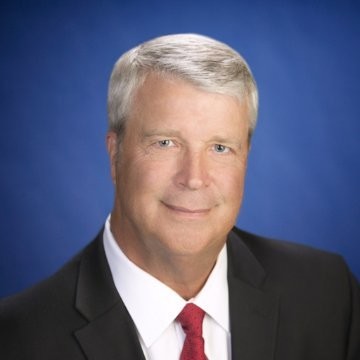
Ted Simendinger, President and CEO of Ocean Palmer and Associates is a globally experienced leadership coach with expertise in behavior-based talent development, executive and Millennial coaching, change management, sales problem-solving, and sales excellence. He has extensive global experience solving complex organizational and performance challenges that enable quick, relevant repositioning for greater success. Ted utilizes strategic planning, private coaching, and classroom facilitation at multiple levels to explain, teach, and develop high-performance diversity talent and inclusionary cultures.
Ted is also the founder of the No Bats Baseball Club which is a baseball-related charity organization that has raised over $2Million with an incredible group of good men, doing good things, for the right reasons.
A former #1 salesman with Xerox and top senior instructor at the Xerox International Training Center for Management Development, Ted has extensive experience in designing and updating curriculum.
An accomplished and respected award-winning author and speaker, Ted has guested on network TV talk shows coast-to-coast and has been featured on over 3,500 global radio stations.
Considered one of the world’s foremost teachers on the subject of “Worry,” Ted’s popular life skills book “Managing the Worry Circle: How to Improve Your Life by Worrying Less” — written under his pen name “Ocean Palmer” — is utilized around the world. He is also an expert on The Impact of Technology on Behavior & Happiness.
Now your host, Ed Molitor.
Welcome back to another episode of the Athletics of Business podcast. I am your host and CEO of the Molitor Group, Ed Molitor, in what a treat I have for you today, joining us for his encore interview, my great friend and I do not say that lightly, as this is one of the greatest humans I have ever had the opportunity and good fortune to get to know Ted Simendinger, president, CEO of Ocean Palmer and Associates. Now, if you have not listened to his previous episode number 92, managing the worry Circle, I could not encourage you, urge you to implore you enough to go back. Listen to episode number 92. We really jump into the worry circle. His incredible life skills book, managing the Worry Circle, how to improve your life by worrying less, which go look for it.
It's written underneath his pen name, Ocean Palmer, and we do have a link to all of his books in our show notes@oceanpalmer.com dot. So you can find that in our show notes. And he's also an expert on the impact of technology on behavior and happiness. Now, I normally don't go through guest bio when they're back on the Athletics of business podcast for the second time, but I want to give you just a brief overview of Ted because I want to make sure that I do him justice. He's done so much incredible work globally experienced leadership coach with expertise in behavior based talent development, executive and millennial coaching, change management, sales problem solving and sales excellence. At one time, he was the number one salesman with Xerox and top senior instructor at the Xerox International Training center for Management Development.
Ted is also the founder, and this is so cool is also the founder of the no Bats Baseball Club, which is a baseball related charity organization that has raised over $2 million with an incredible group of good men doing good things for the right reasons. And I might change that with an amazing group of great men doing great things for phenomenal reasons. Today we're going to jump into why it is so important to focus on what on you can't control and to live in the boundaries of that and not the hypothetical. We'll also jump into why discipline is so important when protecting your head and what you allow in, and what the difference is between the open bar versus the castle approach and why it is so critical to treat your head like a castle.
And we'll jump into why it is so significant to be your authentic self. Now think about this part I'm about to say, and to treat your clients money like it is your own and how significant it is to chase greatness while honoring your profession. I'm going to get out of the way, let you listen to this incredible conversation with Ted Simendinger. Ted, thank you so much for joining us again here on the athletics of business podcast. It is great to have you back.
Thanks, sir. It's great to be back. Ed, it's always a pleasure to speak with you.
You know, I'm not real sure we can top our last conversation, but we've got a lot of great stuff to talk about.
Well, hopefully I'll hold up my end to that. I know you will.
You usually do.
I might be the weakest link, as Ann Robinson would say. No, no, you are the weakest link.
Yeah. You know, it's been an amazing. I don't know if that's the right word, but it's been, it's. It's been an interesting year and a half. And in the introduction I referenced our last conversation. All the great work that you've done wrapped around the worry circle and where that came from and how it's evolved and what it's grown into. I have to imagine that this last year and a half has led to a lot of conversations, a lot of opportunities in your world to work with folks on not only what was going on and not just getting through it, but growing through it and how they were able to come out the other side of this in a better light.
Oh, yeah. I mean, you summed it up beautifully. It's been a trying year for a lot of people. It's been a character building year. And sometimes in life, character building events gets thrown at you. Go seek them out and pick them. They get thrown at you. And so I think what this has really taught a lot of people, some more than others, is, first off, patience, resilience. And third would be adaptation, readjusting to the new normal. So it has been a very interesting year. And what from my perspective, as it relates to the worry circle, you know, the worry circle, something I wrote a long time ago, but I've taught it ever since and it's hugely popular now. There's a lot of crowded heads out there.
You know, what that keeps telling me is that the need for an important life skill that you can lean on at a difficult time, that's not going to obsolete itself, that's still there. It's big as ever. It's as important as ever. I care as much as ever about spreading the word on it, teaching people how to manage what's going on between the years. But, yeah, unquestionably the last year and a half or so, it's been remarkable on a lot of levels.
And one of the things I'm curious about, I want to make sure that I word this question properly. Inside of the worry circle, folks have a tendency to worry about things that they can't control. Okay. And they can't control what's going on. They can't control the outcome. Yet they still spend their energy and their focus worrying about that. What has happened in your experience in the last year and a half, what has happened to folks were those worries that they tried to push out of their head. What has happened when those worries actually came to fruition? How are they able to respond to it? Or how did they respond to it?
Well, first off, you shouldn't have a hypothetical in your head to begin with, right? Because it burns a lot at time, creates a lot of negative energy, and you can't solve it. So what's the point, right? Those things do arise, however, when people have idle time. You know, the mind starts wandering to that kind of stuff. But your question now deals with, okay, suppose I let one of those sneak in and fester in there and that now it becomes a reality. Now I got to deal with it. How do I deal with it? Well, you know, a worry circle principle would say, okay, recognize what's in there. Ask yourself if it belongs. Is this something you can control or not control? And if you can control it through your thoughts and deeds, what can you do? What are you empowered to do?
You know, where are the boundaries of what you're capable of doing to address this thing at this particular time? Don't worry about next month, next year, whatever. That might not ever happen. But in those cases, what's happened is something that was sort of latent in the mind becomes dominant in the mind, and if it's something you can control, then figure out your plan and take action. You know, just don't. Don't let it fester. I mean, if it's important to you, step up and do it. I think what we're seeing a lot of, Ed now because of the COVID stuff is you actually have more of a bleed toward influence issues.
You know, in an influence issue, it's part controllable, and it's part uncontrollable, and we've seen it all over the country, something as simple as whether or not to wear a mask based on medical advice. So people would weigh their beliefs and what they read and see and then decide that, yeah, they're going to do it, or they're not going to do it, but they're not going to solve COVID by choosing one way or the other. Person that wears a mask isn't going to solve it. Person that doesn't wear a mask isn't going to avoid it. I've seen a lot more of a cloudiness in that area of overlap between the controllables and uncontrollables, which I define as influence issues. You have some input on the outcome, but you can't control it. And in those cases, I always break it apart. What can you control?
What can't you. Right. And then own a part you can control and throw the rest of it out of your head. You know, this is the mental discipline that comes with really effective worry circle management. And what I'm really proud of are the people that I've worked with all around the world who have totally transformed their outlook on life and how they approach life, because they have an ongoing discipline to examine what's bothering them, and then they apply the best techniques they can to put this life skill into place in a positive way. And so that's, to me, is the beauty of worry circle management. You can learn it and you can do it, and it's free and it makes life better. And then when.
When you experience that, I want you to go out and teach it to other people because they need to know.
So get it out of your head. But what if someone says, ted, I just can't. I just can't do it. What are some of the big blocks or the push? And you've heard it a million times, I'm sure.
Well, we all have a choice that, I mean, your head, you know, your head and what's in there, your attitude toward the permissiveness that you demonstrate on what's allowed in there or not in there. You're either going to take an open bar approach or you're going to take a castle approach and an open bar. We've all been there, right? They're great to get invited to. You show up, you eat what you want, you drink what you want, you leave plates and dishes all over the place, and then you hang around as long as you want. And then when they shut the bar down, you leave. Who's stuck cleaning up the mess and paying for the whole thing? Right? The host. Now, if you got an open bar mind. And you're the host. Why would you want to do that to yourself?
Why would you want to? I wouldn't want that.
Right.
Well, one of the challenges these days because of technology is that there's more portals into the mind than ever before. There's more access, means and methods to get into, somebody said, than ever before. And so, you know, lesson number one or lecture number one from Uncle Ted is, look, just because somebody has access to your mind does not mean that he, she or it has the right to be there. Right? So I espouse a better methodology to treat your head like a castle.
Known.
A castle has a moat around it and it's got a drawbridge. If you've got a crowded head, I would suggest lowering the drawbridge, examining what's in there, sweeping out the stuff that doesn't belong, the uncontrollable, stuff like that. And then you raise the drawbridge back.
Up again to protect yourself.
Now, the new worry comes into town and is on the other side of the moat, and it's yelling at you to come in. You look at it and say, can I control that, yes or no? And if the answer is yep, I can control it. You lower the drawbridge, it walks in, you raise the drawbridge back up. It's now allowed in your head. Right. It's invitation only, and that keeps order and safety inside the castle. Now, if the same issues out there yelling at you, and it's something you cannot control, you just look over the wall and you might do a Monty python suggestion, which is hurl something in the general direction, but you don't let it in.
Right?
Right. And this is the beauty of the process. You learn to treat this as your default approach to managing worry, and you decide your head's going to be a castle and not an open bar. Life gets a lot easier, a lot quicker.
And I think one of the tricks with that is to realize because you make it go away once doesn't mean it's not going to come back. You have to build up the resilience. And I talk a lot with my clients about mental stamina. Endurance.
Yeah, yeah, mental stamina. You know, as you were saying, I was thinking, the word discipline, you have to have a mental discipline, a mental stamina.
So do people have a tendency to break down when the worry keeps coming back? Keeps coming back and keeps grinding on them?
Oh, geez. That, you know, uncontrollable worry circle issues create so much danger in the mind that they build up over time. You know, just reading the other day about, you know, the mass shooting of the day, right, in San Jose. And a worker got ticked off at his boss and his co workers decided to see, you know, that guy's head was blowing up with an uncontrollable worry circle. And when we look in the news every single day, we see stories of erratic behaviors and stupid decisions that people have done with, and every one of them eds clueless on how to manage their head. Nobody with a balanced perspective in life is going to do rash things. And so if it comes back and festers and you do not remedy it, that will be dangerous over time.
Now, also point out that I do believe that people that allow things like that to come back in repeatedly don't know themselves that what I call the third head of life, right. They don't know the third head as well as they really should in order to manage that effectively so that it doesn't keep coming back. And a lot of times, the answers to mental strength, discipline, stamina, all that kind of stuff come from being comfortable with who you are. Because until you're happy with who you are, you'll never be happy with what you have. So long answer. But that's the way I see that one.
Now, I would like to, wasn't planning this, but the role social media plays in this, for some reason, as a society now, collectively, okay, I'm not saying every individual, but collectively, for whatever reason, we have a tendency to believe if we throw up on social media, bashing what we don't agree with, and just lashing out at others beliefs, others actions, that it's going to make our world better. What I think is all you're doing is continuing to tell you a story that's going to raise your level of anger, raise your level of anxiety, it's going to raise your level of ill will, you know, and it's just going to increase your worry. I'm just very curious about what your thoughts are and what, how we handle social media and how we handle all the challenges we have going on right now.
Social media, thanks for asking on that topic. I invested 1500 hours researching the impact of technology on behavior and happiness, right. And social media. To me, the best way I can paint a clear picture of what this is, it's the 17 year locusts hatching.
Every day, every minute.
Every minute. Yeah, it's horrible. It's horrible, and it's horrible for a lot of reasons, one of which is that the host sites are profit driven enterprises and they have algorithms to track what you react to and they feed you things to react. It's easy to infiltrate. There is no governance on truth, and it preys upon Maslow's. You know, if I go to Abraham Maslow's, you know, hierarchy needs hierarchy, right? It preys on steps three and four, which is love and affection, and then respect. And when I mentioned earlier that the third head is sometimes, you know, who you really are deep down is some a place that people really should invest time investigating. The first two heads are how you want to appear to others and then how do you react to others? And social media feeds those two monsters.
It ignores the third one, who you really are. Right. And so what it does is it gives you a free forum of easy access to espouse the best version of yourself you want, seeking affirmations. And there are a lot of people out there with self image and self esteem issues and, you know, think that it's okay to be mean to people because they're doing it inside the invisibility of wherever they're tapping the keys on the keyboard. To me, it's a horrible thing. It's an insidious thing. And for reasons, I could talk for an hour, but enough's enough, right? Right.
Yeah. You know, and the movie social dilemma, I encouraged, I don't want to say I made, I encouraged my wife to sit down and watch it because to me, it punched me right in the gut. I mean, it hit me right over the head. Yet people will watch that movie and they'll agree that social media is awful. It can be awful, yet theyll still go back to being stuck on their phones and stuck on their devices, and theyll fall right back into it. In your opinion, why is that? Why, as humans do, we continually go back to things that we know are bad for us? Our unproductive habits go against the grain of what were trying to accomplish.
Doctor well, theres several layers to that. I mean, one of the first things that comes to mind is that the reason social media works, and digital interactions like that work, they create dopamine releases in the brain, which is sort of like the body's cocaine. And so people seek that because it's doctor feelgood. I'm important. I was heard. You know, I have something to say. Circle back to Maslow again. Right. I'm seeking love and affection. I'm seeking respect, and we're looking for that validation, and we get it. It's a huge dopamine jolt. If we don't get it's an attack. We have an emotional reaction to it. It's all chemically based and digital addiction is a huge problem and getting worse. But how you choose to use your tools is up to you. I always tell people, look, use your tools.
Don't let your tools use you.
Right.
Social media. Zuckerberg and Sandberg are making a fortune off people by this is strong, but I'd say by preying on their weaknesses, they serve the first two heads. The image you want to project and how you receive by others. They ignore the third one. And in real life, Ed, the only one that really matters is the third one. Who are you really, and are you proud of that? And when you own all that, we're better and worse. Nobody can hurt you anymore. It's a complex issue. But once people get addicted to digital technology, the real danger is that addiction is treated differently than other addictions, like drinking or drugs or something like that, where the person with the problem wants to quit. Digital addiction, nobody wants to quit. They just want to learn how to manage it better. And there is a huge difference.
And there's way more to it than just putting down your device. I mean, it's a starting point, but there's way more to it.
Yeah, there is more to it. It's hard to do it if you don't put down your device. But you're going, we're going to go back, have to go back to mental strength. When you put down that device, you are going to go through withdrawal for at least a month. And the reason for that is you're not getting your dopamine jolts and you want your dopamine to, and so we find excuses to go back. Well, I'll just check for five minutes, blah, blah, blah. So you're still tethered to the cord. It's just a thinner strength that's got you. Everybody has to navigate life the best way for him or her. It probably works well for someone.
I know it works well for some people who have no other social connections with folks, but people who get jealous easily and all that kind of stuff, it's insidiously bad.
So yeah, I saw somebody yesterday and this individual is in her seventies and she thanks social media for maxing out her friends on Facebook at 5000. And I thought to myself how awful the feeling is that I just picture this person that's, and I could be completely wrong, but there's got to be more and I'm going somewhere. There's got to be way more to life than just maxing out your friends limit on Facebook. Which leads me to ask you, Ted, what is it that releases your dopamine? Because one of the most, many things that I love about you is your ability to be there for others and your ability to be available for others. And from all our conversations, your ability to actually be, I mean, absolutely locked in and present. Where does that come from?
I don't know if any of that's true.
Come on. It is. And this was not a setup, and he. Nor did he know it.
Yeah, yeah. Looking for a fastball. He throw a change up at me. Right? Where does my dopamine come from? The first and foremost, definitely making people laugh. Yeah, I love to make people laugh. Right. And the reason for that goes way back to my childhood, you know, because I just love the silent comedians. I grew up loving comedy and the sound of laughter, especially with old people. If I can make old people laugh, it's a joy to me, right. Because no matter how bad life is at that time, when I make them laugh, life's okay then, right. That brief, shining moment. So that brings me a lot of joy. Telling stories creates a lot of joy for me. You know, I enjoy it, you know, somewhat good at it. And it was a gift I've been given. I'm not going to waste it.
And I'm. And I like that. And what I love with my work, especially, is that I love it when I hear back from people I worked with years ago, wherever in the world they are. And last week, I heard from three different people I worked with in the past from different continents. When you know that you had a positive effect on somebody's life, and they care enough to take the effort to find it, because I'm not on social media, that means a tremendous amount to me. It means that my caring and concern for them has been appreciated and reciprocated. And that means the world to me.
How about fishing?
I love fishing. I think America would have handled COVID much better if everybody fished. And there are two reasons for that, Ed. One is that.
I did not think about. That was one of them.
Yeah. No, but the reason is that you never get in trouble if you keep your mouth shut. Right. If you fish. Right. But fishing teaches patients. COVID is a masterclass in the need for patients. And because of technology and the amped up speeds, as we've now transitioned all the way up to 5g, we've created a behavioral culture of necessary immediacy. We want an immediacy to communicate. We want immediacy reaching back and all that stuff. And what we really lost in all this stuff is patience. Patience plays a very important part in maturation. It plays an important part in level headedness. It plays an important part in relaxation. It gives you time to think. So I enjoy fishing. You know, when I was young, I used to determine success by how many fish I caught.
And now that I'm older, you know, I let them all go. And now when I'm lucky enough to catch one, I thank it and then let it go. Yeah, there's. There's worse ways to spend your time thinking about important things than with a fishing rod in your hand.
I'm gonna come back to a question about your best catch ever. But before we do that, something just dawned on me. You talk about patience and everything you've done, you know, the fishing. Right. The leadership, the human development, working with people. Right.
Yeah.
The horse racing. Everything's been patient. Yet you were so incredibly successful in sales for Xerox at a time when patience wasn't one of the biggest things in the sales world. How so?
It still isn't.
Well, it still isn't okay, seeing that I have to sell on a daily basis, you know, what role the patients play for you or where do they. I mean, was patience always there for you? Is that something you developed over time, or. Or how did that show up?
No, no, that's a good question. You know, especially for salespeople, sales professionals. Right. I was lucky enough to hire on with a company that had a brilliant talent development program. At the time, Xerox was the best in the world at developing sales talent. And when I first got hired, I got stuck. Or I got. Well, his word would be I got stuck with him. I had to shadow a guy named Max Zahn. And Max was a great salesman, but he was totally unique, and he had his own style. And the biggest mistake I made in my career, the first two or three years, because I was imprinting, you know, learning from this guy, was that I tried to be like Max. And it got very hard for me because I couldn't be Max, that I'm me.
And if I show up at a customer's office and I'm acting like somebody else, they're going to smell that. They're going to read that. We've all seen it, right? Absolutely. And I got frustrated, and I said, you know, I'm going to either succeed or fail on my own merits, but I got to develop my own style. And so I worked hard on that just to be me. And so the authenticity that, that helped me create in front of clients, I think, had a large measure to do with my success. The other thing that was really important is that I always spent my customers money like it was my money, and if I wouldn't buy it, I wasn't going to sell it.
And when I did that, my hit rates increased, you know, and I combined those two things, you know, an authenticity of self, for better or worse, but a sincere desire to make sure my clients invested their money instead of spending it. It created a lot of long haul success for me. And my hit rate increased, you know, your hit rates, your number of successes divided by your number of attempts. Right. And so I did better and better. And it validated that the greatness of everyone who sells. If you honor the profession, because it is a profession. Yeah, I honor the profession. The professional honor you. Right. And I've always believed that. And that's what I teach, man.
I love that. There's about a thousand salespeople coming to my mind who don't honor the profession.
No, I don't.
And there's some amazing, I mean, I've been very fortunate to work with some great ones. And to, the thing you said to me that resonated so much was you spent your customers money as if it was your own.
Yeah. Now I'm going to treat it that way.
Another question. You in our first conversation, our first podcast episode, you mentioned your college job. Okay?
Yeah.
And one of the biggest, I mean, I want you to talk about, though, and you use a line in there that I love, never back into the pay window. When you're talk about the work ethic, you learn working at the bottom. Butcher.
Yeah, exactly. And I hold that today, you know, you don't back into the pay window. You earn your money. And you don't make money by cheating on your taxes or falsifying documents for banks or lending officers or anything like that. You earn your money, and when you earn your money, you're proud to have it. And then I would urge people to hold on to some of it, you know, don't blow it all. But I think when you have a strong work ethic like that's part of your personal brand, part of who you are, it's how you operate, part of it's going to be, how do you measure your success? I worked with a lot of people who made a lot of money, who were terrible humans. I didn't admire that. I admired people who honored the profession.
And I had the opportunity to watch, like you said, there's a few of them out there. That are great, and you try to chase greatness, but they all do it by honoring the profession.
I'm going to ask you a question that did not mention to you that I had asked. How do you define winning? How do you define victory? How do you define success? What does that mean to you?
Personal gratification? You know, if I did the best I can do, you know, whether it's. You know, I've never taught a perfect class. I've taught some really good ones, but it's always the pursuit of the perfect class. But I know that there are certain things I have to do ahead of that class to be prepared. I have to show up ready to go. I have to show up well rested. I can't have this as a personal quirk, but zero alcohol in my system, zero drugs in my system. They are these people in their room especially, they never seen me before. They're going to get the best of me, best I got. And I brought that discipline to the classroom for as long as I've been teaching, because I can control all those things.
So what success is for me, you know, in a classroom example would be at the end of the program when I. When they all leave, and it's just me straightening up and cleaning up. Did I do the best I could? And if the answer is yes, then you hope for a positive outcome. You hope you positively impacted the lives of others. But the true measure that is you. You're the only one that knows. You know, if you gave it 100% or if you gave it 96%, there's a big difference. There's a big difference in performance, and there's a big difference in your emotional comfort of who you are, how you identify yourself in the work you do. Well, you know, I guess that's how I would define it. If I did my best, I can live with it one way or the other.
One of the questions I ask my clients when I first start working with them, and every single time we talk and run feedback loops, is, are you doing the best you can with what you have to become, the best you're capable of becoming? When you have the focus that you have on going into the class, going into the training, you absolutely know that those people sitting on the other side of the desk know that it's the commitment you're making.
And they absolutely. And then absolutely, they can smell a fake, and they can smell if you're mailing it in, and they can smell canned nonsense, right? So you got to be in the moment. And I think I may have mentioned it the first time we spoke or not. But. But, you know, in. In the line of work, when you're, you know, you're consulting and teaching stuff like that, you know, you're either healthcare or show business, right? You either take good care of people or, you know, you're entertaining them. I got a background in comedy, so I'm comfortable in the room, and we have a good time. Learned. I don't think learning and fun are mutually exclusive, but there are boundaries within all that, too, that you have to maintain in order to do your very best work. Not your best show, your best work.
You know, the goal is for everybody in that room to get a good return on the time they invested. And if I can deliver that, and I did the best I could, that's a win for me. If I'm irrelevant to them, then I feel bad about that.
When you have this gut feeling, because you said something in our first podcast episode that I apologize, I did not follow up on, but when you get that gut feeling that you might not be connecting with someone, they might not just be picking up or they're not digging it, they're not into it. You said you blame yourself, not them.
Yes. And the reason for that is there are eight behavioral types you will deal with when you teach. I'm pretty good at recognizing all eight and situationally adapting to each of those eight, when those behaviors manifest themselves through interactions. If I can't figure that out, that's on me, because I know there's eight and I've done it before, and that just tells me I haven't cracked the code yet. If that happens, and I sense it's happening, what I'll typically do is try to talk to that person offline at a break privately and find out what's going on, because it might be a misread on my part. You know, a classic example is a silent and independent. Right. A silent just sits there, never says a word, gives you nothing, blah, blah.
And as an instructor, you're sitting there looking at them going, man, either, you know, they don't get it, but by the same token, the silent might get everything perfectly. They just want you to hurry up and give them. Right. And so you gotta find that out. Right. You gotta find that out. You don't leave that to the great abyss of mystery.
Absolutely.
Yeah. You find it out. Yeah.
Now, the eight behavioral types. I love your writing. Okay? I love what you bring to your writing. Obviously, you know, I'm hooked on a series that you have going right now. You have a new book coming up. I'd love to talk about this character, but how much of that do you take, what you do, and you look at the eight behavioral types. How much of that do you intentionally put into each book, or is that just something that just happens?
Everything in my life's integrated. You know, I apply so much of people, places, things, behaviors, all that stuff. I've had a wonderful life, a rich life. I've been so fortunate to go so many places and meet so many people. They gave me a lot of ammo to draw from. Right. And so when I create characters or situations, I base them in the reality of past experience, and that's what I think makes them relatable to a lot of readers. They can see themselves in some of these characters, or they see somebody they know and something one of these characters do. I don't create perfect people. You know, my character's got quirks. They all got issues. You know, I weave my messages through them. I.
Most of the work, my fiction work that I do, it's their multicultural ensemble stories with happy endings, because that's the way I want the world to be, you know, written a couple things that were mean and nasty, and that's because I got mad at the world, and I was telling the world that's the way you really are. But, you know, my act of definance and all that stuff is to tell good stories that make people laugh at the right times, cry if it's warranted, but care about the people and the stories they're reading about. So they're. All my work is a blend of my life.
And one of the things I love about reading your books is I hear your voice telling the story. You know, obviously, I've gotten. I've gotten to know you a little bit and. Incredible person. And as I'm reading 12 miles to paradise, as I'm reading tookie, I'm like. And I could just see you as you're writing, laughing, right? Or I could see you at times when you're writing, maybe have a tear in your eye.
Yeah, I've cried. You know, what's really. What's really something, Ed, is when you're crying on the third read through, huh? You're still crying because you should be.
You should. You know, it's coming. You know what it is?
You did it.
You wrote it. You read it twice already, and it still gets me.
Right? But that's what happens in life, man. You know, there's. There's times we laugh, there's times we cry, and all that stuff. And I just want my characters, you know, I turn my characters loose to do what they want to do the way they want to do it. I don't govern them. Some of them do things I would never do, and some of them are much more conservative than me. But again, I'll go back to the overriding theme of so much of my work, which is, I wanted to be a multicultural ensemble comedy with a happy ending. You know, it's easy to make somebody cry. It's hard to make them laugh. And I like making people laugh. So if I can do that while we're having a lot of fun and learning lessons at the same time, so be it.
That's the way we're going to roll, you know?
So your pen name is Ocean Palmer?
Yeah.
Who has written your favorite book? Ted or ocean?
Ernest Hemingway, the old man in the city.
That wasn't an option. There was no c. It was Airbnb. I mean. I mean, who's put out your best book, the one that was your favorite to write? I don't know.
They're like. It's like your children. You know, the worry circles helped the most people. When I threw that one out there, I didn't think it was going to help anybody, and it ended up helping people around the world.
So.
Still is. Yeah, it still is. And so from a nonfiction standpoint, that's clearly my seminal work. You know, people still buy it, people still like it, people still want to talk about it, and it's a life skill, so that has great value beyond my lifespan. From an entertainment standpoint, I've had a lot of fun with some of the fiction stories I've written. You know, you mentioned Tookie, banjo, superstar, my favorite character. I'm writing the follow up story to that one now. I pick her life up 20 years later, a different stage of life, and a very, you know, happy, proud to go hang out with her again. She's an extraordinary character, very cool character and. And all that stuff. But I wrote a London screenplay. We're trying to get made into a movie. Great, great story, great characters, all that stuff.
Have some a list people interested in it. But same thing, Ed. Positive, multicultural, solid stories with happy endings. Right? There seems to be a need for them out there.
Yeah, that's not going away. And I just love the whole thought process behind it. But the London screenplay, that, too is pulled from your experiences, no?
Well, yes, I wrote it. I thought the story up was smoking a cigar in St. James's park near Trafalgar Square.
Love it. There you go. All right.
And I was watching everybody walk through the park, you know, and they're. They're tourists. There's people working, you know, or cutting through the park, and there's people on dates, and there's people who are sad and blah, blah, blah. And so the idea germinated from that, and I blown my leg out at the time, and I had a quad rupture, and I couldn't go anywhere. So after I taught during the day, I'd get. Sit on a bench, smoke a cigar. When the cigar was over, my life, you know, cigar was done. My life was done for the day. Right. Because I couldn't go anywhere doing it. But I thought through the whole story, and then I just. I told it. I told it, and it turns out that it resonated, and I'm very happy about that.
We'll put in the show notes. We'll put a link to your website. Last time we put a link to the book worry circle and your website, but I'll put it there. And I'll put also a link directly to the books tab where they can go and look at all your books. Yeah. Now, I want to. If we can, and I'm prejudiced, but I want to go back tookie because you and I had a conversation about how she represents a lot of what we're. We are as people right now going through, or what we may be going through based on our situations. With his last, you know, we talked about getting off the mat.
Right. What happened?
Can you talk into that a little bit?
Yeah. You know, just for your listeners, the backdrop on the character was I. She was a very troubled teen who had absolutely nothing going for her. A little New Zealand girl. And the first story, the first book took you, band to a superstar, was about her life between the ages, really, about really, you know, 16 to 20, you know, in that range. And it was how she determined they willed herself to great success. And then once she found that success, it didn't work for her. That wasn't what was missing in her life.
And so with all that's been going on with COVID and life and the national mood and the global mood, for that matter, I decided it was time to revisit her life 20 years later when she was 40 instead of 20, because at 40, life presents a totally different set of challenges, and she was at rock bottom again. And what I wanted to talk about there was getting off the mat a second time in life, even when it seems you have nothing. If you have will and determination. You can get off the mat and get back in the game and find yourself and all that. And so that's what this new story is about. It's really about how she goes about doing that, and it's a lot of fun.
Yeah. And she helps others do that as well.
Yeah. Because for her, friends lift her up, they make her get back in the game. She gets back in the game, she finds some footing, and as soon as she does, instead of hoarding her success or whatever like that or chasing more of it, she turns around and helps other people. And I think that's the way lives are better. I think lives are better when we let our friends pick us up and we let our friends dust us off, we let our friends push us back into the game. But when we get back in the game, we decide that we're going to. We'll carve out our own niche, we'll find out our own true north. And then once we do, we're going to look around and find some people that need the same kind of help, and we give it.
I think it's a wonderful message for these modern times, and I'm very proud of this particular story, and I love this character immensely, and I think that's a great way.
As we said, we begin to wind down here. I think it's a great way to talk about your amazing baseball club and what you all have done, what you've done in the fundraising side, and even more importantly, what you've done for each other.
Yeah, I founded the no Bats baseball club in 1991. I did it as a one time thing. And here we are in October, coming up on our 30th anniversary, and it's been remarkable. Over the years, I've had about 225 guys participate this October, celebrate our 30th. You know, we're going to celebrate that. We're going to celebrate having raised and donated over $2 million to charity, the Ryan Sanders organization, JJ Gotch, Reed Ryan. They're going to host us in Round Rock, and I'll have about 80 guys coming in, a lot of them from the early years and stuff. But what's happened over time is that we evolved from being a sort of a baseball centric group to being a brotherhood, a philanthropic brotherhood. And through the years, stuff happens. You know, we. We have buried spouses, we have buried children, we've lost jobs.
We have had careers implode. We've lost fortunes and made fortunes. But when the guys get together, nothing's more important than the guy next to him. And there is a beauty in that. There's a poetry in that. And I'm very proud of my guys. I'm very grateful for everything they've done for me. And what we have developed over time is a shared resilience. No man is. You're not allowed to be in a barrel. Now, we're all going to take turns in the barrel. And I say that the number of hands that will reach in to pull you out. This is with Tuki. Right. The number of hands that reach in to pull you out are going to equal the number of times that you've reached in to help others.
And it's been a beautiful poetry that these men have created and that I've been fortunate enough to coattail for the last three decades.
It's pretty remarkable when you really think about the journey and how you started to know it was going to be a one off.
Yeah, yeah. You know, I said, I think the one thing I did that I, and I hope is non negotiable through the years, Ed, is I wanted to create a safe haven for guys to go and just get away from all the stuff.
Yeah.
The bills, the careers, the stress, you know, just. I just needed a lily pad. I needed a safe haven. I needed a castle for my boys. Right. And that was the emotional experience I wanted to project and protect throughout the years. All the guys signed up for that. All the guys that show up know that, you know, they own it, they're proud of it. And over time, that forges tremendously strong bonds. And some of the greatest friendships in this club were formed on pickup teams at no bats years and years ago. Now, these guys are blood brothers. It's inspiring to me to watch them.
How have the rules evolved over the years?
I got to imagine the one rule I'm trying to get JJ and Reed Ryan the best. It was shortening the bases to 30ft each.
But you know what they'll do? They'll make them. They'll make them further apart.
Well, what I want. Yeah, I know those guys. Reed's going to probably put the bags out in the corners. Yeah.
As he should.
Yeah. Yes. Yeah. But the rules, you know, I wanted, the one thing I wanted to do was to protect the emotional experience of everybody that participated. So I want. I made it sort of like little league, almost like coach pitch, but your teammate pitches to you. Because I want guys to hit the ball. I didn't want some hot shot to show up and strike out 20 guys and think he's a bad man, you know, and so part of what has to happen is your teammates laying it in there for you to hit it. Cause I want guys hitting it with a wood bat. None of this aluminum nonsense. I want to hit it on a wood bat, and then off we go. Now, the game was easier for many of us 30 years ago than it is now.
So I've developed sort of a senior division, the telemugs. And that stands for the extraordinary league of most unusual gentlemen. That's. That acronym stands for. And that's all us old guys, you know, who founded the club. And we've got a new generation of terrific young guys and players.
That's great.
You know, who we turn loose and that's more competitive for them. So you got to move with the tires, brother. That is.
That is awesome. How does it, how does the age groups break up with 80 guys coming back? I know you said you're going to have some of the original members there.
You got to be 21 to show up. Our youngest will probably be 23 or four.
Okay.
Our oldest is 82.
Okay. Do you make the young guys carry your bags and bats and all rookies do okay.
Oh, yeah. Rookies log everything. Makes them and dependent on it. On how much we like the rookies. That depends how much Gatorade and water we buy, right? But now the rookies have to pay their homage. They got to pay their dues.
That's great. That is fantastic.
But it's probably the only league I've 82 guys, 61 of them are second basement. It's really an amazing. It's an amazing collection.
So how do they decide? They go rocks versus paper for second base.
Oh, man. When I get tabbed to play third base, I am crying like a baby. I don't know if you've ever tried to throw a ball the first. Normal humans don't do that. Right?
Not on target.
Nor do I want, nor do I want somebody torquing on a pitch right at me, you know, 70 or 80 miles an hour. So. So, yeah, you learn to adapt. You know, I play a lot deeper.
Than how many blown hamstrings have there been?
One of the club records? The answer to that is well over a dozen. But my brother did it when were in Cincinnati recently, so hats off to you, bro. A great player at Notre Dame. He comes out, plays first time. He blew the hammy out going, he's.
Not here to defend himself.
No, he's not. He's not. Nor does he deserve the right. But, Ed, one of the great records in the club history is that we had two blown hamstrings on the first play of one of our seasons. The batter blew his, pulled his run into first and the fielder pulled his, trying to get the ground out of the middle. So we had two guys first time. So I wouldn't say we're as nimble as we used to be, but in our minds we are, and that's just.
As much, just as much fun.
Yeah.
Well, hey, Ted, it's been awesome. I mean, it's been great to have you back and what we're going to do. Can you tell us more about where folks can find out about the great work you do with the worry circle as well as your writings with Ocean Palmer?
Well, all my work is on my writer's site. That's oceanpalmer.com. You know, Ocean, like the CEO, C E a N, Palmer, like Arnold or Jim, oceanpalmer.com, a book, you know, that stuff's on there. So there might be a video link on there to speech I gave at MIT about the worry circle and stuff like that. And so, or if somebody needs something in particular, they can just reach me through that, you know, send me a note, I'll give them a call or write back, whatever.
Ted, I appreciate you. I really do, and you know that. And it's been a pleasure.
All right, man. Thanks a million, Ed. I appreciate you having me. It's always a lot of fun. Thank you for listening to the athletics of business. Be sure to give us a rating and review so we know how we're doing. For more information about the show, visit theathleticsofbusiness.com. Now get out there.
Think, ask.