

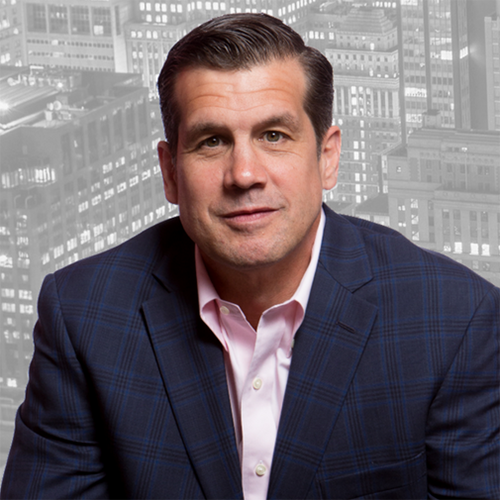
In the last 26 years, Ed has developed his leadership skills in both athletics and business. From working as a NCAA Basketball coach at Texas A&M to becoming the Vice President of a national recruiting firm, Ed has taught countless athletes, coaches, and business leaders how to THINK, ACT, and EXECUTE at an elite level. Ed has a unique set of skills to deliver leaders across the country a purposeful, positive, energetic, and refreshing experience to unlock their true potential.
In 2016, Ed launched his company, The Molitor Group, in order to reach and add value to a larger sphere of ambitious individuals and help them achieve their goals every day. Through The Molitor Group, Ed has guided all types of leaders to achieve success. From entrepreneurs and executives to teams and companies, The Molitor Group specializes in empowering individuals and groups to achieve at the next level. Through Leadership Performance training, coaching, and speaking, Ed’s goal is to supply people and organizations with the necessary tools to move forward from where they are now to where they want to be.
This is the Athletics of business podcast, episode 23.
Welcome to the Athletics of Business, a podcast about how the traits and behaviors of elite athletes and remarkable business leaders frequently intersect. The real stories and hard lessons to help you level up your leadership and performance. Now, your host, Ed Molitor.
Welcome to the Athletics of Business podcast. And I am your host, Ed Molitor. And this is the first podcast of 2019. And we are going to really dial into how you can make it your best year ever. I know that's sort of overturned. Make this year your best year ever. But we're going to talk about getting off to a fast start. In all my years playing basketball, coaching basketball at the college level, one of the things that I love was focusing on the first two minutes of each half. Okay? Especially the first two minutes of the game. Why? Because that's when you really play inspired basketball, when you're really dialed into what your keys to a winner. Okay. What the game plan called for, what it is that you're trying to do to be successful.
Every single thing you do is at a higher level. You're more focused, okay? You talk more as a team, you communicate at a higher level. Every loose ball, there's bodies flying all over the place for, you're picking teammates up, people are flying around the benches into the game. You know, there's so much energy, the positive energy. And if you can win those first two minutes, you always feel like you're going to set the tone for the rest of the game. Are you going to control the tempo? Are you going to value each possession? Okay, what statement are you trying to make to the other team? Are you taking away what their best options are? So as I correlate that into. And getting off to a fast start in 2019, I relate that to the first two weeks of the year.
Now, let's do a little note here, a side note, if you will. You could take what we're going to talk about today and you could. You can apply it to any quarter of. Of the year. Okay, if we're talking business here, let's talk the fiscal year. So we break that down into four quarters. So getting off to a fast start in 2019, we can take the keys to that and some of the other things I'm going to talk about, and you can apply that each quarter. So how do you do it? How do you get off to a fast start? What are the keys to that? Well, the very first thing I think you have to do is you have to have positive energy and your positive Energy starts with your attitude. And you think about this.
The very first choice you make every day, before your feet even hit the floor, you can choose what. What type of attitude you are going to have. Is it going to be a positive attitude, or is it going to be an indifferent attitude or is it going to be a negative attitude? Now, if you have an indifferent attitude or a reactive demeanor, it's going to turn into a negative attitude. So each day, right when you wake up, you get to make the first choice of day. And what is that attitude? Okay, your positive attitude will set the tone for your level of energy. And positive energy doesn't mean just a cheerleader sense of enthusiasm where you're bouncing all over the place and you're just kind of loud and really demonstrative, even though there's a time and place for the rah, if you will.
But what positive energy is, to me, it's. Are you empathetic? Okay, Are you an empathetic leader? Do you sincerely care? What's your level of authenticity? How well are you not only communicating, but how well are you connecting? Because the trust that you build with your team and really, the trust that you build with yourself is a direct reflection. It's a direct byproduct of your ability to connect with others. What's your tenacity? Okay, positive energy is going to contribute to your level of persistence. And one of the things we try to build over time is resilience. And resiliency is a direct result of a lot of things. And one of those things being authenticity, and one of those things being persistence. And what type of enthusiasm do we have? We all know enthusiasm is contagious.
When you walk into a room, are you contributing positive energy to that room, or are you sucking the energy out of that room? Are you sucking the life out of. Out of the conference room, out of the office, out of the meeting that you're in? What are you bringing to the table and what's your focus? How dialed into the things you can't control are you? And the other thing about positive energy is it's a direct result of how intentional you are being. And when you think about what positive energy does for your teammates and your clients are going to feed off of your positive energy. Like I said, it's contagious. It'll drive action. We all know that you can have the greatest plan put in place, but unless you take action, none of that plan is going to come to fruition.
And it's something that is. It raises your level of Self awareness, okay? Because what positive energy does, it forces you to be in tune with. With what's going on. And that in turn is going to increase your awareness of blind spots that you may have. So again, your level of positive energy all is going to start at the beginning of the day with the attitude that you choose. Now, the second key to winning the first two weeks, again, we're talking about winning the first two weeks of 2019, of winning the first two weeks of the new year. And again, you can't translate this into winning the first two weeks of each quarter. Number two. Always have your vision, your purpose, and your goals right in front of you. Now, let me repeat that.
Always have your vision, purpose, and goals right in front of you. Because what happens over the course of time is, okay, we have our goals, we have our vision, we have our purpose. And it's the law of diminishing intent. Okay? What you do is, yeah, you peek at them to peek at them. You read your goals in the morning to read your goals. You're going through the emotions. But what I do with my clients and what I do personally, and let me speak to a level of authenticity that I'm coming from here, anything I recommend, suggest, or have my clients do, I do myself. I'm never going to ask you to do something that I haven't done or I'm not currently doing myself. So let's take your goals, write your goals down.
If you write your goals down, you are more committed to those goals emotionally, you're more attached to them, and you increase the odds that you have of achieving those goals. So write those goals down and put them everywhere you possibly can. All right? Make copies of it. I have them taped onto my bathroom mirror. I have them on my computer to monitor. I have them on the dashboard of my car. I know folks that have them as their screensaver. Put them wherever you have access. There are. They are taped to the inside of my journal. So when I open my journal each morning, I see those goals and I read them out loud as much as I possibly can. But let's back up. Everything starts with your purpose. Okay? And what is your purpose? What is your why?
Why do you do what you do? And the stronger your purpose, the more powerful your purpose. And the more intentional you are about identifying your purpose, the more adversity that you can grow through, the more failure you'll be able to learn from. The farther outside of your comfort zone you'll be able to get, because you are constantly going to be reminded of why you're doing what you're doing and then have your vision. Where do you want to be at the end of this quarter? Where do you want to be at the end of the year? I write my visions in one year, three year and five year increments. And what we have a tendency to do is as performers, as producers, as people, we, let's take our vision as the mountaintop.
So we do this five year vision or a one year vision, and we look at the mountaintop and we're like, okay, that's where I want to get to. That's where I have to go. But what we, we do is we become overwhelmed about how far we have to go. So when you really break that down and start looking at the first two weeks, 2019, things become much more reasonable, much more attainable. I don't want to use the word reasonable. Let's use the word reachable. They become much more reachable, much more attainable because you're going to take your goals, you're going to layer projects and tasks underneath your goals, and in a minute I'm going to talk to you about how you get there and about what things go underneath the projects and tasking goals as a foundation, okay?
But when you start every day reading your vision and you write your vision as it's already been accomplished, okay? As you're living your vision and you really read that purpose, and when you read the purpose, read it with emotion again. Don't do things just to do them. It's, you know, let's relate it back to athletics. Think about times you're watching a football game or a basketball game and you see people just go through the motion, all right? There's nothing. They're not getting better, they're not contributing to their team, they're not being a great teammate. So attach emotion to that purpose and really be dialed into it. And the purpose is something for me that serves as a rock, as anchor when I'm going through a struggle, when I'm going through a really hard time, when I'm saying to myself, why am I doing this?
Why am I putting myself through this? Because we all do, we all struggle. I'm amazed at the folks that I have on this podcast, the guests that I have on this podcast, and as successful as they are into a person, they will tell you to this day that the evil of self doubt still creeps into their head when they're not paying attention. So really attach emotion that purpose and I'll always refer back to it. And what these Things do. What these components do of getting off to a fast is they keep you focused, they keep you purposeful. Every activity has meaning. And your daily activities, your projects and your tasks, specifically your task, you're doing them for a reason. And they remain aligned with your vision, your goals, and most importantly, with your core values.
So let's back up a second and talk about that. I have a program that I work with my coaching clients on as well as corporate clients. I do on site for corporate clients. And it's plan your powerful season. And I really break it down to planning your powerful day. And here's what intrigues people is where we start when we talk about planning our powerful day is at the very base of the foundation. If you'll picture a pyramid, ok, or a triangle, but it's a pyramid. And at the bottom of that pyramid is your core values. And if you really take time to identify what your core values are, what is that unshakable foundation? What is it that you stand for that you can go back to when you have to make a difficult, challenging decision, when you're trying to decide right from wrong?
Okay, good, better, best. Go back to what are your core values and does that decision align with your core values and then above your core values? The next line is going to be your roles. And here's why roles for me goes above core values. Because before you can create a vision for where you want your life to be and what you want your life to be like, you have to be intentional about really identifying what your roles are and where they fit into the overall picture of your day. For me, my roles are very simple to lay out there, okay? They're not always easy to execute, but they're simple to lay out there and identify first. I am a father, a husband and son, hands down. No matter what's going on, my family comes first. No matter what, my family comes first.
So my first role, a father, a husband and son. My second role, I am a friend, okay? I've always believed, show me your friends and I'll show your future. Okay? Show me the people you spend the most time with, you know, and I'll show your future. I believe we are the average of the five people we spend the most time with. So why am I telling you this when I'm talking about my second role being as a friend? Because my friends are family. They're not like family. If you are one of my best friends, if you are one of my closest friends, if you are someone that I turn to just to have difficult conversations or to bounce ideas off of.
If I checked in with you from time to time, you know, even if we've lost touch over the course of months, because that's what life does. Your family, you're not just a friend, you're family. So that's my second role. Then the other roles sort of fall into place. I'm a mentor. I'm a mentor to a lot of people. Some by choice, some by design, some just because that's how it's worked out. And I value the role of being a mentor. I'm also a mentee, and I'm very intentional about being a mentee because I want to respect and honor my mentor's time. And I try to always be organized. But I really embrace the role of being a mentor because I know the impact that mentors have had on my life. Okay, the next role is.
And these all go together from the business perspective is inside of me being an entrepreneur and me being a business owner. And those responsibilities go back to my responsibility to my family. But inside of that, I'm a leadership performance coach, an executive coach, a leadership performance consultant, and a keynote speaker. And those are the roles I have. And I could add some things. You know, I do volunteer work. I could add some different things there. But these are the roles that I'm going to take to the next step of the pyramid. One level up. And that's my vision. And I'm really, really intentional about creating my vision. I love doing it. I love taking time to write it down, to talk it through, to read it out loud. I picture it.
When I work with my clients on writing their vision, I want them to see it, I want them to feel it. I want them to be able to smell it, touch it, give it some substance, give it some context, give it. It's existing right now. So your mind doesn't know the difference between perception and reality. And what you're doing with your vision is you're feeding your subconscious mind the story that you should be telling yourself. And that is. That is a very significant step leading up to. Okay, now let's set our goals. All right, let's set our goals, and let's figure out what it is we want to accomplish. And for the vision, again, I do one, three, five year visions. So my goals are going to be the longest. My goals are.
Are one year, and I break them down into quarterly goals, which I then am going to break down into projects and tasks. And then when I move up and again, I'M not. I would love to give you the whole program right now, but we just don't have the time in a podcast. But if you're interested, reach out to me, ed@themolitorgroup.com fire me an email and we can talk. I do have a virtual program that's available and we can talk and we can walk through some things. But back to the next step is, okay, so I have all this. I know my core values, okay? I'm living my core values. I know what my roles are and I'm embracing my role. There might be some things I want it, I want my role to expand in certain areas of my life in business.
But you know what? During the day, during the workday, I've got to work on my role. I've got to hug it, I've got to embrace it and I've got to win my role and I've got to be the best at that role than anybody can possibly be. And then outside of that, I got to work on, you know, the skills I need to expand that role. Okay? So then after my roles, I've got the vision. Set my goals, layer those goals with projects and tasks. I have my weekly objectives. And then after my weekly objectives, alright, and this is going to lead into our next step. I'm going to start planning my day. Because the very next step. All right, step three.
The third key to winning, to getting off, excuse me, to getting off to a fast start in 2019, is to be hyper organized. Whatever it is you want to say, Hyper organized, uber organized, super organized, whatever it is, just be hyper organized, okay? Be prepared, plan, be intentional about that. Take your organization to a whole new level during the first two weeks. Because what you're trying to do is you're trying to accumulate positive habits by repeated behavior. And when you focus on the things that you can control, the things that are in front of you right now, being present, that's when you're going to build positive habits. Don't go into, and this is why I really don't like New Year's resolutions. Don't go into 2019 and say, you know what? I am going to stop doing this. Instead, start focusing on creating new habits.
Get off to a fast start saying, here's what I'm going to create, here's what I'm going to become, here's how I'm going to do it. These are the behaviors that I have to do in order to develop these behaviors and the traits that I need to be successful. Here is what My week needs to look like. And you know what? Here's what my days need to look like. And on Sunday night, Sunday afternoon, whenever I have some free time, I plan out my week. I do the 30,000 foot view of my week. I write down everything in my schedule. I put all my Google calendar, whatever has a times, time and date or a date and time stamp on it. I put it in there. And then I prioritize.
I have my value matrix that I go through my program, I prioritize my activities, I fit it all in. And then when I go into Monday, I know what it is I want to accomplish on Monday and I get after it. And I start the day with momentum. And with that clarity, I provide myself the opportunity to be flexible as things come up, as life happens during the day. Okay? But nothing is going to keep me from being organized because it's something that I can control. Now you might be saying, but Ed, I consider myself a pretty organized person. That's awesome. But do it better. We can all improve the things that we are really good at. We can even improve the things that we are great at. Okay? Now here's the key.
At the end of each day, you have to run the feedback loop. When I work with my coaching clients, as we go on and as we progress, we work on two week feedback loops, I, to this day personally, at the end of each day, run a feedback loop. I recognize the small wins, the big wins. I celebrate. All right? And I mean, if I've got to scrape the bottom of the barrel to find a win, all right? Like I didn't lose my mind when my, my little guy EJ wrote on the wall with permanent marker and thought I was hilarious. Hey, if that's all I got for that day, that's still a huge win. Might not seem huge to me, but I guarantee you it was huge to ej. All right?
And then I, and then I'm very honest with myself and I write down my losses. Okay? And, and I know people say sometimes you win, sometimes you learn in the. John Maxwell has a great book out by that. I love it. And I agree with that. But there's still losses to learn from. And you still have to be honest with self because, you know, let's talk. Let's say you're in sales. You either won the sale or you didn't win the sale. But what did you learn from it? What did you glean from it? And are you intentional? And are you committed to writing that down in your journal? So you can refer back to that.
Now you dial into this and don't take an evening off with your feedback loop in the first two weeks because it's really easy to fall into the trap early on of the law of diminishing intense. Now you might say, ed, I've got kids, we've got sports, I've got this, I've got commitments, I have a volunteer, I compete in adult sports leagues, whatever it is, okay, so before you call it a day at the office or before you wrap, work up wherever you work from, then plan out. You run your feedback loop and plan out your next day. Having a self discipline to do this every night will raise your level of self confidence. Okay, this is going to help you. This is going to help you create momentum in the first two weeks that will carry over to the next two weeks.
Now, next thing you know, all of a sudden you've had this month where maybe you didn't accomplish everything you wanted to. Maybe you're a little bit behind, maybe you're a little bit ahead. But what you did do is you could check off every box of accumulating great habits because you did things the right way and you fought through adversity, you dealt with some downtime, your mind got bored, you could feel your mind wander, you could feel self doubt or lack of self confidence creep into your mind and you were able to shift that mind. Okay? You're able to shift the mindset and get yourself right and get yourself positive. And I'll refer you back to the first key to a win, of getting off to a fast start in the new year or in the new quarter is the positive energy.
And here's the thing, exaggerate everything. If you watch teams that are really intentional about winning the first two to three minutes of a game, it's a whole different level of enthusiasm, positive energy, effort, communication, even patience to a point. Okay. And it's a whole other level of persistence. They look at what's right in front of them. What can I control now? What's next? What can I do now? Now some of you may be saying, Ed, you don't understand my circumstances. This is going to be really hard to get off to a fast start because I'm working through some things and we have some lag measures that weren't met. And you know, we're trying to close up some things still from 2018. So I didn't have enough time to plan. I feel sort of behind. We're starting off 2019 behind the eight ball.
Hey, start now. Okay? Forget about, you know, how the you're at. Finish up what you have to finish up. Still be intentional about planning your 2019. And don't scramble, don't chase, pursue success, you know, relentlessly like I like to think I relentlessly pursue greatness. And I know some people are saying don't pursue things. Let it come you be creative. And I understand that and I agree with that wholeheartedly. I believe in the law of abundance. I live the law of abundance versus the law of scarcity. But by nature, I'm a competitor at heart and I love to be creative and be open. Okay, and that's another podcast for another time. But I'm going to tell you what. These first two weeks I get after it, even when I'm on vacation with my family the first week, you know what I'm going to get after?
I'm going to get after family time. We're taking our six year old and four year old skiing and I'm going to be present every single moment. I'm going to enjoy the books I read at night after we put them down. If I'm going to journal, I'm going to take notes. I never completely turn it off because there's always opportunity to learn. And even though I'm going to be on vacation, I will be absolutely dialed into getting off to a fast start in 2019 because I'll come home from that week off with the family re energized, recharged, refreshed and focused and ready to roll. Okay, so I wish everybody the best to get off to a great start.
And again, if there's anything I can ever do for you, please do not hesitate to reach out to me@edhemolitorgroup.com I will respond as quickly as I possibly can. Do know this. I want to respond to you with substance. I don't want to just let you know I received your email. I want to get back to you with answer with some CL so I can be of service to you. You can find me on Facebook Molitor the name. We also have the Molitor Group Facebook page on LinkedIn. I love LinkedIn. I love building relationships on LinkedIn. I think there's a ton of value there to be shared and to be had. And that is my name, Ed Molitor. Go to my personal LinkedIn page and you can find me on Twitter.
And my Twitter handle is tHemolitor Group, Instagram is Edmolitor and I think that's about it for social media. So you know, again, I can't thank you enough for listening to the Athletics of Business podcast. It has been an amazing journey. Again, this is episode 23. Some phenomenal guests coming up. Would love to hear feedback. Go to itunes. Please rate us, Give us a review. Your feedback is important. Be honest, be transparent. If you don't think it sounds good, or if you think there's something we could do better, or if there's something you'd like to hear, if there's something else or a certain type of guest, please put that down. But again, all the best to your family, to your team, to your organization for a phenomenal 2019.
If you're replaying this at the start of the second quarter, go have a beast of a second quarter, third quarter, fourth quarter, whatever it is, just keep doing great things. And by keep doing great things, remember, your success is going to be a byproduct of doing the right things the right way at the right time.
Thank you for listening to the Athletics of Business. Be sure to give us a rating and review so we know how we're doing. For more information about the show, visit theathleticsofbusiness.com now get out there, think, act and execute at the highest level to unleash your greatness.