

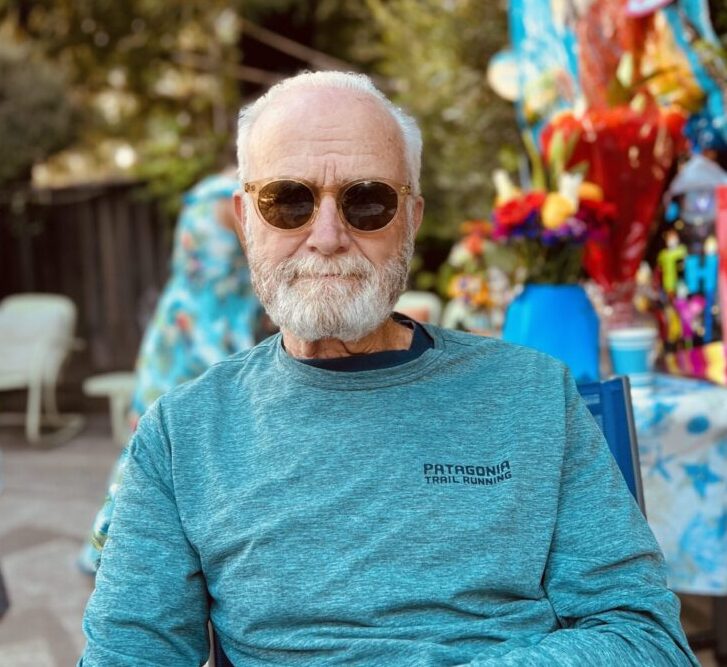
Jerry first learned about extraordinary performance and excellence as a nationally ranked competitive athlete sponsored by Nike, running world-class times from 5,000 meters to the marathon, setting an American record in the half-marathon, winning a National Championship, and many other races against athletes half his age.
He took what he learned about himself and life from his competitive days and parlayed it into a dynamic successful career helping athletes and coaches in all sports to use his performance and leadership strategies to up their game and discover the best version of themselves.
Dr. Lynch has been recognized as one of the top five in his profession nationwide. He has worked with teams, coaches, and athletes in the NBA, Pro Lacrosse, Major League Soccer, with men’s and women’s basketball, lacrosse, soccer, tennis, golf, and other sports at the universities of North Carolina, Duke, Maryland, California, Syracuse, Stanford, Harvard, and Middlebury.
Dr. Lynch is the author of 17 books in over 10 languages and the founder and director of WAY OF CHAMPIONS, a human potential and performance consulting group helping others master the deeper inner game for sports, business, and life. Jerry is a dynamic, entertaining, inspirational, provocative, and humorous teacher and speaker with topics on leadership, coaching, team culture building, winning the relationship game, and core value development.
His profound insights into the inner workings of the human mind and the dynamics of excellence have propelled countless individuals to overcome obstacles, harness their strengths, and achieve unparalleled success.
With a unique blend of wisdom, experience, and compassion, Dr. Jerry Lynch has become a trusted mentor and guide, empowering individuals to cultivate resilience, embrace authenticity, and tap into their innate capabilities. His work continues to inspire and elevate the lives of those who seek to reach new heights of achievement and fulfillment.
What you’ll learn in this episode:
Additional Resources:
Welcome to the Athletics of Business, a podcast about how the traits and behaviors of elite athletes and remarkable business leaders frequently intersect. The real stories and hard lessons to help you level up your leadership and performance. Now your host, Ed Molitor.
Welcome back to another episode of the Athletics of Business podcast. I am your host and CEO of the Molitor group, Ed Molitor. Today's special guest is no stranger to the podcast, as he appeared with our good friend John O'Sullivan on episode number 176. And today we have Dr. Jerry lynch all to ourselves, and we are going to do a deep dive into his amazing new book, the mindful coach leading with intention, instinct, influence, inspiration and insight. Now, in case you haven't listened to episode number 176 yet, or you need me to jog your memory, kind of rattle your brain a little bit, let me tell you a little bit about Jerry. Jerry is one of the top five in his profession nationwide.
He has worked with teams, coaches and athletes in, now get this, the NBA, pro lacrosse, Major League Soccer, men's and women's basketball, lacrosse, soccer, tennis, golf and other sports at the universities of North Carolina, Duke, Maryland, California, Syracuse, Stanford, Harvard, Middlebury. He is a significant piece to the puzzle of hundreds of championships. And as you listen to Jerry, you'll realize he deflects any credit that he should receive. He is so passionate about what he does. And he wrote this book, the mindful Coach. I absolutely love it. He wrote this book because he wants to change the status quo of leadership and coaching and think about this in a business aspect. Wants to change the status quo of leadership and coaching to a more transformative, guiding servant leader model, replacing the obsolete, antiquated model of being transactional.
Jerry dives into and uses time honored strategies enabling all leaders to be more connective, caring, loving, compassionate, while demanding from others what is needed to take it to higher levels. And we talk about that all the time on this podcast, do we not? That doing things the right way for the right reasons and raising the level of performance are not mutually exclusive in the mindful coach, all leaders and coaches will become more aware of the power of their influence, positive influence, to have a say in the outcomes and to facilitate growth in a safe environment. Where failure is a teacher, opponents are partners, and results are the reflection of how selfless and giving we are being. Outcomes. We are so focused on outcomes.
So let me just get out of your way so you can listen to this amazing conversation, but let me share a couple of the outcomes that you will have. After reading the book and after listening to this podcast episode. Becoming aware of the power of your influence to affect positive change in the culture. Creation of a safe learning environment for maximum personal performance growth. Increased loyalty, a word we do not talk about enough, nor do we talk enough about how to properly foster that loyalty. Increased loyalty, trust, belief and optimism, greater happiness, fun and heightened inspiration. Stronger and more focused performance, and becoming a better version of ourselves with a greater self awareness. So I'm going to get out of the way, turn this over to the conversation with Dr.
Jerry lynch, and I hope you enjoy listening to it half as much as I did recording. Jerry, thank you so much again for joining us today on the Athletics of Business podcast. Now, this is going to be an understatement, but it is an absolute honor to have you back on our show to talk more about and pick up where we left off on episode 176 when were joined by our great friend, John O'Sullivan.
Yeah, well, let's clarify that honor thing, because those who are listening to us don't realize that what you're talking about is it's an honor for me to be here to discuss things that are so relevant to the work you do with the athletics of business and the work I do. And I knew when I first met you that we've got to continue this conversation somehow, and you made it happen. So what a thrill for me.
Well, let's dive into our conversation, because I love your energy and I love your gratitude, and I absolutely embrace what you are doing with your book, the mindful coach. And where are you going?
You've had.
Now, is this your 15th or 16th book?
Okay, so it's my 17th book.
17Th book was my next guest. I apologize about that.
Okay. All right. You were getting close. You're going in the right direction.
Yeah, I apologize about that. But I have read a handful of your books in the past. Amazing work. And then the mindful coach comes out, and it speaks to exactly what we do here at the monitor group on a daily basis, where we're making the coaching and the subtitle. I absolutely love leading with intention, instinct, influence, inspiration and insight. Where does this come from?
It covers it all, doesn't it?
It does, absolutely. Where did this come from?
Where does the title come from? Or where does that concept?
Where does the concept, the book, the evolution of what a coach and being a coach really is?
Well, it just needed to be written. What I do is I look at what's needed out there, and I try to fulfill the gap. And I've written a number of books on leadership and coaching. And performance. But I've never written this one. This is different. I talk about coaching with heart, which is really an important piece or creative. Coaching is another book that I've written. But this particular book I just realized to be a good leader, you've got to go inside. There's no way that you can go to work every day and do the same old without looking at your own personal development. To be a good leader, you have to be a good examiner of not others, but of yourself.
You've got to know who you are and embrace the natural self that you are, because there's such a power in simply being you. And that's why I love being here with you, Ed. I mean, you are you. And when I'm here on this podcast show with mean, if I'm not me, then why do you want me here? And the athletes feel the same way, and the co workers in the organization feel the same way. In business, they want you to be know. When I was talking to Steve Kerr, coach of the warriors, he said to me, one of the most important things that we all need to know is let's just be who we are. And a client comes to me and says, jerry, I want you to make me like Steve Kerr.
And I said, I can't do can't, and I don't want to. I can make you more of who you are, maybe using some of the strategies and techniques that Steve uses. So back to your original point here. Why? When? What? It's just a natural outcropping of the work that I've been doing. When I wrote win the day, which was about coaching to some degree, but it was about building and sustaining healthy championship cultures, the thing that I really left out that's most important is we need to take a deep dive into ourself before this is going to happen. It's not about the X's and O's. It's about the relationship game with others. But the most important relationship game will ever win is the relationship with ourself.
Can we talk into that a little bit more? Because you said something to me before we started recording this conversation that resonated with me so much where you said, and you've had this amazing career, and we talked a lot about it in the introduction, you've had this amazing career, yet you said, for years, I've still been trying to remove the mask. For years, I've still been trying to be my authentic self, my real self. Can you talk about that a little bit?
Oh, I could talk about that for at least an hour. I mean, gosh.
Well, we've got time.
Okay. So thank you, first of all, for asking that and picking up on that, because that's probably one of the most important aspects of becoming the mindful coach. For me to be mindful, it's not about being mindful about you. It's about being mindful about me. Who am I? What am I doing? Why am I doing it? I'm not doing my work to make a living. I'm doing my work to make a difference. And if I'm not making a difference, there's no coaching, no making a difference, no coaching. And so this concept of taking the mask off, I thought about, oh, I would say 30 years ago. So part of the reason I'm still working. Yeah, I want to make a difference. There's no question. But kind of selfishly, Ed, I want to master my craft.
I want to be the best version of myself before I help other people become the best version of themselves. I want to feel what that's like. You can talk to athletes about doing a triathlon or playing a championship basketball game, but unless you're in the arena yourself, you don't have a clue as to what it feels like. So I'm trying to master my craft, and what I realized a long time ago is that when I'm invited to give a keynote talk and they put me behind a lectern, and I have notes up there, which is my script, and I have my PowerPoints up there, which is another script, which really detracts people from looking at me. I get them all looking at PowerPoints. They don't have to look at me and my nervousness.
That's a veteran right there, boy.
There we go. Right? So what we need to know is that we all carry a mask. I show up at this conference, the first thing people know about me before I walk in is here comes Dr. Lynch. I'm going to say this. It doesn't impact me at all. Here's Dr. Lynch. He's had 100 and plus 18, whatever, national championship teams he's worked with, these iconic coaches, he's written this many books, blah, blah and all that stuff. What does that do to you when you hear that? Does that make us connect or does it separate us?
It separates us. Right?
So I became aware that when I'm standing up on that stage behind electern, that I'm being protected because I'm afraid of you. Really? Knowing who I am. I have to start with knowing who I am. Ask who am I and then embrace who I am and know that the more I am who I am, the more powerful my work will be with you to become who you are. And when you feel that, when I walk in a room and you feel that I am you and you or I, and we're together, we're human beings, not human doings, and that I don't have to connect with my professional head, but I can connect with my human heart. That's great, extraordinary coaching, and that's mindful coaching. So when I realized that 30 years ago, I realized I have to start doing this.
So you go through your trials and tribulations. Sometimes I had to have that title to get in the door. Sometimes I had to prove that I could do this to get in the door and to be accepted. But really, I noticed once I started dropping the mask, the work was so much more genuine, so much more authentic, because it was coupled with the message itself. Being mindful is being mindful about what we're doing here. But really being mindful is I need to remind myself when I'm with Ed, just be yourself, be who you are. And that's what's going to make this thing sing.
What happens? Because we've all been there as leaders and performers, right? But what happens when we don't like what we see? What happens if we're not happy with our level of mindfulness? What happens when we're so busy being pushed by people above to chase numbers, to chase metrics, to chase championships, to chase records, to chase wins, and we don't like what we see.
Now what? Well, you have a number of choices. The first choice is get up and leave. I don't want to be in an environment where I'm feeling that people are measuring my self worth by the outcome. I can't walk into a room of 135 leaders and coaches and feel like if they don't like me, I'm failed. Because already I'm tense, tight and tentative, so I can't do my best work in that environment. So the first option is to leave. The second option, which is really difficult, which is to change the thinking of those people who are putting that kind of pressure on me or trying. You know, maybe I can talk with you, Eddie, and try to convince, you know, it's not about the outcome and results, it's about the relationship game.
And if I do a good job with that, maybe you can change, but that's not easy. Or I can change myself. The way I see it. The way I see it is, look, you know what they might be putting pressure on me, but I still have the choice, and I can control how I am, how I'm being. And if they don't like it, they can get rid of me at their pleasure, whatever they want to do. So this thing about the outcomes and results, I gave you three possible solutions, but you know what? None of those, to me, are viable. The solution to that problem is a deeper dive into who you are and to really embrace who you are.
And you do it by understanding your intention, how pure it might be, and to go about leading and understanding that only you have to understand this, that only by being who you are will people follow you. People will not follow people who are pretending, who are trying to be something they're not, and people are sensitive to that. You have to understand that people can read you. People will say they're not going to buy in. You get complete buy in when you're being who you are being yourself. So it's practice. I just told you it took 30 years. And let me add this addendum. 30 years is where I am now being myself, but I'm only halfway there. It doesn't mean my mask is only halfway off. It means it's 98% off after 30 years.
But I have 2% to go, and that 2% left might take another 30 years. And someone's sitting out there listening to us saying, well, what the heck is that so important? It's important because I want to make a difference, and it feels really good. The payoff is not what Ed Molita thinks. The payoff is how Jerry feels about himself, and it really feels good to like yourself.
That whole liking yourself and being comfortable with yourself, it opens up. It allows you to be free in how you lead. There's a level of self confidence in how you're doing things because you know you're doing them the right way, and you know you're doing them for the right reasons. And if you make mistakes, it's okay, because you develop the sense of trust with not only yourself, but with the people you lead. One of the things Steve Kerr said in the book, which I found so awesome and so fascinating, yet so simple, is the mindful coach is about a coaching revolution, right? It's not just an evolution. It's this transformational movement that we are on. We are on in the athletic world. We are on in the business world.
I think it's slower to come to fruition in the business world than it is in the athletic world. But can you talk about what that revolution is and what that evolution is in the role of a high impact coaching leader.
Okay. Yeah, I can, and I'm going to say this, a lot of what you and I are talking about in terms of this evolution revolution, and I do see my work as a movement and I'm way ahead of the game in many ways and I'll allude to that in a minute. I got so many thoughts that you're generating inside my heart right now. And I feel like these thoughts and these ideas have been around for 2000 plus years. The first book I ever read on leadership is 2500 years old. It's called the Tao de Jing. That's taoteching and it's ancient chinese book of leadership. They were talking about servant leadership back then and all of a sudden today, oh, have you heard about servant leadership? Yeah.
When I introduced these concepts, I had a lot of pushback and then I would unpack the concept and what people realize is, oh, that's what I really do want. Right. So we crave this model of trans, it's called transformational leadership as opposed to transactional leadership. We crave it. We want it. Who doesn't want to feel important, valued, empowered, respected, revered? Who doesn't raise your hand if you don't want to feel that way? Well, you're not going to get anybody to put their hand up because why? We all want to feel that way. And how do you get to feel that way when you have a leader who establishes strength with the relationship game and makes that relationship stronger? Because with good relationships come amazing things. Now, I read an article, I'm just going to digress for a minute.
Ed, if you give me that freedom here, and if you don't, that's okay.
You have all the freedom that you want. You know this.
I'm going to go for it. And then you stop me when it.
Gets a little bit. There's no stopping you.
Okay. So I read an article in Forbes, actually, it was on forbes.com and I read it yesterday and I sent it to several leaders who are really, and Steve was one of them. What they're talking about is, oh, now we have this option. We can bring mindful leadership to the table and create people who, it's not a top to bottom structure. It's cooperative, it's collaborative, it's compassionate, it's caring, it's connection, it's all of these wonderful things. And once you have this kind of relationship, this article was saying, boy, you're going to really notice how the workers in the environment are going to work more, work harder they'll be on board, they'll do what you want, they'll go the distance on and on. And I'm saying, yeah, this is what we've been teaching for 30 years. However, the time is right now. People are ready.
The Chinese say when the student is ready, the teacher appears. There's been teachers here for 2500 years, just weren't ready. And now the business world, corporate world is realizing what we've known intuitively for years, which science is now proving. And that is we need a change. We need a sea change, something that ignites the passion and the drive and allows people to feel like they count, like they're important, like they're valued. And when you feel that way, you don't leave a job, it feels too good. And so the mindful coach, we have one whole section in there called the servant leader. One whole section. And then we have a whole section where there are 99 questions, kind of 99 bottles of beer on the wall. I don't know where I got that from, but I wanted 99, not 100.
Yeah, so I have 99 questions. Ed, if you and I go through that and we answer all the questions, the conversation we have will be very different than we would if we hadn't read those. And why? Because they're transformative, not transactional. And the transformation takes place as you answer the questions. So what I'm trying to help coaches and leaders with is let's take the steps, let's take this journey together. It's an endless journey. It will go on forever. I'm only halfway there is what I tell people. I'm still on the journey to get that last 2%. Will I get it? Probably not, because it's just so much more I'm aware of that. I need to be able to execute in my delivery, in my leading, in my coaching. I want to be the best coach I can be.
And 59 years ago was the start of my career, coaching and teaching. And when I look back there and I see the growth, that's what I'm talking about, 98% growth. But I know the last 2% is going to be very challenging. So this book is really a guidebook. It'll guide you into being the mindful coach. You don't have to become the mindful coach. You can start being one right now and become more aware of the power of your influence. You want to affect change, be aware of the power of your influence. Creating safe learning environments where people are enthusiastic and people feel valued and increase loyalty and trust and optimism. There's greater happiness you become better versions of yourselves and it's overall, and you have found this in your work. I know you have ed.
Overall, you're going to have a higher purpose and higher meaning. And as I tell people, I don't have a job and I don't have a career, really what I do have is a calling to make that difference in the lives of people. And that's the joy that I experience day to day.
It's simple and that's conveyed in everything you do. Even the simple emails that you'll send. I love receiving them. When we're just catching up or when we're just trying to figure out when we can schedule a call or schedule this podcast. The little things that you do and that you say just convey everything that you just said. Now, I want to pick this up because we talk about the trust, we talk about the loyalty, we talk about the joy, but I don't want to miss a big important piece to this. You're an incredibly competitive individual. You had one heck of an athletic career. You work with some of the best at all levels of sport. This is not to be mistaken, that this translates into a softer, easier world. There is still a ton of focus on competitiveness, on mental toughness, on physical toughness.
Can you talk about how all of this goes hand in hand? Because I work with some people that, I mean, their drive is off the charts. I mean, former college athletes, former pro athletes, they still have that competitive nature and the numbers still mean something to them. But being a transformational leader, a servant leader means more to them. But we all have that edge, right? That little chip on our shoulder, just that inner drive again, can you talk into that, how those combine, how being a mindful coach can still pull out the mental toughness in people, you can still create a psychologically safe environment that people thrive in.
Yeah, you're hitting it right on the head. That's a brilliant question. I am competitive and I like it because what I'm doing is I'm becoming a better version of myself through competition. I see the people doing the work out there and I ask myself, how can I better than that? How can I do a better job? You probably do the same with your business and I find the ways and then I go ahead and do it. However, the key ingredient when you're working with people like, let's say in your business, you have like 25 people and they're all striving to compete to better version themselves, which is really cool and a lot of them to better than their competitors. Well, guess what?
That's not going to happen unless we have the mindful leader creating a safe environment where failure is understood to be our greatest teacher. Now, there's a concept. 2500 years ago in that leadership book, I referenced you to the Dow de Jing. It said this, and I quote, we lose yet in this way. Win. OMG. Wow. Wait a minute. Hold on. Stay with me. 2500 years ago? Yeah. Now people are telling me that failure is our greatest teacher. Like, duh. I mean, really, it really is. To compete and to be mentally tough. Your chances of success are greatly enhanced if the environment is conducive to allowing you to fail as a coach. As a leader, you have to communicate to your workers, to your athletes, to your group of people.
I don't care whether you're leading a church group or you're leading a platoon of fighters in war. It doesn't matter. When you're in that position, no one's going to go the distance. No one's going to get the best out of themselves, and they're going to feel unsafe. But the mental toughness is not a gimmick. It's not like, look, I'm a sports psychology. I can teach you techniques that people are using to strengthen the mental toughness of people. But I have never met an athlete tougher than an athlete, who's in a safe environment, who understands that the leaders will accept the failure provided you turn on that dime and you make the corrections and you go forward saying to yourself, I'm a better person, I'm a better worker because of that failure than I were before that failure.
It's like a team on a Monday morning after a Saturday afternoon loss, I walk in the locker room and the coach says to me, jerry, do you have anything to say to the team before I talk to them? My first answer is yes. And let me just say this. Let's all discuss this question. Why are we a better team? Because of that loss on Saturday, and once we identify that we are a better team. So mental toughness is all related to the mindful coach. The mindful coach creates this amazing environment that's safe. Can you fail? Yes. Do you want to? Not really. But understand that my rejections in the publishing world and my failures on the race course, on the track, my running was my sport, distance running as well.
My failures all taught me who I am today and make me able to speak with you like I'm speaking with you, Ed now. Like 35 years ago, I couldn't do that I would speak with you, but it'd be very different. I've learned about myself in an environment that's safe. And by the way, for me, my environment is internal, so it's my head not judging that loss in the wrong way. The loss is really my power play. This is how I'm getting better. I'm learning from that loss. So back to your point. Mindful coach creates the environment that's safe. People feel like if they fail, they're going to learn from it. They're not going to get benched. They're not going to be dismissed. They're going to be still recognized in good ways.
They're going to feel important and valued, and what they're going to do is learn from that and go forward. That takes a lot of training on the part of a coach to understand. When I'm in an environment like that, you create that environment for me. Let's just talk about that for a second. You create a safe environment for me. I can screw up, fall flat on my face. I have no script. I don't have kinds of notes all over the place that I'm going to rely on. I don't even have my book here. Oh, my God, I should get my book. And Casey asked a question. But I'm mentally tough right now because I know I can't fail with you. I'm not going to fail. I might make a mistake, and I might have a setback, and I'll look at that and correct it.
And by the way, I've already made 13 of them, if you haven't noticed. I haven't. Okay? But there you go. Sometimes people don't even notice when you're screwing up, right? But anyway, having said that, in that environment, I am mentally tough. I go back in the arena. I'm not afraid to fail. I'll take the risk. I'll take the chance. I'll lead the fast break. I'll call an audible at the line. I'll try to throw the runner out at third base from center field. I'll do all these things because even if it doesn't turn out the way I would like it to, I'm going to be okay. That's mental toughness.
The mindful coach. I just recently completed my first half, Iron man. And leading up to it, everyone who has done them before is like, what's your goal for the swim? Like, what time do you want to get out of the water? What's your transition? What's your bike? What's the clip? And I said, listen, I said, I have my numbers, like, what I'd like to do knowing based on my training, but that's not what I'm. I'm treating this one as. It's my first one, and it's going to be a learning experience, and I'm going to learn from every single thing that happens, from how I had made adjustments in the swim, what I did in the transition area, when I took my nutrition on the bike, how I took my fluids, everything. I'm going to learn from all of that.
And I'm going to tell you what. When I got back to the office, I had a couple of coaching calls that week, and I approached, and I had a call. We were closing a significant deal. And I approached each one like a learning experience. The agility that provided me, the flexibility that provided me in the moment, the freedom it provided me freedom and access to the best version of myself. I mean, that has to show up so much in a mindful coach if they treat it like it is a learning experience, just like you do every single day with the 2% remaining of your mask. Can you talk into that a little bit how significant that is?
You just answered it. You're a perfect example. You could have gone into that listening to all the messages, oh, I'm too old. I'm not good enough. I'm not fast enough. What if I don't mate? What if the swim, I'm like, blah, blah, on and on. We have all these thoughts coming into our head, but the thoughts are based on fear. You got to realize those negative thoughts are all based on fear. What if the what if factor is like, not what if. What if I set a world record? You'd never think that way. What if the what if is, what if I collapse? What if I look like a fool? What if I drown? Whatever. Worst case scenario, it's all based on fear. And of course, fear is a wonderful acronym. I once saw it stood for false evidence appearing real.
And that's not a significant statement. What is significant is that your ability at that moment to redirect the negative fear into positive proactive behaviors is the key to success, not whether you hit the time. I mean, you could hit the time. I've hit times but have terrible races. I've hit the times, and the race was terrible. Yeah, but I've also not hit the times and had the best races of my life and learned so much. So it's a learning experience. Going into business, going into a race, going into a competitive event, no matter where it is, in life. It's a learning experience.
So the mindful coach will take you on a journey, will allow you to feel free to create the environment that will really, ironically, make you the best version of yourself because you're doing what I consider the right things at this point in time. And it's a challenge, and you have to just understand that it doesn't happen overnight. You read a book like the mindful coach and all of a sudden you're not like, Tada, I'm so mindful, it's ridiculous. No, it's like, oh, I'm now aware of this. Let me implement that and I'll tell you in the book how to implement it. There are 30 plus virtues or values in that book. I define the value. I talk about my personal experience with that value. I have five quotes for each value.
And what's the purpose of all this material is to help you absorb that value and make it part of who you are. One of the values would be courage. To have courage. What is courage? Well, here it is defined. What does courage mean in the business world, in the athletic world? Here's what it means. Here's how it looks. What are some of the ideas behind this quotes that people, famous people have from sports and business, what they've said about what courage is all about. And the list goes on and on. It's selflessness, courage, patience, perseverance, tenacity, grit, all of these kind of values. So what I've done is I said, you know what? I now have to help coaches and leaders realize that this is an inside job. Your coaching brilliance is not measured by what you do out there.
What you do out there is a reflection of what you do in here. So the mindful coach, yes, we will be more mindful of others and the game itself. But the big takeaway is how much more mindful you will be inside of yourself and your behaviors. And that's when you have the greatest influence. That's when you have a say in the outcome. Raise your hand if you do not want to have a say in the outcome. Oh, so you all want to have a say in the outcome. You have to become more inner. You have to learn about yourself, who you are, what you can do, what your capability, and then go out and replicate that by being genuine and authentic and being vulnerable, too, which is what a lot of the great iconic leaders do in this world.
Coaches and CEOs, they're open to being know. Steve Kirk can go into the locker room, said, hey, guys, before we say another word, I just want you to know that this one's on me. I didn't prepare you well. That's my fault. We'll do a better job next time. Now, that's great coaching, but there's a little addendum to that, and that is we have to know our stuff. And if you know your stuff, then being vulnerable is not going to hurt you. In fact, it's going to make you look stronger and will give you more power.
Ironically, you've consistently beaten me to the punch on my next question this entire conversation, which I love.
No.
So I want to stay with Steve Kerr for a second because I wanted to jump in and ask you what makes him so unique and what makes him so special. But then you use the word courage. And I remember the first time that I became aware of Steve and aware of his story, and I was a high school player. And knowing what he went through with his father and knowing how he was treated on the road at Arizona State and knowing, getting to know his, know where he grew up, who was recruiting him and how he ended up at Arizona, I just immediately connected and followed him every step of the way.
And then watching the evolution, I mean, the mentors he had in Phil and coach pop, but yet he found a way to become his own mindful coach and have his own style and his own voice. What is it that makes Steve so special?
First of all, this is my opinion. Other people have other opinions about this, but I think most people would agree. Let me just digress a bit. I just finished this conference, our 7th annual conference in Denver, and we had amazing coaches there to talk. Steve Kerr was one of them, virtually. We had him virtually because he's with the US team now. They're doing some amazing stuff. So he didn't have the time. Phil Jackson's another one we had at the conference. And of course, Steve played for Phil. And you mentioned Arizona Lute Olsen. Now, Steve played for loot. You mentioned Greg Popovich. Popovich was a mentor to him. Still is. All these mentors were there for Steve and Steve's involvement. The number one quality is he's a lifelong learner like you. You don't do a podcast unless you want to be a lifelong learner.
You're learning every time you run one of these things. I'm learning when I do it in my podcast. And so we're lifelong learners and that's what Steve is. He's open. He has an openness. The mindful coach has an openness receptive to learning. And you're in charge. If this doesn't fit, you throw it away. If this fits, you bring it in and you hold on to it. So that's the number one ingredient. Number two is having had these mentors, he understood and learned really early. And this is a definite quality of Steve's is very authentic. When he's at my conference and he's talking for an hour and 15 minutes with John and I, virtually, it's like people are agape. I mean, their jaws are dropped because he's so real.
You think Steve Kerr, like, all of a sudden we're going to put him up on this pedestal? No, he's a human being. He's connecting with his heart and our heart. He's very authentic, very genuine. These are the qualities of a mindful leader, and he's very vulnerable. He has the quality of vulnerability. And I always like to make the statement, no vulnerability, no coaching, no vulnerability, no leading. You cannot lead without taking the responsibility for all your setbacks, mistakes, errors and failings. It creates respect on the part of others. They put you in a position of trust and they'll follow you because they know that you are a human being first. That's why I don't want to wear a mask. I mean, when I put a mask on, people think I'm this, like, oh, my God, right? Like, look at the resume.
No, what you need to do is see my life resume, who I am, and I, as a leader, need to be in touch with that. So Steve is in touch with that. He is extremely authentic, extremely genuine. And plus, the other thing he has is he's very grateful. And I have expression, and it says, from grateful to great, all the great leaders that I've studied and I continue to read about great leaders and what they do to become great. And that's how I get all this conversation going. He continues to be grateful for everything he has been given rather than think about the things he hasn't gotten. And a lot of people out there said, yeah, well, he's pretty. Wow. If I got Steph Curry and I got Clay Thompson and I got Karen Durant, I'd be blah, blah, blah.
No, those guys are around the league and they're not winning championships. He is grateful for everything he's been given, and you can feel that. And when people are grateful, they tend to give. And to me, not the last thing I'll say about Steve, but he's a giver. He's a just for me, he's written, I think it's three forwards in a busy life to write a forward means you really have to be in touch with the book, what it's about, and the person who's writing it. And Steve has agreed to writing those forwards for me, which I am like over the moon about and terribly grateful for. But the reason why he does things like that, he wouldn't do it to every single person that comes up to him. He wouldn't have the time.
But in his life, there are a lot more important people than Jerry lynch. For sure. I've had an impact on his life. I know I have. He tells me that, however, his gratefulness allows him to give like he gave to me, like it allows him to give to his teams, allows him to give to the organization, to his family. So being this leader, I think when you're authentic, genuine, grateful, vulnerable, inspiring, these are all the qualities of a Steve Kerr, as well as someone like aloud Olsen from Arizona and Phil Jackson and these other greats.
So as there are these young leaders, these emerging leaders in the athletic world, in the business world, what would your advice be to them, which you sort of just laid out there when you're talking about Steve, when you talk about his qualities, but what would your advice be? And we have an emerging leader coaching program along with the leader and role coaching program and an executive coaching program with those emerging leaders. We try to get them to be there before they get there.
Right.
And to understand what it takes and what it means. Not just what it takes, but what that stuff means and what it means to them and how they figure that out internally. Well, what would some of your just a couple of pieces of advice to those striving to move up to that leadership role?
Well, I think you hit the nail on the head again without even giving yourself credit for it. And that is, you've got to see it to believe it. You've got to feel it to believe it. People talk about visualization. Visualize the life that you want. I talk about feelingization, feel the life that you want. I mean, seriously, I go to bed at night if I have to get up in the morning, and I've got a three day conference going on, and I'm responsible for all this work. To be with these people. I've got to feel the person that I want to be five years from now. I have a goal right now, Ed. I want to feel, I absolutely want to feel what that will be like when that goal has already been achieved. So I'm living the future now. Living the future now.
I'm creating the future in a quantum field. And then what I'm doing is I'm wearing it by feeling how that will be now, as if it is really happening now. People say, well, that's setting yourself up for failure. And I'm saying, no, if you don't do that, you set yourself up for failure. What this does is this lays the foundational building blocks of the direction you're going to go. I'll get a little psychological with you right now. The central nervous system as we know it does not distinguish between what's real and what's imagined. So if you're imagining stuff that is negative and failing and not having fun, if you're imagining that, the central nervous system sends messages to all of your body, your expression, your enthusiasm, or lack of that's the way life is.
So you actually said this in your words, which is, we have to feel an eyes. We have to feel, this is where I want to go. This is how I want to be. This is the part of the mask that I want to get rid of. I want to bring the music in. You know what I'm talking about? We don't have to go into that. I want to bring that. In five years from now, I have a vision of how to really almost be completely mask free and to be my genuine, authentic self, teaching everything I've learned in these next five years, in addition to what I have learned, so that I can inspire people to go that route of feeling what it's like to genuinely be their natural self, that's when the best leadership will take place.
If you're wearing a leadership hat with a big L on it, people know what they got it, they'll get what you're being. But if you're being a human being, and that's what Steve Kerr is being when he's talking to the 15th guy on the bench, it's like he's the first guy on the bench. He feels like more important than anybody on that team, even though intellectually he knows he's not. But Steve is doing that, and he's doing it because he understands that you don't wear the leadership hat, you wear the relationship hat form relationships, and things will come to fruition as you wish.
But you've got to dream things that never were in your life, dream them in your mind, feel them, and that will guide you every step of the way each year or each month or each week to a place you want to be. Before I got on this show today, for those of you listening, I didn't just like, okay, showtime. Let's turn it on bomb blom. I actually got into the feeling of what it feels like to be with Ed Molitor. I know what that feeling was because I had it. Even if I didn't know, I would still imagine how I want to be with you, to be the best guest, the best person, the best version of myself. And so I have a roadmap. I follow that roadmap, and then what I do is I just let it fly.
I have no idea where I'm going to wind up, but I know where I am and I'm not lost. And so going forward, everyone out there, create your calling, create what will really feel good, and just say, what if that happened? Oh, wow, that feels good. Is there anything I can do today to get closer to that goal, that.
Place, and with respect to your time? Before I ask you the final question, you can have a brief answer to that. Where can folks find out more about you, about way of champions, about the book, the mindful coach.
Okay, so my website isn't up to date, but you can go to my website. It's not up to date having the latest two books on it, but that's okay. My website is wayofchampions.com, and I take personal messages at wayofchampions@gmail.com and all my information is on that. And any book that you have, I just put my information right out there on the book. So at the end of wayofchampions, you have my bio, but at the end of the bio, you have all the contact information that you need. Because I really crave feedback. I crave ideas and thoughts, and that's how I got to where I'm being. I'm a lifelong learner, and the wisdom with all the people listening to this is exponentially more than I ever will attain in this lifetime.
So I'm very open to learning ideas and helping people figure out what's the next step.
And we'll put all that information in our show notes, too. There'll be a direct link to purchase the mindful game, find out more about you. We'll have all that in our show notes. But quickly, being a mindful coach, what does that do to your resilience as a leader, to the culture's resilience that you are building, and to your team's resilience as they execute and grow closer together?
Resilience is a great word. It's not used often enough to me. Ed resilience. Once again, it's a byproduct. When are we going to realize mental strength is a byproduct. These are byproducts you don't go for. I'm not going to take you in and train you in resilience. But if I create the right environment by using the techniques, strategies and tools of the mindful coach, when I use those, I create a certain environment that feels free and open and ready to fly. That's resilience. When you see someone get back up, the reason they get back up is because they feel hope. They don't feel like fear. If you're afraid, you're not going to get back up, so you get up right away because you know that the environment is safe. It's okay to get knocked down. You get back up. Learn from that. Go forward.
So when you have the qualities of the mindful coach, quite simply, and you create the environment where work environment or your team environment, they can count on you. You're dependable, you're reliable, you're authentic, you're genuine, you're vulnerable. You're all of these qualities which you learn. Then what's going to happen is you'll have people who will be more willing to get up when they're knocked down. And that's what resilience to me is all about.
Jerry, that's a perfect way to wrap this up. I appreciate you so much. I have so much gratitude and I'm blessed that we have connected. I can't thank you enough for your time.
What an you. When you get to be a little know, you start to really appreciate that people are willing to listen to you.
Well, any day of the week, any time of the day, I will listen to you.
Yeah. Tomorrow morning I'll be available again. 08:00 let's jump on tomorrow.
Wonderful.
But thank you so much for this wonderful opportunity. And continue, please, to do the good work that you're doing. I love the name of your company. I've told you that before, the athletics of business, it's a double entendre, which means so much to me. So thank you so much for all the good you're doing. Ed.
Well, thank you, Jerry.
Thank you for listening to the athletics of business. Be sure to give us a rating and review so we know how we're doing. For more information about the show, visit theathleticsofbusiness.com. Now get out there. Think, act and execute at the highest level to unleash your greatness.