

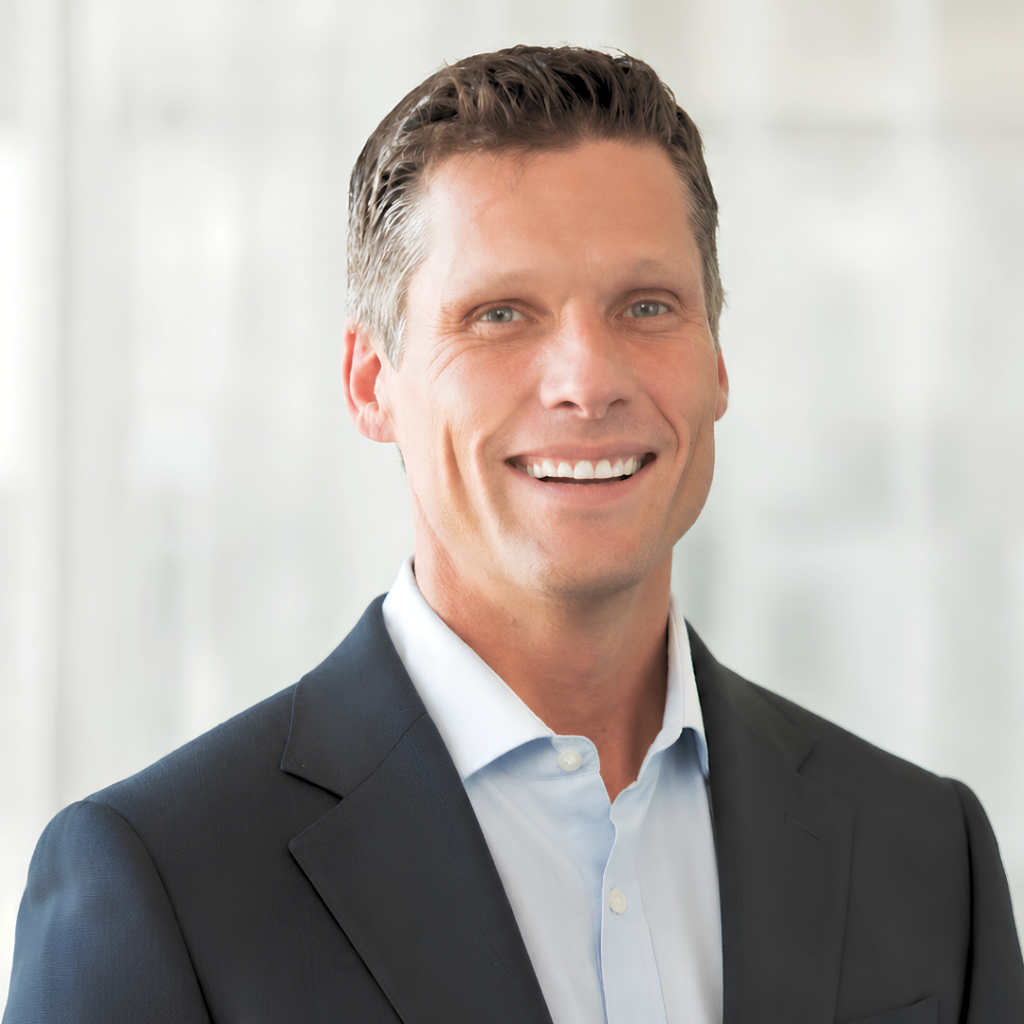
Jeff Schaffnit is the General Manager and Head of Rare Blood Disorders at Sanofi, where he leads work focused on serving patients and families impacted by rare blood disorders.
With more than 20 years of experience in the pharmaceutical industry, Jeff is known for his ability to build and inspire high-performing teams, design effective commercial organizations, and translate complex challenges into clear, pragmatic strategies that deliver results. His leadership approach combines a strong strategic lens with disciplined execution, enabling teams to perform in dynamic and highly regulated environments.
His connection to this work is deeply personal. Jeff’s son, Carter, was born with severe hemophilia, an experience that helped shape Jeff’s career and continues to influence the way he leads. For Jeff, the mission is not abstract. It is about helping patients live fuller lives and building teams that understand the responsibility and privilege of serving them.
At his core, Jeff believes that performance is built through people. Through clarity, alignment, trust, and a shared commitment to purpose. And ultimately, the true measure of success is the impact that work has on patients’ lives.
Jeff holds an MBA from the Northwestern University Kellogg School of Management and a Bachelor of Science in Chemical Engineering from the University of Illinois Urbana-Champaign.
Jeff Schaffnit
Ed Molitor
At the end of the day, the most important job you have is the team and developing that team. I believe that it's going to be humanity first and AI second, particularly in rare disease. I think that's crap. You have to have both.
What's the advice that you would give that other, that young you?
You know, these things didn't happen overnight for me.
So allowing people to fail and help coach them through that, that's the only way they're going to get better.
Every team says they want to win, but winning takes more than just stockpiling talent. It takes trust, discipline, hard conversations, and leaders who know how to coach people through pressure. I'm Ed Molitor, and this is The Athletics of Business, where the lessons of high-performing teams, elite athletes, and high-impact coaches become the playbook for more impactful leadership, stronger cultures, and sustained success Jeff, thank you so [00:01:00] much for joining us today on The Athletics and Business Podcast.
I can't thank you enough 'cause I know how crazy your world is, how busy it is, and for you to carve out time to add some value to our listener today, I, I greatly appreciate that.
Yeah, thanks, Ed.
Yeah. So, you know, obviously in the introduction I, I teed you up about the amazing journey that you've had in, in your industry, right?
Yeah. What got you here? Like, what is it that gets you... We spend so much time as leaders, what keeps us up at night? But I like to focus on what is it that gets you out of bed every single morning? Yeah. Like, can you direct your attention there? Tell us a little bit about your world.
A- absolutely. So I've spent the last 20-plus years in the pharmaceutical industry, and we often say it's the best industry in the world.
It doesn't always get the best reputation, and, but the reason why I say it's the best industry in the world is you get to work with patients. You get to change patients' lives. You get to have this sense of purpose that you can't really get with very many, you know, in very many industries with very many careers.
It's just this, this higher sense of purpose that it drives me to get out of bed in the morning, but certainly it makes me [00:02:00] feel like every day I'm not even working. You, you always hear the, the adage that, you know, if you love what you do, you don't work a day in your life. I mean, certainly we work hard, but to be able to work with patients, to change patients' lives, that has meaning.
Yeah. Can you get specific about what you do in the rare disease space- Absolutely ... and how that has both personal purpose to you as well as business purpose?
I mentioned I've been in the pharmaceutical industry for over, over 20 years. What drove me into the industry was I have a son with hemophilia.
He's got severe hemophilia. He's 26 now. We have no family history. In hemophilia, about two-thirds of the patients have a family history. The other third is sort of a spontaneous diagnosis. And Carter has severe hemophilia A, which means his blood doesn't clot. He has to take a medicine to get his blood to clot.
And, you know, when you think about hemophilia, it's not, "I'm gonna bleed to death through a cut," it's, "I have internal bleeding in my knees, in my elbows." So it tends to affect joints more than anything else. And if these aren't treated, individuals will be [00:03:00] crippled by the time they're in their teens. And so for me, I set out very early after Carter was born to say That's not gonna happen to me.
It's gonna be very different for Carter. The treatments are out there. You know, you give preventative treatment for hemophilia, and this, for the most part, keeps the bleeding from happening and lets him live a, a fairly normal life. And Carter's been fortunate enough to be able to play organized sports his entire life.
He was very involved in soccer, baseball, basketball, volleyball growing up. He played soccer and volleyball throughout high school, and then he played volleyball in college. And this is, it's certainly not typical for every hemophilia patient, but there are lots of stories like Carter today. And for me to be able to lead a team that produces, sells, and educates patients around hemophilia products, it's truly the, the best job in the world.
And it, it's gotta make the story that you tell the people that you work with and y- you know, that work alongside- Yeah ... it's gotta make your story that much more powerful.
Absolutely. I [00:04:00] mean, I lead the entire US team, so for me, having that person who's leading have that personal connection's important, but it doesn't stop with me.
We have over 30 people on my team who have personal connections into the hemophilia community and other bleeding disorders. That's our North Star. I mean, that is what drives us. And then those that don't have that personal connection, once they work in this area, in this rare space, it changes their life.
They're literally never the same again. They nev- they never wanna leave this part of the industry because it is so unique and so special.
Yeah. I can only imagine, like, how often do you guys talk about that? Like, how often when you're struggling or things are... Is that the anchor too, not just your North Star, but is that the anchor?
Like, is that the thing that keeps you guys going?
Yeah, I mean, we talk about it. Every single meeting, we talk about patient stories. We're always bringing patient stories, and not just among ourselves, but also any meeting we have with our senior leadership, with our CEO. I mean, we are bringing these patient stories because stories are what matters.
That's what tells the truth about what we do. It's [00:05:00] the raw truth. And in fact, today, you know, we just started a hemophilia film festival that we're doing. We partnered with a company. We produced four different documentary films, and today we showed the first one at, at lunchtime called On the Shoulders of Giants, and this was about individuals in, you know, with hemophilia, the older generation.
And this was a generation of individuals who went through the HIV crisis with tainted blood products that hemophilia patients used to take. And what they really talk about is how much this industry has changed because of technology, because of advancements, and they were proud to be able to make this happen as, you know, trailblazers in hemophilia.
How much have you seen it evolve over the years? I mean, even going back to when your, your son was diagnosed, right? How much advancement has there actually been?
I mean, a ton of advancement, not just in how patients are treated, but the products that are available. I guess just to put perspective on it, a hemophilia patient a hundred years ago probably doesn't live past twelve or thirteen.
Wow. [00:06:00]
You know, fifty years ago, you know, they may be living into their early twenties, and those that were born, you know, forty years ago, a lot of them had HIV and, and passed away, unfortunately. And now patients are living full lives. And they, you know, instead of, they used to have to take product intravenously every other day.
Now patients are treating once a week, sometimes once a month. There's even products now once every two months, subcutaneous, just a shot. This is really what's ev- evolved in this marketplace and, and ultimately, it's only helping patients.
You know, we talked a little bit earlier before we started recording the podcast about the potential of AI in your industry- Yeah
and in your space, right? How do you see that playing out? It's such a significant piece to our future, our present, but our future, but there's so much unknown. Yeah. How do you see that playing out?
Yeah. So much unknown. And, and- Yeah ... a day doesn't go by where we're not using AI for something. You know, ultimately, it's going to, and it's starting to change healthcare, how healthcare is delivered, how we communicate with our customers, with [00:07:00] physicians, with patients, how we improve efficiencies.
It's gonna play in all parts of our, of our business. But what's not gonna change is the human nature of what we do. I mean, it is truly a human calling, a personal touch. I believe that it's going to be humanity first and AI second, particularly in rare disease. And ultimately, the companies and the people who can do it better can have a competitive advantage in that, that humanity piece.
Those are the ones who are gonna win.
You know, it's funny you talk about the human touch, and you are well known in the industry for Developing, putting together, developing, further developing and growing high-performing teams,
right? Yeah.
Like, your culture is second to none, and I've been fortunate to work with some of your folks and get to know.
I mean, your culture's unbelievable. Tell me what that means to you. Tell me where that comes from.
Yeah. I take personal pride in anywhere I've been in my career to build a strong culture. It doesn't happen overnight. You know, sometimes you move into a new area, and you say, "Got some work to do here," um, whether you're on a, a team or whether you're a large organization.
I think [00:08:00] it starts first with your leadership team. You gotta get the right people on your, your senior leadership team, which I've been able and fortunate to do. When I hire people, you know, I think about three things. You have the heart, the mind, and the body. The heart is where you have to look first.
This is, is this somebody who can put the patient first, can have passion around the patient? And if they don't have that, literally they're, they're off the table right, right away. Yeah. We think about the head. This is somebody who can think strategically, can think about change and innovation. And then the body's just, is this someone who can execute and, and collaborate with others?
And so that's how I look at when I build a team. But ultimately, our culture is built on a couple of key tenets. One is putting patient first, and two is collaboration, so working together as a, a cross-functional team. This is not an individual sport when you're, when you're selling pharmaceuticals. It is a team sport, and there are lots of different players and functions that, that play a role And then, you know, ultimately you want to have a team that is, that wants to win [00:09:00] and grow.
You know, they have to be accountable. They wanna win and grow. You put those pieces together and you, you know, continue to put the patient at the forefront, and the culture just continues to build.
You talk about it being a team sport, and it's interesting with some of the other conversations I've had this week, and one of the questions I've been asking is, A, what are the things, what are the behaviors, the traits that great teammates have?
Okay, because you're in a... Hey, listen, you're in an industry a lot like athletics where- Mm ... there's some high performers that have egos, and I'm not saying in an unhealthy way. Like, that's just what they do. That's who they are. Leave me alone. I need to perform.
Yeah.
They still need to be a teammate. They still need to go beyond coexisting and still have to serve.
Yeah. What are the traits and behaviors of great teammates? And the second piece of that, if you could talk about how that's evolved over time, because we're not old, but we're- Mm ... experienced and we're older. You've been in the business for a while. How has that changed, and then how do you get your leadership to adjust to that?
I think one of the things great teams do is, and great teammates, is they put the team first. [00:10:00] These teams that I have under me, you know, they're consisting of sales and patient educators and medical affairs, market access, reimbursement. I mean, these are lots of different functions. Everybody plays a role and, you know, we're in a, we're in an industry that's regulated by compliance rules and regulations, and so, you know, this is why you have a lot of different teammates, and they put the team first.
They say, "What, what's the best thing for the team? What's the best thing for the patient? Maybe I'm not the one that goes in. Maybe it's somebody else." And you put your, your ego aside, and you're willing to do anything for the team first before... And not thinking about Individual glory. The other thing you have to do is you have to reward the team.
You have to put metrics in place and accountability in place that has some shared, you know, shared accountability for success. If you don't have that, you're just gonna have a bunch of silos and lone wolves.
How do you deal with the silo piece?
One, you call it out. Good teams do is they, they call it out themselves.
Yeah.
In a group setting. They'll say, you know, "So and so, we're noticing you're only, [00:11:00] you're only thinking about your own metrics or your own... What can we do to work better together?" If that doesn't work, then, you know, you give them coaching and development. If that doesn't work, you move them out.
We talk about building a culture worth fighting for, right?
Mm-hmm. And then you protect the front door, you're protecting the culture. But I mean, I can remember as a college basketball coach, two of the biggest ways I judged whether a kid would fit in- Mm-hmm ... is a, how did he treat the people that had... on campus that had nothing to do with the success that he had?
Would he hold the door for people he didn't know, right? How did he treat- Yeah ... the lady in the cafeteria that was serving his food that he didn't know from Adam? Second one was I'd ask our guys, "What did you think of him? What was it like? Like what'd you... When you hung, what were the conversations that you had?"
How have you seen that play out over the years with building this team that absolutely protects what they have, and not necessarily always from the outside, but sometimes you need to do that internally as well.
Yeah, yeah, yeah. I mean, I love the, the analogy to sports 'cause I think it's very appropriate here.
You know, some- let's say someone's in sales, one way to [00:12:00] judge, are they treating people in the offices they go to with, with respect and dignity? Of course, they wanna get in, they wanna talk to a physician 'cause that's who's gonna prescribe your product, but how do they treat the nurses? How do they treat the office manager, the receptionist?
Sometimes when I go in the field with our team, I see that, you know? I see the people who have those relationships. And then how are they actually treating their teammates? And again, that's the analog to the team sports. When there's issues with it, again, I think it's just calling that out and making sure people know what good looks like.
What are some of the things over the years that you've done 'cause of culture, I mean, there's so many different definitions of it, right? Yeah. I love, I love Daniel Coyle's set of living relationships working toward a shared goal. It's not something you are, it's something you do.
Yeah.
Okay. So what are some of the things you've had conversations where you've brought that culture to life- Yeah
on a daily basis?
Well, I'll mention a few of them. I mentioned before, patient stories. We're always bringing patient stories. Outside, inside stories. I've told my story [00:13:00] before. I think that provides that purpose. The second thing is making sure that new people to the team get a good onboarding. That's really important.
So we actually, we take extra care with our new people. They, you know, we put them in a, we call it a year one program. They're given a mentor. I meet with every single new employee. Doesn't matter who they are, I meet with them, get to know them, introduce them to the team, they get to know a little bit about them, about their family, 'cause that, I think that's important.
And then the other thing is I make sure that everyone is included in all of our communications, the critical communications. So, you know, with any, any organization you have organizational structure. I don't like organizational structure. It's there because it's a, it's an org chart, it needs to be in the system, whatever.
At the end of the day, if I have somebody who's my analytics lead or finance lead or communications, or they work in medical, if they touch my business, they're part of my team. It doesn't matter where they're at, they're part of the team, and they're part of, in, in my business, what we call our, our Rare Blood [00:14:00] family.
Yeah. Have you ever read the book, I believe we had this conversation, so forgive me, Legacy. You don't like to read, but Legacy, we talked about it, right?
Yeah. Okay. I have not read it, but maybe
I will. Okay. Amazing book. There's so much to it. There's a, a term in there they use in New Zealand, and it's, uh, I'll screw it up here.
It's whanau. Okay? So... And what it means is our family though, but it's everybody, right? It's similar to the Seahawks. They're, what is it, 12 and one. Yeah. Right? Like, every person that touches the team. It's not just the players, it's not just the coaches. Yeah. It's the support staff, it's the fans, it's the strength coaches.
It's ev- Yeah ... it's everybody that touches that. Do you find, and sometimes I ask questions that I hope I already know the answer to, but do you find that the ability to create that bond and that tightness of people that even though they don't fall underneath you in the org chart- Yeah ... but they do touch your business, that they self-select into fighting harder for your people and the customers that you're serving?
Oh, for sure. If you think about large organizations and maybe people who are further from- [00:15:00] the patient further from the purpose, you know, again, could be finance, it could be analytics. The closer you pull them in, the closer they're gonna fight for that. They're gonna fight to stay on your business.
They're gonna fight for great outcomes. We call it purpose-driven performance. Oftentimes people think you can be an organization where maybe you have purpose, like we fight for the patient or our purpose is, you know, this, but if we have purpose and we're empathetic to people and patients, we can't really be a, a strong performer and grow.
Yeah.
I think that's crap. That you have to have both.
Yeah. It's so powerful when you really think about it. It seems so simple on the surface, but yet when you see it in action, it's incredible. You know, along those lines, it's somewhere along the way when we're in it right now, right? When we're in it, we reflect back on a time we're in a similar situation, and it allows us to make better decisions now.
Was there a time earlier in your career where there might've been a struggle when you were building a culture or someone you were a part of a culture build, regardless of what position you were [00:16:00] in, where it just, you learn vicariously through the mistakes others made or something that happened to you personally?
Was there something that still to this day you can reflect back on?
I've been part of organizations before, and a couple of these came through getting acquired by another organization where they didn't fully understand the purpose, or when they start micromanaging everything. No one wants to be micromanaged.
When you start to micromanage, people lose trust, they lose creativity, innovation, and ultimately it's not a place people wanna be. So then turnover accelerates. And I've been part of those organizations where, you know, it came from above me even, where there was this lost trust in what the team was doing.
That's very unhealthy.
Let's talk about that. You just said a word. I mean, obviously everything begins and ends with trust, right? Mm. And, and it's the foundation of every success that we're gonna have, whether it's in relationships, whether it's in build-outs, whatever it is, you have to... How are some of the ways, as you bring people into the team and bring them into your culture, that you [00:17:00] intentionally go about helping them earn the trust of others and, and others getting to earn their trust?
Yeah. It's important. You know, I mentioned we intentionally spend more time with our new employees. When we bring them on, we give them a mentor, we introduce them to new people on the team. We put them in situations where they can succeed. But also, anytime a new leader comes in the organization, and I'm, if I'm coaching them, one of the pieces of advice I will give them is ask a lot of questions.
Listen. Listen to the team. They'll tell you like it is, and they know what they're talking about, right? And this will allow you to evaluate, do I need to make changes? Do I need to continue to support and enhance what they're already doing? And by that point, you've already built their trust because y- you've listened to them, and that's really important.
Right. You just said a word that, to me, obviously it hits a spot, coach, like, as you coach your people. Now, besides rooming in college with one of my all-time favorite high school coaches, okay? What does it mean, though, to you to coach your people, and how much [00:18:00] is coaching for your leaders a part of your culture?
So it's critically important, I think at all levels. It doesn't matter what level in the organization you are, but spending time With your team, with individuals. It doesn't have to be people who report directly to you. It can be skip levels, it can be anyone in the organization. Spending time with them, asking questions, digging in, providing advice that they ask for.
The worst thing you can do is provide advice they didn't ask for. That's not coaching, right? That's telling. But it's listening and using, you know, your collective experience, the experience of working with others to, you know, provide them some advice. And I mentor a lot of people in the organization as well, and I, I try not to say no.
Sometimes I have to say no to people, but I have quite a few people I mentor, and they're not even in my organization. I like to mentor people outside of my Rare Blood team. One, to give them exposure to other parts of the business, but two, because it's a great opportunity to get to know other people and help them along.
You know,
both the coaching piece
and the mentoring piece, right, they're [00:19:00] different. Yeah. But yet there's some similarities, and there's some things you need to be really good at in both. And we talk a lot about active listening. With my clients, I talk a lot about engaged listening as well, right? Like the active listening, you're really trying to make sure you understand what they're saying.
But that engaged listening, understanding how they feel and understanding what that means to what makes them tick and how you can put them in better position to be successful. Can you talk a little bit about how important that emotional attachment to what you guys are doing, to your process, to your outcomes, to what you do on a daily basis, how important it is to understand how your people are feeling?
As I mentioned, the, this connection and purpose with the patients is number one. If people are stressed, and they will be, right? I mean, we, we work hard. There's times of the year and when people are busier and they're, they're feeling like they're underwater. It's spending the time to ask how they're feeling, how they're doing, and then making sure they're connected back to the purpose and asking the question, you know Will working on that presentation on Sunday afternoon really help [00:20:00] a patient?
You know, is that going to help them get on product, do better with their product? And who are we actually doing that for? Let's ask the question. It's
interesting.
Oftentimes people spend a lot of time working on things that they don't really know what they're actually, what value it brings. It's either because someone told them to or because it's always been done that way.
And sometimes we feel that sense of obligation that we should be doing this, right?
Yeah, yeah, absolutely. And, and, you know, when we do our annual engagement surveys, no matter what we do and how good our culture is, it always comes back that people feel overworked. You know, I think that's just the nature of the world we live in today where, and part of it is work being always on, you know, twenty-four hours a day, three sixty-five.
Because of that connection, people feel like they're always on. We have to find ways for them to disconnect.
It's interesting. I have another client, similar space as you, and we've had this very same conversation. He's incredibly successful CCO. He won't send emails after five. I'm like, it's impossible.
Okay. It is absolutely impossible. And yes, I'm going to [00:21:00] send emails at four thirty in the morning too, because I can, and everyone's sleeping. But the piece like on the weekends, like he shuts it down. And it came from the fact that he was on a business trip and his brother called him and said, "Listen, you got to get home.
Dad's about to pass." He goes, "I'll be there as soon as I get done with this." And when he got done with that, that was too late. So he made, he made a decision in his mind. He goes, "I'm never going to put my people in that position that I was put in, in that moment." But in seeing the different generations that we're navigating now and we're leading now How much do you talk about inside of your culture, so when mental health's such a factor, it's not work-life balance, but it's work-life alignment?
Yeah.
How much do you talk to your people about that?
Well, first of all, I think work-life balance is hard to... You know, the way you describe it- Yeah ... the way people have historically described it, it's different for everybody. What does that mean for one person versus another? It's really about managing your time and your energy in a different way so that when you're there and you're with the team, you're engaged and your energy is [00:22:00] high, and you have to help people, well, how do they keep their energy high?
You know, you need to come in with the right state of mind. How am I thinking about my mindfulness? Am I-- How's my nutrition, my movement, my wellness, and am I actually getting enough rest, not only at night, but al- also throughout the day? And oftentimes you pick up cues when people are, are a little out of balance.
Yeah. And, you know, you have to s- tell them, "It's okay. Take an afternoon off. Take some more time off. Don't work on that project. You know- Hmm ... push that to next week. Really take care of yourself." And part of it is modeling it as well as a leader. I've seen lots of leaders that don't model it very well. You know, that's something I've always tried to do.
People know that I'm not gonna take meetings before 8:30 in the morning. Why? 'Cause I work out in the morning.
Right.
That's important to me. And, and it's every morning I work out and, you know, it's rare that I would take a meeting before 8:30. I block every Friday afternoon. And we have a big initiative going on right now.
It's called Find Your Five. Look at your calendar. Look at what you do on a weekly basis. Find five [00:23:00] hours that you can take back.
Hmm.
It's not that hard, actually. If you look at your calendar-
It sounds great though, doesn't it? It's-
It sounds great ... five hours. It's not that hard to find five hours because all you have to do is look at the meetings and say, "Am I a decision-maker?
Am I accountable somehow in that meeting, or am I just there because there's somebody invited me?" Well, you know what? Don't go. Yeah. A lot of people say, well, there's this FOMO or fear of missing out. We call it JOMO, the joy of missing out.
I love that. Where'd you get that from?
Uh, you know what? Did you create
that yourself?
No, I didn't actually. Where did you get that from? Right now. Somebody-- One of our employees, one of our employees came up with it, and they said, "You know what? I'm all in on JOMO. I don't need to be at this meeting, and I'm happy that I'm not there."
Yeah. It's something I need to hear right now too. We have a tendency to inject ourselves, right, in other meet- meetings that we think we should be in, but don't necessarily need to be in.
So five hours though, that's, that... Now, does it have to be during the workday, or can they do it in their personal world too?
Yeah, it can be personal world, but I mean, the idea is- Take back five hours [00:24:00] throughout, you know, an entire week. That's one hour a day on average. Doesn't have all have to be from the same day, but what are you gonna do with those five hours?
Are you gonna get more rest? Are you gonna work out? Are you gonna use it for strategic thinking? Uh, maybe more coaching time with your team. Things that you're not doing enough of today that you wanna do more of.
What are you gonna do with the five hours?
Yeah.
And we're not talking about sitting there and watching an episode of, of Lioness or Ted Lasso.
I, I have the strongest- You can do that if you want, but- But that's, that's not what we're talking about. Or mobbling, whatever. That is an interesting concept. And you mentioned mindset, and we talk a lot about attention management with our c- our clients as well. The mindset, how important is that to high-performing teams?
In other words, owning your own mindset, not having to have someone constantly remind you of how significant it is.
Yeah. Yeah, I mean, it's incredibly important. I mean, the, the idea of mindset is I can begin every, every week, every day thinking about what is it that I want to accomplish? How am I going to, to go about doing that?
Maybe today's a day I think about that I'm, I'm not feeling great today, so I'm gonna just do some [00:25:00] mindless tasks. Other days I'm fully engaged, I wanna, I wanna go all in. But, you know, you own, as an individual, you own your own mindset. You can choose to be engaged. You can choose to be happy. It's easier to do that if you take care of the rest of your life in terms of sleep, nutrition, wellness, all of those other things.
They help the mindset become... It's easier to think about the mindset when those other things are lined up.
Yeah. Now, this will segue a little bit into the, the next question I'm gonna ask you, because one of the things I've always admired about you is you're, you're, you're here. Like, you're in a world full of pressure, metrics, numbers, people, everything, family, okay?
But you've always got that, at least that exterior, you've always got that even keel. Was that something you always had or is that something you had to work on over the years, and did you have a mentor in that?
No, I mean, I probably always had it. You know, I was strongly influenced by my family growing up.
I had eight brothers and sisters, so I'm, you know, one of nine. I became independent very early in, in life. Where
do you fit on the age chart?
I'm number six out of nine.
Number six, okay. All right. [00:26:00]
And it made me, you know, appreciate hard work, number one, but also just this independence and not going, you know, the highs aren't too high, the lows aren't too low, you know, to try to keep, to keep steady.
Now, yes, there's times where, you know, you have those highs and lows, and those are good, but generally I don't get, I don't get shaken too much by things that are happening. Some of it's mindset and some of it's confidence. Like, if you, you know, if you're confident in your team and you're confident in your own abilities, you know, you shouldn't get shaken by a small bump in the road.
You know, it's interesting you mentioned confidence, right? Because I, I've always felt like sometimes when leaders lack confidence, but it's a lack of preparation, right? Mm-hmm. They just haven't, they haven't put in the work. They... But that confidence piece and connecting it to emotional intelligence and in the moment and leaning in the moment, how significant is that?
Well, I mean, your team's gonna look at the confidence piece of it. Nobody wants someone to be overconfident or cocky, but you want someone who, when they're making decisions, people believe that they're making them, [00:27:00] number one, for the right reasons, number two, that they're actually thinking about the needs of the team, and that in most cases, not all cases, it's gonna be the right decision.
That does come with that confidence that some of it is inherent, some of it is trained, some of it is honestly preparation. I'm sure if, if I wasn't as organized as I am and, and on top of things, I would be less confident 'cause I would walk into situations where I wasn't ready.
And you talked about something a little bit earlier about accountability within your, like, teams holding themselves accountability.
How do you foster this culture of collaboration, accountability, run to the fight on tough conversations, but be honest with it? Like, how do you go ahead and do that when you already have such a strong culture-
Yeah ...
right, and not allowing drifting or slippage?
Yeah. I mean, it's not always easy. You know, you have...
Everybody's got goals and metrics that they're trying to achieve, and we reward and recognize people on an ongoing basis, and we're not always... You know, we're not recognizing just individuals. Many, many times we recognize [00:28:00] teams. So there's team awards, there's team recognitions. Every week we give out shout-outs where they're nominated by peers in the field.
It's not me nominating them. It's anyone can go out and nominate somebody, and then it gets blasted out to everybody, so they see, you know, who, who got nominated for a shout-out this week. And then we'll have quarterly awards, and then we'll also have our, our big annual awards, and many times they're team-based, and teams work together because, you know, obviously they have the purpose, but, you know, everybody wants to win, right?
Right. Right. It's funny, like, everybody wants to win, and we live in a society now where sometimes we're afraid to talk about winning, competing, and then having fun and joy, right? Yeah. They believe they're mutually exclusive. But the miracle is you can actually work your lips off and enjoy doing it. Like, you can lock into the process.
They're not mutually exclusive. Yeah. How much do you, you guys talk about competing? At the end of the day, we have to produce. Yeah. Right? Yeah. At the end of the day, like, how much do you talk about that?
I mean, we talk a lot about competing. We talk about growth. The [00:29:00] competition though is not on the inside, right?
We have to collaborate with not only, you know, let's say you have a team you're working with in a specific geography. Yes, you wanna win, you wanna be number one, but not at the expense of the, the geography next to you, right? They're part of the same overall family. The competition's on the outside. You know, how are we going to position our products in a different way than our competitors?
How are we gonna outsmart our, our hustle to win the day, and ultimately grow the products? We've had successful growth over the last five years, very successful. Part of it coming through launching new products, but also growth at our existing products. Why? Because that's part of that purpose-driven performance.
Is there a method to your madness? And I mean, we live in this world where the rate and pace of change is unlike anything we've ever seen, and it's only gonna accelerate, right? Is there a method, like how you go about anticipating things down the road? You know, oftentimes in leadership when we talk about what's your vision, we talk about that compelling vision of what our company's gonna be.
But having almost like a court vision, like, do you see things developing? Do you know how to get to the spot before the puck gets there, so to [00:30:00] speak? Like, how do you go about doing that and anticipating
that? Yeah, I try, I think there's honestly in, in full transparency, I have people on my team that are probably better at that than I am.
And, you know, you get the right people on your team, and you-
That's right ...
you work together and you say, "Hey, where do we see this in two years? How do we get ready for this launch? What resources do we need to put on this?" I'm not gonna solve it all by myself. And ultimately, we also don't wanna overcomplicate things.
I'm a very pragmatic leader, and I, I don't wanna change just for the sake of change. I think a lot of organizations will reorganize, they'll restructure, they'll change how they're aligned. Why? Because it seems like the right thing to do. At what expense? Right. What human expense? Every change you make has, no matter how, how good the outcome at the end, there's going to be a trade-off in terms of disruption Human engagement.
And you have to look at all of those factors and say, "Is it the right time to make the changes? Is this the right change to make?" And that's the hardest part about leadership is, you know, transforming while you're [00:31:00] performing, and being able to do it in a way that still thinks about the human side.
Love the transforming while you're performing.
That's so, that's so profound. When you think about that in the things that you just talked about, right? Surrounding yourself with the right people, with people that may be better at things.
Mm-hmm.
How have you seen, and not you, but how have you seen others where ego has gotten in the way of allowing them to do that, and then they become, as a leader, they become the bottleneck of what the output is on the team?
Yeah. Yeah. I mean, I, again, I've been in organizations before where all decisions have funneled through one person. That person's the CEO, the chief marketing officer, the chief financial officer. They want to play every role.
Yeah.
They don't want anything to happen without them knowing, and that is an absolute recipe for disaster.
One, because no human on earth has that kind of bandwidth or that knowledge, and two, you just get a bunch of yes-people at that point, and no one's going to think creatively or innovatively. They're going to do whatever you ask them to do, [00:32:00] and it may not be the right thing.
It's funny. I, I just, as you were talking, I popped into a conversation right before we started recording, and we come from a different era of how coaches in athletics coached us, right?
So I'm gonna ask you how mu- how significant a certain word is in your world right now that did not exist 1,000 years ago, okay, when we were playing sports. Vulnerability.
Yeah.
How significant is vulnerability to you?
I think it's important. It's probably the most difficult thing that I deal with. It doesn't come natural to me, I mean, to be honest.
It's something I had to really work at. It actually took a previous manager of mine, a leader I, I greatly respect, who called me out, and she said, "You know what? You're trying to be perfect in all aspects. Like, you need to be a little bit more vulnerable. Open up. What do you know? What don't you know? Where do you need help?"
And being able to ask for that help Still working on that piece of it, but, um- It's a never-ending
battle, isn't it?
Getting better. It's a, it's a battle, and I highly respect people who are [00:33:00] much better at it. I have leaders who report directly to me who will come to me and say, "I don't think I did a very good job at that presentation.
Like, I didn't feel great about it. I'd love for you to give me some more advice about how to, how to improve going forward." Like, that's vulnerability that they self-acknowledged, and I respect that.
Who are some of... You mentioned a previous mentor. Who are some of the people in your industry, or even not in your industry, that have influenced you, that have impacted?
Like, when you think of, of your Mount Rushmore of people that you would go back to in a second for advice, okay- Yeah, yeah ... or to get input from. Yeah, yeah. Who would that be?
Well, I mean, we went back to, you know, we were talking about that era of sports before, but for me, someone you know, I know, Joe Patrica, my high school football coach.
Did he work us hard? Yes. Yeah. You know, did he teach us a lot? Yes, absolutely. I mean, his whole thing was, you know, "I want all of you to be, to be men, to be respected, honorable, ethical, football players second." [00:34:00] And the lessons that he taught, oftentimes through sports and through football and through teamwork, are things that just stick with me today.
He was absolutely one of the best.
Yeah.
He still looks like he could line up across from people, too. He, he always, he always scared the crap out of me. Yeah. Even when he said hi to you, you're kinda like- All right, you know? But honestly, one, one of the most... A- and you don't... Not just inspirational, but just one of the most productive leaders.
Yeah. And I'm not talking about the wins and losses, like actually getting that impact and making a difference and, and going back to it. Yeah. And it was, hey, he had some dudes that weren't easy to coach, too, and you know what? They still bought in, and they still-
Yeah.
I mean, he- They, they still absorbed ...
of all the people that I've ever met in my life, he's probably changed the most lives.
Yeah. Changed them. He's made people, you know, successful in life that otherwise would not have been without him.
Yeah.
Yeah. I mean, that's- That's awesome. So he's big, he's a big influence. In the, in the industry, I would say there's a, an individual who had hired [00:35:00] me into my first role in hemophilia about 13 years ago, a gentleman named Jac Leonardi, and Jac, Great business leader, sure, but what he taught me the most about was human empathy and how to build a culture and organization of purpose-driven performance.
To really open up, be vulnerable, to think about the team first. You know, this wasn't about you as a leader. And I tell people to this day, you know, it, when you become a leader of people, your job is no longer what you think it is. Your job is the team. That is your job as a leader. Your, you know, yes, you're inspiring and you're giving leadership presentations, you're doing financial reviews, but at the end of the day, the most important job you have is the team and developing that team.
And that's one of the things that scares the hell out of emerging leaders, right? Like, when, once that becomes their world, like, they're producing like crazy right now, and they're putting up huge numbers, and now they gotta put the team first. It's not that they don't have a heart, it's not that they don't care about their teammates, but [00:36:00] it's a whole new thing.
How do you guys internally identify emerging leaders? Like, people that embrace what becoming or getting to that next level- Yeah ... is all about. Because you and I both know, I mean, hey, some people are perfectly happy, and that's okay. That's okay. That's what you wanna be. Yeah. But we've gotta go find someone internally that's willing to take that next step.
Yeah, I mean, we have a formal tool we use internally, but I think, you know, if you really dig deep, it comes down to those that have... You could recognize skill and runway, how much runway does someone have in their career, but also drive. Are they driven to do more? Are they driven to be enterprise leaders?
Are they driven to, to lead people? And then these are some of the people that, you know, you recognize could be successful in any role. So sometimes you just project and say, "Can you see this person in that role or this role?" Different functions, different levels. And we put disproportionate effort in, and coaching and development around these individuals to make sure they're our future leaders.
Yeah. Have you [00:37:00] seen a trend where people are really buying into the development piece of it, right? Like, to get there and realize it's not all about the numbers, it's not all about the metrics, that it's actually about figuring out what makes their people tick, put them in the right position to be successful and, and, and making an impact and, like we talked about, being vulnerable.
Yeah, I mean, the first part about development is having, is wa- somebody wanting to be developed, right? They have to, it's a two-way street. You can throw things at them, and they have to want it as well. You know, within my company, we have a lot of mechanisms we have in place to allow people to develop. We have, we call them gigs.
They used to call them, you know, preceptorships or whatever you want to call them, and they can-
Ah ...
step in and do an extra job in addition to theirs. You learn a lot about someone when they're doing that. They're not getting extra pay. They're not getting extra glory. They're just getting development. But also, we've seen people take completely lateral or even demotion levels in the organization to get the right level of experience.
It's about collecting these experiences, not about building levels, and people are starting to recognize that.
All right, as [00:38:00] we, as we wrap up, and again, I, I greatly appreciate your time. As we wrap up There's another young Jeff Schaffnit out there, right? Just starting his, his career. Doesn't quite know his path yet.
What's the advice you're giving that person to get to... And I mean this sincerely, right?
Yeah.
Like, I have so much respect and admiration for not just where you- you've gotten to in the industry, but the impact you have and how authentic and sincere you are- Yeah ... in everything you do. What's the advice that you would give that other, that young you?
Yeah. I mean, we talked about a few of these things today. Ultimately, you know, these things didn't happen overnight for me. I had to work hard at certain things. Vulnerability is one of them. It took me a long time in my career to be vulnerable. The other piece is making sure that you're spending the time to develop your team and doing that in a productive way.
You know, for many, many years I was o- I was very, very competitive with my team, and if I didn't see something going well, I would just take it on myself. You know, [00:39:00] I'd say... I'd finish something and I'd, I'd say, "Just give me those slides, I'll do them myself." That's not productive. That is, you know-
Sounds familiar, yeah
number one, it's- it's more work for me that's taken away from somewhere else I could spend my time. But two, it's literally telling people that what you've done is not good and I don't value you, and that's not good either, right? So allowing people to fail and help coach them through that, that's the only way they're going to get better.
And, you know, those are a couple pieces of advice I have.
Yeah. Now, we- we know relationships are so... They're the core of everything, right? What would you say to folks in terms of networking? And I don't mean networking like the old school way, but really developing meaningful relationships, right? Like getting to know people cross-functionally, getting to know people externally within the industry, outside your exact rare d- you know, rare disease, rare blood.
Yeah. Like h- how important is that in your growth?
Well, I th- I think it's very important, and I always tell people, "You find a mentor." You can, you can find a mentor, find somebody outside of [00:40:00] your specific area, outside your function, somebody in a, a slightly higher level position. You can't pick a sponsor, but ultimately if you're, if you're a strong performer, you'll end up with sponsors.
I think those are important as well. But then really building those networks outside of your area, not just to say, "Where's my next job gonna come from?" But, "How can I learn from other areas?" There's so many good things happening, and people aren't spending the time to learn. That's probably the most important part.
And, you know, the, this virtual world we live in now where people aren't coming into offices and working together, it's, it's actually... It's really hurt that part of, of networking.
Yeah.
And I hope that changes.
Yeah. Well, there's, there's gonna be a ton of change here in the next like... We- we'll, we'll jump back on this a couple years from now and it's gonna look totally different than, than it does now.
Yeah. Does that excite you? Does the change that's ahead of us, the unknown, does that excite you?
Scares me, for one. Yeah. Yeah. I mean, it, I guess it excites me. I make, you know, I, I tell my kids, think about jobs that'll be AI-proof, where you can continue to have [00:41:00] impact. But, you know, it's also exciting at the same time.
It's a big opportunity. And as I said before, I truly believe that the future is still a very human one. And those companies that are able to be human first, build those relationships, augmented by AI, those are the ones that are gonna win.
Jeff, thanks a ton for your time, man. This has been, this has been awesome.
We could talk for hours. I know you got a busy world to get back to, but I truly appreciate you.
Yeah. Thanks, Ed.
Thank you for listening to The Athletics of Business. Be sure to give us a rating and review so we know how we're doing. For more information about the show, visit theathleticsofbusiness.com. Now, get out there, think, act, and execute at the highest level to unleash your greatness.