
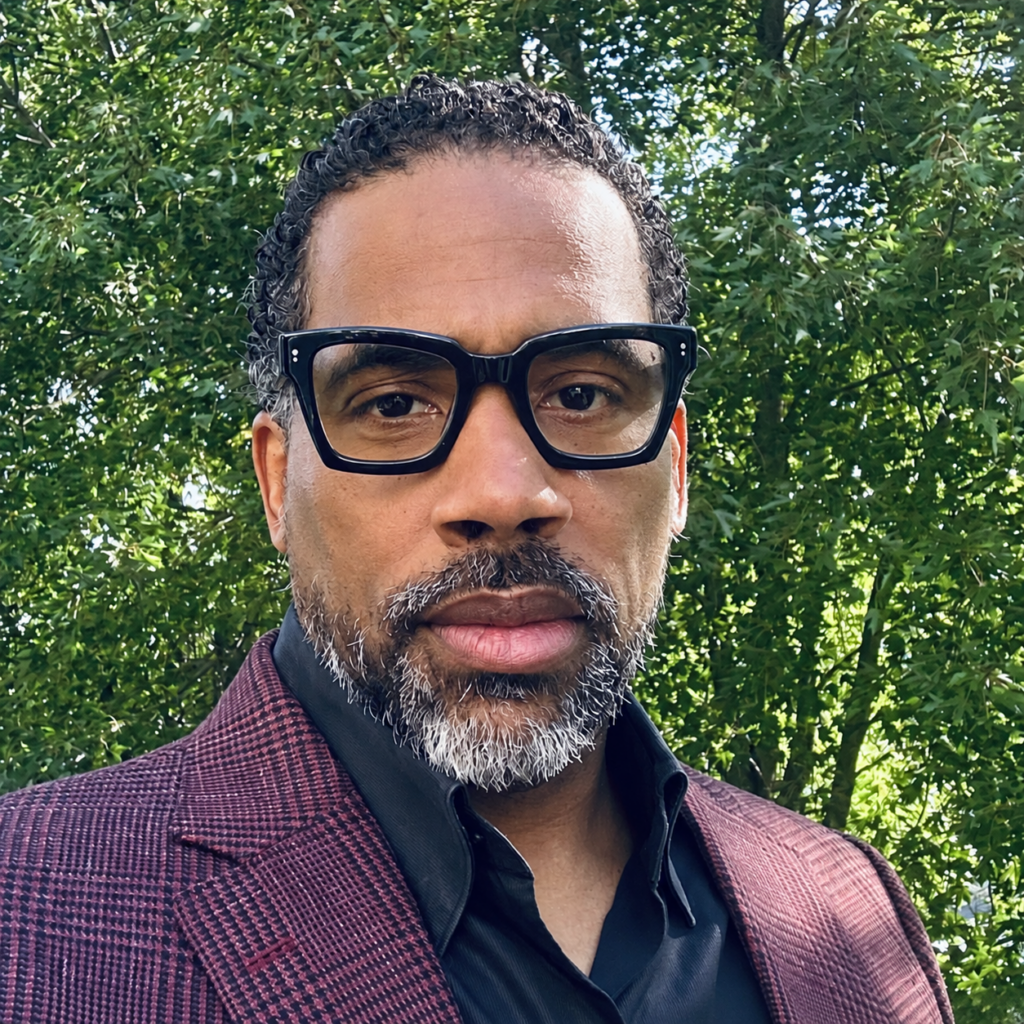
Brian Taylor is the Zone Director – Sickle Cell Disease at Agios, where he is responsible for building and leading the company’s Sickle Cell Sales team.
Brian brings more than 20 years of experience across sales, field force operations, marketing, brand commercialization, and thought leader engagement. Most recently, he served as Thought Leader Engagement Lead for Pfizer’s Rare Hematology and Endocrine business unit. Previously, he was a founding member of the Global Blood Therapeutics sales leadership team, where he was first introduced to sickle cell disease and began a six-year commitment to the community.
An award-winning leader, Brian is recognized for inspiring teams, executing with discipline, and delivering results in highly competitive markets. He is also respected for his commitment to inclusion, talent development, and meaningful engagement across the sickle cell community.
Brian is a graduate of Hampton University, where he was a three-year basketball letterman. He earned a Master of Science in Sport Management from the University of Massachusetts Amherst and completed the Professional Development Program at The Wharton School.
Brian lives in Lambertville, New Jersey. Outside of work, he serves on the Board of the United Negro College Fund of New Jersey, mentors young men in Trenton as they prepare for life after sports, and is a proud member of Kappa Alpha Psi Fraternity, Inc.
I said there's a couple things that lead to success, right? Number one, you have to prepare yourself for the role you aspire and the role that you're in. Number two, you have to have a breadth of experiences that gives you a broader view of the business. They always say, "What's behind door number two, or do you want to stick with what you know?"
Sometimes- Right ... behind door number two is a golden path to tremendous success and opportunities you had no idea that would be available to you because you took that chance. When people know you care, you can coach them differently. You can actually ask for permission to give them feedback, whether it be good or bad feedback.
You know, people, not every rep has a great call when they're with their manager. I find different ways to reward and recognize my team, but I got to make sure that we stay grounded, and we build that culture, and that the culture breeds culture, and that we really protect it all at every level.
Every team says they want to win, but winning takes more than just stockpiling talent.
It takes trust, discipline, hard conversations, and leaders who know how to coach people through pressure. I'm Ed Molitor, and this is The Athletics of Business, where the lessons of high-performing teams, elite athletes, and high-impact coaches become the playbook for more impactful leadership, stronger cultures, and sustained success.
Brian, thank you so much for joining us today on the Athletics of Business podcast. It is, it's great to see you again. We've had a few great conversations, but I appreciate you taking time to join us here.
Appreciate it, Ed. I'm excited about the opportunity to sit down and talk with you, share my journey, share my story, and learn.
Just h- continue our, our previous conversations.
Well, y- there's not anyone else who's more fitting than you to be on the Athletics of Business podcast when you really think about your journey, right? Like, for us, the athletics of business is the belief that the traits and behaviors of high performing teams, elite athletes/performers, and high impact coaches- Yeah
are key to your success in business, and you have absolutely lived and breathed this for decades now. Can you just fill the listener in on your journey?
Yeah, absolutely. So I'll go back, because you're talking about athletics and business, I'll go back to college. I was a three-year letterman at Hampton University in Hampton, Virginia, uh, playing basketball.
Um, and I think that that was an amazing time and experience because you, you, you bond. You know, when you talk about sports, it's not just necessarily the competitive aspect of it, but it's also the bonding you have that's coming together as a team and how you achieve something together, right? And so I think my sophomore year we were the, um, we won the CIAA tournament, um, and then we went on to the NCAA tournament.
Uh, and from there, um, I think that I realized how much I love teams, how much I love to compete, um, and, and being able to translate that on as I move forward. So after college I went and got my master's degree in sport management from UMass Amherst. And you know, it was interesting because my mother asked me my senior year, it was like, "What do you wanna be when you grow up?
What do you wanna do?" And I said, "You know, Ma, I either wanna be the next John Thompson or I wanna be the next Jerry Maguire." And so I was like, "Well, where, where can I do both?" Both
are very aspirational, by the way.
Amazing. Absolutely. Absolutely. You know, because as a kid, Georgetown was the team. Uh-huh.
Everybody followed John Thompson and what he meant to college basketball, what he meant to the African American community. Um, and so then I thought about, "Okay, w- how can I get the best of both worlds?" And so that's where I went and got my master's in sport management at UMass. I found that was the number one program in the country.
Um, and so I took my talents to Amherst, Mass. Now, it was a culture shock because I wasn't prepared for w- the winters of Western Massachusetts, but I also learned so much around the business of sport, realizing that sports is a more than a billion dollar business. From there, I actually went on and became a full-time Division I college basketball coach at Wofford College in Spartanburg, South Carolina.
And at Wofford, the ironic thing is that Wofford and Hampton both moved to Division I in the same year. And so I was, I was fortunate enough to have connection to both programs. But now at Wofford I'm coaching full time, I'm understanding what it means to be an assistant basketball coach. Um, and then I had an opportunity presented to me to create a sports camp for Nike and Microsoft.
And so I moved to Dallas, Texas from there and created the Nike Sports Camp. Now, with that I had none of the mark- none of the Nike marketing machine. I didn't have any commercials. I didn't have any brochures. All we had was a 1-800 Nike Sports Camp. And to, I had to sell parents on an overnight camp focusing on sports with, um, you know, technology component where kids were creating their own journals, their da- daily journals to talk about what they were doing.
So we successfully completed the camps. The first year was in four cities. I believe we were in St. Louis, Chicago, Dallas, and then San Jose. Uh, the goal was to go to 10 cities in year two, and then in 10 years be in 100 cities. I was like, "This is a great opportunity. Nike's gonna fund this. What, what great way to do it?"
And build my name in the sports world. And I always thought, felt like I could go back to coaching. Lo and behold, um, Nike had their first losing quarter in 13 years. And because of that, you know, when you have a losing quarter, there's, there's cutbacks. And so our funding- Is that about 1996? Around '96. Okay.
Yeah. 1996. Around '96. Yeah. All right. 'Cause it was the Summer Olympics in Atlanta.
Okay.
And so after we, we had these cuts, all of a sudden then it was like, oh, the Participate in the Lives of America's Youth program, which is where we're funded, was where we got the cuts. So the, the sports camps, uh, were terminated, and that was my first experience of being, uh, laid off.
So I stayed on, um, in Dallas, and I was... And, and looking for a job. I had a friend of mine say, "Have you ever thought about pharmaceutical sales?" And I was like, "No." He said, "Well, having a sports background, you'll have a territory, and it's your responsibility to drive demand in your territory. And so athletes do extremely well."
Now, now, Ed, I couldn't pronounce nephropathy, hypertrophy. I didn't know the difference between systolic, uh, or diastolic blood pressure, let alone any sickle cell disease. It was like- But look
at you now.
I know. Here I am with sickle cell disease. Yeah. And so I interviewed, I applied, and from the interview, I was offered the job.
And I remember that at that point it was time to get serious about training and understanding. So training for me was the equivalent to preseason conditioning in basketball, right? Going through, learning my disease state, learning the selling model, learning, uh, my mechanism of action, learning the, the business acumen of pharma sales.
And I remember a, a trainer told me, she was like, "Brian, you're brilliant." And her name is Kathy Smith, and I owe a lot to her because she's the first person to instill confidence in me to, that I could do this job. And I went out, I repeated my messages. I was, I was there. The first thing you have to be is disciplined to go to work every day.
And I showed up to my customers. I made, built relationships, but I repeated my messaging, and then I got good. And I ended that, after about a year and a half, I was the number one rep in the country. And I think it was because I had the discipline to get up every day and go to work. I believed in learning my messaging and understanding.
And I had a friend, um, and this is from playing basketball against him, who was an ER physician. And he said, "You know, Brian, as a physician, when I finish my residency and fellowship, there's nobody that's gonna make me a better physician." I have to do that upon myself. And I've kept that mentality in every role I've had.
There's nobody gonna make me a better rep than the work that I put in. When I became a trainer, there was nobody gonna make me a better trainer. When I was a first-line leader, no one's gonna make me a first line- a better first-line leader. And to this day, I still think that there's nobody that's gonna make me better at the role I'm in unless I work hard at achieving that.
And so I think that my journey has led to from being a representative to going to becoming a trainer, to become a first-line leader, then going in in sales operations, coming out as a region business director, becoming a second-line leader, running a full team, um, then going back in-house as, uh, the senior director of brand, um, execution, then doing a lateral move and becoming the senior director of brand commercialization, preparing the commercial organization to launch for, for products, which has led me to the opportunity I have today to actually be a national sales director, actually lead a sales team and, and b- and, and build that team from scratch because I think my experiences and my journeys have led me down this path.
So, you know, people think success is just a very linear thing, right? Mm-hmm. And I, I like to relate it to more of you're trying to climb a mountain, and you're gonna-
Yeah ...
you're gonna zigzag up the mountain. You're gonna go from base camp A to base camp B, and what you got- Mm-hmm ... what got you from there to there is not necessarily what's gonna get you from B to C, you know?
Yeah. Yeah. And you might go further, you might go shorter. Take it. But the question I have is how did all of those experiences and all the other different roles that- Mm-hmm ... you held, okay? How do those pour into and fuel the success that you're having today as a leader and all the great work that you're doing at Ciclo Cell?
That's a great question, I think, because even when I mentor people, people ask, "Well, how'd you get there?" And I said, "There's a couple things that lead to success," right? Number one, you have to prepare yourself for the role you aspire and the role that you're in. Number two, you have to have a breadth of experiences that gives you a broader view of the business.
And a lot of times, uh, when you're just in sales, you think about, "Hey, I have my number. I delivered on my number." But you don't understand the marketing aspect. You don't understand the access aspect. You don't understand, um, the medical side of the business and how the medical liaisons help your business.
you don't understand that strategic side of the business. So I wanted to get a breadth of experiences that allow me to prepare me for every role that I was going into. So it, it's not a linear route. There is zigzag. There is, you know, you have to take roles that are, that are horizontal. You have to be able to jump into other functions.
You have to be able to do things that are outside your comfort zone to learn other aspects of the business, and I think those are the things that have propelled me. The other part of that is not just preparing and doing a variety of roles and having breadth of experience, but you also have to have depth of experience.
You got to spend some time in each one of those roles so that you can not only learn it, but you can master it, so that as you go up, that there's other things that you can do. I've gone to multiple companies, so I, I... And I think that what fuels that is thinking about the word growth, of having gone to multiple companies and taking my learnings from one organization to the next and applying them.
'Cause a lot of times people don't think about how much you learn in going to another role that ha- Now I got to apply it when I go in, so when I move companies and I've had other experiences, I'm able to apply it into the role that I'm in, the, in the role that I'm, I'm currently, uh, in. The other part about that is what some people don't want to talk about, is there's failure.
Um, you have to be able to taste failure, right? I, I tell people all the time that One of the things I hate most is failing, and I think that I hate to lose. But the lessons from failure are those are the greatest lessons that there are because you always want to say, "And how are you adjusting? How are you learning?
What are you gonna do differently?" And I think that when you, you've tasted failure, you say, "Okay, now I can apply it." So not only do I have the breadth of experiences, but I'm learning from mistakes that I've made. I'm learning from things that I didn't get. I, I've interviewed for tons of jobs that I did not receive, and I ask myself, "What didn't I do?
What didn't I say? What didn't, what, why was I not the best candidate for that role?" And then I look to see how I can continue to grow and how I can continue to get better. And I think that that's something that you've got to do is, is continuously challenge yourself to get better. C- challenge yourself to be the best you can be.
Like I said earlier, there's nobody gonna make me a better national director. There's nobody gonna make me a better, uh, senior director of brand commercialization except I gotta put in the time, the work to learn from not only my successes, but also from my failures. Also, uh, e- ensuring that I have the breadth of experience that will allow me to continue to move forward and continue to grow.
I'm gonna segue that into adversity, right?
Mm-hmm.
You shared a story with me a few weeks ago about a, a big piece of adversity that you had in your career. Because one of the things that intrigues me about your industry is there's so many different variables to the success you're gonna have. There is. A lot of them are not in your control.
Yeah.
And I have noticed over the years working in the life science space with all you amazing leaders is the ones that have the ability to respond to adversity that they had zero control over the best- Yeah ... are the ones that seem to really make the biggest impact, right? Yeah. Because they can, they can pour into others on how to do that for themselves.
Because what fascinated me about the story y- you shared and you're, you're about to share was the fact that you literally were on an island, or at least you felt like you were on, on an island. You, you had been with this organization for a significant amount of time- Mm-hmm ... and were experiencing tremendous success, and all of a sudden something completely out of your control shifted.
Mm-hmm. And then it was up to you, uh, what you did with it.
That, that's, you know, Ed, that's part of, I think I, I can attribute part of my success and part of my journey today. Um, like I shared with you, I had been with that company about 11 years. Um, and I had ridden, risen pretty high up in the organization.
Um, I had, I was a founder of an employee resource group. I was on this, reported to the senior VP of sales. I was on the sales leadership team. Um, and changes started happening in, within the organization, right? Where I thought the advocacy tree that I had slowly but surely was leaving the organization.
And next thing I know, as I see these changes coming, I did what I do best. I put my head down and got into, got to work. Um, until one day I interviewed for a role that I knew that I was qualified for, but I was like, I didn't receive it. And someone that I had previously worked for that now was, uh, on the leadership team, the leadership team of the organization, pulled me aside and said, "Brian, you don't have any advocacy anymore."
And I was like, "What do you mean?" He said, "There's nobody in the room speaking up for you. There's nobody behind the scenes mentioning your name. There's nobody saying, 'Hey, Brian is now on the succession plan and where you need to go.'" And I realized that I was all alone. Um, within a few months of that conversation, my role was eliminated.
Uh, and I was actually Told, "Hey, you no longer have a place here. You're no longer welcome." And it hurt. I mean, Ed, it absolutely hurt because if when you work somewhere 11 years, you feel like you've built relationships and it's no longer just you going in to do a job, but you f- you felt like you're part of the organization, you're part of the fabric or the, of the organization.
You've, you've contributed to su- the tremendous success of the organization. And I had to take a step back. Number one, I had to heal. I had to take the time. It's like any other relationship, you have, have to heal from that because my feelings were hurt. After healing for some time, I had to rebuild myself.
Um, I had to rebuild my confidence. I had to rebuild the confidence in m- in my ability to lead a team, and I had to take a step back. I actually took a role. I took some time off to recover, and then I actually took a role that was maybe one or two steps beneath what I was doing. But what it offered me was an opportunity to move into a new therapeutic area, move into a rare disease space from a primary care space, but I was also able to sharpen my skills.
I think I'm a better leader today than I was then because I was able to refocus. I'm, I'm, I'm committed to being true to myself. I committed to being who and what I felt I wanted to be as a leader. I committed to challenging myself to be the best. I committed to building relationships, not only with my team, but horizontally and vertically b- rebuilding relationships throughout the organization.
And what I w- committed to myself is I will never be alone again. I'll make sure that I've built up enough relationships, I've built up enough equity, but I'll also so that as things happen, that somebody will be able to speak my name in the room. The other pieces I've, I've learned from that is I've learned that you c- sometimes you can outstay your welcome.
You have to be able to read the, the tea leaves. You got to be able to see how the organization is changing, and sometimes change is good to go to a new opportunity, a new experience because you don't know what, what you're going to unlock. They always say, you know, "What's behind door number two, or do you want to stick with what you know?"
Right. Sometimes behind door number two is a golden path to tremendous success and opportunities you had no idea that it would be available to you because you took that chance. And I'm never gonna be risk-averse again, where I'm afraid to step outside, afraid to try something new because you don't know what the opportunities are gonna be.
But I used those lessons, I used that adversity to rebuild myself, to re- regain my confidence, regain my self-worth and say, "I'm going forward and I'm gonna continue to succeed," and not let it hold me back.
You know what's really interesting about that? Listening to you talk, the first thing that goes back to, we've always talked about y- you can be bitter or you can get better, right?
That's right. Be bitter or get better.
That's right.
And that, that's... But y- that's so significant to all the work that you had done to get yourself to where you were.
Yeah.
And to hear you talk about, "I had to regain my confidence."
Yeah.
But that's... But, but then you came out the other side of it even stronger, a better leader.
Mm-hmm.
Right? More well-versed, a different treatment. What is that, like, was it hard for you at first when you felt like people weren't speaking up for you? Did you think, "Well, they understand the impact that I've had," or, "They understand that I do things the right way," and you think it would just happen? So if you had to go back and do it again, would you have maybe started to look sooner, or would you have had some uncomfortable conversations with some folks?
What was it that, or what is it that you would have done differently? I'm thinking about some of the folks that I have in, in my circle, in your industry that are- Yeah ... experiencing something very similar right now.
Man, if I had to do it all over again, there's a lot of things I'd do differently. Number one, I think I took for granted that people understood who, who I was and what I had accomplished, and I, I was, I guess sometimes just how you're feeling yourself.
Like, you're thinking that, "I'm above that. They're not gonna get rid of me of all the things I've done." And you need to realize everybody's replaceable. Everybody's replaceable. And then you also realize sometimes there's genuine relationships and sometimes there's transactional relationships. And I d- I wasn't thinking that they were transactional relationships.
I think that there's times I would have handled some adversity different or, and had some tough conversations, and definitely been, had some more honest, upfront conversations around, you know, if there was, you know, um, conflict, how to resolve the conflict and continue to move forward. Um, so I look back on that time and say, "Wow, I could have done so many things differently," and, and lifted my head up and really looked around the room to see how things were changing so quickly.
You know, because sometimes things change quickly. It's like technology. Things change quickly, so fast, and if you're not adapting to that change, you'll get left behind, and I got left behind. And, and so I had to learn from it. And I, I took it and said, "How do I move forward? How do I grow?" But what you can't do, and this is for anybody, you can't wallow in it.
You gotta lift yourself up by the bootstraps and move forward, and you gotta say, "Now, now," like you said, "I can stay bitter or I can get better." I committed to getting better. And so I put, like I said, I put my head down and I figured, figured out, how do I get better? And I just needed an opportunity. And once I did it, I made sure that I continued to grow, continued to rise, and never lose sight of where I'm trying to go, and never lose sight of how to, how I got there or what I had done previously.
You know- People, and this is something you can share with, with your, with, with your circle that are in here Who's on their board of directors?
Yep.
Who are those four or five people that they trust to tell them the good, the bad, and the ugly? I turn to my board of directors, I turn to the chairman of my board, and she looked at me and said, "Brian, you're talented.
You can't lose sight of how talented you are. This has happened to you. Don't let it turn that's who you become."
Right. "
Learn from this. Grow from this. Look at the success that you've had over the 15 to 20 years of your career, all the things you've accomplished. That didn't happen by happenstance. That happened because of the talents that you had."
And I was able to, to really reground myself in that and, and find that belief in myself. It's like in sports. How many times when people are, are in a shooting slump, what do you say? Shoot or shoot. They gotta keep shooting. You don't stop taking a jump shot because you're in a slump. You keep shooting, right?
I- if you... And when you play sports, how many times have we said it's mental, not physical? When athletes are down and they lose, they lose their confidence in themselves. And we've seen people's careers get derailed because they've lost confidence in their abilities of things that they do extremely well.
Well, while I was at my lowest point is when I had to ground myself and to rebuild myself and, and believing in myself that I can get back to where I want to be. And, and then you make the changes that are necessary. Um, and you find out how you communicate with people, how you give, set direction, how you hold people accountable, how you build relationships cross-functionally, how you partner with your peers.
You find all those things are different now, right? You find out that you're doing things differently. Understanding the nature of the relationship, right? Are you, are you building bridges? Are you burning down bridges? Are you building advocacy based off the results of your work and that, and those... You're doing all those things again.
And they're little things that you've got to seek to understand, but you've got to, you cannot let adversity hold you back. You have to rise above it and grow and keep moving forward.
You know, it's almost as if that, that piece of adversity in your world happened for you, too, right? Not to- Yeah ... you look at, you look at what you've evolved into and what you've become- Mm-hmm
because of it. And all that has to do with, you know, you and who you are and how you went about doing things. Mm-hmm. You know what I lo- one of the things I love about our conversations, it always comes back to the values that you speak of, right? Mm. The discipline. Yes. Right? Commitment. Yes. Communication, right?
And then your genuine care for your people. Yeah. Now, here's what's really cool, and I want to get into the amazing work that you and your team are doing right now. Mm. Because the genuine care for your people, and not just the people that you lead, but the people that you serve in terms of- Yeah ... the end user, right?
And, and you are doing such meaningful work. I just want you to walk us through, um, what you folks are doing and what that means to you and how- Yeah ... that really fuels your leadership and, and the performance of those around you.
Yeah, absolutely. Um, you know, Ed, when I got into sickle cell disease in 2019, I knew a few people with sickle cell disease, but I didn't know sickle cell, right?
You hear about it in, in- As with everybody else, the common misperception is it's all about pain, and they live in this, this pain, and they just have this, you know, these significant vaso-occlusive crisises. I didn't understand the stigma. I didn't understand the health inequality. I didn't understand the lack of research.
I didn't understand a lot about the disease till I got here. Um, and so it's the first time in my career that all the work I'm doing is for my community, and that makes me immensely proud to be able to say that I'm giving back to the African American community. I know about the health inequality that African Americans have faced historically.
I understand when people talk about the Tuskegee experiment. I understand what that means when there's no trust of the healthcare system. Hell, I was in diabetes for a number of years, and my stepfather, who was living with type 2 diabetes, would not talk to me about potential diabetic solutions and insulin and other things.
So I understood that, and I understood what it meant to not do it. And then when I got in, it was even more profound. Um, I had to earn my trust. Just because I was an African American male didn't mean the community was gonna accept me. They wanted to know I was gonna be committed and be there. They wanted to know that, are you really here for the right reasons, that you're here to advocate for sickle cell warriors?
Are you here to really educate and make sure that we, you set the expectations? Are you here to truly build trust? And I committed myself to that. Uh, and so it changed my career because it, it me- it really gave me more purpose, where it was not about the, the job. It's about changing the community. It's about changing a, a, a, a group of people that are living in the sickle cell community that have been ignored.
Think about this. Sickle cell disease has been recognized well over 100 years. In that 100-year timeframe, there's only been four approved therapies for sickle cell disease, right? Of which, two have, uh, have essentially been removed from the market. And so now we have an opportunity to give them a new therapeutic option, provide a new therapeutic option, bring it, give them a, a choice where they now have options.
We have now to show that the industry is actually doing more research, finding out. When I look at the proxies that we use historically as cystic fibrosis, and look at the number, uh, how much research has gone into cystic fibrosis, how much awareness has gone on to cystic fibrosis. We don't even talk about broad awareness campaigns for sickle cell disease.
Right now is Sickle Cell Awareness Month, and we're trying to raise awareness of just what they go through and how people living with this disease, what they go through and what they're living with daily, right? Um, one of the things I'm adamant about o- on my team specifically is we always wanna keep- The person impacted by sickle cell disease or the family impacted by sickle cell disease as our North Star.
I don't, I try not to say, use the word patients, because they're not patients. What they are are individuals living with a rare blood disorder that has tremendous impacts on their lives. And I want to make sure that's understood, right? And under- and people understand what they go through. It's not just pain crisis, but sickle cell impacts every organ in the body.
Any place that needs oxygenate- oxygenated blood, sickle cell disease impacts. And so I'm, I'm committed to it. I've stayed committed to it. I've stayed true to it. And it, and it fuels my work. It's my passion. I don't think there's a day that goes by that I feel like I'm working. I'm actually fueling my passion and really make change for a community that, that deserves change.
They deserve people to be champions for them. They deserve the industry to increase the research, increase the funding. They deserve all of that, and I'm here for it.
It is the epitome of being a part of something far greater than yourself.
Yeah, absolutely.
And it's really powerful. You know, I think using the word cool, as I was about to use, is, is- Mm
is an insult. I mean, it, it's powerful- Mm ... it's meaningful. And, and you mention it as your North Star. I have to believe that it is at the forefront of every conversation that you have. Team means- Absolutely ... one, one means. I mean, everything that you talk about, everything that you do, at the end of the day, regardless of the adversity that we're going through, it, it pales in comparison to what the people with the disease are going through.
We, there's nothing we're going through that changes what, that can compare to what they're going through. All right? Uh, on a daily basis. And I'm, I actually have to say that I'm honored to have been accepted into the community by many of the community leaders, by many of the warriors living with sickle cell disease.
The fact that by the ph- physicians, even some of the physicians that have been here that are true sickle cell experts, because I've committed myself to it. I've shown up. I've faced adversity. Um, I was at an organization that had a major setback, and I actually was present. And I said, "Look, if we want to be leaders in this space, you have to be present, not just for the glory, but you got to be present for the hard conversations just as much."
And I faced those, and I've stood 10 toes down to say, "I'm here, and I'm committed to how do we make change?" And I think that that's what drives me. So in every conversation I had and my passion comes through, and people understand that that's what I'm committed to doing and what I'm committed to being.
And that's really, at, at this stage of my career, is really fighting for individuals impacted by this deadly disease called sickle cell disease.
I am really curious about this.
Mm-hmm.
How much of a role Does it play in the people that you bring on the team, in their ability to understand the story, embrace the significance of it- Mm-hmm
and then take that story and be able to communicate it to all stakeholders involved, including the patients with the disease?
It plays a big role in all I'm doing when I'm hiring. Um, when I'm hiring, Ed, I have to make sure that number one, the person understands sickle cell disease and what they're walking into.
I don't want them blindsided. And understand the historical perspective of what sickle cell warriors have gone through, the lack of treatment options, the health inequality, what it's like to actually go into the ED when you're in crisis and be, and be stigmatized, face racism. Everything that you can imagine they face when they're going in.
I mean, no other disease state do, do you feel like you have to dress up when you're in severe pain and someone at the ED tells you, "No, you're not, you're really not in pain." Nobody else does that. So if you don't understand those factors and the historical perspective, number one, it's gonna be hard to work on my team.
Number two, we have to build trust. We have to build trust with the community, we have to build trust with the providers, we have to build trust with the offices that we call on, and so I think that that's critically important. If you can't build trust and have, understand the historical perspective, then you're not gonna make it, right?
And so then I need to make sure that you can do those things. And so all of that comes into play as I'm building out my team. I, I, I think that the sickle cell community is very small, so what you do in Atlanta can have significant impacts on what happens in Houston 'cause, 'cause it's a small community that everyone knows one another.
And so I got to make sure that we're not ruffling the feathers of the community, but we're able to build trust as an organization as we move forward. So everything I'm doing, I'm looking at those factors. I'm looking at people to see, um, do they have that ability? Do they understand the historical perspective?
Are they gonna have unconscious bias? Are they gonna look at it funny? Are they gonna look and say, "Hmm, I don't understand that," and, and, and, and, and go- Violate the trust of the provider, violate the trust of the community-based organization, right? Or are you just looking at it to say, "Well, I just want to get paid"?
No, you can't do that. You got to build relationships. You got to be clinically sound. You got to be able to really understand who the, the, the individuals that you serve, the community that you serve, what they need you to do. Because sometimes there may be physicians that, that's, that have unconscious bias, and you need to stand strong in front of that physician to say, "No, this is why you need to do this."
Or ask the tough questions of, "Why won't you do this? Why won't you present this therapeutic option to the, to the patient or to the family that needs it?" And, and really give them an opportunity. So you have to stand strong and understand what that patient journey is like, what they've been through, and what's, what's needed of you and what's expected of you when you call, when you call on your customers.
So, um, so to sum it up, I'm looking at all those things. I'm a- I'm asking those questions. I'm, I'm evaluating your ability to do that, have empathy, build trust, understand that patient journey, um, before I bring you onto the team.
The word trust is always so... It's always there. It's always present, and it's always apparent in our conversations, right?
Mm-hmm. And I believe everything begins and ends with trust. I- Yeah ... it's the foundation of every relationship you have, personal and professional, your ability to impact, positively impact and lead people and influence them. You've mentioned three coaches to me when we were talking one time. Pat Summitt, Don Staley, Roy Williams, okay?
Yep.
And then you said all of them, the thing they have in common is that they genuinely care for your people, okay?
Absolutely.
And it's the, it's, it's the way you lead. I want you to talk about the role that empathy plays in your ability to show people that you care, right? To also have to earn the right and earn the trust to push them outside their comfort zone and to challenge them to c- to perform at a higher level.
How do you do that?
You know, I'm actually, you know, getting a little emotional here 'cause I'm thinking about someone that I, that I, I led when I was an early leader. Um, and she came to me one day and expressed that she was diagnosed with stage four cancer, and, and she was worried about losing her job And I said to her, I said, "You know, don't worry about that.
Let's worry about getting you healthy. Let's, let's get you through this and here's the things you need to do. Go on short-term disability. Do everything you need to. Let's focus on you being healthy." And I was committing to her that, "Your job will be here." And I think that it changed my relationship with her because what happened was she saw, she was able to see the human side of me.
It wasn't just the business side of me. And I think that was something I learned early on is you have to let your people know that you, that you care about them. And if you, they, you let them know that you care about them, they will run through a brick wall for you. And so I start and stop with making sure that your family's number one.
If, if I have to rank order family or job, family's always gonna be number one, and you need to make sure you have to be there for your family, and then you can do the job when you're supposed to do the job. And I think that that go, that, that starts and stops, and I've learned those. You know, we, we talk about lessons and growth.
Ed, it, it's interesting. One of the, the, the woman I just mentioned to you, you know, maybe about five years ago, there were three women that when I ... It was after my first s- Leadership role. The first time I had taken over a team, I was a terrible manager. I mean, absolutely, because I wasn't myself. I was trying to be who I felt like Mar- RBD wanted me to be.
I was trying to fit in and I wasn't being true to myself. And if it was not for those three women sitting me down one day and saying, "Brian, here's what we need from you," and actually giving me the riot act, telling me all the things I needed to do better, and I understood. And I was like, you know, I thanked them for that that day.
And then about five years ago, I sent a group text to all of them. I said, "Ladies, I want to thank you for allowing a young, immature leader to grow and develop and mature, and you guys not giving up on me. I know it's been a number of years since we've spoken," and I just wanted to thank them because I owed that to them.
I would not have grown if it was not for those three ladies that were, you know, had been experienced, had been in the field for some time, actually not giving up on me and saying, "Hey, we think you can do X, Y, Z." And it, and I learned, and I took from that. And so each one of them had shared different stories, had different family things going on, and it allowed me to become a better leader.
It allowed me to, to dive into the empathy side, dive into getting to know people's families, dive into understanding what's going on at home, and how can I help you with... or what, what, what, what advice can I give you, you know, so that you can manage job and personal. And it's allowed me to build closer relationships, right?
And so I think that when people know you care, you, it, it allows them to say, "Hey, he really cares about me and I'm not just a number." The other piece about that is when people know you care, you can coach them differently. You can actually ask for permission to give them feedback, th- whether it be good or bad feedback.
You know, people, not every rep has a great call when they're with their manager. "Hey, you know what, Ed? That didn't go as well as we want it to go. Would you like some feedback right now or would you like to wait? You know what, if you said, 'Brian, let's wait,' let's wait. Let's get you in the right mindset to really have that feedback and absorb that feed- and not just listen, but actually hear what I'm saying to you so I can help get you better."
It allowed me to say, "Hey, we're on the same team." You know, when I'm in the field with, with representatives, even to this day, I don't want them to introduce me via my title. Introduce me as this is my colleague Brian, and we all have a job to do. And I can build a relationship and say, "Hey, how can we partner with you?
How can we build a relationship with you?" So I've learned to do all those things, but again, I think that that foundation of coaching and empathy starts from those three ladies that I had on my first team that actually took a young, immature leader and allowed me to grow into the role to become who I am today.
That's still an incredible amount of self-awareness on your part, right? We have something on the wall here in the studio. It says self-awareness is the competitive advantage. Mm. I mean, for you to be young and for them to tell you what you needed to hear instead of probably what you wanted to hear-
Yeah
and for you to listen, I also have to give kudos to you because that's, that's not easy to do, especially when you're trying, you're aspiring to be great at what it is you're
doing. No. It's not easy at all because nobody wants to be told that their baby is ugly. Nobody wants to be told they got a big wart on the middle of their forehead, right?
But you know when you're not succeeding. You know when you're not connecting. As a leader, you know when you've connected to your team because here, here, let me give you some telltale signs. Even as now as I lead this team at Agios, when teams wanna be with you, you don't have to ask them to set up, you know, forced fun.
You don't have to ask them and say, "Hey, guys. Dinner's at 6:00." They're coming to you and say, "Hey, Brian. We all wanna get together and go to dinner." Right? We all want to get together and do it, go do this. Hey, the general session starts at 10:00 AM. Somebody goes and says, "I got our seats. We're all together."
So the team genuinely wants to be together, and you know when you're not connecting with your team. You know when it, it's not genuine and it's just, it's just the transactional nature of those relationships. But you have to learn from those things, right? And you have to be awa- a- and it's not the end of the world because things don't go right.
It's all right, now how do you fix it, right? It's like decision-making. I'm not afraid to make a decision because I'm comfortable saying, "What inputs am I getting? What insights am I gathering that'll allow me to make the decision? What data am I using?" I make the decision. If it goes well, it went well, we'll celebrate.
If it doesn't go well, then say, "Hey, here's why I made the decision. Here's what happened. Now, here's what we're gonna do about that, and we're gonna pivot very quickly because I took time to make a very th- thorough and sound decision based off the data that was available to me at that time." And so that's the same thing.
If, if you're not connecting with your team, why am I not connecting with my team? Am I not showing m- who I genuinely am? Am I not showing my true self? Am I not 100% committed? Am I not telling the truth, right? Am, am I just people not getting the truth out of me, right? And so you got to be honest with yourself to understand what you're doing, what you're not doing, how you're gonna be re- how people respond to you, and connect with people.
And so you got to connect with people. When I go to POA meetings or national sales meetings, at the end of that week, I am exhausted because I'm giving my all to the team. I'm diving into the workshops. I'm di- I'm diving into getting to meet everyone. I'm diving in to greet people by name, right? There's little things you can do.
When I built this team, I sent handwritten notes welcoming every member of the sales team to the organization just to say, "I'm really excited that you, that you dec-" And what I say is, "I'm real excited you decided to take this journey with us to change sickle cell disease, and I'm looking forward to partnering with you to not only just to see your success, but also in, as you, partnering with you to see you achieve your career goals."
And so I'm committing to that upfront and committing to them, and that's what they have to do.
I would bet you 90% of those people you wrote the hand- you did the handwritten note for, I, I would bet you they still have them I
hope so.
Yeah.
I'm really hoping. No,
you, you, you create this incredible environment, right?
Mm-hmm. Like, it's really... Listening to you talk, it, it's powerful. Yeah. Yes, there's, there is a significant amount of site safety and connection, but there's obviously a high level of accountability. Yes. Because what you do is very real. It's very serious. It goes beyond just being a treatment, right?
Yeah.
How significant is it to be crystal clear about the expectations you have on your team members?
Mm-hmm. And how do you go about to make sure that they're receiving and understand those expectations?
That's number one. I have to... Expectations are clear. You have to be crystal clear what we're doing. But, but before, when you're setting expect- expectations, you have to say why we're doing it. You need to let everyone know why we're doing certain things and what we're gonna, what we're gonna accomplish, and I think that's important.
So now, as a leader, I consider myself a servant leader, and what that means is I wanna make sure I remove all the barriers- That could potentially be in your way. If you need training, I'll make sure you get the training. If you need resources, I'll make sure you get the resources. Now, when you remove barriers, it means that as a team you can perform at the maximum capabilities that you have.
You're at your maximum potential. And I want to make sure that people are at their max potential. And so that when I set the expectations, the expectations are very high. Again, I said to you that the work I'm doing today is for the community that I serve. My North Star are the individuals impacted by sickle cell disease.
So my ultimate commitment is to the individuals impacted by sickle cell disease. So I may have to hold my team accountable that they're doing all that they can so that we know the people living with this disease, the families impacted by this disease, are getting the best of the best. Right? And if you're not doing that, my commitment is greater than you as an individual.
It's to the 100,000 people living in the United States with sickle cell disease. It's to the more than eight million people living in and around the world with sickle cell disease. While we sit, sit there and focus on the 100,000, if we're not successful here in the US, the rest of the world doesn't get this amazing treatment.
We have to be successful here to be able to globalize it. That's what people don't understand. That's my passion. It's much bigger than one individual. So if one of the individuals not cutting the mustard, they're not delivering on their expectations, then something has to change. And if I didn't deliver clear expectations, I have to really articulate that differently so it's crystal clear of what to expect, why we're doing it, and how I'm holding you accountable to that.
I can't just set expectations and not hold the, hold you accountable. I got to hold you accountable that, that you deliver and execute upon that, and execution becomes the key. Right? And w- and we, you want to execute on the expectations so that becomes the key to our success and what we have to do, because it's a much bigger picture.
And that's when you, you, you said, how important is it that the p- that the people I hire understands that journey. They have to. They have to understand that journey. They have to understand my commitment and why I'm committing to you to be the best, why I'm committed to you to understand that patient journey, why I'm committing to you to understand, to be clinically sound, why I'm committing you to be very strategic in your business and have strong selling skills.
That's our competitive advantage. That's what we're gonna do. And then when you get out in the field, you're executing upon that, and then you have that glory and that success as a team.
It's, it really truly is remarkable the work that you are doing. The next question, I didn't plan on asking this, but it just keeps popping in my head.
You had shared a story with me about a gentleman by the name of Kyle from Philadelphia-
Yes ...
last time we talked. How important is storytelling and shared storytelling across your organization, across your team? Mm. So you hear a story about Kyle in Philadelphia, Philly, and then, um, one of your reps has a story about Sheila in Atlanta.
Mm. And you share those stories with the other teams, and you share them cross-functionally. Yeah. How often do you guys do that?
All the time. Yeah. We share best practices weekly. I would say If we're not, it, it would be easy to say daily, but it's really weekly we hear those stories. Now, why do I want to share those stories?
I feel, I feel as in this is my own leadership philosophy. If I can capture the heart of a sales rep, let me capture your heart. I can educate your mind. I can educate you about everything else, but I captured your heart. You now have a purpose of what you're doing. You now have a reason to say, "I remember Kyle.
I remember Susan. I remember Sheila in Los Angeles. I remember hearing that story," because I've captured your heart and it's living with you. It's giving you reason to fight. If I don't give you reason to fight, then how do I, I know you're gonna really do it with the same passion I need you to do? How am I gonna know that the, the sickle cell community in Houston, Texas, or sickle cell community in Atlanta or Miami, you're gonna do what you need for them, right?
When a, when a provider says, "I really don't treat that population," how am I gonna know if I haven't captured your heart and educated your mind that you're gonna stand there and say, "Why not?" Ask the tough questions. Really challenge that office. Respectfully challenge that office to really change their mindset of treating people living with sickle cell disease.
So I got to capture the heart, capture the mind, and I think we got to hear those stories to share because if you've met one sickle cell warrior, you've met one sickle cell warrior, right? Because everybody's lived experience is completely different than the other, and you got to make sure you understand that and listen, build empathy, understand what they're going through, and be able to convey that to others.
'Cause we are, we are the voice within those there, in those offices to change the providers' minds about how they treat this disease.
God, I love it. So there's about 20,000 more things we could talk about and we can go on. Because I just thought of a whole bunch of other questions. But you, you, you talk about it like capture their heart, educate their mind, and what that does for their performance.
And forget the- Mm-hmm ... performance to me with what you do is getting what needs to be put in the hands of the people that need it. You get better at it. You get more efficient at it. You, you... But what it does for the, your, your, your team and what it does for their families and what it does, i- just the, the whole big picture of it.
But what I really love about it, what it does for your retention- Yeah ... and what it does for your culture. Yeah. I mean, they're gonna protect that culture till the, you know, to the, to the very end. Yeah. Have you seen that show up? Have you seen people that have had other pretty significant opportunities say, "You know what?
I'm not ready. My work here is not done because of the great work that we're doing"?
Absolutely. I've seen people say, "You know what? We want to protect this culture, and we want to fight." Yeah. "And we want to fight for those impacted by this disease." And I think that you see it by how you bring them in, right?
Right now, I think that- The way I describe the team now, there's contagious enthusiasm. When they walk in the room, it is contagious. Their energy, their passion comes through in all that they do. When they get down to business and they're in training sessions or in, in, in, in, you know, workshops, they are laser-focused because they, that enthusiasm and, and the desire to make a difference comes through.
And I think that you do it. Now, for me, what happens is now I have to recognize it and I have to see their hard work, and I have to recognize and compliment and share their story of all the work that they're doing so the greater organization can see exactly what they're doing, how they're doing it, what they've accomplished, and then I want to reward it as well.
And reward isn't always, like, we have IC and people think IC is the, is the reward. The reward can be IC, but can also be that recognition. It can also be me copying them on an email to the CEO or our chief commercial officer saying, or all commercial sales call recognizing the great work that they've done.
So I find different ways to reward and recognize my team, but I got to make sure that we stay grounded and we build that culture, and that the culture breeds culture, and that we, we really protect it all, at, at every level, right? I need my RBDs protecting the culture. I need the representatives protecting the culture.
And I think they're gonna really be, say, "Hey, that's not how we do things here. This is what we need to be doing. What's the right thing that we do?" So I think that that all c- that all, it, it, it, it's, it's not really, it's not really linear. It's more of in a circle and that we're all working together, and that's why, that's why great teams are formed.
That's how great teams live and thrive, and you really talk about, you know, um, you hear about the Patriots and the Patriot way. You hear about the San Antonio Spurs and all those things that you've done. You hear about the family at Duke. You hear about the brother, uh, the family at North Carolina and the brotherhood at Duke.
You hear about those things because that's the culture of people coming in and how we defend each other and what we do and how we go about our business.
You know, it's really awesome talking to you. I mean, Brian, you're young, okay? But it, you get the feeling that everything that you have done in your career- Mm-hmm
personally and professionally, has culminated in this opportunity, and you're just embracing the heck out of it, which just makes it all the much more powerful. But now, I would be, before we, before we wrap this up- I have to ask, and I'd be remiss, okay, and I'd be kicking myself if I didn't ask you this.
Coaches that had a significant impact on your life. Mm-hmm. Okay? People that helped shape you. Mm-hmm. What are one or two of the, the, the folks that you would, you would mention? Or they could be teachers, right? I mean, who was it that you first realized, like, being a coach, you know, it isn't, it isn't just what you do, it's who you are.
Mm-hmm. And your ability to make an impact on someone's life is really significant.
Yeah. You know, it's interesting. Um, and this is very, this is very, very personal for me. There's two coaches. You mentioned three coaches earlier. You talked about Dawn Staley, Roy Williams, and Pat Summitt, and the reason why I'm so committed to them was the fact that I love how they connect with their team.
I became a Roy Williams fan when he lost the national championship against Kansas, um, at Kansas. And the reporter said, "Well, what about North Carolina?" He said, "I really don't care about North Carolina right now. All I c- s- care about are those kids." And in that moment, he... it was all about those kids. And so why it's personal for me is that I remember being a young, uh, early in my career, and I had a senior VP of sales.
I was a trainer at Bristol Myers Squibb, and a senior... I was in the gym that... Then, you know, back then, you, you, you know, there was old montage, you gotta be in the building early and stay late. Be the first in, the last in. So I would go to the gym at, like, 6:00 in the morning. I knew he would be there so he could be seen.
And he said, "Young fella, come here. I'm gonna do you a favor. Get on my calendar." And so I got on his calendar. I w- I, I immediately got dressed, ran upstairs, talked to his executive assistant, said, "Milt told me to get on his calendar." She said, "Brian, you know Milt is busy, so you, he won't be able to see you for a one-on-one for maybe about two months later."
So he continues to see me in the gym, continues to see me in the gym, and he says, "Young fella, come here. Didn't I tell you to get on my calendar?" I said, "Look, Milt, you're a busy man, you know, so it's not that easy." "And I'm seeing you next week."
Yeah.
So I finally had that one-on-one, and Milt says to me, "What do you wanna be when you grow up in your career?"
And he s- I said, "Milt, I want your job." And he's the senior VP of sales at Bristol Myers Squibb. Mm-hmm. He says, "What do you need to do to get that?" I said, "I ran over all these things." He said, "Slow down. Let's take the first step first." Milt has been my mentor from that point until today, and why I'm saying this personal is because I just found out Milt passed away a week ago.
And up until, up until, um ... And I talked to him last Saturday, and whenever Milt Goggins called me, I answered it, and he's the ultimate coach that took me under his wing, that gave me advice that I listened to and, and made sure I developed in my career, not only as a career but also as a man, how he took care of his family, all the things he just gave to me and mentored me.
And, and, and it's always good to have mentors outside of family because he showed me All the things that I needed to do to be a great leader, how to have empathy for your people, how to invest in your people, how, how to hold them accountable, how to make sure family was number one. And so I got to thank Milt, and you, you're asking me this question and, and like I said, I apologize because it's personal.
No,
I, I love it. I appreciate you sharing that. I
do. Milt- 'Cause that's not easy. I really, truly appreciate you sharing that ... Milt is the ultimate coach for me that got me to where I am today. And like I said, up until last Saturday, I talked to him. Every time that phone rang, and I always felt like I was that kid that was a trainer.
And I was probably more bold to say to him, "Hey, Milt, I want your job," and, you know- You're ... I said, "You're a busy man, so I don't know why you thought I was gonna get on your calendar right away." Yeah. Yeah. But at the end, Ed, I can say I made Milt proud, at least I thought I made Milt proud, and I know I did, and that's what means the most to me.
Because as a coach and mentor, he's the one that got me where I want to be. And that's how, like I talked about Pat Dawn and Roy Williams, because of how they connect with their teams, and that's how I want to be remembered, for connecting with their teams. And I will say, one thing Milt said to me, and I share, he said, "Brian, my greatest thanks is you giving back to others what I've given to you."
And that's what I do. I've given back to so many others, and I tell them, "My greatest thanks is just give back what I've given to you." And so I'm passing it forward based off Milt Goggins.
Brian, that's an unbelievable way to close out this phenomenal conversation. I appreciate you sharing that with us.
And, and thanks for being you, and thanks for the work that you do. Um, we, we've got to, we've got to run it back. We've got to have you back sooner rather than later. Let me know. So much more to talk about, but wish you and your team all the best. Where can folks listening to this find out more about you, find out more about Agios, the work that you're doing in the sickle cell area?
The best way, I think, you can follow Agios on LinkedIn, Agios Pharmaceuticals. It's, it's, it's usually just, uh, on the Agios, or you can go to our website, agios.com. I'm on LinkedIn as well, Brian Taylor on LinkedIn, and you can come in and, and just see my background, my story, things that I've done. I post a lot on sickle cell disease.
I post a lot about the work that we're doing. I post a lot about the type of leaders that I'm looking for and the impact we want to have. And if there's opportunities people see, hey, reach out and let me know how, how I could be of assistance, even if it's just want to talk about their career. I love talking.
I love giving back. I love sharing. So all those things are available.
Brian, thank you.
Ed, thank you