

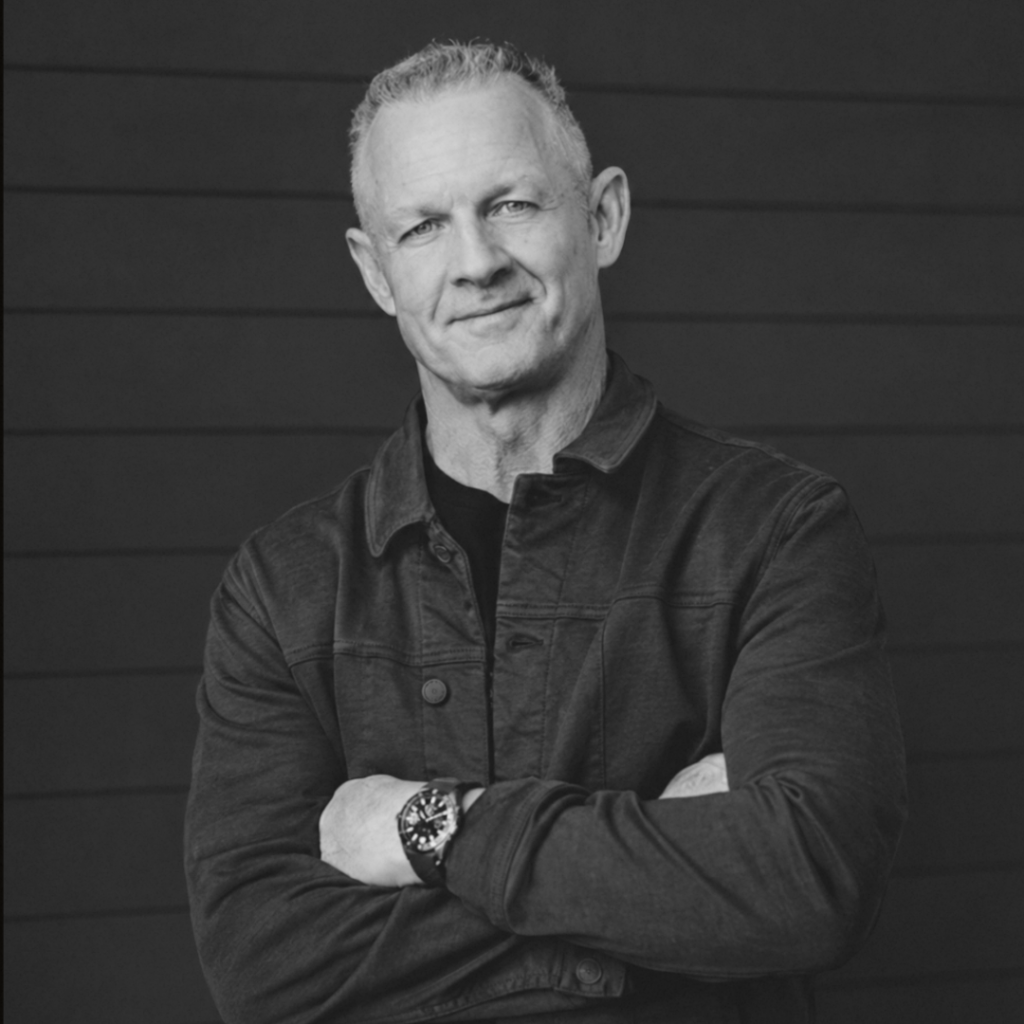
Merril Hoge played in the NFL for 8 seasons with the Pittsburgh Steelers and Chicago Bears; he was also a football analyst for ESPN for 21 years
Hoge is an inspirational speaker who speaks all over the country, impacting people and companies to grow through self-reflection and taking action to Find Their Way.
He is also on the board of the Chuck Noll Foundation for Brain Injury Research and a member of the NFL Mild Traumatic Brain Injury Committee.
In 2018, Hoge helped launch Your Call Football and is the author of Find a Way: Three Words That Changed My Life and Brainwashed: The Bad Science Behind CTE and the Plot to Destroy Football.
Hoge continues to find new ways to make a positive impact with his mind, heart, and energy. Whether that be through his educational work, advocacy, or motivational engagements, he is a force for positive change and inspiration. He lives in Fort Thomas, Kentucky.
Merril Hoge
Ed Molitor
I've never understood this, don't put all your eggs in one basket. We have a responsibility to do our very best to give everything we have. That's our job no matter what our goal or dream or challenge we hope. That's the two things we can control. Why would you not give everything that you have?
Sometimes you need to reset yourself and sometimes, um, that's what I, I think sometimes find a way can be about, you know, and not just battling a cancer, but it could be other things that are business-oriented, you know, personally that can help a person at, at a time that they, they need it. Well, I've never used the word losing, you know?
We either win or learn, you know? And I tell my kids, well, you know, I, I remember we had one year we were so bad, you know, in two games, even my son was like, "I'm gonna quit." I'm like... And I'm the head coach, and I'm like, "Okay, that, you can't, you can't quit." I came up with a parenting tool and it became so effective I made it a coaching tool, even a business tool, but I judge my kids in the yardsticks of their years and not mine.
And that gives me two things at all times, patience and perspective
Every team says they want to win, but winning takes more than just stockpiling talent. It takes trust, discipline, hard conversations, and leaders who know how to coach people through pressure. I'm Ed Molitor, and this is The Athletics of Business, where the lessons of high-performing teams, elite athletes, and high-impact coaches become the playbook for more impactful leadership, stronger cultures,
and sustained success
Merrill, thank you so much for joining us today on The Athletics and Business Podcast.
I, I couldn't be more grateful. It is football season, no pun intended, has kicked off, and it's, you know, your time is, is compressed. A lot of people pulling at you, so thanks for being here, my friend.
My pleasure. I'm looking forward to it, Ed.
I always have had a tremendous amount of respect for you, your journey, both as a player, at, and off the field.
And not just for all your success, right, on camera, with the books. Congratulations on two amazing pieces of work. But you, as a person, the impact that you have had the ability to have on people and have leaned heavily into your message of finding a way. Would love for, love for us to jump into that, where it came from, and how that translates into all the work that you're doing right now.
It's interesting. Most everybody's journey starts as a kid. You know, there's so many things that happen to us as a kid, good, bad, indifferent. I had a couple things that were pretty significant as a kid. One of them, I'll never know why this happened, but this really started around 1973. And the reason I s- I give a, a time is because in 1973, had a television.
You know, and it's hard for peop- You gotta take them back in time a little bit, and you had three channels. Okay? No remote, okay? And in Tana, that's it. And so the environment was completely different back then. So the first time I ever saw football on television was actually at my grandparents' house, 'cause we...
My mom and dad wouldn't let us have our television on, on Sundays. So every time I went to my grandparents' house, which they always had their television on, I used to love to go there on Sundays 'cause you could see TV. Somebody asked me, like, what do I want to do when I grow up, and I was like, "Wow, I never thought of that."
You know, but I was eight. And so at eight, not everybody knows what they're doing, but it widened my mind. As a kid, I always started realizing, like, "Wow, I want to start a..." I'm like, "Yeah, well, what do I want to do?" I, 'cause I would've never have thought of it at that age, and that sparked me to start thinking about it.
When we walk into my grandparents' house, I look to my left, and there's, they're, the Green Bay Packers are playing. And the real big deal was not the Packers. The big deal, I'd never seen football on television. I mean, I played in the backyard. I just signed up for it. I loved playing it, but I had no idea they did it on television, and like a spark went off.
Immediately, I knew what I wanted to do. I was like, "That's what I wanna do." So when I would share that with people after they'd ask me again, even if they didn't ask me, I was sharing it, but one of four things was always said to me right away. "Oh my gosh, you know how hard that is? Oh my gosh, you know what the odds of you playing in the NFL are?
Don't put all your eggs in one basket, son. We wouldn't want you to be disappointed, and it's impossible." S- All I ever heard. And it was actually my first taste of resiliency because none of it phased me. The spark went off. I was always thinking about it. I held it here really closely. I, I just never stopped thinking about it.
None of those things deterred me either. But a few years later, we're, I was in class one day and our teacher comes walking into class. She says, "Everybody put your stuff down and pay attention" So we put our stuff down, we turned around, she's standing in front of the class, and she said, "Now listen, everybody needs to have goals and dreams in your life, and you need to write them down, and you need to pin them up in your room because that's where you start and end your day.
You need to remember them in the morning and revisit them at night." And I was like, "Oh my gosh, that's brilliant." Okay. "I got to pick another one. I, I'd never thought of that." I was like, "That's awesome." I'm a kid, you know? I'm like- Yeah ... I'm like 11 years old, so I'm like, "That's awesome. I want to do that.
That's what I'm gonna do." But I have a problem. I do have a bedroom, but I share it with a little brother, and I pin anything up on my wall, he's tearing it down. That's why I'd pray diligently every night that he would disappear, 'cause I was just... That doesn't mean I don't love my little brother, I just want my own bedroom.
And so it wasn't feasible for me to pin anything up on my wall. And not, not just because of him, because my parents too were pretty meticulous. Like, if I put, if I put something on the wall in my home or in my bedroom and stuck a hole in it, oh my gosh, that one gonna be good. And that's like- Yeah ... "No, no, don't do that."
Uh, actually, in fact, that's how I came up with a cork wall, 'cause I was like, "Geez, got a cork wall. That's made to pin things up." So anyway, a couple years later, my dad, we're eating dinner one night and he announces that the concrete basement that we use as a playground, he's gonna convert it into a family room, an office space, and two bedrooms.
The good news, one of them was gonna be mine. As soon as he asked me, I said, "Can you make me a wall of cork?" He asked why, I explained. I just had some time on my hands, so I wrote down all my goals for the... 'Cause I have junior high school and college to attend, so I knew that I had to do something in each one of those experiences to get me to the, to where I was going.
Right. But I would play in the National Football League, it was gonna be at the top. And at the time, my favorite player was Walter Payton, so I cut a picture of him out. My favorite team as a kid was the Pittsburgh Steelers, I cut a picture of them out. And that kind of symbol of the National Football League just decorate the goal because that's where I was going.
And so my room gets done, I open up the door, and I walk in, and the wall that I had envisioned was gonna be a wall of cork was nothing but white painted sheet rock. And moment of disappointment, I look to my right and there's my bed. It's bumped up against a wood chair rail, and above it's three panels of cork.
So it's like half a wall, but man, big enough. Jump up on my bed, pin all the goals up, and here's where I have my first moment of truth of life. This is where my li- uh, you know, at that point really made a good, a drastic shift. I'm going, revisiting all the things people had said to me, and for a moment I'm like, "Oh my gosh- It became overwhelming.
I was like, and I was putting all these negative things in my backpack and carrying around that burden, you know? For a moment, I was playing the national football, just words on a wall, and then I remember thinking to myself, "Now wait a minute, that's not why you did that. You did that for a reason. Like, you wanted to achieve that."
That's why we- I wrote it. I mean, I open myself up and I commit to the goal. On that day I was like, "Whatever work's required, I'm gonna do it." Whatever odds I was up against, I was gonna attempt to beat them. And even back then, I ... This one was the biggest one. I've never understood this. Don't put all your eggs in one basket.
We have a responsibility to do our very best to give everything we have. That's our job no matter what our goal or dream or challenge. That's the two things we can control. Why would you not give everything that you have? 'Cause I remember thinking, "Man, I'm not gonna wake up later in life and it's too late and I regret I didn't try."
That one probably angered me more than any one. I had it 'cause that one as a kid I never understood, and it wasn't possible and I'd watch them on television. And it was that day that, like, the way I was thinking about it changed, my energy changes, and the words find a way popped into my head at that moment and I'm like, "Oh my gosh."
Like, I just got excited and it did two things, many things actually. It's taken me on a journey of past till this day. The two things it did on that day that still does to this day One, it gave me hope, and two, it challenged me to do something about my circumstance. And we all have that responsibility. If you have a g- a dream, a goal, a dream, a challenge, a deadline, I know you're smart enough to know what the results will be if you do nothing.
So do something. Take action into whatever it is you're dealing with. If you don't do that, then you can't feel sorry for yourself, or you can't point a finger and cast the blame because you didn't even try. I just got excited about doing... Those words got me excited. And I was, at the time, I was like, "I don't even know what to do, but I want to do something."
And I was excited about it, and that's really what sent me on my journey. And the guy that I actually leaned on initially was Walter Payton. Yeah. I'd already watched him, and I won- but I wanted to know if there was more that he could help me with. And, you know, um, going back to only having a TV at that time, now this is like 1977, but your ability to access things was not like today.
I mean, you had to go to the library to find out stuff like that. And it just sent me on a journey, and I discovered so many things where people helped me on the journey. I was responsible for the work, and everybody's responsible for the work. But man, you can have people that can help you, that can influence you, inspire you, give you some insight that, man, you never even thought of.
Case in point, that writing things down and put them up on your... I never thought of that at that age, and I was like, "That was brilliant." I'm like, "I love that." So I just had so many things like that, my journey, that I'm so grateful for.
Now, I have to ask you, so and I'm gonna take you through your journey just a little bit 'cause y- y- you've been in it, man.
I mean, you've dealt with your share of adversity. You've grown through your share of adversity, right? Personal health, loss of family members very close to you. But at an early age, and just around this time, if I'm doing the math correctly, you had an issue where you almost lost your hand as a young man.
Isn't that correct?
Yeah, you know, actually I don't get asked about that much. I don't even talk about it that much. It seems to be the, the least damaging thing that happened to me. Although- ... when I go back and think of it, I thought my- Yeah ... life was over. I mean, I- Yeah ... shortly after this, I just, I was 11, I was 12 years old.
It was actually the same year that I had put all those goals up. I worked on a farm. I worked for a ranch and a farmer. I was... I'd get up at 5:30 in the morning, get on my motorcycle. I'd drive in to the farm, pick up a truck, drive about 13 miles to the Mashhad Flats and out on the Indian reservation, and I moved pipe all day and all afternoon.
I'd get home about 10 o'clock at night, seven days a week, all summer long. But in this area that I was responsible for, we had wheel lines. Now wheel lines- Back then, they've advanced them, but, you know, they're machines. And really there's a layer, there's like two motors. Well, there's a motor on the one end, and then there's mechanisms to help the pipe roll across the potato fields, and it's a torque system.
So they have all these chains, they have these little chains and cog wheels that go really fast, and then almost the size of a bicycle, that size, and then a medium size, and then these big chains. And so they're all working together, pull the pipe across the field. And this had, happened a couple times to me where something got stuck in the thing, and they're so powerful that they would literally b- I mean, just twist the pipe in half before you could shut the machine down and fi- you know, stop the torque 'cause it didn't have a quickness to it.
You know, you had to hit the release valve, and it would slowly work its way down. By then, you know, pipe had bust and anyway, but ... And we had a lot of problems with them. But I remember we went out and we welded almost every master link on the, all of the chains on them because they kept falling off. One of the days I went out to work in the afternoon, I did something I'd never done before.
I take my brother, 'cause my brother's gonna come out and help me. I was gonna have the Fourth of July off is why. And it was July 2nd or 3rd, excuse me, and if we got all the pipe moved, we had the day off. I'd never had a Fourth of July off. I had never celebrated the Fourth of July. I was always working on the Fourth of July.
So I took him out, and what made that helpful is that the motor was in the middle and, but the attachment to the main line was at the other end. So if you do it by yourself, it was all this walking up and down, a long time to move a pipe worth, and with somebody with you, I just move the pipe, he unhooks it, hooks it back up, I go to the next and move it, and s- it expedites things.
I mean, it's a third of the time. When I was moving one of the lines, I looked up and the chain, it was the slower one, they were off-kilter a little bit, and it looked like the chain was gonna fall off, so I just put my hand up there to press against it, and that pressure kept it in line. And I was like, "Oh, thank goodness," 'cause if that falls off, I'm done.
I'm working on the Fourth of July, man. I'm s- I'm coming back. And I'm like, when I was able to push it, I was like, "Oh gosh, this is awesome. I wanna get this across. We'll fix it later." But something like almost falls down the back of my neck. It ends up being mud off the wheel I was under, 'cause these wheels, you know, they're about 10 feet tall up in the air.
And when I turned, my hand wandered down into the fast cog wheels. Now- Ed, I'll tell you this. Um, when I think of if somebody ever said, you know, do you believe in a higher power? Is there divine intervention? On this day, there will be nothing that will ever change my mind or can ever change my mind that there was not a higher power on that day in that moment.
Because the second my hand went in there, what I'm telling you, the force that it grabbed me with. Now, the, they got these cleats, you know, that come on those chains. It grabbed my hand like that so fast, and I already told you how when you shut it off, it takes a long time for it to wind down. It sucked it in so fast that it goes another, like, two or three inches, and it's gonna rip my wrist off or my elbow off or my shoulder, 'cause I just said there was no other, there's no other way for my arm to go, and I shut the machine down.
The second I hit the machine, it stops. It stops in its tracks. I even panicked because I was like, "Oh my gosh, I released it." When they release, they spin backwards and they send so much energy. I thought my head was gonna just come back the other way. And I realized what I had done, so I shut it down to lock it, and now I'm sitting there in the middle of nowhere, but at least I have my brother.
So I'm like, there. He comes down, and there's blood everywhere, like I am bleeding, you know, profusely. He loses his mind. He literally cannot help me. He cannot do it.
He was what, about 10 at the time?
Yeah. He was only... He, I was 11 or 12, so he's gotta be, he, he's gotta be 10 or 11. We're a year apart. Yeah, he's probably about 11.
And I'm just like, "Oh, God." We have no tools. We got nothing. And right out of the, like, the, the distance, I can see... Have you ever seen those farm or those dirt roads and you can see the dust? You can't see the vehicle- Dust coming up. Yep ... but you can see the dust. Yep.
Yep.
I'd never seen it. I'm like, "Who was that?"
I'm like, "Who is coming?" It's my boss. As he gets closer, it's my boss. I've been there for three years. He's never checked on me. He's never come out to me. I'll, wanna fast-forward just really quick. He's in the middle of dinner, and he gets up. He tells his wife. The farmers don't ever eat with their family, 'cause this is, like, like, the precious time for them.
Yeah.
He said, "I gotta go check on Merrill." She told me the story. He goes, right in the middle of dinner, she goes, "I gotta go check on Merrill." He drives out there. When he's coming across the field, he's got a hammer, a pair of pliers, and a, a, a wrench, and he's walking across the field. And later on, he told me, "Well, something told me to grab those three tools.
I don't even know why." And he goes, and he walks right across the field. And of all the master links on that particular farm, 'cause remember I told you we welded them all, it's the only one we didn't weld. It's the only one in the thing that we didn't... Anyway. That's amazing. They unlinked it. He, he takes me to the hospital, and then, you know, really I, I thought I was gonna lose my hand, 'cause my hand, it looked like strings of flesh off my hands.
To see my hand today, I, even back then, I'm like... So this is like 1977, like- Trust me, like rebuilding hands and fixing things was not to the level we have right now. And, um, I, I remember that doctor put me back together. I remember when I woke up, though, they had me wrapped, like in a, a little ball, so I thought I lost my hand, and I lost my mind.
And the nurse come running in, 'cause there was a big blood spot on the top of the hand, and so I'd lost... I thought I lo- Anyway, I didn't, obviously I didn't lose my hand, but it was, um, it was tragic for me. And it took probably about two years before I could really use my hand, so that affected how I played.
I mean, I was, well, I was playing quarterback at the time, and I didn't really want to in eighth grade. They say I wanted in ninth grade, and they qu- they asked me what position I wanted to play. I said, "I just want to go back to running back." And I ended up playing running back from there, and I could protect my hand.
'Cause even if you would touch it, 'cause the nerves and the endings were so bad But I have full move- I lost a little bit of my little finger, and that's it. I got, like, 300 stitches to put my whole hand together. I got some bones that may be a little sore or hurt more in the cold, but what, what American?
Well, American, but h- uh, that, you combine that with find a way around that time and how that prepared you for the adversity that you would go through later in life and, and it didn't end when you were playing, right? Like- No ... some of your toughest days were still ahead of you. So how have you found this ability?
Because listen, you and I both know there's people on the stage and there's people that speak, that tell stories of others because they don't have the stories to share themselves, and that's fine. That's not their, that's not their fault. But you have lived it, right? Like, everything that you talk about comes from the heart and the impact that you're able to have.
And you've had all these people that have poured into... You've had two coaches in your career that are two of my favorites, in, in Coach Noll and Coach Dungy. I mean, it's unbelievable. So how this all comes together. So y- when you're up on stage or you're talking to others to decide, i- in the things that the words, the authenticity, the integrity that, that, that's coming from that, that has to, for you, at what stage of your journey did you realize you had a lot to share, and what you had to share was gonna help others on the other side
of it?
Well, I have to share this quite a bit because you least, it's the places you least expect it. I always tell people I learn more about who I am in the dark days of my life than I have in the light. And probably one of the darkest days of my life, I was, I was sitting in a chemotherapy chair. It was, uh, my last treatment.
My treatments were 12 hours long. I sat in that chair for, oh, shoot, almost two years. A year and a half at least. But it was the last real brutal one, and I was struggling. I was... And a, a friend of mine had hired a film crew, 'cause he, I would just talk to him how my day would go and what I would do after.
One day I was gonna go play in my basketball league at the end, or I'd go train. And he's like, "You're doing what?" And then he goes, "I gotta take this..." Anyway, he hired this film crew. They come in, and I really thought his idea was, we got 12 hours. We did a lot of... We start and stop, but we did a lot of interview stuff.
More or less, can I foreshadow and forecast messages for my kids if I don't survive? That- that's really kind of how I had perceived his idea. And that's one of the first times I ever told a person about, like, Find a Way. Like Find a Way, how it, what it meant to me, what happened with Cora, my daughter, and how that has helped me fight.
You know? And just really get up every day and look in the mirror and go, "Pick the wrong guy," and create a mindset that was different than the one I had initially set into when I got diagnosed, and how it shifted everything. And, um, he didn't, had never heard about that, so he goes, "Oh my gosh, you gotta, you gotta write a book about this."
He goes, "And you need to, you need to share that." And I just, I'll never forget it. I remember saying Charlie, if I survive, I'll write your dumb book, okay? I mean, that's just how I said it. I said, "I'll write your dumb book." I was like, 'cause writing a book, I'm like, "I'm a C student, Charlie. I spelled because B-E-C-O-U-S-E wrong 12 times in my last paper.
I ain't writing no book. I ain't smart enough to write the book, Charlie." In my head, I'm like, "Yo, sure, whatever," you know? I was just like But I said, "Well, I- He was right, though. I mean, he was right. An amazing- Well,
yeah. Can you share the story? Because you and I talked about it before we recorded. But can you share a story about Cory, if that's okay, about the Find a Way and what the doc- what you were going through at that time?
Well, when I got diagnosed, you know, my c- my doctor called me on the phone, and he, he just basically said, "Hey, listen, you have a f- a tumor in your lower back." He goes, "It's ironically it's the size and shape of a f- of a football, but it's about three pounds." He said, "It's malignant." He said, "You're gonna need brutal chemotherapy."
He goes, "We'll do it every 21 days. Every time we do it, it's gonna take a toll on you. You'll be sick. You get tired. Towards the end, you're gonna feel like you ain't gonna make it, if you get that far." And he said... And the last thing he said, "I just, I can't guarantee what we're gonna do is gonna work for you."
And he hung the phone up. And I was just like, "Oh, my gosh." I mean, now, I... If you just hear that, anybody can sit there and go, "Oh." I mean, but you can never know how you're gonna feel and the reaction you're gonna have unless it's for real. 'Cause I, I'm, I just wr- read a book. I just read a book like six months before this happened about this guy, this person that had battled cancer.
And I remember fin- they survived it, but I kind of shut the book down, going, "Man, yeah, I'll never have to worry about that." No genetics in our family cancer oriented. I go, "The way I, I invest health in myself, that ain't never gonna f- happen." 'Cause I couldn't handle it. That's exactly what I said to myself.
I said, "Pssh, I couldn't handle that. That's too much." And that's exactly how I, what I did. I couldn't handle it. I was like, I- a darkness came over me. You know? Of not, I... Not just that day, 'cause then I had like seven days where I have to go get all of these exams and all these treatments, and it gets worse and worse and worse.
I call it the dark days of diagnosis. It ain't one. There's like many. To where I'm like, "Pssh, I..." You know, I brought my kids in, 'cause my... I'm like, "I gotta address this with these kids," 'cause, you know, they're nine and seven. I'm gonna be sick, bald, laying on a couch. I mean, this is not good. But I ought to get ahead of it versus behind it.
And right after I shared it with them, I just went right back into that darkness. And I was so caught up in it that my... I didn't realize Cory had walked, crossed, walked across the room. She crawled in my lap, and she put her little day jobs around my neck as she started to wiggle my neck back and forth.
And I, finally she got my attention. I looked at her, and she said, "Well, then you know what, Dad? You better find a way." And man, I was like, "Oh, my gosh." I'm like, "You s-" I mean, in my head. And she saved my life. It was the perfect person to look at a little nine-year-old, a little girl, and she believed in those words enough to do something.
And she's done that, and she felt like that would help me. And I'm like, "It did." Man, the second she did that, I'm telling you, I, I s- I could feel it right now. The second that happened, I'm like, "Dying ain't an option. Being sick and tired, feeling sorry for myself, not an option. Going bald, that's gonna have to be an option.
But the rest of it, the rest of it ain't an option." Man, it, it, that ended. It ended. And that's why I know there... I don't care who you are, man, there's times you're weak. You know? There's times that it's too heavy. And sometimes you need to reset yourself, and sometimes that's what I think sometimes Find a Way can be about.
And not just battling a cancer, but it could be other things that are business-oriented, you know, personally, that can help a person at a time that they need it. And it's about them, you know? It's, Find a Way is about the way you wanna do it, not the way I did it, the way you wanna do it, you know? I, I learned so many things from Walter Payton.
I didn't do it just like Walter Payton, but man, the things that he did, the mindset that he had, the mindset that he sha- shared and I learned from, I'm like, I took it and I applied it to my life the way I saw fit, and that's what it's about. You take it and apply it to your life the way you see fit.
Being, being a diehard Bears fan, and, and Walter Payton is absolutely hands-down my greatest, favorite football player of all time, how surreal was it when you got to Chicago, when you found out Chicago?
Well, I just said my favorite player is Walter Payton, my favorite team is the Pittsburgh Steelers. Yeah. I just spent in Pittsburgh for almost a decade. Right. Now I'm going to Chicago Bears. I'm like, I, you can't make this up. I'm like, I am just, like, that's so cool. The only thing that was disappointing, you know, Walter Payton retired my rookie year.
But I met him my rookie year, 'cause my second pre-season game was in Chicago, and we played the Bears. Out of all the things that Walter has done indirectly and directly in my life, this is probably the most powerful thing I think I've ever experienced. At, at least in the top five of... That were impactful at that moment, and still to this day.
Because there's... I'll tell you, every week I think about Walter Payton at some point after I share what happened. But my goal was... At that time, so they cut people... My first day at training camp, they cut people right in camp, right in practice. They asked for them off the field, I never saw them. Took them in a white van, I never saw them again.
I'm like, "Oh my gosh," like, "This is... Like, this ain't no joke." It's kind of ruthless. It was. Yeah, it's
kind of ruthless. Yeah.
You talk about gets your attention, man.
Yeah.
I... But anyhow, so I was like, so I was like, "Well, shoot, you better reset your goals. Just make it to the next week." I'm like, my, my one goal was like, "I'm making it-"
Stay out of the white van.
Oh,
man. Just stay out of the white van.
I see a white van now, I start shaking. I'm like, "I'm not going to go in the white van." Never want to go in there. But I was like, um, "I'm gonna make it to the Chicago game." Um, so we played in Washington, I had to have a really good game there. We go to Chicago. I'm deciding, you know, "Where am I gonna meet him at?"
You know, "What's the best... Is it before the game? Is it after the game?" Well, the way things turn out, he didn't come out till the very end. He, he kind of walked out there, so we were already in our dre- like, I couldn't do it before. And meanwhile, we're getting beat 50 to nothing, too, by the way. But we're on the field, we got, like, 35 seconds left, so you know how long 35 seconds can last in the NFL, especially with three timeouts.
And for whatever reason, we're throwing bombs. We're not completing anything, clock's stopping every time. But every time I get in the huddle, I go, I look to the right, I'm like, "Where's he at? Okay, there he is. Matt Suhey's with him. Okay, perfect." Our last play... Everybody's seen a game when it's over. It's just mass, you know, everybody goes different directions.
And I'm like, "Oh, where'd you go?" I'm like, "I ran a play." I'm like, "Oh, dang." I couldn't find Matt Suhey, I couldn't see him. I'm like, "You know what? I done come this far. I am not walk- I am not leaving this stadium without meeting him." And, you know, the Bears locker room is here, so it's the home, the visiting team.
They're just side by side. It isn't like they're opposite ends like most stadiums. I'm like, "I'm going in, putting my stuff away, and walking in that locker room." I just... I ain't, I ain't come this far. So I'm heading off the field and just something said, like, "Look to your left." I look to my left, and there he is.
He's walking all by himself in the middle of the field. I remember he was... This is when they had turf. He's right up on that crown, you know, right up on the big C. I run up on him, man. I, I sprint up there, and when I come up on him, I'm like, "Oh my gosh," I, I didn't realize how small he was. You know, like, I'm 6'1", 220 at the time, and he's five-ten, too.
And I was taken aback by that 'cause I'm like, "Man, I... You played..." In my head, I'm like, "You played..." Yeah. Man, I'm like, "This is incredible that he's..." And I stuck my hand out and I told him who I was. I said, "Hey," I go, "Mr. Payton, my name's Merrill Hodge. I just want you to know that you've impacted my life in so many ways.
The hills that you've run, the mindset that you created. And I've tried to implement all of those things in my life." And I have that Chicago Bear hat, right? So I tell him about that Chicago Bear hat. Yeah. I tell him about the Chicago Bear hat. And now I'm, I'm... Now I'm turning into a buffoon, and I'm like, "Oh my gosh.
I didn't even... How do you wrap this up and look somewhat elegant?" And I, I'm like, "Oh, I'll just ask for an autograph," which I've never asked one before. I'm not a big autograph person. And my buffoon self goes, "Can I get an autograph?" And there was, like, a moment where just silence. And I'm, "Like, that was the dumbest thing to ever say."
But what he said next I've never forgotten to this day, and it's still meaningful still to this day. He first remembered my name. He said, "You know, Merrill, I wanna thank you for taking the time to come over here and tell me that. That's the nicest thing that anybody's ever said to me." He said, "I don't have a pen on me."
He goes, "But why don't you take these?" So he takes his wristbands and elbow pads off and headband, and he goes, "Why don't you take these?" I'm like, "Oh my gosh, that's better than an autograph." And when it was over and he shook my hand and he said, "Good luck, kid," I don't even think I said anything 'cause I was so speechless.
But man, how he made me feel. Like, how he made me feel. I was like... I felt like the, the greatest guy in the history of mankind. I just talked to the greatest football player ever, and he said that's the greatest thing that was ever said to him, which we all know is a lie because it's not the greatest thing that ever said.
But the point is how he made me feel How he made me feel. Like, I never forgot that. And I'm like, you know, when there's moments where everybody has these, you know, where you're like, you, you... Somebody come up and it's not a good time. It's like, I always think about him, like, man, he took the time. Take the time, put it in perspective, listen to the people, and I just, he...
I never forgot that. How can you make them feel and help them? And I'm like, gee, I'll never forget that. It was the... Of all the people I've ever met, I've never met a person that had that impact on me in, in that way, and probably will never again.
Well, and I'm sure that showed up, like you just mentioned, it showed up a lot, like in your, what you do now and all the conversations you had when you were playing, when you weren't playing, even when you were going through cancer treatments.
I'm sure you came across people that wanted to have conversations, right? But you know, you said something, I w- you said something about when you speak, what your goal is, right? You said, I read this, say, "People ask me all the time what my goal is when I speak." And this speaks to who you are, right? "When I'm done speaking, if you're talking about me, I've done a bad job.
But if you are thinking about yourself and what you can do and what you possess, I've done a good job." Right? But it's kind of the whole thing with your Find a Way, after your connection with Walter, you know what I mean? You took that as not the, "Oh, that's great, I met Walter," but later in life it's like, "I now have that own responsibility.
I now have that obligation," and gladly so, to give that, pay that forward to others.
Well, and I would say this, that's really what the message is all about. Everything... Like I told people, if I, if I really got up here and talked about what I personally know, it's gonna be a short conversation. I might just get away any questions.
But all of the, you know, like Chuck Noll, he's the greatest man I have ever been around still to this day, and I was-- I actually give myself a lot of credit. I was 21 years old, 22 maybe. Was I 22? Whatever it was, one year doesn't make you any smarter. But I was smart enough to know I'll never see somebody like this again, so take notes.
Listen to what he has to say, because you're never gonna hear this again. And it was, and still is, some of the most potent, powerful things I've used, and the disciplines that he helped establish in my life, not in foot- not just football, but outside of life. Still stuff that-
So when you, when you were drafted in the 10th round, right?
Was that what it was, at Idaho State, 10th round? Yeah. So you're drafted. Your favorite team's the Steelers. You're going to the Steelers, okay? Yeah. I mean, you probably, in your mind, couldn't get there fast enough, right? Like, you were ready to go. What was it like the first time that you took a seat or took a knee in the locker room, and you realized you, you made the team, and you realize that this is now your day-to-day, this is what you've done?
I mean, did you go back to the corkboard when you were 12 years old? Like, what was that like?
Well, that corkboard, I mean... And I'll bore you with this story. That corkboard helped me make that team, because... I'll just, I'll tell you quickly, 'cause they... You know, mini camp... This is important. Like, this is a true thing.
You know, our subconscious is a powerful tool, and we all, it, we all have that su- subconscious. And what's great about the subconscious, if you had to do a little research on it, and the plasticity that is part of it, is that it helps us build on things we're working on and rewire other things. So it's a powerful tool, and it never shuts down.
You know, that's why my teacher said, "Remember them in the morning, and revisit them at night." At night, you can get so much work done in the mind if you revisit stuff and go through your stuff before you go to bed. Okay, so, um... And I, and I, I've become a big proponent of that. I started trying to talk... I've done, d- done all kinds of research, and talked to all kinds of people, and read all kinds of books on it.
But it's a powerful tool. But the most powerful of it is actually putting it on display and having it work for you. So, go to mini camp. It's a three-day mini camp. They give you a, a playbook that's, you know... Right? And so it's not a... It's twice this size. Okay? Twice this size. Yeah. And they let you use "check with me" during mini camp, 'cause you don't know what you're doing.
Boy, that last practice is over, they say this, "Check with me does not work in training camp. You don't make a mistake in training camp," you know, that book, like, hits the back of your hand, "or you ain't making the team." And they are dead serious about it. They are looking for people that are making mistakes, 'cause that makes their job easy.
"Get out of here. Can't trust you." So what I did is I went home. I had, like... I'll say a month. I think it was about a month, maybe six... maybe five weeks. I got these... Like, you know, they're cards like this, these, uh... I've, I've always been a fan of these. They're a little bigger than this. But I wrote down all the...
So I ticked every play that we have. So you have... In a passing game, there's 70s, 80s, 90s, screens. There's strong side, weak side, run, draws. There's all these categories. So I wrote down the play, what my assignment was, and what everybody else's assignment was. Every play, I put them all in categories. It filled my entire wall.
Every night before I went to bed, I said the things out loud, walked through what I had to do, walked what everything else had to do, all the adjustments that existed. Could take me almost an hour, a little over an hour. Then I got up early, did the exact same thing. I do this for five weeks. I don't know how to test it.
I ain't gonna get tested until I step in the hole on training camp Now keep in mind, when I was in mini camp, the quarterback starts, when Mark Malone was, and Bobby Bruschi, they talk so fast and, you know, like Red Dog said, "Whoa, what'd you say?" I'm like, all of us are like, "What the... What was that?" And you see the veterans who, you know, knew this like the back of their hand.
You see it in the huddle too. You know, peop- when you start hearing three words, you're like, "I don't even know what's going on." I mean, you, uh, that was something that was fascinating. It's like, "How do they know this?" Anyway, I stepped in the huddle for the first time in training camp. Mark Malone steps in the huddle, and he starts to call a play.
The second he gets the second word done, I know what I'm doing. I know what everybody's doing. It was like I had been in this huddle and playing for this team for several years. I knew the system. That's when you talk about validation of the power and the tool and how it can truly help you instantaneously.
I mean, you know, five, six weeks, but, you know, I put a goal up there that sat there for a decade, and then I've done other things where I've done it in five weeks. So it's powerful, and everybody has access to that. That is not like, "Oh, I got... I used to think about Walter Payton. Walter Payton must have something else nobody does."
No, he doesn't. He just has a mindset of a relentless commitment to something that is, I mean, obscene and notorious and unthinkable to most people. But if you choose, you can do the exact same thing and go after something the exact same way he did if you make that commitment, but that commitment ain't easy, and there's a lot of people don't want to make it.
You know, we're missing, a- and not to get off tangent, but I, I'm in the throes of youth sports, right? My daughter's a freshman in high school. My son's in sixth grade playing football, and she's a flag football, basketball, soccer gal. He's football, baseball, basketball. I spent years as a college basketball coach, grew up in a gym with my father, and I sit back and I reflect.
We're a little bit older parents for the age of our children, and I look at these parents that are chasing these shiny objects, and I look at the people that are all caught up in the car re- the rat race, and the AU coaches that are telling lies, right? Like- Yeah ... if we really wanna, if we really wanna serve these kids and their families, why aren't we talking to them about this stuff?
Why aren't we talking to them about goal setting? Why aren't we talking to them about the mental aspect of whatever sport that is they're competing about, competing in? And why in God's name are we not letting them fail and then allowing them the room to learn from that failure? I, it just, it blows me away.
And then I see it in the business world a lot. Like what you're talking about, we all can do, and I just appreciate you saying that. Well,
I like to coach for, uh, jeez, I coached eight to 48 for 25 years. I ran camps for well over a decade. I coached my son in every sport. I've coached youth football. I helped USA Football create the Heads Up program when I was on their board.
I sat in front of Congress to get them to wake up, that head trauma doesn't just happen in football. It's happening in every sport. You know, in coaching my son, I had more head trauma in basketball first, because kids would hit their head on the floor- You know, hardwood floor, no helmet baseball. Um, oh, by the way, the pitcher's not as accurate as some pitchers and they get hit in the face with a ball, slide on a, on a home plate play.
I'm like, this is not the only sport... Anyway.
Yeah.
Yep. I tell people all the time that I had... Th- th- there's three problems in youth sports, parents and parents, and that's a period. And the problem... And I would s- I would throw in there, you know, coaching can be a problem, too, in that, you know, I, I was running, I was part of this league, uh, the Fort Thomas Football League, and we had a meeting, and every one of these coaches, I'd seen, I mean, they act like they're getting hired and fired if they don't win, okay?
I didn't know anybody's getting hired and fired. I didn't know anybody's making any money coaching youth football. But man, the- priced to win. The only word I ever hear is, "We gotta win." Okay, I go, "Wouldn't it be better if we taught kids how to win? Like, we instill principles and disciplines to help them win.
That's why we practice. Why do we practice? We practice so we can get better. We work together so we can get better. We're on time so that we can start practice and we can work together. Now, does that always mean that we're gonna win? No, it doesn't. But every time we do something, we can go back and reassess, okay, what is it that we maybe need to do, me to maybe need to adjust things?
I go, even as a coach, I gotta do that. I might have to change things to help us win. We might have a weakness we don't work out that much on, and that's what exposed us, so let's work on our weakness. Like, if we taught kids that, that's life. There's transitioning to the business world, to your life's work.
I learned that from Chuck Noll. Man, he taught- Wow ... about disciplines and principles. Yeah. And they translate. You know, if, if you're not doing... And even you can do those things. That's what makes sports so, you know, really amazing. It's like you can still do all of that, you can execute things right, you've prepared perfectly, you are ready, and s- somehow the ball comes out and you fumble and lose the game.
You learn from that, too. You know, I've never used the word losing. You know, we either win or learn. And I tell my kids, I, I remember we had one year, we were so bad, won two games, and my son was like, "I'm gonna quit." I'm like... And I'm the head coach, and I'm like, "Okay, that, you can't, you can't quit." And then I, you know, I even had to look at my- I even told my c- kids, I'm like, "Hey, I gotta change some things we can't do."
And I was asking them to do things they couldn't do. So, you know, that be- that fell on me, but I was honest with them. I said, "I, this is it. This is why I was," 'cause I'm like, "And y- you're gonna do things I need you to do better, and we gotta work at it. And you don't wanna work at them 'cause you don't do them well.
That's hard for people." Chuck Noll taught us that. He goes, "Everybody comes out here and does exactly what they're good at. Nobody comes out here and ever works on what they're not good at. That's how you get better." And I'm like, "Wow, he's right." Yeah. And, and I'm, I'm that guy. I'm like, "Geez, yeah, 'cause I don't wanna do that.
That's not, I'm not really used." Changed me. Changed me. I'm like, "Oh, you're right.
I'm gonna work everything I'm
not good at.
And, wow, that made me a better player." We've touched on Coach Noll a little bit, but reading a bunch of articles about you talking about him, watching some videos, you talked about how he was a teacher, and you talked about how he had this ability to challenge you, right?
And hold you accountable. Yeah. But how he connected all that to what you just said, he connected that all to life, right? What made him such a great teacher?
Two things, his integrity and he modeled what he said. Man, I, I tell people all the time, the most powerful tool in leadership, and I know there's a lot of them we could...
And I'm not gonna sit there and go, "This is the ultimate one." And, but if you had to pick one, I had to pick one, I would pick modeling. And this is actually scientifically true. If you get up and give a great presentation and people are like, "Yeah." And then they watch you, and you do the opposite of what you just preached, they will do what they saw versus what they say you said a hell of a time.
If what they, you said they now just see you do, they will now follow. You know, they'll now be, you know, influenced to do what you're encouraging them to do without being a dictator, and that's what he was. He'd talk about A, B and C, and then he modeled A, B and C. And he sorted ownership. I mean, the chief was alive at the time, Larumi.
He's like, they came in and they said, you know, "We're a woven fabric from the community. We get involved in, we give them back. That's what makes us Pittsburgh Steelers." And then Derek Watson was in the community helping the community do- And you're like, "I don't think I ain't getting a hall pass." You know what I mean?
He influenced me obviously big, but where it really probably resonated, and it's completely powerful, 'cause everybody that has kids is a leader to your children. And I've learned from my kids in like everything that they reflect on off, a- almost, about 90% I'll say, everything is about the, the 90 percentile of what they saw me do.
Nothing really what they heard me say. What they watch, what they see. Man, that, that's really, I mean, probably what cemented it for me. You know, I already learned it there and I was like, "Wow." He's like, "Watch that," how that felt for me. Then later in life when your kids, you know, have a moment to share something with you and they say, you know, "Dad, when I saw..."
But I'll give you example, like Corey. Beau and I, my son, we were all... 'Cause I was coaching with him, and he was trying to learn how to work out and train, so we were always constantly talking about that, doing stuff, and I was helping him come along with doing the right things like stretch
I didn't even think about it with somebody. I'm like, "All right, I gotta think about that." Anyway, when I would come home though from like some of my treatments, like I'd go down in my gym and I'd work out, and she would come... She's k- she came down with me many times to work out. Actually, on our intro video, she's on the treadmill next to me.
We had two treadmills and she was... And she is a fitness buff. She's had five kids. She looks amazing. She invests in her health. She takes care of... And we were just talking. I go, "What the heck?" You know, I, I did so much stuff with Bo. I go, "I, I didn't even mention that to you." And she goes, "Oh, it was when you came home from chemotherapy, Dad, that really affected me."
And she goes, "I, I saw how you worked out and I haven't really... I never forgot that." And I'm like, "Oh my gosh." And there you go. I was like... I'm like, just the power of modeling is just a, a powerful thing, and I, I've seen it in so many avenues and ways and when the words and the, the actions match, it's a powerful way to lead.
Yeah. The integrity piece is so huge.
No, massive.
Yeah. And, and you know, it's funny because I don't think sometimes leaders realize that we always talk about the power of overhearing, which is very real, right? But the power of observing, e- even when you- Oh ... don't think you're, even when you don't think you're being watched, and sometimes these l- leaders will act like, "Well, you know, it's, it's hard 'cause I always got eyes on me."
But it's a privilege, right? Like, it's, it's a privilege, and that's your legacy right there paying it forward. So I mean, kudos to you. And when you were going down in the basement after chemo, did you have any idea? Was there ever... I'm looking across my office here in, in the studio. I have two framed from when I did two half Ironmans, and I literally did those half Ironmans at an age with my kids intentionally for them to observe, right?
Now, I don't know yet if it paid off because I'm still trying to drag them out of bed for a 7:00 AM workout sometimes when they gotta go. But did you know, were you aware that was gonna have the impact on your daughter or that she was coming home with you? No.
No. You know, Corey and I, I, I'm really close to my kids.
I, I love my kids to that end. So I say when I speak, I mean nothing, and I just, I believe this in every parenting scenario, there's nothing more important than your kids and being a parent and a dad. I don't care how high you are in your company, how many people you're responsible for, how many people follow you, you lead.
What you do with your kids trumps all that in every manner, and I've always felt like that. And keep in mind, I was somebody who... I wasn't, I've never been like, "Hey, I'm gonna get married one day and have kids." And I'm like, I never thought about that. I didn't know I was gonna have kids. But man, the second I saw my daughter born, I went like, "
Phew."
Like some- You changed, right? Yep. Wow. I was like, "Didn't see that coming." You know, some... I was like-
Yeah ...
I, I, even Beau, you know, both of them, I'm like- Yeah ... and the responsibility, but the absolute, the joy of and the miracle of being able to like, "This is mine. I'm responsible for this." You know? That's, it's heavy initially, and every parent that's, you know, ah, you're like, "Wow," but what a treat, you know?
And I, it helped me break chains and end cycles of things happened to me as a kid too, and I'll pass it on to my kids, you know? I see things through a child's eyes more than most adults do 'cause of the things happened to me as a kid, and that has helped me. That's why I came up with a parenting tool, and it became so effective, I made it a coaching tool, even a business tool, but I judge my kids in the yardsticks of their years and not mine.
And that gives me two things at all times, patience and perspective, and I just think, I can't tell you how many times that has, has become my warranted tool to help me not react, but to sit back and respond and to look at what my kids are doing and go, "Hmm, they're eight. They're not 38. Eight." And I'm looking at this like I'm 38, you know?
I'm like, "They're eight. And is this reasonable for eight-year-olds, you know?" Yeah, I think it's pretty reasonable. It's not like, you know, I'm gonna lose my mind over Beau running around in his socks out on the grass. You know, he's five years old, and I'm like, "What's he doing?" My initial thought's like- ... "What, what is he doing?"
I'm, "Well." You know, then you ask him, "What are you doing?" He's like, "Well, I'm faster without my shoes on." I'm like, "I did that too when I was a kid. Same thing, Beau." Pretty small. That was $399. I just wanted to buy it. I mean, hey. I don't really think
he cares about- Can you say that first part again? You measure them in their...
I, so- Uh-huh ... so, well, I, I was really doing some self-reflecting. I was like, you know, I, to sort of help me, I was like, "Well, I'm gonna measure my kids in the yardsticks of their years and not mine." So every time they're doing something, I'm like, "Okay, how old are they?" That seems pretty reasonable. Five running around with- without your shoes on and the socks I just purchased.
Now, if you're 25, hopefully you bought your own socks, so you're doing your own
Yeah.
And is he... My point is, is he gonna, is he gonna appreciate a financial lesson right now of 3.99 and, you know, these are not cheap and, you know, you're gonna have holes in them in two seconds if you keep doing this, and all of that's irrelevant to him.
It's not gonna matter. What he wants to be is faster. How can I make him and be faster? Take the socks and the shoes off. Run in your bare feet, bro.
That'll make you faster. And guess what? I never saw Bowgie in running around in socks I had bought for 3.99. So the stocks, the socks stayed clean. Hey, I appreciate your time, and before we wrap this up, I would be so remiss if I didn't ask you about two, two different things.
First, I'm gonna start with Coach Dungy. I know he had a big impact on you, and it had to be so surreal when you two finally got to work together years ago on, on set. But what can you tell me... Because I don't think he was a position coach for you. Like- No, he was, he was
our defensive back coach.
Okay. So what was that like?
Like, how did that relationship form and the impact that that had on you?
You know, I don't know if Tony even knew it at the time, and what's interesting is, like, I gravitated towards a lot of the defensive coaches for some reason. Like, Joe Green was a massive mentor for me for several years when he was our defensive line coach.
And, um, and Tony Dungy, I... You know, we were... Actually, one of the first time we were walking and he put his arm around me and talked and just asked me how I was doing, and I was, you know, I, I was homesick. I'd never been away from home. I didn't live in the dorm room. I didn't... I had first time I'd ever been away.
My mom had passed away, you know, the year before and, or a year and a half before. That was still heavy on me. It wasn't about football. He was just asking how I, I was doing. We would always talk on the way in. Occasionally, we'd talk about some football things, but it was just his genuine kindness and approach to me, and how reverent he was with me and willing to help me.
I've just never met a guy that's quite, quite like that. You know, then when I was with Indiana, I went to see him while he was at Tampa as the head coach, and we, you know, obviously I would see, I go, "Oh my gosh, I feel like I'm..." Because Tony did his own thing in his own way, too, but he had a lot of Chuck Noll in him.
He learned a lot. He took a lot of those principles, but then he did it his way. Okay? He didn't do... He wasn't Chuck. I was just like, "Oh my gosh, that's definitely Chuck Noll." And he was like, "Yeah." He goes, "I just love that part of what Chuck did." And he would... And he blended it into who he was, and he was...
That's what made him, you know, a really special coach.
You know, I, I, each day for years now, the Uncommon Challenge, the One Year Uncommon Challenge book, right? One of the ways I start my day, but he just has a way of getting you to look at things differently, you know, through, through, through a different lens.
And to have that as a player, it had to be pretty special.
Yeah. Well, see, I know... I think, you know, that's, that's why I think one of his enormous strengths, Chuck was a lot like that too. Like, Chuck, I always say Chuck was a great challenger. I mean- Mm ... the way he saw things, the way he'd say a thing, say, say things to you, you'd be like, "What?"
Well, how did he do it? Because in the NFL, people still f- even back then especially, right, old school, i- he wasn't a screamer or yeller, was he? No. Like, how would he, how, what was his approach to challenge you?
Well, I'll give you an example. I'll give you two examples. My rookie year, when I told you about the, the corkboard, I mean, so like I...
five weeks of training camp we have now. Back then, like two and a half. We're like four deep, four and a half weeks deep into this thing. Every one of our running backs has had some type of blunder, or two, or four. I'm the only one that has never made an error, a mistake of any kind whatsoever. Well, on this particular play that we just called, this pass play, I ran a flare route now instead of a flat route.
Okay, so in the end of the day, the, the- where the, the, they both end where you're supposed to be. I just ran a flare.
Okay.
It's a... When you think of problem or a mistake, it is like minuscule. It's like, uh, it's minuscule. I'm still affecting the defense in the manner I need to, blah, blah, blah. So Dick Hoak, our running back coach, who was a great man too, he was, he just...
He walked over to me and goes, "Hey," he goes, "That's a flat route." And I'm like, "Ah, that's right. Flat." And then Chuck doesn't come to me. He just comes over to Dick Hoak. He goes, "I thought you said this kid was smart." I'm like, "Look, it's, it's a minor." I'm like, "Oh my gosh." I'm like... Okay, now at the time, I'm losing my mind in my head.
I ne- I didn't do that. My... I'm just like motionless, but in my head inside I'm like, "Are you kidding me? This is insane to even question that, because listen, I'm worried I'm gonna get cut just for doing that." Okay? This is how intense it is, because remember, people get cut every day. And I'm like, "Oh my gosh, I mean, that could've just ended my career right there.
I have no shot after that." It was actually his way of saying, "I've been watching you." That's his way of saying I was watching. I didn't know it, it's... I... And then- It's kind of
genius. When you really think about it, it is kind of genius. Yeah.
Yeah, because I was like... Because what did it do for me? Buttoned me up, made, made me even sharper.
I'm like, okay, I'm going in. I'm not gonna ever make that mistake again. And I remember like a couple years later, I, I led the team in rushing and receiving and that I, I didn't... Yeah, the next year, um, I had a really good year. We're in training camp, I had trained my tail off. I had actually abused... I went to training camp going, "Gosh dang, I get a break here."
I'm like, I just, I overtrained.
Yeah.
I cracked my rib. I hurt my AC joint. Like, I'm a mess in training camp. I mean, I really shouldn't even practice, but I, I was practicing. We're warming up one day, and he's standing w- in line where we're, you know, you we're doing these warm up quarterbacks. So you, you can be like five deep, so that you're gonna stand there for a little bit till it's your turn.
And, uh, he... I don't remember who he was talking to, but he said, "Oh, yeah, Merrill goes, 'Yeah.'" He goes, "You might be right. He could be just a flash in the pan type." Oh. Oh. Well, he's lucky I didn't jump behind him. He, he had headlock. I'm like, "Oh, you- Oh ... I'm like, "You have not been in my... I've seen him be out here."
I'm like, "Yeah." Anyways, this is 1989. He gets Coach of the Year. We start out 0-2. We get beat 51 to nothing by 15 to nothing. It's like 51 to nothing by Cleveland at home. We rally, go up to Cincinnati, and we lose by 41 to 10. So we've been beat 92 to 10. We're the worst team in football. It's like we have no hope, and we make this massive turnaround.
I l- I end up having a run at the end. We're almost, that was like 500 yards in our last four, three games of the year to get into the playoffs, then our two playoff runs. And after the playoff game in Denver, Mr. Rooney actually came up to me. He said, "I have never heard Chuck talk about a player like he talked about you."
And honestly, that, that probably was my, one of my greatest moments, that owner would, would share that with me, and that Chuck thought of me like that. And see, Chuck made the captains. Chuck made me a captain on the team. Tunch got hurt, and he left and, or he had to be on IR, so he made me a captain. And so I didn't even know this, so Tunch, I mean, uh, John Kolb, our def- our...
He was the left tackle for the Steelers in all the '70s when they won the Super Bowls. He's our strength and conditioning coach, and he would always stress me before the game, and he was stressed. He goes, "Now you know how big a deal this is?" I didn't even know, right? So like, "Well," I'm just like, you... He goes, "The coaches don't...
When he makes you a captain- That tells you everything. I was like, "Oh my gosh." Well, that's all. So I just... But he was, he had a great way to challenge a man, you know? And he wanted to know, 'cause you know what? Think about it. He wants to see how I'm gonna, how I practice and how
I handle that.
And if I don't, well, he ain't going in the game.
Well, make the game, make the practices tougher than the games, right?
Amen.
Before I wrap it up, I, I wanna make sure that I get to this because this is very important. You went through some really challenging times with concussions, okay? And you have done some amazing work about... Gr- the book's phenomenal, okay?
Can you talk about that just a little bit, and then where folks can find out more about that, where they can find out more about you, the work that you're doing, where they can... We're, we're gonna put all the links on our show notes. Okay. Social media, we'll put everything out there for your speaking. But this, I think, is such a significant piece for the work that you've done and how much it means to you.
Well, you know what's been unfortunate about... Well, just my career alone. I mean, people think concussion ended my career, and that's not true. Improper care of that injury ended my career. And even to this day, the thing that is most important, that falls under the umbrella of care, is proper evaluation of when somebody has some type of trauma, and that removal.
Then proper evaluation and treatment, care before they return. You know, you execute that right there, you just create a better, safer environment no matter what sport you're in. And there'll be a lot of parents that are like, "No, I'm not gonna let my kids play contact sport, especially football." And I'm always like, "Okay, why?"
And they're like, "Well, I don't want them to get a concussion." I'm like, "Okay. I, I don't either. My, my son started playing at seven. I didn't want that either, so I agree. I mean, I don't want that either." I go, "Do they ride a bike? Do they do wheel sports, activities? Wheel, you know, rollerblade, skateboard?" And they're like, "Oh, yeah, yeah, yeah" Do they wear a helmet?
Uh, 50/50 is like no. I'm like, "Okay, just so you know, the leading cause of head trauma in the entire country is tripping and falling. The most dangerous environment is the home." So if you don't want... And, and most homes don't have a plan. M- most kids aren't wearing a helmet when they go down the stairs, step in the shower, go on the trampoline.
And so what are you gonna do? You're gonna rush them to the ER. The only thing the ER is gonna do is make sure they're not dying, it's not something major, and they're gonna tell you to take them to a specialist, somebody who, who deals with that. So to say that at least in sports now, you know, and I would never let my kid go into sports where, unless I asked the qu- I knew this question, knew the answer to this question is, like, what's your protocols for injuries, all injuries, you know?
What do you do for head trauma? What's the removal process? What's... You know, all of those things, you know, need to be explained to a parent, and if they have them... Like I, when I started Coach, I made the first protocol for youth sports in Fort Thomas, Kentucky. I realized that they really didn't have them in youth sports, and we needed to do that, and that's why I went to Congress and spoke to them on their behalf.
I helped USA Football launch it
for youth sports. I appreciate that you're doing it. And we'll put the link to the book, uh, in the show notes as well. And as that information comes up on your website, we'll stay up to speed, and we'll get that, and we'll share that as well. But Merrill, I can't thank you enough for taking the time.
I took way too much of your time today, but-
Thank, thank you, man. I so appreciate it, pal. It,
it was awesome. Merrillhodge.com, right, is your website. Where on social media can they find you?
LinkedIn is where I really kind of- Great ... spend the most time, but we- I'm on X and Facebook and Instagram too.
Instagram, yep.
All right. Awesome. We'll get all those up there. But from my heart, man, it was awesome. It was great. Thank you
very much. Yeah, appreciate it. Thank you, pal. Thank you, everybody.
Thank you for listening to The Athletics of Business. Be sure to give us a rating and review so we know how we're doing. For more information about the show, visit theathleticsofbusiness.com.
Now, get out there, think, act, and execute at the highest level to unleash your greatness.