

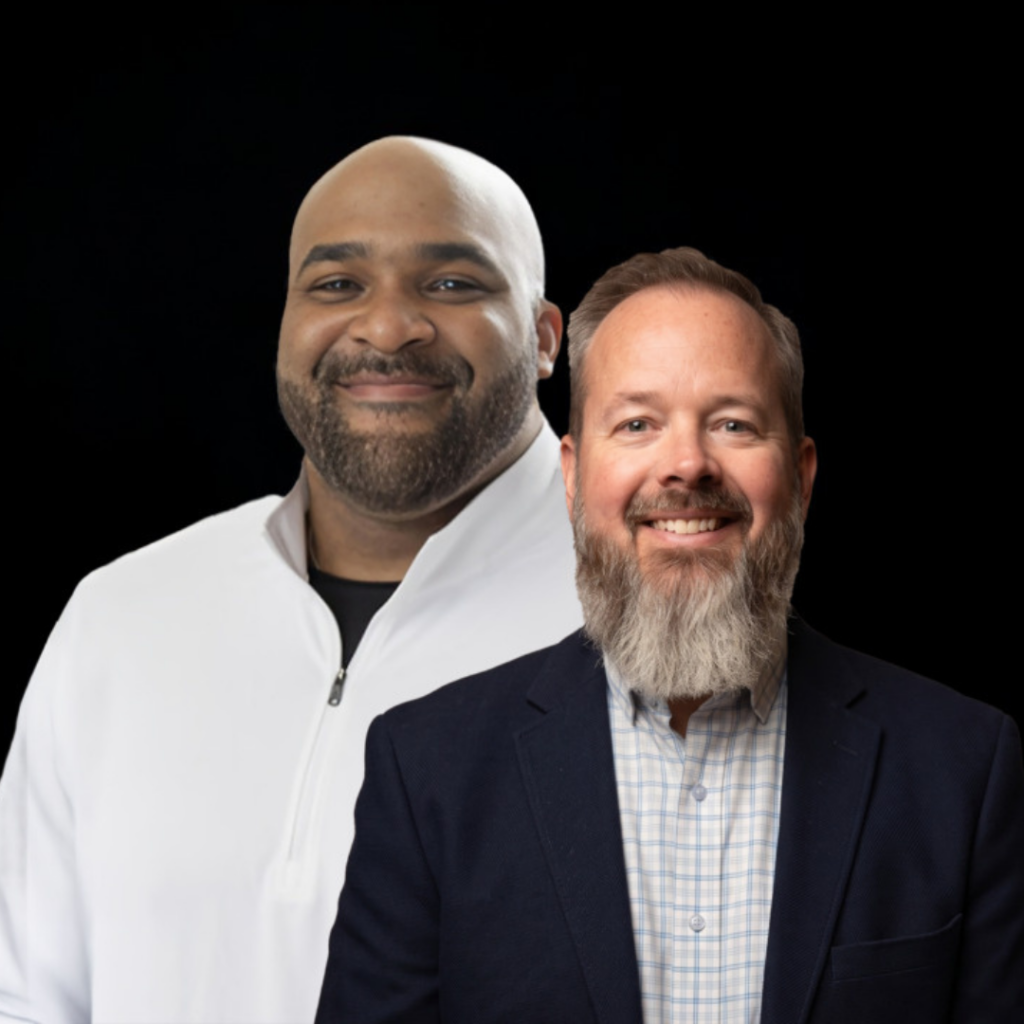
Kyle Craighead is the President & Chief Product Officer for EverRise. With over 15 years of experience in public education as a teacher, coach, athletic director, school administrator, and district administrator, he has had the opportunity to serve various grade bands and demographics in the K-12 setting.
Kyle has now brought his school-system experience to EverRise the last three years to measure the importance and effectiveness of key relationships, such as teachers with students, coaches with athletes, and administrators with teachers.
He has studied the effects of interim assessments and modifying instructional practices that lead to improved outcomes on summative assessments. Kyle is an adjunct professor at Lipscomb University, teaching classes on Strategic Change, Instructional Leadership, Coaching for Change, and Collaborative Leadership in Schools. Kyle is dedicated to improving the educational and athletic experiences of students, student-athletes, teachers, coaches, and all educational leaders.
Joshua Childs is the Senior Advisor of Research and Associate Professor of Educational Leadership and Policy at The University of Texas at Austin. His research examines the role of inter-organizational networks and cross-sector collaborations to address complex educational issues.
He also investigates collaborative approaches involving organizations (local, state, and national) that have the potential to improve academic achievement and opportunities for students in urban and rural schools.
This includes ways to improve student engagement and attendance in school, interscholastic athletics, and expanding educational opportunities through concentrated policy design and implementation. Joshua is a Co-PI (Principal Investigator) of the Expanding Computing Education Pathways Alliance, a consortium of 30 states focused on broadening participation in computer science.
A former Division I athlete, Joshua graduated from Plano West High School (TX).
Kyle Craighead & Joshua Childs
Ed Molitor
When student athletes see their coach as engaged and having fun, and they themselves, the student athletes, are having fun, they are more likely to be not only engaged in their sport, engaged with their teammates, better connected with their school, but see the value of their coach more clearly.
People wanna be challenged.
People wanna grow, they wanna develop, they wanna get better,
but they wanna do it with what? Or with who?
With people they trust.
When those athletes grow up to be leaders and they go out in the real world, what are they gonna do? They're gonna be working on a team, and they need to know the strengths of that team.
So how do we bring that out? Well, it shows up immediately on the assessments that we run.
This is why athletics needs to be beyond s- being seen as an extracurricular activity, and no, it's a co-curricular activity that goes along with subjects like math and science and computer science and English and [00:01:00] algebra and social studies and history, on and on and on.
Every team says they want to win, but winning takes more than just stockpiling talent. It takes trust, discipline, hard conversations, and leaders who know how to coach people through pressure. I'm Ed Molitor, and this is The Athletics of Business, where the lessons of high-performing teams, elite athletes, and high-impact coaches become the playbook for more impactful leadership, stronger cultures, and sustained success Guys, welcome to the Athletics and Business Podcast.
I can't even begin to tell you how excited I am to have two unbelievable human beings doing such great work with us today.
Thanks for having us, Ed. We're excited.
Yeah, thanks. Appreciate it.
Speaking of the work that you're doing, why don't we just jump into where you guys are at, how you've gotten to this point.
Just fill in the blanks, because [00:02:00] it's pretty phenomenal, and the people that it serves is tremendous.
Most of our work right now focuses on sports and education, so it's, it's helping coaches, it's helping teachers, it's helping the administrators, and sometimes athletic administrators Get the data that they've always wanted but never had.
It's been a long journey, Ed, and you've been a big part of that. But one of the biggest things that we're able to talk through now is not just say, "This is the impact of coaches. This is the impact of teachers on student outcomes or student athlete outcomes," as we usually measure it. Maybe with coaches that's with championships, that's with district championships, or, "Hey, we made the state tournament."
That's great, but is that why you got into coaching? Is that why you got into athletic leadership? Well, for most people, the answer to that is no. It's those lifelong opportunities. It's the life skills that are taught. It's the resilience, the grit, determination that are taught. That's what we measure, and then we can track that data and say, what impact is that having on absences for students?
What impact is that having on the [00:03:00] student GPA or behaviors that students have? Now we're able to measure that and give that back to coaches so that they can say, "Look at the impact that we're having." And so the journey's been long, Ed, and we can get-- we can go deeper into that. But one of the, the things that we're most proud of is that we're serving the people who are on the front lines with kids.
I remember, though it seems like a thousand years ago, you know, in a whole different lifetime, when I first discovered the Coaching Effects Survey and I first discovered this work, and I thought to myself, this is before athletic, I was like, "Oh, this would be so impactful on kids, on the athletes, on the students," right?
If we could just get to this, and lo and behold, it was, it was happening. It was, it was in the development unbeknownst to me. But how do you measure the behaviors, the activities, the themes, whatever it is, how do you get to those very things that impacts the student and the ath- students, excuse me, and the athletes?
Yeah, this is such a great question. I think one of the things that we want to do is first, we can understand the value of [00:04:00] coaches and the effect of coaches by asking those that are directly impacted by coaches, and that's the student athletes themselves. And so we help administer a 30-question survey student athletes fill out within ten minutes or less, and they're all about things that...
They all are I statements related to the impact of the coach and the impact of the coach on their athletic and academic performance. And then we analyze all of that data across different kind of metrics and different types of analyses to understand the value or impact and the overall effectiveness of that coach on the student athlete.
And we often, often pair that with either school-level data that's given to us to look at what Kyle just said earlier, intersections with attendance or academic outcomes. But also coaches fill out a similar survey about what they believe or how they perceive their own impact. And we kind of [00:05:00] pair that with the coaching effects survey to see where some useful, not only overlaps and intersections, areas of growth, areas that coaches should double down on, double down on, excuse me, and continue to do well.
But most importantly, to really highlight the value and the important roles that coaches play on a daily basis, and their impact both on and off the field.
It's huge. And, and, you know, obviously this is very near and dear to my heart growing up the son of a high school basketball coach who's, despite the wins and the championships, is more well known for the difference he made in the lives of those that he coached, as well as those that were on his staff and his peers and the...
I don't want to use the word business when it comes to high school athletics, but you know what I'm getting at. And a lot of that has to do with defining what really we are after. What, how do we truly measure success? So how did you do that? Like, how did you get to like, okay, these are the things that we are going to measure, right?
And these are the ways that it impacts. 'Cause to me, in the stories that I've heard and the experiences that I have [00:06:00] had, the amount of value that the student athletes as well as the coaches as you work up the chain of command feel this brings to their world, right? Like, what the difference maker this could be in their world, however it is that you got to this, is truly significant.
So how did that happen?
One of the things that's important is oftentimes we speak about athletics and the athletic experience Through storytelling or anecdotes. And that's important, right? And it's an important part of overall telling of how athletics impacts students, student athletes, coaches. But what we've been able to do now is sort of th-- now tie a measure, tie data, statistical data, with those type of stories to dive deeper, to be able to say, "Yeah, the coach might be having an eight and eight season, but my goodness, the student athletes [00:07:00] are attending school more often.
Their academic outcomes are through the roof, and the value they see in their coach and the value that they see in themselves is astronomical, that if you replace this coach, you could see different types of outcomes." And Kyle, I'll have you expand on that a bit before I follow up with that.
Yeah. I like what you just said there about replace the coach, and sometimes it's that, but it also could be that the coach is leaving for greener pastures or they're leaving coaching and education altogether.
That's part of the work we do, is show their value, and if we speak to their why, then we can show this is the impact that you're having, even if you didn't win district this year. So how did we get here, Ed? Like I said earlier, you've been involved in a lot of this, but I think we can go way back and talk about how this was developed in the business world and the sales world.
Stacia Jorgensen played a, a huge role in developing these six pillars that we now use. Connection, psych safety being the first [00:08:00] two that are, that are in that how are we really building relationships with others section. Then we move into the, the section that's more on structure, communication. It's those systems that we build once we have the relationship.
And then lastly, we talk about skill development and challenge. Why is that last? Well, because if you start with challenge, and you start by being rigid or pushing people out of their comfort zone, but they don't know that you care or that you haven't set up a structure for them that makes them successful, then the challenge doesn't make a lot of sense.
If we think back to the best mentors in our life, and I think we sh- we'll probably talk about this at some point, but if we think about the best mentors in our life, they challenged us, but they cared first, and we knew that what they were doing was meaningful to us personally. Now, yes, it helped the team.
Yes, it helped the smaller version of the team, your first team. If you're on a team of sixty people, that's too many people to individualize [00:09:00] for. That's why we have assistant coaches. That's why we have front level managers. That's why we should only manage seven to eight people at one time. What are the interactions that you're having with that team?
That's what we measure because those interactions with the first group And your direct leader makes the biggest impact on your growth, your happiness, your joy. Are you having fun? And do I want to come back every day? 'Cause if I'm playing a sport or if I'm going into a class and I'm not looking forward to it every day, what's the reason for that?
A lot of times it's because I'm not sure that I'm actually having an impact or that I'm growing or that I'm contributing to a larger group. If I know that I'm contributing to a larger group, if I know that I'm being honored for what I'm contributing to the group by the leader of that group, that makes all the difference in the world.
That's what we measure. And once coaches see that, you forget the replacement part 'cause it's gone. You forget the them wanting to leave part because they don't question when they go home and their [00:10:00] spouse says or their significant other, their kids, "Hey, what'd you do today that was fun?" It's like this.
You know what it was. You know what impact you had because your kids told you so.
wanna- And if your kids told you so, it makes all the difference. Go ahead, Josh.
I wanna have for us and your listeners to sort of do this little, like, thought experiment with me, right? Unless they're driving, don't close your eyes.
But, like, if you were to close your eyes and think about a coach or the coach that impacted your life What are the first sort of things that pop up and come to mind? And for many folks, it'll be how that coach made them feel, how that coach helped them to get them to where they are now, how that coach helped them to overcome or become better maybe at their sport or in something academic or something professionally or overall in their life.
When that coach showed up in their life, right? Notice how I haven't said the wins, [00:11:00] the losses, the championships. Those are like icing on the cake. Those are the things, those are the memories that you hold onto, the trophies you show the kids or the families or the dinner parties. But the things that are intrinsic, that are internal, that no one else sees when you're going through that moment in life, when you're having that happy memory on the beach or on the plane or wherever you are of that time when you were playing, those are the things that stick with us, right?
And those are the things that we want to measure so that coaches can improve and coaches can stay better and stay engaged so that they can have the most impact on their student athlete. Because what we know is not every student athlete's gonna become professional, not every student athlete's gonna become famous, right?
But you have the chance every single day, the opportunity to impact young people's lives, and that's what we are hoping to do through the work that we do. That coaches see the value not only in themselves, but the overall profession and the overall impact they can have on a daily [00:12:00] basis.
That is so huge.
I literally have goosebumps. I mean, the way you said that. And if you think about it, especially for younger coaches, this is so significant 'cause, you know, some of us, us older guys, right, we don't really realize the impact we had on young women and young men that we had coached until long after their playing days are gone, right?
Till we're invited to the wedding or till we bump into them somewhere. You know, and they say, "Listen, you told us this at this point in my life, and this is how I put it into play with my children," right? Or, "I was really struggling. My husband was diagnosed with cancer, and you told, you know, you told us this story in 2000 and whatever, and just know that it helped me get through this time."
And, and some of us, and I'll be the first to admit, when I was younger, it was about getting great players and winning games, right? And, and having fun with them. And like, you don't really realize the significance in even the one-off conversations, even just making sure they're okay, even trying to understand, like, what they're feeling and what they're going through.
I absolutely love this. You know, and Kyle- Mm-hmm. When you and I first connected, forgive me [00:13:00] for how many years ago, but I believe it was the Coaching Effect Summit in New Orleans. That's right.
New Orleans, that's right.
I believe you had your whole team. The proof is in the pudding. You lived this with your people as an administrator, as a t- Like everything- Mm-hmm
that you had done along your journey, this is exactly what you embodied. Can you talk into that, like the difference that this made with the folks that you led?
Yes. So when I first used this, it was because was working on my doctorate Couldn't find ways to measure in the education world what we needed to measure.
It's the intrinsic pieces that Josh was just referring to. That's why we say we uncover hidden metrics. Well, why are they hidden? Well, because they're not the outcome measures. But in education, we're all about outcomes. It's even become more that way in the last probably five years, where that may be all that people are looking at, that the state test scores that are out there just keep getting more and more at the forefront.
Well, what leads to great test scores, what leads to great student [00:14:00] experiences, is for the people who are leading the teachers to actually be leading the teachers in the way that makes sense to those teachers, and that changes based on what s- what school you're at. That changes based on what faculty you have.
For me personally, the reason that I wanted to join in this work and spread the work, Ed, with people like you, is because I got to see firsthand what impact I was having on the group that I was leading. I got to see others have the same type of experience where those w- what you just said a second ago about those one-off conversations that we used to think of, like, hopefully they happen by the way conversations.
What if that becomes a system that you run? What if a by the way conversation becomes a daily habit? That changes your whole frame of reference as a leader, and then your people see you as more relatable. You're able to push them harder. They're able to push themselves [00:15:00] eventually That it's not you saying, "Work harder, do this more."
It's them saying, "I want more because I see where this is going. I see the mission that we have." And that's easy to see in schools. So why don't we look at it always? It's because the numbers aren't there. Why are the numbers not there? It's because we're not measuring it. Well, how do we measure it? That-- Well, that's what we do.
We fit firmly in that gap.
I want to add something to that, too. What you didn't hear Kyle say is using these measures in a punitive way, right? Because oftentimes when people hear measure, we should measure. Oftentimes people will default to, "Okay, well, once we see the results, we'll know where our problem areas are," or, "We'll know, like, how we can cut the fat or get rid of folks," right?
But for us, it's really as a way in which to say, "Hey, where are the opportunities for growth?" Because we know that coaches are impacting and working with young people. And to me, and this might be, this my, [00:16:00] hopefully my one and only soapbox moment on this podcast, right? To me, we can't take deficit approaches when it comes to educating our young people.
Not today, not in today's age with the emergence of AI and the ways in which organizations and companies are using technology to pit young folks against one another through social media and other aspects, right? That we need to be really sure and clear that the ways in which we're measuring, particularly our coaches, has positive effects and can lead to positive results and can lead to positive growth and professional development opportunities so that young people are positively impacted, so that then they grow up to become positive role models in their communities, whether they're in coaching or some other professional or business sector or sense, right?
And that's the important part, that we don't see these, these tools or this tool of measurement as a way to punitively [00:17:00] impact or destroy coaches. That's not the objective, and that's super important, and I love the way in which Kyle sort of framed the way in which he used that word.
Yes, and if-- with your permission, I want to build on, stand on both of your shoulders and build on that in that you just said it.
You talked about tools, right, and you talked about resources, and that was one of the greatest single explanations I ever heard years ago from Will Klefkorn was this. It was, "It's not a weapon, it's a resource," right? And to your point- That's right ... it's like we're not looking to find out what's wrong.
We're looking for opportunities of growth, and it's awesome to show and identify the things that we're doing really well that are making an impact, right? That's right. This is a tool. It is a resource to just, you know, help everybody elevate their impact.
I think Chip and Dan Heath, the authors, talk about bright spotting all the time, and that's the first thing we do This is working, do more of it.
How do you know that it's working? 'Cause your people say that it's working. Do more of it. And to shout out Will Kleffkorn again, he's amazing at that, and that's, that's [00:18:00] really what brought me in, that's what brought our team in, is being able to bright spot those things. There's a story. I was in, uh, Texas for the Texas High School Football Championships in December, probably three years ago now, Ed.
But there was a football coach, head coach now, former defensive line coach. I want you to envision this in your head about who I'm talking about right now. And I'm working off my computer 'cause there's no projector. You know, we're in the football stadium. We're, we're, we're at the AT&T stadium where the Cowboys play.
So I'm working off my projector, and I showed some impact that he was having. And when I showed the data, it was, he's challenging students, it's leading to less absences. His staff is building connection and asking about life outside of football at a higher rate. I think he was maybe fifteen percent above the national average that we have of all these interactions that we measure.
He starts tearing up. So envision this big guy, tough football coach, starts tearing up. Why is he tearing up? He said, "Kyle, I want to [00:19:00] tell you, my mom has said I was supposed to be in ministry. I was supposed to be leading people in faith all these years and young people, and why are you not working as a youth minister?"
All that. And he said, "I've always told her that I'm doing that just through football and school." And he said, "What you just showed me is I'm getting kids here, I'm challenging them, I'm teaching the, the small impacts that they're having every day by asking about life outside of sport. I'm doing that every day, and that's why I'm tearing up."
And he literally stepped away, called his mom, told her about this. That's the type of impact this data can have when you actually measure it.
You hear stories like that, and you hear about men and women of that stature, of that experience, have been along that journey and how it actually moves them. And, and that's what it's all-- But when you get them, and when you do things in such a way like these coaches and then teachers are now doing things, you start to get the kids to self-select into what we're-- the direction we're trying to point them in, right?
Now all of a sudden they're self-selecting in, and that's where the magic really happens. And you [00:20:00] referenced Chip and Dan Heath earlier, the power of moments and bright spotting. There is so much to be said about that. And Josh, in all your work, right, and in all your studies and your writing, what are some of the stories and some of the data that you've seen that's really compelling, that when people see that stood up, they're like This is mind-blowing.
Thanks for the giving me more credit than I deserve, the saying that my research and writing is mind-blowing, or people have that response. That's every researcher's goal. I don't know if I've achieved that, but you said it. I'll go with it. Rumor
has it you have, and
I'm gonna
go with that, so.
I'll take that.
I'll take that. One of the most compelling findings, I think, or one of the things that Kyle and I have talked about a lot is this idea on the word fun. Folks think that student athletes, particularly at the high school level, care about winning, care about skill building, are engaged because of they're playing with their friends, and all of those things can be true.
[00:21:00] But what we found to be the most, at least from the evidence and data, is this concept of fun, that when student athletes see their coach as engaged and having fun, and they themselves, the student athletes, are having fun, they are more likely to be not only engaged in their sport, engaged with their teammates, better connected with their school, but see the value of their coach more clearly.
And that's super important because oftentimes we think about the X's and O's, or we think about this about, oh, I'm now able to juggle a soccer ball, or I can dribble between my legs in a basketball and do a left-handed layup, right? Which took me years to develop. But the idea that I'm having fun and that the coach has created an environment for fun to happen is paramount, and I think we don't highlight that enough within our athletic communities.
We see it, right, when we watch a TV game, right? Uh, if you're [00:22:00] watching what took place, I think it was on Sunday, this past Sunday, in New York City, in Madison Square Garden and Radio City Music Hall, the Knicks finally making it to the NBA championship, and you're seeing the arena and the city With all this joy and fun because their team has won, right?
But then if you actually paid attention and looked at the players and the, those who were in the battle, in the arena doing the work, you could see that they were also having fun, right? And the fun is also obviously amplified by winning and reaching goals, and that is all true. But the fact that the daily grind, we often focus on the daily grind, the ins and outs, the repetitions, the practices, right?
But nothing, I would say, in the... I guess this is my second soapbox moment. Nothing matters unless we're having fun within it, right? You're doing a podcast. A really top-tier podcast, [00:23:00] and I bet part of the reason why that you're in the grind of the editing and the interviewing and the scheduling is this is fun for you.
There's some excitement, there's some joy that this brings to you, right? The work that I do as a professor, engaging with students and grad students, engaging with partners like the Texas High School Coaches Association, working with great folks like Kyle and the Everus team, is fun. Which makes getting up, makes doing the daily grind of writing a paper, doing the edits, analyzing data, fighting with a computer, all of that's worthwhile because in the end, I enjoy what I'm doing, right?
And I think the true is the same for sports, and we don't talk about it enough. And so when coaches see that and they go, "Oh, does my student athletes think I'm fun, and that what we're doing is fun?" Then that makes a kind of, I would say almost does a 180 in thinking about ways in which coaches can now engage with their student athletes that helps them connect not only with them and with their sport, but also the [00:24:00] broader school and broader community as well.
Amen to that. And, and to connect that back to the story Kyle was telling about the Texas high school football coach, right? And he challenges kids, and he's, he's doing his ministry work through coaching and teaching. And for whatever reason, we live in this society that believes that joy and hard work sometimes are, are somehow mutually exclusive.
They're not. People wanna be challenged. People wanna grow. They wanna develop. They wanna get better. But they wanna do it with what? Or with who? With people they trust, right? With people- Right ... with people they trust. And that's why the work that you're doing is so much fun. And I've got to ask this question As you see the psych safety scores go up, as you see the connection scores go up, how much more fun are those student athletes having?
You know, we joke in coaching that sometimes you do your best coaching job with your least talented teams, right? Mm-hmm. With your biggest group of misfits. It's just, you're around long enough, you realize it works out being true very often, because that's when you find a way as a coach to [00:25:00] intentionally connect with the players you have so you can squeeze the most out of them.
You don't take those relationships for granted. I have to imagine you guys see that show up in your work.
We do consistently. The last paper that we put out, it actually showed coaches who score high on fun and the coaches who connect the best, so it's those two things, actually are able to challenge their athletes more.
The athletes say, "They challenge me more." That's not what you'd think maybe 20, 30 years ago. That's not what you think when you get into your career. You're thinking, "Hey, I'm gonna challenge these athletes, but how am I gonna do it?" Well, maybe by rigid structure, whatever that may be that's in your mind.
That's not the coaches who challenge the most. The coaches who challenge the most are the ones who connect the best, the ones who gamify practices, and, and Josh has, has mentioned this and, and wrote about it. But what does it mean by gamifying practices? Why does that make a difference? Because we're making mini [00:26:00] challenges, and we're making it fun.
We're making mini scrimmages in our practices, making that part fun. W- what does that mean as it transfers for the student athlete later in their life? How do they do that in the classroom? You see it all the time, Ed, that what you learned on the field or on the court transfers to all parts of your life, and that's because it's intrinsic.
You can't carry the trophy around that you won with you. You do carry around the intrinsic learnings that you had along the way at every step, and that mentor is in your mind. Whether it's a coach, a teacher, a dad, a grandfather, a mother, what, whoever that is, you carry that piece that you say, "I'm gonna filter this decision through what that person would say."
And for a lot of us, that's a coach.
Josh, in the work that you've done, I have to believe at some point it is uncovered or it becomes obvious that you think about the relationships that coaches who find joy and create fun and the connection they make, they build these [00:27:00] resilient teams, right? They help the athletes, the student athletes create these bonds with their teammates.
And to Kyle's point, those are the things that are, are still around long after the ball has stopped bouncing. I have to imagine you've uncovered that those teams are also the ones that operate with the highest level of resilience over time.
Yeah, absolutely. I think, and obviously there's outliers, right?
Like, obviously you're gonna have those coaches or people who are probably listening and be like, "Well, I was on a team like that and we did really well." Obviously that, that can also be true as well, right? There's various ways in which jobs can get done and do get done, right? Some people work better at 5:00 in the morning, some people work better at 5:00 PM in the evening, in the afternoon, right?
Both things can be true. However, I would say when we're thinking about if we truly wanna value and center young people, whether we're talking about United States or we're talking about globally, how do we think about creating environments that where challenges [00:28:00] can happen, where risk-taking can happen, where fun is promoted and accepted, and that students and student athletes feel like they're part of something greater than themselves, right?
And I think that's so important. I often, as you were talking, and I think about what's the like- If we're thinking about right now, what's the hot craze over the last three or four years that's taken over United States in the sporting world? It's... I'll give you, I'll give you a hint. Any- It's so much so- Oh
that they've had to expand their teams and offerings because it's become such a craze.
Mental health.
That's a part of it. Okay. I'm actually thinking of a specific team, the Savannah Bananas. So why have they emerged as this sort of big time professional entity, organizations within the sports world, right?
Part of it is, I would say, is they bring value to the communities in which they go into. But a big part of that is this aspect of fun. [00:29:00] Wow, there's these professional ball players out there having fun, doing really well. Some of them make it to the major leagues, right? And they do all of that while putting joy and smiles into the audience, right?
Into the arena, right? And so there's this aspect of fun that's really captured us that no one's really been able to sort of write about or capture. They see this, right, they see this phenomenon, and they're trying to understand. They see this owner on interviews, and he's wearing yellow and the top hat and everything else, right?
But I would make the argument that it's fun, right? We want our sports to be fun because oftentimes what we see or read about is the not fun parts. Parents fighting in the, on the, in the sidelines, right? Or in the, um, audience, right? Coaches yelling at one another, right? Fights, right, during a championship game or whatever else, right?
All of those things negatively impact our sports and our sporting community, right? But if we can focus on the fun [00:30:00] and get back to the fundamentals of why we engage, and fun is part of fundamentals of the work of athletics and sports, I think we then begin to see more resilience. We begin to see more engagement.
We begin to receive this more importance and values of our coaches and the student athletes within our communities.
You, you really start to think about the culture, too, right? Like, it just continues in these high school athletic programs. It continues to feed and fuel people wanting to be a part of that, wanting to self-select into being a part of something bigger than themselves.
And when you really think about it, as you were talking, we've kind of been saying this for years. Like, if you go to an AAU event, first of all, God help us all because the cost is not relating to get into, right? But anyway, so I digress. But you go into, there are the teams that you just have a hard time watching.
They, it's about them. It's a me. It's just negative energy. It's trash talking. But then there's the teams that you walk where you're like, "Man They were fun to watch. Like the way they played together, how [00:31:00] hard they played, how they communicated, how they talked. And they didn't just all of a sudden wake up one day and be a fun group of kids or kids that found joy in the way they connected with each other.
And it's to your point, I think it's something that everybody craves and desires, right? And it makes such a big impact. Kyle, when you start to think about this, now you've been a part of this for a while now, right? Mm-hmm. How have you seen that joy, that fun factor sort of elevate and show itself more as more surveys come in, more research is done?
Yeah. You see that coaches know the impact that they're having, and they start to do those small things, those daily habits more, and the kids see that payoff. So we have examples of coaches who are with us year one, they measure, let's say they're a fall sport, and they score high in some areas, but not all areas.
The key is not what's your first year scores, what are you going to do about it now? As anything in life, if I ask you a question, Ed, and say, "How are you connecting with your student athletes?" [00:32:00] And, and you're a coach and I, and I say that. And you say, "Well, it's pretty good." Well, I say, "No, give me a number one to one hundred."
Well, that, that becomes entirely different. Well, what if we ask your student athletes what is that connection like in terms of with your coach or with your direct coach, your position coach, and the score comes back and say it's seventy-nine. The national average is seventy-five. Your school average is eighty-two.
Immediately, Ed, you're like, "What, what do I need to do to grow that? I'm s- I'm pretty good. I'm above the national average, but I know I can be better." Well, your athlete said you need to do more of blank and blank. It's asking about their life outside of the sport every day. Yeah. It's making sure they know how they're contributing to the team, them individually, and setting goals as a team and them individually That changes the landscape because now I can say last year I was 79, national average was 75, school average was 82.
I just grew that to an [00:33:00] 85 because I did those things intentionally every day. It changes our perspective when you put numbers to it, and that's what Josh was touching on earlier with the measurement. It's not punitive. It's totally a growth measure. And how are you going to use that resource? Coaches in our competitive nature, we're going to use it for good because that's why we got into this to begin with, was to do good in the world.
And I think it's important to point out, you just said something that I'd be remiss if I didn't point out. You have the school average, you could have the district average, you could have the state average, you could have the national average, right? And you can see how you stack up and how you compare.
And that leads me to a question. Coaches that experience the most growth. Now, the most growth being you could be a 50 and jump to a 75, but we all know to use golf as an analogy. If you're a 20 handicap and you go to a 12 handicap, it sounds like you made an unbelievable jump. But the real magic lies in what?
When you go from a five to a two, right? Or a four to a one. That's right. Even though it seems smaller in numbers, it's [00:34:00] actually a much bigger difference. So the coaches who, who realize and achieve the most effective growth. I'm looking for the right word. The growth that's the most meaningful. What is it that they do?
Like, what is their approach? So they get their score, and then from there, where do they go?
So we have development resources from some of the best coaches. We partnered with a guy named Steven Mackey, and he's built videos for us. There's individualized pieces for coaches, and we say, "Coaches who score top level on this question do these three things."
Sometimes that's by sport. The other thing that, that we would also be remiss if we didn't point out is sometimes it's important for the coach to realize that maybe that's not me on this staff, but that's my assistant coach. Or that's not this assistant coach, that's this assistant coach, and it's the teamwork aspect of basketball.
The point guard, if the point guard's leading the team in rebounds, either you've got Magic Johnson as a point guard, or maybe the point guard's not doing what they need to be doing and somebody else should be doing it. So [00:35:00] we also have that on a coaching staff. And embodying that is really empowering to the student athletes to see is that coaches have different roles, and we all need to contribute in some ways, but sometimes that's just this coach's natural habitat.
That's where they really excel in using them in that way. Because when those athletes grow up to be leaders and they go out in the real world, what are they gonna do? They're gonna be working on a team, and they need to know the strengths of that team. So how do we bring that out? It shows up immediately on the assessments that we run.
So Josh, would love to hear about what you think the best coaches do.
I'm gonna actually maybe take in a direction that you weren't expecting, Kyle, but you've worked with me long enough. You're, you're used to my pivots. But I'm not hopefully pivoting too far. I think more than ever, especially at the high school level, like education has sort of, has changed.
Uh, we've seen a flip over the last 25, turn of the century, right? Where [00:36:00] traditionally you would see people who started off as coaches work their way up, whether women or men, work their way from being the assistant coach to then, oh, they're a coach. That means they're auto- we automatically assume they're gonna be a great leader, and they work their way up to eventually becoming either a building level principal or working in central office, becoming a superintendent and so forth.
That's actually changed over the last 20, 25 years, where more and more administrators that are in these roles that oversee or support or can decide how athletics is funded or are funded, excuse me, are not actually coming from the athletic side of the house or coming from a coaching ranks. And so Now what we're hoping to be able to do, while not only being able to have coaches see how they're doing with their own student athletes or seeing how they're doing as a coach themselves, but now speak the language that decision-makers [00:37:00] need and have, and need to have to make decisions.
And what do I mean, right? That means decision-makers need data. They want data. They wanna see how things are impacted in the overall effectiveness of the things in which they're investing in. And now coaches can take this data and say, "Look. Look at what my staff, me and my staff, my athletic department, are able to do with the students that come through our door, regardless of race, regardless of gender, regardless of any type of other backgrounds or things that students come into schools every single day.
Look at what this data shows, and look at what your investment in athletics, in this sport, in our staff does for the students that come to our school Monday through Friday for 180 days in a school year," r- right? And that's so important because That, that ties in or that helps to support [00:38:00] the anecdotal, as I mentioned earlier, storytelling that we often do with athletics about how athletics makes us feel and what we're able to see.
Now we can attach some data with that, some positive growth mindset, growth level data with impact that administrators need for when they go and talk in front of a school board, or when they go in front of their state legislatures, or when they're doing a press conference about the overall effectiveness of their districts or ways in which they can improve, or way they need more community or investment type of support.
The data helps to do that, and I think that's important now that coaches can now use that as another tool, as another language, another notch on the belt to show this is the impact we're having on our young people within our school, within our district, and this is why athletics matters. This is why athletics needs to be beyond s- being seen as an extracurricular activity, and no, it's a co-curricular activity that goes along with subjects like math and [00:39:00] science and computer science and English and algebra and social studies and history, on and on and on, right?
That coexist with those things, and it's not something extra that we look at when we get to the end of our meeting, last five minutes, "Oh, we'll sprinkle something to athletics." No, it goes hand in hand with what we're doing in our school and district.
And we have a friend, Curtis Culwell, that says, uh, when he talks to superintendents, he's a former superintendent, re-really smart guy, but if he's listening to this, then I didn't say that part.
But as, as he goes in and talks with superintendents, he says, "What's your greatest high school dropout prevention program? How do you keep high schoolers from dropping out? What's the program that you run that's the most effective?" And lots of-- to Josh's point, lots of superintendents don't go to athletics right off.
And he says, "No, it's absolutely athletics." And sometimes he gets a laugh. Sometimes they're-- someone says, "Yeah, a-actually, that probably is the case." I, I know some [00:40:00] people that when they stop playing, they immediately drop out or, or they don't see the value in school anymore. What we have now is when they say, "Well, that's a great anecdote," or, "That's a cool story," or, "That's funny," prove it.
Now we can Coaches can and athletic leaders can
I'm curious. I, I know some of the inner workings of school districts around this area just from where I've been and what I've done, and now it's hard to give a kid an F. It's hard to hold a kid accountable for being late to class consistently, right? It's hard to...
If you have a kid that disrupt, they don't want you to send him down to the administrator. I've always thought what that kid really wants, like, there's a reason they're like that. Like every... You know, all behavior is meaningful, purposeful, and needs fulfillment, right? What is the structure- Mm-hmm ... that that child needs?
The structure is we're gonna hold you accountable, right? Have you seen- That's right ... the, the impact that this has had on situations like that where you've gone into a district or gone into a, a district a- and said, "Hey, listen, we understand you have this [00:41:00] problem and you're, you're taking the path of least resistance, but let's just show you what we really could...
like, how we really could help these kids and how we really could serve these kids." Has that happened in, in all of your guys' work?
It has on multiple occasions, and it, it depends on what the district's focus is. Where's-- what's their strategic plan focusing on? What initiatives are most important to them?
We can measure that, and sometimes right now across the country, typically it's chronic absenteeism. Who has a huge impact on absenteeism? It's the adult who has the closest relationship with the student. Well, it doesn't necessarily mean... Notice that I didn't say coach is the answer. It could be an adult that's leading a robotics team.
It could be the theater teacher. Who's the person that connects with those students that can hold them accountable because they, the student knows that they care? Yeah. Now, for a whole group of people, that's the coach, and we see that all the time. I use this example a lot, but when I was a school [00:42:00] administrator, we had a new geometry teacher, first year, 22 years old, having a lot of trouble out of some students.
The ones who were athletes, it got corrected immediately. Why? Because the coach took care of it. The ones who weren't athletes, that teacher still had persistent issues until we found a teacher who was connecting with those students. Why does that matter? Because if there are people in your school building who are not connected to students, in your school building who are not connecting with an adult, that is a, an adult problem.
We have to get them connected with someone. It just so happens That coaching is built in. They already have a connection. They have someone who's holding them accountable in multiple ways. Are they holding them accountable to grades and attendance and behavior? For the most part, yes, we see that in almost all of our data.
And if it's not, it stands out. Uh, one of the people that we work with right now is named Chris Pointer in, in Murray County, Tennessee, an amazing athletic leader. And what you see at some of, at some of his schools, if not all of [00:43:00] his schools, is that coaches are checking on grades. Coaches are checking on attendance.
And it's paying off because the athletes score so much higher in those accountability areas than non-athletes. What does that mean for people like Chris? It means that we need to get those coach up, coaches up speaking and being the PD leaders, not the people who sit in the back and say, "This doesn't apply to me."
They're the ones who are connecting with the students, and they're really good at it.
Here's one of the things I don't like about the podcast is when we're having a ton of fun and we're rolling, and all of a sudden you realize you're, you're coming up on your time, right? So Josh, we've connected Kyle's past to this and talked a little bit about the journey he was on and how this...
Can you talk about yourself, you know, your journey, your experience, and how you got to this point and all the amazing... 'Cause it's truly fascinating the work that you do and, and how you've gotten here.
Yeah, I mean, r- real quick, I, I grew up in Texas, so shout out to Texas. Not born, but raised, and was an athlete my [00:44:00] entire life.
Was privileged enough to play in college. Was privileged to work with an athletic department in my master's program at University of Colorado at Boulder, and then got my PhD from the University of Pittsburgh and was fortunate enough to get back into the state where I'm a professor now at the University of Texas at Austin.
Athletics has always been a central part of who I've been. I think about things that coaches either I got to be coached under, have worked with, or just heard and saw. Thoughts, words, things they've shared, their personas, they impact me daily. I think about often. I copy mannerisms and, and words in my classes.
And when I interact with students, I, I treat my, my, the students I work with as a team, right? And that we're all moving towards a, a goal, right? With individual goals as well, right? And I just value the work of athletics. Kyle's from Tennessee, so he gave a Tennessee shout-out. I'm gonna give a Texas shout-out to the [00:45:00] amazing work that our Texas coaches do And coaches all over the country, but especially here in Texas, where to be a, a middle school or a high school coach, you have to be employed within that school and district.
And so they serve these dual roles of both educators and coaches, right? And so they, they are super important. And, and the value that organizations like the Texas High School Coaches Association, the University Interscholastic League that oversees our athletics, uh, infrastructure here in the state, the work they do to pour into our athletics, our student athletes, our educators, and our coaches and athletic directors is super important.
And I just think that every day I wake up thinking about how can we make the lives of young people better, and how can athletics be a part of that vehicle, right? And I often say that it doesn't matter if you do not have an athletic bone in your body, that you too can be an athlete, right? Uh, you too can participate, and that everyone should have [00:46:00] an entry point for engaging and participating in sports where it's fun, where they're challenged, where they feel the value of taking risk, and that they can see growth opportunities, right?
And again, I think that's super important. And now, in today's sort of... And I've given a long-winded answer to your question, and I apologize. But I, I think it's super important to say this. In today's current landscape of youth sports, I worry that we are pricing out or singling out or excluding out those that could benefit the most from participating in athletics.
And so that is my life work. That is my goal, is how do we expand access for all? And I think we do that through empowering and equipping our coaches, because they are the front lines of working with our young people, and it's super important. And I think if we can do that well, that we'll see more and [00:47:00] more young people not only engage and participate in sports, but stay with it and not feel stress and burnout and wanting to quit when they're 12, 13, 10, when they should be at the point of being wanting to explode and accelerate into engaging with their sport, and I would say their sports Over time, right?
To where they're... If we believe in lifelong learning, we should also, also believe in lifelong sports participation, lifelong athletics engagement too, right? And I think that's super important, and I hopefully we can not, uh, move in the direction that we're currently in where we're seeing less and less of that because people are getting priced out or excluded out of sports participation.
Well, and there's nothing that breaks my heart more when you see some of this youth sports and the state of youth sports, and you see kids dropping out because of the experience they had with the coaches that were in charge of them. Right. That just breaks my heart. And Josh, [00:48:00] after listening to you talk, I'm ready to run through a wall.
Like, I don't know if I can still play- ... but I would love to go play. So it leads me to this final question, okay? And before we get to the final question- Where can the listener find out more about the work that you gentlemen do? We'll put the links. You shared a link, social media, websites, all that. We'll put all those links on the show notes, so they will get that.
But would love for one of you two gentlemen to share that with them right now.
Yeah. Easiest place is to go to everise.ai, and that's E-V-E-R-R-I-S-E.A-I. And you can see all the articles that we have there. We have actually a news section on there. We can see interviews that we have on there. We're on all the social media platforms, easy to find.
It's usually Everise Data. If you look that up, you'll see us pop up. But there's lots of data that's there from other coaches or other athletic leaders that they've used at their district level that you could say, "This could be me." And that, that's really what we want is for it to be [00:49:00] so accessible for you to say, "I need that data for our district, for our kids."
And then you say, "Okay, I, I wanna take part in this, not only for me as a growth as a coach, not only for our school's growth, not only for our district's growth, but primarily it's for the students to have that experience."
Yeah. And there's other great people in this space doing phenomenal work as well.
And so Kyle talked about chronic absenteeism. A colleague of mine, Nat Malkus, out of the AI- AEI Institute, just released a f- an amazing report on chronic absenteeism in athletics focused on the state of Indiana. So yeah, I think there's just some great work happening now happening within this youth sports athletic landscape.
I love this. So now I'm gonna take my turn on the soapbox, Josh. Okay. Why in God's name, what are the pushbacks? What are the reasons people don't understand or grasp the significance of the work that you are doing and the responsibility that they [00:50:00] actually have, not necessarily to the board or to funding or wha- It's to the kids.
Why do people not grasp it, or why do they push back on it? What are the reasons for challenging this unbelievable body of work?
I'll start. I'm hopefully gonna give you a quick answer. I'm a professor, so if you give me a question, I'm just gonna talk and talk. But, um, I would say three things. One, I feel like folks don't fully understand athletics in a way.
I think we have this sort of metaphor of sports with the big jock. It overruns folks, right? And it's sort of pushy. And so people have this sort of mentality when they think about sports of like, it's very exclusionary, right? Where sports and athletics, right, there's grandmas, my own grandma, who can run a mile faster than I can, right?
And she's engaged in sport, right? So I think trying to turn that kind of metaphor around into having people thinking about, no, it's an inclusive activity and so forth. The [00:51:00] second, I think the money involved has clouded people's judgment in ways that has impacted how people see athletic and see sports, right?
And then third is I think student athletes, and some of this has trickled down from the collegiate level There's a sense of, well, how did they become so empowered? And why do they have so much autonomy and so much leeway in making so much money? And I think, I think it's just sort of changing some mind shifts of the way in which we view and engage with athletics, right?
And at the end of the day, those that are making the news, those that are on the front page of the ESPNs are the .00002% of those that engage in athletics and sports, right? When we think about young people. But I'm thinking about Johnny, it's not actually their real name. Johnny around the corner, who has three left foot-feet, but enjoys playing on the field by my house [00:52:00] with who I th- I'm assuming is their dad or somebody, some relative, every single day kicking a soccer ball.
Can't kick to save his life, but enjoys being out there. And how do we keep Johnny, who I'm guessing is around six or seven, engaged in that sport to regardless if they become the next Ronaldo or become still the three-foot left with a kicker that they are at age six or seven, enjoying and engaged in sport.
And I think that's super important of how do we make it so that it continues to be inclusive, right? There's nothing that brings m-greater joy in our society than sporting events. I can prove it over and over again. Nine eleven, COVID, uh, anytime there's a maj... What happened in New York, right? Sports brings joy.
Sports brings out people, and I think we gotta focus on that and, and, and stay, stay committed to that work around fun and enjoyment. Kyle, anything you wanna add? Sorry.
Yeah. I think, Ed, you, you were saying what are [00:53:00] pushbacks. For coaches and people on the front lines, school athletic directors, there, there usually isn't pushback.
They see the value. They see that they just does need to be measured. And if it is, then it's gonna have a big impa-impact on kids. For the people who are making those decisions at the, at the top of the pyramid, so the superintendent, maybe it's a CAO, maybe it's somebody's assistant superintendent, deputy superintendent, they feel like at times if I fund something in sports or if I devote some, some time to things in sports and they get this backlash.
And no matter how you feel about NIL, what ends up happening, at least at, at a K-twelve school level, is people think that, well, if we give money there, what about the kids who aren't participating? It-it's changed that landscape, as Josh was mentioning a minute ago, about the money that seems to be there.
Well, what we're forgetting is that this is the best program for kids to have a mentor. Well, [00:54:00] what program am, am I talking about? Sports. I'm not saying that theater is not important. It is. It is extremely important. All of these things are important because really we should view all of this as a mentorship program Because that's truly what it is.
Would the school board fund a mentorship program? Yes, they do all the time. But as soon as you attach sports to it, they think we're only serving a select few, and that's not the truth. 'Cause there's people like me who didn't play in, in college like you two, and a backup, but what, what can I do still with my career?
I can still be a coach. I can still coach kids. Did I learn teamwork through athletics? Absolutely. What about the 13th kid on the 15-kid basketball team? Are they learning about teamwork and about resilience? Probably more than the number one kid on the basketball team, they're learning about resilience and grit.
So why do we not view it that way? I think that people just need to take a bold stand who are at those high leadership positions and say, "This actually is a program that's [00:55:00] for many, not for a few."
I tell you this, as a parent of two young kids that, that love sports, love other activities, the work that you're doing is so significant.
It's so important. And I think about their friends, right? Like obviously, you know, they have had a dad that's been around a little bit, so they, they hear more from me than their friends might hear at home or hear. Like, I think about all the kids I've seen growing up and the difference it's made in their lives as they come back from college and go out into the working world or go through the struggles that life throws our way.
Thank you for the work that you do. You know, I know it's, it's a ton, it's a lot. I know the hours that you guys put in that we even hide from the ones we love sometimes because there's a lot of them, but it's making an impact. So thanks for being you, Josh, Kyle. Appreciate you guys.
Thank you so much again for having us.
Thank you,
Yeah. All right. It's been a lot of fun. Well, listen-
It's been a lot of
fun ... again, again, Evverise.ai. That's E-V-V-E-R-R-I-S-E.a- [00:56:00] d-.ai, excuse me. And then go to all social media handles. And Kyle, did you say Evverise Data?
Data.
Data. Excuse me. Okay. Evverise Data. That's right. And thank you, all right? Wish you guys all the best.
And we're gonna have to do this again soon. What I would love to do again is dive into like a case study where we really walk it through from start to finish. Let's do it. Maybe we could do that with the High School State Football Association or something like that.
Sounds great. That sounds great. Let's do it.
Thank you for listening to The Athletics of Business. Be sure to give us a rating and review so we know how we're doing. For more information about the show, visit theathleticsofbusiness.com. Now, get out there, think, act, and execute at the highest level to unleash your greatness.