

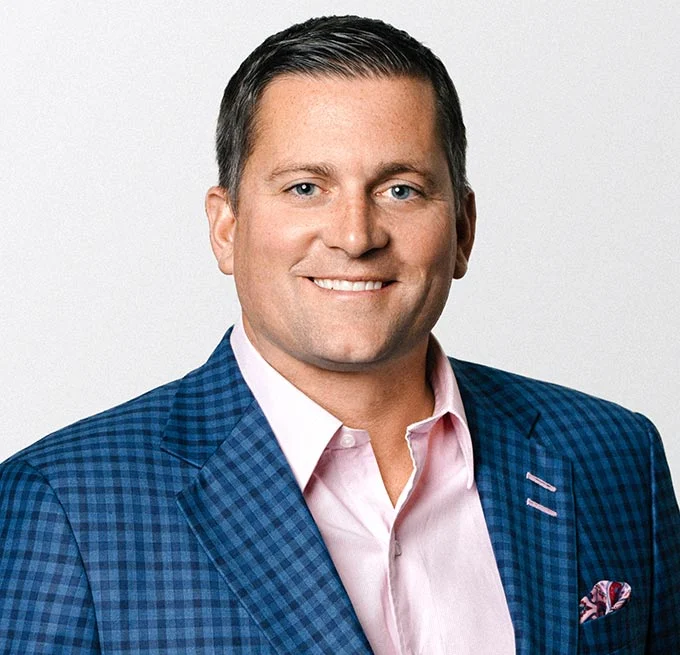
Matt Monahan joined Genesys Health as Chief Strategy Officer in 2020 after leading the way as the National Practice Leader of an Insurtech benefits consulting firm. He was responsible for sales, service, and insurance operations for over 500 employers across the United States.
To know Matt is to be in the presence of an infectious energy. Matt sees the world differently; where others see a dead end, he sees an opportunity to connect, perfect, and solve. Matt isn’t afraid to ask hard questions and challenge the norm, taking pride in disrupting systems before building them back stronger and more successful.
Before that, he spent 15+ years at Aetna and GE, where he held multiple senior leadership roles at Aetna. Matt worked closely to bring innovative solutions to the market.
In a consulting business where service and support are incredibly subjective, regardless of the situation any action he takes is making sure it is the right thing for that person on the other end.
Guys locked in with the weather. Are you guys okay there?
Now it's just cold. I mean, snow. It snowed this weekend. We were upstate, or at least Bo and I were. And we got about a foot, which was awesome. So the skiing was great. Yeah, it was fun.
That's cool. That is really good. Yeah. We're going to get crushed tomorrow. I mean, that's why I'm a couple of minutes late. I'm sitting here canceling all these basketball games.
I got a basketball game I'm coaching tonight, so I get nice.
Nice. How's all that going?
It's good. It's funny. It's been a long time since I played competitive basketball. And it's fun getting back into it. It's our daughter, Reese. So they're a little older, but a lot of the girls haven't played. So it's trying to get some foundational work in the recording has.
Awesome. That's fun. I get more nervous. So I coach Maddie's 6th grade team, which is pretty good group. And I coach EJ's third grade team, which is awesome. Those kids just. They go from crying to laughing to fighting to whatever. And then I coach. I help out their varsity team.
Yeah.
So it's been weird. It's been a weird winter. And I was stuck in state college, Pa. The last. Well, yesterday I was stuck there. I got. My flight got canceled out of there yesterday. So. Had meetings for two days. We were meeting in the football stadium, which was pretty amazing. They're about to put a billion dollars into that place.
That's going to be crazy.
They're only telling the public 750 because they don't want to say the b word when they're talking about public funds.
No, I get that.
How is the family? How are your holidays? And we'll jump in. We'll start recording here shortly.
Yeah, everything was great. We had a great time. Suzanne and Reese just got back from Paris. She took Reese for 13th birthday. We picked her up from school, surprised her. And Suzanne handed her a card so she could read it. And Reese is like, oh, this is cool. I'm going to Paris. And Suzanne was like, did you see when? And she was like, no, I can't read your writing. And she was like, it says, get dressed. We're leaving in 30 minutes.
Did she go nuts?
She did. I mean, it was funny because I said to Suzanne, I was like, this is like 15 years of travel between the two of us to use points and do something like this. So she was really excited. The two of them had a blast. That's cool. 13 year old girl and her mom. Such a formative time to be able to do something like that. So were pretty happy to make it happen.
That's really sweet. How many days were they gone?
They went Tuesday. So they landed like Wednesday in Paris. They left Tuesday night here, Wednesday, and then they got back Monday afternoon. So I guess like five on the ground is what I would say.
I can't even imagine. Just starting with the plane right there. Right? Just sitting next to each other.
They had a blast. And I think they were both delirious when they got there, but they had a lot of fun.
That's cool.
How about yours? How was yours?
It was good. I mean, it was crazy. We had my wife's 50th, which was, I'll send you a video and that'll tell you the story about how it went. I rented out a comedy club at downtown Batavia. It's a really popular comedy club with headliners. They come out here and they work on the material. And it's Chicago, New York, la. People and woman was unbelievable. But the first guy, the amateur, I don't know who's getting my wife for vodka and tonics, but she took the stage, took the mic, and she was funnier than heck. And she did a mic drop. It was an expensive mic drop. Let's just put it that way.
Yeah, I get that.
It was really a cool night. I mean, we had about close to 100 people there. It was like 90 to 100 people there. Rented out the whole place and two comedians, food, plenty of booze. Really had no idea what I was going to tell her. Just played out finally that day. And we had Christmas tournaments that weekend. Right. For varsity. Our varsity is pretty good this year. And so I was going to miss the semifinal game, had we won the quarterfinal game, lost a quarterfinal game. So obviously he went to our game tonight for birthday. But we're walking into the comic, over to the comedy club from a bar, and my budy goes, what do you tell her? Why are we going to the comedy club on Thursday night? We're going to the comedy club on a Thursday night.
I don't know what I'm going to tell her. I go, just, let's go. Follow us. Let's just see what happens. Yeah, so it was good. It was really fun. Nice. She was surprised and went up north to go skiing, but there was no snow. Now they're crushed, but they're making it. Yeah, they were making it. So we skied pretty. I mean, we had four straight days where we skied for about three and a half, 4 hours, which is all the kids need. It was fine. So it was fun, but definitely ready to get better. I come back and start traveling. Right. Been. Have you been going to Atlanta a lot?
I have not. I've had a reprieve of the last two, like, two months, I should say. I'll be down in February. This month in our world is kind of like a cleanup. Just kind of get everything going. So I spent the morning cutting clips from a podcast I filmed last year, trying to figure out how to embed that into LinkedIn. So, glimpse into your world today.
Let me know if you need help with that.
So how do you get it? So, the video. What I'm trying to figure out is I want the video to sit in LinkedIn. I don't want it to be like, an embedded link where you click on it.
I'll have vnet send you the instructions.
Thank you.
Yeah, I'll have her send that to you. Four years ago, if you asked me, I would have done it, but she does everything. I don't touch it.
If she knows how to do it'd be awesome. I started, this is the first clip I've edited, did the captions for, and it saves a decent amount of money, and it's not that complicated. It's just time. And the first time, it took me a while, so this is like my last step.
That's why I don't do.
I'm really focusing on pumping the marketing out and getting content out and all that stuff for this year.
Are you doing that all yourself, or do you have some folks that can do it for you?
Some of the editing on the podcast stuff I've been doing on our own, we're looking at agencies to help with some of the marketing, but I'll be honest, we're a small business. So part of what I'm looking at is how much of this can we just do and build our content calendar? And we're going to have to develop and write our content regardless of what we do with an agency, because what we do is so specific. It would be like asking Suzanne to hire an agency and talk about infectious disease. We got to build it. They got to fix it, is really.
How I look at you know, it's funny you say that. I've spent two and a half years just fighting that fight, and it gets to be a brawl with yourself. Like, well, we can save money if we do it this way, but it's time, and we know time is we're actually, we have a meeting tomorrow. This group, Harper and slain, and I think we're going to give them our business. But they do a couple of things that I don't need. I'm trying to talk that part of the contract out because that's what people do. They try to attach stuff to their contracts. But there's plenty of folks that will literally, you just record stuff, they interview you fill out a questionnaire, and they'll just map out your whole social content for you and do all the clips for you.
That's what we're looking for.
Cost anywhere from three to five a month.
So if you like these guys, let me know. We're wrestling with this. I'm a huge proponent investing in this, but I'm also a realist that it's going to take some time and I don't really want to lose q one to the decision process and then start in March, in April. So I'm going to do what I can as we get this rolling. I've been pitching this to our CEO because in my last role, we used pr and marketing and it drove hundreds of leads into the pipeline in a given month. And I don't need that volume, but I want some percentage of that volume. Because if we can get to. If we're meeting with 100 prospects in a year, I could close 15 to 20 of those at any point. That's a pretty good revenue pump for us.
So that's how I'm looking at it from a lead gen perspective.
Let me ask you this. What do you think you're willing to spend on it?
Well, that's in the wrestling match, right? The least amount we've been proposed was $8,000 a month. I would like this to be somewhere between three to five, if we can get it there.
Forget this group. I'm talking tomorrow. Not forget them. I'll let you know how it goes. But I've got a group that I almost pulled the trigger. I think it was 60 a year. Yeah, I think it was 60 a year, which I don't want to do that where we're at right now, because even if I brought in 100 leads, I don't have the bandwidth to service it.
Correct?
Right. But Neil Solomon is the gentleman. He's down in Miami. The group is amazing. The work they do is amazing. Their CEO is probably one of the top five keynote speakers in the world. She's an amazing woman. I mean, she's her top ten keynote speakers in the world. Amazing woman. I'll get you their information, too. And I'll do an email intro between you and Neil. Neil's a great guy. He really is a solid guy. Developed a friendship, and then five months in a friendship, well, I'd say he tried to sell me for two and a half months. Like, hard, like, here's what works. Here's why. This, this and this. And he was right about everything. Yeah. We missed one thing. We missed one thing. Not what I wanted. It wasn't a priority for me.
And it's funny because I'm selling this internally because it's a priority to me. And to me. We need to really double down on growth. I think there's a really opportune time for our business now, and there's a tremendous amount of value in that, but it's going to take some time to get that internally. But like I said, I'm doing some of it now. I'd like to get this off my plate so I could just focus on being in front of people and closing and doing the stuff that I love. But if I got to be a CMO for a short period of time, I'll throw it on.
Yeah, that's fine. But think about if you spend 85 and you bring in two new clients. Yeah. What's your roi already?
That's the point, right? Our cost of client acquisition. Right. If I could condense that to $60,000 on marketing spend, our average group size, the average client size that we'd be bringing in would be somewhere around 150,000 to 300,000, depending on the size. So any one of those would cover itself by 100%. So I'm working on that battle internally, but I believe in.
I'll help you with all this stuff, too. And I'll be. And I'd get you those instructions.
Yeah, if she has it. That's awesome. I know how to get like a LinkedIn and post a video. What I'm trying to figure out is how do I have it so people don't have to click out of LinkedIn? You know what I mean?
You want it to stay there, and LinkedIn wants to stay there. It helps the algorithms, too. Yeah, hold on 1 second, I got to hit a switch here. So I had you all set up on our new camera system here that we have set up. You're going to be the first one to do it. And the only problem was my video guy, when he left for the weekend, he left all the stuff on. So I literally just got back an hour and a half ago from Pa. So I have it all. I'm clicking on. I hear it click off. I'm like, what's going on here? Hear it again. Clicks so this is what we've been doing. This is good. Anything you want to make sure that I cover in our conversation.
I mean, I'd love to work our company into what we're doing in the marketplace and that type of stuff, but I'm flexible in this, Ed, to be honest with you. Is there anything you're looking for, you're looking to cover?
Well, I'm going to reference. I listened to Suzanne and your episode again this morning when I was standing at the state college airport at 530 in the morning, and people looked at me like I was on tracks. I only had one earpod in, and I was laughing. I was literally laughing out loud. This guy standing in the corner laughing, like, who's this creep at 530 in the morning? I'm going to reference that episode. Okay, but just have a conversation about you, right? And about what you do. What I really love to make sure we get in there, is a, the soccer to rugby. You'll see where I'm going with this. And b, the bartending story. Okay. The biker bar. Here's why, though. But here's why. Besides the fact they're great stories, here's why.
It speaks to your ability to connect with people and develop these amazing relationships. But I want to take it a step further. Not just that, but what you do with those relationships. We talked a lot about doing the right thing, right for the right reasons and your loyalty to your people and your emotional attachment to them and let it go, and you just go with it. And we absolutely are going to talk a lot about Genesis health because I want to talk about that journey. And speaking of relationships, I want to talk about your relationship with your partner, all that stuff. Yeah.
If you don't mind it, I got to pee because Suzanne's got water. My January water. I got this hydrogen water stuff. She's got me going on. I've been chugging more water, but I'm peeing, like, every 20 minutes. Awful.
What's better about the hydrogen water than water?
I don't know. It's supposedly anti inflammatory. I don't know. I'll be right back.
All right, then.
I'm good.
Hey, if you got to take the laptop with you, go ahead. I mean, whatever.
All right, I'm good now.
You're like a cat. I didn't know you're back. I'm solving these basketball game problems. You know, it'd be epic if it didn't even snow tomorrow. That would be fantastic.
Well, if you're getting it, we're getting it. So I'll take some snow, but I'm with you.
How much snow did you get up north?
We got a foot. We got about a foot. It was awesome, great skiing. It was a lot of fun. I mean, the day before, the mountain was like, half brown. Day after, people were, like, trying to ski through the trees and stuff, and you're sitting there like, I don't know, man. Might need one more storm before you want to take that trip.
Yeah, I love the borders, right? They'll just go right over the grass. If the grass is frozen, it's got a dusting on it. They'll crunch right over it. They don't care.
It was funny, though, because there's nothing. In all honesty, skiing is a sport that there's nothing. I can't ski, but I've learned over time there's some stuff I don't want to ski anymore. And in this scenario, I'm watching guys, I'm like, I don't know, man. That was a rock yesterday, and you can't see it. You might want to just let some.
Shit settle before you settle and accumulate.
Too, because it all culminates with, if I screw this up, I'm going to ruin golf season. And so that has become far more important.
Well, that's where I'm at right now. Right? I've had this elbow surgery situation that have been two surgeries on the same elbow. One's the all their nerve bones per one. They can't do anything. It needs to be a replacement, but I'm not doing it. So you all their nerves getting crushed. Long story short, they got to make this huge incision. They're like, no, you don't understand. Six to eight weeks, you're out. Out. You can't pull anything. You can't push anything. You can't probably can't get on your bike and train. Like, you can't do anything. So I was supposed to have it a month and a half ago. I literally have it three days after ski season ends. That's it.
But I also have it timed up like it's in the part of March where by the end of May, I should be okay for the guys trip to go swinging club, right?
Yeah, that's what you need.
Funny when you get old, like how you do those things.
Yeah, I get to march, and I'm always like, if I'm skiing, I'm like, just don't screw this up. It's golf season. We're going somewhere with the clubs at some point soon.
That's awesome. See, these are the things that help get us through the snowstorms.
Listen, I often wonder, given how much I love to play golf most of the year. Like, how I go four or five months. Like, sitting through the snow. Skiing gives us some, but I'm always.
You go to a simulator at all?
Yeah, I'll do that period every once in a while. For me, honestly, I'll take the clubs and just go swing in the basement upstate. I just need to move. Like, for me, it's about the range of motion. If I can just keep the range of motion. I don't really care about contact at that point.
I. Wait, you get to be my age, you have no range of motion. Okay, I hear that.
I don't know, but by the time I get to the spring, the worst part is usually I finish off a season pretty well. So right now I'm a six, and I get to the spring and I'm playing like a twelve, and I start losing money pretty quickly.
All right, you ready to roll?
Let's do.
So. I will. Same as before. I'll do the intro separate, right? I'll go through it, talk about Genesis health. On the intro, I'll refer your podcast with Suzanne as well. I'm going to welcome you, say, it's great to see you again. I like sitting in studio much better. It's a lot more fun. Okay. And you just say whatever you want to say, and then we'll just roll from there.
All right, let's do it.
You good?
I'm great now.
Hey, Suzanne ain't lurking in the background at all, is she?
To, like, tell us when we're screwing up? The kids will probably walk in at, like, 310, but I think we'll probably.
Be done by then.
Yeah. So. Yeah, it's just me.
All right, this meeting is being recorded. Matt, thank you for joining. 1 second. See, I don't like doing it on this sometimes. Okay. Trying to think. That's why I wanted to ask you, is there anything you want to make sure we don't talk about? That's the question I forgot to ask you. Nothing. Okay. And, hey, when you start talking about Genesis, go with it, right? Like, I'll find a way to put questions in it. And then do you want to talk about your podcast, too?
We can. I mean, it's part of what we're doing. It's part of the content in what we're bringing out. So that's fine. I can work that in.
Yeah.
And this will be fun. I'm not worried about where it goes. We'll just have some fun and see what happens.
No, the beauty of it is we can always edit it, no matter how far down. Matt, thank you so much for joining us today on the Athletics of business podcast. It's good to see you again, although I much prefer sitting in studio with you there in New York City.
Yeah, the studio is much better. But if this is the best we can do, I'm excited to be here. So it's good to see you as well.
How's the family? Everybody good?
Everybody's doing great. Doing really well. Thank you.
How about you? We're good. I'm excited to get back into swinging things here and to jump on with you. And obviously, we had Suzanne and you on the episode number 180 of the Athletic business podcast. We had so much fun. But there's a couple of things that we talked about both on air, off air at dinner that I really want to jump into because one of the things I learned very quickly about you, and I had heard it from several folks, but I learned very quickly about you, was your ability to connect with so many different people and create these meaningful relationships. Right. And I think that's something that's special. I believe we all have a story and we all have certain points in our life that shape our beliefs and mold who we are.
If we can jump into the story about you go to college to play soccer. Okay, now, again, this story was told in episode number 180, but want to jump into it. Here you go to play soccer. Tell us about your journey and your transformation from a soccer player to captain of the rugby team. A leader, just a know all things that are. Matt Monahan.
Listen, I think first I want to just say it's nice to be on, chaperoned on a podcast. So it's nice you to bring me back without Suzanne.
You said that. I didn't.
But when it comes, know my transition to soccer, some of that decision was made for me. Right? I got to college, got into preseason, got pretty sick during preseason, and the coach came to me and said, you're going to be cut, and said, we want you to come back and practice in the winter and spring with the team. And so I'd given that a lot of consideration. I ended up playing with them periodically through the winter. And at some point during that time, I met the rugby guys who were super smart, really good athletes, and just great all around guys. And it's not something that when you have a rugby team defined. It's not always said that's the group of smart guys, but we did actually, at one point have the highest GPA on campus, which might have been.
To Suzanne, too, don't you?
What's that?
You bring that up every now and then to Suzanne, too, don't you?
We did. I wasn't helping it, but it was something to me that I always considered myself an athlete. I wanted to continue, and I had really debated was it going to be worth going back, trying out for the soccer team and probably being third or fourth on the bench and trying to work up from there, or was it time for a new direction? It started playing rugby that spring and it developed from there. It was one of the best decisions I made. Learned how to not even be a leader, just to be a vocal member of the team, really helping work amongst men, because at that point, were part of the law school, actually. So were dealing with anyone from ages 18 to probably 30. So it was different conversations. It was a lot of fun.
It was something that I think kind of sent me down the road of loving being in any sort of leadership role and really taught me how to communicate. You saw the best and the worst of people, but it was a lot of fun. It was such a great sport, and I feel very humbled and lucky to have been able to have any opportunity to do it.
And I'm really sincere when I ask. I'm not saying this tongue in cheek, knowing both sports, knowing the dynamics of each group of men, what was it about you that these rugby guys opened their doors to you? What was it that they realized that you were one of them, that you spoke their language, that you walked their walk, that you had their mental and physical toughness. And I won't ask about the fun time because we know you just. What was it? Because there has to be that trust. Rugby is a sport of trust and going to war with each other, right? Going to battle with each other. You don't often see them open her arms and embrace a soccer player.
Well, we embraced everybody. And I think for us, what was part of what made our team special was they didn't really care where you came from. They cared about how hard you worked, how hard you practiced. And coming from what I did, I had a really good fitness level. I could run forever. I was pretty fast. I could kick, which not everybody who came from, like, a football background could punt or kick or place kick. They would all debate or question my ability to tackle in a way that it always comes back to my ability to tackle, but over time I learned how to do that. Not having played football, that was something that was really hard to learn. Putting your head down by someone's knees is an acquired taste, I think, for a lot of people.
So that took some time and some would argue it's still taking time. But that team, the reason they were so good was they were just looking for people who were going to be good and played point guard in high school for a period of time. I had played in the center midfield in soccer for a period of time, so I was used to having plays run through me. So when I played rugby, I was playing fly half, and for those who are familiar with it and those that aren't, I don't want to say quarterback, but you're responsible for initiating and executing on plays. And so understanding the flow of the game and that type of stuff came a little more naturally.
So there were parts of this that I was good at and parts of it that I think people would argue that I could continue to improve, and that was the best part. And that's what I got to do. Even after college, when I played for a year or two after, and those things that I learned on the field and that they were willing to accept were things that I was like, all right, I got to get better here. I got the feedback, but I'm willing to work and continue trying to improve.
What was it about rugby that attracted.
You to it at the time it was available, right? It was something I could do. It wasn't like I could go pick up a lacrosse stick that I'd never played before and figure that out, but I knew I wanted to play a sport. Parts of it made sense growing up. You've watched football. We all have, right? You've watched football. I played soccer. Or conceptually, the way you spread the field isn't that dissimilar to soccer. The way you're trying to work to space wasn't dissimilar. And the hitting was interesting to me. I liked it. And it was one of those things retrospectively, you look back and you say, maybe I should have played football in high school, or maybe I should have done this because I like this hitting so much. It would have been a lot of fun.
I like the contact, but it was also just the people on the team. We had the best group of guys. It was from end of freshman year through senior year. It was tons of fun. Just relationships that I've still maintained to this day. And so it was a lot of different factors, but it was the opportunity to compete. At the end of the day, I think we're all as athletes, and whenever somebody retires, you see Belichick got let go today. He's still looking for the opportunity to compete, and he's 71 years old at 19. When you lose the opportunity to compete in a real organized sport, I think there's a decent amount of drive that if you're willing to work for it, you can find somewhere else to do it well.
And that speaks volumes about you. That talks about you and your inner drive, your competitives, your compassion for being connected to something and to winning. Before we started recording, were talking about skiing. We're talking about golfing. How competitive on the golf course are you?
It depends. So I can play with anybody and I can get super competitive. So it just depends. I ramp up my golf game depending on who I'm playing with. I love to golf so much that for me, I like to be out there, but I play golf because of the competitive situations. I am fully aware of who I'm playing with. So to me, I really enjoy the company aspect of it. And I have learned over the last, I don't know, seven or eight years how much I truly enjoy competing with, like, golfers or leveraging the handicap system to be able to do it. But at the same time, I've also grown that I'm not going to get impatient when I get placed with a bad golfer or any of that stuff.
To me, then that's about meeting somebody and enjoying the time and understanding that's not going to be today.
From a competitive standpoint, how much is that awareness? This is where I'm kind of taking a little bit of a longer road than I thought to get it. But how much is that competitiveness and that awareness contribute to your incredibly massive success in the business world and what you do?
Well, I think it's understanding your situation. To me, it's understanding that if somebody gets paired with me on a golf course and they're not that good, they're super uncomfortable. And I'm not going to benefit my experience by making them further uncomfortable by trying to get it super competitive. And I want that to be a fun experience for them. I want to enjoy that because at the end of the day, that's also going to be a place where I get to disconnect, at least to some degree, and just focus on my game. So if I'm playing a day where I'll play with Suzanne every once in a while, who's learning how to golf, I play with a number of friends and their significant others with a significant other is learning how to play in that scenario. I think it's really just.
I'll just work on my game at that time. That'll be like practice time, and then nobody feels that stress of trying to compete if they don't want it. And if they want to compete, then it's on. And so that's the fun part about golf. You can kind of look at it both ways.
But when you correlate that, though, we'll go back to the awareness and competitive nature and your ability to learn new things. Right. The agility, the flexibility, the adaptability. I'm just going back. And everything you've done and to bring that into the business world and your journey, getting to Genesis health and everything that you've done, just take us through how that started to show up in the business world, especially when you started to lead people.
Well, I think the core of this came from kind of going back came from my dad. So, my dad, growing up, was about respect, but it wasn't just about respect that you earn. It was about respect that you give and that everybody that you meet deserves that respect. And that was kind of a core. And when I got into sales, I remember my dad telling me, when you walk into a building, the janitor of that building should feel as happy as the CEO of whoever you're meeting with in that building, and they should feel as welcomed by you. You should be communicating with them the same way. That was not about city awareness. It's about just your treatment of people. And to me, it was always a big learning experience because I'd walk in anywhere with my father, and people revered him.
And it was just because he was kind, he was a good person, he was successful, but it was how he treated people. So some of that was trying to emulate the way he was treating people. And then I think when you factor that into business, I believe that you can be successful, you can be kind, you can treat people with respect, and you can still accomplish great things. And all of those aren't mutually exclusive from one another. And so I think a lot of it's understanding the situation you're in. So when you're asking about the golf course with a competitive, it's important to be competitive. I am super competitive, so I don't want to show that or state that I'm not. But my competitive nature is situational in that I want to win. But you got to win the right way.
You got to compete the right way to me. The competition side of it is about working hard. It's about putting in the time and doing everything you can to make something happen and achieve your goals. But at the same time, you'll never be successful if you're stepping on other people, if you're not doing the right thing for your clients, if you're not empathetic to what other people have going on in their lives at the time that you're communicating with them, because whatever your goal is, other people have to be involved, whether they're the buyer, whether they're the people who are going to service the account, whether if you're not taking them into consideration, then you're really only worried about yourself. And that is at some point just going to crash and burn. That's always been my experience.
And I think that lends to my next question. How important you're very values based. How important is it? Whether it's an incredibly adverse situation or a moment of extreme success and a huge win for you, how important is it to stay connected to your values and how do you do it? How do you stay? Every time your name comes up, every time I see you or we talk, there's a certain presence and calmness about you, right? Then there's a certain conviction that you operate with, and it goes back to doing the right thing. But how is it that you do that? Because I think some of us, so many of us, we don't forget our values or betray our values. I think we have. Sometimes our values are competing against each other. They're conflicted in certain moments.
How is it you keep all that straight?
Well, I think it's one of my favorite things to tell my son when we're talking about sports or when he scores a goal or something, is act like you've been there. Act like you've been there before. And I believe business is the same thing. You get a big deal, you got to act like you've actually been there before. You should have been there before. And if you haven't been there before, you got to act like you've been there before. And if you got one, then there's another one to be had. And to me, it's about pushing forward. So that is a win. But you want to compound those wins. If you want greatness, you got to compound wins. It's not just about a win. And I think when you get down, it's the same thing.
I've learned over time that from a perspective standpoint, usually when it feels like it's about as bad as it gets. If you're willing to push through that, generally it gets better. Not only does it get better, but it can drastically change. Assuming you've put in the work, assuming you haven't given up, and assuming you've stayed positive, it's not always easy, and I am positive by nature. I'm more glass half full than I ever am glass half empty. But I think to me, it's a state of mind. You got to stay as even keeled as you can, and that's easier said than done, right? Like, everybody kind of ebbs and flows. I just try and keep it within a range. So it doesn't mean I don't celebrate wins, because we do. We do it at our company.
But it's important to make sure that you maintain perspective, because for every win, you could have a loss, and you got to move forward, and it's about getting more wins and compounding those over time. And that's what I really focus on with my team. But especially when someone who's working for you as a win, it's important to celebrate that, too. So it's a delicate balance, to be honest with you, and I wrestle with that. Right.
If I were to ask you, what is the thing that you do different? What's the thing that sets you apart from everybody else? Okay. What makes you so special, such an effective, such a high impact coaching leader? What is it? And now knowing your. Okay. And now Suzanne's listening to this. She might be laughing, but knowing your humility, you might, you know, I want to talk about myself, but what would someone say, you know, monahan, this is what Matt is better at than anybody else, or this is where Matt really is elite.
I think where I've prided myself in my business journey has been my ability to build relationships in a relatively short period of time. And it's one thing to say I built relationships, but I think where I look at that is they've been meaningful relationships. Many of them have transcended now, going on decades, multiple decades. And I think, to me, that's something that I've prided myself on, because I not only want to build those relationships and those connections, I want to be able to deliver on the promises I made to those relationships that I've developed, and I want to make sure I do the right thing for those people and I help them with what I committed to.
But where I've been most proud and the thing that I've loved the most was as I transitioned into my role at Genesis prior, when I was at Aetna, I was building roles with people that I'm now competing. You know, I'm still meeting those people for lunch. We're still sharing ideas. We're still connected. And I'm proud of that, because when you transition to competitor, that can go one of two ways. And the fact that we've been able to maintain that competitive balance and communicate and still be friends and still share insights and all those things speaks to the value of what I built. And those relationships were built over a number of years. So that's something.
If you were to ask some of my old counterparts or bosses, that's something I think they would say was my ability to build those relationships was something that set me apart in what I did back during those years.
And what you just said, matt, I mean, it's really special when you think about it, right? And I think this is one of the things when I work with younger leaders in some of their internal battles or some of their battles with other folks in the industry, relationships, first of all, the single grade, they're the best, right? I meaningful relationships pour so much value into others lives, to your life, and they're so significant. But I think sometimes we get so caught up in the rat race or trying to succeed at the highest level that we move on.
I don't want to even use the word burn bridges, but we don't recognize the value in the relationship when that might show up again in our career, when that might show up again in our life, not how many times, but have you seen relationships come full circle, where ten years later, maybe it's someone you never had the opportunity to do business with, but you kept the relationship, you stayed in touch, you kept the friendship, and all of a sudden, there's an opportunity to work together, right. To take on a special project. Have you seen that show up in your world?
Yeah, I can say personally, I've seen that show up a couple of times, and I can tell you that the people that I had met at that time, which was earlier in my career, whether I stayed connected with them or I followed them or I saw them along the way, but we interacted periodically where it was actually very interesting to be able to call them in multiple instances. My preconceived notion of what they could do to help me or how I could help them or vice versa, was actually skewed and was incorrect and made me think about, like, maybe you weren't thinking about this properly at that time. And conversely, I would tell you some of the biggest failures that I believe I had in my career, which specifically around relationships.
It was two specific relationships where I felt like I retrospectively could have done better for those people and helped them in a way that I didn't. And I feel like that impacted the relationship we had, and over time, that eroded. And that's something I think about all the time. I hated that feeling. I hated how it felt for them. And how can I fix that going forward? What could I communicate differently? How could I communicate differently? How could they communicate? What could we do to have avoided watching those relationships deteriorate? Because for any successful relationship we have, the ones that you fail on is the one you think about.
But I think the people that you keep in touch with and you're willing to continue to engage with over time, especially in the business space, you just never know where you're going to need somebody or where they're going to need you and how that's going to align. And things change so quickly over time, especially nowadays, that I found that to be a really cool experience for me to engage someone that I was like, I didn't think we'd ever work together.
While we're here in this moment, talk about building meaningful relationships and your ability to connect with different types of people. I have to ask. I'm going to plead with you to tell the story. You had an incredible job in college that lends itself to working with others, to building relationships, to understanding where people are coming from, what makes them tick, but also get them to see things a different way. Right. And maybe even get them to watch Jeopardy. I don't know. Okay. Can you share that story with us? I find it, and maybe it's a little trivial on my part, but I find it so fascinating that you did that. And I look at who you are now and how you operate, and I absolutely see an alignment there.
Well, I think if I'm remembering the story correctly that we talked about, it was when I was bartending at a bar in Connecticut outside of Quinnipiac, where Suzanne and I both went to college. And it was a biker bar by day, and I was brought in to turn the bar over into college kids at night. And I forget which night it was, but it was a dead night. It was a rainy night, and I had one shift early in the week, so, like, a Monday or a Tuesday, and then I had another shift on, like, a Thursday or a Friday. And on that Tuesday night, it was raining, and one of the bikers got stuck in the rain. He came in, he threw the door open. And at the time, there was no one in there.
So I was watching Temptation island, which was that they'd take the couple.
That's what it was. Yeah. Sorry.
It wasn't jeopardy.
My bad.
No, it was definitely not jeopardy. They would take the couples and split them apart and set islands.
Much more fun than jeopardy, by the way.
Yeah, it was just. I'll never forget, because I was watching this just like it was the first night it was on. There was no sports on. And it was in that dead time between NCAA basketball finishing and baseball. There was just nothing. And the guy comes in, he says, turn this off. I'd never seen him before. He's soaking wet. Looked like he had a horrible day. And I was like, listen, I'm not shutting this off, but if you want to sit down, I'll buy you dollar Budweiser or something. Back then, I was like, I'll buy you Budweiser for the night because it looks like your day is worse than mine. He was soaking wet, and so he did. And his name was Gary. And I'll never forget, we started talking and we kind of found this.
We started laughing about the show and came in the next. You know. Then this time, he's buying beers. And some people came in and they were like, you gotta change your channel. Gary's like, we don't change your channel off Temptation island. And then over time, now he's your guy.
Now he has your back.
Now he had my back. But the best was. My favorite part of that story was the last two weeks of the show. My boss came to me. He's like, what is happening on these Tuesday nights? And he was like, what is this drink special? I'm like, oh, we're doing kamikaze and Budweisers for a dollar. It's Temptation island night. And he's like, who's here? Did you bring in a bunch of college kids? I'm like, no, it's me. And, like, 30 bikers. You should see it come in. And so it was the first time I realized I want to get into sales. But it was just funny watching how that turned. It turned out. Gary became one of, like, he would stick around. He became one of the bikers that helped us with the transition. And he was a great guy.
I'll never forget how funny that was, though. His face when I first told him and then how he transitioned into the keeper of Temptation island night for the next six or seven.
I mean, that's a movie right there. Or at least a tv series, right? What in God's name was it? That made you say no to him when he asked you to turn a tv off? You had every excuse in the world say, that's fine, I'll turn it off.
No. I don't know. Because when you're bartending, you can't give like that. You want to be polite, you want to serve people and do all those things, but there's some semblance of control that you have to maintain. Otherwise people feel like they have some sort of power or authority over you. And I think it's important that no is not the worst thing that can happen in the business world. Sometimes saying no gives you a degree of authority where the next question can be the yes. But I think if you don't say no, there's never a compromise because you never actually had a stance. And so I think in that scenario, it was kind of like my instinct was I didn't care truly at that point if I was watching island or not.
It's just, if I gave in at that point, then what's he going to tell me to do next? And so to me, you have to have a foundation of, like, you're not going to tell me how this is going to operate. I'm in charge of this bar tonight, but it looks like your day stinks. And that's kind of where you look at situational awareness. What was happening in that guy's day was he just got soaked in March, driving on a motorcycle, and got stuck in a puddle. So how can you fix that?
You talk about the word no. Not only does no sometimes set boundaries, but I think more significantly and a little bit on a more positive note, it points you in the direction of where you need to go to make things work as a collaboration. Right. That's not the way it's going to be. That's not the way it's. And saying no to something, obviously, we know saying no to this, saying yes to something else, but I think gets you going in the right direction as you build up Genesis and all the work you've done. Right. The decision making process. I don't want to use the word shiny objects. You've been in the industry for so long, but what was your method? What was your strategy for staying focused on the task at hand while keeping your compelling vision in front and center as well?
Well, I think our driving force is trying to disrupt healthcare, which is a big job.
Right.
And there's a lot of moving parts in a lot of different places, so you can kind of get lost in that. So we are trying to change the way people view and receive health care and purchase health care for their employees. But at the same time, at the center of that is trying to figure out how to best service and impact our clients, their employees, and all those people that we're serving. Right. Our grounding force, I think, is the people that are already partnered with us that are already breaking glass and doing things differently in the marketplace. And then you have to kind of keep one eye on that, and the other is moving forward, trying to figure out how can we disrupt this further. How can we create further savings in the marketplace for our clients?
How can we change the experience of somebody who has to go to the hospital and make it more seamless so that employee doesn't lose half a day just trying to figure out how to cover the bills or where they should be going for care, or even just helping people get healthier, making it easier.
When you say disrupt health care, can you go for the listener talk? Obviously, we've had this conversation. What do you mean by that?
Well, I mean, you have the big four, the Aetna, the Cigna, the know anthem, and different blues throughout the United States. And I think one of the biggest challenges, know, they always talk about healthcare trend and cost is going up. And I actually think healthcare trend is more about people accepting the status quo, deferring decisions, and not being willing to change and do things differently than what they were doing last year and every year. From a healthcare standpoint, clients throughout the. Not our clients, but clients throughout the United States will get renewals and they'll say anywhere from 8% to 20%, which, from a financial standpoint on a company's bottom line, could be anywhere. Depending on the size of the company, could be tens of thousands of dollars to hundreds of thousands of dollars to millions of dollars.
And the amount of waste that's going into that, just doing the same thing people did last year, or making nominal changes for the sake of changing it, is not improving the employee experience. And it's a significant amount of money. People are spending upwards of $13,000 per employee. To me, it's mind boggling. So what we're trying to do is break that cycle. We're trying to figure out, not trying to figure out. We have figured out a lot of different ways of improving access to care, which controls the underlying cause. We've built 15 clinics throughout the United States with a partner, put in medical deserts for our clients that have people who have issues getting to the doctor because they're too far from a hospital. And even for companies in urban areas, where by putting that in place, you're creating a direct line of care.
You're helping people get easier access to medicine. It's easier to get certain things under control, like hypertension, hyperlipidemia, diabetes, all of which hurt the bottom line of any company. And how can we simplify that process? How can we make it easier? And then there's any number of other levers, whether it's evaluating pbms. And that's where we talked about with Suzanne. Right, like the pharmaceutical industry and how that aligns with things they're doing and trying to figure out where can we make an impact. Direct contracting from a network so that you can get cheaper discounts than what the networks have available. So there's a lot of different levers, but we're really just trying to figure out and work constantly on how can we save these employers money without eroding the benefits that they're already offering those employees?
And how do we make that experience better for employees? Because in our world, there's kind of like those two things. HR is looking to improve that employee experience, retain talent. Cfos are looking to figure out how they can stop the bleeding, because 9% to percent ten is more expensive than anything else they're buying on a consistent basis.
Right. So you mentioned the big four, and you mentioned Aetna. How did you get here? How did you get to the disruption piece to the boutique firm that's doing such amazing work and shaking things up?
I loved my time, and I say disrupt all this stuff. My time at Aetna was not a bad time. I had a blast. I loved it. I loved the people I worked with. One of the things that I found most frustrating was I felt like in those roles, whether it was the innovation labs I was invited into or different strategy discussions, those companies don't lack creativity. They lack the ability to get that creativity to market. And I think by the time the idea comes up to the time that it gets to market, it's been watered down, or its efficiency is less, or it's been touched by too many people, and it becomes more challenging to get whatever they're trying to create as their change to market.
And I think being in a company that is smaller, nimble, and really focused, laser focused one or two specific things, allows us the ability to impact that change quicker, enact those ideas, and have it feel. The other part of it is, once that gets to market, I'll use that as the example. One of the things they've looked at was rolling out similar to what we've done with the clinics, but they're doing it in cvs. And I think the experience of going into a doctor's office within your company, your manufacturing facility or something like that, where it's a dedicated doctor to you, he knows your edmolater and he knows what's going on.
You've spoken to them before versus going to see someone at a know walking through the Fritos and the Fritos aisle and everybody else is like, to me that's not a great experience and that's not what the average person. So, you know, it doesn't feel. I think, you know, that's where that solution, while it's the right track, is probably too watered down for what the market really is looking for. I think people want convenience, but they still want the experience to be positive. They're not willing to give on the experience portion of it. How can we create that alignment? And that's part of what drove me to leave and go out into the consulting world because I think it allows us to put into flight the changes that I think need to happen.
And if we're going to continue to disrupt and make this better, it's not going to happen through the carriers. It's going to have to happen with people like us that are trying to break this glass.
What's really interesting about is there's really no end game, right? It's a constant evolution. You don't know how things are going to look six months, twelve months, 18 months from now. Talk about your team's ability to navigate those waters, to be able to understand the rules of the game, right boundaries that you're inside of. Yet tap into that creative collaboration piece.
I think for us it's about change. One of the things we talk about, even in our values, is we're change agents, right? This stuff has changed 100 times since and it changes with different presidencies and it doesn't matter. Political establishment, whoever you're aligned to, political alignment, it's always changing. Transparency laws have changed. They changed under the last administration, the previous administration put in the ACA framework. And at each one of those it's been interesting because the industry would lobby in different directions, but they've all to some degree had positive impact. But it's about being nimble and it's know. There's an education know and there's a work ethic component because it's hard to keep up with. There's a lot of moving parts at all times. Communication across the team is paramount so how do we talk to each other?
It's about mutually training each other also, someone hears of a change that they got through, a communication that they received or a conversation that they've had. Those are things that were always about keeping the others abreast on. And it doesn't matter. Your position in the company, especially in something at our side. To me, growth is a contact sport, and it's. Everyone's involved. And I think it's the same thing. When you look at compliance and change, everybody's having different conversations. It'd be ashamed not to leverage those conversations for whatever they are over any of the topics. So those are really important. I mean, communication is paramount across everything. And from a leadership perspective to how you just interact with people on a day to day basis, how and what you communicate and how you listen are fundamental to any sort of success.
I'm going to go back to something you just said that I love. Growth is a contact sport, right. We only know that you grow through discomfort. You only grow through complexity. It's almost baked in for you, right. Based on what you do, that complexity is almost something that's given to you on every single day. How do you, as a leader, though, find a way to challenge people that are working on complex situations to get better, right. In other words, to look at things from a different way, even though things are being thrown at them and change is happening and change is occurring, and we can get, I don't want to say stuck in our way of viewing things, but the ability to reframe situations and to reframe policy, to reframe things of that nature.
Well, I think. I believe change is an opportunity, right? It's an opportunity for anyone. But not everybody believes in change. So to me, like, step one is understanding how people handle change. And every individual has a different view of change. Some people recoil. Some people look at it as a wonderful thing, and there's everything in between. So to me, step one is just understanding how your team, who on your team adapts to change. But I think it's also about discussing it. This is a change. Here's what it looks like, but it's about the communication aspect of it. And I think that transcends just change.
But the communication, how you talk about it in the light that you put on it, something may be a change, it may feel negative at the time, but to me, it's about talking through the change, how it's going to impact us and then developing a plan going forward. I like the solution. And Suzanne would argue, probably too much. I like two. I think, you know, to me, I see change. It's just like, what's the path to the new solution? It's a new road. It's not that the road is. And so I think it's just really understanding how people view change and then working from there.
I do remember that point in the conversation. You and I are in the same boat. We want to solve things right now. We need closure now. And then we move on to the next thing. Right?
I can relate.
Doesn't always work out that way for us, though, does it? It doesn't always work out that way. So can you just share with us a little bit? Because I think this is really important in terms of the evolution of our careers. And when you get to be, and you're young, okay, and I do not want to put you in my category in terms of age, but when you get to be a little bit older, when you turn to a little bit more senior in terms of years of experience, so experience, you have the ability to reverse engineer your career and what worked and what didn't work and decisions you made, moves that you made, relationships you developed. When you look at your move from a net to Genesis and what got you there, I know there's a lot more involved, right?
There's human relationships involved. Can you share that with us? Because it's not always linear. It's not always. The timing isn't always right. But how did you get to this point in your career? Because it's a really cool place.
Well, I was given the opportunity coming out of Aetna to go to a company called namely. And at that time, I was given the opportunity to be their national practice leader from a consulting perspective. And it was one of those phone calls where at the time, it was a fast growing tech based startup focused in my business. They needed someone to help scale their consulting business, and it was almost like, impossible to pass up. Whether it worked or it didn't was irrelevant to me at that point. What I knew was the experience would be invaluable. And it was. I mean, it was in all asset, all facets of it. It was fun, scary, challenging in an acid bath, like, all in the same time. And then from there, I learned how to scale a business.
We grew the consulting revenue six x, how to scale that business, how to hire fast, how to fail fast. But at the same time, it gave a lot of exposure to different business situations, whether what it looks like and feels like to be in that fast growth company. And from there, one of the challenges we had, though, was over time, we had three or four. I think it was three, maybe four ceos. Over my time, I reported into three of the four, but it was almost like I got to a place where I'm almost interviewing for my job on a quarterly basis. And that got old. And to me, moving to Genesis was about finding people that I could trust, that were innovative, that wanted to continue to break glass. And our two founders, Karen and Tanya, were those two people.
Karen and I actually started General Electric together. We had met. She was the first person I met at group school, which is the initial training program at that time, by the.
Way, one of the best stories. We don't need to retell it, but total episode 180, if you didn't have a chance to listen to it, because it is a phenomenal story about that, how you met.
But I wanted to align myself with people who shared my values and people that wanted to go out and change the business and break glass, and they were already doing it. They had pioneered the onsite clinic model for a number of their clients that was very new in the industry, and they started doing that in around 2012 that wasn't even talked about until, like, 2019, 2020. So give you an idea of how far ahead they were, and they were good people, and they were people I could trust. And so, to me, it was about, I want to go do this.
I want to go have fun in being in a smaller company where you have flexibility and the ability to solution the way that you and I like to right that, to me, is the dream, and to do that with two people that you know and trust, it can't better. So that was what led me to go there. It was the personal relationships that I had in the trust that I had with them, in the respect that I had for the concept that they were developing, in the fact that I believed that there were some things that I could help build out an ad from a technology perspective after what I'd seen for the previous three years. So a lot of opportunity.
You're an incredibly resilient person. Okay? And you talk about. When you talk about Genesis, you talk about where you're at now and the fun that you're having, but you've been through adversity, and you've been through challenges, both personally and professionally. How important is it to wake up every day knowing you enjoy what you do and who you do it with in terms of contributing to your resilience as a leader? Go ahead. I'm sorry.
You want to enjoy what you're doing. And so that's a big part of it. But I think the part I enjoy about what I'm doing, I'm pretty convinced when you talk about thinking about your career retrospectively, I could have been selling a lot of different things. It didn't have to be insurance. But I think the part that I liked about this was it allowed me to build relationships. It allowed me to develop a subject matter expertise, but I think I would have done that across anything. I think you also have to have that state of mind where you got to kind of commit to, I'm going to engage this, I'm going to give this everything I have. And people always say you want to do what you're passionate about, but I think you develop.
Not everybody can go out there and play the guitar are, and that's their passion and make a living on it, but you can develop a passion for something because whether you're good at it, whether you care about it, or whether you decide, I'm going to care about it, and you make that decision and you go from there. And I think some of that's what I did because I think back to 24 year old me, and I wasn't like, wow, this insurance stuff is super cool. But I understood it and I wanted to get better at it. And instead of focusing on what could I do besides this, it was like, how do I get better at this and just keep doubling down on that?
And so over time, my happiness grew as I got better at it, as I developed those relationships and were able to use the other skill sets that I like. But I think you can do that across any number of things. But my passion for this was, as I saw, like, you can help people, you can build relationships, you can make an impact, and all of those things are things that I like. But that passion was developed. It wasn't like an initial passion for this, if that makes sense.
Where did all this come from? Who had the biggest impact on you, Matt?
Career wise?
Let's go career wise, but let's even go a step further. Who influenced your thinking, understanding what's significant, understanding what's important?
It's interesting, I would say over with a shout out to Suzanne. Some of it was know she is hardwired to do the right thing at all times. And she has given me really good insight into stating some of what I had thought know before that it was my know in all of that. My dad was always about doing the right thing, always about working hard. I mean, he had me jobs. He had put me in were anything from painting fire hydrants and speed bumps. I worked for the DPW, cleaning sewers, construction as a laborer. So, I mean, I was in it all. And he loved seeing me come home filthy and tired. And all of then, you know, I would say professionally, there's been a couple different mentors.
People like the person who hired me out of college was a guy named Mark Duran, who was a fantastic leader, Joanne Doyle of Reliance and Steve Logan, to name a couple people. Michelle Buttman and Dan Burkhart were some people that impacted me along the way. And I think honestly, there was a ton of teammates know would be unlisted. But people that I learned from just by watching or that mentored think, you know, a big part of being successful is people aren't going to reach out to mentor you. You have to force your way into it. And a lot of companies might say you're going to mentor this guy. And some people may take it seriously, most don't.
But to develop a mentor means you have to engage somebody and you got to get their engagement back and you got to keep their attention, which is hard. And I've had a number of mentors over time that I learned from. And some mentors aren't people you have relationships with. It's just people you watch and what to do, what not to do. You can have good mentors, you can have bad ones, but those are other areas of that for me.
When you're interviewing someone, Genesis is interviewing someone, or in the past when you've been interviewing someone, how do you figure it out? How do you figure out that they have that? That they have what it takes in terms of. Some people use, call them soft skills. I call them power skills. Right. They have the resilience, they have the energy, they have the purpose, they have the sense of passion. How do you all of a sudden click and be like, you know what, they're going to do the right thing. All right. How do you get to that?
It's hard at times, especially in this day and age with interviewing, right? Because some of it's virtual, some of it's in person, and that gets tougher. There are certain things that I look for in people, and I like to talk to people. I feel like you can learn a lot from conversations. I have some specific questions that I like to ask that I like to drill down on, but a lot of it to me is what they did in their past from a job standpoint. I don't mean like, were you the number one sales rep at one company. You're coming over here. It was like, what did you do when you weren't successful? What was your job then? What were you doing when you were just going through college? How are you making ends meet? Or did you have to make ends meet?
And there's nothing wrong with kids that were fortunate enough to not have to work like that, or didn't have to earn extra money, or didn't have to do anything. And I was blessed to grow up in a town and with a parents that my dad made me do those things. And it was fantastic learning experiences. But I love people in the service industry, because if you've been in the service industry, you have been through the.
Gauntlet, no matter what, dealt with everything.
Everybody, ten people, dinner, 10% of those people are going to get pissed for some reason or another. It's just going to happen. And so I think, I love the problem solving skills that come with the service industry, whether it's food and beverage or otherwise. I think those are things that I like in people. But I really look for problem solving skills. I really look for people who are hungry and looking to learn. And I think a lost art is the follow up, too. People who reconnect with you after the meeting, whether it's a handwritten note or whether it's an email, but even referencing things that you talked about, those are some skills that I think have kind of been lost as time has gone on. But to me, those are the things that I'm looking for.
I'm looking for people who have empathy, want to communicate, and aren't scared to try and push their way in and want to fight and kick the door open.
Yeah, I love that. Now, you mentioned something, and I have to ask. Okay. The handwritten note. Suzanne is amazing at the handwritten note. Right. That's her thing. And she told a wonderful story on episode 180 about when you went to President's club and she presented you with a handwritten note. What is it like to have the ability to be married to someone who has a mindset like that and to be able to have those conversations and to be able to share things? And I'm going back a little bit to our conversation. And how much do you take away from her? Does she take away from you? When it goes back to these things that we're talking about that you look for in the interview, the little things, the intangibles. Forget the X's and o's. Right. And the blocking and tackling of the job.
What are those moments like? I mean, it's got to be pretty cool whether you showed or not, or what it's like on the exterior when Suzanne writes all these thousands of handwritten notes, but then she realizes at the president's club, know you have a lot to do with everything as you do her as well. Right. What was that moment like?
That was pretty emotional, I won't lie. It was really cool to watch her give those out. And then I wasn't expecting it, honestly, I thought her hand was going to fall off with the amount of writing she was doing for the span of the week. But it's super thoughtful. It's funny because I referenced the handwritten note, not thinking of that because that was something I was taught coming into the business world, and we both taken different things from each other. But it was also interesting, as our careers have developed, that there was a lot of things that were mutually aligned on that we didn't take from the other. We just both kind of did as well. But that card was extremely special and it's still stashed in the back of my closet. So it was one of those things you won't forget.
And it was very tough not to cry in front of a large room.
Of people, which would be okay if you did.
I wasn't scared of it. It was just at the same time I was trying to just move on.
Hey, that might have been her intent. No. She is so genuine and so sincere. Hey, I feel blessed, honestly getting to know you, too, and spending as much time as I have with you and continuing to build this friendship. We have to talk about your podcast. So we have to talk about the creative work that you're doing from the standpoint of what you're putting out there, the work that you do. Can you just share a little bit about that? Yeah.
It started honestly, were having different vendors and partners come in and we're having some really interesting conversations. And dating back it went even know different members of the Amazon team when they were launching Amazon, care was coming in. We were meeting with the product team to talk about putting something together, and I was like, if we could just bottle this and bring this to market. So our podcast was kind of born under the idea of we're having these conversations anyway. Let's actually start recording these and see where they can go. They're interesting, they're fun, or at least they're interesting and fun to insurance nerds like me. But how can we try and build content in a way that people can see the fun that we're having? They can see the work we're doing.
And they can understand in a far better manner than expecting them to read some white paper or something that's out there in a case study format. So that's where it was born. I think we've done six so far. We're in the process of kind of getting everything going. My studio closed in the middle of it all, which was kind of a hiccup. But we are in the process of. We've relaunched and we got a number of episodes coming out over the next two months, and we're excited. I love the medium. It's so much fun and it allows you to connect with people.
And we'll put a link in your show notes to the podcast. Okay. We'll get all that stuff in the show notes and have a direct link. No, it's fantastic. And the work that you do is, know, I didn't ask you at where are you producing the podcast at?
Where are you hosting it out of New York City. Gotham podcast Studios.
You are. Okay, so you're at Gotham Studios. Amazing people at Gotham.
That's where they've been. Fantastic. That was where we filmed. And so I love the room, I love the space, and they're just really good people. They've been super supportive as we've gotten going.
That's great. Well, hey, I appreciate you being here and taking the time. I know how busy your schedule is and how busy your world is. Before I ask you the last question and tell us more about where folks can find out more about you, about Genesis, all of that. Where can I find you? On LinkedIn? Yeah.
Matthew Monet on LinkedIn. And then we're WW Genesis Health. We are here to help in any way, shape or so we. I appreciate the was. It was awesome to get to see you.
Is. It is. I know we got this thing called a computer in front of us, though, right?
I know that's what you're doing.
Technology is a beautiful thing. We're going to make it happen again out in Gotham podcast studios, though. I'm going to get back out there and we'll spend some time cutting it up a little bit. Nobody told me, though, that they're going to be able to see the fact that I was wearing low cut socks with dress shoes when we recorded. So we need to make sure the camera is up a little bit higher than it was last time. It was a lot of work for our video editor on that one. Okay. It used to be really simplified just for dress socks. I don't know. I really appreciate everything I'm going to ask you this question because I think it connects to everything we talk about. Doing things the right way. Right. And doing them the right reasons.
When you're faced with adverse situations and you're faced with the opportunity to take, and I don't want to call it the easy way out. I want to call it the path of least resistance, and it might compromise a little bit about the way that you do things. How do you find it in yourself to do the right thing, to maybe take a short term punch in the face, knowing that in the long game, knowing that it's going to play out and your people will be okay and you're doing the best thing for your clients, et cetera. What is your whole thought process behind that?
It's interesting. When I was at, namely, we had a technology that when I went over there was a technology that was the platform that we leveraged, and it was fine. It wasn't great. And as were scaling, our consulting services were dependent upon it because were selling that with our product. But there was a lot of hiccups in the way were doing things. Initially, you're like, how do we fix this? How do we go about work with the product team? And everybody was engaged, and this was something that got fixed or improved over time. But with that, there was a tremendous amount of kickback from clients and partners. And one of the lessons I learned, I don't know, maybe like day four, was you can't shy away from taking the call. The problem is going to snowball if you don't address it.
And I think when people are mad, people hear yelling and they get nervous.
Right?
It's conflict. And most people shy away from that conflict. To me, it's not about running to the conflict. It's about understanding the situation that person's in. Like, you've created stress in their life and now that's kind of like falling back on you. But meeting that head on as quickly as possible and providing that response, one, builds credibility. And two, it speaks to doing the right thing. Like, there's a problem, I sold this or someone sold this, we're here to fix it. We will be with you every step of the way. May not be perfect, but we will solve that. And I think to me, it's about, what I've learned over time is that if you shy away from that engagement or that conflict or that moment, you're going to shy away from everything, because it's just, what's the next most challenging thing?
You'll shy away from that. You have to meet that where it's happening. And if you don't, it's just going to snowball from there and vice versa.
If you do it a certain way, repeatedly, consistently, me, that's going to become a habit as well.
Yeah, I agree.
Matt, thank you so much, man. I appreciate you joining again. We'll see you in New York again soon. Yeah.
Good seeing you. Take care.
Take care. Thanks, Matt.
All right, bye.
Oh, no. The recording has stopped. Oh, man, my hand.